Kate Stone’s Civil War: They close in and kill

As the winter of 1862 turned Brokenburn into a snowy, muddy landscape, Stone sensed the war was growing ever closer as the joys and comforts she had always enjoyed were slipping away.

From 2012 to 2015, Stillness of Heart will share interesting excerpts from the extraordinary diary of Kate Stone, the daughter of Louisiana cotton plantation owners who chronicled her turbulent life throughout the Civil War era.

Learn more about Stone’s amazing life in 1861, 1862, 1863, 1864, 1865 and beyond. Click on each year to read more about her experiences. You can read the entire journal online here.
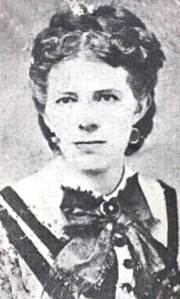
(Photo edited by Bob Rowen)

Stone was in marginal command of Brokenburn as her mother and brothers attended to business in and around Vicksburg. As the winter of 1862 turned Brokenburn into a snowy, muddy landscape, she dutifully recorded the comings and goings of family friends, neighborhood gossip, and her brothers’ dreaded school lessons.

By the end of January, however, slaves and animals belonging to Ashburn, her late brother, were distributed to other owners, bringing Stone a degree of “distress,” and the demands and tragedies of a still far-off war were again felt in Louisiana. Stone sensed the war was growing ever closer as the joys and comforts she had always enjoyed were slipping away.

Jan. 16:

Real winter weather at last with sleet and snow whitening the ground a real winter landscape. We made some ice cream last night, ate it this morning, and pronounced it splendid. Today they are killing the last of the hogs, and all of the house servants with a contingent from the quarters are making lard, sausage, souse, etc., etc. ..

Jan. 17:

The snow is melting and running off the house in a continual rain and underfoot is too slushy for anything. It is too cold and wet for Sister to go to school, but the boys went and came in this evening covered with mud but in high good humor. Each one has an essay to write, their first attempt, and it seems to hang over them as a regular kill-joy. Brother Coley is studying at home for several hours a day. I have been sewing and reading “The Pilgrims of the Rhine,” a perfect prose poem. …

Jan. 20:

Sunday, though it was cloudy, windy, and so muddy, all of us went to church, leaving only Brother Walter at home. Mr. Holbury gave us an excellent sermon. We saw nearly everyone we know in that section and also met the new Presbyterian minister, Mr. McNeely, and Anna’s bright, particular star, Dr. Meagher from Franklin Parish. It looks like there might be serious intentions in that quarter, for Mrs. Savage permits no flirting on her premises and is a famous matchmaker. The Doctor is quite nice looking. …

Dr. Lily left last week, I suppose for the army, and did not come out to say farewell. And such a friend as he claimed to be to the Brokenburn household! I was sorry he left in a bad humor with us.

Mr. and Mrs. Goodrich were at church, his first attendance for years. The death of their little girl Sarah not long since was a dreadful blow to them. She was a bright, attractive child about thirteen who died of diphtheria. They have one little boy.

Jan. 22:

Gen. [Leonidas] Polk has called on the planters from Memphis to the lower part of Carroll Parish for hands to complete the fortifications at Fort Pillow, forty miles above Memphis. A great many Negroes have been sent from Arkansas, Tennessee, and North Mississippi, and now it comes Louisiana’s time to shoulder her part of the common burden. A man was here today with Gen. Polk’s appeal. He had been riding constantly since Monday from one plantation to another, and nearly everyone had promised to send some half of their force of men, some more, some less. As they get off tomorrow evening, Brother Coley had to go down to see Mamma about it.

Took a cozy dinner all to myself shut up in Mamma’s room, which I am occupying while she is away and which Frank keeps at summer heat. I find the piano a great resource as I am recalling some of my music. … We miss Mamma dreadfully.

The boys start to school immediately after breakfast and get home just at sunset, and directly after supper they commence on next day’s lessons. Brother Walter has just worried through his first essay. It is short and of course must be filled with mistakes, but he will not let us look at it. It is the first step that costs. Hereafter, hope he will not find it such a job. The other two boys are hammering away at their speeches. Sister has not attained to the dignity of either writing or speaking yet awhile.

Jan. 24:

Mamma and Other Pa (Stone’s maternal grandfather) got home late Thursday evening. We were not looking for them and no supper had been kept hot, as it was some time before then that hot supper was served. Other Pa only came on business and went back to Vicksburg carrying with him Ashburn’s Negroes, who are to be divided out among the heirs. Separating the old family Negroes who have lived and worked together for so many years is a great grief to them and a distress to us. I wish Mamma had been able to buy them all in and keep them here.

Stone reported the final distribution of her late brother’s slaves and animals on Jan. 30:

From Ashburn’s estate Mamma drew two Negroes, Mathilda and Abe. Patsy and John went to Cousins Jenny and Titia. They all came up on the boat this afternoon. Mat with Festus, the horse, goes to Uncle Johnny, Hill to Uncle Bo, Peggy and Jane to Aunt Laura, and Sydney and her two youngest children to Aunt Sarah. It is hard for Sydney and her older children to be separated. We are so sorry but cannot help it.

Jan. 27:

We went to hear Mr. McNeely preach Sunday rather dry and humdrum. Dr. Carson took him all around the country to introduce him to his new field of work. Quite pleasant socially, and could not be called ceremonious.

But I forget. I must give the real neighborhood news. Rose and Dr. Lily are to be married very soon — my pet prejudice, Rose Norris and the “Tiger Lily.” She will be Mrs. “Rose Lily.” She slipped quietly off with Mrs. Savage to New Orleans and is selecting her trousseau. … I never would have picked Rose Norris out of all the world to spend my life with. For that matter, neither would I have selected Dr. Lily for that post. But oh! how tastes differ. I cannot believe he is in love with her. It has been too recently that he was criticizing her severely her looks, her walk, her manner. If it proves a happy marriage, I shall be surprised. She is quite young, about seventeen I think. …

Jan. 30:

A late mail this evening. A letter from My Brother complains that it is dreadfully dull. They are just wearing the time away winterbound in their tents. The papers confirm our defeat at Fishing Creek and the death of Gen. Zollicoffer. Two lamentable events. Mr. McNeely knew Gen. Zollicoffer intimately and grieves for his death. He admired him greatly and considers his death a great loss to the Southern Cause.

The whole Northern Army is now on the move preparing to attack us at all points. We expect to hear of great battles within the next few days. God grant us victory in our just war. The manner in which the North is moving her forces, now that she thinks us surrounded and can give us the annihilating blow, reminds me of a party of hunters crouched around the covert of the deer, and when the lines are drawn and there is no escape, they close in and kill. …

It looks like we may have difficulty in getting summer clothes. The merchants are selling only for cash and that cash is hard to get, unless we can do as they seem to be doing in the towns make it. Judging from the looks of the paper money and the many signatures on odd-looking paper and pasteboard, one would be convinced that many people are making their own money. We have spent less this year than ever before. Have bought only absolute necessaries — no frills and fur belows for us. Affairs are too grave to think of dress.

Kate Stone’s Civil War: Happy birthday

As she faced a long, hard year ahead, on Jan. 8, 1862, Stone made a fresh promise to herself as an individual and as a citizen of the Confederacy.

From 2012 to 2015, Stillness of Heart will share interesting excerpts from the extraordinary diary of Kate Stone, the daughter of Louisiana cotton plantation owners who chronicled her turbulent life throughout the Civil War era.

Learn more about Stone’s amazing life in 1861, 1862, 1863, 1864, 1865 and beyond. Click on each year to read more about her experiences. You can read the entire journal online here.

(Photo edited by Bob Rowen)

As she faced a long, hard year ahead, on Jan. 8, 1862, Stone made a fresh promise to herself as an individual and as a citizen of the Confederacy.

Jan. 8:

This is my twenty-first birthday, and I think this will be my motto for the year so uncertain are all our surroundings: “Live for today. Tomorrow’s night, tomorrow’s cares shall bring to light.” May I always be able to put my trust in God as I can tonight, satisfied that He will order our future as is best.

This has been a year of changes, of stirring and eventful life, the shortest ever in our calendar. God has been with our Nation during this year of trouble. He has given us wise rulers, brave and successful generals, valiant and patriotic men, and a united people, self-sacrificing and with their trust in God. …

Kate Stone’s Civil War: Sad Christmas

Stone’s first entry for 1862 was a somber one. The shadow of her brother’s death darkened the holiday cheer.

From 2012 to 2015, Stillness of Heart will share interesting excerpts from the extraordinary diary of Kate Stone, the daughter of Louisiana cotton plantation owners who chronicled her turbulent life throughout the Civil War era.

Learn more about Stone’s amazing life in 1861, 1862, 1863, 1864, 1865 and beyond. Click on each year to read more about her experiences. You can read the entire journal online here.

(Photo edited by Bob Rowen)

Stone’s first entry for 1862 was a somber one. The shadow of her brother’s death darkened the holiday cheer.

Jan. 6:

Christmas passed very quietly with us. Greetings on all sides but no gifts and not many good things prepared beforehand. Had the customary eggnog before breakfast, but not a prize nog. It was made of borrowed whiskey with a strong flavor of turpentine. A lovely day, so warm that we sat on the gallery until bedtime.

Julia Reed came on the twenty-seventh and stayed until today. This is the first Christmas in our recollection that was not a time of fun and feasting. We missed Ashburn’s kiss and blithesome presence.

Mamma invited the two Mr. Valentines, father and son, to dinner, thinking it would be pleasant for Other Pa (Stone’s maternal grandfather) to meet the older man, and rather to our surprise they came and stayed until sundown. We never heard of Mr. Valentine, Sr., paying a social visit before. He is odd, just as we fancied he would be, but an excellent talker. He and his son are strikingly alike in looks, manners, and turn of mind, though they generally take opposite sides on every proposition. Mark, Jr., says they are forced to do so to have something to talk about the long winter evenings.

Mark, Jr., acquainted us with his fixed determination to pay us a New Year’s call. So Julia and I hurried back from our ride that misty, misty morning and looked for him all day. In the afternoon we begged Mamma to let us pay our expected visit to Mrs. Savage, but she would not allow it. So he ruined our plans for all day. It will be long before we let an engagement with him keep us in again.

The morning after Christmas Mamma gave all the house servants holiday … and they all went down to the quarters. She hired some of the field women, who were busy in the backyard drying out lard, making up sausages, cleaning feet and so on. …

Kate Stone’s Civil War: Rainy days

As the war’s first Christmas approached, life went on at Brokenburn. Soft winter rain drenched the neighborhood. A strange relative got married. Sickness claimed yet another acquaintance. It’s a fascinating record of a quiet home front. Quiet for the moment.

From 2012 to 2015, Stillness of Heart will share interesting excerpts from the extraordinary diary of Kate Stone, the daughter of Louisiana cotton plantation owners who chronicled her turbulent life throughout the Civil War era.

Learn more about Stone’s amazing life in 1861, 1862, 1863, 1864, 1865 and beyond. Click on each year to read more about her experiences. You can read the entire journal online here.

(Photo edited by Bob Rowen)

As the war’s first Christmas approached, life went on at Brokenburn. Soft winter rain drenched the neighborhood. A strange relative got married. Sickness claimed yet another acquaintance. It’s a fascinating record of a quiet home front. Quiet for the moment.

Dec. 22:

I have been sleeping with Mamma and so I have not written for some time, as night is my time for scribbling.

Aunt Laura left us ten days ago after a two-week stay, and she seemed to enjoy so much being with us all, especially Mamma. Her visit was a pleasure to us. …

After two weeks of the lovliest warm spring weather with skies as blue and bright as bend over Italian plains, we wake to hear a soft, warm rain pattering down, and so no church for us today. And none of us went last Sunday. Sunday spent at home is a long, weary day. …

The greatest news of all Uncle Johnny is married. On the seventeenth of this month he gave his heart and hand to Miss Kate Boone, a girl from Charleston, S.C., who has been visiting her brother at Pine Bluff, Ark., for some months. She is quite a young girl, not more than seventeen, while Uncle Johnny is thirty-five. We wish them every happiness, and I wish he would bring her down to see us. I only hope he will not try to educate her according to his theories but will let her go on as Nature and her own antecedents and education would have her. But for years he has had the idea of marrying a very young girl and molding and educating her according to his pet theories. My mind misgives me that such is still his plan.

Other Pa (Stone’s maternal grandfather) left the day after the wedding, which was very quiet. He is not pleased with the marriage, though he does not say much against it. Uncle John is editing a paper in Pine Bluff. He is a most impracticable man with so many theories, and he has made ducks and drakes of all the money inherited from Other Ma (Stone’s maternal grandmother) and every other cent he could get. We hope marriage will be his salvation, an anchor to keep him from drifting with every tide, or feeling, or impulse. Johnny says he shall call his new Aunt “Aunt Boone.” He likes it better than “Kate.” I have pre-emption title on that name. …

Mrs. Virginia Cavalier, the oldest sister of the Morris girls, died a week ago of swamp fever. She was a widow with two young children and a very attractive woman. Her brother-in-law, Mr. Joe Cavalier, has been addressing her for the last year, so report says.

Kate Stone’s Civil War: The noble, gentle heart

Stone was an insightful, often self-deprecating, and intelligent writer, but she never wrote more beautifully than when she endured tragedy.

From 2012 to 2015, Stillness of Heart will share interesting excerpts from the extraordinary diary of Kate Stone, the daughter of Louisiana cotton plantation owners who chronicled her turbulent life throughout the Civil War era.

Learn more about Stone’s amazing life in 1861, 1862, 1863, 1864, 1865 and beyond. Click on each year to read more about her experiences. You can read the entire journal online here.

(Photo edited by Bob Rowen)

Stone was an insightful, often self-deprecating, and intelligent writer, but she never wrote more beautifully than when she endured tragedy.

The sickness that ravaged the Stone family was too much for Stone’s brother Ashburn, who died soon after their older brother left to rejoin his Confederate unit. Their mother accompanied the soldier to his embarkation point at Vicksburg, Miss., and she was too far away to rejoin her dying son in his final moments. As Stone grieved, her journal sat silent for two weeks. In late November, she began to write again.

Amidst her sorrow she took a moment to reflect on her mother’s beauty and character. It’s a fascinating and affectionate celebration of the woman Stone admired above all others.

Nov. 27:

How can I write the record of the last two weeks? It seems that the trouble and grief of years has been pressed into that short space of time. Ashburn, our darling, has gone, never to return. Oh! how we miss him every hour in the day. The noble, gentle heart and the loving sensitive nature are stilled forever, passed from the world as though they had never been. What great thoughts, loving wishes, and proud hopes lie buried in his grave. So young, so bouyant, so full of life and happiness, brilliant with the very joy of living such a little while ago, and now dead. …

Nov. 28:

Ashburn died on Tuesday, November 12, at 11 o’clock at night of swamp fever. We sent for Mamma very early Tuesday morning, but she could not get here until Wednesday morning too late. She was so dreadfully distressed. As soon as he died, Brother Coley started at once to Vicksburg to meet Mamma and to make arrangements for the burial. He reached DeSoto just as she crossed the ferry, and as soon as she saw him she knew the worst.

Brother Walter had gone for her and brought her back. She so reproached herself for leaving him when he was sick, but we told her everybody on the place had been sick off and on all summer and she could not know this would be a serious illness. She loved him so. We always told her that she loved and indulged him more than any of us, and she always said, why, he was the best boy of them all and never gave any occasion to be scolded.

Nov. 29:

[Ashburn’s] was buried Thursday in a clump of woods just back of the house, the new family graveyard. Our Father and two little sisters were removed there from the old graveyard a year ago.

Here at home all seems strangely dull and sad. …

A warm lovely week, a wanderer from the April sisterhood. No frost and the flowers are still in fullest bloom roses and annuals, as gay as in May. “The Melancholy days have come” for our household but not for Dame Nature. The boys have been out hunting most of the day with poor success one duck but the woods are full of game and the lakes covered with ducks.

Brother Coley and Mr. Reading went to attend the drill at Willow Bayou and to bid adieu to Mr. Reading’s friends. They went from there to Omega. No mail. But Brother Coley brought back the paper containing the resolutions of sympathy passed by the Willow Bayou company on Ashburn’s death. How he loved all military matters.

Mamma was talking tonight of her early days. She was married before she was sixteen, before she had left school, but she had been out enough to reject ten lovers before she met papa. All of them are living still. She was and is a beautiful woman of most attractive manner and a brilliant conversationalist with a great power of attracting love, the first and greatest gift that can be bestowed on anyone. She has the most cheerful, brightest spirit and is a brave resourceful woman. None of the children bear a strong resemblance to either her or our Father. Brother Walter is most like her.

Nov. 30:

This is the last day of a month that brought us unmixed joy and hopeless sorrow. My Brother was with us at its commencement and now at the close he is in camp again, and one of our dearest and best has bidden farewell to Earth and floated out on the dark river.

Kate Stone’s Civil War: Gladden our hearts

As Stone celebrated one brother, she expressed deep discomfort with another.

From 2012 to 2015, Stillness of Heart will share interesting excerpts from the extraordinary diary of Kate Stone, the daughter of Louisiana cotton plantation owners who chronicled her turbulent life throughout the Civil War era.

Learn more about Stone’s amazing life in 1861, 1862, 1863, 1864, 1865 and beyond. Click on each year to read more about her experiences. You can read the entire journal online here.

(Photo edited by Bob Rowen)

In mid-October 1861, Stone’s brother, who served in the Confederate army in Virginia, returned to Brokenburn for a rest. Stone was elated to see him. His stories from the battlefields fascinated and horrified her. He rejoined a family wracked by seasonal sicknesses. As Stone celebrated one brother, she expressed deep discomfort with another.

Oct. 19:

What a joyous evening to us all. My Brother came a complete surprise to us all. Sent home on sick furlough. He has had typhoid fever for a month and as soon as convalescent the surgeon sent him home. He looks taller and has lost forty pounds. Home life and love will soon build him up. He came at dusk. We have kept him talking until eleven, and that was not wise, as of course he is tired. He told us many funny anecdotes of his experiences as assistant provost marshal. He likes the marshal exceedingly. How horrible is the idea of the visitors to the Manassas battlefield rifling the graves of Northern soldiers for mementoes. They should be put in the front ranks of the next battle. It is positively ghoulish. Johnny went out for the mail and brought My Brother instead. Mr. Bledsoe kindly sent him out in his buggy. Our heartfelt thanks go up to God for having returned to us our best beloved brother.

Oct. 22:

My Brother is a bright yellow, even the skin of his head, like an orange or a pumpkin, and Dr. Lily has prescribed sugar cane for him. He is to eat all of it he can. Dr. Carson sent him a wagonload of it by the wagon that carried out the cotton that Mamma and others subscribed to the sewing society.

Oct. 28:

Today is but a catalogue of chills. Ashburn and Brother Coley shivered through the morning and burned all the evening. Timely doses of quinine kept them off Sister and Johnny. Sister has been sick since Friday and Mamma had Dr. Lily for her. Charles and Sarah are up today and Lucy and Prank down.

My Brother went out this evening to see Dr. Carson. His appetite is better and he is gaining strength.

They are digging potatoes today. Promises to be a noble lot. Annie is helping Uncle Hoccles gather the goober peas [peanuts]. It looks like a month’s job for him. Jimmy and I made some pecan and pull candy this evening and I wish we had not.

Brother Walter teased and worried us, and we all got tired of it and appealed to Mamma when Brother Walter flew into one of his unreasoning rages (fortunately such attacks are rare) and behaved so badly that we have all been uncomfortable ever since. He is the only one of my brothers I ever thought really needed punishing and the only one I ever feel like quarreling with. I believe he is the brightest of all the boys, converses so well, has Mamma’s gift in that, and looks more like her than any of her children.

Nov. 10:

My Brother left us today to join his regiment at Evansport on Occoquan Creek in Virginia. His health is quite restored but Oh! how we hate to give him up. His visit home has been such a delight to us. When will he come to gladden our hearts again?

Kate Stone’s Civil War: The war inches closer

Stone lived in consistent dread of the violence of war.

From 2012 to 2015, Stillness of Heart will share interesting excerpts from the extraordinary diary of Kate Stone, the daughter of Louisiana cotton plantation owners who chronicled her turbulent life throughout the Civil War era.

Learn more about Stone’s amazing life in 1861, 1862, 1863, 1864, 1865 and beyond. Click on each year to read more about her experiences. You can read the entire journal online here.

(Photo edited by Bob Rowen)

Stone lived in consistent dread of the violence of war. The demands of war were already very evident all around her. Her brother and uncle were away serving the armies. Her mother’s foresight called for austerity measures — a war garden, cutbacks on travel — to get the family through lean times ahead. Stone noticed the unavailability of certain fabrics critical to military uniforms, and as she sewed and repaired clothing, she made do with other materials. Stone carefully followed the news from the military and diplomatic fronts and hoped for the best. But bad news came in late September 1861.

Sept. 27

No mail this week, but a rumor that 12,000 Federalists have taken possession of Mississippi City. That is bringing the war near us. How we wish the authorities could carry the war into Washington City. What an awful responsibility rests on our statesmen and generals. May God give them wisdom.

Kate Stone’s Civil War: The fevers

Throughout late August 1861, Stone offered a glimpse at the seasonal dangers of rural life that were tragically normal for a 19th century family. The Stones and their neighbors probably suffered from malaria.

From 2012 to 2015, Stillness of Heart will share interesting excerpts from the extraordinary diary of Kate Stone, the daughter of Louisiana cotton plantation owners who chronicled her turbulent life throughout the Civil War era.

Learn more about Stone’s amazing life in 1861, 1862, 1863, 1864, 1865 and beyond. Click on each year to read more about her experiences. You can read the entire journal online here.

(Photo edited by Bob Rowen)

Throughout late August 1861, Stone offered a glimpse at the seasonal dangers of rural life that were tragically normal for a 19th century family. The Stones and their neighbors probably suffered from malaria.

Aug. 24

Did not reach home until nearly ten, much to the surprise of the family who had given us out. Ashburn was to have been with me but I left him sick at Vicksburg. Such an unhealthy season. Everybody in the house, but Brother Coley, has been sick since I left, and I was in bed nearly a week. It has been raining for three weeks and is cool enough for fall. Mr. McRae fears it will make the cotton crop light.

Chainey died of paralysis a few days ago. The place must indeed seem like a graveyard to the poor Negroes so many deaths since we moved here. Clearing land and digging ditches may make it worse now.

Aug. 25

Mrs. Hardison and the baby both have fever, and Josa and the rest of the family look as if there was not an ounce of red blood between them the whitest, weakest looking set of people. … Aunt Sarah complains so much of loneliness and is so afraid to be alone that I would have remained longer with her, but I was anxious about Mamma and the boys. There is so much sickness.

Aug. 28

I have slight chills and fevers and am being dosed on bitters and drugs of varied meanness. There is danger of
congestion or swamp fever at this season.

Aug. 30

Mamma and I, after knitting awhile, went to work on the boys’ uniform shirts. I did the machine stitching, but Mamma soon broke down and went to bed with a chill. Johnny was tossing with fever. …

Sept. 17

We fear Ashburn, Jimmy, and Johnny all have whooping cough. Ashburn must have taken it in Vicksburg, though he had it when a little fellow. There are seventeen little cribs of Negroes to have it in the quarters and Mamma dreads it getting among them. Thus the house is under strict quarantine.

Kate Stone’s Civil War: Gallantly fought and won

Families shattered. Love lost. Fears deepened. Tightly-held hopes slowly suffocating.

‘Capture of Ricketts’ Battery’ by Sidney E. King

From 2012 to 2015, Stillness of Heart will share interesting excerpts from the extraordinary diary of Kate Stone, the daughter of Louisiana cotton plantation owners who chronicled her turbulent life throughout the Civil War era.

Learn more about Stone’s amazing life in 1861, 1862, 1863, 1864, 1865 and beyond. Click on each year to read more about her experiences. You can read the entire journal online here.

(Photo edited by Bob Rowen)

In late July, Stone’s diary recorded news of the first major battle between Union and Confederate forces in Virginia, the Battle of Bull Run, or the Battle of Manassas, fought on July 21, 1861. The word “First” often accompanies historical mention of this battle because a second battle would be fought on or near the same ground 13 months later.

July 26

Received telegraphic accounts of our first pitched battle fought at Manassas Junction. Our side victorious, of course. A reported loss of 3,000 for us and 7,000 for the Yankees. The losses we hope are exaggerated. Reported that Gen. [Winfield] Scott and [Jefferson] Davis were in command. If Gen. Scott is defeated, it will make our victory more complete. My Brother and Uncle Bo may have been in the fight, but we hardly think so as on the thirteenth they were still in Richmond.

Stone received wrong information on who was in field command. Irvin McDowell commanded Union forces, and Joseph E. Johnston and P.G.T Beauregard commanded the Confederates. Winfield Scott was general-in-chief of all Union forces, and he had remained in Washington. Confederate President Jefferson Davis visited the battlefield near the end of the fighting.

The battlefield maps and accounts of combat are always tragically fascinating, but Stone’s diary instilled in me a genuine sensitivity and respect for the real cost of these engagements. Families shattered. Love lost. Fears deepened. Tightly-held hopes slowly suffocating. Manassas was only the beginning.

July 29

Mamma and Mr. Newton rode to Omega yesterday morning and learned some of the details of the Manassas battle. It was gallantly fought and won. Poor Col. Bartow fell, banner in hand, rushing on so bravely. Mr. Newton heard his brother George was in the fight but came through unharmed.

Tomorrow is a day of thanksgiving for victory. Mr. Newton leaves us for his home early Monday. He is busy tonight packing. How much we will all miss him.

July 30

We are all sorry for Dr. Lily. Sunday, he sent Mamma word that he was going on to Richmond to see his brother and would take any letter or message. Mamma had only time to write a short letter to My Brother, and Brother Coley started with it and met Dr. Lily at the gate, just starting on his way to Richmond. He had received a dispatch that his brother, a boy of seventeen, was dangerously wounded in the battle, and he was going on to be with him. All the gentlemen seem to be leaving for Richmond. Mr. Catlin sent us word that he would leave at once and we sent letters by him. …

Kate Stone’s Civil War: The blood of her children

Hard, historic days of decision, she knew, lay ahead.

From 2012 to 2015, Stillness of Heart will share interesting excerpts from the extraordinary diary of Kate Stone, the daughter of Louisiana cotton plantation owners who chronicled her turbulent life throughout the Civil War era.

Learn more about Stone’s amazing life in 1861, 1862, 1863, 1864, 1865 and beyond. Click on each year to read more about her experiences. You can read the entire journal online here.

(Photo edited by Bob Rowen)

Independence Day, 1861, inspired Stone to reflect on the remnants of the Union her generation inherited from the Founding Fathers. Hard, historic days of decision, she knew, lay ahead.

July 4

Mamma is still in bed but is better. The boys have holiday in honor of the Fourth but more I think to keep up old customs than for any feeling of respect for the day. This is the first Fourth in our memory to pass without a public merrymaking of some kind, but we do not hear of the day’s being celebrated in town or country. There are other and sterner duties before us. It would ill become us as a Nation to be celebrating a day of independence when we are fighting for our very existence.

This July sun has set on a Nation in arms against itself, host against host. Those who have clasped each other’s hands in kindest spirits less than one short year ago, as friends, as countrymen, as children of one common Mother, now stand opposing each other in deadliest hate, eager to water Old Mother Earth with the blood of her children. Our Cause is right and God will give us the victory. Will the next July sun rise on a Nation peaceful, prosperous, and happy, or on a land desolate and disgraced? He alone knows.

Congress meets today. The lives of thousands hang on its decision. Will it be for peace or war? We should know by Saturday.

July 5

The Fourth and today passed without any trouble with the Negroes. The general impression has been that the Negroes looked for a great upheaval of some kind on that day. In some way they have gotten a confused idea of Lincoln’s Congress meeting and of the war; they think it is all to help them, and they expected for “something to turn up.” I hope the house servants will settle to their work now.

July 17

Mamma and I went out Monday and took dinner with Mrs. Savage and went up in the afternoon to call on Mrs. Carson. I remained there until this evening. Mamma came out and spent the day. Had a delightful visit. It is a most hospitable home, complete in all its appointments lovely gardens and orchards, an old place well taken care of with perfect service because of so many servants.

We admire Dr. Carson greatly. He is such a humane master and good Christian. He has the minister to preach regularly to his Negroes, or if there is no minister, he or one of the boys reads a sermon, hymns, and the Bible to them every Sunday afternoon. And he has Sunday school for them. He raises plenty of fruit and vegetables for everybody on the place, and his quarter lot is the prettiest place, a great stretch of thick green turf dotted with great forest trees and a double row of two-room cabins shining with whitewash. It is the cleanest-looking place I ever saw. He is a good man. Mamma has the minister to preach to our Negroes when he can find time, but that is not as often as we wish.

Rebecca Aguilar

#CallingAllJournalists Initiative | Reporter | Media Watchdog | Mentor | Latinas in Journalism

Anna Fonte's Paper Planes

Words, images & collages tossed from a window.

Postcards from Barton Springs

Gayle Brennan Spencer - sending random thoughts to and from South Austin

The Flask Half Full

Irreverent travelogues, good drinks, and the cultural stories they tell.

Government Book Talk

Talking about some of the best publications from the Federal Government, past and present.

Cadillac Society

Cadillac News, Forums, Rumors, Reviews

Ob360media

Real News That Matters

Mealtime Joy

bringing joy to family meals

Øl, Mad og Folk

Bloggen Øl, Mad og Folk

a joyous kitchen

fun, delicious food for everyone

A Perfect Feast

Modern Comfort Food

donnablackwrites

Art is a gift we give ourselves

Fridgelore

low waste living drawn from food lore through the ages

BeckiesKitchen.com

MUSINGS : CRITICISM : HISTORY : NEWS

North River Notes

Observations on the Hudson River as it passes through New York City. The section of the Hudson which passes through New York is historically known as the North River, called this by the Dutch to distinguish it from the Delaware River, which they knew as the South River. This stretch of the Hudson is still often referred to as the North River by local mariners today. All photos copyright Daniel Katzive unless otherwise attributed. For more frequent updates, please follow northriverblog on Facebook or Instagram.

Flavorite

Where your favorite flavors come together