As Stone continues her brief stay with friends in Louisiana, she savors the old sights and sounds of her beloved home state.
From 2012 to 2015, Stillness of Heart will share interesting excerpts from the extraordinary diary of Kate Stone, who chronicled her Louisiana family’s turbulent experiences throughout the Civil War era.
Learn more about Stone’s amazing life in 1861, 1862, 1863, 1864, 1865 and beyond. Click on each year to read more about her experiences. You can read the entire journal online here.
(Photo edited by Bob Rowen)
As Stone continues her brief stay with friends in Louisiana, she savors the old sights and sounds of her beloved home state.
Sept. 2, 1864
Near Oak Ridge, La.
Mrs. and Col. Templeton are entertaining a Mr. Massengale, just from Texas with news of Capt. Jack Wylie. We may look for him any day now. He will bring three beautiful horses, which we three girls have already appropriated in imagination and expect to race over the whole countryside.
I am too used up by my ride, or rather run, of yesterday to do anything. We have been very busy for the last ten days, riding, sewing, singing, receiving visitors, and playing, but now that the Brigade has gone out to Tensas Parish, we will be quiet for a time. Even Walker’s division is passing through en route to Arkansas, and so for the present we are left defenseless. …
Unfortunately for my pleasure, the report is abroad that I am engaged. There is no truth in it, and it deprives me of much fun. …
I have finished all of Jimmy’s clothes and two dresses for myself, and I feel a real Louisianian once more in the very heart of the swamp, suffocating with the heat, fighting mosquitoes, lazy and languid, little appetite, but luxuriating on fruit for breakfast, dinner, and supper and enjoying curds and cream. The swamp is my own dear land most natural, most restful.
Mamma’s trip to Yankeeland did much good to all of us. The carriage, and such a delightful one, is a great triumph. The dry goods are the greatest comfort, relieving our present necessities, and the books and papers are great entertainment. …
As Stone loses another brother to the Confederate Army, she also records the hanging of two Missouri spies.
From 2012 to 2015, Stillness of Heart will share interesting excerpts from the extraordinary diary of Kate Stone, who chronicled her Louisiana family’s turbulent experiences throughout the Civil War era.
Learn more about Stone’s amazing life in 1861, 1862, 1863, 1864, 1865 and beyond. Click on each year to read more about her experiences. You can read the entire journal online here.
(Photo edited by Bob Rowen)
As Stone loses another brother to the Confederate Army, she also records the hanging of two Missouri spies.
Aug. 23, 1864
Near Oak Ridge, La.
Mamma and I came out to Monroe [La.] and Jimmy joined the army. Mamma and I stopped here at Col. Templeton’s, and then Mamma went on to the river and stayed with Mrs. Newman. She went in the old Jersey but came back in the pretty carriage that we have been wanting ever since we left home. She brought out a carriage load of dry goods that were most welcome.
After staying here a few days, she returned to Monroe for a little stay with Mrs. Wadley and then on home by way of Homer where so many of our friends are established. We stopped there coming out, and they greeted us most cordially. We could not make much of a visit as Jimmy and Mamma were anxious to get on. Mrs. Templeton’s family all insisted on my remaining with them until fall, and then I could go back to Texas with Col. Templeton, who will go out to where the Negroes are beyond Tyler.
Jimmy’s command was camped near here and I could see much of him. Mamma and I knew it would be a delightful visit, and as she unselfishly and I selfishly wanted to stay, I did so and am having a most lovely time. All the family are so kind. …
What a horrible tragedy, the death of Mrs. Hull’s two brothers, hanged as spies in Missouri where they had gone in disguise to recruit for Col. Hull’s regiment. They were with him but he escaped and had the hardihood to go and see them hanged with the faint hope that he might effect their escape. But of course that was hopeless. He made his way out of the state with some men and met a number who knew him but was not betrayed. The men hanged were two gallant young officers of excellent family. I cannot recall their names just now, but their father was the editor and proprietor of one of the leading St. Louis papers and left a large fortune. Poor Mrs. Hull is heartbroken.
It is very warm but we enjoy our ease with open doors and windows, undressed and lounging around. No gentlemen staying in the house to molest or make us afraid. Emmie is busy on a dress that she has had on hand for two weeks. Mary is practicing a delightful concord of sweet sounds, and I have been working on a flannel shirt for Jimmy. …
Stone feels adrift throughout an era where the past is too painful to remember and the future is too horrific to imagine.
From 2012 to 2015, Stillness of Heart will share interesting excerpts from the extraordinary diary of Kate Stone, who chronicled her Louisiana family’s turbulent experiences throughout the Civil War era.
Learn more about Stone’s amazing life in 1861, 1862, 1863, 1864, 1865 and beyond. Click on each year to read more about her experiences. You can read the entire journal online here.
(Photo edited by Bob Rowen)
Hidden beneath her upper-class sneering at a Texas barbecue, Stone grimly illustrates the wartime reality of senseless death and the emotional and psychological numbing required to endure it from one day to the next. She feels adrift throughout an era where the past is too painful to remember and the future is too horrific to imagine.
June 26, 1864
Tyler, Texas
This has been a busy week, clouded by the thought of Jimmy’s departure. We are finishing off his clothes and renovating ours, for we will go with him as far as Monroe [La.]. …
We have had our own trials patching up our clothes. We had no idea we were so near being ragamuffins until we took an exhaustive survey of our underclothes. Oh, for bolts and bolts and more bolts of white domestic. If Mamma’s trip proves successful, we will be able to better our condition as regards habiliments. Mamma is having quite a store of Texas goodies made up … to solace the inner man while on the road. …
Friday there was a grand Masonic celebration that we, in common with all the town and county, turned out to see. Mr. Michele took possession of our party and Sally Grissman and established us in the most pleasant and also most conspicuous seats and then devoted himself to our entertainment. Lt. Alexander and Dr. McGregor took possession of a nearby window, and we all had a merry morning but did not profit by the speeches. A large crowd and barbecue dinner that Mr. Michele insisted was not clean enough for us to eat. “Why,” said he, “should we dine with plebians?” I hope no native heard him. We went out, as Mamma said, “to see the animals feed.” Then we (the select few) returned home to dinner …
That night there was a party given at the hotel by Col. Anderson. He is in command, I think, of the Ordnance Department here and is an old army officer. His wife is charming. Emily and I went, to our surprise, and spent a charming evening. It was a most mixed and odd-looking crowd. Neither Emily nor I possessed a party dress, but we did not bring discredit on the swamp and looked well enough.
I did not think two months ago I would ever dance or care to talk nonsense again. But one grows callous to suffering and death. We can live only in the present, only from day to day. We cannot bear to think of the past and so dread the future. The refugees remind me of the description of the life of the nobility of France lived during the days of the French Revolution thrusting all the cares and tragedies of life aside and drinking deep of life’s joys while it lasted. This was our debut in Tyler society, and without self-flattery I may say we were quite a success.
I took a buggy ride yesterday with Dr. McGregor, who has a fine span of horses, and we just flew up and down (especially down) the hills. Enjoyed it highly, though I did think we would capsize on every hill we rushed down. On our return all the boys met us at the gate and could scarcely contain themselves at such a splendid opportunity for teasing, but the dread of future punishment at my hands kept them fairly in bounds. …
The horror of the Overland Campaign hangs over the Stone household but she holds out hope Lee will outsmart Grant in the end.
From 2012 to 2015, Stillness of Heart will share interesting excerpts from the extraordinary diary of Kate Stone, who chronicled her Louisiana family’s turbulent experiences throughout the Civil War era.
Learn more about Stone’s amazing life in 1861, 1862, 1863, 1864, 1865 and beyond. Click on each year to read more about her experiences. You can read the entire journal online here.
(Photo edited by Bob Rowen)
The horror of the Overland Campaign hangs over the Stone household but she holds out hope Lee will outsmart Grant in the end.
Again Stone impresses with her ability to illustrate everyday life and mores in so few detailed sentences. Note how the Stones and their friends are now regularly visiting Union prisoners at the nearby Confederate camp.
June 19, 1864
Tyler, Texas
A letter from My Brother but dated three months ago. He writes very sadly and thinks he will not see us again until the war is over. He was safe on the fourth of May, but it was on the fifth that those terrible battles commenced. We see from the papers that his corps was engaged every day. The fate of Richmond still trembles in the balance. Lee’s army has fallen back within the fortifications, and Grant is beginning to burrow as they did at Vicksburg. The most thrilling report is that Beauregard has captured Butler and 9,000 men. May it only be true. …
We have quite a trip in contemplation. Mamma is thinking of going to Monroe [La.] on business and taking me and one of the boys on for a pleasure jaunt. Which one of the boys depends on Mrs. Savage, who thinks of joining us with Emily. In that event Mamma will leave Jimmy at home as affairs are getting too interesting with Jimmy and Emily. He is too susceptible, and Mrs. Savage is too much of a matchmaker for Jimmy to be hourly exposed to such fascination for the next two weeks. Emily is a designing, forward girl, exceedingly so for her age. Jimmy is making every preparation to go with us and join the army at Monroe and will be horribly disappointed if Mamma refuses her consent.
Our usual refugee visitors. Yesterday evening returning from a ride, Jimmy and I were called in by Mrs. Carson, who begged us to stay to supper, at which we enjoyed delightful venison, killed by Jimmy Carson, and some of Mrs. Carson’s new style marmalade excellent. Read the papers to Mrs. Carson and rode home in the most glorious moonlight.
Mamma is very sad since receiving My Brother’s letter. She is very anxious about him. We have a nice set of real chessmen, made by one of the prisoners. We loaned them some days ago to the hospital in response to a polite note asking for them. The boys often go there. They have taken a great fancy to Mr. Griffin, a wounded boy. He must be a nice young fellow. Mamma and Mrs. Carson and some of the other ladies go quite frequently.
Stone mourns a family friend’s death. She also notes ominously the growing epidemic of deadly disease at a nearby Confederate camp filled with Northern prisoners of war.
From 2012 to 2015, Stillness of Heart will share interesting excerpts from the extraordinary diary of Kate Stone, who chronicled her Louisiana family’s turbulent experiences throughout the Civil War era.
Learn more about Stone’s amazing life in 1861, 1862, 1863, 1864, 1865 and beyond. Click on each year to read more about her experiences. You can read the entire journal online here.
(Photo edited by Bob Rowen)
As another oppressive Texas summer begins, Stone mourns a family friend’s death. She also notes ominously the growing epidemic of deadly disease at a nearby Confederate camp filled with Northern prisoners of war.
June 14, 1864
Tyler, Texas
Comfortably seated by an open window in our lone rocking chair, I am munching Confederate cakes all alone with nothing to do. … Johnny is lying on his stomach with his heels in the air … Johnny has taken great delight in Shakespeare and reads and re-reads his favorite plays. He is already a good Shakespearean scholar. Sister is amusing herself with Sally, and the others are off spending this day with Mrs. Prentice. If there is one thing I most detest, it is spending a long summer day away from home. …
Jimmy received a letter from Mr. Hardison telling of Mrs. Hardison’s death in February. We are truly grieved to hear it. She was a high-minded good woman and one of our best friends. She died in Red River County, where they have been living since fall. Her life was a scene of trial from the time they fled from home. He writes most sadly. They have no books, no papers, hear no news, and have made no new friends and are alone on the bleak prairie, strangers in a strange land. We pity them all but most, her poor mother, Mrs. Alexander.
Anna and Dr. Meagher returned a few days ago. He is stationed here now in charge of the Yankee prisoners. The prisoners are in a most pitiable condition, perfectly destitute. Some have only a blanket to wear and others only one garment. There is much sickness and death among them and the authorities are powerless to get clothes for them. No clothes or blankets to be bought. …
Stone distracts herself from the new year’s cold beginning with some wry observations of an attractive young woman who, she fears, will break many hearts.
From 2012 to 2015, Stillness of Heart will share interesting excerpts from the extraordinary diary of Kate Stone, who chronicled her Louisiana family’s turbulent experiences throughout the Civil War era.
Learn more about Stone’s amazing life in 1861, 1862, 1863, 1864, 1865 and beyond. Click on each year to read more about her experiences. You can read the entire journal online here.
(Photo edited by Bob Rowen)
Stone distracts herself from the new year’s cold beginning with some wry observations of an attractive young woman who, she fears, will break many hearts.
Jan. 4, 1864
Tyler, Texas
We were glad to see the Old Year go. It had been a year of trial to us, and we rejoiced when we caught the last glimpse of the sail bearing him on to the dim Ocean of Eternity. The New Year came wailing in, borne on the wings of a freezing norther. God grant it may bring peace to our war-worn land and those we love home again.
Mrs. Savage and her cortege, with Dr. Meagher in the train, arrived Tuesday and are busy settling in their new quarters. The little girls have been staying in here with us until today. We found five in the room with insufficient bedclothes rather too much for comfort in this freezing weather. I very foolishly allowed myself to be persuaded to spend the first night out in camp with them, and I have not recovered from it yet. I feel like blushing every time I think of it as we all practically slept together with only a curtain separating the tent into two rooms and the mattresses touching each other. I never felt so out of place.
Anna is the same as ever, but Emily Norris has outgrown the name of little girl. She has developed very rapidly and promises to be a noted flirt. She already has her “trot lines” out for all these boys. Think Jimmy Stone and Eddie will fall easy victims, but I doubt her ability to land such shy, wild specimens as Johnny and Jimmy Carson.
We are so glad to have Johnny and Jimmy start to school today. It worried us all the time seeing Jimmy losing his last year at home learning nothing. We did not mind so much about Johnny’s idleness. He is well advanced and the brightest child I ever saw. He takes the lead. Jimmy Carson and Eddie will follow him anywhere and applaud all he says or does.
Jimmy Carson has been away for a week on business connected with Anderson’s killing that Negro, a dreadful affair, and Mrs. Carson has fretted over his absence as she alone can fret. It is a terrible spell of weather to be traveling. The snow is several inches deep and frozen hard with the keenest wind howling around the house.
Capt. King, the exquisite, has paid us several visits and beaten me a game of chess by my connivance. He came by to tell us good-bye Tuesday on his way to Shreveport and Camden. Sent letters by him and one of introduction to Julia and Carrie Lowry.
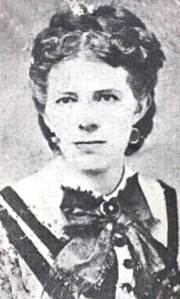
Exiled in Texas, Kate Stone refused to dwell on death. ‘People do not mourn their dead as they used to,’ she wrote. ‘Everyone seems to live only in the present — just from day to day — otherwise I fancy many would go crazy.’
This is Part 4 of a five-part essay series on Kate Stone and her Civil War which was modified from a paper I presented at the New York Military Affairs Symposium in October 2011.
Learn more about Stone’s amazing life in 1861, 1862, 1863, 1865 and beyond. Click on each year to read more about her experiences.
As the war ground on into 1864, the men and women around Stone made the most of their lives of exile in East Texas. Dances were held. Men and women married. new boys studied for classes.
In Tyler, Texas, Stone cleaned the house, played chess, and read. The wall Stone built in her mind to hold back the crush of mounting tragedies in the Eastern Theater became a permanent fixture. Not even the drama of death breached the barrier anymore.
(Photo edited by Bob Rowen)
“People do not mourn their dead as they used to,” she wrote. “Everyone seems to live only in the present — just from day to day — otherwise I fancy many would go crazy.”
In 1864, Confederate victories brightened the situation in the Trans-Mississippi Theater. In the spring of 1864, Federal forces under Maj. Gen. Nathaniel Banks began the Red River Campaign, in which Federal forces from Vicksburg, New Orleans and Arkansas were supposed to meet near Shreveport, seize Louisiana once and for all, amputate Texas from the Confederacy, and then abort any nascent relationship between the Confederacy and the French-controlled Mexican government.
But the plan failed to consider Confederate audacity. In early April 1864, Maj. Gen. Taylor beat back the Federal invasion at the Battles of Mansfield and Pleasant Hill.
Stone practically leapt for joy in her journal. “It is our first great success on this side of the river. … We will never laugh at our soldiers on this side of the Mississippi again. …”
The Confederate conscription act lowered the age range for enlistment to seventeen, and in August, Kate Stone lost a third brother to the Confederate Army. James Stone joined a unit named Harrison’s Brigade at Monroe, La.
She and her mother accompanied him to Louisiana, and Federal raids through the area frightened her, especially when conducted by black soldiers.
“The Paternal Government at Washington,” she wrote, “has done all in its power to incite a general insurrection throughout the South, in the hopes of thus getting rid of the women and children in one grand holocaust. We would be practically helpless should the Negroes rise, since there are so few men left at home.”














 Stillness of Heart
You must be logged in to post a comment.