Recommended reading / viewing / listening

Civil War shipwrecks … Brando the inventor … The Obama Doctrine … WikiLeaks on Haiti’s secrets … The moon’s mysteries.

Most of these great items come from my Twitter feed or Facebook news feed. Follow me on Twitter and on Facebook for more fascinating videos, articles, essays and criticism. Read past recommendations from this series here.

1. The Greatest Mysteries of the Moon
By Adam Hadhazy | Space.com | July 1
“Although it is the closest celestial body to us, the moon still harbors secrets aplenty. … The great gray and white orb in our sky never veers much nearer than 225,000 miles … and getting there is no easy feat, especially in the case of manned missions. No human has left boot prints in the lunar regolith since 1972.”

2. The Haiti secrets from WikiLeaks uncovered
The Nation and Haiti Liberte | June 1
“The cables from US Embassies around the world cover an almost seven-year period, from April 17, 2003 — ten months before the February 29, 2004, coup d’état that ousted President Jean-Bertrand Aristide — to February 28, 2010, just after the January 12 earthquake that devastated the capital, Port-au-Prince, and surrounding cities.”

3. The Housemaid | Death and Delight
By David D. Robbins Jr. | The Fade Out | July 2
“It says something tragic too, that fifty years later, a remake of “The Housemaid” opens and closes with meticulously choreographed suicide pieces: the cynicism of the past carrying over into the present.”

4. Diplomacy 2.0 and the expanding world order
By Mathieu Labreche | Toronto Review of International Affairs | June 30
Carne Ross: “My experience in diplomacy is that it is far too secret — the worst decisions are made in secret, often by very small and under-informed groups of people. Above all, officials and governments should be held accountable for what they do.”

5. The Obama Doctrine Defined
By Douglas J. Feith & Seth Cropsey | Commentary Magazine | July 2011
“The United States under Barack Obama is less assertive, less dominant, less power-minded, less focused on the American people’s particular interests, and less concerned about preserving U.S. freedom of action.”

6. Marlon Brando’s Lost Musical Innovation
By Felix Contreras | NPR | July 3
“The Oscar-winning actor was also an amateur drummer and an inventor with four patents to his credit. ”

7. Who Was George G. Meade?
By Allen Guelzo | Civil War Times | July 2
“George Gordon Meade won fame as the victor of the Battle of Gettysburg, but not lasting fame. Unlike the commanders of other great battles (Wellington at Waterloo, Eisenhower at D-Day), Meade has always stood in the shadow of the man who lost the battle, Robert E. Lee.”

8. Civil War Shipwrecks: What Remarkable, New 3-D Images Reveal
Associated Press | June 30
“Federal researchers are practically giddy about the ability of sonar technology to show what long-sunken Civil War ships look like under water.”

9. How Tom Cruise Beat Charlie Sheen for ‘Born on the Fourth’ of July Role
By Tim Appelo | The Hollywood Reporter | June 29
“Sheen thought he was a shoo-in for the career-making part, because his previous Vietnam film for [Oliver] Stone, ‘Platoon’ (1986), had grossed $138 million domestically and won Stone his first directing Oscar.”

10. The Italian occupation of Libya
By Jeb Sharp | How We Got Here :: PRI’s The World | March 16, 2011
“The World’s Marco Werman interviews historian Ronald Bruce St John about the Italian occupation of Libya in the first half of the 20th century and its ramifications today.”

Recommended reading / viewing / listening

Bin Laden’s worries revealed … William Shatner narrates NASA’s new shuttle documentary … Secrets from the Battle of Stalingrad … ‘Octomom’ hates her kids and her life … The fascinating and bloody Haitian Revolution.

Most of these great items come from my Twitter feed or Facebook news feed. Follow me on Twitter and on Facebook for more fascinating videos, articles, essays and criticism. Read past recommendations from this series here.

1. Bin Laden document trove reveals strain on al-Qaeda
By Greg Miller | The Washington Post | July 1
“Toward the end of his decade in hiding, Osama bin Laden was spending as much time exchanging messages about al-Qaeda’s struggles as he was plotting ways for the terrorist network to reassert its strength.”

2. What Is Distant Reading?
By Kathryn Schulz | The New York Times Book Review | June 24
“What are we mortal beings supposed to do with all these books? Franco Moretti has a solution: don’t read them.”

3. Space Shuttle Documentary
NASA | July 1
“This feature-length documentary looks at the history of the most complex machine ever built. For 30 years, NASA’s space shuttle carried humans to and from space, launched amazing observatories, and eventually constructed the next stop on the road to space exploration.”

4. Deadliest Battle
Secrets of the Dead :: PBS | May 20, 2010
“Germany’s invasion of the Soviet Union in 1941 was the largest troop offensive in military history. And the Battle of Stalingrad is arguably the deadliest single battle the world has ever seen. … But 70 years after the battle was fought, newly uncovered documents, survivor accounts, and stunning archival footage are revealing a very different picture of what took place.”

5. NASA’s Spitzer Finds Distant Galaxies Grazed on Gas
Jet Propulsion Laboratory | June 30
“Galaxies once thought of as voracious tigers are more like grazing cows, according to a new study using NASA’s Spitzer Space Telescope.”

6. Read Bruce Springsteen’s Clarence Clemons Eulogy
By Andrea Kszystyniak | Paste Magazine | June 30
“Standing next to Clarence was like standing next to the baddest ass on the planet. You were proud, you were strong, you were excited and laughing with what might happen, with what together, you might be able to do.”

7. Inside a Russian Billionaire’s $300 Million Yacht
By Robert Frank | The Wall Street Journal | April 15, 2010
“Designed by Philippe Starck, the “A” has quickly become the most loved and loathed ship on the sea. WSJ’s Robert Frank takes an exclusive tour of Andrey Melnichenko’s 394-foot mega-yacht.”

8. Nadya Suleman: Babies disgust me
The Marquee Blog :: CNN.com | June 30
“Suleman, who was labeled with the moniker ‘Octomom’ after she gave birth to octuplets in 2009, told [In Touch magazine], ‘I hate babies, they disgust me.’ She went on, ‘My older six are animals, getting more and more out of control, because I have no time to properly discipline them.’ ”

9. Resolving Insurgencies
By Thomas R. Mockaitis | Strategic Studies Institute | June 17
“Understanding how insurgencies may be brought to a successful conclusion is vital to military strategists and policymakers. This study examines how past insurgencies have ended and how current ones may be resolved.”

10. The Haitian Revolution
By Jeb Sharp | How We Got Here :: PRI’s The World | Jan. 29, 2010
“You can’t understand Haiti without understanding the slave revolt and war for independence that shaped its early days.”

TUNES

Tonight I’m spending some time with the blues, specifically with the Texas Blues Café. Check out the line-up and then listen here.

1. Dennis McClung Blues Band — The Red Rooster
2. Brian Burns with Ray Wylie Hubbard — Little Angel Comes A-Walkin
3. Ray Wylie Hubbard — Cooler-N-Hell
4. Roy Rogers — Little Queen Bee
5. Ted Shumate Blues Band — All Night Long
6. Cactus — The Groover
7. Ian Moore — Muddy Jesus
8. Commitments — Mustang Sally
9. Rocky Jackson — Goin’ Back to Texas
10. Mark McKinney — Comfortable in this Skin & Bonfire
11. Mojo Saints — Gnawin’ Bone
12. Blackfoot — I’ve Got a Line On You

Recommended reading / viewing / listening

The fall of MySpace … Women in special operations … ‘Spy girls’ find each other in retirement … The aircraft carrier may be irrelevant … A boring Gorbachev.

Most of these great items come from my Twitter feed or Facebook news feed. Follow me on Twitter and on Facebook for more fascinating videos, articles, essays and criticism.

1. Twilight of the $UPERfluous Carrier
By Henry J. Hendrix and J. Noel Williams | Proceedings | May 2011
“[T]he march of technology is bringing the supercarrier era to an end, just as the new long-range strike capabilities of carrier aviation brought on the demise of the battleship era in the 1940s.”

2. The Long, Lame Afterlife of Mikhail Gorbachev
By Anne Applebaum | Foreign Policy | July/August 2011
“A cautionary tale about what happens when you fail to see the revolution coming.”

3. The FP Twitterati 100
Foreign Policy | June 20
“Here are 100 Twitter users from around the world who will make you smarter, infuriate you, and delight you — 140 characters at a time.”

4. Heavy sentences
By Joseph Epstein | The New Criterion | June 2011
“Learning to write sound, interesting, sometimes elegant prose is the work of a lifetime. The only way I know to do it is to read a vast deal of the best writing available, prose and poetry, with keen attention, and find a way to make use of this reading in one’s own writing. The first step is to become a slow reader.”

5. Decades after duty in the OSS and CIA, ‘spy girls’ find each other in retirement
By Ian Shapira | The Washington Post | June 26
“Doris Bohrer and Elizabeth ‘Betty’ McIntosh met two years ago in a Prince William County retirement community. As their friendship developed, they realized they had both served as intelligence operatives during World War II.”

6. Female Special Operators Now in Combat
By Christian Lowe | Military.com | June 29
“Army Special Operations Command has deployed its first teams of female soldiers assigned to commando units in Afghanistan, and military officials are assessing their initial performance in theater as ‘off the charts.’ ”

7. Beauty and the Beasts: The Sight of a Pretty Woman Can Make Men Crave War
By Rebecca Coffey | Scientific American | June 25
“Show a man a picture of an attractive woman, and he might play riskier blackjack. With a real-life pretty woman watching, he might cross traffic against a red light. Such exhibitions of agility and bravado are the behavioral equivalent in humans of physical attributes such as antlers and horns in animals. ‘Mate with me,’ they signal to women. ‘I can brave danger to defend you and the children.’ ”

8. An A-Z of incredible uses for everyday things
The Guardian | May 7, 2007
“Did you know you can kill weeds with vodka? Remove stains on clothes with aspirin? Make jewellery gleam with tomato ketchup? Here are 40 surprising tips to save you time and money.”

9. Libya mission brings John McCain and John Kerry together again
By Paul Kane | The Washington Post | June 28
“Concerned about what they consider an isolationist and fearful drift in both of their parties, Kerry (D-Mass.) and McCain (R-Ariz.) are advocating an even more forceful role for America in the world.”

10. The Rise and Inglorious Fall of Myspace
By Feliz Gillette | Bloomberg Businessweek | June 22
“It once promised to redefine music, politics, dating, and pop culture. Rupert Murdoch fell in love with it. Then everything fell apart.”

Recommended reading / viewing / listening

Look back at the fall of the Soviet Union … Celebrating Clarence Clemons … The fight over the world’s longest river … Che’s diary published … Iraq’s unseen war.

Most of these great items come from my Twitter feed or Facebook news feed. Follow me on Twitter and on Facebook for more fascinating videos, articles, essays and criticism.

1. The Secret History of Iraq’s Invisible War
By Noah Shachtman | Danger Room :: Wired | June 14
“In the early years of the Iraq war, the U.S. military developed a technology so secret that soldiers would refuse to acknowledge its existence, and reporters mentioning the gear were promptly escorted out of the country. That equipment -– a radio-frequency jammer –- was upgraded several times, and eventually robbed the Iraq insurgency of its most potent weapon, the remote-controlled bomb. But the dark veil surrounding the jammers remained largely intact, even after the Pentagon bought more than 50,000 units at a cost of over $17 billion.”

2. My First Time, Twice
By Ariel Levy | Guernica | June 2011
“After Josh broke my heart, my great regret was not that I had lost my virginity to him, but that I hadn’t. If I was going to be lovelorn, at least I would have liked the consolation of being able to brag that I’d had sex.”

3. New ‘Che’ Guevara diary of the revolution published in Cuba
GlobalPost | June 14
“‘Diary of a Combatant’ documents the three-year guerrilla campaign that resulted in the overthrow of Batista and Castro taking power.”

4. Gulf ‘Dead Zone’ This Year Predicted To Be Largest In History
By Cain Burdeau | HuffPost Green | June 14
“Each year when the nutrient-rich freshwater from the Mississippi and Atchafalaya rivers pours into the Gulf, it spawns massive algae blooms. In turn, the algae consume the oxygen in the Gulf, creating the low oxygen conditions. Fish, shrimp and many other species must escape the dead zone or face dying.”

5. Struggle Over the Nile: A special report
Al Jazeera | June 2011
“It is the world’s longest river. A 7,000-km lifeline for almost 400 million people. It runs through 11 countries, including South Sudan, from the highlands in the heart of Africa to the shores of the Mediterranean Sea. It is a source of sustenance, but also of tension — and even potential conflict.”

6. Cold Specks | Holland
By David D. Robbins Jr. | Their Bated Breath | June 13
“This London by way of Toronto singer-songwriter has a voice that is unmistakable. So unmistakable, that as soon as I heard this new track, “Holland”, I knew right away who the singer was. She has a voice that knocks you in the gut, and you’ll never forget it.”

7. If chivalry is dead, blame it on the selfish feminists
By Lucy Jones | The Telegraph | June 15
“Thankfully, there are still men out there who will take your coat, pull out the chair and pay for dinner”

8. Remembering Clarence Clemons
Rolling Stone | June 18
“The legendary E Street Band saxophonist’s life in photos”

9. The Long Breakup
By Kathy Lally and Will Englund | The Washington Post | June 2011
“Twenty years ago, the Soviet Union came to an end. It was a drawn-out and difficult journey, full of passion, hope, anger, betrayal and re-awakening. Between now and the end of the year, The Post will track the major developments, in real time, of the last six months of the U.S.S.R.”

10. Japan Quake Released Hundreds of Years of Strain
By Brett Israel | Our Amazing Planet | June 15
“The March 11 earthquake is the fourth-largest ever recorded in the world. The quake struck off the coast of the Tohoku region of Japan, triggering a deadly tsunami that may have killed nearly 30,000 people.”

Recommended reading / viewing / listening

History’s biggest volcanic explosions … Great gadgets for Father’s Day … Video of an asteroid … Revisiting McNamara’s War … Regrets of dying men and women.

Most of these great items come from my Twitter feed or Facebook news feed. Follow me on Twitter and on Facebook for more fascinating videos, articles, essays and criticism.

1. Regrets of the Dying
By Bronnie Ware | Inspiration and Chai
“For many years I worked in palliative care. My patients were those who had gone home to die. … When questioned about any regrets they had or anything they would do differently, common themes surfaced again and again. Here are the most common five. …”

2. Arab revolutions mask economic status quo
By Mark LeVine | Al Jazeera | June 10
“Despite talk of a ‘new social contract’, financial powers seek to maintain their grip on the poor of the Middle East.”

3. Our Troops Abroad: What Does a Soldier Need to Read?
By Elizabeth D. Samet | The New Republic | June 11
“Few of us have been castaways, but we’ve all spun variations on the exercise of figuring out whatever is essential to the life of our minds.”

4. McNamara’s Non-War
By James Burnham | National Review | Sept. 19, 1967
“In the form of a statement, August 25, to the Senate Armed Services Committee, Secretary of Defense McNamara offered the most elaborate apologia yet made by the Johnson Administration for, specifically, “our conduct of the air war in Vietnam,” and, by implication, for the Vietnam policy in general. … Before trying to pass judgment on his conclusions, it is advisable to make sure we understand what he is saying.”

5. NASA Spacecraft Captures Video of Asteroid Approach
Jet Propulsion Laboratory | June 13
“Scientists working with NASA’s Dawn spacecraft have created a new video showing the giant asteroid Vesta as the spacecraft approaches this unexplored world in the main asteroid belt.”

6. After 90 Years, a Dictionary of an Ancient World
By John Noble Wilford | The New York Times | June 6
“Ninety years in the making, the 21-volume dictionary of the language of ancient Mesopotamia and its Babylonian and Assyrian dialects, unspoken for 2,000 years but preserved on clay tablets and in stone inscriptions deciphered over the last two centuries, has finally been completed by scholars at the University of Chicago.”

7. Just back: the painted houses of Peru
By Jonathan Carr | The Telegraph | June 10
“Lurid red and orange paint had been daubed everywhere. Villagers throughout Cajamarca region, like everyone else in Peru, were facing a choice between two alleged evils. … To help in the decision-making process, the villagers’ shacks had been marked with giant crosses. But there were no pleas for God to show mercy. This was not that kind of plague. Rather, the names of politicians had been invoked: left-wing Ollanta in red, right-wing Keiko in orange. Soon, the people were to decide which of the two would become president. ”

8. Chekhov on Judgment
By David D. Robbins Jr. | The Fade Out | June 10
“Dover Koshashvili’s adaptation of Anton Chekhov’s short novella “The Duel”, a period drama about the residents of a seaside town in the Caucuses, correctly finds the tone set by the original. Take it from a Chekhov lover, the best thing about the Russian’s writing is his ability to arrive at a point of discovery without necessarily providing an apotheosis.”

9. The 10 Biggest Volcanic Eruptions in History
Our Amazing Planet | June 10
“June 15, 2011, marks the 20th anniversary of Mt. Pinatubo’s cataclysmic eruption. … On this anniversary, we countdown the largest volcanic eruptions in history as measured by the Volcanic Explosivity Index (VEI), a classification system somewhat akin to the magnitude scale for earthquakes.”

10. 15 Fantastic Gadgets for Father’s Day
By Doug Aamoth and Chris Gayomali | Time | June 13
“Whether dad loves to grill, fish or take on projects around the house, any number of these geeky goodies are sure to be a hit.”

Recommended reading / viewing / listening

Recommended reading / viewing / listening, Part 1: China’s naval power … ‘Weinergate’ cartoons … the perfect Father’s Day present …Peru’s new president … what disasters can teach us.

Most of these great items come from my Twitter feed or Facebook news feed. Follow me on Twitter and on Facebook for more fascinating videos, articles, essays and criticism.

1. Apocalypse: What Disasters Reveal
By Junot Diaz | Boston Review | May/June 2011
“Apocalyptic catastrophes don’t just raze cities and drown coastlines; these events, in David Brooks’s words, “wash away the surface of society, the settled way things have been done. They expose the underlying power structures, the injustices, the patterns of corruption and the unacknowledged inequalities.” And, equally important, they allow us insight into the conditions that led to the catastrophe, whether we are talking about Haiti or Japan. ”

2. Damon Horowitz calls for a ‘moral operating system’
By Damon Horowitz | TED Talks | May 2011
“At TEDxSiliconValley, Damon Horowitz reviews the enormous new powers that technology gives us: to know more — and more about each other — than ever before. … Where’s the moral operating system that allows us to make sense of it?”

3. Book review: ‘State of Wonder’
By Carolyn Kellogg | Los Angeles Times | June 5
“In her new novel, Ann Patchett’s gives readers almost a feminized version of ‘Heart of Darkness,’ but without the savagery.”

4. What kind of leftist president for Peru?
By Frank Bajak | Associated Press | June 6
“In his first, failed run to be Peru’s president, Ollanta Humala projected the image of a radical leftist in Hugo Chavez’s mold. This time, he called the Venezuelan leader’s socialist-oriented economic model flawed, and sought moderate allies and courted Washington. Yet many Peruvians wonder if this 48-year-old political novice … is really a market-friendly populist. Many skeptics fear he will renege on his promises and spring revolutionary change on an unsuspecting nation.”

5. The Only Father’s Day Gift You Need: A Letter of Appreciation
By Andrew Snavely | Primer | June 6
“Man to man, especially with a dad can be impossible. Some fathers are gruff and won’t tolerate the awkwardness or the sentiment. Others put up walls to shield their emotions from others. These guys are from a different generation. A letter allows you to say everything you need to, just the way you want to.”

6. Death and Drugs in Colombia
By Daniel Wilkinson | The New York Review of Books | June 2011
“In February 2003, the mayor of a small town on Colombia’s Caribbean coast stood up at a nationally televised meeting with then President Álvaro Uribe and announced his own murder.”

7. Stargazer: A story
By Eliot Treichel | Narrative | June 6
“As the pickup truck approached, Walters raised his free hand and motioned for the vehicle to stop. In his other hand he clutched the stock of a lever-action Winchester, the gun barrel angled over his shoulder.”

8. Why China’s Growing Naval Presence Is To Be Expected
By Wesley Clark | Big Think | June 6
“We don’t know exactly what the aim of the Chinese shipbuilding program is, but they are building a Navy. And they do have commerce and it’s a very natural thing.”

9. The most eye-catching ‘Weinergate’ cartoons so far …
By Michael Cavna | Comic Riffs | The Washington Post | June 6
“Sure, the target might be like shooting kingfish in a barrel, but some satirists are hitting their marks with especial flair.”

10. Critics’ Picks Video: ‘Lawrence of Arabia’
Arts Beat | The New York Times | June 6
” ‘Revolution in the Arab world is inspiring, dramatic and confusing,’ says A.O. Scott, the co-chief film critic for the New York Times. ‘The Arab Spring of 2011 is not the first time that political upheaval in the Middle East has captured the imagination of the West. Mr. Scott is referring to the events that inspired the 1962 Academy Award-winning film, “Lawrence of Arabia,” a movie he calls “a remarkably sophisticated investigation into revolution itself.’ “

‘Youth is the weapon’

The cost of youthful idealism, the history of Iraq, some useful writing tips, notable books and journals I’ve recently received, and the soundtrack for a Beautiful Blues Friday.

Deadly idealism

The New York Times recently reminded me of an aspect of story of African and Middle Eastern uprising I hadn’t thought about before: how this revolutionary and reformatory fervor must appear to Iraqi youth politically suffocated by the limping government.

Supplementing their article, the At War news blog offered quotes from Iraqis collected during the reporting, “a sampling of their comments on three topics vital to the country’s future: democracy, faith and the future of the young generation.” Sherzad Omar Rafeq, a Kirkuk attorney: “The youth is the weapon of the next change in Iraq, and especially in the Kurdistan region, through demonstrations and sit-ins that are forcing change and overthrowing corrupted people.”

Youthful idealism has always frightened me, if only because history has showed me so many dreams of change end up in the gutters of geo-political reality, especially after U.S. force is utilized to take down those “corrupted people.” I used to condemn my own cynicism. I don’t anymore. I just remind myself to check particular numbers on a particular list to see the price of idealism. I don’t want to ever see any more lists like that one, especially if they’re the consequence of anyone’s youthful idealism, conceived on the streets of Baghdad or behind the desk in the Oval Office.

Speaking of Iraq, take a moment to listen to PRI’s stunning three-part series on the history of Iraq, the torturous British legacy and its bloody history with the United States.

Beautiful Blue Friday

My soundtrack for today included:
1. WHEN LOVE COMES TO TOWN U2 and B.B. King
2. BLOOD AND SNOW The Melissa Ludwig Band
3. TAKE ME Mable John
4. HOOCHIE COOCHIE MAN Muddy Waters
5. LAST NIGHT Little Walter
6. THE THRILL IS GONE B.B. King
7. I’M A MAN Bo Diddley
8. THAT’S ALL RIGHT Mighty Joe Young
9. MY LOVE WILL NEVER DIE Otis Rush
10. DEATH LETTER Cassandra Wilson

Writing tips

Over at the Guardian’s Punctuated Equilibrium blog, Henry Gee contributed his 10 tips for good writing. I feel better, knowing I already follow “the first six.” Check it out here.

Journals and books recently received

1. “The Berlin-Baghdad Express: The Ottoman Empire and Germany’s Bid for World Power” by Sean McMeekin. Belknap Harvard. $29.95
2. The Journal of Military History. April 2011, Vol. 75, No. 2
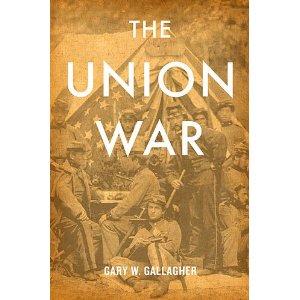
3. “The Union War” by Gary W. Gallagher. Harvard.
4. The Journal of the Civil War Era. March 2011. Vol. 1, No. 1
5. Civil War History. March 2011. Vol. 57. No. 1

The Handbook of Civil War Texas is unveiled

Thrilling news (for me, anyway) arrived in my email today. The Texas State Historical Association, which produces the magnificent Handbook of Texas, has unveiled the Handbook of Civil War Texas, a collection of “more than 800 entries, including some 325 new articles about Texas people, places and events in the Civil War.”

Thrilling news (for me, anyway) arrived in my email today. The Texas State Historical Association, which produces the magnificent Handbook of Texas, has unveiled the Handbook of Civil War Texas, a collection of “more than 800 entries, including some 325 new articles about Texas people, places and events in the Civil War.”

The editors have essentially pulled together all the Handbook of Texas articles with any link to the Civil War and then supplemented the collection with the 300+ new pieces. Also sprinkled among the articles are beautiful Civil War-era images from two Southern Methodist University photo collections.

It’s an impressive achievement, and it’s sure to be a lasting one. Begin your journey into Civil War-era Texas here.

Nazi belt buckles, sunset at Gettysburg … and Rod Stewart, baby

Some interesting historical items caught my eye today.

WORLD WAR II

1. The British newspaper The Telegraph recently published a fascinating report on MI5 files from World War II, warning Allied forces that special Nazi agents planned to infiltrate liberated areas of Europe with poisoned aspirin pills, a gun hidden in a belt buckle and an arsenal of other clever weapons in order to spread paranoia, damage morale and murder high-ranking officials.

“The information came from a four-strong unit of German agents,” the article said, “including one woman, who were parachuted into Ayon, near St Quentin in France in March 1945, two months before the end of the war. They had been flown from Stuttgart in a captured B17 Flying Fortress, which dropped them behind enemy lines before getting shot down.”

Don’t forget to check out a photo of the very cool belt-buckle pistol, which is paired with the main Hitler photo at the top of the story. Can’t miss it. This online article is part of a larger Telegraph special report on all things World War II, including links to other fascinating pieces on Adolf Eichmann’s regrets, plans for a post-war “Fourth Reich”, and a plot to kill Winston Churchill, along with slideshows on wartime posters, wartime London and Iwo Jima. Great little package.

2. That reminds me of one of my favorite shows, “Secrets of the Dead,” which took a closer look at Winston Churchill’s cold, calculated decision to destroy the French fleet (and kill any French sailors that stood in his way) after France surrendered to the Nazis. He didn’t want the fleet, which was based at Mers El Kébir in French Algeria, used in the German attempt to invade England. It’s a stunning story.

THE CIVIL WAR

1. As time runs out for reasonable compromise to avoid another ridiculous government shutdown, the Associated Press recently updated its list of ways the shutdown would affect regular American life, including the festivities marking the beginning of the Civil War at Fort Sumter. Like I said, ridiculous.

2. The Washington Post‘s wonderful “Five Myths” series recently included two items from the Civil War arena: Why the South seceded (states’ rights or slavery?) and Abraham Lincoln (Was he gay? Was he depressed?). Keep an eye on this series for more Civil War topics as the anniversary dates roll past.

3. Columbia, S.C.’s TheState.com reported this week that ancestry.com, celebrating Civil War festivites in its own way, will allow one week of free access to its 1860 and 1870 census records. The article explains, “The 1860 census is helpful for determining which family members might have served in the Civil War. The 1870 census is the first that detailed many free former slaves.” The free week of access starts today, Thursday, April 7. Thanks to my friend, the attorney Jim Dedman, one of the authors of the legal blog Abnormal Use, for sending this piece my way.

4. Also from the Palmetto State, Charleston Magazine offers A Civil Discourse, a collection of short essays from lawyers, historians and politicians, all reflecting on what the Civil War means to them and to their lives. The last line of the last essay said it best, “It is only by discussing the war truthfully and recalling its lessons with humility, courage, and grace that we will continue to heal and prosper.” The sentiments were truly touching. Are those quivers of hope and optimism I’m feeling in my withered, cynical heart?

5. Thanks to my friend Kathleen Hendrix for sending me this gem: The Washington Post recently reported that on April 12 the Library of Congress opens a new exhibit of photos of men who fought on both sides of the war. “Titled ‘The Last Full Measure: Civil War Photographs from the Liljenquist Family Collection,'” the article says, “the exhibit features 400 haunting pictures of the average Billy Yanks and Johnny Rebs. …”

Check out the Library’s entire collection here.

6. The Baltimore Sun recently assembled a great slideshow celebrating “some of the best and most memorable works from and about the Civil War.”

Appropriately, the slideshow includes film classics like “Gone with the Wind,” “Roots,” and “North and South.” Some recent films included were “Glory” (charge!), “Cold Mountain” (>yawn<), and my personal favorite, “Gettysburg” (“Gen. Lee, I have no division!” God, I love that movie.) Thankfully, the historical and artistic travesty “God and Generals,” the prequel to “Gettysburg,” was ignored. Personally, I would have included on this list the excellent films “The Hunley,” “Ride with the Devil,” (a new Criterion Collection edition!) and “Andersonville” (the TNT version).

The slideshow also included authors Stephen Crane, Michael Shaara and Bruce Catton. If I have to explain why, let’s just part ways as friends right now. My own slideshow also would have included Gordon Rhea’s great series on the 1864 Overland Campaign, Gary W. Gallagher’s “Lee: The Soldier,” Shelby Foote’s entire Civil War narrative history, James McPherson’s “Battle Cry of Freedom,” David Herbert Donald’s “Lincoln,” and, of course, U.S. Grant’s memoirs.

Thanks to my old friend David D. Robbins Jr., editor of the fantastic blogs The Fade Out, Their Bated Breath and Rustle of Language, for pointing out the Sun‘s slideshow to me.

7. Speaking of Civil War films, Robert Redford’s “The Conspirator” premieres on April 15. Its Facebook page describes the film: “In the wake of Abraham Lincoln’s assassination, seven men and one woman are arrested and charged with conspiring to kill the President, the Vice-President, and the Secretary of State. The lone woman charged, Mary Surratt, 42, owns a boarding house where John Wilkes Booth and others met and planned the simultaneous attacks. Against the ominous back-drop of post-Civil War Washington, newly-minted lawyer, Frederick Aiken, a 28-year-old Union war-hero, reluctantly agrees to defend Surratt before a military tribunal. As the trial unfolds, Aiken realizes his client may be innocent and that she is being used as bait and hostage in order to capture the only conspirator to have escaped a massive manhunt, her own son. A suspenseful thriller with action throughout, The Conspirator tells the true story of a woman who would do anything to protect her family and the man who risked everything to save her.”

Could be good. We’ll see. Watch the trailer here.

8. Historian Thomas Connelly, writing in the Wall Street Journal, urges people who want to understand the true complexity and drama of the battles to walk the fields, hills and lanes on which they were fought. “Many Civil War battlefields have their ‘bloody lanes’ or ‘stone walls’ ” he writes. “A supposedly impregnable defense or irresistible attack could give way in the blink of an eye, resulting in slaughter. It is hard to imagine how this could happen until you see the ground itself. But once you see it, those quick shifts in the tide of battle become chillingly vivid.”

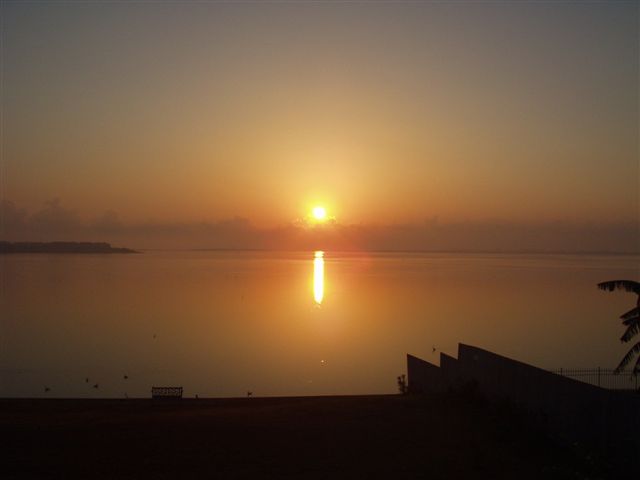
I certainly agree with him. I remember almost exactly 12 years when I visited the Gettysburg battlefield for the first time. I arrived late in the afternoon, too late to do any real exploring. That would have to wait for the next day (which was amazing). But I knew I had just enough time to make it to Little Round Top. I poked around, parked the car, dodged a squadron of bikers racing down the shaded street, and somehow found my way up to the summit. I stood next to a statue of Union Maj. Gen. Gouverneur K. Warren, one of the heroes of the battle. All around me were men and women re-enactors, beautifully dressed, saying nothing. The air was still, the birds quiet. Not even the leaves rustled. We all stood silent, transfixed by the beauty of the setting sun. The ridges below, the infamous pikes and ridges, the thickets, the monuments, and that terrible field where Pickett’s and Pettigrew’s doomed men charged — it was all bathed in a strange, red-orange haze.

It was one of the most beautiful moments of my life. I opened my cell phone to call Ayse, my then-girlfriend, to share it with her. I dialed the number, listened to it ring, and then she answered.

“Hi, darling,” I said. “I’m standing — ”

“Hold on, let me call you back.” She hung up.

I stood there in momentary disbelief. As I waited, I imagined the horrific Confederate attacks on this small hill, its desperate Union defenders somehow fighting off one attack after another. Every rock, twig, leaf, and branch must have been glistening with blood. The ground must have been soaked with it.

The phone rang. I answered.

“Sorry!” she said. “The Spurs were kicking some ass. Game just ended. What’s up, honey?”

“Oh, nothing,” I said, sighing to myself, watching the sun sink into the western horizon. The moment was gone.

TUNES

My soundtrack for today included:
1. GROWING UP Peter Gabriel
2. KNOCKIN’ ON HEAVEN’S DOOR Bob Dylan
3. GLORIA Van Morrison
4. TINY DANCER Elton John
5. RIVERS OF BABYLON The Melodians
6. SOUTHERN CROSS Crosby, Stills & Nash
7. THAT CERTAIN FEMALE Charlie Feathers
8. EVOLUTION REVOLUTION LOVE Tricky
9. RUNNING ON FAITH (Unplugged) Eric Clapton
10. I’M LOSING YOU Rod Stewart

Party like it’s 1861

We’re little more than a week away from the 150th anniversary of the Confederate attack on Fort Sumter, a Federal military installation in Charleston Harbor, where, our history books tell us, the American Civil War officially began.

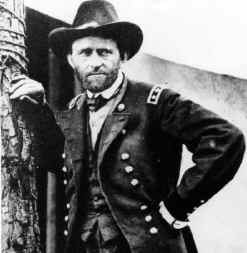
Grant

Until now, legions of commemorative tweets, blogs, multimedia and special anthologies have been busy celebrating and studying the fascinating events of 1859, 1860 and early 1861, which saw brutal fighting in Kansas, John Brown’s doomed raid at Harper’s Ferry, Va., the 1860 presidential victory of Republican Abraham Lincoln, the stunning first and second waves of Southern secession, the inauguration of Jefferson Davis and the birth of the Confederacy. I’ve studied the Civil War era for 20 years, and the public’s recently re-energized enthusiasm for — and for some rediscovery of — the era has made me very happy. It’s been just so damn fun.
 
Disunion, the excellent blog from the New York Times, has used diary entries, photos and other primary sources — coupled with mostly very good historical articles — to examine day by day the thinking of intellectuals, journalists, politicians, men and women alike, watching alongside them as the world they knew slowly crumbles all around them. The short essays, soldier profiles and stories in the 21st century capture with heartbreaking beauty what must have been an excruciating 19th century sense of hopelessness and terror, excitement and determination, dreams of a better world or grim resolve to preserve what had existed for generations.

The Associated Press has pulled together a package of multimedia, interactives, historical coverage and contemporary analysis of the events and the era. Much if not all of it should be available on their special Facebook page. Keep an eye on my Civil War Facebook group for interesting links to articles, essays and interactives. Crossroads and Bull Runnings are two great blogs by Civil War historians that never fail to enlighten me. In March, Kent State University Press unveiled the new editorial staff for the journal Civil War History, and University of North Carolina Press premiered The Journal of the Civil War Era. The latter is edited by William Blair, who just recently was editor of the former. I’ll be a faithful and passionate reader of both journals and note on this blog anything particularly interesting from their pages.

Forget the History Channel when it comes to Civil War documentaries. Full disclosure: The only thing I’m stupidly snobbish about is historical documentaries. Tip: If what you’re watching has commercial breaks, it’s not a real documentary. PBS is still the gold standard when it comes to intelligent exploration and analysis of the Civil War era, and they jumped into commemoration party with a rebroadcast of “The Civil War,” the factually flawed but otherwise gorgeous Ken Burns miniseries. But don’t stop there. Over the past decade, “American Experience” has produced a treasure chest of excellent pieces on the aforementioned psychotic John Brown, Abraham and Mary Lincoln, Lincoln’s murder and its aftermath, the poet Walt Whitman, on U.S. Grant and Robert E. Lee, on the industrial economy over which they fought, and on the endlessly fascinating and horrific Reconstruction era.

But for some the real fun begins on April 12 at 4:30 a.m., the moment the rebel guns opened fire on Fort Sumter and the Federal troops inside. Fresh studies of the 1861 battles are sure to follow, along with examinations of the early Civil War careers of Grant, Lee, George McClellan, William T. Sherman, Thomas “Stonewall” Jackson, Braxton Bragg, George H. Thomas and others destined for star performances on the bloody stage. Finally, watch for some new book criticism from me as long-ago pre-ordered Civil War books are finally delivered, including Gary W. Gallagher’s “The Union War.”

Save me a seat and a cigar. I’ll definitely be at this party.

Rebecca Aguilar

#CallingAllJournalists Initiative | Reporter | Media Watchdog | Mentor | Latinas in Journalism

Anna Fonte's Paper Planes

Words, images & collages tossed from a window.

Postcards from Barton Springs

Gayle Brennan Spencer - sending random thoughts to and from South Austin

The Flask Half Full

Irreverent travelogues, good drinks, and the cultural stories they tell.

Government Book Talk

Talking about some of the best publications from the Federal Government, past and present.

Cadillac Society

Cadillac News, Forums, Rumors, Reviews

Ob360media

Real News That Matters

Mealtime Joy

bringing joy to family meals

Øl, Mad og Folk

Bloggen Øl, Mad og Folk

a joyous kitchen

fun, delicious food for everyone

A Perfect Feast

Modern Comfort Food

donnablackwrites

Art is a gift we give ourselves

Fridgelore

low waste living drawn from food lore through the ages

BeckiesKitchen.com

MUSINGS : CRITICISM : HISTORY : NEWS

North River Notes

Observations on the Hudson River as it passes through New York City. The section of the Hudson which passes through New York is historically known as the North River, called this by the Dutch to distinguish it from the Delaware River, which they knew as the South River. This stretch of the Hudson is still often referred to as the North River by local mariners today. All photos copyright Daniel Katzive unless otherwise attributed. For more frequent updates, please follow northriverblog on Facebook or Instagram.

Flavorite

Where your favorite flavors come together