Loreta’s Civil War: The insatiate desire

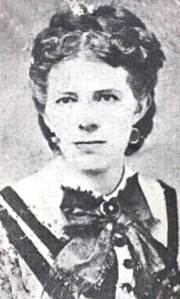
Velazquez pauses her adventure as a Confederate soldier, for the moment, and heads for Washington, D.C., for a new challenge.

OLYMPUS DIGITAL CAMERA

Throughout 2016 and 2017, Stillness of Heart will share edited excerpts from the extraordinary memoir of Loreta Janeta Velazquez, who chronicled her adventures throughout the Civil War — either as herself, as a Confederate spy, or in disguise as Confederate Lt. Harry T. Buford. She fought and led men in terrible battles, fell in love, bore and lost children, and traveled throughout the U.S. and Europe, ultimately fulfilling her childhood dream of a rich and adventurous life.

You can read the entire 1876 memoir online here. Learn more about Velazquez (and the incredible documentary film Maria Agui Carter made about her) here.

Part 13: Velazquez pauses her adventure as a Confederate soldier, for the moment, and heads for Washington, D.C., for a new challenge.

******

We may regret that the dreams of our youth do not come true, just as we once loved to hope that they would, almost without endeavor on our part; but who shall say that our own life romances, woven out of the tissues of events from day to day, with much labor, doubt, and pain, are not fairer and brighter than any imagination could create? It is good to do one’s duty quietly amid the rush of great events, even when the path of duty lies in hidden places, where the gaze of the crowd penetrates not, where applause cannot follow; and one’s own satisfaction at duty well and nobly performed, is, after all, the best recompense that can be had.

To be a second Joan of Arc was a mere girlish fancy, which my very first experiences as a soldier dissipated forever; and it did not take me long to discover that I needed no model, but that, to win success in the career I had chosen, I must be simply myself, and not a copy, even in the remotest particular, of anybody else; and that the secret of success consisted in watching the current of events, and in taking advantage of circumstances as they arose. … The experiences of actual warfare, however, soon had the effect of convincing me that a woman like myself, who had a talent for assuming disguises, and who, like me, was possessed of courage, resolution, and energy, backed up by a ready wit, a plausible address, and attractive manners, had it in her power to perform many services of the most vital importance, which it would be impossible for a man to even attempt.

The difficulty which our commander experienced in gaining accurate and thoroughly reliable information with regard to the movements of the enemy, the rumors that prevailed of the enormous preparations being made by the Federal government to crush the South, an insatiable desire to see and to hear for myself what was going on within the enemy’s lines, all stimulated me to make an attempt, the hazardous character of which I well knew; but, trusting to my woman’s wit to see me safely through, I resolved that the attempt should be made.

My plans were tolerably well matured when the Battle of Ball’s Bluff took place, and I should probably have put them in execution before I did, had it not been for the insatiate desire I had to take part in another fight. After that battle, I more than ever felt the necessity for some constant, active employment, for I chafed under the ennui of the camp, and felt irresistibly impelled to be moving about and doing something. I accordingly was not long in resolving that the time had now arrived for me to attempt something more than I had yet done, and for me to effect a coup that might either make or mar my fortunes, but that, whatever its result might be, would give me the excitement I craved, and demonstrate my abilities, and my disposition to serve the Confederacy in such a signal manner that it would be impossible for those in authority any longer to ignore me.

A woman labors under some disadvantages in an attempt to fight her own way in the world, and at the same time, from the mere fact that she is a woman, she can often do things that a man cannot. I have no hesitation in saying that I wish I had been created a man instead of a woman. This … is the matter with nearly all the women who go about complaining of the wrongs of our sex. But, being a woman, I was bent on making the best of it; and having for some time now figured successfully in the garments of the other sex, I resolved upon resuming those of my own for a season, for the accomplishment of a purpose I had in my mind. This purpose I felt sure I could accomplish as a woman; and although I had a tolerably good appreciation of the perils I should run, I had confidence in my abilities to see myself through, and the perils attending my enterprise were incentives, rather than otherwise, for me to attempt it.

Having obtained a letter of introduction to Gen. Leonidas Polk, and my transportation papers — for it was my intention, after making the trip I had immediately in view, to visit the part of the country in which his army was operating, as it was more familiar to me, and I thought that I could perform more efficient service there than in Virginia — I turned in my camp equipage to the quartermaster, and bidding farewell to my friends, started off in search of new adventures. …

Going to an old negro woman who had washed for me, and who had shown considerable fondness for me, I told her that I intended visiting the Yankees for the purpose of seeing them about coming and freeing the colored folk, and asked her to let me have a suit of woman’s clothes, so that I could get through the lines without being stopped. I made up quite a long yarn about what I proposed to do, and the poor old soul, believing all I told her without a moment’s hesitation, consented to aid me in every way she could, her ardor being materially quickened by a twenty dollar Confederate note which I handed her.

She was not long in having me attired in the best she had — a calico dress, a woolen shawl, a sun-bonnet, and a pair of shoes much too large for me — and hiding away my uniform where it would be safe during my absence, she started me off with a full expectation that I would be back in a couple of weeks, with the whole Yankee army at my back, for the purpose of liberating all the slaves. The old woman put such implicit faith in me that I really felt sorry at deceiving her, but quieted my conscience with the thought that lying was as necessary as fighting in warfare, and that the prospects were that I would be compelled to do much more fibbing than this before the errand upon which I was about starting would be achieved.

Managing to make my way to the river without attracting any particular attention, I found an old negro who had a boat, and making up a story that I fancied would answer the purpose, I struck a bargain with him to take me across to the Maryland shore for twenty-five dollars. He was eager to get the money, probably never having handled so much before in his life at any one time, but warned me that it would be a risky piece of business, for the weather was very cold, the river broad and deep, and the current strong, and there was considerable danger of my being fired at by the pickets on either bank. I told him that I was not afraid to take all the risks, and that I thought I could stand the cold. I accordingly concealed myself in his cabin until the time for commencing the crossing arrived, neither of us deeming it prudent to start before midnight. …

At length we reached the Maryland side of the river, to my infinite satisfaction, for I was numb with the cold, and stiff in all my limbs, from the cramped position in which I had been obliged to sit in the boat, and was heartily glad of an opportunity to tread dry land once more. Dismissing the boatman, and enjoining him not to say anything, I made my way to a farm-house which I espied a short distance from the place of landing, and about four o’clock in the morning, finding no better place to rest my weary limbs, I crept into a wheat-stack, and slept there until daylight. …

[Once I] penetrated the lines of the enemy, there was, I knew, little to fear. As a Confederate soldier, I was figuring in a disguise which was likely, at any time, to get me into trouble of some sort, and not the least danger I saw was that of being arrested as a spy. When I first undertook to be a soldier, this was an idea that never occurred to me; but a very short experience in actual campaigning taught me that I would have to be careful to prevent the fact that I was disguised from being found out, if for no other reason than that my loyalty to the Southern cause might not be suspected. I relied, however, upon the good fighting I had done, and the other services I had rendered, which were proofs of the genuineness of my devotion, as well as the influence of my friends to get me out of any scrape into which I might fall through the discovery that I was not a man.

Here, in the enemy’s country, however, I passed for exactly what I was, with nobody nearer than Memphis who knew me, both as a man and as a woman, and I consequently felt perfectly secure in moving about pretty much as I chose, having a plausible story on the end of my tongue to tell anybody who might question me. I concluded that, as it was most likely I would meet in Washington people who knew me as a woman … that it would be safer, and in all respects better for me to attempt no disguise, but to figure as myself, and as nobody else. …

Between my starting-point on the Maryland side and Washington, I saw a good many soldiers, from which I judged that the approaches to the Federal capital were strongly guarded, and that very efficient means were being taken to prevent anything like a surprise on the part of the Confederates. This was the most important information I succeeded in obtaining; and except that I was enabled to form some estimates of the force that was guarding the Maryland side of the Potomac it was of no special value, as it was well understood among the Confederates that the enemy were well prepared to resist an attack upon Washington, and were concentrating a large army in and about the city. …

On arriving in Washington, I went to Brown’s Hotel, and having learned that an officer of the regular Federal army, with whom I was well acquainted, and who had been a warm personal friend of my late husband, was in the city, I sent him a note, asking him to call on me. He came to see me very promptly on receiving my message, and greeting me with a good deal of cordiality, expressed a desire to aid me in any manner that lay in his power. I told him that I was just from New York, and making up a plausible story to account for my being in Washington, began to question him about the progress of the war. He evidently had not the slightest idea that I was in Washington for any other purpose than what he would have considered a perfectly legitimate one, and consequently spoke without any reserve concerning a number of matters about which he would certainly have kept silent had he suspected that I had just come from the other side of the Potomac, and that my object was to pick up items of information that would be useful to the Confederacy.


Recommended reading / viewing / listening

This week: Tragedy in Roma, Texas / Less NYC gay clubs / Letters of John Adams / Bernie Sanders and Eugene McCarthy / Google doodles

IMG_2126

This week: Tragedy in Roma, Texas / Less NYC gay clubs / Letters of John Adams / Bernie Sanders and Eugene McCarthy / Google doodles

Most of these great items come from my social media networks. Follow me on Twitter, Tumblr, LinkedIn, and Facebook for more fascinating videos, photos, articles, essays, and criticism.

1. Gay Dance Clubs on the Wane in the Age of Grindr
By Michael Musto | The New York Times | April 26
“Night life veterans point to a variety of reasons, including cultural shifts, real estate pressures and technology.”

2. Prince’s Paisley Park Home to Become a Museum
By Sebastian Modak | Conde Nast Traveler | April 26
“Sheila E., Prince’s longtime musical collaborator, revealed plans to memorialize His Royal Badness within the walls of his estate on the outskirts of Minneapolis.”

3. ‘West Wing’ Meets White House: Allison Janney Greets Reporters in Press Room
Associated Press :: The Hollywood Reporter | April 29
“She took the podium normally reserved for spokesman Josh Earnest and told reporters she hoped to bring attention to the nation’s opioid epidemic.”

4. Roma, Texas: A Smuggler’s Paradise
By Jay Root | The Texas Tribune | April 21
“Multiple inflatable rafts on the water. Emotionally shaken kids in the back of Border Patrol vans. Dope worth a quarter-million dollars on the street, dumped on the river’s edge. Roadside apprehensions. People running, swimming and shouting obscenities in and alongside a river shared by two countries.”

5. Meet the man behind Google’s doodles
By Elizabeth Garone | BBC Capital | April 26
“His job and others like it says a lot about why art matters more than ever to the binary world of technology”

6. Against American exceptionalism: Gordon S. Wood on John Adams
Library of America | April 19
“Library of America sat down with editor Gordon Wood, Alva O. Way Professor of History Emeritus at Brown University and the Pulitzer Prize?winning author of The Radicalism of the American Revolution, to discuss Adams’s complicated legacy, and the enduring appeal of his writings.”

7. The Hitchhiker’s Guide to the Islamic State
By Marwan Hisham | Dispatch :: Foreign Policy | April 20
“An accidental tour into the heart of the caliphate’s oil smuggling economy.”

8. NASA has mapped every eclipse that will occur for the next 1,000 years
By Brian Resnick | Vox | April 29
“They even know the exact time, down to the fraction of a second, that the eclipses will occur.”

9. What Bernie Sanders Should Learn From Eugene McCarthy
By Julian E. Zelizer | Politico Magazine | April 21
“In 1968, the Democratic insurgent refused to support the establishment nominee — and it was disastrous”

10. A Style-Setting J.F.K. Appears With a 2014 Congressional Candidate
By Michael Beschloss | HistorySource :: The New York Times | July 2014
“Recoiling from a famous photograph of President Calvin Coolidge in a Sioux headdress, which he considered comical, Kennedy almost always refused to wear unusual hats in public — including on the last morning of his life, when hosts at a Fort Worth breakfast pressed him, without success, to don a Stetson.”

CV of Fernando Ortiz Jr.

So far, so good … but there’s so much more to do.

IMG_2893

So far, so good … but there’s so much more to do.

Kate Stone’s Civil War: The entire special series

Read Kate Stone’s amazing stories as she defiantly faces Union soldiers, escapes across a Louisiana swamp, falls in love with Texas, and watches the Civil War rip her country and her family apart.

1862

From May 2012 to November 2015, a special series from Stillness of Heart shared excerpts from the extraordinary diary of Kate Stone, who chronicled her Louisiana family’s turbulent experiences throughout the Civil War era.

She defiantly faced Union soldiers, escaped across a Louisiana swamp, fell in love with Texas, and watched the Civil War rip her country and her family apart.

The entire series of excerpts is collected here.

Learn more about Stone’s amazing life in 1861, 1862, 1863, 1864, 1865 and beyond. Click on each year to read more about her experiences. You can read the entire journal online here.

(Photo edited by Bob Rowen)

From 1861
May 15: Death in defense of the South
June 5: The stir and mob of angry life
June 18: Whipped unmercifully
July 1: They thought me so ugly
July 4: The blood of her children
July 26: Gallantly fought and won
Aug 24: The fevers
Sept. 27: The war inches closer
Oct. 19: Gladden our hearts
Nov. 27: The noble, gentle heart
Dec. 22: Rainy days

From 1862
Jan. 6: Sad Christmas
Jan. 8: Happy birthday
Jan. 16: They close in and kill
Feb. 1: The little creature
Feb. 20: Victory will be ours
March 1: A perfect love of a lieutenant
May 9: Burn our cities
May 22: Fashion is an obsolete word
May 23: The sleep that knows no waking
June 6: Trembling hearts
June 20-30: Capable of any horror
July 5: The fire of battle
Aug. 5: Beyond my strength
Sept. 23: Tragedy after tragedy
Oct. 1: His sins against the South
Nov. 7: A lady’s favors
Dec. 3: She was heartbroken

From 1863
Jan. 1: Preparing to run
March 2: Hoodoo woman
March 11: It made us tremble
March 22: The pistol pointed at my head
April 10: Tears on my cheek
April 15: A horrid flight
April 21: The greatest villian
April 26: Flaming cheeks and flashing eyes
April 27: The glory of the family
May 2: His father’s sins
May 3: Baffled beasts of prey
May 22: Useless to resist
May 23: Southern hearts
June 3: Like mad demons
June 15: On the road for Texas
July 7: The dark corner
July 12: The dirtiest people
July 16: Scowling, revengeful faces
July 26: Despondent and chicken-hearted
July 29: Makes us tremble for Texas
Aug. 3: Lose our scalps
Aug. 10: Conquer or die
Aug. 16: My pen is powerless
Aug. 30: They call us all renegades
Sept. 1: It makes us shiver
Sept. 14: Years of grinding toil
Sept. 20: Destroyed by the Yankees
Oct. 2: Two distressed damsels
Oct. 8: This is too disgraceful
Oct. 29: The heart of a boy
Nov. 1: Credulous mortals
Nov. 7: A fear of bad news
Nov. 13: Pride must have a fall
Nov. 15: So little to eat
Dec. 10: Nobly and fearlessly
Dec. 12: Alone in a strange land
Dec. 19: A charming little woman
Dec. 24: A sad 1863 ends

From 1864
Jan. 4: A noted flirt
Jan. 7: Trouble and distress
Jan. 13: The first desideratum
March 8: The mournful whistle
March 20: The petted darling
April 15: A besom of destruction
May 5: The easy conquest of Texas
May 7: To every young lady
May 18: To kill and destroy
May 25: Our best fancy yellow organdies
May 29: That land of desolation
June 1: The breath of flowers
June 14: Strangers in a strange land
June 19: Those terrible battles
June 26: Callous to suffering and death
Aug. 23: We enjoy our ease
Sept. 2: Lazy and languid
Sept. 5: One grand holocaust
Sept. 10: Too disgraceful if true
Sept. 27: The flower-wreathed scepter
Oct. 15: Fairy castles in the air

From 1865
Jan. 29: Kindly bestow them
Feb. 1: Our soldiers were powerless
Feb. 12: One of life’s greatest trials
Feb. 13: Peace blessed peace
Feb. 15: My escorts were disgusted
Feb. 21: Our only hope for peace
March 3: The most enjoyable life
March 9: Full of life and fun
March 24: Eager for a fight
March 30: Its spring decoration
April 1: Out of time
April 7: A blow on my heart
April 16: He would do anything
April 23: God spare us
May 7: Lounged and gossiped
May 9: We fear it cannot last
May 15: We will be slaves
May 17: Restless and wretched
May 20: A fever of apprehension
May 21: A piece of amusement
May 27: Only sadness and tears
May 31: The grand crash
June 12: Words are powerless
June 25: Civilization commences again
July 2: He deserves killing
July 13: It is unavoidable
July 18: A man-flirt is detestable
Aug. 14: No disorder
Aug. 26: Astonish the natives
Sept. 3: Our pleasant Tyler life
Sept. 11: The very poorest people
Sept. 21: A state of insubordination
Oct. 10: The bitterness of defeat
Nov. 16: At home again
Nov. 17: How many idle hours

Epilogue, from 1867 and 1868
I was young again

Kate Stone’s Civil War: I was young again

Stone’s last three entries in her diary are from September 1867 and 1868. They form a somber epilogue to her chaotic journey. They capture a bitter reflection of a shattered Southern slaveholding society, adrift, confused, and afraid of a world in which they no longer rule.

KS10

From 2012 to 2015, Stillness of Heart will share interesting excerpts from the extraordinary diary of Kate Stone, who chronicled her Louisiana family’s turbulent experiences throughout the Civil War era.

Learn more about Stone’s amazing life in 1861, 1862, 1863, 1864, 1865 and beyond. Click on each year to read more about her experiences. You can read the entire journal online here.

(Photo edited by Bob Rowen)

Stone’s last three entries in her diary are from September 1867 and 1868. They form a somber epilogue to her chaotic Civil War journey. They capture a bitter reflection of a shattered Southern slaveholding society, adrift, confused, and afraid of a world in which they no longer rule.

Read her first entry in this series here.

Sept. 22, 1867

Brokenburn

A long silence and a year of hard endeavor to raise a crop, reconstruct the place with the problem of hired labor, high water, and cotton worms. Mamma had little trouble in getting advances in New Orleans to plant. Cotton is so high that merchants are anxious to advance to put in a crop, and there is much Northern capital seeking investment in that field. … The Negroes demanded high wages, from $20 to $25 for men, in addition to the old rations of sugar, rice, tobacco, molasses, and sometimes hams. Many of the old hands left, and My Brother went to New Orleans and brought back a number of ex-Negro soldiers, who strutted around in their uniforms and were hard to control. I was deadly afraid of them.

During the spring while Mamma and I were in New Orleans (Mamma on business and she took me for my pleasure), and Uncle Bo and My Brother and Jimmy were away for a few hours, Johnny had a fight with a young Negro in the field, shot and came near killing him, and was mobbed in return. Johnny would have been killed but for the stand one of the Negroes made for him and Uncle Bo’s opportune arrival just as the Negroes brought him to the house a howling, cursing mob with the women shrieking, “Kill him!” and all brandishing pistols and guns. It came near breaking up the planting, and it is a pity it did not as it turned out. Johnny had to be sent away. He was at school near Clinton [Miss.] and the Negroes quieted down and after some weeks the wounded boy recovered, greatly to Johnny’s relief. He never speaks now of killing people as he formerly had a habit of doing. He came home when school closed and there was no further trouble.

Then the water came up and we were nearly overflowed. The cotton planted was very late, and when it was looking as luxuriant and promising as possible and we saw ease of mind before us, the worms came. In a few days the fields were blackened like fire had swept over them. We made about twenty bales and spent $25,000 doing it. What most distresses me is that none of that money went for our personal comfort. All of it went to the Negroes. Mamma would buy only bare necessaries for the table and plainest clothes for the family. Not a luxury, no furniture, carpets, or anything. We are worse off for those things than even in Texas and such a sum spent! But Mamma said it was not honest to spend the money on anything but making the crop. All in this section have suffered in the same way, and for awhile they seemed stunned by their misfortunes. But now the reaction has come, and all are taking what pleasure offers.

Old neighbors and new ones have come in and all seemed to be anxious to be together and talk over their trials and tribulations. There has been much visiting and various picnics and fish frys. I would not go at first. I felt like I did not want to see anybody or ever dance again. I felt fully forty years old, but Mamma made me go after a good cry. Once there, I was compelled to exert myself, and soon I was enjoying it all. The burden of some of the years slipped from my shoulders, and I was young again. It was pleasant to talk nonsense, to be flattered though one knew it was flattery, and to be complimented and fussed over. So since then, Mamma, the boys, and all of us have been going to everything and have found even poverty in company more bearable than when suffered alone. …

September 1868

Rose Hill

In January My Brother rented this place knowing that Brokenburn would be again overflowed, and we moved out the latter part of the month. My Brother lost money again last year planting, and this year he determined to farm, planting a little of everything.

Johnny and Jimmy are both at home, and having nothing to do pulled off their coats and rolled up their sleeves and went to work to raise a crop of corn and potatoes for themselves. They have succeeded well as they will clear several hundred dollars.

We all regret so much Jimmy’s refusal to go buck to the hospital. … We fear he is throwing away the best chance of his life. The boys are so hot and tired when they come in from the fields. …

Sept. 28, 1868

Rose Hill

Mother has been in Vicksburg for a month on a visit to Aunt Sarah. It is her first outing for eighteen months. We hope it will benefit her — her health has been bad for more than a year. She is seldom out of bed more than a week at a time. It took great persuasion and the pointed urging of the whole family to induce her to go on this visit that Aunt Sarah has been begging her to take for months.

Jimmy is now on the wharf boat, Johnny at Omega, and Sister, My Brother, and I have it all our own way with but little to do. My Brother is making an excellent crop and is much more cheerful. …

How we wish Sister could be sent off to school for two years, but it has been impossible. No money. … Let us hope that now the current will change and success will be our portion, as the outlook is brighter than for three years.

This is a pleasant neighborhood … and everybody has been kind and polite about calling and coming in at all times. [The other day we] had another of those inevitable dances that have been given so often this summer. Mary and Katie Byrnes, Louise Meagher, and the other girls never seem to tire of them, but they wear me out — such a sameness. I doubt not that I am getting too old for such gaieties. The men and boys about here are so silly and boyish in conversation. …

It has been an enjoyable life since we came here in January. It is a pleasant enough cottage house, after we got it thoroughly cleaned. There is a lovely little flower yard and a splendid orchard, and the kindest and most sociable neighbors with various little entertainments and dances. …We have new books and papers ad libitum, a luxury we missed for years.

My Brother has just sent Mamma money to buy our winter clothes, and Sister and I are jubilant at the prospect of new dresses and bonnets. We have lived on very little of late years, little bought that was not absolutely necessary. They have dressed me better than any of the others. I have not wanted for anything indispensable for a young lady, but the only money I have spent really as I wished was five dollars of the ten Uncle Bob gave me when Mamma and I went to New Orleans three winters ago. …

What splendid fellows my brothers are. They are all so good to us and such handsome boys. Sister looks almost the same, scarcely older than three years ago. We hope she can go to school this fall and make her debut next fall. If not, I shall beg Mamma to put long dresses … on her and bring her out this winter. She has a gay cheerful nature, and I hope will have a happy girlhood.

Mamma’s bright hopeful spirit never change. She is us always the ruling power with us all, the center and light of our home. How much she will have to tell us on her return, and maybe Aunt Sarah will come with her.

Well, this is the last page of the book that has gone with me through all our journeying. Looking back to the beginning so many years ago, I realize what an unthankful, wicked girl I was not to be supremely happy. With youth, health, and everything surrounding me for comfort and happiness. with unmistakable blessings, I was yet an unsatisfied, discontented girl. It has taken trouble to teach me my faults, and how earnestly I try now to enjoy instead of repine, to be thankful instead of fault-finding. I will try always to see the silver lining to the cloud. All my life I have been surrounded with love and care, far more than I deserved, and I will try in the future to be more worthy of the blessings that brighten my pathway.

So this is the end — shall I ever care to write again?

FINIS

Kate Stone’s Civil War: The bitterness of defeat

Stone is reunited with her brothers, who were sent ahead to evaluate the condition of the Brokenburn plantation. They bring back disastrous news.

KS46

From 2012 to 2015, Stillness of Heart will share interesting excerpts from the extraordinary diary of Kate Stone, who chronicled her Louisiana family’s turbulent experiences throughout the Civil War era.

Learn more about Stone’s amazing life in 1861, 1862, 1863, 1864, 1865 and beyond. Click on each year to read more about her experiences. You can read the entire journal online here.

(Photo edited by Bob Rowen)

Stone is reunited with her brothers, who were sent ahead to evaluate the condition of the Brokenburn plantation. They bring back disastrous news.

Oct. 10, 1865

Lamar County, Texas

Jimmy and My Brother joined us about ten days ago, and we have never passed ten more unhappy days. Our future is appalling: no money, no credit, heavily in debt, and an overflowed place. No wonder Mamma is so discouraged. Since My Brother’s return, we have all had the blues and look forward with dread to our return to Louisiana. But there is nothing else to do. Nothing for us here. Mamma, Sister, and I, with Johnny or Jimmy, will get off early next week, going straight on, while My Brother will bring the Negroes back. The contrabands are all crazy to return to Louisiana, as soon as they realized that My Brother did not wish to take them, and are on their best behavior. What a treacherous race they are! I doubt whether one will remain with us a week after we return.

The name “Vexation” we have given this place is most appropriate. It has been a most trying job settling up the business, and My Brother and Mr. Smith say everyone they have had dealings with has not only tried but succeeded in cheating them. We are in all the stir and disagreeable confusion of moving, yet preparations to get off advance but slowly, though all four of the menfolks are doing their best to expedite our departure. We have to send such a distance for everything we need.

It seems an ill-advised move to take the Negroes back unless they could be bound by some contract to remain on the place, and that is impossible. It is so expensive and troublesome to move about eighty or ninety Negroes such a distance. …

Jimmy goes to Tyler this week and will join us somewhere on the road. We will camp out just as we did when we came to Texas but will have a more comfortable vehicle and a more careful driver. …

Mamma and Mrs. Smith are away today visiting the dentist at Ladonia, the boys are off on business, and so Sister and I have the house to ourselves. It is delightful to be alone sometimes, a pleasure we have rarely enjoyed since we left Brokenburn. We have lived in crowded quarters all the time. I shall be glad to get to the solitude of my own room at Brokenburn, even if it will be but sparsely furnished. My Brother says all our furniture has been divided out among the Negroes and Yankees.

How exceedingly quiet he is. Rarely talks at all. He was never very fluent and being in the army has intensified his silence and reserve, and he seems to take little interest in hearing others. We hope home life will brighten him up and make him more cheerful. He feels the bitterness of defeat more than anyone we have met. He cannot reconcile himself to give up everything but honor. …

Our trip will probably take a month. The weather is lovely, and we hope to get home over good roads and to arrive before the fall rains set in. A sad journey to the old scenes.

Kate Stone’s Civil War: A state of insubordination

Stone has little sympathy or respect for former slaves, who she sees as “insolent” and insubordinate.

KS50

From 2012 to 2015, Stillness of Heart will share interesting excerpts from the extraordinary diary of Kate Stone, who chronicled her Louisiana family’s turbulent experiences throughout the Civil War era.

Learn more about Stone’s amazing life in 1861, 1862, 1863, 1864, 1865 and beyond. Click on each year to read more about her experiences. You can read the entire journal online here.

(Photo edited by Bob Rowen)

Stone has little sympathy or respect for former slaves, who she sees as “insolent” and insubordinate.

Sept. 21, 1865

Lamar County, Texas

We reached this haven a week ago. Shall we ever forget that forty-mile jolt in a four-mule wagon, the mules at full trot? We made it in a clay over a broken, sorry prairie with nothing to eat but dried peaches, uncooked, soggy biscuits, and warm, salty-tasting well water. We were bruised black and blue and were too tired to sleep or eat the first night. We did not find out until nearly night that the wagon floor was much easier than the chairs we were perched in, and we all crouched down in the straw, too worn out to hold up our heads.

The people who had sheltered us utterly refused all pay and were hurt at the idea — and they with absolutely nothing. Truly it is not the rich who are the most generous! Mamma will send them lots of things when she sends for the carriage.

We found nearly all the Negroes in a state of insubordination, insolent and refusing to work. Mamma had a good deal of trouble with them for a few days. Now they have quieted down and most of those who left have returned, and they are doing as well as “freedmen” ever will, I suppose. We were really afraid to stay on the place for the first two days. We are looking for the boys up from Tyler and for Jimmy and My Brother next week. Then, Ho, for Louisiana!

We have all the butter, milk, and curd that Mamma promised us with wild plums, maypops, and apples in abundance, and Mrs. Smith is a good housekeeper. But it is undeniably a dull spot. …

Johnny has taken Mr. Smith’s place as overseer. The Negroes mind him better.

Kate Stone’s Civil War: The very poorest people

A reluctant Stone leaves Tyler to return to Louisiana, but one minor disaster after another make it a bitter journey.

OLYMPUS DIGITAL CAMERA

From 2012 to 2015, Stillness of Heart will share interesting excerpts from the extraordinary diary of Kate Stone, who chronicled her Louisiana family’s turbulent experiences throughout the Civil War era.

Learn more about Stone’s amazing life in 1861, 1862, 1863, 1864, 1865 and beyond. Click on each year to read more about her experiences. You can read the entire journal online here.

(Photo edited by Bob Rowen)

A reluctant Stone leaves Tyler to return to Louisiana, but one minor disaster after another make it a bitter journey.


Sept. 11, 1865

Hopkins County, Texas

Here we are … wearing away the time as best we may for two days and nights in a real prairie hut awaiting relief from our place, thirty miles away. The carriage stands in the yard with a crushed wheel, and we are mired up in all sorts of dirt and discomfort in the middle of the wildest prairie with not a tree or a house in sight. We broke down two miles from here journeying on our way to Lamar County with nothing in sight but the broad sweep of the prairie and one lonely tree. We made our way to that. No gentleman with us, no money, no possible way of getting on, and in a great hurry. We were in despair. Richard mounted a mule and scoured the country to find a carriage, wagon, or wheel to take us on, while we with parasols, books, and cushions, betook ourselves to the grateful shade of the tree to await his return. I was fast asleep in the tall grass, and Mamma and Sister were dozing when Richard got back. He could not find any conveyance, but a lady two miles away would give us shelter. So there we were in for a two-mile walk under the burning sun and over the shadowiest prairie with a wind blowing hot as a sirocco of the desert. The prospect was appalling, and I foolishly burst into tears. Mamma scolded. I remonstrated. But soon we cooled down in temper., if not in person, and commenced our weary jaunt to shelter.

It is the roughest two-room affair with six or eight people living in it, and with nothing to eat this last day but bread and milk and butter. They killed their last chicken for us yesterday, an old, old hen, but the people are as kind as they can be, and as hospitable. They give us of their best and are really sorry for us. There are two women and a girl and not a scrap of ribbon or lace or any kind of adornment in the house. I never saw a woman before without a ribbon. They have not even a comb. They are the very poorest people I ever saw.

We — that is Mamma, Sister, Johnny, and I — broke up our establishment and started on short notice from Tyler on last Friday, and our entire trip has been a chapter of accidents since. A wheel crushed four miles from town, and after spending most of the day in the woods we returned very reluctantly to Tyler, We had gone the rounds the evening before making farewell calls and hated to return after so many solemn leavetakings, but go back we must.

The room is filling with the family so must close my book.

The bugs are awful, and so we three slept last night on the carriage cushions and a bolt of domestic out on the front gallery, much against the wishes of our hosts who seemed to think it inhospitable to allow it. But it is impossible to sleep in the rooms with four or five untidy folks, being bled from every pore by the voracious bugs. The natives do not even toss in their sleep from them. They do not know the bugs are there.

A glorious full moon, light enough to read by, and a pleasant breeze. We quite enjoyed our outdoor bunk, especially as we had not slept for two nights. Oh, the happy summer days of our life in Tyler. … And all this discomfort would have been spared us if My Brother had only come out when Joe did and made this trip to the farm in Mamma’s place. Poor Mamma, what a weight of responsibility and trouble she has had on her hands. …

Mollie Moore gave me a pretty copy of The Lady of the Lake as a souvenir of our happy friendship. Shall I ever see her cheerful face again? …


Kate Stone’s Civil War: Our pleasant Tyler life

Stone faces the moment she has waited so long for: the return to Brokenburn. And yet, she realizes her time in Texas may be among the best years of her life.

7218-8

From 2012 to 2015, Stillness of Heart will share interesting excerpts from the extraordinary diary of Kate Stone, who chronicled her Louisiana family’s turbulent experiences throughout the Civil War era.

Learn more about Stone’s amazing life in 1861, 1862, 1863, 1864, 1865 and beyond. Click on each year to read more about her experiences. You can read the entire journal online here.

(Photo edited by Bob Rowen)

Stone faces the moment she has waited so long for: the return to Brokenburn. And yet, she realizes her time in Texas may be among the best years of her life.

Sept. 3, 1865

Tyler, Texas

Just rested after our long, warm walk to church. Mollie and I appeared in all the glories of new caps and bodices, and pretty they are. We think the caps would please the most exacting milliner and Olympia would be charmed with my velvet waist. Mamma and I have worked untiringly to finish them in time, and our labors were only completed at nine last night. We never worked harder in our lives, but the combination of white silk, velvet, and embroidery meets with unqualified approval. Mamma fashioned our caps after we made the braids, and I embroidered both waists, mine in bunches of blue flowers and Mollie’s in pale pink roses. They are beauties.

September is here but My Brother still tarries. Mamma is so impatient to be off that she will not wait many more days on him. She wishes to start everything to the prairie next Thursday, and so our pleasant Tyler life will be broken up forever and a day. I fear we will look back to this last year of our life in Texas with regret. The happiest year of my life. …

Kate Stone’s Civil War: Astonish the natives

Stone demonstrates how she can love the region but still look down on its residents.

KS7

From 2012 to 2015, Stillness of Heart will share interesting excerpts from the extraordinary diary of Kate Stone, who chronicled her Louisiana family’s turbulent experiences throughout the Civil War era.

Learn more about Stone’s amazing life in 1861, 1862, 1863, 1864, 1865 and beyond. Click on each year to read more about her experiences. You can read the entire journal online here.

(Photo edited by Bob Rowen)

Stone demonstrates how she can love the region but still look down on its residents.

Aug. 26, 1865

Tyler, Texas

None of us can muster the energy to go to hear Mr. Seaton’s dry-as-dust discourse this burning August day, and so we will wear the day away at home. We are looking for My Brother daily. Johnny is out at the Bachelor Ranch. … But tomorrow Johnny and the boys return, bringing all noise and nonsense in their train.

Mr. Pierson returned bringing quite a number of new books to us and Mollie Moore, but to our disgust most of them are by Yankee authors and are unreadable trash. … He brought a long letter to Mamma from Lt. Dupre, who says he is the happiest of happy men to be again with his family. …

Mollie Moore, Sally Grissman, and I are busy making ourselves palmetto caps and black bodices. The caps will soon be done and the bodices next week, and we expect to astonish the natives with our brave attire next Sunday. Mrs. Tooke is to give a small party on September 5, and we are all as much excited over it as though it were the grand hall of a season. Mrs. Tooke has spent several days with us lately and notes come every two or three days. We all like her very much. We are particular of the party and invite whom we please. …

Thinking As Leverage

Developing deep and critical thinking.

Behind The Wall

Tabletop Games

Rebecca Aguilar

#CallingAllJournalists Initiative | Reporter | Media Watchdog | Mentor | Latinas in Journalism

Anna Fonte's Paper Planes

Words, images & collages tossed from a window.

Postcards from Barton Springs

Gayle Brennan Spencer - sending random thoughts to and from South Austin

The Flask Half Full

Irreverent travelogues, good drinks, and the cultural stories they tell.

Government Book Talk

Talking about some of the best publications from the Federal Government, past and present.

Cadillac Society

Cadillac News, Forums, Rumors, Reviews

Ob360media

Real News That Matters

Mealtime Joy

bringing joy to family meals

Øl, Mad og Folk

Bloggen Øl, Mad og Folk

a joyous kitchen

fun, delicious food for everyone

A Perfect Feast

Modern Comfort Food

donnablackwrites

Art is a gift we give ourselves

Fridgelore

low waste living drawn from food lore through the ages

BeckiesKitchen.com

MUSINGS : CRITICISM : HISTORY : NEWS