This week: George Michael dies / 2016’s best science stories / Texas and Planned Parenthood / What men should know by 22 / Plantations and public history
This week: George Michael dies / 2016’s best science stories / Texas and Planned Parenthood / What men should know by 22 / Plantations and public history
Most of these great items come from my social media networks. Follow me on Twitter, Instagram, Tumblr, LinkedIn, and Facebook for more fascinating videos, photos, articles, essays, and criticism.
1.Ex-Wham singer George Michael dies BBC News | Dec. 25
“The star … is said to have ‘passed away peacefully at home.’ … Police say there were no suspicious circumstances.”
2.Ordered Deported, Berlin Suspect Slipped Through Germany’s Fingers By Alison Smale, Carlotta Gall, and Gaia Pianigiani | The New York Times | Dec. 22
“Amri’s life and odyssey underscore a vexing problem, common in Europe: how to handle hundreds of thousands of virtually stateless wanderers who are either unwilling or unable to return home.”
4.The Most Popular Science Stories of 2016 By Andrea Gawrylewski | Scientific American | Dec. 19
“The presidential election took center stage, but our readers were also fascinated by everything from particle physics and rage disorder to autism in girls and the polar vortex”
5.The Best TV Performances of 2016 By Tim Goodman and Daniel Fienberg | The Hollywood Reporter | Dec. 20
Sadness, fear, strength, vulnerability — 2016 had an incredible array of acting achievements.
7.22 Things Men Should Know By Age 22 By Todd Brison | Medium | Dec. 15
“Most of the people in your life now will not be there in 5 years. Tell them how much they matter to you today.”
8.The Plantation Tour Disaster: Teaching Slavery, Memory, and Public History By Niels Eichhorn | Muster :: Journal of the Civil War Era | Dec. 5
“Regardless whether a plantation does or does not cover slavery, they provide an interesting mechanism to teach about the institutions of the Old South, collective memory, and public history.”
9.Mexico: The Cauldron of Modernism By J. Hoberman | NYR Daily :: The New York Review of Books | Dec. 12
“To a degree, ‘Paint the Revolution’ is the story of the three star muralists, Diego Rivera, David Siqueiros, and José Clemente Orozco, who along with the posthumously canonized Frida Kahlo, defined the new Mexican art.”
10.From White Knight to Thief By Michael Beschloss | HistorySource :: The New York Times | September 2014
“At the start of the terrifying market plunge of October 1929, he had bravely helped shore up the market by parading around the exchange floor, placing bids for shares of U.S. Steel, as well as other blue-chip holdings.”
This week … a brief look at some of the best works on World War I and World War II, science, culture, and literature.
Summer is upon us, and the season of leisure is the perfect time for new stories, characters, ideas, and adventures. Stillness of Heart concludes its occasional series of critical recommendations, from Civil War battle histories to memoirs, and from intellectual histories to photobooks almost as beautiful as the natural world they celebrate.
Read Part 1 of this 2016 series here and subsequent essays in this series here.
Finally … a brief look at some of the best works on World War I and World War II, science, culture, and literature.
David M. Lubin’s Grand Illusions: American Art and the First World War (Oxford University Press, 304 pp., $31.96) challenges us to appreciate how the trauma of war on individuals and on society as a whole has a powerful effect on how that society and its most creative minds express themselves through artwork. Political statement, illustration of shattered psyches, celebrations of victory and glory, reflections of societies that will never be the same again — the wartime and postwar motivations for beautiful and horrifying works analyzed in Lubin’s book were as varied and complex as the artists themselves. This valuable book reviews the work of famous artists and introduces us to previously unknown artists we must know about to fully understand the full spectrum of artwork from the Great War era.
Benjamin E. Jones’s Eisenhower’s Guerillas: The Jedburghs, theMaquis, and the Liberation of France (Oxford University Press, 336 pp., $23.96) reminds us that as the D-Day invaders floated off-shore and the paratroopers floated down from the sky, an Allied insurgency distracted, disrupted, or destroyed German operations in the hours and days before the invasion. This stunning book collects the stories of the daring teams that accepted incredible risks and executed impossible missions in the struggle to free France from Nazi domination.
Theresa Kaminski’s Angels of the Underground: The American Women who Resisted the Japanese in the Philippines in World War II (Oxford University Press, 512 pp., $27.95) offers a story of patriotism and bravery in the midst of brutal conquest. Four women contributed in different and priceless ways to the resistance efforts, the return of the American forces, and the final defeat of the Japanese invaders. Kaminski places their efforts in the larger historical context of the military operations, Japanese treatment of American prisoners, and the place of the Philippines in the overall calculus of Pacific strategy.
J. Samuel Walker’s Prompt and Utter Destruction: Truman and the Use of Atomic Bombs against Japan (University of North Carolina Press, 168 pp., $25), reissued this fall in a third edition, analyzes the contemporary debates over the use of the weapon, evaluates the intelligence available to the Truman administration officials at the time the decision had to be made, and includes fresh information from recently opened Japanese archives. The work masterfully illustrates the incredibly complicated considerations made by the Americans and the Japanese as the world — and warfare itself — stepped into a new era.
Miri Shefer-Mossensohn’s Science among the Ottomans: The Cultural Creation and Exchange of Knowledge (University of Texas Press, 262 pp., $55) pushes back against classic Western assumptions that the Ottoman Empire lost its cultural ambitions and interest in technological advancements — two key aspects of an intellectually vibrant entity — throughout the late nineteenth century and early twentieth century, thereby dooming itself to (and justifying) European domination after World War I. Far from it, she argues, for the Ottomans retained their intellectual passion for new solutions to old problems, particularly in the field of communications, when, as early as the 1870s, they were one of the world’s leaders in telegraph technology. For centuries, the Ottoman Empire deliberately and nobly strove to create and maintain a rich creative and artistic culture, championing new inventions, embracing and improving innovations from other regions, and building on the mountainous achievements inherited from Greeks, Romans, Byzantines, Safavids, and other great civilizations. This work refocuses academic attention on those accomplishments and challenges Western scholars and students to grant Ottoman civilization the credit and respect it richly deserves.
Apollo Pilot: The Memoir of Astronaut Donn Eisele, edited by Francis French (University of Nebraska Press, 192 pp., $24.95), promises to be an incredible story from an incredible individual. Eisele was selected for the Apollo 1 mission, the first in a series of manned missions to the moon. A training injury suddenly grounded him, and then news came that a fire killed the Apollo 1 crew, including his replacement. The disaster paralyzed NASA’s lunar program, and it was up to the next Apollo crew, including Eisele, to face down dual challenges: restart the Apollo mission program and also recover Americans’ faith in the grand endeavor. Apollo 7 did both. Eisele’s memoir of scientific triumph and personal tragedy brings a new dimension to the literature of space flight and of the heroes that won the space race.
Allan Metcalf’s From Skedaddle to Selfie: Words of the Generations (Oxford University Press, 232 pp., $19.95) promises to be a smart and light-hearted stroll through the history of American vernacular and the societies, cultural fads, fashions, and events that inspired or were defined by them. Metcalf’s work is a vital reminder that the stories behind common and colorful language, ranging from the Revolutionary era to today, are complicated but crucial elements of our nation’s history and cannot be underestimated.
Reading Debra Hamel’s Reading Herodotus: A Guided Tour through the Wild Boars, Dancing Suitors, and Crazy Tyrants of The History (Johns Hopkins University Press, 360 pp., $29.95) is like sitting on a beach near Bodrum, formerly Halicarnassus, with Hamel next to you, the classic book open on your lap, as she illuminates every incredible and sexy story — just the way Herodotus hoped we would enjoy his work.
James A. Michener’s Legacy (Penguin Random House, 144 pp., $16) re-appears on the literary stage with a new paperback edition. The 1987 novel centers on Norman Starr, loosely modeled on Iran-Contra figure Oliver North, as he prepares to answer for his actions before a congressional committee. He looks for moral strength in his ancestry, and the novel unspools an incredible cast of characters ranging across American history, each having played a part in forming the democratic republic Starr’s actions may have threatened.
This week … a brief look at some of the best works on slavery and the U.S. Civil War era
Summer is upon us, and the season of leisure is the perfect time for new stories, characters, ideas, and adventures. Throughout the next few weeks, Stillness of Heart continues its occasional series of critical recommendations, from Civil War battle histories to memoirs, and from intellectual histories to photobooks almost as beautiful as the natural world they celebrate.
Read Part 1 of this 2016 series here and subsequent essays in this series here.
This week … a brief look at some of the best works on slavery and the U.S. Civil War era
Emily West’s Enslaved Women in America: From Colonial Times to Emancipation (Rowman & Littlefield, 168 pp., $35) offers a stunning symphony of long-lost voices struggling to survive, caring for and protecting their children, and fighting to keep their communities intact. Few if any other scholars have studied slave women as deeply and broadly as West, and hopefully her work will become required reading in history and women’s studies courses throughout a nation and society that still owes them so much.
Patrick H. Breen’s The Land Shall Be Deluged in Blood: A New History of the Nat Turner Revolt (Oxford University Press, 304 pp., $23.96) recounts the fascinating story of the 1831 slave rebellion in Southhampton County, Virginia. He then analyzes whites’ reaction to the rebellion, which in some ways is even more complicated and unexpected. As mobs exacted brutal vengeance on the slave populations — guilty or not — slaveowners found themselves protecting their slaves from their own white neighbors. Breen examines the manufactured narratives the slaveholders provided to the lynch mobs and deepens our understanding of the precarious stability of the antebellum slaveholding societies.
Mark K. Christ’s Civil War Arkansas, 1863: The Battle for a State (University of Oklahoma Press, 336 pp., $19.95) offers a fascinating analysis of the campaigns for control of the strategically valuable Arkansas River Valley, which were (and still are) overshadowed by U.S. Grant’s brilliant Vicksburg operations unfolding at the same time. His work challenges scholars, students, and enthusiasts to look beyond traditional war histories and theaters and envision a far more complicated war and wartime era.
For a personal account of how the Civil War ripped apart Arkansas communities, spend some time with Torn by War: The Civil War Journal of Mary Adelia Byers, edited by Samuel R. Phillips (University of Oklahoma Press, 248 pp., $19.95). Union military forces occupied her hometown of Batesville. She witnessed unprecedented suffering. The war overturned her understanding of her place in her state and in her nation. Byers takes her place alongside Southern diarists like Mary Chesnut and Kate Stone as an important witness to the wrenching changes the war brought to the South.
Another fascinating primary source is Vicki Adams Tongate’s Another Year Finds Me in Texas: The Civil War Diary of Lucy Pier Stevens (University of Texas Press, 367 pp., $29.95). Stevens, from Ohio, found herself trapped in Texas when the war broke out. Fortunately, she channeled her concerns, observations, sense of humor, and wide-ranging interests into a diary, which is an incredible encapsulation of wartime Texas from an outsider’s perspective. It’s a Unionist memoir with an extra twist, touching on gender identities, social changes, and even political loyalties, specifically when, like Stone, Stevens grew fond of Texans.
Lone Star Unionism, Dissent, and Resistance: Other Sides of Civil War Tejas, edited by Jesus F. de la Teja (University of Oklahoma Press, 296 pp., $29.95), brings the necessary complexity to the story of Texas in the Civil War, shattering the assumption that the Confederate state was filled with Confederate loyalists. The essay anthology explores how Unionist Texans, slaves, German immigrants, Tejanos, women, and political leaders waged their own wars of independence or resistance throughout its societies and communities during and after the war.
John W. Robinson’s Los Angeles in Civil War Days, 1860-1865 (University of Oklahoma Press, 204 pp., $19.95) paints a portrait of a place starkly different from what we know today. The small California town stood in the long shadow of San Francisco, and war brought economic and social strife to the area. Robinson explores how it became a microcosm of the struggle between pro-Union and pro-secessionist forces, a battleground between different races and cultures fighting for dominance, and the site of sickness, drought, and riots.
Stephen D. Engle’s Gathering to Save a Nation: Lincoln and the Union’s War Governors (University of North Carolina Press, 624 pp., $49.95) highlights a rarely-explored perspective of the Civil War. Governors of the loyal states gathered troops for the Union armies, marshaled public support for the war effort, and calculated political support for the Lincoln administration. Engle’s work is part biography anthology, part political analysis, and part homefront history. Engle enriches all three aspects of Civil War literature and highlights relationships that were far more crucial to Union victory than historians previously understood.
Louise L. Stevenson’s Lincoln in the Atlantic World (Cambridge University Press, 283 pp., $79.99) is a valuable addition to the growing scholarship on the Civil War in a global context. Personally, it is one of the literature’s most exciting, challenging, and fascinating conversations. Stevenson considers the African and European influences on Lincoln’s growth into a “global republican,” a champion of democratic republics in a predatory world of empires and kingdoms, and the supreme warrior in that global struggle who faced the challenge of civil war and saved the future of democracy.
Laura F. Edwards’s A Legal History of the Civil War and Reconstruction: A Nation of Rights (Cambridge University Press, 226 pp., $64) reminds us that the Civil War’s greatest effect was on American law and on the redefinition of citizenship, with all the rights that came with it. But Edwards is also careful to remind us that initial improvements did not lead to ultimate success or justice. The incredible accomplishments of the war and the Reconstruction Era required sustained commitment from subsequent generations for the benefits of those triumphs to take hold. Her history is a cautionary tale for modern citizens who not only take for granted today’s freedoms but also forget how brittle those rights can be when not actively sustained and protected.
Life and Limb: Perspectives on the American Civil War, edited by David Seed, Stephen C. Kenny, and Chris Williams (Oxford University Press, 240 pp., $29.95), offers vital insight into medicine in the Civil War, one of the era’s saddest subjects. For the men and women who participated as doctors, nurses, and caretakers, the war’s truest victories were found in their patients’ and loved ones’ survival and recovery. The essays explore the evolution of medical knowledge, the way writers coped with their experiences, the way the war shaped fiction, and accounts from the patients themselves. Nothing should be more important than to highlight the primal and complete suffering any war of any era unleashes on the human experience.
This week … a brief look at some of the best works on Texas and Texas history.
Summer is upon us, and the season of leisure is the perfect time for new stories, characters, ideas, and adventures. Throughout the next few weeks, Stillness of Heart continues its occasional series of critical recommendations, from Civil War battle histories to memoirs, and from intellectual histories to photobooks almost as beautiful as the natural world they celebrate.
Read Part 1 of this 2016 series here and subsequent essays in this series here.
This week … a brief look at some of the best works on Texas and Texas history.
Jesus F. de la Teja’s Faces of Bexar: Early San Antonio and Texas (Texas A&M University Press, 240 pp., $40) offers an anthology of essays that together form a biography of one of the most significant cities in North America. San Antonio’s historic importance as a military center, source of political power, international economic hub, and cultural crown jewel is expertly explored and analyzed in this work. The book also includes a vital bibliographic essay analyzing the latest developments in Tejano historiography.
Most history students know about the Texas Revolution, but they know next to nothing about the Revolution’s birthplace. Richard B. McCaslin’s Washington on the Brazos: Cradle of the Texas Republic (Texas State Historical Association Press, 100 pp., $15.95) should be the perfect remedy for that gap in historical knowledge. When the Republic of Texas joined the United States, power and administrative authority was centralized in Austin, and Washington faded into the social and commercial background. It briefly boomed as a port town, but its economic over-reliance on steamboats left it behind as the age of railroads dawned and rail tracks bypassed the town. The Revolution’s centennial in 1936 sparked fresh interest in Texas history, and the town basked in new appreciation from restoration experts and history-loving tourists. McCaslin’s book uses the history of the town to illustrate the larger historical eras of the Texas people, their evolving values, their conflicted identities, and their beautiful multifaceted culture.
Laura Lyons McLemore contributes Adele Briscoe Looscan: Daughter of the Republic (TCU Press, 320 pp, $29.95) to the Texas Biography Series. Looscan made history in 1915 when she became the first woman elected to the presidency of the Texas State Historical Association. The scholar of Texas history made history again when she stepped down in 1925, completing the longest presidency in the Association’s history. McLemore’s biography promises the story of an important intellectual and social leader who guided and enriched historical, political, and business conversations in early twentieth-century Texas.
Timothy Paul Bowman’s Blood Oranges: Colonialism and Agriculture in the South Texas Borderlands (Texas A&M University Press, 412 pp., $43) takes an important and complicated look at the social and economic tensions burning throughout Rio Grande Valley communities in the decades following the Mexican War. Bowman illustrates a brutal twentieth-century process of converting the region from Mexican culture to Anglo-American political and economic control, from a cattle-based economy to an agricultural economy. Racially-minded Anglos built or modified the region’s governmental and legal structures to contain and suppress Mexican-American populations, particularly laborers, who were exploited as they formed the foundation of a major U.S. agricultural industry.
Mark Allan Goldberg’s Conquering Sickness: Race, Health, and Colonization in the Texas Borderlands (University of Nebraska Press, 328 pp., $60) focuses on the same region but with an earlier timeframe and a different focus. Anglo and Spanish colonizers applied their standards of health to the Native Americans and Mexicans they found in the region and subsequently determined that because their European health standards practices were superior to indigenous standards and practices, the Europeans naturally deserved to control the region and its people. They used the network of religious missions or other controlled spaces to enforce European standards on the indigenous people, and they devalued the significance of indigenous understandings of health. For the colonizers, Goldberg’s important work explains, the issue of health became one more aspect of their larger ambitions for control and of the moral calculations made to justify that control.
David G. McComb’s The City in Texas: A History (University of Texas Press, 352 pp., $35) is an authoritative and much-needed analysis of the transformation of Texas from a land of rural and agricultural communities into a constellation of metro centers dominated by glittering skyscrapers, electrical wires, highways, and suburbs. Alan Lessoff’s newest work focuses on just one city with Where Texas Meets the Sea: Corpus Christi and Its History (University of Texas Press, 368 pp., $29.95). Full disclosure: I grew up in Corpus Christi, so I’ll consider pretty much any serious history about the Sparkling City by the Sea to be interesting, at least, but Lessoff’s history is exceptional — serious yet potentially appealing to both tourists and residents, brimming with fascinating stories, and built on solid and extensive research.
Jesse Cancelmo’s Glorious Gulf of Mexico: Life Below the Blue (Texas A&M University Press, 156 pp., $30) takes us below the waves to explore 600,000 square miles of incredible landscapes, vibrant coral reefs, and more than 15,000 different species. Cancelmo wants his readers to fully appreciate the complexity, beauty, and importance of the Gulf’s ecosystems, life cycles, and species. Readers should gain a more sophisticated understanding and appreciation of how the Gulf’s treasures enrich our world and our lives.
This week: Tragedy in Roma, Texas / Less NYC gay clubs / Letters of John Adams / Bernie Sanders and Eugene McCarthy / Google doodles
This week: Tragedy in Roma, Texas / Less NYC gay clubs / Letters of John Adams / Bernie Sanders and Eugene McCarthy / Google doodles
Most of these great items come from my social media networks. Follow me on Twitter, Tumblr, LinkedIn, and Facebook for more fascinating videos, photos, articles, essays, and criticism.
1.Gay Dance Clubs on the Wane in the Age of Grindr By Michael Musto | The New York Times | April 26
“Night life veterans point to a variety of reasons, including cultural shifts, real estate pressures and technology.”
2.Prince’s Paisley Park Home to Become a Museum By Sebastian Modak | Conde Nast Traveler | April 26
“Sheila E., Prince’s longtime musical collaborator, revealed plans to memorialize His Royal Badness within the walls of his estate on the outskirts of Minneapolis.”
4.Roma, Texas: A Smuggler’s Paradise By Jay Root | The Texas Tribune | April 21
“Multiple inflatable rafts on the water. Emotionally shaken kids in the back of Border Patrol vans. Dope worth a quarter-million dollars on the street, dumped on the river’s edge. Roadside apprehensions. People running, swimming and shouting obscenities in and alongside a river shared by two countries.”
5.Meet the man behind Google’s doodles By Elizabeth Garone | BBC Capital | April 26
“His job and others like it says a lot about why art matters more than ever to the binary world of technology”
6.Against American exceptionalism: Gordon S. Wood on John Adams Library of America | April 19
“Library of America sat down with editor Gordon Wood, Alva O. Way Professor of History Emeritus at Brown University and the Pulitzer Prize?winning author of The Radicalism of the American Revolution, to discuss Adams’s complicated legacy, and the enduring appeal of his writings.”
7.The Hitchhiker’s Guide to the Islamic State By Marwan Hisham | Dispatch :: Foreign Policy | April 20
“An accidental tour into the heart of the caliphate’s oil smuggling economy.”
9.What Bernie Sanders Should Learn From Eugene McCarthy By Julian E. Zelizer | Politico Magazine | April 21
“In 1968, the Democratic insurgent refused to support the establishment nominee — and it was disastrous”
10.A Style-Setting J.F.K. Appears With a 2014 Congressional Candidate By Michael Beschloss | HistorySource :: The New York Times | July 2014
“Recoiling from a famous photograph of President Calvin Coolidge in a Sioux headdress, which he considered comical, Kennedy almost always refused to wear unusual hats in public — including on the last morning of his life, when hosts at a Fort Worth breakfast pressed him, without success, to don a Stetson.”
This week: Prince and Beyonce / Tubman on the $20 / QEII turns 90 / Abigail Adams / Shakespeare, the American
Most of these great items come from my social media networks. Follow me on Twitter, Tumblr, LinkedIn, MySpace, and Facebook for more fascinating videos, photos, articles, essays, and criticism.
1.Boston cheers Tubman going on the $20 bill By Eric Moskowitz | The Boston Globe | April 21
“Although Tubman was born into slavery in Maryland and spent most of her free life in upstate New York, she has deep ties to Massachusetts, the center of the abolitionist movement.”
2.Tubman’s In. Jackson’s Out. What’s It Mean? By Jennifer Schuessler, Binyamin Appelbaum, and Wesley Morris | The New York Times | April 20
“Does having her on the bill make a real difference — either to how we think about our history, or how we think about our money?”
6.Trump terrifies world leaders By Edward-Isaac Dovere and Bryan Bender | Politico | April 21
“And Obama’s reassurances aren’t calming them down.”
7.William Shakespeare: a quintessentially American author By Robert McCrum | The Guardian | April 9
“From Abraham Lincoln’s White House readings to Hollywood westerns and West Side Story, Shakespeare’s plays are an integral part of the American dream. So how did this icon of Englishness become a U.S. phenomenon?”
9.A Busy Queen Elizabeth II Pencils In a 90th Birthday By Dan Bilefsky | The New York Times | April 20
“Through seven decades, she has remained gloriously and relentlessly enigmatic in one of her signature pastel outfits and colorful hats, chosen, royal experts say, so onlookers can spot her in a crowd.”
10.Kennedy, L.B.J. and a Disputed Deer Hunt By Michael Beschloss | HistorySource :: The New York Times | August 2014
“Someone present thought the president-elect looked ‘like a football fan.’ Another felt that in the rural Texas setting, Kennedy looked as if he were ‘on Mars.’ ”
This week: Bill Cosby / A historic mammoth / ISIS: The Magazine / Benefits of red wine / Cartels and Mexican politics
This week: Bill Cosby / A historic mammoth / ISIS: The Magazine / Benefits of red wine / Cartels and Mexican politics
Most of these great items come from my social media networks. Follow me on Twitter, Tumblr, LinkedIn, MySpace, and Facebook for more fascinating videos, photos, articles, essays, and criticism.
1.Bill Cosby and His Enablers By Ta-Nehisi Coates | The Atlantic | Jan. 12
“Even victims of discrimination can look away from — and thereby enable — other forms of violence.”
2.Gingerly, Donald Trump Tries Out Some Campaign Conventions By Maggie Haberman and Patrick Healy | The New York Times | Jan. 15
“The risk for Mr. Trump is that too much baby-kissing, people-pleasing, Mr. Nice Guy politicking will come across as inauthentic to voters who like that he is, in their view, a tough-talking realist about perceived threats from Muslims, illegal immigrants, and budget-busting Democratic and Republican leaders in Washington.”
3.FDR’s Nate Silver By David Greenberg | Politico Magazine | Jan. 16
“How a self-taught data whiz from Michigan became the first person ever to poll for an American president — and turned into a national sensation.”
4.A Mysterious Mammoth Carcass Could Change Human History By Maddie Stone | Gizmodo | Jan. 14
“Its discovery … might push back the timeline for when humans entered the northernmost reaches of the world — including the first entries into North America.”
5.Why Cartels Are Killing Mexico’s Mayors By Ioan Grillo | Sunday Review :: The New York Times | Jan. 15
“These new cartels continue to traffic drugs. … But they have also used their armies of assassins to move into new endeavors: rackets, extortion, oil theft, even wildcat iron mining. And they are now muscling in on one of Mexico’s most lucrative businesses of all: local politics.”
7.Why the United States can’t make a magazine like ISIS By William McCants and Clint Watts | Brookings and The Daily Beast | Jan. 13
“Can you name a single U.S. government publication or online platform devoted to the anti-ISIS fight that is as informative or as widely-read as Dabiq? … We couldn’t come up with one either.”
9.Health Benefits of Red Wine vs. Grape Juice By Karen Weintraub | Ask Well :: The New York Times | Jan. 8
“We keep hearing about the benefits of drinking red wine. Why not grape juice instead? It has the same benefits, plus no alcohol.”
10.Why Ike Wouldn’t Celebrate the D-Day Anniversary By Michael Beschloss | HistorySource :: The New York Times | May 2014
“Thus Ike spent the D-Day anniversary of Sunday, June 6, 1954, out of sight, with his family at Camp David.”
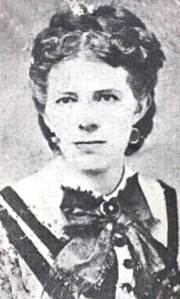
Read Kate Stone’s amazing stories as she defiantly faces Union soldiers, escapes across a Louisiana swamp, falls in love with Texas, and watches the Civil War rip her country and her family apart.
From May 2012 to November 2015, a special series from Stillness of Heart shared excerpts from the extraordinary diary of Kate Stone, who chronicled her Louisiana family’s turbulent experiences throughout the Civil War era.
She defiantly faced Union soldiers, escaped across a Louisiana swamp, fell in love with Texas, and watched the Civil War rip her country and her family apart.
The entire series of excerpts is collected here.
Learn more about Stone’s amazing life in 1861, 1862, 1863, 1864, 1865 and beyond. Click on each year to read more about her experiences. You can read the entire journal online here.
Stone’s last three entries in her diary are from September 1867 and 1868. They form a somber epilogue to her chaotic journey. They capture a bitter reflection of a shattered Southern slaveholding society, adrift, confused, and afraid of a world in which they no longer rule.
From 2012 to 2015, Stillness of Heart will share interesting excerpts from the extraordinary diary of Kate Stone, who chronicled her Louisiana family’s turbulent experiences throughout the Civil War era.
Learn more about Stone’s amazing life in 1861, 1862, 1863, 1864, 1865 and beyond. Click on each year to read more about her experiences. You can read the entire journal online here.
(Photo edited by Bob Rowen)
Stone’s last three entries in her diary are from September 1867 and 1868. They form a somber epilogue to her chaotic Civil War journey. They capture a bitter reflection of a shattered Southern slaveholding society, adrift, confused, and afraid of a world in which they no longer rule.
A long silence and a year of hard endeavor to raise a crop, reconstruct the place with the problem of hired labor, high water, and cotton worms. Mamma had little trouble in getting advances in New Orleans to plant. Cotton is so high that merchants are anxious to advance to put in a crop, and there is much Northern capital seeking investment in that field. … The Negroes demanded high wages, from $20 to $25 for men, in addition to the old rations of sugar, rice, tobacco, molasses, and sometimes hams. Many of the old hands left, and My Brother went to New Orleans and brought back a number of ex-Negro soldiers, who strutted around in their uniforms and were hard to control. I was deadly afraid of them.
During the spring while Mamma and I were in New Orleans (Mamma on business and she took me for my pleasure), and Uncle Bo and My Brother and Jimmy were away for a few hours, Johnny had a fight with a young Negro in the field, shot and came near killing him, and was mobbed in return. Johnny would have been killed but for the stand one of the Negroes made for him and Uncle Bo’s opportune arrival just as the Negroes brought him to the house a howling, cursing mob with the women shrieking, “Kill him!” and all brandishing pistols and guns. It came near breaking up the planting, and it is a pity it did not as it turned out. Johnny had to be sent away. He was at school near Clinton [Miss.] and the Negroes quieted down and after some weeks the wounded boy recovered, greatly to Johnny’s relief. He never speaks now of killing people as he formerly had a habit of doing. He came home when school closed and there was no further trouble.
Then the water came up and we were nearly overflowed. The cotton planted was very late, and when it was looking as luxuriant and promising as possible and we saw ease of mind before us, the worms came. In a few days the fields were blackened like fire had swept over them. We made about twenty bales and spent $25,000 doing it. What most distresses me is that none of that money went for our personal comfort. All of it went to the Negroes. Mamma would buy only bare necessaries for the table and plainest clothes for the family. Not a luxury, no furniture, carpets, or anything. We are worse off for those things than even in Texas and such a sum spent! But Mamma said it was not honest to spend the money on anything but making the crop. All in this section have suffered in the same way, and for awhile they seemed stunned by their misfortunes. But now the reaction has come, and all are taking what pleasure offers.
Old neighbors and new ones have come in and all seemed to be anxious to be together and talk over their trials and tribulations. There has been much visiting and various picnics and fish frys. I would not go at first. I felt like I did not want to see anybody or ever dance again. I felt fully forty years old, but Mamma made me go after a good cry. Once there, I was compelled to exert myself, and soon I was enjoying it all. The burden of some of the years slipped from my shoulders, and I was young again. It was pleasant to talk nonsense, to be flattered though one knew it was flattery, and to be complimented and fussed over. So since then, Mamma, the boys, and all of us have been going to everything and have found even poverty in company more bearable than when suffered alone. …
September 1868
Rose Hill
In January My Brother rented this place knowing that Brokenburn would be again overflowed, and we moved out the latter part of the month. My Brother lost money again last year planting, and this year he determined to farm, planting a little of everything.
Johnny and Jimmy are both at home, and having nothing to do pulled off their coats and rolled up their sleeves and went to work to raise a crop of corn and potatoes for themselves. They have succeeded well as they will clear several hundred dollars.
We all regret so much Jimmy’s refusal to go buck to the hospital. … We fear he is throwing away the best chance of his life. The boys are so hot and tired when they come in from the fields. …
Sept. 28, 1868
Rose Hill
Mother has been in Vicksburg for a month on a visit to Aunt Sarah. It is her first outing for eighteen months. We hope it will benefit her — her health has been bad for more than a year. She is seldom out of bed more than a week at a time. It took great persuasion and the pointed urging of the whole family to induce her to go on this visit that Aunt Sarah has been begging her to take for months.
Jimmy is now on the wharf boat, Johnny at Omega, and Sister, My Brother, and I have it all our own way with but little to do. My Brother is making an excellent crop and is much more cheerful. …
How we wish Sister could be sent off to school for two years, but it has been impossible. No money. … Let us hope that now the current will change and success will be our portion, as the outlook is brighter than for three years.
This is a pleasant neighborhood … and everybody has been kind and polite about calling and coming in at all times. [The other day we] had another of those inevitable dances that have been given so often this summer. Mary and Katie Byrnes, Louise Meagher, and the other girls never seem to tire of them, but they wear me out — such a sameness. I doubt not that I am getting too old for such gaieties. The men and boys about here are so silly and boyish in conversation. …
It has been an enjoyable life since we came here in January. It is a pleasant enough cottage house, after we got it thoroughly cleaned. There is a lovely little flower yard and a splendid orchard, and the kindest and most sociable neighbors with various little entertainments and dances. …We have new books and papers ad libitum, a luxury we missed for years.
My Brother has just sent Mamma money to buy our winter clothes, and Sister and I are jubilant at the prospect of new dresses and bonnets. We have lived on very little of late years, little bought that was not absolutely necessary. They have dressed me better than any of the others. I have not wanted for anything indispensable for a young lady, but the only money I have spent really as I wished was five dollars of the ten Uncle Bob gave me when Mamma and I went to New Orleans three winters ago. …
What splendid fellows my brothers are. They are all so good to us and such handsome boys. Sister looks almost the same, scarcely older than three years ago. We hope she can go to school this fall and make her debut next fall. If not, I shall beg Mamma to put long dresses … on her and bring her out this winter. She has a gay cheerful nature, and I hope will have a happy girlhood.
Mamma’s bright hopeful spirit never change. She is us always the ruling power with us all, the center and light of our home. How much she will have to tell us on her return, and maybe Aunt Sarah will come with her.
Well, this is the last page of the book that has gone with me through all our journeying. Looking back to the beginning so many years ago, I realize what an unthankful, wicked girl I was not to be supremely happy. With youth, health, and everything surrounding me for comfort and happiness. with unmistakable blessings, I was yet an unsatisfied, discontented girl. It has taken trouble to teach me my faults, and how earnestly I try now to enjoy instead of repine, to be thankful instead of fault-finding. I will try always to see the silver lining to the cloud. All my life I have been surrounded with love and care, far more than I deserved, and I will try in the future to be more worthy of the blessings that brighten my pathway.
So this is the end — shall I ever care to write again?
For just one night, on Friday, Oct. 16, 2015, at 8 p.m., an artist will project light onto the building, virtually “restoring” the Mission to its former glory.
I’m a history teacher at Northwest Vista College in San Antonio. I teach both parts of the introduction to U.S. history. HIST 1301 begins the tour in Native America and ends with post-Civil War Reconstruction. HIST 1302 begins with Reconstruction and brings it to the modern era.
Every teacher ends the second half in different places: the Reagan Revolution, 9/11, the election of Barack Obama. Because I’m emphasizing the relevance of history to current events (if they leave my class with nothing else, at least they will be more sensitive to and appreciative of the historical roots of news events all around them), I intend to end the second half with the rise of ISIS.
I’ve slowly come to appreciate the historical richness and importance of San Antonio, if only because of my lifelong failure to fully appreciate Mexican and Tejano culture. But San Antonio has captured my heart and, more importantly, my respect as a historian. I’ve tried to share my new enthusiasm with my students by making them aware of the truly unique place of San Antonio in Spanish, Mexican, Texas, Confederate, and U.S. history.
One of their extra-credit opportunities is to visit one of the San Antonio Missions (a visit to the Alamo doesn’t count). They have to take a picture of themselves next to a sign indicating which Mission they visited, show it to me, and then they get an extra ten points towards their final grade for the semester.
As I just told them on our class blog, Ortiz History, I recently learned of one more reason to visit the beautiful Mission Concepcion. For just one night, on Friday, Oct. 16, 2015, at 8 p.m., an artist will project light onto the building, virtually “restoring” the Mission to its former glory. That will be the highlight of a three-hour festival of food trucks, picnics, historical tours, music, and family-friendly activities spread throughout the mission grounds. Festivities begin at 6 p.m.










![IMG_2392[1]](https://stillnessofheart.com/wp-content/uploads/2016/01/img_23921.jpg?w=840)





 Stillness of Heart
You must be logged in to post a comment.