Kate Stone’s Civil War: Lose our scalps

Stone’s critical eye takes in a town’s beauty, overpriced luxuries, her brother’s love, and a gentleman’s proper language use.

KS29

From 2012 to 2015, Stillness of Heart will share interesting excerpts from the extraordinary diary of Kate Stone, who chronicled her Louisiana family’s turbulent experiences throughout the Civil War era.

Learn more about Stone’s amazing life in 1861, 1862, 1863, 1864, 1865 and beyond. Click on each year to read more about her experiences. You can read the entire journal online here.
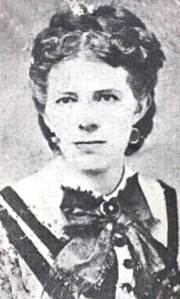
(Photo edited by Bob Rowen)

Stone’s critical eye takes in a town’s beauty, overpriced luxuries, her brother’s love, and a gentleman’s proper language use.

Aug. 3, 1863

Lamar County, Texas

Paris is a clean, pretty place in the edge of Blossom Prairie — clumps of trees and deep white sand in the streets.

We went to church and saw a really nice-looking congregation of refined-looking people. We all liked the place so well that Mamma would rent a place there, but it is too near the borderline, the first point for an invasion and right next to the Indian Nation. We do not wish to lose our scalps in addition to everything else. We saw a large party of Indian men dashing through the town. They are nearly all Southern sympathizers, we hear.

We went shopping. There are several well-filled stores, but the prices are beyond anything. We saw a pretty light calico but Mamma could not afford it at $6 a yard. A penknife was very tempting, but who would give $25 for a little Yankee knife? Our nails will have to grow like eagle’s claws before we can afford an extravagance of that kind. We did get a few articles, absolute essentials, and Mamma indulged me in a piece of extravagance a deck of playing cards at $5. They are a different kind from those the girls use out here, but I fancy they will afford us more amusement than the finest pair of cotton cards.

A gentleman gave us a late Louisiana paper containing Mary Gustine’s marriage on July 21. I know she was a beautiful bride, and our best wishes go with her for her future happiness. I wonder how Brother Coley will stand the loss of his sweetheart, his first love affair. Like most boys, he lost his heart to a girl several years the older — fortunately a disease that never kills a boy of that age.

The Baptist meeting has been going on in Paris for seven weeks, and sixty have joined that church. It seems the strongest church of this section. Sunday morning we heard a splendid sermon, the best since hearing Dr. Marshall preach two years ago. I wish Jimmy could have heard it. It was the first real Baptist sermon I ever really listened to. Have heard the preacher, Mr. Buckner — knows what he believes and is not afraid to preach it from the pulpit.

We have made the acquaintance of another Texas gallant. Dr. Bywaters, introduced as a friend by Mr. McGleason, walked home with us from church. One thing in his favor: he does not say “mile” for “miles,” and he does not ignore the plural of “year.”

Kate Stone’s Civil War: Baffled beasts of prey

Stone’s bitter sense of humor flashed for a moment as she dryly observed the effects of marriage on a young woman’s beauty.

KS19

From 2012 to 2015, Stillness of Heart will share interesting excerpts from the extraordinary diary of Kate Stone, who chronicled her Louisiana family’s turbulent experiences throughout the Civil War era.

Learn more about Stone’s amazing life in 1861, 1862, 1863, 1864, 1865 and beyond. Click on each year to read more about her experiences. You can read the entire journal online here.

(Photo edited by Bob Rowen)

As Stone and her family regained their bearings in their temporary home before making the final push for Texas, Stone’s bitter sense of humor flashed for a moment as she dryly observed the effects of marriage on a young woman’s beauty.

May 3, 1863

Near Monroe, La.

We went to a real country church this morning, saw a country congregation, and heard a sermon to match. Loring Wadley made several trips with the buggy to get us all there, but two of the party rode back in Dr. Young’s $3,000 carriage. We had a pleasure today in a visit of several hours from Julia Street. She came down from Bastrop just for the day. She is more nearly depressed than I ever saw her.

Annie and Peggy got here from the salt works today, and we are glad to have somebody to wait on us again. I expect we will keep them busy. …

May 5

Near Monroe, La.

The gunboats are unable to pass Grand Gulf and are lying idle between Vicksburg and Grand Gulf, like baffled beasts of prey. There is a great scarcity of provisions all through Mississippi. It is difficult to provision Vicksburg for a long siege. …

We went yesterday to see Florence Pugh (now Mrs. Morrison), an old schoolmate. The family are near here now on their way to Texas. She is a dear, sweet girl but looks dreadful. How marrying does change a body for the worse. She was a pretty girl a year ago, fresh and dainty. Now she is married and almost ugly.

I am busy every day trying to make up the cloth Mamma bought, but it is slow, tiresome work for one person with no sewing machine. The only things Mamma could find to buy belonged to the Lowrys, and they sold them at awful prices: $60 for a pair of common blankets, $50 for a pair of linen sheets, and everything else in proportion. They have sold much of their own clothing. Mamma bought some of Olivia’s things for Sister. … It seems funny to be wearing other people’s half-worn clothing, but it is all we can get. Mamma bought some Turkey-red calico at $3 a yard for a dress for Sister.

May 10

Near Monroe, La.

Mamma returned from the salt works on Friday, riding the whole distance on horseback. It was dreadfully fatiguing for one who rides so little. She has gone this evening to Delhi to make another attempt to have the Negroes brought out, if she can get soldiers to go with Jimmy. Quite a number of Negroes have been brought out in that way recently, some from within the lines.

The news from the salt works is bad. Frank, my maid, and Dan both died of pneumonia and neglect, and three others are very ill. Poor Frank, I am sorry for her to go. She has been raised in the house with us. With so much sickness among the Negroes, Mr. Smith has been unable to start to Texas. …

Several thousand of our soldiers are now at Monroe under Maj. Gen. Walker. Two of the officers spent yesterday evening here and told us the whole command would get off this morning and that there were some splendid bands with the regiments. So this morning we rode out to the river opposite Monroe to see them off, starting before sunrise. We saw crowds of soldiers, talked to a number of them, and heard inspiring music. The ride all the way through the spring woods was delightful. I sat up until twelve the night before fixing a sort of riding habit. … The troops after embarking received counterorders and are again in Monroe, expecting to march at any minute. There is another panic in Monroe. The Yankees are looked for at any time. They could not make anything out of this poor family. We have been too thoroughly plucked by the river Feds. …

Aunt Laura is not very well. We would dread to see her get sick.

Recommended reading / viewing / listening

The value of apostrophes / Obama and Nixon / Cicada secrets / Boston Marathon bombing PTSD / A long-lost WWII Marine’s diary

IMG_2085

Most of these great items come from my Twitter or Facebook feeds. Follow me on Twitter, Tumblr, LinkedIn, and Facebook for more fascinating videos, photos, articles, essays, and criticism.

1. WW2 Marine’s diary: A brief look at a brief life
By Janet McConnaughey | Associated Press | May 27
“Before Cpl. Thomas ‘Cotton’ Jones was killed by a Japanese sniper in the Central Pacific in 1944, he wrote what he called his ‘last life request’ to anyone who might find his diary: Please give it to Laura Mae Davis, the girl he loved. Davis did get to read the diary — but not until nearly 70 years later. …”

2. How Timbuktu’s manuscripts were saved from jihadists
By Sudarsan Raghavan | The Washington Post | May 26
“The scholarly documents depicted Islam as a historically moderate and intellectual religion and were considered cultural treasures by Western institutions — reasons enough for the ultraconservative jihadists to destroy them.”

3. Why Efforts to Bring Extinct Species Back from the Dead Miss the Point
Scientific American | May 27
“A project to revive long-gone species is a sideshow to the real extinction crisis”

4. There Are Plenty of Reasons Why Parents May Read More With Their Daughters
By Nanette Fondas | The Atlantic | May 21
“Understanding a new study that finds girls get more reading time with their parents than boys.”

5. As Boston recovers from Marathon attack, emotional trauma may be just setting in
By Marissa Miley | GlobalPost | May 24
“PTSD and related stress disorders can take weeks or months to develop — and local organizations are prepared to help.”

6. Obama’s speechwriter: from intern to top wordsmith
By Darlene Superville | Associated Press | May 25
“Current and former White House colleagues, all Obama campaign veterans, praise [Cody] Keenan’s writing skills and work ethic and what they describe as his sense of fairness, modesty and willingness to help.”

7. The Man Who Knew Too Much
By Marie Brenner | Vanity Fair | May 1996
“Angrily, painfully, Jeffrey Wigand emerged from the sealed world of Big Tobacco to confront the nation’s third-largest cigarette company, Brown & Williamson. Hailed as a hero by anti-smoking forces and vilified by the tobacco industry, Wigand is at the center of an epic multibillion-dollar struggle that reaches from Capitol Hill to the hallowed journalistic halls of CBS’s 60 Minutes.”

8. The secrets of cicada survival
By John Matson | Salon | May 24
“A new brood is set to emerge this summer for the first time in 17 years. What’s taken them so long?”

9. Why Obama Is Not Nixon
By Elizabeth Drew | NYR Blog :: The New York Review of Books | May 18
“Compared to Watergate, on the basis of everything we know about what are the current ‘scandals’ amount to a piffle. Watergate was a Constitutional crisis.”

10. Are Apostrophes Necessary?
By Matthew J.X. Malady | Slate | May 23
“Not really, no.”

Recommended reading / viewing / listening

Springtime fights over skin / Tax myths / Near-death experiences / Le Carre’s doubts / Anthony Weiner is back

IMG_2076

Most of these great items come from my Twitter feed or Facebook news feed. Follow me on Twitter, Tumblr, and Facebook for more fascinating videos, photos, articles, essays and criticism.

1. The 5 Kinds of Flesh-Obsessed Articles You Read in the Spring
By Katie J.M. Baker | Jezebel | April 11
“Every spring, concerned citizens spring up like so many tulips (or boners) to share their opinions on how women should and shouldn’t dress when it’s warm outside. Unfortunately, unlike pollen allergies, there’s no known antidote for these five most obnoxious types of seasonal ‘Ladies! Put your clothes on/take them off, plz!’ articles.”

2. Five myths about taxes
By Steven R. Weisman | Five Myths :: The Washington Post | April 11
“Whether tax cuts generally spur economic growth and tax increases generally dampen it is debatable …”

3. Why a Near-Death Experience Isn’t Proof of Heaven
By Michael Shermer | Scientific American | April 13
“The fact that mind and consciousness are not fully explained by natural forces, however, is not proof of the supernatural. In any case, there is a reason they are called near-death experiences: the people who have them are not actually dead.”

4. Narrow escape for more than 100 airline passengers as plane crashes
By Harriet Alexander | The Telegraph | April 13
“Local television showed a picture of a Boeing passenger jet intact with a slightly ruptured fuselage and passengers in the water.”

5. Army’s Disaster Prep Now Includes Tips From the Zombie Apocalypse
By Spencer Ackerman | Danger Room :: Wired | April 12
“[W]hether you’re confronting extreme weather that shorts out a power grid or running from a marauding horde of the undead, preparation is the key to survival.”

6. Resort Of Last Resort
By Aubrey Belford | The Global Mail | April 5
“Fear, corruption, boredom, smugglers, extortionists, Saudi sex tourists and temporary wives: such is life in the Indonesian resort town that has become limbo for asylum seekers.”

7. John le Carré: ‘I was a secret even to myself’
By John le Carre | The Guardian | April 12
“After a decade in the intelligence service, John le Carré’s political disgust and personal confusion ‘exploded’ in The Spy Who Came in from the Cold. Fifty years later he asks how much has changed”

8. Roman ruins found in the heart of London
By Erin McLaughlin | CNN International | April 10
“Archeologists uncover thousands of ancient Roman artifacts in London.”

9. Anthony Weiner and Huma Abedin’s Post-Scandal Playbook
By Jonathan Van Meter | New York Times Magazine | April 10
“They seem to be functioning again as a couple, even unselfconsciously bickering in front of the waiter. But what they do not yet have a handle on is their public life.”

10. Obama’s former speechwriter on the secrets he learned from his boss
By Sarah Muller | MSNBC | April 12
“Jon Favreau told MSNBC.com he misses his former job as President Obama’s chief speechwriter, though not the late hours. He began the job in 2005, becoming the second youngest head speechwriter in the White House’s history.”

2012 in review

It’s been my best year ever. Thank you all for your interest.

WordPress.com prepared a 2012 annual report for Stillness of Heart.

Here’s an excerpt:

600 people reached the top of Mt. Everest in 2012. This blog got about 7,900 views in 2012. If every person who reached the top of Mt. Everest viewed this blog, it would have taken 13 years to get that many views.

It’s been my best year ever. Thank you all for your interest. Click here to see the complete report.

Recommended reading / viewing / listening

The supervolcano / Romney’s plan for August / Overthrowing Mossadegh / Background on Sikh religion / Plan out your next 200 years

Most of these great items come from my Twitter feed or Facebook news feed. Follow me on Twitter and on Facebook for more fascinating videos, articles, essays and criticism.

1. ‘Super volcano’, global danger, lurks near Pompeii
By Antonio Denti | Reuters | Aug. 3
“Across the bay of Naples from Pompeii, where thousands were incinerated by Mount Vesuvius in 79 AD, lies a hidden ‘super volcano’ that could kill millions in a catastrophe many times worse, scientists say.”

2. The longevity of US presidents’ mothers
By Richard Knight | BBC News Magazine | Aug. 3
“The mothers of US presidents and presidential candidates live far longer than the mothers of British prime ministers and opposition leaders. Is that just a statistical quirk?”

3. Romney’s August to-do list
By Maggie Haberman | The Arena :: Politico | Aug. 5
“The fear for Democrats is how much of a cash advantage Romney will have over them when his campaign begins its own serious spending.”

4. A Crass and Consequential Error
By Roger Cohen | The New York Review of Books | Aug. 16
“Muhammad Mossadegh, the Iranian prime minister overthrown by US and British agents in 1953, was a man who declined a salary, returned gifts, and collected tax arrears from his beloved mother.”

5. David Axelrod: Barack Obama’s street fighter
By Paul Harris | The Observer :: The Guardian | Aug. 5
“For the second time, the ultimate campaign manager is determined to get his man into the White House. And now the gloves are off as he masterminds a brutal ad campaign against Mitt Romney”

6. 5 Things To Know About The Sikh Religion
The Huffington Post | Aug. 5
“Sikhism is the fifth largest religion in the world with a population of upwards of 30 million worldwide. There are an estimated 250,000 Sikhs in the United States having first arrived in the late 19th century.”

7. Raghava KK: What’s your 200-year plan?
TED | April 2012
“Artist Raghava KK …. shows how it helps guide today’s choices and tomorrow’s goals — and encourages you to make your own 200-year plan too.”

8. Where Daisy Buchanan Lived
By Jason Diamond | The Paris Review | July 23
“Founded in 1861, Lake Forest, Illinois, was originally built as a college town by Presbyterians.”

9. Before the Storm
By Ronald S. Coddington | Disunion :: The New York Times | May 7
“James E. McBeth was a modest young man of few words who in 1862 left his job as a law clerk on Wall Street and enlisted in the Union Army. Later, in a series of wartime letters to a friend, he detailed the experiences that sparked his transformation into a military zealot advocating total war.”

10. Decoding the Science of Sleep
By David K. Randall | The Wall Street Journal | Aug. 3
“In today’s always-on economy, we’re tired like never before. Caffeine and sleeping pills only do so much. How did we get this far away from our most basic, ancient habits? And how can we get back on track?”

‘A child of love’

Part 9 of this special series focuses on Tennessee Williams, the famed playwright, who embraced his diary as shelter from the depressive snowstorms that ravaged his life

This special Stillness of Heart series explores the Morgan Library & Museum’s fascinating exhibit, “The Diary: Three Centuries of Private Lives.”

Part 9 focuses on Tennessee Williams, the famed playwright, who embraced his diary as shelter from the depressive snowstorms that ravaged his life. Success, drugs, sensual companionship, even public accolades like a Pulitzer Prize (for “Cat on a Hot Tin Roof”) all failed to calm his suffocating anxiety, loneliness, and despair.

“A child of love — dined on the terrace with the cathedral spires lit up and a mass choir singing Catalonian folks songs on the Square below. Then love — came twice, both ways, and divinely responsive as if a benign Providence, or shall we be frank and say God, had suddenly taken cognizance and pity of my long misery this summer and given me this night as a token of forgiveness.”

Examine images of his amazing diary and listen to the museum’s audio guide here.

Entries in this series:
Part 1: Introduction to the exhibit and Charlotte Brontë
Part 2: Frances Eliza Grenfell
Part 3: Sophia and Nathaniel Hawthorne
Part 4: Paul Horgan
Part 5: John Newton
Part 6: Mary Ann and Septimus Palairet
Part 7: Walter Scott
Part 8: Bartholomew Sharpe
Part 9: Tennessee Williams
Part 10: John Ruskin

‘A strange vanity’

Part 5 of this series focuses on John Newton, a British slave trafficker and later a minister who wrote ‘Amazing Grace.’

This special Stillness of Heart series explores the Morgan Library & Museum’s fascinating exhibit, “The Diary: Three Centuries of Private Lives.”

Part 5 focuses on John Newton, a British slave trafficker and later a minister who wrote “Amazing Grace.” Throughout his adult life, he struggled with his religious faith and with his views on slavery, and the diary captured in daily detail the long, tumultuous spiritual journey he made. In the end, as the exhibit essay explains, Newton simply hoped that someday he “would serve as inspiration to others.”

“I have been reading what I have recorded of my experience in the last year – a strange vanity. I find myself condemn’d in every page[.] But the Lord is good, O how gracious! How wonderfully has he born with my repeated backslidings! And yet the thought but faintly affects. What I can I will – Lord I am not able to praise thee, accept the desire, which I trust is thine own gift – deliver me from that pride, impurity & self seeking, which so fatally interrupt my progress.”

Examine images of the extraordinary diary and listen to the museum’s audio guide here.

Entries in this series:
Part 1: Introduction to the exhibit and Charlotte Brontë
Part 2: Frances Eliza Grenfell
Part 3: Sophia and Nathaniel Hawthorne
Part 4: Paul Horgan
Part 5: John Newton
Part 6: Mary Ann and Septimus Palairet
Part 7: Walter Scott
Part 8: Bartholomew Sharpe
Part 9: Tennessee Williams
Part 10: John Ruskin

Homo universalis

One of my guiding principles is that we’re all capable of self-improvement at any age, particularly intellectual self-improvement. Sometimes that faith is the only thing that enables me to sleep through the night and get out of bed in the morning.

KS16

That’s Latin for “universal man” or “man of the world,” if Wikipedia can be relied on for a proper translation.

I glide through a small, comfortable life — trying not to bother anyone, trying to be pleasant and polite, non-judgmental and sympathetic, charming and humble, trying to be intellectually honest and self-aware of my limits and flaws, every day edging closer to fulfilling all my ambitions.

One of my guiding principles is that we’re all capable of self-improvement at any age, particularly intellectual self-improvement. Sometimes that faith is the only thing that enables me to sleep through the night and get out of bed in the morning. I’ve always been blessed with a hunger for knowledge, a curiosity that often flares into full-blown passion for new arenas of experience, a curiosity perhaps sparked by a bittersweet frustration that I don’t know as much about literature, science, mathematics, history and culture as I think I should.

Perhaps that’s why I’ve always embraced wholeheartedly people like Theodore Roosevelt and Michelangelo, those who lived their lives desperately hungry for more of the world to absorb into their hearts and minds, constantly reaching out to make more of it their own.

A friend once called me a polymath. Other friends have called me a Renaissance man. I politely laughed off both compliments. I’m certainly no genius. I’d hardly consider myself intelligent, compared to the accomplishments and capabilities of the other men and women in my life.

As I understand it, polymaths and Renaissance men and women possess an immensity of talent to complement that fiery passion to achieve great things in multiple fields, professions, etc. As my quiet life sadly illustrates — in which I’ve been not much more than a minor writer, historian, editor, painter and arts critic — I have very much of the latter and very little of the former.

Perhaps later life will prove otherwise, as I’m slowly exploring how to become a proper pianist, an amateur boxer, an effective apiarist and gardener, an expert numismatist and philatelist, a stellar professor of American Civil War and Roman and Spanish imperial history, a sympathetic and effective psychologist, an historical novelist, a decent speaker, writer and translator of Spanish and Latin, and a less-than-atrocious golfer, photographer, and salsa dancer. My mandate is to be more than a simple-minded, well-meaning hobbyist.

But if none of that works out, perhaps this particular man of the world will be content being someone who’s fun to spend time with, whose passion for history is inspiring, whose writing makes the heart soar, who’s always interesting, always relaxing, always enriching. Always happy.

I’d settle for that last one, above and beyond all the rest.

Rebecca Aguilar

#CallingAllJournalists Initiative | Reporter | Media Watchdog | Mentor | Latinas in Journalism

Anna Fonte's Paper Planes

Words, images & collages tossed from a window.

Postcards from Barton Springs

Gayle Brennan Spencer - sending random thoughts to and from South Austin

The Flask Half Full

Irreverent travelogues, good drinks, and the cultural stories they tell.

Government Book Talk

Talking about some of the best publications from the Federal Government, past and present.

Cadillac Society

Cadillac News, Forums, Rumors, Reviews

Ob360media

Real News That Matters

Mealtime Joy

bringing joy to family meals

Øl, Mad og Folk

Bloggen Øl, Mad og Folk

a joyous kitchen

fun, delicious food for everyone

A Perfect Feast

Modern Comfort Food

donnablackwrites

Art is a gift we give ourselves

Fridgelore

low waste living drawn from food lore through the ages

BeckiesKitchen.com

MUSINGS : CRITICISM : HISTORY : NEWS

North River Notes

Observations on the Hudson River as it passes through New York City. The section of the Hudson which passes through New York is historically known as the North River, called this by the Dutch to distinguish it from the Delaware River, which they knew as the South River. This stretch of the Hudson is still often referred to as the North River by local mariners today. All photos copyright Daniel Katzive unless otherwise attributed. For more frequent updates, please follow northriverblog on Facebook or Instagram.

Flavorite

Where your favorite flavors come together