The wars over the War

Nine key books and articles taken together can explain what led to the first sparks of civil violence and how those sparks ignited what evolved into the bloodiest and most important war in U.S. history.

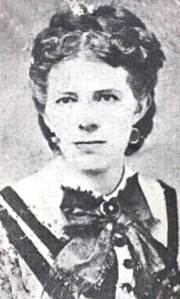
Courtesy of David D. Robbins Jr.

Nine key books and articles taken together can explain what led to the first sparks of civil violence and how those sparks ignited what evolved into the bloodiest and most important war in U.S. history. A review essay by Fernando Ortiz Jr.

*****

Works reviewed in this essay:

Alcott, Louisa May. Hospital Sketches. Boston: Bedford/St. Martins, 2004.

Berlin, Ira. “Who Freed the Slaves? Emancipation and Its Meaning.” Union & Emancipation: Essays on Politics and Race in the Civil War Era. Kent, OH: Kent State University Press, 1997.

Dew, Charles B. Apostles of Disunion: Southern Secession Commissioners and the Causes of the Civil War. Charlottesville, VA: University of Virginia Press, 2001.

Fleche, Andre. The Revolution of 1861: The American Civil War in the Age of Nationalist Conflict. Chapel Hill, N.C.: University of North Carolina Press, 2012.

Gallagher, Gary W. The Union War. Cambridge: Harvard University Press, 2011.

Grimsley, Mark. The Hard Hand of War: Union Military Policy Toward Southern Civilians 1861-1865. New York: Cambridge University Press.

Jacobs, Harriet. Incidents in the Life of a Slave Girl. Boston: Bedford/St. Martins, 2009.

Kelly, Patrick J. “The North American Crisis of the 1860s.” The Journal of the Civil War Era 2, no. 3, (September 2012): 337-361.

McPherson, James. “Who Freed the Slaves?” Proceedings of the American Philosophical Society 139, no. 1 (March 1995): 1-10.

*****

The crucial story of U.S. history is the Civil War. But too often readers skip right over the significance of the “Civil” and go right to the “War.” When the spotlight shines only on the armies and the navies, glorious battles and inglorious retreats, and the admirals and generals who won and lost, one can lose sight of why hundreds of thousands of Americans slaughtered each other for years.

Readers forget why and how fundamental cultural and political differences swirled like a hurricane into a galaxy of large and small battles, and how such violence was hardly new in a war-torn nineteenth century world. Scholars forget the transnational democratic movements wafting in the political breezes that inspired or terrified citizens desperately committed to their own visions of American freedom. Students forget why the war was key to measuring the republic’s commitment to preserve the wilting blossoms of international democracy. Everyone forgets that slavery – not states’ rights, not economic domination, not debates over big government — is what steadily fractured every element of antebellum American society, government, economy, and future aspirations.

Fortunately, less than a dozen key books and articles taken together can explain what led to the first sparks of civil violence and how those sparks ignited what evolved into the bloodiest and most important war in U.S. history.

I. The sparks and the fire

White Americans owned black Americans. Slavery as an institution predated the Revolutionary War. Moral debates over its place in the new republic were muted throughout the independence era. The U.S. Constitution legalized the institution of slavery and considered blacks only 60 percent human. Slaves were a massive labor force upon which Southerners built their aristocratic society and King Cotton and sugar industries. Slaves were a highly lucrative commodity that Southern states hoped to sell to new farmers in Western states. Worst of all, slaveholders enjoyed and protected their violent sexual control of the women they owned.

No book better illustrates that horror than Harriet Jacobs’ harrowing account of her life as a slave in Incidents in the Life of a Slave Girl. Her owner, Dr. Flint, sexually harassed her. Her sexual affair with another white man, which produced two slave children, was a desperate attempt to get Flint to sell her off to her lover. She gave up an opportunity to escape to the North to remain near her family. As Flint hunted for her, she hid in an attic for seven years and watched her community, including her children, from a hole in the wall. Her experiences demonstrated how slave women had no control over their sexual lives, their families, or their futures. Their only weapons were their sexuality, their intelligence, and their will to survive. They were trapped in a slaveholding system upheld by national laws, protected by national political leaders, and perpetuated by economic and racial imperatives. Her book, aimed at Northern women, demonstrated the strong and humanizing commitment of black men and women to their families, illustrated the constant sexual threat slavery posed to black women, and explained to her white readers how slavery also destroyed white families by their action and inaction in service of the slaveholding system.

When a new national party, the Republican Party, challenged in the late 1850s the future of slavery in the United States, some Southern leaders raised the old cry for secession from the Union. Since the 1820s, competing economic interests struggled for control over the direction of the quickly growing country. With every era of expansion came carefully-crafted congressional deals delineating into which areas slavery could expand. Some succeeded and some did not. The Louisiana Purchase saw the Missouri Compromise. Territorial gains from the Mexican War saw the doomed Wilmot Proviso. Illinois Sen. Stephen Douglas offered the Kansas-Nebraska Act. With each political generation, the polarization intensified. Southerners were convinced the North sought to contain slavery. Northerners perceived a Slave Power conspiracy that controlled one president after another, dominated both houses of Congress, and infected the Supreme Court’s objective judgment.

Charles B. Dew argues in his slender but powerful Apostles of Disunion that slavery was at the heart of secession. He follows Southern slaveholding speakers as they traveled throughout the South during the presidential election year of 1860, arguing to anyone who would listen that Abraham Lincoln’s election guaranteed the emancipation of the slaves. Emancipation, they insisted, guaranteed race war, racial marriage, and racial equality. Slaves would kill their masters, rape their wives and daughters, and help conceive a nation that held whites equal to blacks. Lincoln’s election marked the end of both Southern civilization and legal subjugation of non-white people, they argued. The only option was Southern separation from a poisoned, doomed republic and the formation of a new one.

After Lincoln’s election, Southern states steadily seceded, and Confederates fired on Fort Sumter in Charleston Harbor. Thousands of Northern citizen-soldiers donned the blue Federal Army uniform and prepared to defend their Union. Looking backwards in history with sympathetic eyes, it is too easy to assume they fought to break the chains of slavery restraining their fellow black citizens. Gary W. Gallagher disagrees. He argues in The Union War that Northern soldiers fought not for slavery but for Union. They fought against a slaveholding aristocracy to preserve their republican government for themselves and for the world, brightening the beacon of democracy sweeping across a dark world of empires and kingdoms. Slavery was ended, yes, but only as a result of the Northern will to strip the South of anything that sustained its resistance to moral and military realities.

II. The reasons

The war ended slavery, but where should history lay the credit for emancipation? James M. McPherson argues in a 1995 essay that Lincoln deserved credit for ultimately freeing the slaves because he directed the war that ensured personally self-emancipated slaves would remain free in a society cleansed of the legalized slave system. Without the Union War, McPherson writes, “there would have been no confiscation act, no Emancipation Proclamation, no Thirteenth Amendment (not to mention the Fourteenth or Fifteenth), certainly no self-emancipation, and almost certainly no end of slavery for several more decades. …” Lincoln was the “political denominator in all the steps” that defeated the Southern slave system.

In 1997 Ira Berlin disagreed with McPherson. His essays insists that grassroots social forces freed the slaves. Union forces would move through Southern communities, and slaves would abandon their homes to join them. When soldiers refused to send the runaways back because they found them useful, the slave system was weakened. When soldiers wrote to their families, and those families as voters helped change congressional and presidential opinion, slavery was weakened. If Lincoln led the way nationally, Berlin argues, it was only because people in immediate contact with the slave system cleared a path for him. If Lincoln had not led, someone else would have.

Lincoln was desperate to bring back the seceded states into the South by any political means necessary. One brilliant historian summarized Lincoln’s thinking with brutal simplicity: If the South came back, Lincoln promised to be the greatest fugitive slave-catcher in history. Even when war began, Mark Grimsley explains in The Hard Hand of War, Lincoln took a conciliatory approach. When armies moved through Southern regions, soldiers would not harm civilians, and they would respect all forms of personal property, particularly slaves.

Lincoln gradually realized that nothing he could do would bring the seceded states back. That crushing realization, coupled with the North’s growing list of defeats in the Eastern Theater, particularly throughout the 1862 Peninsula Campaign, hardened Lincoln’s belief in final victory. He aimed for the Confederacy’s jugular — the slaves — with the ultimate war measure. The Emancipation Proclamation was a clarion call to slaves to abandon their masters and let the entire slaveholding system collapse in on itself.

The conciliatory war gradually became a hard war. As Berlin stresses, soldiers did not return escaped slaves. They took pigs. They took chickens. They ripped down fences for fires. They threw railroad tracks — key for moving Confederate men and material — into those fires. The friction and abrasion of Union forces in Southern territory transformed the way the war was fought. In Georgia, Maj. Gen. William T. Sherman led the transformation from the top with the policy of directed severity. Barns were incinerated. Homes were destroyed. But civilians were not directly harmed. It was violence against property and not people.

III. The women

The war killed and injured hundreds of thousands of soldiers. Northern women cared for Union soldiers with tireless devotion. Louisa May Alcott joined them, and she collected her memories of the experience in Hospital Sketches. The memoir made Alcott famous throughout the North. The book captures the opportunities the war offered to many Northern women, who were expected under normal circumstances to remain in their patriarchal society’s private and domestic sphere. The public sphere was reserved for men. The war was not revolutionary in terms of gender roles, but the extraordinary circumstances made allowances for women willing to walk through the new social cracks. Alcott did exactly that as she joined a Washington D.C. hospital staff. She entered the public sphere as a nurturer — as a nurse. She infantilized her male patients, calling them her boys, and in this temporary wartime sphere she touched their bodies, cleaned their wounds, and guided them from life to death.

Hospital Sketches contributed to the Northern war effort in unique ways. It illustrated for Northern readers the gruesome suffering their soldiers endured in defense of their democratic republic. It celebrated the material, physical, and psychological sacrifices of citizen-soldiers, ennobling them and the nation for which they fought. Alcott portrays one patient as a Christ-like figure — his death for his countrymen makes it possible for a new nation to arise from the ash and blood of a righteous war.

IV. The world

Northerners and Southerners both saw the Civil War as a struggle for the future of freedom in the world, not simply in the United States. Europe’s nationalist revolts in 1848 — and the subsequent monarchical counterrevolutions that crushed them — burned in their memories as North America’s domestic unrest intensified. Andre Fleche’s The Revolution of 1861 and Patrick Kelly’s 2012 article “The North American Crisis of the 1860s” both demonstrate how political leaders and citizens on both sides, standing at the threshold of the revolution of 1861, attempted to align themselves not only with the U.S. revolutionary legacy of the 1770s but also with the revolution of 1848. An era of nationalist revolutionary spirit that streaked around the world — from the mid-1770s to the late-1860s — began and would end in North America.

Both sides, Fleche notes, perceived the Civil War as North America’s opportunity to fulfill the revolution that Europe began. Northerners wanted to destroy New World slaveholding aristocracy. Southerners wanted to escape Northern radicals ready to shatter their racial order. Northerners, as Gallagher emphasizes, viewed their democratic republic as an island of freedom in a treacherous ocean of imperial oppression. Southerners attempted to portray themselves as the freedom fighters, as Dew implies, struggling to uphold the legacy of the Founding Fathers and rebuild anew a self-governing republic.

Sprinkled among the Americans were refugees of the 1848 revolts, particularly Germans, who understood the difficulty of asserting a democratic nation in the shadow of aristocratic oppression. Their enthusiastic participation in the Union war effort, Kelly notes, essentially amounted to a freedom-fighting army at the center of the blue-coated Federal force and a viable political and moral force in Northern cities that supported Republican goals. Unfortunately, Gallagher spends little to no time exploring the 1848 Germans’ contribution to the Union war effort, despite the supreme importance Lincoln placed on the community as a potent source of political and military support.

The war began with both sides seemingly misaligned, with the North defending the status quo and the South fighting for the freedom to break away. But once Lincoln issued the Emancipation Proclamation — temporarily in 1862 and then officially in 1863 — the North leapt past the South on the moral spectrum. The North became the revolutionary force, and the South instantly became the archaic aristocracy, defending the past instead of fighting for the future.

Secession was a dynamiting of the linkages Northerners made to the transnational and transatlantic struggles for nationalism and freedom. When imperial France invaded Mexico and placed a French emperor in charge, Kelly explains, the Confederacy allied itself with the new French rulers. Southerners were desperate for foreign recognition, and not even moral hypocrisy was too high of a price to pay for it. The supposed Southern freedom-fighters promised to support the French government in Mexico — the first crashing counterrevolutionary wave in the New World — if France recognized the Confederacy. Lt. Gen. U.S. Grant’s determination to support Mexican revolutionaries highlights the dual advantage of final Union victory: once the New World aristocratic threat was defeated, the United States would join the fight in driving out Old World aristocratic threat and fulfill the goals of the 1848 struggles for freedom.

The Civil War changed the United States in ways historians are still discovering, if only because it occurred in a world as complex if not more so than today’s. War empowered women as it freed slaves. It illuminated sexual abuse, personal bravery, and inextinguishable devotion. It linked desperate defeats in distant foreign lands to the victories of Northern men marching through Southern valleys. It demanded that Americans view war, race, class, and freedom in new ways. The Civil War was the test every citizen had to pass, and its lessons dare every subsequent generation to fulfill the liberties the war was waged to protect.


Happy New Year

May 2014 be one of the best years of our lives.

Happy New Year, my old and new friends. I wish you all well. May 2014 be one of the best years of our lives.

Write me and tell me more about yourselves.

2013 in review

The WordPress.com stats prepared a 2013 annual report for Stillness of Heart.

The WordPress.com stats prepared a 2013 annual report for Stillness of Heart.

Here’s an excerpt:

The concert hall at the Sydney Opera House holds 2,700 people. This blog was viewed about 11,000 times in 2013. If it were a concert at Sydney Opera House, it would take about 4 sold-out performances for that many people to see it.

Click here to see the complete report.

Kate Stone’s Civil War: A sad 1863 ends

As 1863 came to a quiet close, Kate Stone — bathed in early evening firelight and unnerved by the brutal gales of a Texas winter — recorded some final thoughts on her grim situation.

KS49

From 2012 to 2015, Stillness of Heart will share interesting excerpts from the extraordinary diary of Kate Stone, who chronicled her Louisiana family’s turbulent experiences throughout the Civil War era.

Learn more about Stone’s amazing life in 1861, 1862, 1863, 1864, 1865 and beyond. Click on each year to read more about her experiences. You can read the entire journal online here.

(Photo edited by Bob Rowen)

As 1863 came to a quiet close, Kate Stone — bathed in early evening firelight and unnerved by the brutal gales of a Texas winter — recorded some final thoughts on her grim situation, made less uncomfortable by determined effort and endurance. The sense of loss weighed heavier than ever on her heart and mind. She missed her brothers, her friends, and her Brokenburn neighbors. Her community, she mourned, was “scattered to the four winds.”

Christmas Night

Tyler, Texas

The day has passed most quietly, not a cake, not a visitor. We did have an eggnog but only the servants enjoyed it. Made of mean whiskey, it smacked of Texas. We missed our regular Christmas visitor, Mr. Valentine. He has been with us for the last three years. I wonder where he is now. Only one present on the place, a fine turkey from Mrs. Lawrence. Last Christmas morning when dear little Beverly raised up in bed, and looking at her stockings saw only some homemade toys, bedstead and chairs made of white pine by the plantation carpenter, hid her head, sobbing that she “would not have the ugly common things.”

Aunt Laura told her how bad that was and that poor Santa Claus had done his best but he could not get through the Yankee lines. Presently the little, flushed face was raised and an apologetic little voice faltered out, “Table, I begs your pardon. Bedstead, I begs your pardon. I will keep you and play with you. You is nice.” What a dear little heart she is. …

A cold, moonshiny night, a warm room, and Mamma dozing at ease in our only rocking chair before a bright fire. The chair has accompanied us in all our journeyings since leaving Monroe and, though not a thing of beauty, it is a joy forever and seldom without an occupant. Sad to say, it is showing signs of wear, but it has acted the part of comforter in our weary pilgrimage. …

Mrs. Lawrence has been kind about lending us her books, but we have about finished her library. Have read history until I feel as dry as those old times. Have nearly memorized Tennyson and read and reread our favorite plays in Shakespeare. Fortunately he never grows old. We hope Mr. McGee will be able to get “Harper’s” to us. We wrote to him for it. That would keep us stirred up for awhile at least. The literature of the North is to us what the “flesh pots of Egypt” were to the wandering Israelites — we long for it.

Never a letter but brings news of death. Mr. Catlin is gone. And when we saw him last spring, what a picture of vigorous health he was. I wish we could hear from Lt. Valentine. Our old neighborhood is scattered to the four winds.

Kate Stone’s Civil War: Nobly and fearlessly

In one of her longest and most beautiful passages, a heartbroken Kate Stone mourned the loss of yet another beloved brother.

KS44

From 2012 to 2015, Stillness of Heart will share interesting excerpts from the extraordinary diary of Kate Stone, who chronicled her Louisiana family’s turbulent experiences throughout the Civil War era.

Learn more about Stone’s amazing life in 1861, 1862, 1863, 1864, 1865 and beyond. Click on each year to read more about her experiences. You can read the entire journal online here.

(Photo edited by Bob Rowen)

Stone recalled with heartbreaking beauty the loss of yet another beloved brother.

Note how Bonham stressed Coleman’s dignity and comfort throughout his physical deterioration, his medical care, and his serene death and moonlit funeral. Her letter turned his decline into a graceful ceremonial journey from life to death. Bonham tried to reassure Coleman’s mother that all Christian values were fulfilled (the Bible under the pillow, the constant prayers read, his hopes for divine forgiveness). It promised that Coleman’s masculinity was preserved right to the end (adoring women always nearby to care for him and kiss him, his brave endurance of terrible pain, his resolve bringing grown men to tears). It illustrated his final moments as unforgettable and fitting for a Southern gentleman (no undignified or embarrassing “contortion,” the retention of “his senses,” his grim but religiously devoted bearing).

Dec. 10, 1863

Again we are called on to mourn one of our dearest and best. Brother Coley has crossed the Dark Valley, free from all pain and trouble. He lies at rest and we are desolate indeed. We had heard only the week before that he was well on October 10, when the letter came telling of his death at Clinton, Miss., on September 22. I can do no better than copy Mrs. Bonham’s letter to Mamma, telling how nobly and fearlessly a Christian soldier can die.

Clinton, Miss.

Sept. 25, 1863

My dear Friend:

It is with feelings of deep and heartfelt sorrow that I resume my pen to give you the particulars of the death of your noble son Coleman Stone. He breathed his last at a quarter before ten Tuesday morning, Sept. 22nd. I wrote you a week before his death giving you full particulars up to that time. Then fever set in which with his previous bad health and reduced state and wound combined soon brought him down. The injury, as I stated in my letter, was very serious from the first and never healed as it would have done on a strong, healthy person. Ten days or more before his death I had him moved from the hospital to an office in the yard next me so I could give him constant care. Mrs. Moore was on the other side so some female was with him all the time. I never saw so great a favorite. Everybody in town was interested in him. Someone was constantly calling to see if they could be of service. As for me, I loved him as a son and grieved for him as one. He was one of the most patient beings under suffering I ever saw.

I watched him three weeks and four days. Most of the time he was suffering the most excruciating pain, but he bore it with the most remarkable firmness, and to you, his mother, I bear the comforting assurance that he died a Christian. The first Sabbath after he came to the hospital I went in the evening to see him, fearing he would be lonely, and found him reading his Testament. I sat down by him and read aloud for some time. He kept his Bible lying always under his pillow. I used often to take my work and sit by him, and we had many conversations about you, his brothers, and sisters, and his last wish was that he could see you all once more, calling you all by name.

Two days before his death he told me he wished the doctor to tell him his exact condition. He was perfectly calm and composed. The doctor told him there was no chance of his recovery, and said to him, “Coley, you are a sensible thinking boy and must know the necessity of preparation for another world.” He replied that he did and asked me to send for a minister to converse and pray with him. I at once sent for Mr. Tom Markham, formerly of Vicksburg, who happened to be in this vicinity, and around the couch of that dying soldier boy I passed through some of the most impressive scenes of my life.

At sunrise on Tuesday morning, we all knelt around his bed and heard one of the most feeling and beautiful prayers I ever listened to. When I rose and stood by him my hand on his head, he looked in my face and said, “Mrs. Bonham, I don’t think I have ever been a very wicked boy, but since I have been in the army I have been striving to be a Christian, and I believe God has heard my prayers and has answered them. I believe He has forgiven my many sins, pardoned me, and will take me to my home in Heaven. Write to my dear Mother and tell her what I have said to you. I have longed, oh, so much, to see her and my Brothers and Sisters once more, but as I cannot on this earth I trust they will meet me in Heaven.”

He was perfectly calm and had his senses up to five minutes before his death. There was no struggle, no contortion. I stood on one side of him, Mrs. Moore on the other, Dr. Hunt, Mr. Markham, and several others around. I stooped and with sobs and tears pressed a kiss on his brow. He looked in my eyes and said audibly so that all could hear, “For my Mother.” Again I kissed him, and he said, “For my Sisters.” All were in tears.

The strong, stout man who waited on him turned to the window sobbing aloud. Of that good man, that kindhearted friend, I must speak. Mr. Galloway was sent at Coley’s request to wait on him. He watched by him day and night with the faithfulness and affection of a brother and the tenderness of a woman. He was never for a moment cross or impatient and always ready to gratify Coley’s slightest wish, and he grieved for him as for a brother. I shall always love the man for his devotion to Coley, who, on his death bed, told me he wanted Mr. Galloway to have his horse and other effects. He said his horse belonged to his brother, and Mr. Galloway would give it up if it was ever called for. He also has his pistol. …

I have his Testament and a few books. My Belle never let a morning pass without taking him a bouquet of flowers, which he always enjoyed.

Joe Carson came in the morning of his death. He grieved sorely to think he must give up forever his dearest friend. It made my heart ache to see his sorrow. … We dressed Coley in a nice suit of clothes furnished by a young friend of his, Tom Moore. When Coley was first brought in, Tom said to his mother, “Do all you can for Coley Stone as he is my best friend.” Everything of the best kind was prepared for his burial. I wish it was in my power to describe the funeral, but my pen is inadequate. It took place just after night. The moon was full and shone most beautifully. The burial service by Mr. Markham was long and most appropriate. Nearly all of his company were present and a large number of ladies. A stranger would have thought from the feeling shown that we were each seeing a loved brother or son to his last resting place. All were in tears. That burial was one we will all remember. You have my deepest sympathy in this, your great sorrow.

How many sad hearts and broken households has this terrible war caused.

Most sincerely your friend,
Mary T. Bonham

My heart bleeds for Mamma. Sorrow after sorrow rolls over her, almost more than she can bear, but she is a most brave woman and will not sink beneath the burden.

The moonlight falls clear and cold on the graves of three of those who made the mirth and happiness of our home only two short summers ago, three of the glad young voices are hushed, three of the bright young heads lie low. Now what remains of the high hopes, the stirring plans, and the great ambitions that burned in the hearts and filled the brain of these gallant boys — only a handful of dust. All have fallen in the dew and flower of their youth. Ashburn was the first to sink to his dreamless sleep. For two long years the grass has been springing fresh and green over his grave at Brokenburn. He died Nov. 12, 1861, aged eighteen years and three months. Brother Walter was the next to obey the dread summons. He crossed the black waters of the River of Death Feb. 15, 1863, aged eighteen years and two months, and now in the autumn of the same year Brother Coley has passed from Time to Eternity, his short life numbering twenty years and six months.

What charms can peace have for us when it does come bereft of our nearest and dearest?

They grew in beauty side by side
They filled one home with glee,
Their graves are scattered far and wide
By mountain, grove, and sea.

We can never return to the bright and happy home of three years ago. These three graves darken the threshold.

Mamma was in Shreveport when we received the letter and did not get home for several days. She had heard all were well and came home cheerful and happy to be greeted by such news. It was an awful shock to her.

Brother Coley had such a brave and dauntless spirit in that frail, sensitive body, a love for all that was pure and noble, and a scathing contempt for all that was low and mean. Joe Carson has just left after a short furlough home, and from him we learned all that we can know of Brother Coley. He had not grown to strong manhood, as we fondly imagined, but was still a beardless boy, tall and slender, the same fragile form and unbending energy and spirit that we knew at home. He had been offered a position as 2nd lieutenant in Bragg’s army through Uncle Bo’s influence. He had accepted it and expected to join his new company in a few days, when he received the injury that caused his death.

He was out scouting near Clinton with several others when something scared his horse, a powerful black of Dr. Buckner’s. Brother Coley was sitting sideways on the horse, his leg thrown over the pommel. They had stopped to rest when the horse reared and Brother Coley’s spur caught in the bit as he threw his leg over, and the horse fell backward crushing Brother Coley’s shoulder and arm against a root — a most painful injury. He was a splendid rider, and to meet death that way. He had been in many skirmishes and engagements but never was wounded. In the desperate charge that the 28th Mississippi, made in the Franklin, Tenn., battle, he had his cartridge box shot off and fell from his horse but was unhurt. Once acting as regimental orderly he rode through a fire of shot and shell that none of the couriers would brave to carry orders to his squadron.

Brother Walter was only once under fire but acted with such coolness and courage that he was highly complimented by his officers. A small party were sleeping at a picket post on the bank of a little stream when they were surprised by the enemy, who opened artillery fire across the creek. The men rushed for their horses and galloped off, but Brother Walter after mounting rode to the banks of the stream and fired several shots at the gunners, saying afterwards, “Boys, I was just obliged to take a few shots at them.”

Well may we be proud of our brave boys, and we can never be grateful enough to the kind friends at Clinton who nursed Brother Coley so tenderly.

Kate Stone’s Civil War: Credulous mortals

Stone and her brother still endured the hatred of Texas boys. She also despaired over the lack of news that reliably reported any Confederate victory.

OLYMPUS DIGITAL CAMERA

From 2012 to 2015, Stillness of Heart will share interesting excerpts from the extraordinary diary of Kate Stone, who chronicled her Louisiana family’s turbulent experiences throughout the Civil War era.

Learn more about Stone’s amazing life in 1861, 1862, 1863, 1864, 1865 and beyond. Click on each year to read more about her experiences. You can read the entire journal online here.

(Photo edited by Bob Rowen)

Stone and her brother still endured the hatred of Texas boys. She also despaired over the lack of news that reliably reported any Confederate victory.

Nov. 1, 1863

Tyler, Texas

We are just from church. Jimmy, Johnny, and I did not go con amore. There are more pleasant things than toiling a mile through heavy sand, up hill and down dale too dark to see the road beneath you or the sky above, sitting for an hour listening to an indifferent sermon, and being gazed at by a battery of hostile eyes. Jimmy was determined to go, and I would go too, though he did not want me. Last night he and Johnny went alone, and during the services someone cut his bridle all to pieces and stole his martingale and blanket. A crowd of boys followed them after church, talking at them all the time. They know now the boys are armed and so did not attack them. The rowdies followed us tonight, and I saw them for the first time. They are real nice-looking lads. What a pity they are not gentlemen. Jimmy Carson is deeply mortified that he is compelled to desert a friend in need.

Miss Sally Grissman called to see us a short time ago. She is quite pretty, a Creole, piquante and petite. They are from Assumption Parish and have been here nearly a year. Mrs. Prentice from Joe’s Bayou and Mrs. Hull from St. Louis called yesterday. Mrs. Hull is a delightful little lady with the prettiest face and sweetest manner. Her husband is a colonel. He has just returned from Missouri. He went in to raise a regiment, of course in disguise, and brought out four hundred men, a most dangerous undertaking since it meant the death of a spy if he had been captured. Mr. and Mrs. Prentice have a house near town and Mrs. Hull boards with them. Mrs. Prentice begged me to come and stay some with her. Perhaps I shall.

Spent a day with Mrs. Levy lately. She is from New Orleans and has a large family of little children. Her husband and oldest son are in the Virginia Army. She is a good talker, a woman of the world, and a Jewess, but I think does not practice her religion. She was a Miss Moise from Charleston. …

The exhilarating news of the capture of [Union Maj. Gen. William] Rosecrans and his army proves to have been a canard. He has been heavily reinforced and is again in the field. What credulous mortals we be, believing all the good reports and distrusting all the bad until the truth is forced upon us. …

Kate Stone’s Civil War: The heart of a boy

Stone’s brothers began a new school in Tyler, Texas, but bullies tormented them, and they nearly came to blows. Students brought guns to school to deal with these Louisiana refugees.

KS39

From 2012 to 2015, Stillness of Heart will share interesting excerpts from the extraordinary diary of Kate Stone, who chronicled her Louisiana family’s turbulent experiences throughout the Civil War era.

Learn more about Stone’s amazing life in 1861, 1862, 1863, 1864, 1865 and beyond. Click on each year to read more about her experiences. You can read the entire journal online here.

(Photo edited by Bob Rowen)

Stone’s brothers began a new school in Tyler, Texas, but bullies tormented them, and they nearly came to blows. Students brought guns to school to deal with these Louisiana refugees.

As Kate fretted, she and her mother sewed winter clothes and celebrated the construction of impressive new bonnets.

Oct. 29, 1863

“Refugee Ranch,” Tyler, Texas

We have been at Tyler scarcely long enough to feel settled, and the first thing is a grand disturbance that threatens all our plans.

It seems there is a great prejudice existing here against the unfortunate refugees, a feeling strong in Mr. Kaiser’s school that made Jimmy and Eddie Carson very unpopular. There was no open outbreak, however, until Jimmy and Johnny were entered as pupils. For several days the disaffected could find no open cause of offense, and our boys, perfectly unsuspecting, rode, walked, hunted, and marched together perfectly happy to renew their old friendships and not dreaming they were making enemies. But all this was the head and front of their offending. When they added to this “wearing gold watch chains and black broadcloth” a slender little strand of gold and a secondhand suit of clothes the Tyler boys could stand no more, and they rose in their wrath to put down those “refugee upstarts” most unaffected little fellows.

They opened hostilities by sticking pins in Jimmy and Johnny at church during the prayer. … Johnny was so enraged that he challenged the boy to come out of the church at once and fight, but the boy excused himself as he had a lady with him. They made an appointment to meet the next day and have a regular fisticuffs. The boy failed to keep the promise, and Jimmy denounced the act at school as ungentlemanly. The fuss blew over without coming to blows, the boys agreeing not to speak to each other, and they thought everything was settled. But the father of the boy came to school very angry and told Mr. Kaiser that unless Jimmy Stone was dismissed from school all the other boys would be taken away. Several boys wore pistols to school today, and they had formed a plan to mob Jimmy last night, but as I was with him they put it off.

We knew nothing of all this until Mr. Kaiser came over this evening to advise Mamma and Mrs. Carson to keep the boys inside the yard and to make Jimmy Carson take off the chain and put on rough clothes. Mr. Kaiser has acted a very cowardly part. The boys have been taken from school, and Mamma and Mrs. Carson are trying to get a private tutor for them. Jimmy Stone was studying hard since he knows his school days are short. …

Oct. 30

The Tyler boys are trying to force Jimmy Carson into a fight. Half a dozen of them are going armed for him, and we are very anxious. Mamma and Mrs. Carson have made our boys promise they will not be first to start a row. They restrain themselves but they are boiling with rage. Mamma will not let Jimmy go to church as she hears the Tyler boys intend mobbing him, and Jimmy is in a dreadful state of mind. He says they will all call him a coward. We do not care what these rowdy roughs call our boys, just so they do not all get into a free fight with pistols. If it was only fisticuff, we would let them fight it out. Mrs. Carson went to see Mr. Williams, the father of the ring-leader, and we hope her pacific representations to him will calm the excitement.

Jimmy Stone has behaved as well as a boy could, with firmness but moderation. I do not think he has even been angry until tonight, when Mamma forbid his going to church unless she or I went with him. And he has not put on a pistol until this morning, though he has known for several days that half a dozen boys are wearing pistols to “do him up,” as they say. The entire household is wrought up, and Jimmy is furious. He says he intends to shoot down the first boy tomorrow who says a harsh word to him.

Mrs. Carson is a strong member of the peace party and has forbidden either of her boys to go to Tyler on any pretext whatever. This restraint chafes the boys extremely but is a most necessary one, excited and angry as all the boys are. Johnny and Eddie had been wearing pistols days before we knew there was any trouble. How little we can know what is in the heart of a boy. Here we were, so pleased with their innocent sports, thinking them absorbed in their marbles and horses and marching around, when every boy was expecting a deadly encounter and burning with hatred for his enemies. We were praising Johnny for his devotion to study when lie insisted on going to school one day when Mamma thought him too unwell. We found out afterwards they were expecting a battle royal that day, and Johnny had an appointment to fight. I hope Mr. Kaiser, for his cowardly truckling in dismissing Jimmy without cause, will lose his school.

I am glad it is a general refugee quarrel instead of being confined to Jimmy. Edward Levy and George Grissman, refugee boys, have both had to leave school.

Mamma has been busy remodeling and making bonnets. She has excellent ideas on the subject, and we tell her a first-class milliner was spoiled when she turned to other pursuits. Her bonnet is quite a triumph, a regular “skyscraper” of straw and silk. She finished mine today, a pretty mixture of black velvet and cherry. It is the same I sported at Monroe in uniform with Julia Barr and Shirley Crith, but it is much improved by the addition of the bright color. I have been forced to take off black. None to be bought.

I am still on the weary treadmill of work, work, work that commenced at Monroe. Our sewing seems endless. We have been hard at it for nearly six months and the end is not yet. Mamma bought two calicoes for me, one at $55 and the other $66. One is made and I am sewing on the last one. We still have two drill dresses to make over. Jimmy is without winter underclothes, and we cannot buy a piece of woolen. We fear in such thin clothes he will take pneumonia again.

Kate Stone’s Civil War: It makes us shiver

In the absence of hard facts or updated news from the battlefields, rumors of all kinds were rampant.

KS34

From 2012 to 2015, Stillness of Heart will share interesting excerpts from the extraordinary diary of Kate Stone, who chronicled her Louisiana family’s turbulent experiences throughout the Civil War era.

Learn more about Stone’s amazing life in 1861, 1862, 1863, 1864, 1865 and beyond. Click on each year to read more about her experiences. You can read the entire journal online here.

(Photo edited by Bob Rowen)

In the absence of hard facts or updated news from the battlefields, rumors of all kinds were rampant.

Sept. 1, 1863

“Elysian Fields,” Lamar County, Texas

A letter from Jimmy at Jefferson [Texas] on the thirty-first of July, just as he was leaving for Navasota. It is almost time for his return, and Mamma is anxious for him to get back. She wants the wagons to move the Negroes before they hear that the Yankees are coming in from the North, as it is rumored, and before they have a chance to make a break for the Federal lines again.

There are quite a number of Yankee prisoners at Tyler, captured while in command of black troops. It does seem like they ought to be hanged, and they are so impudent too. The detestable creatures!

There is a rumor that Louisiana, Missouri, Mississippi, and Tennessee have applied for admission into the Union again. Of course, we know it is a base fabrication, but many of the natives believe it firmly. They will believe anything against Louisiana. They seem to hate that state, and we would not give one Louisiana parish for half of Texas.

Our pet rumor is again in the air that France, Spain, and England have recognized the Confederacy. Oh, that it were true. …

We hear that Mrs. White, from whom we rented books and also bought one or two, has leprosy. It makes us shiver to think of it, and our handling her things and Patsy nursing her. We can only hope it is another big story, as it is too late to take precautions.

Sept. 11

Jimmy is back after an absence of seven weeks, and now as soon as we can collect up our scattered goods and chattels we will be off to fresh fields and pastures new. …

The Federals made only a short stay at Monroe, but were busy at the work of destruction. Would like to know how our friends have fared.

Our high hopes of recognition by the European powers are again dashed to the ground. If they just would not start such rumors, raising expectations only to be disappointed.

We paid a three-day visit to Mrs. Slaughter up in the famous Union neighborhood, Honey Grove, where they say there is only one Confederate family. There, everyone you talk to says of course we will be conquered. In Louisiana one rarely heard such an idea expressed.

We attended a large Baptist meeting in the vicinity several times. The interest and excitement were intense. There were often fifty mourners crowded around the altar and the church crowded to suffocation. Never saw so many men in church before, and we have not seen so many men at one time since the war commenced, unless they were soldiers in uniform. The scene at night was most striking: the anxious, excited faces, crowding and surging around the altar; the exalted, earnest mien of the minister; the groans and shrieks and wild prayers of the mourners, mingling with the shouts and hallelujahs of the newly professed; while high over all rises the thunder of a triumphant hymn, borne on many voices. In the background gleam the eager, curious faces of the lookers-on, row on row.

A scene to thrill and interest anyone, but I must take my religion more quietly. It was a country-looking congregation with a sprinkling of nice people. Short dresses, large hoops, and top-knotted sun-bonnets, the style.

Kate Stone’s Civil War: They call us all renegades

Two carriage accidents, a large rattlesnake, and a dirty house all inspire Stone to call Texas “the dark corner of the Confederacy.”

KS33

From 2012 to 2015, Stillness of Heart will share interesting excerpts from the extraordinary diary of Kate Stone, who chronicled her Louisiana family’s turbulent experiences throughout the Civil War era.

Learn more about Stone’s amazing life in 1861, 1862, 1863, 1864, 1865 and beyond. Click on each year to read more about her experiences. You can read the entire journal online here.

(Photo edited by Bob Rowen)

Two carriage accidents, a large rattlesnake, and a dirty house all inspire Stone to call Texas “the dark corner of the Confederacy.”

Aug. 30, 1863

“Elysian Fields,” Lamar County, Texas

I must record the first instance of liberality that has come under our notice since entering the state. The first night after leaving Tyler we stayed at a Mr. Fowler’s, a very nice place, and they did not charge us a cent. But we were picked up the next night. We lost our way and traveled until 8 o’clock when we asked to stay at a pretty, large, white house, white only on the outside. I despair of giving any idea of the dirt. We tried to eat without seeing or tasting and to sleep without touching the bed. They gave us coffee, a horrid decoction of burnt wheat and milk without sugar, in saucers and water in the halves of broken bottles. The table was set in the dirtiest of kitchens with a dirt floor and half a dozen half-naked little Negroes and numberless cats and dogs scampering through the room and under the table. The rafters were festooned with old hoop skirts and worn-out, rough boots. It surpassed any place we have been in yet. We certainly had found the dark corner of the Confederacy.

We lost our way again one evening and traveled until way in the night, through a wild woods road dotted with stumps. But it was cool and bright moonlight and really more pleasant than a stuffy dirty room, but the mules and Hoccles did not enjoy it.

Our next adventure was not so pleasant. The mules were rushing down a long, rocky, red hill. Hoccles is a wretched driver and lets them do pretty much as they please when crash! over went the Jersey, and we rolled out on the ground, along with a confused medley of baskets, bundles, palmetto, corn, bonnets, and boxes. Fortunately no serious damage was done, and after a few repairs to the Jersey we journeyed on. Hoccles is a right good tinker for wagons.

But our troubles were not yet over. The mules were trotting briskly along through the white sand, Mamma was asleep sitting in the foot of the Jersey, and I was knitting away, when there was a sudden cluck and tearing sound. I looked up to see the whole top of our devoted Jersey folding back like a fan. While Hoccles was nodding in the sultry heat, we had run into a tree and broken the top nearly entirely off. Mamma gave a groan and exclaimed, “Now Hoccles, just run us over a stump and break the wheels and maybe you will be satisfied. You have broken the bottom racing down the hill. But that would not do you. You had to go and break the top. Now run over a rock and break the wheels and you will be fixed!”

I could not help laughing. It was funny in spite of our bad plight, and poor Hoccles looked so humble and apologetic. We thought he would be forced to take the entire top off, but he was equal to the emergency. With hammer, nail, and strings, he patched it up so it lasted until we reached home. But it is a most forlorn, lopsided affair. If we just had our own good carriage, but we hear it is a smallpox ambulance now.

Our last day we just missed driving over the largest rattlesnake, stretched across the road basking in the sun. It was larger than my arm and had twelve rattles. That frightened us most of all. It might have glided into the carriage as we drove over it. …

A long letter from Julia Street was awaiting me. … She says she hates Arkansas and wants to come to Texas. I am sure she will hate this state ten times more. If she is a wise girl, she will stay where she is as long as possible. The more we see of the people, the less we like them, and every refugee we have seen feels the same way. They call us all renegades in Tyler. It is strange the prejudice that exists all through the state against refugees. We think it is envy, just pure envy. The refugees are a nicer and more refined people than most of those they meet, and they see and resent the difference. That is the way we flatter ourselves. …

Recommended reading / viewing / listening

Tracking whale sharks / How Nixon chased women / Dead vice presidents / Man-made eggs, woman-made sperm / Chronicling Syria’s bloodshed / Friday’s blues

IMG_2087

For this week:
Tracking whale sharks / How Nixon chased women / Dead vice presidents / Man-made eggs, woman-made sperm / Chronicling Syria’s bloodshed / Friday’s blues

Most of these great items come from my social media networks. Follow me on Twitter, Tumblr, LinkedIn, MySpace, and Facebook for more fascinating videos, photos, articles, essays, and criticism.

1. Where the Whale Sharks Go
By Christopher Joyce | Morning Edition :: NPR | Aug. 22
“After tagging more than 800 whale sharks over nine years, the team discovered that after feeding, the sharks head off in seemingly random directions. Some travel thousands of miles, and they can dive a mile deep.”

2. How the Nixon Administration Tried to Woo Women
By Emma Green | The Atlantic | Aug. 22
“It turns out that the Republican strategy on women in the 1970s was about as nimble as ‘binders full of women’ ”

3. Have any vice presidents died in office?
By Anthony Bergen | Dead Presidents | August 2013
“Yes, quite a few of our Vice Presidents have died in office, actually — SEVEN out of 47 total, so about 15% of the VPs didn’t survive their term.”

4. Lab-Made Egg and Sperm Precursors Raise Prospect for Infertility Treatment
By David Cyranoski | Nature / Scientific American | Aug. 21
“A technical tour de force, which involved creating primordial germ cells from mouse skin cells, is prompting scientists to consider attempting this experiment with human cells”

5. Syria’s civil war: A chronicle of bloodshed
By Emily Lodish | GlobalPost | Aug. 21
“News of a possible chemical weapons attack in Syria follows a chain of deadly events. Here’s a look at the worst of the worst.”

6. The Latinos turning to Islam
By Katy Watson | Newshour :: BBC World News | August 2013
“With more than 50 million Hispanics living in the US, the Latino community is now the country’s biggest minority. ”

7. Covering Nixon
The New York Review of Books | Aug. 9
“The sheer number, variety, and viciousness of David Levine’s drawings of Nixon provide some sense of his place in The New York Review’s pages during the five and a half years of his presidency.”

8. Bezos, Heraclitus and the Hybrid Future of Journalism
By Arianna Huffington | LinkedIn | Aug. 14
“The future will definitely be a hybrid one, combining the best practices of traditional journalism — fairness, accuracy, storytelling, deep investigations — with the best tools available to the digital world — speed, transparency, and, above all, engagement.”

9. The Man Who Knew Too Much
By Marie Brenner | Vanity Fair | May 1996
“Angrily, painfully, Jeffrey Wigand emerged from the sealed world of Big Tobacco to confront the nation’s third-largest cigarette company, Brown & Williamson. Hailed as a hero by anti-smoking forces and vilified by the tobacco industry, Wigand is at the center of an epic multibillion-dollar struggle that reaches from Capitol Hill to the hallowed journalistic halls of CBS’s 60 Minutes.”

10. Are Apostrophes Necessary?
By Matthew J.X. Malady | Slate | May 2013
“Not really, no.”

******************

TUNES

Tonight I’m spending some time with the blues, specifically with the Texas Blues Café. Check out the line-up and then listen here.

1. Gary Moore — Texas Strut
2. Paul Rodgers & Gary Moore — She Moves Me
3. Dr. Wu — Storm Watch Warning
4. Needtobreathe — Prisoner
5. Rick Huckaby — Can’t Miss Kid
6. The Mark Knoll Band — High Time
7. Preacherstone — Old Fashioned Ass Whoopin’
8. Brian Burns & Ray Wylie Hubbard — Little Angel Comes A-Walkin
9. Cody Gill Band — Crazy
10. Ramblin Dawgs — Worse Without You
11. Pat Green & Cory Morrow — Stuck In The Middle With You
12. Bobby Manriquez — How We Started
13. WSNB — True Love
14. Shane Dwight — Boogie King

Behind The Wall

Tabletop Games

Rebecca Aguilar

#CallingAllJournalists Initiative | Reporter | Media Watchdog | Mentor | Latinas in Journalism

Anna Fonte's Paper Planes

Words, images & collages tossed from a window.

Postcards from Barton Springs

Gayle Brennan Spencer - sending random thoughts to and from South Austin

The Flask Half Full

Irreverent travelogues, good drinks, and the cultural stories they tell.

Government Book Talk

Talking about some of the best publications from the Federal Government, past and present.

Cadillac Society

Cadillac News, Forums, Rumors, Reviews

Ob360media

Real News That Matters

Mealtime Joy

bringing joy to family meals

Øl, Mad og Folk

Bloggen Øl, Mad og Folk

a joyous kitchen

fun, delicious food for everyone

A Perfect Feast

Modern Comfort Food

donnablackwrites

Art is a gift we give ourselves

Fridgelore

low waste living drawn from food lore through the ages

BeckiesKitchen.com

MUSINGS : CRITICISM : HISTORY : NEWS

North River Notes

Observations on the Hudson River as it passes through New York City. The section of the Hudson which passes through New York is historically known as the North River, called this by the Dutch to distinguish it from the Delaware River, which they knew as the South River. This stretch of the Hudson is still often referred to as the North River by local mariners today. All photos copyright Daniel Katzive unless otherwise attributed. For more frequent updates, please follow northriverblog on Facebook or Instagram.