Recommended reading / viewing / listening

This week: The Associated Press and The New York Times offered special reports on Obama’s legacy. Here are a few selections from their analysis series.

img_0458

This week: The Associated Press and The New York Times offered special reports on Obama’s legacy. Here are a few selections from their analysis series.

Most of these great items come from my social media networks. Follow me on Twitter, Instagram, Tumblr, LinkedIn, and Facebook for more fascinating videos, photos, articles, essays, and criticism.

1. The Obama Era
The New York Times | 2016 and 2017
“The Obama Era [explores in six parts] the sweeping change that President Obama has brought to the nation, and how the presidency has changed him.”
Also see: Obama enters the final weeks of his presidency

2. Obama racial legacy: Pride, promise, regret — and deep rift
By Sharon Cohen and Deepti Hajela | Associated Press | Jan. 4
“[H]is presidency did not usher in racial harmony. Rather, both blacks and whites believe race relations have deteriorated, according to polls. Mounting tensions over police shootings of African-Americans prompted protests in several cities and the emergence of the Black Lives Matter movement.”
Also see: Some key moments related to race during Obama’s presidency

3. As Obama accomplished policy goals, his party floundered
By Lisa Lerer | Associated Press | Dec. 24
“The leadership of the one-time community organizer and champion of ground-up politics was rough on the grassroots of his own party. When Obama exits the White House, he’ll leave behind a Democratic Party that languished in his shadow for years and is searching for itself.”
Interactive: The Obamas’ legacy in race, civil rights, social media, and more

4. Michelle Obama: A first lady who charted her own course
By Darlene Superville | Associated Press | Dec. 26
“As she navigated her way through, the woman who grew up on the South Side of Chicago discovered a talent for television and a comfort with Hollywood A-listers, haute couture and social media. And she used all of those elements to promote her causes — childhood obesity, support for military families, girls’ education — with at least some success.”
Also see: For girls, Michelle Obama is an empowering example
Also see: Michelle Obama: Life’s ‘greatest honor’ was being first lady

5. Michelle Obama loved fashion and the fashion world loved her
By Jocelyn Noveck | Associated Press | Dec. 26
“[U]nlike some past first ladies who favored one or two big-name designers, Mrs. Obama has spread her fashion choices among a huge stable of them — often promoting lesser-known names, and taking care to promote American designers at such high-profile events as inaugurations, conventions and state dinners.”

6. Obama makes his mark as first ‘social media’ president
By Kevin Freking | Associated Press | Jan. 6
“Obama’s two terms in office played out like a running chronicle of the trends of our times.”
Also see: President ending reign as pop culture king

7. 8 ways the US job market has evolved over Obama’s 8 years
By Christopher S. Rugaber | Associated Press | Jan. 6
“The unemployment rate is 4.7 percent. Jobs have been added for 75 straight months, the longest such streak on record. But many other trends, not all of them positive, have reshaped the job market over the past eight years. …”

8. In realist foreign policy, Obama found limits
By Bradley Klapper | Associated Press | Dec. 24
“Over eight years, Obama ushered in a new era of diplomacy, re-establishing the United States as the driving force behind fighting climate change and reducing the threat of nuclear weapons.”

9. Handing Trump a broad view of war powers
By Josh Lederman | Associated Press | Dec. 5
“After eight years as a wartime president, Barack Obama is handing his successor an expansive interpretation of the commander in chief’s authority to wage war around the globe. And that reading has continued to grow even as Obama prepares to pass control to Donald Trump.”

10. A quiet mission to export gay rights oversea
By Josh Lederman | Associated Press | October 2016
“The U.S. has deployed its diplomats and spent tens of millions of dollars to try to block anti-gay laws, punish countries that enacted them, and tie financial assistance to respect for LGBT rights. … Yet the U.S. encountered occasional backlash, including from some rights groups that said public pressure by the West made things worse.”

Recommended reading / viewing / listening

This week: The truth of ‘Westworld’ / U.S. interference with other democracies / Einstein’s first wife / A new era of Reconstruction / James Buchanan’s presidential transition

img_1997

This week: The truth of ‘Westworld’ / U.S. interference with other democracies / Einstein’s first wife / A new era of Reconstruction / James Buchanan’s presidential transition

Most of these great items come from my social media networks. Follow me on Twitter, Instagram, Tumblr, LinkedIn, and Facebook for more fascinating videos, photos, articles, essays, and criticism.

1. Trump names Conway counselor to president
By Brooke Seipel | The Hill | Dec. 22
“Conway will continue her role as a close adviser to Trump, working with senior leadership to further the his administration’s goals.”

2. Does ‘Westworld’ tell a truer story than a novel can?
By Stuart Kelly | The Guardian | Dec. 20
“The conventions of prose fiction are bound up with an understanding of life that feels more and more outdated — not so with this box-set drama”

3. The U.S. has a long history of hacking other democracies
By Mariya Y. Omelicheva, Ryan Beasley and Christian Crandall | Monkey Cage :: The Washington Post | Dec. 20
“We examined unclassified Central Intelligence Agency documents and historical academic research on U.S. interventions to identify 27 U.S. clandestine operations carried out between 1949 and 2000. Most U.S. ‘secret wars’ were against other democratic states.”

4. Russia Missing from Trump’s Top Defense Priorities, According to DoD Memo
By John Hudson, Paul McLeary, and Dan De Luce | Foreign Policy | Dec. 20
“Besides placing an emphasis on budgetary issues, ‘force strength,’ and counterterrorism in Iraq and Syria, the memo noted other briefings between the Defense Department and the Trump transition team on China and North Korea. But Russia was not mentioned.”

5. We are witnessing the birth pangs of a Third Reconstruction
By the Rev. William J. Barber II | ThinkProgress | Dec. 15
“We need a moral movement to revive the heart of American democracy and build a Third Reconstruction for our time. This work is not easy, and it will not be completed quickly. But we know what is required to move forward together.”

6. Harmony Amidst Division: The Cabinet of James Buchanan
By Rick Allen | Muster :: Journal of the Civil War Era | Dec. 17
“History never specifically repeats itself, but there are parallels between 1856, 1860, and 2016. As we, like Buchanan and Lincoln, transition from one era in our national history to another, let us remember the only way to achieve true success requires the inclusiveness of both people and ideas.”

7. Analysis: On transgender Texans and bathrooms, a call to stay calm
By Ross Ramsey | The Texas Tribune | Dec. 19
“Some Texas lawmakers were in a hurry to require transgender Texans to use the restrooms that match the genders listed on their birth certificates. But the policy and politics are complicated enough to prompt the governor to tap the brakes.”

8. The Making of an American Terrorist
By Amanda Robb | New Republic | Dec. 15
“Robert Dear shot up a Planned Parenthood clinic and killed three people. Did the right-wing media help turn a disturbed loner into a mass murderer?”

9. The Forgotten Life of Einstein’s First Wife
By Pauline Gagnon | Scientific American | Dec. 19
“She was a physicist, too — and there is evidence that she contributed significantly to his groundbreaking science”

10. The President Attends the World Series
By Michael Beschloss | HistorySource :: The New York Times | October 2014
“Herbert Hoover’s surprise appearance at Game 5 of the Philadelphia Athletics vs. the Cubs in Philadelphia, in October 1929, was one of the last happy moments of his presidency, occurring two weeks before the stock market collapse that ushered in the Great Depression.”

Book gems of 2016, Part 5

This week … a brief look at some of the best works on slavery and the U.S. Civil War era

IMG_1427

Summer is upon us, and the season of leisure is the perfect time for new stories, characters, ideas, and adventures. Throughout the next few weeks, Stillness of Heart continues its occasional series of critical recommendations, from Civil War battle histories to memoirs, and from intellectual histories to photobooks almost as beautiful as the natural world they celebrate.

Read Part 1 of this 2016 series here and subsequent essays in this series here.

This week … a brief look at some of the best works on slavery and the U.S. Civil War era

Emily West’s Enslaved Women in America: From Colonial Times to Emancipation (Rowman & Littlefield, 168 pp., $35) offers a stunning symphony of long-lost voices struggling to survive, caring for and protecting their children, and fighting to keep their communities intact. Few if any other scholars have studied slave women as deeply and broadly as West, and hopefully her work will become required reading in history and women’s studies courses throughout a nation and society that still owes them so much.

Patrick H. Breen’s The Land Shall Be Deluged in Blood: A New History of the Nat Turner Revolt (Oxford University Press, 304 pp., $23.96) recounts the fascinating story of the 1831 slave rebellion in Southhampton County, Virginia. He then analyzes whites’ reaction to the rebellion, which in some ways is even more complicated and unexpected. As mobs exacted brutal vengeance on the slave populations — guilty or not — slaveowners found themselves protecting their slaves from their own white neighbors. Breen examines the manufactured narratives the slaveholders provided to the lynch mobs and deepens our understanding of the precarious stability of the antebellum slaveholding societies.

Mark K. Christ’s Civil War Arkansas, 1863: The Battle for a State (University of Oklahoma Press, 336 pp., $19.95) offers a fascinating analysis of the campaigns for control of the strategically valuable Arkansas River Valley, which were (and still are) overshadowed by U.S. Grant’s brilliant Vicksburg operations unfolding at the same time. His work challenges scholars, students, and enthusiasts to look beyond traditional war histories and theaters and envision a far more complicated war and wartime era.

For a personal account of how the Civil War ripped apart Arkansas communities, spend some time with Torn by War: The Civil War Journal of Mary Adelia Byers, edited by Samuel R. Phillips (University of Oklahoma Press, 248 pp., $19.95). Union military forces occupied her hometown of Batesville. She witnessed unprecedented suffering. The war overturned her understanding of her place in her state and in her nation. Byers takes her place alongside Southern diarists like Mary Chesnut and Kate Stone as an important witness to the wrenching changes the war brought to the South.

Another fascinating primary source is Vicki Adams Tongate’s Another Year Finds Me in Texas: The Civil War Diary of Lucy Pier Stevens (University of Texas Press, 367 pp., $29.95). Stevens, from Ohio, found herself trapped in Texas when the war broke out. Fortunately, she channeled her concerns, observations, sense of humor, and wide-ranging interests into a diary, which is an incredible encapsulation of wartime Texas from an outsider’s perspective. It’s a Unionist memoir with an extra twist, touching on gender identities, social changes, and even political loyalties, specifically when, like Stone, Stevens grew fond of Texans.

Lone Star Unionism, Dissent, and Resistance: Other Sides of Civil War Tejas, edited by Jesus F. de la Teja (University of Oklahoma Press, 296 pp., $29.95), brings the necessary complexity to the story of Texas in the Civil War, shattering the assumption that the Confederate state was filled with Confederate loyalists. The essay anthology explores how Unionist Texans, slaves, German immigrants, Tejanos, women, and political leaders waged their own wars of independence or resistance throughout its societies and communities during and after the war.

John W. Robinson’s Los Angeles in Civil War Days, 1860-1865 (University of Oklahoma Press, 204 pp., $19.95) paints a portrait of a place starkly different from what we know today. The small California town stood in the long shadow of San Francisco, and war brought economic and social strife to the area. Robinson explores how it became a microcosm of the struggle between pro-Union and pro-secessionist forces, a battleground between different races and cultures fighting for dominance, and the site of sickness, drought, and riots.

Stephen D. Engle’s Gathering to Save a Nation: Lincoln and the Union’s War Governors (University of North Carolina Press, 624 pp., $49.95) highlights a rarely-explored perspective of the Civil War. Governors of the loyal states gathered troops for the Union armies, marshaled public support for the war effort, and calculated political support for the Lincoln administration. Engle’s work is part biography anthology, part political analysis, and part homefront history. Engle enriches all three aspects of Civil War literature and highlights relationships that were far more crucial to Union victory than historians previously understood.

Louise L. Stevenson’s Lincoln in the Atlantic World (Cambridge University Press, 283 pp., $79.99) is a valuable addition to the growing scholarship on the Civil War in a global context. Personally, it is one of the literature’s most exciting, challenging, and fascinating conversations. Stevenson considers the African and European influences on Lincoln’s growth into a “global republican,” a champion of democratic republics in a predatory world of empires and kingdoms, and the supreme warrior in that global struggle who faced the challenge of civil war and saved the future of democracy.

Laura F. Edwards’s A Legal History of the Civil War and Reconstruction: A Nation of Rights (Cambridge University Press, 226 pp., $64) reminds us that the Civil War’s greatest effect was on American law and on the redefinition of citizenship, with all the rights that came with it. But Edwards is also careful to remind us that initial improvements did not lead to ultimate success or justice. The incredible accomplishments of the war and the Reconstruction Era required sustained commitment from subsequent generations for the benefits of those triumphs to take hold. Her history is a cautionary tale for modern citizens who not only take for granted today’s freedoms but also forget how brittle those rights can be when not actively sustained and protected.

Life and Limb: Perspectives on the American Civil War, edited by David Seed, Stephen C. Kenny, and Chris Williams (Oxford University Press, 240 pp., $29.95), offers vital insight into medicine in the Civil War, one of the era’s saddest subjects. For the men and women who participated as doctors, nurses, and caretakers, the war’s truest victories were found in their patients’ and loved ones’ survival and recovery. The essays explore the evolution of medical knowledge, the way writers coped with their experiences, the way the war shaped fiction, and accounts from the patients themselves. Nothing should be more important than to highlight the primal and complete suffering any war of any era unleashes on the human experience.

******

Book gems of 2016
An occasional series
Jan. 3: Antiquity, Civil War, World War II, and space
June 22: Presidents and the political world
June 29: Texas and Texas history
July 6: Latin America
July 13: Slavery and the Civil War era
July 20: World War I and II, science, culture, and literature

Book gems of 2016, Part 3

This week … a brief look at some of the best works on Texas and Texas history.

IMG_0431

Summer is upon us, and the season of leisure is the perfect time for new stories, characters, ideas, and adventures. Throughout the next few weeks, Stillness of Heart continues its occasional series of critical recommendations, from Civil War battle histories to memoirs, and from intellectual histories to photobooks almost as beautiful as the natural world they celebrate.

Read Part 1 of this 2016 series here and subsequent essays in this series here.

This week … a brief look at some of the best works on Texas and Texas history.

Jesus F. de la Teja’s Faces of Bexar: Early San Antonio and Texas (Texas A&M University Press, 240 pp., $40) offers an anthology of essays that together form a biography of one of the most significant cities in North America. San Antonio’s historic importance as a military center, source of political power, international economic hub, and cultural crown jewel is expertly explored and analyzed in this work. The book also includes a vital bibliographic essay analyzing the latest developments in Tejano historiography.

Most history students know about the Texas Revolution, but they know next to nothing about the Revolution’s birthplace. Richard B. McCaslin’s Washington on the Brazos: Cradle of the Texas Republic (Texas State Historical Association Press, 100 pp., $15.95) should be the perfect remedy for that gap in historical knowledge. When the Republic of Texas joined the United States, power and administrative authority was centralized in Austin, and Washington faded into the social and commercial background. It briefly boomed as a port town, but its economic over-reliance on steamboats left it behind as the age of railroads dawned and rail tracks bypassed the town. The Revolution’s centennial in 1936 sparked fresh interest in Texas history, and the town basked in new appreciation from restoration experts and history-loving tourists. McCaslin’s book uses the history of the town to illustrate the larger historical eras of the Texas people, their evolving values, their conflicted identities, and their beautiful multifaceted culture.

Laura Lyons McLemore contributes Adele Briscoe Looscan: Daughter of the Republic (TCU Press, 320 pp, $29.95) to the Texas Biography Series. Looscan made history in 1915 when she became the first woman elected to the presidency of the Texas State Historical Association. The scholar of Texas history made history again when she stepped down in 1925, completing the longest presidency in the Association’s history. McLemore’s biography promises the story of an important intellectual and social leader who guided and enriched historical, political, and business conversations in early twentieth-century Texas.

Timothy Paul Bowman’s Blood Oranges: Colonialism and Agriculture in the South Texas Borderlands (Texas A&M University Press, 412 pp., $43) takes an important and complicated look at the social and economic tensions burning throughout Rio Grande Valley communities in the decades following the Mexican War. Bowman illustrates a brutal twentieth-century process of converting the region from Mexican culture to Anglo-American political and economic control, from a cattle-based economy to an agricultural economy. Racially-minded Anglos built or modified the region’s governmental and legal structures to contain and suppress Mexican-American populations, particularly laborers, who were exploited as they formed the foundation of a major U.S. agricultural industry.

Mark Allan Goldberg’s Conquering Sickness: Race, Health, and Colonization in the Texas Borderlands (University of Nebraska Press, 328 pp., $60) focuses on the same region but with an earlier timeframe and a different focus. Anglo and Spanish colonizers applied their standards of health to the Native Americans and Mexicans they found in the region and subsequently determined that because their European health standards practices were superior to indigenous standards and practices, the Europeans naturally deserved to control the region and its people. They used the network of religious missions or other controlled spaces to enforce European standards on the indigenous people, and they devalued the significance of indigenous understandings of health. For the colonizers, Goldberg’s important work explains, the issue of health became one more aspect of their larger ambitions for control and of the moral calculations made to justify that control.

David G. McComb’s The City in Texas: A History (University of Texas Press, 352 pp., $35) is an authoritative and much-needed analysis of the transformation of Texas from a land of rural and agricultural communities into a constellation of metro centers dominated by glittering skyscrapers, electrical wires, highways, and suburbs. Alan Lessoff’s newest work focuses on just one city with Where Texas Meets the Sea: Corpus Christi and Its History (University of Texas Press, 368 pp., $29.95). Full disclosure: I grew up in Corpus Christi, so I’ll consider pretty much any serious history about the Sparkling City by the Sea to be interesting, at least, but Lessoff’s history is exceptional — serious yet potentially appealing to both tourists and residents, brimming with fascinating stories, and built on solid and extensive research.

Jesse Cancelmo’s Glorious Gulf of Mexico: Life Below the Blue (Texas A&M University Press, 156 pp., $30) takes us below the waves to explore 600,000 square miles of incredible landscapes, vibrant coral reefs, and more than 15,000 different species. Cancelmo wants his readers to fully appreciate the complexity, beauty, and importance of the Gulf’s ecosystems, life cycles, and species. Readers should gain a more sophisticated understanding and appreciation of how the Gulf’s treasures enrich our world and our lives.

******

Book gems of 2016
An occasional series
Jan. 3: Antiquity, Civil War, World War II, and space
June 22: Presidents and the political world
June 29: Texas and Texas history
July 6: Latin America
July 13: Slavery and the Civil War era
July 20: World War I and II, science, culture, and literature

Loreta’s Civil War: A mild flirtation with this fair flower

Velazquez completes her disguise, doesn’t hesitate from flirting with farm girls, and rounds up men to form her Confederate battalion.

KS17

Throughout 2016 and 2017, Stillness of Heart will share edited excerpts from the extraordinary memoir of Loreta Janeta Velazquez, who chronicled her adventures throughout the Civil War — either as herself, as a Confederate spy, or in disguise as Confederate Lt. Harry T. Buford. She fought and led men in terrible battles, fell in love, bore and lost children, and traveled throughout the U.S. and Europe, ultimately fulfilling her childhood dream of a rich and adventurous life.

You can read the entire 1876 memoir online here. Learn more about Velazquez (and the incredible documentary film Maria Agui Carter made about her) here.

Part 8: Velazquez completes her disguise, doesn’t hesitate from flirting with farm girls, and rounds up men to form her Confederate battalion.

******

I immediately proceeded to change my garments, and ere a great many minutes had elapsed, I was transformed into a man, so far as it was possible for clothing to transform me. When I was ready, I called my friend and asked his opinion of the figure I cut. He admitted that I was not a bad-looking specimen of a man, considering I had only been about five minutes, and thought that in time I should be able to do credit to the name I bore and the clothes I wore.

The only regret I had in making up my disguise was the necessity for parting with my long and luxuriant hair. This gave me a real pang but there was no help for it, and I submitted with as good a grace as I could muster, while my friend played the part of tonsorial artist with a pair of shears. He trimmed my hair tolerably close and said that it would answer until I could visit a barber’s shop with him and be initiated into some of the mysteries of such a peculiarly masculine place of resort. … [H]e made me promenade the room, practicing a masculine gait until I had acquired it tolerably well, and gave me a great number of very minute instructions about the proper manner of conducting myself so that my sex would not be suspected. He particularly enjoined me to watch his actions closely at the barber’s, in the drinking saloons, the billiard rooms, and the other places he intended conducting me to, for the purpose of informing me with regard to some masculine habits and ways of acting, talking, and thinking. …

Strolling down the street, we soon came to the hotel and entered the barroom, where my companion met a number of friends, to whom he introduced me as a young officer on his way to the seat of war. I was received with much cordiality, and the whole party speedily engaged in an animated conversation about the coming conflict. … The men all took whiskey straight but I did not venture on anything stronger than cider. Soon my companion managed to give me a quiet hint, and I treated the party to drinks and cigars. We then adjourned to the billiard-room, and my friend, taking off his coat, went at a game in good earnest with another member of the party. I had never seen the game of billiards played before, and I soon became intensely interested … pretending to smoke my cigar, the balls rolling over the table. As the weather was warm, I very soon, after entering the billiard-room, availed myself of what seemed to be the custom of the place, to take off my heavily padded coat, which began to be unbearable, and found myself much more at my ease sitting in my shirt sleeves. …

The next day I completed my outfit by purchasing a pair of field glasses, a pair of blankets, a rubber overcoat, and a rubber blanket. On returning to my room I made out a form of attorney in my friend’s name and authorized him to attend to all my business matters for me. I also prepared a lot of recruiting papers on the model of some genuine ones I succeeded in getting hold of, and some muster rolls, and procured a manual of tactics, and before the day was over was pretty nearly ready to commence active operations.

My friend, thinking that my disguise could be somewhat improved and a more manly air given to my countenance, obtained a false mustache and a solution with which to stain my face in order to make it look tanned. I rubbed on the solution until my skin was about the right tint, and then my friend carefully fastened the mustache on my upper lip with glue. This was a very great improvement, and I scarcely knew myself when I looked in the glass, and laughed at the thought of what my husband would say when he saw me in this disguise. …

Everything was now in proper trim for me to commence operations in earnest; so, packing my trunk, rolling up my blankets in army style, as I had often seen soldiers do, preparing my papers, and getting ready a change of underwear, and other matters for immediate use in a small satchel, I was ready to start on my campaign with as stout a heart as ever beat in the breast of a soldier.

The plan of action I had fixed upon, after mature reflection, was to raise and equip a battalion at my own expense, taking care to select good material for it, and then to appear at the head of my little army before my husband, and to offer him the command. I pictured to myself again and again the look of astonishment he would put on when he recognized his wife as the leader of a gallant band who were pledged to fight to the death for the cause of Southern independence, and flattered myself with the idea that, so far from being inclined to censure me for my obstinate persistence in carrying out my idea of becoming a soldier, he would be disposed to praise without reservation, and so far from being ashamed of my action, would be proud of it. Whatever view of the matter he might take, however, he would be compelled to yield to my wishes, whether he desired to do so or not, and I would consequently be free to follow the bent of my inclinations without fear of further opposition on his part. My desire was to serve with him, if possible; but if this could not be done, I intended to play my part in the war in my own way, without his assistance. I, however, did not contemplate any further difficulty in obtaining his consent, and even his assistance, in the execution of my plans, and so started out on the war path with a light heart and with brilliant anticipations for the future.

I crossed over to Hopefield, on the Arkansas side of the river, and took the five o’clock train, not knowing exactly where I proposed to bring up. For a time I busied myself with the study of my Manual of Tactics, with the intention of becoming sufficiently posted on certain points to get my recruits into something like military training immediately. Having been the wife of an army officer for a number of years, and having seen some hard service on the frontier, I was, in a measure, pretty well qualified for the work I had now undertaken, especially as I had paid a good deal of attention to the details of military organizations, and had seen soldiers drilled hundreds of times. I had not been in the train very long, before, finding the conductor at leisure, I entered into conversation with him with a view of obtaining information that might be useful in the furtherance of my designs.

Explaining to this individual, who appeared to take the liveliest interest in my affairs, that I was on a recruiting expedition, I asked him if he could not suggest a good neighborhood for me to commence operations in. He said that Hurlburt Station was as likely a place as I could find to pick up a company of strong, hearty fellows who would do some good fighting, and advised me to try my luck there. Hurlburt, he told me, was not much of a place — a saw-mill, a country store, in which the post office was located, a schoolhouse, which was also used as a church, being pretty much all there was of it. …

The train sped through the swamps, and it was not a great while before we reached Hurlburt Station, where, in accordance with the conductor’s suggestion, I alighted. With my satchel in my hand, I made for the nearest house, and inquired of a negro, who was chopping wood, whether his master was at home. The darkey stared at me a bit, evidently attracted by something in my appearance, and then, grinning until he showed all his ivories, said that the old boss was away, but that the young boss was about somewhere. I accordingly told him to call the young boss; and soon up came a well-built, good-looking young fellow, whom I fixed upon immediately as a suitable recruit. …

I told him that I had the army regulations with me and would take pleasure in explaining them to him in the morning. I then asked him to give me some water so that I could clean myself up a bit before supper, as I was pretty well covered with dust and cinders after my ride. He accordingly got me a basin of water and then left me to go off and hunt the old man, full of eagerness to tell him of the arrival of the recruiting officer, and of his own desire to go soldiering.

The sudden intrusion of a gallant young officer, in a gay uniform, plentifully decorated with buttons and lace … made an even greater impression on the female than upon the male part of the family. My arrival had clearly created an intense excitement, and I understood very well that I was the subject of the whispered conversation that I heard going on outside. From the manner in which the old woman and her son had addressed me, I knew that they had no suspicions of my being other than what I seemed, but I judged that it would be necessary to be pretty careful how I carried myself before the former, for she was clearly a sharp one and would be quick to take note of any peculiarly feminine traits of manner I might display. I therefore determined to play the man right manfully, whether I thought myself observed or not; and this I found to be a very good rule to go by throughout the entire period during which I wore my disguise. …

The eldest of the two daughters was about sixteen and was attired in a bright, flaring yellow calico; the youngest was about twelve years of age and was somewhat less unbecomingly dressed in pink. Both of the girls had put on the best they had to do honor to the occasion, and the eldest, especially, so soon as her first bashfulness wore off, seemed very much disposed to attract the particular attention of the visitor by various little feminine artifices, which I understood very well, and which amused me immensely.

On entering the room, the old woman said, awkwardly waving her hands towards her daughters, “These is my gals, sir.”

I bowed in the politest manner, and said, with what I intended to be a particularly fascinating smile, “Good evening, ladies,” laying a particular emphasis on the word “ladies,” which had the desired effect, for both of the girls blushed deeper than ever, and the eldest simpered as if she heartily enjoyed it. … I started a talk with the old woman by remarking that it had been an exceedingly pleasant day. … After a few commonplaces of this kind about the weather and other matters of no particular moment, I thought I might as well proceed to business at once, for I expected that I would have some opposition from the old woman in my effort to enlist [her son]. So I said, “Madam, I am trying to enlist your son for a soldier in my company; don’t you think you can spare him?” She burst out crying, and exclaimed, “Oh, sir, I can’t let my boy go for a soldier and get killed.” The youngest girl, seeing her mother in tears, began to blubber a little also; but the eldest not only did not cry, but she looked at me in such a peculiar way that I was convinced she wished I would take her instead of [her brother].

The idea of having a mild little flirtation with this fair flower of the Arkansas forest rather grew upon me as I noticed the impression I was making upon her susceptible imagination. I had some curiosity to know how lovemaking went from the masculine standpoint and thought that the present would be a good opportunity to gain some valuable experience in that line; for it occurred to me that if I was to figure successful in the role of a dashing young Confederate officer, it would be necessary for me to learn how to make myself immensely agreeable to the ladies. I knew how to make myself agreeable to the men, or thought I did, and I could, if I chose, be agreeable to women in a feminine sort of fashion; but I had never studied the masculine carriage towards my sex critically with a view of imitating it, and it was important, therefore, that I should begin at once to do so, in order that when compelled to associate with women, as I assuredly would be to a greater or less extent, I might not belie my outward appearances by my conduct. I flatter myself that during the time I passed for a man I was tolerably successful with the women, and I had not a few curious and most amusing adventures, which gave me an insight into some of the peculiarities of feminine human nature which had not impressed themselves on my mind before, perhaps because I was a woman.

My flirtation with Miss Sadie Giles was not a very savage one, and I hope that it did not inflict more damage on her heart than it did on mine. It was immensely amusing to me while it lasted, and I presume, if not exactly amusing, it might at least be deemed entertaining to her. At any rate, I succeeded not only in having a little sly fun at her expense, but I picked up an idea or two that I subsequently found useful. Noticing that Miss Sadie was developing a marked partiality for me, but was much too bashful to give me any encouragement, except some shy glances out of the corners of her eyes, I commenced to ogle her, and, whenever I had an opportunity, to pay her some delicate attentions, for the purpose of making her think I was just a bit fascinated with her. It soon became very evident that the heart which beat under that yellow calico dress was in a great state of excitement, and Miss Sadie, while not encouraging me by any direct advances, made it very plainly understood that my little attentions were appreciated.

Supper was now announced, and we all sat down to a tolerably plentiful repast, the principal features of which were bacon, cabbage, and fried chickens — the latter having been prepared in my honor. Miss Sadie managed to place herself by my side, by a dexterous little maneuver which escaped the attention of the family but which I understood perfectly. I, for my part, strove to play the gallant by helping her bountifully to the bacon, cabbage, and chicken, and by endeavoring to induce her to join in the conversation. She undoubtedly appreciated my attentions at their full value, but was not sufficiently self-possessed to do much talking; indeed, during the supper I could scarcely get anything out of her except a timid “yes” or “no.”

[Her father], on the contrary, was very talkative, and plied me with all kinds of questions about myself, my errand, the war, and the prospect of a speedy accomplishment of Southern independence. I told him that my name was Buford, that I was a lieutenant in the army, and that I had been sent down to Arkansas for the purpose of recruiting a company for service in Virginia. He said that I would have no difficulty in getting all the recruits I wanted, as the young fellows in those parts were every one eager to have a dash at the Yankees, and promised to aid me in every way possible. …

Before the supper was over I had a terrible fright. … While drinking a glass of buttermilk, which I greatly enjoyed, for it was the best thing on the table, and was most refreshing, my mustache got full of the fluid, and when I attempted to wipe this ornament, which my Memphis friend had so carefully glued upon my upper lip, and which added so much to the manliness of my countenance, I fancied that it was loose and was about to fall off. Here was a terrible situation, and I cannot undertake to describe what I felt. To say that I was frightened scarcely gives an idea of the cold chills that ran down my back. The ridicule of my entertainers, and especially of Miss Sadie, was the least thing that I feared, and I would rather brave any number of perils at the cannon’s mouth than to repeat the emotions of that dreadful moment. Such a situation as this is ludicrous enough, but it was not a bit funny for me at that time, and I was on pins and needles until I could get away and take means to secure the mustache firmly on again. I managed, however, to keep a straight countenance and to join in the conversation with a tolerable degree of equanimity, keeping my hand up to my mouth all the time though, and doing my best to hold the mustache on. My fright, after all, was causeless, for on examination I found that the hair was too firmly glued to my lip to be easily removed; indeed, I subsequently discovered that it was practically impossible to move it without the aid of alcohol.

After supper, the old man and Frank went off to finish up their work before going to bed, and the women folks busied themselves in clearing the dishes. … I glanced over my shoulder, and seeing that Miss Sadie had finished her work and was apparently anxious to be better acquainted with me, I politely arose and offered her my raw-hide chair. This she blushingly declined but took a wooden stool, upon which she seated herself quite close to me. I could think of nothing so likely to loosen her tongue and make her properly sociable as a reference to religious matters; so I asked her if there were any churches in the neighborhood. She said that there was no regular church, but that on Sundays a preacher held forth in the schoolhouse. … The old man, I presume, was rather tired, and so, taking advantage of this change of subject in our conversation, he went to bed, and soon was snoring lustily. Finally, Miss Sadie got back to what was the subject uppermost in her thoughts and began questioning me about my own affairs, by asking if I had any brothers.

“Yes,” I replied, “One, older than myself, who is more fortunate, for he is married,” giving a look at her out of the corner of my eye, which I intended her to understand as an intimation that, although not married, I had no objections to being so if I could find a girl to suit me.

“You ought to be married, too,” said Miss Sadie, with a simper, and apparently appreciating this kind of conversation much better than the war talk the old man and I had been indulging in.

“How can I get married when none of the girls will have me?” I retorted. … The old woman thinking, I suppose, to flatter me, said, “A handsome young fellow like you, with, I dare say, a pretty fair education, needn’t be afraid of the gals not having you.”

At this point of the conversation the old man awoke, and sang out, “Don’t you women talk that man to death. Why don’t you git out and let him go to bed?” and then, pointing to a bed in the corner, he told me to turn in there when I felt like it. …

Here I was at the end of my first day’s experience in playing the part of a soldier, with every reason to believe that I had thus far played it most successfully, and that I had really made quite a brilliant start. … the susceptible heart of Miss Sadie was apparently touched in a way that it could never have been had the faintest suspicion of my not being a man crossed her mind. The old woman, too, who, in a matter of this kind, would be quite certain to be a more critical observer than the rest of the family, had no hesitation in believing me to be a gallant young soldier; so that, taking all things into consideration, I had reason to congratulate myself upon a brilliant opening to my campaign. …

[The next day, when] breakfast was over … I crossed over to the schoolhouse, where I found half a dozen rather rough fellows waiting to see me, all of whom expressed themselves as extremely anxious to enlist. One very hard-looking specimen, who could not even write his name, wanted very badly to be captain; indeed, they all were quite ambitious to be officers, and I had some difficulty in explaining to them, that in the army, in time of war, where actual fighting was being done, it was a very different thing holding the position of an officer, from what it was in the militia. I, however, encouraged them to believe that they all might be lieutenants, captains, and even generals, some day, if they fought bravely, and succeeded in creating such an enthusiasm among them over the prospect of a brush with the Yankees, to be followed by rapid promotion, that the whole party were soon ready to enlist on any terms I chose to suggest.

After talking the matter over with these men for some time, and explaining the situation in the best style I was able, I wrote out some bills calling for volunteers, one of which I posted on the school-house door. … During the day I read the army regulations at least a dozen times, and tried to make the men understand what they meant. This was not a very easy matter, but I succeeded in enrolling thirty-six, whom I ordered to report for roll call the next morning. This they did not much fancy; but on my stating that they were under oath and bound to obey, they yielded without making any trouble about it, but apparently with no great admiration for military discipline.

My quota was easily filled in four days, and I then proceeded to get my battalion organization complete and to make preparations for departure. Two of the most intelligent of the men I appointed subordinate officers, one sergeant and the other corporal, and gave them instructions about drilling the battalion and maintaining discipline in my absence. Everything now being in proper trim, I sent a messenger ahead to the friend in Memphis who had so efficiently aided my plans with instructions for him to engage transportation, and then getting my troops into marching order, off we started. …

“The depths of human turbulence”

Muster, the excellent blog for the Journal of the Civil War Era, recently interviewed the historical adviser to the new Civil War drama Mercy Street

IMG_1499

Muster, the excellent blog for the Journal of the Civil War Era, recently interviewed Dr. Jane E. Schultz, professor of English at Indiana University-Purdue University Indianapolis and historical adviser to Mercy Street, the PBS drama about women in Civil War hospitals. She perceptively argues that the series “is trying to show the depths of human turbulence that lay beneath the surface of military etiquette.”

Read the entire interview here. It offers intellectual depth and understanding to the process of shaping the drama’s narrative, location, characters, and era.

Recommended reading / viewing / listening

‘The Force Awakens’ (of course) / A highway marriage proposal / ‘Thriller’ makes history / Confessions of a cartel killer / Trump’s unpleasant talents

IMG_1938

This week: ‘The Force Awakens’ (of course) / A highway marriage proposal / ‘Thriller’ makes history / Confessions of a cartel killer / Trump’s unpleasant talents

Most of these great items come from my social media networks. Follow me on Twitter, Tumblr, LinkedIn, MySpace, and Facebook for more fascinating videos, photos, articles, essays, and criticism.

1. Trump, Master of the Seven Deadly Sins
By Michael D’Antonio | Politico Magazine | Dec. 16
“How the GOP leader has succeeded for 40 years by bringing out the worst in people.”

2. Libya’s cultural heritage ‘being destroyed and plundered by Isis’
Associated Press :: The Guardian | Dec. 15
“Museums and UN say ancient artefacts and artwork are in danger of obliteration or being looted and sold illegally”

3. A Houston Marriage Proposal Stops Traffic
By Katie Rogers | The New York Times | Dec. 16
“Drivers did not give them more than a few seconds to celebrate. As the ecstatic couple hugged, the blare of car horns could be heard as people in trucks and S.U.V.s began to drive around the couple and their entourage, who were also recording.”

4. Alter Your Reading… Alternate History Picks Sure to Make You Wonder
By Billy Gschlecht | Bibliofile :: New York Public Library | Nov. 5
“Alternate history is an interesting and imaginative look at what might have been, sometimes for the better or worse, but certainly always different.”

5. Michael Jackson’s ‘Thriller’ sets new sales record
By Anthony McCartney | Associated Press | Dec. 16
“The album has sold 30 million copies in the United States, making Jackson the first artist to attain 30-time multiplatinum status …”

6. ‘Ghostbusters,’ ‘Top Gun,’ ‘L.A. Confidential’ Among 2015 National Film Registry Selections
Variety | Dec. 16
“Each year, the Library of Congress adds 25 notable films to its permanent collection, ensuring that the titles will be preserved for generations to come.”

7. 30 lives extinguished, but no regrets: A killer’s story
By E. Eduardo Castillo | Associated Press | Dec. 15
“This is a story from the other side, the tale of a man who kidnaps, tortures and kills for a drug cartel. His story is the mirror image of those recounted by survivors and victims’ families, and seems to confirm their worst fears: Many, if not most, of the disappeared likely are never coming home.”

8. ‘Star Wars: The Force Awakens’: The fanboy dissection of a film that restores faith
By Michael Cavna and David Betancourt | Comic Riffs :: The Washington Post | Dec. 16
“With John Williams’s soaring score still ringing in our ears, and the uplift of this soon-to-be globally embraced film still dizzying our senses, here is Comic Riffs’ fanboy dissection of the Star Wars franchise reawakened …”

9. Revisiting ‘Star Wars’ Before ‘The Force Awakens’
Here & Now :: NPR | Dec. 14
“That was back in the day when the first Apple II computers went on sale and Space Mountain was opening at Disneyland.”

10. When T.R. Saw Lincoln
By Michael Beschloss | HistorySource :: The New York Times | May 2014
“For Theodore Roosevelt’s family, Lincoln’s cortege was no abstract public ceremony. “

Kate Stone’s Civil War: The entire special series

Read Kate Stone’s amazing stories as she defiantly faces Union soldiers, escapes across a Louisiana swamp, falls in love with Texas, and watches the Civil War rip her country and her family apart.

1862

From May 2012 to November 2015, a special series from Stillness of Heart shared excerpts from the extraordinary diary of Kate Stone, who chronicled her Louisiana family’s turbulent experiences throughout the Civil War era.

She defiantly faced Union soldiers, escaped across a Louisiana swamp, fell in love with Texas, and watched the Civil War rip her country and her family apart.

The entire series of excerpts is collected here.

Learn more about Stone’s amazing life in 1861, 1862, 1863, 1864, 1865 and beyond. Click on each year to read more about her experiences. You can read the entire journal online here.

(Photo edited by Bob Rowen)

From 1861
May 15: Death in defense of the South
June 5: The stir and mob of angry life
June 18: Whipped unmercifully
July 1: They thought me so ugly
July 4: The blood of her children
July 26: Gallantly fought and won
Aug 24: The fevers
Sept. 27: The war inches closer
Oct. 19: Gladden our hearts
Nov. 27: The noble, gentle heart
Dec. 22: Rainy days

From 1862
Jan. 6: Sad Christmas
Jan. 8: Happy birthday
Jan. 16: They close in and kill
Feb. 1: The little creature
Feb. 20: Victory will be ours
March 1: A perfect love of a lieutenant
May 9: Burn our cities
May 22: Fashion is an obsolete word
May 23: The sleep that knows no waking
June 6: Trembling hearts
June 20-30: Capable of any horror
July 5: The fire of battle
Aug. 5: Beyond my strength
Sept. 23: Tragedy after tragedy
Oct. 1: His sins against the South
Nov. 7: A lady’s favors
Dec. 3: She was heartbroken

From 1863
Jan. 1: Preparing to run
March 2: Hoodoo woman
March 11: It made us tremble
March 22: The pistol pointed at my head
April 10: Tears on my cheek
April 15: A horrid flight
April 21: The greatest villian
April 26: Flaming cheeks and flashing eyes
April 27: The glory of the family
May 2: His father’s sins
May 3: Baffled beasts of prey
May 22: Useless to resist
May 23: Southern hearts
June 3: Like mad demons
June 15: On the road for Texas
July 7: The dark corner
July 12: The dirtiest people
July 16: Scowling, revengeful faces
July 26: Despondent and chicken-hearted
July 29: Makes us tremble for Texas
Aug. 3: Lose our scalps
Aug. 10: Conquer or die
Aug. 16: My pen is powerless
Aug. 30: They call us all renegades
Sept. 1: It makes us shiver
Sept. 14: Years of grinding toil
Sept. 20: Destroyed by the Yankees
Oct. 2: Two distressed damsels
Oct. 8: This is too disgraceful
Oct. 29: The heart of a boy
Nov. 1: Credulous mortals
Nov. 7: A fear of bad news
Nov. 13: Pride must have a fall
Nov. 15: So little to eat
Dec. 10: Nobly and fearlessly
Dec. 12: Alone in a strange land
Dec. 19: A charming little woman
Dec. 24: A sad 1863 ends

From 1864
Jan. 4: A noted flirt
Jan. 7: Trouble and distress
Jan. 13: The first desideratum
March 8: The mournful whistle
March 20: The petted darling
April 15: A besom of destruction
May 5: The easy conquest of Texas
May 7: To every young lady
May 18: To kill and destroy
May 25: Our best fancy yellow organdies
May 29: That land of desolation
June 1: The breath of flowers
June 14: Strangers in a strange land
June 19: Those terrible battles
June 26: Callous to suffering and death
Aug. 23: We enjoy our ease
Sept. 2: Lazy and languid
Sept. 5: One grand holocaust
Sept. 10: Too disgraceful if true
Sept. 27: The flower-wreathed scepter
Oct. 15: Fairy castles in the air

From 1865
Jan. 29: Kindly bestow them
Feb. 1: Our soldiers were powerless
Feb. 12: One of life’s greatest trials
Feb. 13: Peace blessed peace
Feb. 15: My escorts were disgusted
Feb. 21: Our only hope for peace
March 3: The most enjoyable life
March 9: Full of life and fun
March 24: Eager for a fight
March 30: Its spring decoration
April 1: Out of time
April 7: A blow on my heart
April 16: He would do anything
April 23: God spare us
May 7: Lounged and gossiped
May 9: We fear it cannot last
May 15: We will be slaves
May 17: Restless and wretched
May 20: A fever of apprehension
May 21: A piece of amusement
May 27: Only sadness and tears
May 31: The grand crash
June 12: Words are powerless
June 25: Civilization commences again
July 2: He deserves killing
July 13: It is unavoidable
July 18: A man-flirt is detestable
Aug. 14: No disorder
Aug. 26: Astonish the natives
Sept. 3: Our pleasant Tyler life
Sept. 11: The very poorest people
Sept. 21: A state of insubordination
Oct. 10: The bitterness of defeat
Nov. 16: At home again
Nov. 17: How many idle hours

Epilogue, from 1867 and 1868
I was young again

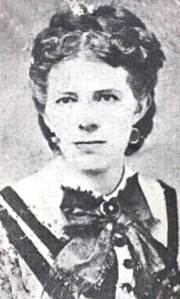
Kate Stone’s Civil War: I was young again

Stone’s last three entries in her diary are from September 1867 and 1868. They form a somber epilogue to her chaotic journey. They capture a bitter reflection of a shattered Southern slaveholding society, adrift, confused, and afraid of a world in which they no longer rule.

KS10

From 2012 to 2015, Stillness of Heart will share interesting excerpts from the extraordinary diary of Kate Stone, who chronicled her Louisiana family’s turbulent experiences throughout the Civil War era.

Learn more about Stone’s amazing life in 1861, 1862, 1863, 1864, 1865 and beyond. Click on each year to read more about her experiences. You can read the entire journal online here.

(Photo edited by Bob Rowen)

Stone’s last three entries in her diary are from September 1867 and 1868. They form a somber epilogue to her chaotic Civil War journey. They capture a bitter reflection of a shattered Southern slaveholding society, adrift, confused, and afraid of a world in which they no longer rule.

Read her first entry in this series here.

Sept. 22, 1867

Brokenburn

A long silence and a year of hard endeavor to raise a crop, reconstruct the place with the problem of hired labor, high water, and cotton worms. Mamma had little trouble in getting advances in New Orleans to plant. Cotton is so high that merchants are anxious to advance to put in a crop, and there is much Northern capital seeking investment in that field. … The Negroes demanded high wages, from $20 to $25 for men, in addition to the old rations of sugar, rice, tobacco, molasses, and sometimes hams. Many of the old hands left, and My Brother went to New Orleans and brought back a number of ex-Negro soldiers, who strutted around in their uniforms and were hard to control. I was deadly afraid of them.

During the spring while Mamma and I were in New Orleans (Mamma on business and she took me for my pleasure), and Uncle Bo and My Brother and Jimmy were away for a few hours, Johnny had a fight with a young Negro in the field, shot and came near killing him, and was mobbed in return. Johnny would have been killed but for the stand one of the Negroes made for him and Uncle Bo’s opportune arrival just as the Negroes brought him to the house a howling, cursing mob with the women shrieking, “Kill him!” and all brandishing pistols and guns. It came near breaking up the planting, and it is a pity it did not as it turned out. Johnny had to be sent away. He was at school near Clinton [Miss.] and the Negroes quieted down and after some weeks the wounded boy recovered, greatly to Johnny’s relief. He never speaks now of killing people as he formerly had a habit of doing. He came home when school closed and there was no further trouble.

Then the water came up and we were nearly overflowed. The cotton planted was very late, and when it was looking as luxuriant and promising as possible and we saw ease of mind before us, the worms came. In a few days the fields were blackened like fire had swept over them. We made about twenty bales and spent $25,000 doing it. What most distresses me is that none of that money went for our personal comfort. All of it went to the Negroes. Mamma would buy only bare necessaries for the table and plainest clothes for the family. Not a luxury, no furniture, carpets, or anything. We are worse off for those things than even in Texas and such a sum spent! But Mamma said it was not honest to spend the money on anything but making the crop. All in this section have suffered in the same way, and for awhile they seemed stunned by their misfortunes. But now the reaction has come, and all are taking what pleasure offers.

Old neighbors and new ones have come in and all seemed to be anxious to be together and talk over their trials and tribulations. There has been much visiting and various picnics and fish frys. I would not go at first. I felt like I did not want to see anybody or ever dance again. I felt fully forty years old, but Mamma made me go after a good cry. Once there, I was compelled to exert myself, and soon I was enjoying it all. The burden of some of the years slipped from my shoulders, and I was young again. It was pleasant to talk nonsense, to be flattered though one knew it was flattery, and to be complimented and fussed over. So since then, Mamma, the boys, and all of us have been going to everything and have found even poverty in company more bearable than when suffered alone. …

September 1868

Rose Hill

In January My Brother rented this place knowing that Brokenburn would be again overflowed, and we moved out the latter part of the month. My Brother lost money again last year planting, and this year he determined to farm, planting a little of everything.

Johnny and Jimmy are both at home, and having nothing to do pulled off their coats and rolled up their sleeves and went to work to raise a crop of corn and potatoes for themselves. They have succeeded well as they will clear several hundred dollars.

We all regret so much Jimmy’s refusal to go buck to the hospital. … We fear he is throwing away the best chance of his life. The boys are so hot and tired when they come in from the fields. …

Sept. 28, 1868

Rose Hill

Mother has been in Vicksburg for a month on a visit to Aunt Sarah. It is her first outing for eighteen months. We hope it will benefit her — her health has been bad for more than a year. She is seldom out of bed more than a week at a time. It took great persuasion and the pointed urging of the whole family to induce her to go on this visit that Aunt Sarah has been begging her to take for months.

Jimmy is now on the wharf boat, Johnny at Omega, and Sister, My Brother, and I have it all our own way with but little to do. My Brother is making an excellent crop and is much more cheerful. …

How we wish Sister could be sent off to school for two years, but it has been impossible. No money. … Let us hope that now the current will change and success will be our portion, as the outlook is brighter than for three years.

This is a pleasant neighborhood … and everybody has been kind and polite about calling and coming in at all times. [The other day we] had another of those inevitable dances that have been given so often this summer. Mary and Katie Byrnes, Louise Meagher, and the other girls never seem to tire of them, but they wear me out — such a sameness. I doubt not that I am getting too old for such gaieties. The men and boys about here are so silly and boyish in conversation. …

It has been an enjoyable life since we came here in January. It is a pleasant enough cottage house, after we got it thoroughly cleaned. There is a lovely little flower yard and a splendid orchard, and the kindest and most sociable neighbors with various little entertainments and dances. …We have new books and papers ad libitum, a luxury we missed for years.

My Brother has just sent Mamma money to buy our winter clothes, and Sister and I are jubilant at the prospect of new dresses and bonnets. We have lived on very little of late years, little bought that was not absolutely necessary. They have dressed me better than any of the others. I have not wanted for anything indispensable for a young lady, but the only money I have spent really as I wished was five dollars of the ten Uncle Bob gave me when Mamma and I went to New Orleans three winters ago. …

What splendid fellows my brothers are. They are all so good to us and such handsome boys. Sister looks almost the same, scarcely older than three years ago. We hope she can go to school this fall and make her debut next fall. If not, I shall beg Mamma to put long dresses … on her and bring her out this winter. She has a gay cheerful nature, and I hope will have a happy girlhood.

Mamma’s bright hopeful spirit never change. She is us always the ruling power with us all, the center and light of our home. How much she will have to tell us on her return, and maybe Aunt Sarah will come with her.

Well, this is the last page of the book that has gone with me through all our journeying. Looking back to the beginning so many years ago, I realize what an unthankful, wicked girl I was not to be supremely happy. With youth, health, and everything surrounding me for comfort and happiness. with unmistakable blessings, I was yet an unsatisfied, discontented girl. It has taken trouble to teach me my faults, and how earnestly I try now to enjoy instead of repine, to be thankful instead of fault-finding. I will try always to see the silver lining to the cloud. All my life I have been surrounded with love and care, far more than I deserved, and I will try in the future to be more worthy of the blessings that brighten my pathway.

So this is the end — shall I ever care to write again?

FINIS

Visit Mission Concepcion on Oct. 16

For just one night, on Friday, Oct. 16, 2015, at 8 p.m., an artist will project light onto the building, virtually “restoring” the Mission to its former glory.

IMG_2070

I’m a history teacher at Northwest Vista College in San Antonio. I teach both parts of the introduction to U.S. history. HIST 1301 begins the tour in Native America and ends with post-Civil War Reconstruction. HIST 1302 begins with Reconstruction and brings it to the modern era.

Every teacher ends the second half in different places: the Reagan Revolution, 9/11, the election of Barack Obama. Because I’m emphasizing the relevance of history to current events (if they leave my class with nothing else, at least they will be more sensitive to and appreciative of the historical roots of news events all around them), I intend to end the second half with the rise of ISIS.

I’ve slowly come to appreciate the historical richness and importance of San Antonio, if only because of my lifelong failure to fully appreciate Mexican and Tejano culture. But San Antonio has captured my heart and, more importantly, my respect as a historian. I’ve tried to share my new enthusiasm with my students by making them aware of the truly unique place of San Antonio in Spanish, Mexican, Texas, Confederate, and U.S. history.

One of their extra-credit opportunities is to visit one of the San Antonio Missions (a visit to the Alamo doesn’t count). They have to take a picture of themselves next to a sign indicating which Mission they visited, show it to me, and then they get an extra ten points towards their final grade for the semester.

As I just told them on our class blog, Ortiz History, I recently learned of one more reason to visit the beautiful Mission Concepcion. For just one night, on Friday, Oct. 16, 2015, at 8 p.m., an artist will project light onto the building, virtually “restoring” the Mission to its former glory. That will be the highlight of a three-hour festival of food trucks, picnics, historical tours, music, and family-friendly activities spread throughout the mission grounds. Festivities begin at 6 p.m.

Learn more about the event on its Facebook page.

Thinking As Leverage

Developing deep and critical thinking.

Behind The Wall

Tabletop Games

Rebecca Aguilar

#CallingAllJournalists Initiative | Reporter | Media Watchdog | Mentor | Latinas in Journalism

Anna Fonte's Paper Planes

Words, images & collages tossed from a window.

Postcards from Barton Springs

Gayle Brennan Spencer - sending random thoughts to and from South Austin

The Flask Half Full

Travel stories and culture, with a twist.

Government Book Talk

Talking about some of the best publications from the Federal Government, past and present.

Cadillac Society

Cadillac News, Forums, Rumors, Reviews

Ob360media

Real News That Matters

Mealtime Joy

bringing joy to family meals

Øl, Mad og Folk

Bloggen Øl, Mad og Folk

a joyous kitchen

fun, delicious food for everyone

A Perfect Feast

Modern Comfort Food

donnablackwrites

Art is a gift we give ourselves

Fridgelore

low waste living drawn from food lore through the ages

BeckiesKitchen.com

MUSINGS : CRITICISM : HISTORY : NEWS