
Kate Stone’s Civil War: This is too disgraceful

Kate Stone’s brother returned with news of a beloved Louisiana crawling with Federal troops and Unionists. Stone was enraged, disgusted, and insulted.

KS38

From 2012 to 2015, Stillness of Heart will share interesting excerpts from the extraordinary diary of Kate Stone, who chronicled her Louisiana family’s turbulent experiences throughout the Civil War era.

Learn more about Stone’s amazing life in 1861, 1862, 1863, 1864, 1865 and beyond. Click on each year to read more about her experiences. You can read the entire journal online here.
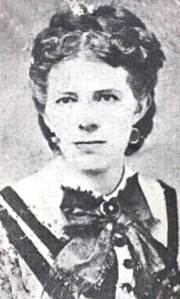
(Photo edited by Bob Rowen)

Kate Stone’s brother returned with news of a beloved Louisiana crawling with Federal troops and Unionists. Stone was enraged, disgusted, and insulted.

Oct. 8, 1863

“Elysian Fields,” Lamar County, Texas

The last few days have been full of interest. First, Johnny returned only last night, and this opens the gates of release from this region of sin and woe. We think we can get off on Monday. Uncle Johnny has been awaiting only Johnny’s return to move on, and they will start on their long journey on Saturday over 300 miles. Thus Johnny’s arrival has been the signal trumpet calling us all to horse and away.

A letter from Julia in which she says My Brother was twice severely wounded in his right arm in the battle of Gettysburg. He has recovered and is with his command but has lost the use of his right hand. We are truly thankful it is no worse. If we could only hear all that has happened to him since seeing him last, but we know so little. Poor fellow, this is his fifth wound and the most severe of all. We so hope he can get a furlough this fall. It worries me to hear of Tom Manlove’s frolicking about, getting married and enjoying himself in every way, getting all the honor, while My Brother, who is worth ten of him, gets only the hard work of the camp and the wounds. … I can write and think myself into a fever about My Brother.

Julia is still at Camden. All wagons have been impressed to remove government stores, and so they cannot get away. She heard through Robert Norris, who wrote asking news of his aunt, that Uncle Bo is well and is now a 1st lieutenant. We are so glad of his promotion. Not a word of Brother Coley, and we are very anxious about him. Joe Carson is regimental colorbearer, a dangerous post. …

Johnny gives a dreadful account of affairs in and around Delhi and Monroe. Most of the citizens remaining boast of being Unionists and carry on a most profitable trade with Vicksburg. The Yankee cavalry came out to Monroe by invitation, and a number of citizens signed a petition asking them to come out and drive away our soldiers still there. This is too disgraceful to be true. Then, a great number of Louisianians have deserted. My cheek crimsons as I write this of our own beloved state, but I cannot believe that she has brought her name to be a disgrace and reproach to her loyal children. …

Kate Stone’s Civil War: Two distressed damsels

A simple carriage-ride day trip for Kate Stone and her friend Kate turned into a nightmare.

KS37

From 2012 to 2015, Stillness of Heart will share interesting excerpts from the extraordinary diary of Kate Stone, who chronicled her Louisiana family’s turbulent experiences throughout the Civil War era.

Learn more about Stone’s amazing life in 1861, 1862, 1863, 1864, 1865 and beyond. Click on each year to read more about her experiences. You can read the entire journal online here.

(Photo edited by Bob Rowen)

A simple carriage-ride day trip for Kate Stone and her friend Kate turned into a nightmare.

Oct. 2, 1863

“Elysian Fields,” Lamar County, Texas

We got a late start [on our shopping trip] … with a tired horse and in a drizzling rain, and we had not gone two miles before our bad luck caught up with us.

Uncle Johnny took the wrong road, and we soon found it out and urged him to turn around. He avowed his horror of anything like a backward movement and kept on his chosen way, thinking it would lead into the right road. We traveled on for several miles, leaving home farther and farther away, until at last our united persuasions induced him to turn and cut across the country instead of heading straight for Arkansas, as we were doing. After a wearisome ride thorough stubborn thickets and hogwallow prairie, we at last reached the Paris road and went on rejoicing, but our troubles were just beginning.

A slow pattering rain set in and the buckshot prairie soil grew heavy and more heavy, and our gallant grey was visibly tired. We got out of the Jersey in the pouring rain to cross Sulphur Creek, the bridge like most Texas bridges being only a trap for the unwary. With wet heads and muddy feet, we climbed in again, congratulating ourselves that we would soon be at home. Vain hope. Night came on apace, wrapped in her sable mantle and unbrightened by a star, and we were still four miles from our own hearthstone with a horse only able to drag on in a slow walk. Again we took the wrong road and wandered off on what looked in the uncertain light like a boundless prairie with not a house or road in sight. Again as in the morning we begged Uncle Johnny to turn back to the right road, but true to his expressed principles he refused. We journeyed on, leaving the horse to find his way and straining our eyes to discern a light, but the only lights were those shining up through the tangled grass, the countless glowworms with their gleaming crests. At last plodding along in the Egyptian darkness, the horse gave out entirely, and … we were forced to camp out.

We picketed out the poor horse and wrapped ourselves in bolts of calico and woolen, for we had not a wrap of any kind and it had grown very chilly. Crouching in the Jersey, we resigned ourselves to sweet slumber, but nature’s kind restorer, balmy sleep, was safely sheltered in warm homesteads and was not to be coaxed out on the bleak cold prairie. Twisting and turning we wore the hours away until we discovered that the horse was off picket, and such a chase as Uncle Johnny had to catch him, while we had visions of wandering lost on the prairie for days.

As soon as the first tints of day crimsoned the east, Uncle Johnny set off for home to bring relief to two distressed damsels. The horse was too spent to take us all home. How we laughed at the figure Uncle Johnny presented when he started off with a cushion for a saddle. Kate and I at once went to sleep. Jimmy found us cuddled down in the bottom of the Jersey fast asleep when several hours later he came to our relief with a fresh horse. We reached home at last just before dinner, two forlorn-looking wights and very hungry.

Kate Stone’s Civil War: Destroyed by the Yankees

Stone at last received news of the rest of her family and was left despondent. War scattered her relatives, destroyed their communities, and turned them into disgraced refugees.

KS36

From 2012 to 2015, Stillness of Heart will share interesting excerpts from the extraordinary diary of Kate Stone, who chronicled her Louisiana family’s turbulent experiences throughout the Civil War era.

Learn more about Stone’s amazing life in 1861, 1862, 1863, 1864, 1865 and beyond. Click on each year to read more about her experiences. You can read the entire journal online here.

(Photo edited by Bob Rowen)

Stone at last received news of the rest of her family and was left despondent. War scattered her relatives, destroyed their communities, and turned them into disgraced refugees.

Note how Stone almost admired how she managed to get on with her life with “almost nothing but servants, and yet we are comfortable.”

Sept. 20, 1863

“Elysian Fields,” Lamar County, Texas

Uncle Johnny was at Richmond, Va., a month ago and heard from nearly every member of the family. How thankful we are to know that they are all alive, though perhaps in distress. My Brother was neither killed nor hurt in the Pennsylvania campaign. Uncle Bo is as usual in fine health and spirits and is under [Confederate commander Braxton] Bragg. Dr. Buckner and Brother Coley are also with Gen. Bragg, and Aunt Laura is at Chattanooga within reach of Dr. Buckner. How glad we are that she is comfortably settled and not suffering all the discomforts of life in Texas. …

Aunt Sarah is at Bladen Springs, Ala. Poor little Horace is dead, a most bitter blow to his mother. He was her favorite. She was keeping house at Cooper’s Well when the Yankees marched on Jackson. She just escaped on the last train with only their wearing clothes. Everything else was destroyed by the Yankees, house and furniture burned, piano hacked to pieces, and the portraits torn to shreds. … It looks like the whole family is to be ruined, root and branch. Every member of it is broken up and all the women and children fleeing from the Yankees, while all the men and half-grown boys are in the army.

We are thankful Mamma has saved most of Uncle Bo’s Negroes, and if we can keep what we have now we can help the others. But I have a strong presentment that we shall yet lose all that we have and be compelled to labor with our hands for our daily bread.

Mrs. Smith had moved up to Mr. Vaughn’s just in time to give room for Uncle Johnny. How glad we are to have a house to ourselves once more. Mrs. Smith was very kind in leaving everything we needed for housekeeping. It is surprising how little one can get on with. We seem to have almost nothing but servants, and yet we are comfortable, comparatively so.

I have finished knitting those tiresome gloves and can read with a clear conscience. Fingered and gauntlet gloves are a trouble to knit.

Sept. 22

The news today is discouraging. Charleston [S.C.] has fallen, Louisiana and Arkansas are to be entirely deserted by our troops, and all the available forces of the Trans-Mississippi Department are to be concentrated at Tyler, Texas. If Charleston has fallen, it is because it was not in the power of man to hold it. Everything possible had been done, and it had made a most gallant defense. No disgrace can sully the name of its Gen. Beauregard, as the name of Lovell and Pemberton have been darkened. …

How I long for a glimpse at Brokenburn these pleasant autumn days radiant in flowers and crowned with fruit, the grassy yard and tall oaks, the clump of sassafras changing now to bright crimson, and the fragrant sweet gum showering down its leaves of gold, the flower garden sparkling across the grass, its many kinds of fall flowers gay in the mellow September sun, and the wide fields stretching away, white with cotton and vocal with the songs of the busy pickers. Shall we ever see it so again?

Kate Stone’s Civil War: They call us all renegades

Two carriage accidents, a large rattlesnake, and a dirty house all inspire Stone to call Texas “the dark corner of the Confederacy.”

KS33

From 2012 to 2015, Stillness of Heart will share interesting excerpts from the extraordinary diary of Kate Stone, who chronicled her Louisiana family’s turbulent experiences throughout the Civil War era.

Learn more about Stone’s amazing life in 1861, 1862, 1863, 1864, 1865 and beyond. Click on each year to read more about her experiences. You can read the entire journal online here.

(Photo edited by Bob Rowen)

Two carriage accidents, a large rattlesnake, and a dirty house all inspire Stone to call Texas “the dark corner of the Confederacy.”

Aug. 30, 1863

“Elysian Fields,” Lamar County, Texas

I must record the first instance of liberality that has come under our notice since entering the state. The first night after leaving Tyler we stayed at a Mr. Fowler’s, a very nice place, and they did not charge us a cent. But we were picked up the next night. We lost our way and traveled until 8 o’clock when we asked to stay at a pretty, large, white house, white only on the outside. I despair of giving any idea of the dirt. We tried to eat without seeing or tasting and to sleep without touching the bed. They gave us coffee, a horrid decoction of burnt wheat and milk without sugar, in saucers and water in the halves of broken bottles. The table was set in the dirtiest of kitchens with a dirt floor and half a dozen half-naked little Negroes and numberless cats and dogs scampering through the room and under the table. The rafters were festooned with old hoop skirts and worn-out, rough boots. It surpassed any place we have been in yet. We certainly had found the dark corner of the Confederacy.

We lost our way again one evening and traveled until way in the night, through a wild woods road dotted with stumps. But it was cool and bright moonlight and really more pleasant than a stuffy dirty room, but the mules and Hoccles did not enjoy it.

Our next adventure was not so pleasant. The mules were rushing down a long, rocky, red hill. Hoccles is a wretched driver and lets them do pretty much as they please when crash! over went the Jersey, and we rolled out on the ground, along with a confused medley of baskets, bundles, palmetto, corn, bonnets, and boxes. Fortunately no serious damage was done, and after a few repairs to the Jersey we journeyed on. Hoccles is a right good tinker for wagons.

But our troubles were not yet over. The mules were trotting briskly along through the white sand, Mamma was asleep sitting in the foot of the Jersey, and I was knitting away, when there was a sudden cluck and tearing sound. I looked up to see the whole top of our devoted Jersey folding back like a fan. While Hoccles was nodding in the sultry heat, we had run into a tree and broken the top nearly entirely off. Mamma gave a groan and exclaimed, “Now Hoccles, just run us over a stump and break the wheels and maybe you will be satisfied. You have broken the bottom racing down the hill. But that would not do you. You had to go and break the top. Now run over a rock and break the wheels and you will be fixed!”

I could not help laughing. It was funny in spite of our bad plight, and poor Hoccles looked so humble and apologetic. We thought he would be forced to take the entire top off, but he was equal to the emergency. With hammer, nail, and strings, he patched it up so it lasted until we reached home. But it is a most forlorn, lopsided affair. If we just had our own good carriage, but we hear it is a smallpox ambulance now.

Our last day we just missed driving over the largest rattlesnake, stretched across the road basking in the sun. It was larger than my arm and had twelve rattles. That frightened us most of all. It might have glided into the carriage as we drove over it. …

A long letter from Julia Street was awaiting me. … She says she hates Arkansas and wants to come to Texas. I am sure she will hate this state ten times more. If she is a wise girl, she will stay where she is as long as possible. The more we see of the people, the less we like them, and every refugee we have seen feels the same way. They call us all renegades in Tyler. It is strange the prejudice that exists all through the state against refugees. We think it is envy, just pure envy. The refugees are a nicer and more refined people than most of those they meet, and they see and resent the difference. That is the way we flatter ourselves. …

Recommended reading / viewing / listening

Profiles of first ladies / Childfree and loving it / A boring mission to Mars / A Texas-made space telescope / Nixon’s love for Jews

IMG_2092

This week: Profiles of first ladies / Childfree and loving it / A boring mission to Mars / A Texas-made space telescope / Nixon’s love for Jews

Most of these great items come from my social media networks. Follow me on Twitter, Tumblr, LinkedIn, MySpace, and Facebook for more fascinating videos, photos, articles, essays, and criticism.

1. The First Ladies
C-SPAN | 2013 and 2014
Watch the stunning and fascinating series about the women as intelligent, complex, canny, and noble (if not more so) than the presidents their husbands became.

2. The Choice To Be Childfree
On Point with Tom Ashbrook :: NPR | Aug. 23
“Childless by choice. We look at the trend of couples saying ‘no thanks’ to having kids.”

3. Dating Superman
By Seth Stevenson | Slate | May 2013
“The ultimate superpower would let you find, woo, and mate with the perfect person”

4. Olivia Wilde Takes Center Stage
By Emma Brown | Interview | Aug. 22
Drinking Buddies is Olivia Wilde’s first time carrying a film, but it is certainly not her last. With upcoming roles in everything from Rush to Spike Jonze’s Her and Paul Haggis’ Third Person, Wilde is the girl of the moment.”

5. Danger! This Mission to Mars Could Bore You to Death!
By Maggie Koerth-Baker | The New York Times Magazine | July 2013
“It would be catastrophic if humanity’s greatest voyage were brought low by the mind’s tendency to wander when left to its own devices. ”

6. Some Newly Uncovered Nixon Comments on the Subjects of Jews and Black People
By Elspeth Reeve | Atlantic Wire :: Atlantic Monthly | Aug. 21
“Richard Nixon was like many a Millennial (or middle-aged politician) who’s gotten busted for sending racy emails or sexts — even though he knew everything he was saying would be archived forever, he still said really inappropriate things.”

7. UT, A&M telescope to be 10 times sharper than Hubble
By Robert Stanton | Houston Chronicle | Aug. 21
“This Saturday, the third mirror for the Giant Magellan Telescope (GMT) will be cast inside a rotating furnace lab at the Steward Observatory in Tucson, Ariz. It’s the only facility in the world where mirrors this large are being made.”

8. Turkey’s Women Strike Back
The New York Review of Books | Aug. 19
“Just as some Turks have recognized for the first time that violence against the Kurds in the east is no different than the police violence they are now experiencing in the west, they are also becoming aware that state meddling in women’s lives means meddling in the lives of everyone.”

9. Not-so-empty nests: When adult children live at home
By Adriene Hill | Marketplace Life | May 2013
“There are more than 22 million adult children still living at home with their parents, according to the U.S. Census Bureau.”

10. The End of Second Acts?
By Shadd Maruna and Charles Barber | The Wilson Quarterly | Spring 2013
“The mass warehousing of convicts is a sign of America’s faltering belief in second chances. Considering how individuals atone for their crimes can help us restore rehabilitation as an ideal.”

Kate Stone’s Civil War: My pen is powerless

Stone had little respect for anyone who lacked her sense of style and bearing. She hardly sympathized with the people of East Texas.

KS31

From 2012 to 2015, Stillness of Heart will share interesting excerpts from the extraordinary diary of Kate Stone, who chronicled her Louisiana family’s turbulent experiences throughout the Civil War era.

Learn more about Stone’s amazing life in 1861, 1862, 1863, 1864, 1865 and beyond. Click on each year to read more about her experiences. You can read the entire journal online here.

(Photo edited by Bob Rowen)

Stone had little respect for anyone who lacked her sense of style and bearing. She hardly sympathized with the people of East Texas.

Aug. 16, 1863

“Elysian Fields,” Lamar County, Texas

We went to church this morning at a tumbledown schoolhouse called Liberty expecting to hear the funeral sermon of Mrs. Alexander, who was a near neighbor. The poor woman has been dead four months, and her husband married again six weeks after her death. But he says he is determined to pay proper respect to dear Mary and so will have her funeral preached, with the new wife sitting decorously near to hear it.

It was the oddest-looking crowd one could imagine, and the very funniest dressing we ever saw. My pen is powerless to describe it: one girl airy in pink tarleton and another sweltering in red woolen; high horn combs with long ribbon streamers waving from the top; immense hoops; and strand after strand of beads, all colors, wound around their necks.

Many of the men were barefooted, and nearly all of their slouched wool hats were decorated with ribbons or an artificial flower. There were few coats but many vests and a display of homemade knit galluses. It was a most unusual-looking crowd, all sitting on puncheons laid on supports, some of them constantly slipping down. …

Kate Stone’s Civil War: Conquer or die

As a Texas summer storm approaches, Stone angrily vows that the Confederacy will never surrender to the Union forces that shattered her family.

OLYMPUS DIGITAL CAMERA

From 2012 to 2015, Stillness of Heart will share interesting excerpts from the extraordinary diary of Kate Stone, who chronicled her Louisiana family’s turbulent experiences throughout the Civil War era.

Learn more about Stone’s amazing life in 1861, 1862, 1863, 1864, 1865 and beyond. Click on each year to read more about her experiences. You can read the entire journal online here.

(Photo edited by Bob Rowen)

As a Texas summer storm approaches, Stone angrily vows that the Confederacy will never surrender to the Union forces that shattered her family.

Aug. 10, 1863

Lamar County, Texas

Nearly the close of summer and we are still in our first Texas retreat. We have dubbed it “Elysian Fields.” Mr. Smith has been away nearly a week looking for another location. No matter where we may go, we are almost sure to meet some of our old friends or acquaintances, for everybody about Monroe is moving out this way, we hear, scattering over Texas. How good the sight of a familiar face will be. I would feel like kissing nearly anybody I had ever seen before. …

Our list of victories last month were all a mistake. Gen. Lee has recrossed into Virginia, and our march into Pennsylvania seems to have been barren of results. We do not hold nor have we destroyed a single Northern city, as we so much hoped. A dark hour for the Confederacy. The loss of Vicksburg has stunned the whole country. It is a grievous blow, and there is great discouragement at least on this side of the Mississippi River. But the reaction will come. The people will rally to strike a more deadly blow, to fight till the last armed foe expires, to conquer or die.

Mamma, Sister, and Johnny are just in from their round of investigation. Instead of renting Mrs. White’s house they rented a book. The house was already taken, but she had quite a library of books that she would hire out for fifty cents a week. She would not think of lending them. The book Mamma brought was a most worthless thing, but the engravings in it are fine. Mrs. White is an educated woman, lives in a nice house, and is well to do, but a regular skinflint. She is living from day to day on the verge of the grave, suffering from some incurable complaint, and is still very eager to make money, extorting the last cent. She has one of our women hired to wait on her. She is a Yankee. That explains all. …

We look out tonight on a windy, stormy sky. Dark clouds go scudding by, and the wind whistles through our frail tenement. The boards have shrunken until daylight shines through. Lightning flashes continuously, thunder is rolling overhead, and the whole prairie is ablaze with the fireflies, weaving in and out like fairy shuttles.

Kate Stone’s Civil War: Lose our scalps

Stone’s critical eye takes in a town’s beauty, overpriced luxuries, her brother’s love, and a gentleman’s proper language use.

KS29

From 2012 to 2015, Stillness of Heart will share interesting excerpts from the extraordinary diary of Kate Stone, who chronicled her Louisiana family’s turbulent experiences throughout the Civil War era.

Learn more about Stone’s amazing life in 1861, 1862, 1863, 1864, 1865 and beyond. Click on each year to read more about her experiences. You can read the entire journal online here.

(Photo edited by Bob Rowen)

Stone’s critical eye takes in a town’s beauty, overpriced luxuries, her brother’s love, and a gentleman’s proper language use.

Aug. 3, 1863

Lamar County, Texas

Paris is a clean, pretty place in the edge of Blossom Prairie — clumps of trees and deep white sand in the streets.

We went to church and saw a really nice-looking congregation of refined-looking people. We all liked the place so well that Mamma would rent a place there, but it is too near the borderline, the first point for an invasion and right next to the Indian Nation. We do not wish to lose our scalps in addition to everything else. We saw a large party of Indian men dashing through the town. They are nearly all Southern sympathizers, we hear.

We went shopping. There are several well-filled stores, but the prices are beyond anything. We saw a pretty light calico but Mamma could not afford it at $6 a yard. A penknife was very tempting, but who would give $25 for a little Yankee knife? Our nails will have to grow like eagle’s claws before we can afford an extravagance of that kind. We did get a few articles, absolute essentials, and Mamma indulged me in a piece of extravagance a deck of playing cards at $5. They are a different kind from those the girls use out here, but I fancy they will afford us more amusement than the finest pair of cotton cards.

A gentleman gave us a late Louisiana paper containing Mary Gustine’s marriage on July 21. I know she was a beautiful bride, and our best wishes go with her for her future happiness. I wonder how Brother Coley will stand the loss of his sweetheart, his first love affair. Like most boys, he lost his heart to a girl several years the older — fortunately a disease that never kills a boy of that age.

The Baptist meeting has been going on in Paris for seven weeks, and sixty have joined that church. It seems the strongest church of this section. Sunday morning we heard a splendid sermon, the best since hearing Dr. Marshall preach two years ago. I wish Jimmy could have heard it. It was the first real Baptist sermon I ever really listened to. Have heard the preacher, Mr. Buckner — knows what he believes and is not afraid to preach it from the pulpit.

We have made the acquaintance of another Texas gallant. Dr. Bywaters, introduced as a friend by Mr. McGleason, walked home with us from church. One thing in his favor: he does not say “mile” for “miles,” and he does not ignore the plural of “year.”

Kate Stone’s Civil War: Despondent and chicken-hearted

Stone is wary of “chicken-hearted” rumors of a defeat at Vicksburg. She also receives her first “Texas beau.”

KS27

From 2012 to 2015, Stillness of Heart will share interesting excerpts from the extraordinary diary of Kate Stone, who chronicled her Louisiana family’s turbulent experiences throughout the Civil War era.

Learn more about Stone’s amazing life in 1861, 1862, 1863, 1864, 1865 and beyond. Click on each year to read more about her experiences. You can read the entire journal online here.

(Photo edited by Bob Rowen)

Stone is wary of “chicken-hearted” rumors of a defeat at Vicksburg. She also receives her first “Texas beau.”

July 26, 1863

Lamar County, Texas

I had my first call from a Texas beau yesterday evening.

A smooth-faced, rosy-cheeked, young dandy, dressed in the height of Paris fashion and dotingly proud of his jet-black imperial. Several of the elite of Blue’s Prairie have called on us. I wonder, shall we look as old-fashioned as they after a year or two of prairie life? Even Blue’s Prairie is looking lovely now. It is covered with a flower, looking like feathery, white plumes laced and tangled together with a yellow love vine and purple maypop vines.

There are some most disquieting rumors believed by the despondent and chicken-hearted, but we do not give them credence. It is said both Vicksburg and Port Hudson have been taken, with a number of prisoners. We have heard it affirmed and contradicted half a dozen times. We will wait to see Gen. Johnston’s official report of such disaster before believing it.

Unionism is rampant about here. There was a company of Jayhawkers for the Federal side raised in this county. Half of the militia have been drafted for six months, and oh, the moaning and bewailing of the feminine population. But I cannot be sorry for the militia. My sympathies are all with the soldiers in the field.

Kate Stone’s Civil War: The dirtiest people

Stone hated and pitied the people of Texas. She gagged at the sight of unshaven men sitting at her dinner table. The seeming normality of violence horrified her. But the natural beauty of Texas gradually entranced her.

KS25

From 2012 to 2015, Stillness of Heart will share interesting excerpts from the extraordinary diary of Kate Stone, who chronicled her Louisiana family’s turbulent experiences throughout the Civil War era.

Learn more about Stone’s amazing life in 1861, 1862, 1863, 1864, 1865 and beyond. Click on each year to read more about her experiences. You can read the entire journal online here.

(Photo edited by Bob Rowen)

Stone hated and pitied the people of Texas. Barefooted women, evidently ignorant of the latest Southern fashions, still wore outdated “hoops.” The roads all the looked the same. She gagged at the sight of unshaven men sitting at her dinner table. She lost her appetite when she witnessed dusty slaves washing dishes “in the duck pond” before dinner. The Texas heat was punishing. The seeming normality of violence horrified her.

But the natural beauty of Texas gradually entranced her.

July 12, 1863

Lamar County, Texas

We made our first visit in Texas yesterday. We went to a protracted meeting being carried on nine miles from here at an old schoolhouse called — it must be in mockery — “Paradise.” After the meeting we went by invitation to spend the evening and night with some real nice people, settlers from Virginia, the McGleasons. They are a pleasant family and exceedingly hospitable. We came back this morning after a ride of nearly eighteen miles, having missed our road three times. The prairie roads are so much alike it is impossible for strangers to distinguish the right from the wrong.

The congregation was much more presentable than the Gray Rock crowd. We saw several nice-looking families, but all were in the fashions of three years ago. If they would only leave off their tremendous hoops, but hoops seem in the very zenith of their popularity. Mamma and I were the only women folks without the awkward, ungraceful cages. No doubt the people thought us hopelessly out of date. We have not worn them for a long time. Nothing looks funnier than a woman walking around with an immense hoop barefooted.

Mamma and I went several days ago to Tarrant in Hopkins County. The road ran part of the way over a lovely rolling prairie, dotted with clumps of trees and covered with the brilliant, yellow coreopsis in full bloom and gemmed with countless little mounds of bright green, like emeralds set in gold. Tarrant is the hottest looking, new little town right out in the prairie not a tree.

We tried to eat dinner at the roughest house and with the dirtiest people we have met yet. The table was set on a low, sunny gallery and half a dozen dirty, unshaven men took their seats in their shirt sleeves at the dirtiest tablecloth and coarsest ware. We saw the Negro girl wash the dishes at the duck pond right out in the yard. That was too much for me, but Mamma and Mr. Smith managed to swallow down something. …

The prairie we are living on is called a thicket prairie. There are clumps of dwarf dogwood, spice trees, and plums, tangled together with wild grape and other vines and alive with snakes. The plums are just in season, a sour, red variety just like the swamp wild plums, and are nice for jelly. The prairie is a mass of flowers, one variety covering it at a time. Before you realize it, that color has faded away and another has taken its place, and this succession of flowers and colors goes on until frost comes and spreads a brown sheet over all. There are many familiar garden flowers: blue salvia, coreopsis, verbenas, larkspur, standing cypress, and now as far as the eye can reach the prairie is a mass of waving purple plumes, “French pinks,” the natives call them. …

We hear no news now but accounts of murders done and suffered by the natives. Nothing seems more common or less condemned than assassination. There have been four or five men shot or hanged within a few miles of us within a week. No one that we have seen seems surprised or shocked, but take it as a matter of course that an obnoxious person should be put to death by some offended neighbor. A few evenings ago a captain in the army had just reached home on a furlough three hours before when he was shot at through his window. He was killed and his wife dangerously wounded. The authorities are trying to find the men who did it. It is supposed to be one of his company who had vowed vengeance against him. The other miscreants go unwhipped of justice.

Rebecca Aguilar

#CallingAllJournalists Initiative | Reporter | Media Watchdog | Mentor | Latinas in Journalism

Anna Fonte's Paper Planes

Words, images & collages tossed from a window.

Postcards from Barton Springs

Gayle Brennan Spencer - sending random thoughts to and from South Austin

The Flask Half Full

Irreverent travelogues, good drinks, and the cultural stories they tell.

Government Book Talk

Talking about some of the best publications from the Federal Government, past and present.

Cadillac Society

Cadillac News, Forums, Rumors, Reviews

Ob360media

Real News That Matters

Mealtime Joy

bringing joy to family meals

Øl, Mad og Folk

Bloggen Øl, Mad og Folk

a joyous kitchen

fun, delicious food for everyone

A Perfect Feast

Modern Comfort Food

donnablackwrites

Art is a gift we give ourselves

Fridgelore

low waste living drawn from food lore through the ages

BeckiesKitchen.com

MUSINGS : CRITICISM : HISTORY : NEWS

North River Notes

Observations on the Hudson River as it passes through New York City. The section of the Hudson which passes through New York is historically known as the North River, called this by the Dutch to distinguish it from the Delaware River, which they knew as the South River. This stretch of the Hudson is still often referred to as the North River by local mariners today. All photos copyright Daniel Katzive unless otherwise attributed. For more frequent updates, please follow northriverblog on Facebook or Instagram.

Flavorite

Where your favorite flavors come together