Kate Stone’s Civil War: God spare us

The rumors finally reach Tyler: Lee may have surrendered to Grant. The Stone family refuses to believe it.

KS33

From 2012 to 2015, Stillness of Heart will share interesting excerpts from the extraordinary diary of Kate Stone, who chronicled her Louisiana family’s turbulent experiences throughout the Civil War era.

Learn more about Stone’s amazing life in 1861, 1862, 1863, 1864, 1865 and beyond. Click on each year to read more about her experiences. You can read the entire journal online here.
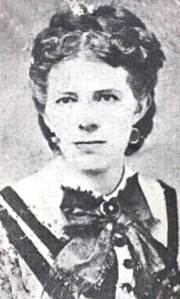
(Photo edited by Bob Rowen)

The rumors finally reach Tyler: Lee may have surrendered to Grant. The Stone family refuses to believe it.

Stone is especially detailed in this entry, perhaps burying herself in mundane moments to drive back the looming and crushing reality of Confederate defeat.

April 23, 1865

Tyler, Texas

Such terrible news if true, but we cannot believe it. We know that we have met with fearful reverses this year. All our coast cities are conquered: gallant old Charleston has fallen, Wilmington and Mobile have passed out of our hands, and Richmond … has been taken. But all that is nothing compared to the awful report from the Yankee papers that Gen. Lee, our strong arm of defense, has capitulated with 40,000 men without firing a gun, that most of our best generals were taken at the same time, and that what remains of that noble army is only a disorganized mob of despairing men. All this is too dreadful to believe. God spare us from this crushing blow and save our dying country!

All refuse to believe such disaster, and the home life flows on as usual. Two dramatic performances by the natives, the amiable Capt. Johnson saying he did not wish the refugees even to attend. Mrs. Gary is vice-president, and I am secretary of the society. The gentlemen come in the evening and the ladies call in the day, but over every pleasure sweeps the shadow of the evil news. It may be true. It may be true. Mollie Moore, Lt, Holmes, and I rode out to the armory to see the soldiers drill. Met Col. and Mrs. Hill, all sympathizing with Capt. Polys, who fell down while pulling the bell rope and broke his leg in two places.

Just finished three embroidered cravats for Johnny. Friday Mamma and I finished a beautiful fawn-colored barege trimmed with black lace. It looks real stylish. My old white dress has been dyed by Lucy. She has become quite an adept at dyeing things.

The rain came down in torrents Thursday but in the afternoon ceased and I rode up to school for Sister. Came through boggy roads and rushing streams at sundown. Found Lt. Holmes waiting to go with me to Mrs. Carson’s to tea, to stay there until 8:30, and then to drive over to Dr. Moore’s, Mollie’s father’s, to attend a private rehearsal. We had a pleasant time there until twelve, then the drive home, adieux to Lt. Holmes, and then the blessed oblivion of sleep. Went up to return Eliza Roberts’ call late in the afternoon.

Lt. Holmes caught up with me and came home and spent the evening. Busy sewing Tuesday until Lt. Holmes was announced, then had to spend the balance of the day amusing him. After he bowed himself away, I went over to see Mollie Moore and chatter nonsense. …

Had delicious white cake at Mrs. Lawrence’s. All the members of the troupe wanted Mamma for president of the society, but she would not hear of it. Mrs. Swain, a perfect incapable, was called to the chair. Capt. Buck has brought me a book nicely commenced for my official records, and Lt. Holmes is to see they are kept according to rule. Must send it around for members to sign.

Mamma has been much disturbed on the subject of details for Mr. Smith, but Lt. Dupre arranged the detail as he passed through Marshall. She hopes to have no further trouble on that score. …

Kate Stone’s Civil War: He would do anything

Stone’s entries refer to Lt. Holmes more often, and for good reason. Holmes would eventually become her husband.

KS25

From 2012 to 2015, Stillness of Heart will share interesting excerpts from the extraordinary diary of Kate Stone, who chronicled her Louisiana family’s turbulent experiences throughout the Civil War era.

Learn more about Stone’s amazing life in 1861, 1862, 1863, 1864, 1865 and beyond. Click on each year to read more about her experiences. You can read the entire journal online here.

(Photo edited by Bob Rowen)

Stone’s entries refer to Lt. Holmes more often, and for good reason. Holmes would eventually become her husband.

April 16, 1865

Tyler, Texas

All walked to church and were well repaid by an excellent sermon from Mr. Moore. … The tableaux with all their pleasant chat and laughter are a thing of the past. The gay rehearsals and frequent meetings are over, and we cleared about $900. The weather was wretched both evenings and of course kept many away, but we feel repaid for the trouble. The tableaux went off beautifully, not a hitch. Lt. Holmes — the Prince Charming as Mollie Moore and I dubbed him — was invaluable. He would do anything or adopt any suggestion we made. He was in attendance on Mollie and me all the time.

Dr. Weir came up to say good-bye as he is off for good. … He was much pleased with Mollie Moore, whom he met for the first time.

I tell Miss Mollie she always gets ahead of me when she tries the “poetry dodge” on our mutual friends. She is a charming girl. It is such a pleasure to have a friend to chatter nonsense to who enjoys it as much as I and does her full share. …

Kate Stone’s Civil War: A blow on my heart

Stone reveals a deep well of insecurity about herself as her mother confesses her own feelings about her intelligent daughter.

OLYMPUS DIGITAL CAMERA

From 2012 to 2015, Stillness of Heart will share interesting excerpts from the extraordinary diary of Kate Stone, who chronicled her Louisiana family’s turbulent experiences throughout the Civil War era.

Learn more about Stone’s amazing life in 1861, 1862, 1863, 1864, 1865 and beyond. Click on each year to read more about her experiences. You can read the entire journal online here.

(Photo edited by Bob Rowen)

Stone reveals a deep well of insecurity about herself as her mother confesses her own feelings about her intelligent daughter.

April 7, 1865

Tyler, Texas

Mamma distressed me much yesterday by telling me I was the most reserved person she ever knew, that she did not feel that she knew me at all.

It was like a blow on my heart for her to speak so. I never knew I was reserved. I never try to be. All that I can do is to endeavor to overcome this fault and to let her see that she knows all there is of me to know. The silly, light love affairs seemed too foolish to talk about, but I will try to be frank with my darling Mother. I wish I could be more like her, more like she would have me, but I fear we cannot change our nature.

Another impressive thing is she says that I am generally considered a very handsome, stylish-looking girl, but I know she is mistaken there. Motherly partiality has blinded her. I always considered myself rather remarkably ugly.

All the girls attended a party a few days ago and their escorts drank so much several were unable to accompany the girls home. All the men present but two were said to be drunk. I am thankful I did not go to such a disgraceful affair. The girls are much chagrined and offended.

Kate Stone’s Civil War: Out of time

An early-spring Texas cold front has scattered Stone’s beloved flowers, and she sinks into a depression as friends suddenly turn their backs and her brother wants to fight his school nemesis again.

KS22

From 2012 to 2015, Stillness of Heart will share interesting excerpts from the extraordinary diary of Kate Stone, who chronicled her Louisiana family’s turbulent experiences throughout the Civil War era.

Learn more about Stone’s amazing life in 1861, 1862, 1863, 1864, 1865 and beyond. Click on each year to read more about her experiences. You can read the entire journal online here.

(Photo edited by Bob Rowen)

An early-spring Texas cold front has scattered Stone’s beloved flowers, and she sinks into a depression as friends suddenly turn their backs and her brother wants to fight his school nemesis again.

April 1, 1865

Tyler, Texas

A wild March wind is howling around the house, scattering the glory of the white and pink blossoms that have made the town so lovely for the last week. The white and purple lilacs yesterday were in full bloom, great plumes, redolent of perfume, but today the rude norther has drifted the fragrant petals far and wide. On the mantle is our first spring bouquet, wreathes of flowering almond, tufts of brilliant phlox, a handful of the coral honeysuckle loved by the boys, gold and purple pansies, as large as those in Louisiana, and sweetest of all, the cluster of purple and white lilac. Lilacs grow so much better in this red soil than in the swamp.

Though the buds and flowers of fair spring are with us, we are feeling the truth of the poet’s song, “What is friendship but a name?” Our refugee friends, Mrs. Carson and Mrs. Savage, have grown cold toward us, and we do not know what is wrong. It worries Mamma very much. Though we may pretend not to feel the wound, it is no less painful. As to Mrs. Carson, Mamma long ago realized that she had no conception of real friendship. Her nature is too shallow to be true to anyone. The last friend is always the best with her. But Mamma had a right to look for real friendship at Mrs. Savage’s hands, but she has not secured it. Her friendship is … worthless. … She showed plainly in the affair of the house that Mamma’s interest was as nothing to her compared to Mrs. Alexander’s, a friend of a few months. Mamma is disturbed by it, for she considered Mrs. Savage one of her very best friends.

Mrs. Alexander sent to ask Mamma to let her keep the house, but that would deprive us entirely of a home as Mamma had given up the one we are in and planted a garden at the Alexander house. It was impossible and we will move in May. We will be glad to move to the Brazos this fall and put the past and its false friends behind us. …

Beauregard is all right. We hear that Gen. Sherman is dead. …

Johnny is in a dreadful humor and makes us all feel it because Mamma will not allow him to have another fight with Charley Ligruski. Boys of Johnny’s age are generally self-willed and disobedient, Mamma can do but little with him, and now he is of no assistance to her. Everything seems to be going wrong, most probably because I myself am out of time, and so no more scribbling until I am myself again.

Kate Stone’s Civil War: Full of life and fun

The party that bonded the Stones to the Tyler community was a success. But Stone herself enjoys an even greater success: a new beau, Lt. Holmes.

KS18

From 2012 to 2015, Stillness of Heart will share interesting excerpts from the extraordinary diary of Kate Stone, who chronicled her Louisiana family’s turbulent experiences throughout the Civil War era.

Learn more about Stone’s amazing life in 1861, 1862, 1863, 1864, 1865 and beyond. Click on each year to read more about her experiences. You can read the entire journal online here.

(Photo edited by Bob Rowen)

The party that bonded the Stones to the Tyler community was a success. But Stone herself enjoys an even greater success: a new beau, Lt. Holmes.

March 9, 1865

Tyler, Texas

The tableaux passed off as a grand success and made quite a nice sum of money. It is quiet now. Most of our soldier friends have left, one new acquaintance remaining, Lt. Holmes, a Louisianian. He took part in the entertainment and we saw him frequently. Before he came, Lt. Dupre told us he was so “fast ” that he would not bring him to the house, but he came with someone, and as far as we can tell is behaving all right. He seems full of life and fun. …

Mamma received today her application for My Brother’s transfer. It was disapproved, and so that ends our last hope of seeing him until this cruel war is over. We hear all the troops on this side are to be ordered across the river to reinforce the Army of [Northern] Virginia. When we hear from Jimmy again, their command may be marching over. It is a dark hour for us now. Only bad news, but the darkest hour is just before the dawning.

Miss Mollie Moore, “the Texas song bird,” has been very kind, lending us books, among others new novels. … They promise to be quite interesting. I am hoarse from reading aloud so long tonight. Mamma was tired and lying down. It has been too cold today to do anything but hover over the fire and read. …

Kate Stone’s Civil War: The most enjoyable life

Stone finally embraces in writing her Tyler, Texas, community as she and her mother help residents raise money for home Confederate veterans.

KS16

From 2012 to 2015, Stillness of Heart will share interesting excerpts from the extraordinary diary of Kate Stone, who chronicled her Louisiana family’s turbulent experiences throughout the Civil War era.

Learn more about Stone’s amazing life in 1861, 1862, 1863, 1864, 1865 and beyond. Click on each year to read more about her experiences. You can read the entire journal online here.

(Photo edited by Bob Rowen)

Stone finally embraces in writing her Tyler, Texas, community as she and her mother help residents raise money for home Confederate veterans.

It is astonishing, given her vivid condescension to and disdain for Texans recorded in past entries, to see Stone not just befriend Tyler residents but to also dismiss any potential disparagement from her fellow Louisiana refugees.

Note her new friendship with Mollie E. Moore, who will eventually become a celebrated poet and successful writer.

March 3, 1865

Tyler, Texas

Our interest for the last ten days has centered on the all-engrossing theme of tableaux. All the society young folks of the town with Mamma as head and front of the affair are busy getting up an entertainment, tableaux, music, and charades, to raise money for establishing a soldiers’ home. The natives, very unexpectedly, asked us to take part; and as Mamma knows more of such things than all the rest of them put together, she soon found herself sole manager of the affair and I am her [deputy]. I have taken no part but they kindly allow me to attend all rehearsals, and I have had a gay time but for being bored to extremity by Dr. Weir, whom I nearly hate.

We have become acquainted with all the creme de la creme of the city, and from one to a dozen are always dropping in to discuss something or ask Mamma’s advice. I know most of the love affairs of Tyler now. I hope Janie Roberts and Lt. Alexander will make a match. They are very much in love with each other and it would be quite suitable. The young people have rehearsed here several times when it was too bad to go to the church. …

Anna Meagher was asked to play at the entertainment but some feeling of pique prevented her, and they all speak most contemptuously of the whole affair. But we are glad the ice is at last broken, and we are friends with the people of the town. It is far more agreeable, and there are many nice people when one finds them out. Mollie E. Moore, a poetess, is a charming girl and we are becoming quite friends. They live near. The other refugees can laugh at us if they like, but we are having the most enjoyable life. …

Kate Stone’s Civil War: My escorts were disgusted

More food and supplies finally make it to Tyler, and Stone enjoys a crowded concert, if only to drown out the anguish of recent months.

KS14

From 2012 to 2015, Stillness of Heart will share interesting excerpts from the extraordinary diary of Kate Stone, who chronicled her Louisiana family’s turbulent experiences throughout the Civil War era.

Learn more about Stone’s amazing life in 1861, 1862, 1863, 1864, 1865 and beyond. Click on each year to read more about her experiences. You can read the entire journal online here.

(Photo edited by Bob Rowen)

More food and supplies finally make it to Tyler, and Stone enjoys a crowded concert, if only to drown out the anguish of recent months.

Note her details on how the slaves make candles from Texas cactus.

Feb. 15, 1865

Tyler, Texas

Our garrison is reinforced and heavily provisioned. Warren reached here tonight after a six-day trip from the prairie with the long looked-for load of comestibles, and never could they have come in better time. The last flour had just been made up into biscuit in Capt. Birchett’s honor, and meat, sugar, candles, and everything else was waxing low. By the way, the servants make such pretty candles now. The candles look almost like wax. They boil a species of cactus in the tallow, and the candles are partly transparent and brittle and give an excellent clear light. Warren says the roads are nearly impassable. Mamma, when he left the carriage, was bogged down a few miles beyond Quitman, but Warren is satisfied that she will reach here today or tomorrow.

Capt. Birchett, after keeping me at home all day and depriving me of the pleasure of a ride with Dr. Weir, came up to tea and soon after bade us adieu for Shreveport and does not expect to be back for some weeks. We will miss him as he has been very sociable. Jolly Col. Hill and his demure, prim little wife called this morning and later Mrs. Benton and Mrs. St. Clair. No news except Mrs. Alexander, who lately lost her husband, will leave in a few days for San Antonio. And Johnny and I are eager to rent that house by the time Mamma arrives. Such a nice two-story affair with a pretty flower yard and in a nice part of town.

Dr. Weir spent yesterday afternoon here playing chess, and after tea I went with him and Capt. Birchett to a concert. Such a crowd. Not another person could have been crammed in and so many soldiers, but they were quiet and behaved well. The gentlemen all had to stand and my escorts were disgusted.

Looking Back: It has to be done

Today in 1910, Johnnie W. Flores was born near Somerset, Texas, southeast of San Antonio. In 1941, Flores joined the Army, and, as part of the 36th Infantry Regiment in the European Theater, he saw and paid the war’s ultimate price.

7218-8

Today in 1910, Johnnie W. Flores was born near Somerset, Texas, southeast of San Antonio. In 1941, Flores joined the Army, and, as part of the 36th Infantry Regiment in the European Theater, he saw and paid the war’s ultimate price.

*************

LOOKING BACK
A special series

During my time as a contributing editor to the magnificent Voces Oral History Project at the University of Texas at Austin, I came across some amazing stories. The project, which I celebrated in 2011, collects the stories of Latino veterans and civilians who saw and felt the effects of war, from World War II to Vietnam. This occasional series will highlight a few of these fascinating lives.

Johnnie W. Flores, born on Feb. 10, 1910, was one of seven children living with their parents on a farm near Somerset, Texas. In his mid-twenties, Flores moved to California. He joined the Army in 1941.

His letters home encapsulated the evolution of the man’s character. The soldier faced down the horrific realities of war with practicality. He bought life insurance, and he sent half of his paycheck back to his mother. His letters also captured his romantic entanglements with young women in the U.S.

World War II brought him and his 36th Infantry Regiment to Europe, where he saw in late 1944 how war destroyed French communities and the “very green and beautiful” landscape. His letters captured his horror and his determined justification for such destruction.

By the end of the year, his family received news of the unthinkable. Read about what they learned and how they reacted, and the rest of wonderful profile here.

Visit the Voces website. Like them on Facebook. Follow them on Twitter.

Recommended reading / viewing / listening

This week: CSS H.L. Hunley emerges / Writing: A job or a calling? / Solving a math mystery / Gaza children with PTSD / What caused her cancer?

KS33

This week: CSS H.L. Hunley emerges / Writing: A job or a calling? / Solving a math mystery / Gaza children with PTSD / What caused her cancer?

Most of these great items come from my social media networks. Follow me on Twitter, Tumblr, LinkedIn, MySpace, and Facebook for more fascinating videos, photos, articles, essays, and criticism.

1. After 150 years, Confederate submarine’s hull again revealed
By Bruce Smith | Associated Press | Jan. 30
“What [scientists] find may finally solve the mystery of why the hand-cranked submarine sank during the Civil War.”

2. Facebook needs a ‘Sympathy’ button
By Amy-Mae Elliott | Mashable | Jan. 25
” It can mean a feeling of pity or sorrow for someone else’s misfortune, and also an understanding between people — a common feeling.”

3. Is Being a Writer a Job or a Calling?
By Benjamin Moser and Dana Stevens | Bookends :: Sunday Book Review | Jan. 27
Moser: “Even the best writing won’t have the immediate, measurable impact of a doctor’s work, or a plumber’s.”
Stevens: “Of course a writer is going to lean toward saying writing is a calling — that’s our job.”

4. The Pursuit of Beauty
By Alec Wilkinson | The New Yorker | Feb. 2
“Yitang Zhang solves a pure-math mystery.”

5. Hundreds of thousands of children shell-shocked after the war in Gaza
By Robert Tait | The Telegraph | Jan. 29
“Children who saw their siblings or parents killed, often gruesomely, have been left stricken, and around 35 per cent to 40 per cent of Gaza’s million children are suffering from shell-shock according to Hasan Zeyada, a psychologist with the Gaza Community Mental Health Programme.”

6. What Caused My Cancer?
By Shana Bernstein | Pacific Standard | Jan. 29
“Was it bad genes? Bad luck? Or was it the toxins I eat, drink, breathe, and touch on a regular basis because the United States has a policy of putting the burden of proof for product safety on the consumer?”

7. The Fire of 1910 — Why It Still Matters
By Timothy Egan | Inside American Experience | Jan. 29
“Never in recorded United States history has there been anything to match the fire of 1910. For its size, its ferocity, its impact, nothing comes close.”

8. 50 years after funeral, Churchill towers over UK politicians
By Jill Lawless | Associated Press | Jan. 30
“Modern politicians know better than to invite comparisons to the larger-than-life Churchill — a noted ‘bon vivant’ … who kept 10 Downing St. stocked with Pol Roger Champagne.”

9. Seven questions every editor should ask the writer
By Roy Peter Clark | Poynter | Jan. 30
“After asking these questions to hundreds of writers, I have confidence that the answers provided by the writer can guide a coaching editor on how best to help the writer over time.”

10. For Incarcerated Japanese-Americans, Baseball Was ‘Wearing the American Flag’
By Michael Beschloss | HistorySource :: The New York Times | June 2014
“By 1943, when some of those in the relocation camps were allowed to volunteer for war service, some of the ballplayers joined the Army’s almost all-Japanese-American 442nd Regimental Combat Team, which suffered grievous casualties in Europe and came to be called the most decorated military unit in American history.”

5 (more) facts about orgasm

Thinking As Leverage

Developing deep and critical thinking.

Behind The Wall

Tabletop Games

Rebecca Aguilar

#CallingAllJournalists Initiative | Reporter | Media Watchdog | Mentor | Latinas in Journalism

Anna Fonte's Paper Planes

Words, images & collages tossed from a window.

Postcards from Barton Springs

Gayle Brennan Spencer - sending random thoughts to and from South Austin

The Flask Half Full

Irreverent travelogues, good drinks, and the cultural stories they tell.

Government Book Talk

Talking about some of the best publications from the Federal Government, past and present.

Cadillac Society

Cadillac News, Forums, Rumors, Reviews

Ob360media

Real News That Matters

Mealtime Joy

bringing joy to family meals

Øl, Mad og Folk

Bloggen Øl, Mad og Folk

a joyous kitchen

fun, delicious food for everyone

A Perfect Feast

Modern Comfort Food

donnablackwrites

Art is a gift we give ourselves

Fridgelore

low waste living drawn from food lore through the ages

BeckiesKitchen.com

MUSINGS : CRITICISM : HISTORY : NEWS