Obama’s 2014 / Why grandmothers exist / Atahualpa’s tomb finally found? / The future of news / Widowed without warning
This week: Obama’s 2014 / Why grandmothers exist / Atahualpa’s tomb finally found? / The future of news / Widowed without warning
Most of these great items come from my social media networks. Follow me on Twitter, Tumblr, LinkedIn, MySpace, and Facebook for more fascinating videos, photos, articles, essays, and criticism.
1.2013’s biggest media stories (and screw-ups) By Dylan Byers and Hadas Gold | Politico | Dec. 22
“2013 was indeed exceptional: Edward Snowden released the biggest leak in U.S. history; President Barack Obama lost the goodwill of a press corps that not long ago had been accused of being in his pocket; and America’s most established news organizations came under new leadership, from Jeff Zucker at CNN to Jeff Bezos at The Washington Post, paving the way for a new and uncertain future.”
2.Official business behind him, Obama looks to 2014 By Josh Lederman | Associated Press | Dec. 27
“But as campaigning for House, Senate and governors’ mansions kicks into high gear in 2014, Obama may find his efforts to focus attention on his priorities drowned out by the political posturing that reaches a fever pitch in Washington every other year.”
4.Why Do Grandmothers Exist? By Judith Shulevitz | The New Republic | January 2013
“[T]he grandmother hypothesis has gone from oddball conjecture to one of the dominant theories of why we live so long, breed so fast, and are so smart.”
5.I Find Myself in a Dark Wood By Joseph Luzzi | Private Lives :: The New York Times | Dec. 18
“I had left the house that morning at 8:30 to teach a class; by noon, I was a father and a widower.”
6.The future of news is anticipation By Amy Webb | Nieman Journalism Lab | December 2013
“One of the most important trends going into 2014 is the wave of sophisticated algorithms and processes that will forever change how journalism is both created and consumed.”
7.For Candidates, the End of the Year is a Deadline By Ross Ramsey | The Texas Tribune | Dec. 23
“Political candidates are thinking they have a little over a week of fundraising left before an important deadline: Dec. 31 is the last day of contributions that can be reported on a required Jan. 15 campaign finance report.”
8.A toast to the bad old days By Todd S. Purdum | Politico | Dec. 23
“If the past few weeks in the capital have shown anything, it is that the time-honored traits and tactics that modern politics loves to demonize in fact still have much to recommend them.”
9.Is this the lost tomb of the last Incan emperor? The Daily Mail | Dec. 19
“The site, discovered by a multinational team of explorers, could be the tomb of Atahualpa, the last emperor of the Incas, who was executed by the Spanish after their conquest of South America.”
10.Doctor, Teacher, Soldier, Spy By Melinda Miller and Rachel Smith Purvis | Discunion :: The New York Times | Dec. 18
“[Rufus Gillpatrick’s] curious career and violent death illustrates the porous line between civilian and soldier on the frontier.”
Bush’s storms loom over Obamaland / Heroin labeled ‘Obamacare’ / Life lessons from Pinterest / The Civil War in Florida / A new exomoon
This week: Bush’s storms loom over Obamaland / Heroin labeled ‘Obamacare’ / Life lessons from Pinterest / The Civil War in Florida / A new exomoon
Most of these great items come from my social media networks. Follow me on Twitter, Tumblr, LinkedIn, MySpace, and Facebook for more fascinating videos, photos, articles, essays, and criticism.
1.Echoes of George W. Bush blues in Barack Obama’s 2nd term By Alex Isenstadt and Carrie Budoff Brown | Politico | Dec. 19
“They’re two presidents dogged by crises largely of their own making, whose welcome with Americans has worn thin after two marathon elections.”
2.Dick Cheney in Nixonland By Jon Wiener | The Nation | Dec. 19
“When our most hated vice president visits the library of our most disgraced president, you look forward to a good night.”
3.Found heroin labeled ‘Obamacare’ By Lucy McCalmont | Politico | Dec. 20
“This probably isn’t the Obamacare PR push the White House had in mind.”
4.Important Life Lessons From Pinterest’s Top Pins of 2013 By Erin Gloria Ryan | Jezebel | Dec. 19
“Pinterest is to physically impossible crafts, recipes, and photographs for the homebound and quixotic what Cosmo is to physically impossible sex positions for the recently deflowered.”
5.Florida’s Cattle Wars By Phil Leigh | Disunion :: The New York Times | Dec. 19
“[T]he Confederacy increasingly looked to a seemingly unlikely source, Florida, as a source of beef for its armies.”
6.Our Thirteen Most-Read Blog Posts of 2013 By Nicholas Thompson | The News Desk :: The New Yorker | Dec. 12
“There’s a certain randomness, or at least unpredictability, to Web traffic. You’re never absolutely certain that a blog post will take off until it does.”
7.How Diplomacy Helped Cause an F-18 Crash By Dan Lamothe | The Complex :: Foreign Policy | Dec. 19
“[A] series of miscommunications and judgment mistakes … ultimately forced the $60 million fighter — call sign ‘Victory 206’ — into the North Arabian Sea.”
9.Auld Lang Syne NYE tradition thanks to cigar firm The Scotsman | Dec. 19
“Guy Lombardo, a bandleader who was nicknamed America’s Mr New Year’s Eve, was searching for a song to bridge a gap between radio broadcasts.”
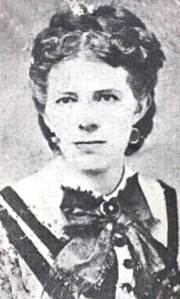
In one of her longest and most beautiful passages, a heartbroken Kate Stone mourned the loss of yet another beloved brother.
From 2012 to 2015, Stillness of Heart will share interesting excerpts from the extraordinary diary of Kate Stone, who chronicled her Louisiana family’s turbulent experiences throughout the Civil War era.
Learn more about Stone’s amazing life in 1861, 1862, 1863, 1864, 1865 and beyond. Click on each year to read more about her experiences. You can read the entire journal online here.
(Photo edited by Bob Rowen)
Stone recalled with heartbreaking beauty the loss of yet another beloved brother.
Note how Bonham stressed Coleman’s dignity and comfort throughout his physical deterioration, his medical care, and his serene death and moonlit funeral. Her letter turned his decline into a graceful ceremonial journey from life to death. Bonham tried to reassure Coleman’s mother that all Christian values were fulfilled (the Bible under the pillow, the constant prayers read, his hopes for divine forgiveness). It promised that Coleman’s masculinity was preserved right to the end (adoring women always nearby to care for him and kiss him, his brave endurance of terrible pain, his resolve bringing grown men to tears). It illustrated his final moments as unforgettable and fitting for a Southern gentleman (no undignified or embarrassing “contortion,” the retention of “his senses,” his grim but religiously devoted bearing).
Dec. 10, 1863
Again we are called on to mourn one of our dearest and best. Brother Coley has crossed the Dark Valley, free from all pain and trouble. He lies at rest and we are desolate indeed. We had heard only the week before that he was well on October 10, when the letter came telling of his death at Clinton, Miss., on September 22. I can do no better than copy Mrs. Bonham’s letter to Mamma, telling how nobly and fearlessly a Christian soldier can die.
Clinton, Miss.
Sept. 25, 1863
My dear Friend:
It is with feelings of deep and heartfelt sorrow that I resume my pen to give you the particulars of the death of your noble son Coleman Stone. He breathed his last at a quarter before ten Tuesday morning, Sept. 22nd. I wrote you a week before his death giving you full particulars up to that time. Then fever set in which with his previous bad health and reduced state and wound combined soon brought him down. The injury, as I stated in my letter, was very serious from the first and never healed as it would have done on a strong, healthy person. Ten days or more before his death I had him moved from the hospital to an office in the yard next me so I could give him constant care. Mrs. Moore was on the other side so some female was with him all the time. I never saw so great a favorite. Everybody in town was interested in him. Someone was constantly calling to see if they could be of service. As for me, I loved him as a son and grieved for him as one. He was one of the most patient beings under suffering I ever saw.
I watched him three weeks and four days. Most of the time he was suffering the most excruciating pain, but he bore it with the most remarkable firmness, and to you, his mother, I bear the comforting assurance that he died a Christian. The first Sabbath after he came to the hospital I went in the evening to see him, fearing he would be lonely, and found him reading his Testament. I sat down by him and read aloud for some time. He kept his Bible lying always under his pillow. I used often to take my work and sit by him, and we had many conversations about you, his brothers, and sisters, and his last wish was that he could see you all once more, calling you all by name.
Two days before his death he told me he wished the doctor to tell him his exact condition. He was perfectly calm and composed. The doctor told him there was no chance of his recovery, and said to him, “Coley, you are a sensible thinking boy and must know the necessity of preparation for another world.” He replied that he did and asked me to send for a minister to converse and pray with him. I at once sent for Mr. Tom Markham, formerly of Vicksburg, who happened to be in this vicinity, and around the couch of that dying soldier boy I passed through some of the most impressive scenes of my life.
At sunrise on Tuesday morning, we all knelt around his bed and heard one of the most feeling and beautiful prayers I ever listened to. When I rose and stood by him my hand on his head, he looked in my face and said, “Mrs. Bonham, I don’t think I have ever been a very wicked boy, but since I have been in the army I have been striving to be a Christian, and I believe God has heard my prayers and has answered them. I believe He has forgiven my many sins, pardoned me, and will take me to my home in Heaven. Write to my dear Mother and tell her what I have said to you. I have longed, oh, so much, to see her and my Brothers and Sisters once more, but as I cannot on this earth I trust they will meet me in Heaven.”
He was perfectly calm and had his senses up to five minutes before his death. There was no struggle, no contortion. I stood on one side of him, Mrs. Moore on the other, Dr. Hunt, Mr. Markham, and several others around. I stooped and with sobs and tears pressed a kiss on his brow. He looked in my eyes and said audibly so that all could hear, “For my Mother.” Again I kissed him, and he said, “For my Sisters.” All were in tears.
The strong, stout man who waited on him turned to the window sobbing aloud. Of that good man, that kindhearted friend, I must speak. Mr. Galloway was sent at Coley’s request to wait on him. He watched by him day and night with the faithfulness and affection of a brother and the tenderness of a woman. He was never for a moment cross or impatient and always ready to gratify Coley’s slightest wish, and he grieved for him as for a brother. I shall always love the man for his devotion to Coley, who, on his death bed, told me he wanted Mr. Galloway to have his horse and other effects. He said his horse belonged to his brother, and Mr. Galloway would give it up if it was ever called for. He also has his pistol. …
I have his Testament and a few books. My Belle never let a morning pass without taking him a bouquet of flowers, which he always enjoyed.
Joe Carson came in the morning of his death. He grieved sorely to think he must give up forever his dearest friend. It made my heart ache to see his sorrow. … We dressed Coley in a nice suit of clothes furnished by a young friend of his, Tom Moore. When Coley was first brought in, Tom said to his mother, “Do all you can for Coley Stone as he is my best friend.” Everything of the best kind was prepared for his burial. I wish it was in my power to describe the funeral, but my pen is inadequate. It took place just after night. The moon was full and shone most beautifully. The burial service by Mr. Markham was long and most appropriate. Nearly all of his company were present and a large number of ladies. A stranger would have thought from the feeling shown that we were each seeing a loved brother or son to his last resting place. All were in tears. That burial was one we will all remember. You have my deepest sympathy in this, your great sorrow.
How many sad hearts and broken households has this terrible war caused.
Most sincerely your friend,
Mary T. Bonham
My heart bleeds for Mamma. Sorrow after sorrow rolls over her, almost more than she can bear, but she is a most brave woman and will not sink beneath the burden.
The moonlight falls clear and cold on the graves of three of those who made the mirth and happiness of our home only two short summers ago, three of the glad young voices are hushed, three of the bright young heads lie low. Now what remains of the high hopes, the stirring plans, and the great ambitions that burned in the hearts and filled the brain of these gallant boys — only a handful of dust. All have fallen in the dew and flower of their youth. Ashburn was the first to sink to his dreamless sleep. For two long years the grass has been springing fresh and green over his grave at Brokenburn. He died Nov. 12, 1861, aged eighteen years and three months. Brother Walter was the next to obey the dread summons. He crossed the black waters of the River of Death Feb. 15, 1863, aged eighteen years and two months, and now in the autumn of the same year Brother Coley has passed from Time to Eternity, his short life numbering twenty years and six months.
What charms can peace have for us when it does come bereft of our nearest and dearest?
We can never return to the bright and happy home of three years ago. These three graves darken the threshold.
Mamma was in Shreveport when we received the letter and did not get home for several days. She had heard all were well and came home cheerful and happy to be greeted by such news. It was an awful shock to her.
Brother Coley had such a brave and dauntless spirit in that frail, sensitive body, a love for all that was pure and noble, and a scathing contempt for all that was low and mean. Joe Carson has just left after a short furlough home, and from him we learned all that we can know of Brother Coley. He had not grown to strong manhood, as we fondly imagined, but was still a beardless boy, tall and slender, the same fragile form and unbending energy and spirit that we knew at home. He had been offered a position as 2nd lieutenant in Bragg’s army through Uncle Bo’s influence. He had accepted it and expected to join his new company in a few days, when he received the injury that caused his death.
He was out scouting near Clinton with several others when something scared his horse, a powerful black of Dr. Buckner’s. Brother Coley was sitting sideways on the horse, his leg thrown over the pommel. They had stopped to rest when the horse reared and Brother Coley’s spur caught in the bit as he threw his leg over, and the horse fell backward crushing Brother Coley’s shoulder and arm against a root — a most painful injury. He was a splendid rider, and to meet death that way. He had been in many skirmishes and engagements but never was wounded. In the desperate charge that the 28th Mississippi, made in the Franklin, Tenn., battle, he had his cartridge box shot off and fell from his horse but was unhurt. Once acting as regimental orderly he rode through a fire of shot and shell that none of the couriers would brave to carry orders to his squadron.
Brother Walter was only once under fire but acted with such coolness and courage that he was highly complimented by his officers. A small party were sleeping at a picket post on the bank of a little stream when they were surprised by the enemy, who opened artillery fire across the creek. The men rushed for their horses and galloped off, but Brother Walter after mounting rode to the banks of the stream and fired several shots at the gunners, saying afterwards, “Boys, I was just obliged to take a few shots at them.”
Well may we be proud of our brave boys, and we can never be grateful enough to the kind friends at Clinton who nursed Brother Coley so tenderly.
Death, Yankee prisoners, pride grounded into nothing … Stone stared into a quiet Texas night with fear and sadness.
From 2012 to 2015, Stillness of Heart will share interesting excerpts from the extraordinary diary of Kate Stone, who chronicled her Louisiana family’s turbulent experiences throughout the Civil War era.
Learn more about Stone’s amazing life in 1861, 1862, 1863, 1864, 1865 and beyond. Click on each year to read more about her experiences. You can read the entire journal online here.
(Photo edited by Bob Rowen)
Death, Yankee prisoners, pride grounded into nothing … Stone stared into a quiet Texas night with fear and sadness.
Nov. 13, 1863
Tyler, Texas
This week Mrs. Carson, the little girls, and I are alone. Mamma has gone to Shreveport, taking Eddie Carson with her. Mr. Smith is again taken into the militia, thanks to Maj. Little’s dislike of refugees, and Mamma has gone to the headquarters of Gen. Kirby Smith to try to get a permanent discharge for Mr. Smith.
The turnout for the trip was essentially Texas: the high Jersey with white body and black curtains and two shaggy mules with shuck collars. It was anything but stylish. They say pride must have a fall, and ours has had many a tumble since we left home. How I hope Mamma will be able to buy a carriage this trip.
Jimmy has gone to the prairie to stay during Mr. Smith’s absence. He started off with a dreadful toothache, on a rough little mule. Hope he will return free of toothache and on a horse. We rode with him as far as the Yankee camp. Mamma had some business with the commanding officer, and we went out with her. A number of the prisoners escaped the other day, and the townspeople are very apprehensive of their burning the town. They put out guards every night, and they take turns in guarding the prisoners. One of the prisoners was shot yesterday for disobedience of orders. He died in a few hours. …
Death does not seem half so terrible as it did long ago. We have grown used to it. Never a letter but brings news of the death of someone we knew. Another girlhood friend off the list, but none do I regret like Kate Nailor, the first and best. …
Alone as we are tonight, I feel a little afraid of the escaped Yankees. So I will put out the light, pull the cover over my head, and go to sleep.
Stone’s first standard for even considering spending a significant number of days anywhere in Texas was its number of Louisiana war refugees living nearby. Tyler, Texas, suited her just fine.
From 2012 to 2015, Stillness of Heart will share interesting excerpts from the extraordinary diary of Kate Stone, who chronicled her Louisiana family’s turbulent experiences throughout the Civil War era.
Learn more about Stone’s amazing life in 1861, 1862, 1863, 1864, 1865 and beyond. Click on each year to read more about her experiences. You can read the entire journal online here.
(Photo edited by Bob Rowen)
Stone’s first standard for even considering spending a significant number of days anywhere in Texas was its number of Louisiana war refugees living nearby. Tyler, Texas, suited her just fine.
Note her anxiety over simply the possibility of receiving any news from the outside world. It made her “sick with apprehension.”
Nov. 7, 1863
There are some changes in our household. Mr. Kaiser has left us after his school left him. He has gone seven miles in the country to open another school. May it prove more successful than this attempt. We have forgiven him for his desertion of Jimmy. He cannot help being a coward. He remarked pathetically to Mrs. Carson, speaking of the big boys of the school, that he felt he was on the mouth of a volcano. We have no teacher and no prospect of one.
Mamma is speaking seriously of going on to live in Gilmore to put Jimmy in school, but I hope she will not. There are so many refugees here that we may like Tyler after a while, and the next school the boys may be able to attend. …
Several letters this week. One from Uncle Johnny at Austin. He secured his situation but says everything is very high, wood $40 a cord. A letter from Sarah Wadley just as they were leaving for Georgia. Hope they succeeded in running the blockade and crossing the river in safety.
I do not wish for letters. Have such a fear of bad news. The sight of a letter turns me sick with apprehension.
Stone and her brother still endured the hatred of Texas boys. She also despaired over the lack of news that reliably reported any Confederate victory.
From 2012 to 2015, Stillness of Heart will share interesting excerpts from the extraordinary diary of Kate Stone, who chronicled her Louisiana family’s turbulent experiences throughout the Civil War era.
Learn more about Stone’s amazing life in 1861, 1862, 1863, 1864, 1865 and beyond. Click on each year to read more about her experiences. You can read the entire journal online here.
(Photo edited by Bob Rowen)
Stone and her brother still endured the hatred of Texas boys. She also despaired over the lack of news that reliably reported any Confederate victory.
Nov. 1, 1863
Tyler, Texas
We are just from church. Jimmy, Johnny, and I did not go con amore. There are more pleasant things than toiling a mile through heavy sand, up hill and down dale too dark to see the road beneath you or the sky above, sitting for an hour listening to an indifferent sermon, and being gazed at by a battery of hostile eyes. Jimmy was determined to go, and I would go too, though he did not want me. Last night he and Johnny went alone, and during the services someone cut his bridle all to pieces and stole his martingale and blanket. A crowd of boys followed them after church, talking at them all the time. They know now the boys are armed and so did not attack them. The rowdies followed us tonight, and I saw them for the first time. They are real nice-looking lads. What a pity they are not gentlemen. Jimmy Carson is deeply mortified that he is compelled to desert a friend in need.
Miss Sally Grissman called to see us a short time ago. She is quite pretty, a Creole, piquante and petite. They are from Assumption Parish and have been here nearly a year. Mrs. Prentice from Joe’s Bayou and Mrs. Hull from St. Louis called yesterday. Mrs. Hull is a delightful little lady with the prettiest face and sweetest manner. Her husband is a colonel. He has just returned from Missouri. He went in to raise a regiment, of course in disguise, and brought out four hundred men, a most dangerous undertaking since it meant the death of a spy if he had been captured. Mr. and Mrs. Prentice have a house near town and Mrs. Hull boards with them. Mrs. Prentice begged me to come and stay some with her. Perhaps I shall.
Spent a day with Mrs. Levy lately. She is from New Orleans and has a large family of little children. Her husband and oldest son are in the Virginia Army. She is a good talker, a woman of the world, and a Jewess, but I think does not practice her religion. She was a Miss Moise from Charleston. …
The exhilarating news of the capture of [Union Maj. Gen. William] Rosecrans and his army proves to have been a canard. He has been heavily reinforced and is again in the field. What credulous mortals we be, believing all the good reports and distrusting all the bad until the truth is forced upon us. …
Stone’s brothers began a new school in Tyler, Texas, but bullies tormented them, and they nearly came to blows. Students brought guns to school to deal with these Louisiana refugees.
From 2012 to 2015, Stillness of Heart will share interesting excerpts from the extraordinary diary of Kate Stone, who chronicled her Louisiana family’s turbulent experiences throughout the Civil War era.
Learn more about Stone’s amazing life in 1861, 1862, 1863, 1864, 1865 and beyond. Click on each year to read more about her experiences. You can read the entire journal online here.
(Photo edited by Bob Rowen)
Stone’s brothers began a new school in Tyler, Texas, but bullies tormented them, and they nearly came to blows. Students brought guns to school to deal with these Louisiana refugees.
As Kate fretted, she and her mother sewed winter clothes and celebrated the construction of impressive new bonnets.
Oct. 29, 1863
“Refugee Ranch,” Tyler, Texas
We have been at Tyler scarcely long enough to feel settled, and the first thing is a grand disturbance that threatens all our plans.
It seems there is a great prejudice existing here against the unfortunate refugees, a feeling strong in Mr. Kaiser’s school that made Jimmy and Eddie Carson very unpopular. There was no open outbreak, however, until Jimmy and Johnny were entered as pupils. For several days the disaffected could find no open cause of offense, and our boys, perfectly unsuspecting, rode, walked, hunted, and marched together perfectly happy to renew their old friendships and not dreaming they were making enemies. But all this was the head and front of their offending. When they added to this “wearing gold watch chains and black broadcloth” a slender little strand of gold and a secondhand suit of clothes the Tyler boys could stand no more, and they rose in their wrath to put down those “refugee upstarts” most unaffected little fellows.
They opened hostilities by sticking pins in Jimmy and Johnny at church during the prayer. … Johnny was so enraged that he challenged the boy to come out of the church at once and fight, but the boy excused himself as he had a lady with him. They made an appointment to meet the next day and have a regular fisticuffs. The boy failed to keep the promise, and Jimmy denounced the act at school as ungentlemanly. The fuss blew over without coming to blows, the boys agreeing not to speak to each other, and they thought everything was settled. But the father of the boy came to school very angry and told Mr. Kaiser that unless Jimmy Stone was dismissed from school all the other boys would be taken away. Several boys wore pistols to school today, and they had formed a plan to mob Jimmy last night, but as I was with him they put it off.
We knew nothing of all this until Mr. Kaiser came over this evening to advise Mamma and Mrs. Carson to keep the boys inside the yard and to make Jimmy Carson take off the chain and put on rough clothes. Mr. Kaiser has acted a very cowardly part. The boys have been taken from school, and Mamma and Mrs. Carson are trying to get a private tutor for them. Jimmy Stone was studying hard since he knows his school days are short. …
Oct. 30
The Tyler boys are trying to force Jimmy Carson into a fight. Half a dozen of them are going armed for him, and we are very anxious. Mamma and Mrs. Carson have made our boys promise they will not be first to start a row. They restrain themselves but they are boiling with rage. Mamma will not let Jimmy go to church as she hears the Tyler boys intend mobbing him, and Jimmy is in a dreadful state of mind. He says they will all call him a coward. We do not care what these rowdy roughs call our boys, just so they do not all get into a free fight with pistols. If it was only fisticuff, we would let them fight it out. Mrs. Carson went to see Mr. Williams, the father of the ring-leader, and we hope her pacific representations to him will calm the excitement.
Jimmy Stone has behaved as well as a boy could, with firmness but moderation. I do not think he has even been angry until tonight, when Mamma forbid his going to church unless she or I went with him. And he has not put on a pistol until this morning, though he has known for several days that half a dozen boys are wearing pistols to “do him up,” as they say. The entire household is wrought up, and Jimmy is furious. He says he intends to shoot down the first boy tomorrow who says a harsh word to him.
Mrs. Carson is a strong member of the peace party and has forbidden either of her boys to go to Tyler on any pretext whatever. This restraint chafes the boys extremely but is a most necessary one, excited and angry as all the boys are. Johnny and Eddie had been wearing pistols days before we knew there was any trouble. How little we can know what is in the heart of a boy. Here we were, so pleased with their innocent sports, thinking them absorbed in their marbles and horses and marching around, when every boy was expecting a deadly encounter and burning with hatred for his enemies. We were praising Johnny for his devotion to study when lie insisted on going to school one day when Mamma thought him too unwell. We found out afterwards they were expecting a battle royal that day, and Johnny had an appointment to fight. I hope Mr. Kaiser, for his cowardly truckling in dismissing Jimmy without cause, will lose his school.
I am glad it is a general refugee quarrel instead of being confined to Jimmy. Edward Levy and George Grissman, refugee boys, have both had to leave school.
Mamma has been busy remodeling and making bonnets. She has excellent ideas on the subject, and we tell her a first-class milliner was spoiled when she turned to other pursuits. Her bonnet is quite a triumph, a regular “skyscraper” of straw and silk. She finished mine today, a pretty mixture of black velvet and cherry. It is the same I sported at Monroe in uniform with Julia Barr and Shirley Crith, but it is much improved by the addition of the bright color. I have been forced to take off black. None to be bought.
I am still on the weary treadmill of work, work, work that commenced at Monroe. Our sewing seems endless. We have been hard at it for nearly six months and the end is not yet. Mamma bought two calicoes for me, one at $55 and the other $66. One is made and I am sewing on the last one. We still have two drill dresses to make over. Jimmy is without winter underclothes, and we cannot buy a piece of woolen. We fear in such thin clothes he will take pneumonia again.
Two carriage accidents, a large rattlesnake, and a dirty house all inspire Stone to call Texas “the dark corner of the Confederacy.”
From 2012 to 2015, Stillness of Heart will share interesting excerpts from the extraordinary diary of Kate Stone, who chronicled her Louisiana family’s turbulent experiences throughout the Civil War era.
Learn more about Stone’s amazing life in 1861, 1862, 1863, 1864, 1865 and beyond. Click on each year to read more about her experiences. You can read the entire journal online here.
(Photo edited by Bob Rowen)
Two carriage accidents, a large rattlesnake, and a dirty house all inspire Stone to call Texas “the dark corner of the Confederacy.”
Aug. 30, 1863
“Elysian Fields,” Lamar County, Texas
I must record the first instance of liberality that has come under our notice since entering the state. The first night after leaving Tyler we stayed at a Mr. Fowler’s, a very nice place, and they did not charge us a cent. But we were picked up the next night. We lost our way and traveled until 8 o’clock when we asked to stay at a pretty, large, white house, white only on the outside. I despair of giving any idea of the dirt. We tried to eat without seeing or tasting and to sleep without touching the bed. They gave us coffee, a horrid decoction of burnt wheat and milk without sugar, in saucers and water in the halves of broken bottles. The table was set in the dirtiest of kitchens with a dirt floor and half a dozen half-naked little Negroes and numberless cats and dogs scampering through the room and under the table. The rafters were festooned with old hoop skirts and worn-out, rough boots. It surpassed any place we have been in yet. We certainly had found the dark corner of the Confederacy.
We lost our way again one evening and traveled until way in the night, through a wild woods road dotted with stumps. But it was cool and bright moonlight and really more pleasant than a stuffy dirty room, but the mules and Hoccles did not enjoy it.
Our next adventure was not so pleasant. The mules were rushing down a long, rocky, red hill. Hoccles is a wretched driver and lets them do pretty much as they please when crash! over went the Jersey, and we rolled out on the ground, along with a confused medley of baskets, bundles, palmetto, corn, bonnets, and boxes. Fortunately no serious damage was done, and after a few repairs to the Jersey we journeyed on. Hoccles is a right good tinker for wagons.
But our troubles were not yet over. The mules were trotting briskly along through the white sand, Mamma was asleep sitting in the foot of the Jersey, and I was knitting away, when there was a sudden cluck and tearing sound. I looked up to see the whole top of our devoted Jersey folding back like a fan. While Hoccles was nodding in the sultry heat, we had run into a tree and broken the top nearly entirely off. Mamma gave a groan and exclaimed, “Now Hoccles, just run us over a stump and break the wheels and maybe you will be satisfied. You have broken the bottom racing down the hill. But that would not do you. You had to go and break the top. Now run over a rock and break the wheels and you will be fixed!”
I could not help laughing. It was funny in spite of our bad plight, and poor Hoccles looked so humble and apologetic. We thought he would be forced to take the entire top off, but he was equal to the emergency. With hammer, nail, and strings, he patched it up so it lasted until we reached home. But it is a most forlorn, lopsided affair. If we just had our own good carriage, but we hear it is a smallpox ambulance now.
Our last day we just missed driving over the largest rattlesnake, stretched across the road basking in the sun. It was larger than my arm and had twelve rattles. That frightened us most of all. It might have glided into the carriage as we drove over it. …
A long letter from Julia Street was awaiting me. … She says she hates Arkansas and wants to come to Texas. I am sure she will hate this state ten times more. If she is a wise girl, she will stay where she is as long as possible. The more we see of the people, the less we like them, and every refugee we have seen feels the same way. They call us all renegades in Tyler. It is strange the prejudice that exists all through the state against refugees. We think it is envy, just pure envy. The refugees are a nicer and more refined people than most of those they meet, and they see and resent the difference. That is the way we flatter ourselves. …
Profiles of first ladies / Childfree and loving it / A boring mission to Mars / A Texas-made space telescope / Nixon’s love for Jews
This week: Profiles of first ladies / Childfree and loving it / A boring mission to Mars / A Texas-made space telescope / Nixon’s love for Jews
Most of these great items come from my social media networks. Follow me on Twitter, Tumblr, LinkedIn, MySpace, and Facebook for more fascinating videos, photos, articles, essays, and criticism.
1.The First Ladies C-SPAN | 2013 and 2014
Watch the stunning and fascinating series about the women as intelligent, complex, canny, and noble (if not more so) than the presidents their husbands became.
2.The Choice To Be Childfree On Point with Tom Ashbrook :: NPR | Aug. 23
“Childless by choice. We look at the trend of couples saying ‘no thanks’ to having kids.”
3.Dating Superman By Seth Stevenson | Slate | May 2013
“The ultimate superpower would let you find, woo, and mate with the perfect person”
4.Olivia Wilde Takes Center Stage By Emma Brown | Interview | Aug. 22
“Drinking Buddies is Olivia Wilde’s first time carrying a film, but it is certainly not her last. With upcoming roles in everything from Rush to Spike Jonze’s Her and Paul Haggis’ Third Person, Wilde is the girl of the moment.”
5.Danger! This Mission to Mars Could Bore You to Death! By Maggie Koerth-Baker | The New York Times Magazine | July 2013
“It would be catastrophic if humanity’s greatest voyage were brought low by the mind’s tendency to wander when left to its own devices. ”
6.Some Newly Uncovered Nixon Comments on the Subjects of Jews and Black People By Elspeth Reeve | Atlantic Wire :: Atlantic Monthly | Aug. 21
“Richard Nixon was like many a Millennial (or middle-aged politician) who’s gotten busted for sending racy emails or sexts — even though he knew everything he was saying would be archived forever, he still said really inappropriate things.”
7.UT, A&M telescope to be 10 times sharper than Hubble By Robert Stanton | Houston Chronicle | Aug. 21
“This Saturday, the third mirror for the Giant Magellan Telescope (GMT) will be cast inside a rotating furnace lab at the Steward Observatory in Tucson, Ariz. It’s the only facility in the world where mirrors this large are being made.”
8.Turkey’s Women Strike Back The New York Review of Books | Aug. 19
“Just as some Turks have recognized for the first time that violence against the Kurds in the east is no different than the police violence they are now experiencing in the west, they are also becoming aware that state meddling in women’s lives means meddling in the lives of everyone.”
9.Not-so-empty nests: When adult children live at home By Adriene Hill | Marketplace Life | May 2013
“There are more than 22 million adult children still living at home with their parents, according to the U.S. Census Bureau.”
10.The End of Second Acts? By Shadd Maruna and Charles Barber | The Wilson Quarterly | Spring 2013
“The mass warehousing of convicts is a sign of America’s faltering belief in second chances. Considering how individuals atone for their crimes can help us restore rehabilitation as an ideal.”






 Stillness of Heart
You must be logged in to post a comment.