Kings are killed. Politics is power, nothing more.

In January 2011, David D. Robbins Jr., and Fernando Ortiz Jr., discussed three presidential quasi-biopics by film director Oliver Stone: “J.F.K.,” “Nixon,” and W.” The ideas and issues still resonate throughout our current conversations about film, history, politics, and culture.

25th anniversary of Nixon resignation

In January 2011, David D. Robbins Jr., author of the blog The Fade-Out, and Fernando Ortiz Jr., author of this blog, Stillness of Heart, shared their thoughts about three presidential quasi-biopics by film director Oliver Stone: “J.F.K.,” “Nixon,” and W.” They discussed the films and the politics surrounding them. They also considered what the films show us about ourselves and about American politics in general. This is a recently re-edited version of that conversation and is republished — with special permission — on Stillness of Heart. Its ideas and issues still resonate throughout our current conversations about film, history, politics, and culture.

*****

(Letter No. 1): From David D. Robbins Jr. to Fernando Ortiz Jr.:

“Karl, in Texas we call that walkin’.”

Hey Fernando, let me first say, I’m so glad to be talking about these films with you. I can think of no better and more knowledgeable partner. Taken in totality, these are such crucial films to the American movie canon. It seems we’re forever minted by them. I want to start off talking with you about the lesser of the three films, “W.” Much like you, I’ve seen each of these films more times than I can count. I re-watched “W.” a couple of days ago to see if I felt any different than I did the first time I watched it. I saw it at the theater when it came out, and enjoyed it — but it felt trite — something I never felt while watching “J.F.K.” and “Nixon.” I thought I remembered reading somewhere that director Oliver Stone said he purposefully made it trite, because then-President George W. Bush wasn’t really worth a serious look.

The first thing that struck me about this film was just how closely it stayed to the script. The near-death pretzel episode. Bush getting his cabinet lost at Crawford. They were all stories we’re familiar with, and the film’s scenes felt a bit like parody or vignettes stitched together. When I saw the film at the theater, it received a ton of laughs, especially during scenes where Bush Jr. mispronounced words, or got tangled in common phrases. I chuckled a bit, but didn’t find it all that funny because here was a man whose decisions resulted in the deaths of more than 4,000 U.S. servicemen and more than 10,000 Iraqi civilians. Much like what he did in “Nixon,” Stone made Bush sympathetic in “W.” (Unlike what conservative critics, who probably never even watched the film, characterized Stone’s portrayal to be.) And that rubbed me the wrong way.

Stone put some very delicious lines in Bush’s mouth, like that scene where he and political strategist Karl Rove are discussing him taking a run at the presidency. Rove lists a few things Bush needs to change about himself to get votes on a national level. He asks Bush Jr. about his cocky swagger. Bush replies, “Karl, in Texas we call that walkin’.” It’s a fantastic line. Or when Bush, in the Situation Room, says, “I’m not Bill Clinton. I’m not gonna use a $2 million missile to destroy a $10 tent and hit a donkey in the ass.” Granted, I have to give some respect to Stone for not making Bush Jr. into a completely one-dimensional character just to fit a popular conception. But it must have been tempting. There are stories told by many historians that are even more ridiculous than the ones presented by Stone. Bob Woodward tells a story in “Plan of Attack” about Bush Jr. the first day he was briefed by the Joint Chiefs. Vice President Dick Cheney was falling asleep. Secretary of Defense Donald Rumseld kept asking the group to “speak up” because he was so hard of hearing. Apparently, they were describing the two no-fly zones over Iraq, with a map on the table. To outline the areas on the map, they used three mints. Bush Jr. grabbed a mint and ate it. A few minutes later he asked if anyone wanted the second mint. By the end of the meeting, he eyed the third mint and a JCS staffer, spotting his gaze, quickly grabbed up the mint and handed it to Bush — who popped it in his mouth. It doesn’t get any funnier (or sadder) than that.

At first I didn’t like Thandie Newton’s Condoleezza Rice accent. It threw me off. But I suppose it didn’t much matter — because much like her role as Bush Jr.’s National Security Advisor — she remained relatively mute during the movie too. I don’t think there’s ever been a head of the NSA so befuddled by the job — so much so, she simply was a Bush Jr. lapdog. Fernando, imagine Brent Scowcroft or McGeorge Bundy acquiescing to the president’s whims without much interjection or give and take.

Let it be said, I’ve never been a fan of Bush Jr., but I don’t hate the man either. Being president is the most difficult, thankless, life-sapping job on the planet. Tough decisions are made everyday that would crush a normal person. But I do dislike Cheney and Rumsfeld. Thousands have lost their lives and limbs for the egos of those two men. Note how often Stone frames Cheney just at the edge of the picture, or barely within the periphery, lurking in the darkness. Right at all the crucial moments, he jumps in with his point of view. It’s accurate from all the books I’ve read of the man, including the brilliant “Angler” written by Washington Post writer Barton Gellman. Cheney isn’t a complicated person to understand. He’s been in politics for 42 years, and according to Woodward’s “Plan of Attack,” he even held a meeting about “schooling” the new president on Iraq with departing Secretary of Defense William Cohen before Bush Jr.’s inauguration. In other words, Cheney had his eye on Iraq, Saddam Hussein and Iran before he was even officially vice president. He was such a runaway train that even his colleagues said he was “obsessive” about Iraq. We only need to read Jane Mayer’s “The Dark Side” to get an even larger picture of his paranoia. Add this to the calculated opportunism of Rumsfeld (who clearly suffers from the ‘Smartest Man in the Room’ syndrome), a dysfunctional intelligence apparatus headed by a clueless Rice, the tragedy of 9/11, and Deputy Secretary of Defense Paul Wolfowitz’s memo, and you’ve got a perfect storm.

History is messy, and often it’s a meeting of perfect storms. We don’t make history as much as history sweeps us up. What happens if JFK doesn’t go to Dallas? What if the often-brilliant Nixon stopped thinking it was his administration against the world? What if Bush Jr. didn’t have Cheney whispering into his ear like some evil Lady MacBeth? What if 9/11 never occurred to push Bush Jr. away from Secretary of State Colin Powell’s thinking and into the realm of war-machine stalwarts like Cheney, Rumsfeld and Wolfowitz? Just today, I opened up my newspaper to read Cheney daring to talk about current president Barack Obama’s character and his chances for a second term. If I was Obama, it would be hard to swallow lectures from an unapologetic liar, who from day one camped out at Langley trying to force the intelligence to fit his script — turning 9/11 into a phony search for WMDs he knew didn’t exist, and later inventing a connection between al-Qaeda and Saddam in order to push his vision. Cheney is still at it. Still desperately trying to re-write history. Rumsfeld, who had been in politics even longer than Cheney, has quietly and thankfully fallen away into silence. It’s funny how in the movie, whenever ‘Rummy’ speaks, Bush Jr. just rolls his eyes and goes on to the next person. Rumsfeld’s complicated verbiage, or “known unknowns,” impressed Bush about as much as it did the press corps — which is to say not at all. He was shown in the film and in books like “By His Own Rules” (by Bradley Graham) to be a guy who liked to keep insulated. No one would get to know the real Rumsfeld, if that person even exists. He’d give points of view, but rarely let those around him know exactly why he gave them. Ultimately, this administration’s decision to go into Iraq was disastrous in battling terrorism. It refueled a jihadist mentality in Muslims around the world and made Osama bin Laden’s prediction that the U.S.’s long-range goal really was occupation, control of the region and command over oil wells seem all the more correct.

I’m sorry I’ve veered so far away from the movie. But I felt like starting off the conversation with a seriousness the movie lacked. The scenes with Bush Jr. dreaming of baseball came off like a tedious metaphor. Bush Jr.’s ‘come-to-Jesus’ moment was treated fairly by Stone, but it too felt stale and obligatory. Perhaps the one question answered by this movie was how in the world a beer-guzzling, doltish, young Bush could land the bookish Laura Welch. The film presents Bush as a bumbling charmer at a barbecue, where he meets his future wife. Talking with his mouth full, spittle flying, he proceeds to sweep her off her feet. The movie never touches the topic of Welch killing a friend in a car accident, which is fine because it’s not a movie about her. But I suspect that had a major effect on the type of person she became. An accident like that makes one very slow to judge the faults of others. I could see her being very forgiving about Bush Jr.’s defects. It’s a life perspective that transformed her into one of America’s most beloved first ladies. I enjoyed this film. But for me it doesn’t come close to what Stone did in “Nixon” or “JFK”.

 

KS10

(Letter No. 2): From Fernando Ortiz Jr. to David D. Robbins Jr.:

“You’re a Bush! Act like one!”

David, it’s a dream come true to have this virtual conversation with you. Over the last decade, so many of Oliver Stone’s films have made it into our best conversations and casual analyses of the insane world around us. It only seems right to take a moment to focus directly on some of Stone’s best work.

Beginning this series with “W.” is quite timely. Recent days saw Tony Blair’s second appearance before the Chilcot committee, which is investigating British involvement in the 2003 Iraq war. Deadly bombings shattered the notion of a tense peace returning to Baghdad. And at a symposium in College Station, Texas, George H.W. Bush led the architects of the 1991 Persian Gulf War in a re-examination of their strategic decisions, including the decision not to topple Saddam Hussein’s government after Allied forces ejected the Iraqis from Kuwait.

I mention the 1991 war because I sometimes consider the 1991 and 2003 Iraq conflicts as two pieces of a larger whole, a larger era bookmarked by the two Bush presidencies, with the latter war a grand symptom of the bitter relationship the disappointed father shared with his defiant son. As a budding novelist, that relationship has fascinated me for so many years, and Stone’s illustration of that relationship is what, for me, elevates “W.” from the otherwise broad and shallow strokes brushed across a rather cheap canvas. For nuanced explorations of the fascinating power plays throughout the second Bush administration, the intellectual and psuedo-intellectual fires fueling the drive toward a second Iraq war and the catastrophic consequences of so many astoundingly shortsighted decisions, one needs to look no further than the brilliant PBS series “Frontline.”

To me, aside from the exploration of the fragmented father-son connection, the value of “W.” lies in how it challenges us, like all decent biopics, to sympathize with George W. Bush as a person. I agree with you that Stone succeeded at that. We see W. daydreaming during meetings, make terrible jokes, sit on the toilet as he talks to his wife, dance on bars, yearn for parental approval, demand respect, and dream of a happy future. Who among us can’t feel the same tinge of regret, loneliness or hope as we wander through our mediocre days, seemingly locked into our orbits around the men and women who dominate our emotional lives? Like some of the smartest reporting on W., the film warns us to never make the mistake of underestimating him, as so many of his opponents did, and as his father did. It’s a daring approach for Stone, Josh Brolin, and many of the film’s other actors who spoke out against the Iraq war and against the men and women they portray. I wish they received more credit for that artistic decision and a bigger audience to savor it.

It’s a tribute to Stone and his team that they managed to assemble a film of such breezy intelligence and mischievousness so quickly. A small project like this could have been so easily relegated to TNT or Showtime, never to be seen again, except in the $3 DVD bin at Wal-Mart. The director was blessed with an incredible ensemble, and that also is one of the aspects that elevates this film. In the DVD commentary Stone said it was his best ensemble ever. As you know, I still insist “Nixon” had the best cast, followed by “JFK.” But we’ll save that issue for another day.

I thought Condi Rice deserved a deeper, complex portrayal, far from the one Thandie Newton gave her. I don’t even know why they wasted her time as an actress. The role was nothing. As I watched her, I kept picturing in my mind those classic Oliphant editorial cartoons of Rice as a bird, squawking and repeating everything W. said. Rice deserved better, and I hope that a future, more serious film of this era takes a closer look at her. Yes, she was ineffectual as national security adviser, and certainly she was overwhelmed and outmaneuvered by Cheney and Rumsfeld. I suppose I just want a film that will show that with patience, intelligence and layered dramatic force, even if it shows her frustration, her private insecurities, and her determination to hit back when she becomes secretary of state. Take a moment to make her human too, Oliver. I was also unmoved by Jeremy Wright as Colin Powell. I love Wright as an actor, and he did his usual fine job here, but he just didn’t project Powell in a full-bodied way. Powell too deserves a major examination on film.

I want to say the same for Rumsfeld, but Scott Glenn’s smarmy, sneering portrayal wins me over every time. It’s a little bit of his drug-dealer from “Training Day” and a little bit of his Jack Crawford from “Silence of the Lambs.” Then he’ll smile, settle back into his slime and let the audience’s memory do the rest. Naturally, thanks to the real Rummy and his mutated Churchillian acrobatics with the English language, Glenn gets one of the best lines of the movie, a classic: “Sir, the absence of evidence is not the evidence of absence.” I still laugh every time I hear that. Maybe we’ll get a better view of Rumsfeld after his sure-to-be moronic but deliciously controversial memoir, “Known and Unknown,” is published on Feb. 8.

As for Richard Dreyfuss as Cheney, I can’t think of anyone who could’ve done a better job portraying the vice president. I can only imagine what must have been going through Cheney’s mind as he watched a subservient, intellectually listless president follow his lead in shattering the spotlights of democratic accountability and moral decency, thereby creating that dark side to this war on terror. Bush didn’t just unlock the doors to the gun rack of executive war powers. He threw the keys to Cheney and told his neocon barbarians to lock up when they were done. The look Dreyfuss almost always seems to have on his face in “W.,” that particular gleam in the eye, exclaims, “I can’t believe my luck! I can’t believe this is happening! How many moments had to align in the universe for him to be president and me to be his co-president?!?!” Dreyfuss has always been brilliant at playing complete bastards. Just look at two of my favorite bastards, Bill Babowski in “Tin Men” and Alexander Haig in “The Day Reagan Was Shot.” Both films were the blackest of black comedies, perfectly attuned to some of the best moments in “W.”

My favorite performance — I won’t say it was the best performance — was James Cromwell as George H.W. Bush. “What do you think you are?” he bellows to his screw-up son, “A Kennedy? You’re a Bush! Act like one!” I loved that line. It represents the seismic faultline between father and son, fracturing that relationship I found so interesting, as I said earlier, and perhaps exposing lifelong vulnerabilities in W. that Cheney, Paul Wolfowitz and Rumsfeld exploited to drive forward their own agenda. “Don’t act like that other Bush,” they seemed to hiss like serpents from a tree branch. “Don’t deliberate. Don’t draw on the experience from a vast diplomatic career. Ignore history’s lessons. Act with your gut instinct. Act with your heart.” Stone’s W. heard them well, and he agreed with their tempting reassurances that everything was going to be OK.

George H.W. Bush could only look on helplessly as he saw the catastrophes of Iraq and Afghanistan consume his son’s presidency. The Beast, as Stone’s Nixon would have seen it, turned on its master for one final bloody meal. Cromwell’s performance, somehow both cold and loving, distant and supportive, reminded me of how much still remains to learn about H.W. Bush, how unappreciated he still is, and how amazing his career truly was, long before he was vice president to Ronald Reagan, long before Dana Carvey portrayed him as a befuddled, brainless wimp. H.W. Bush was everything Reagan pretended to be.

And therein lies the last elevating value of “W.” It drives me to learn more about W.’s father, the post-Cold War era he inaugurated, and how his Democratic and Republican successors shaped what he left behind. It drives me more to learn about his family, and about the sons who looked up to him for approval, support and guidance. And it drives me to learn more about that one son who thought that rejecting his father’s example would earn his father’s respect, even at the cost thousands of lives and the guarantee of a prominent place in the blood-stained catalog of American infamy.

 

1864

(Letter No. 3): From Fernando Ortiz Jr. to David D. Robbins Jr.:

“We’re just a patsy!”

By 1991, I was aware of Oliver Stone as a film director, particularly for his films “Platoon” and “Wall Street,” but he wasn’t someone I considered a role model. I was 17, and as I looked forward to finally graduating from high school and moving on to college, I thought about what I wanted to do with my life. Perhaps join the military, like my grandfather. Perhaps study history and, like narrative historian David McCullough, write about it. Perhaps simply write, like novelist James Michener.

I briefly considered studying film, perhaps even becoming a film director someday, like Francis Coppola or Martin Scorsese. Now those were role models. Stone hadn’t yet earned a place in my pantheon. And yet he was the one who came along with a film that year that electrified all of my passions. “JFK” was like a meteor strike, driving right into the core of my imagination and intellect, changing forever my understanding of how powerful a bold, historical film could truly be.

OK, “historical” may not be an appropriate word to describe what Stone throws at you. Rolling Stone called the film “a dishonest search for the truth.” But many other reviews used the word “riveting.” Roger Ebert called it “a masterpiece.” The Washington Post said it best: “It’s not journalism. It’s not history. It is not legal evidence. Much of it is ludicrous. It’s a piece of art or entertainment.”

I couldn’t tie my own shoelaces when I was 17, but I knew enough not to take the film seriously, no matter how dazzling it was. I staggered from the theater and into humid Christmas-time Texas Gulf Coast seabreeze, and for weeks I remained dazed and tingling and inspired by such a creative imagination. I was disappointed by how many people despised the film because they took it all too seriously. It’s too bad Stone never prefaced the film with a note like, “This is not to be taken as a sincere exploration of what happened and why, but simply a playfully creative summary of all of the crazy theories out there. Do your own damn research like a normal, intelligent American and decide for yourself.”

As an aspiring filmmaker — or so I thought myself to be at that tender age — “JFK” was the master class on bold, controversial filmmaking. But it also served as the supreme cautionary example. I saw Stone irresponsibly promoting his work as a credible thesis worthy of defense, worthy of consideration among the bitter ranks of men and women committed to exposing the supposed conspiracy behind the assassination. It wasn’t enough for him to accept the laurels from critics who loved his vision, who were moved by his fearless confrontation of the “story that won’t go away,” as the film was subtitled. It wasn’t enough to create a striking, ingenious kaleidoscopic freefall through the caverns of distrust and insecurity looming under the sense of American pride. He had to take the film as seriously as his critics did.

What I loved then and still love now about “JFK” is how it plays with history, the way Picasso played with the bombing of Guernica, the way HBO played with the fall of the Roman Republic and the Ptolemaic dynasty. Everyone sees everything differently. How boring would life be if everyone saw everything the same, and in some sense the film understands that. The film’s beauty and power comes from the depth of its distortions, from the way the filmmakers mopped up all of the paranoia, ignorance and fear pouring from the wounds fired into the American identity, strained it through their own mutated agendas and beliefs, and served us this putrid, blood-red broth, daring us to drink it. History was merely the paint. Our own imaginations were the canvas, and what amazing work did those deranged painters produce.

I later savored the descendants of that pop culture on-screen paranoia in “The X-Files” and in “Millennium,” where FBI Agents Fox Mulder, Dana Scully and Frank Black battled shadowy quasi-governmental conspiracies, and in the epileptic corpse that was “24,” where no season was complete without some ridiculous presidential coup d’etat or paramilitary operation. “JFK’s” older, smarter, and more insanely brilliant sibling, “Nixon,” took it all to a whole new level — it was the greatest of Stone’s imaginings — and it still inspires me. Any high-minded musings about why Kennedy was killed came from Robert Stone and “Frontline.”

Throughout the subsequent years and decades, almost none of those descendants affected me as deeply as “JFK.” It was for Stone definitely a big step forward into a new phase of chaotic, energetic filmmaking and film editing, so different from the somber elegant styles used to illustrate the lush, deadly Vietnamese jungle, the strained loneliness in “Talk Radio” or the cold Wall Street boardrooms. Perhaps there were hints of the flashy, fever-dream experience in “Born on the Fourth of July.” Certainly “The Doors” sent the fame-drunk and drug-addled characters careening through spectacular reels of Stone’s twisted vision.

But “JFK” achieved a new level of surreal imaginings for me. I saw not simply a vision induced by drugs or tropical heat or lust for power. It was a story of murder, one of the greatest of all murders, deconstructed not just moment by moment, but sensation by sensation. How many shots were heard? What did people see? How did they feel? Layered in between comprehension of those sensations are flashes of what they think they heard, blurred images of what they think they saw, how they absorbed what had happened and what warped those absorptions. Half-shrouded faces in the dark, puffs of smoke, black streaks of malice snaking along sunny motorcade routes, rifles aimed, machetes gleaming in the humid night, breaths frozen in time, bodies wheeled away, heartstopping nightmares, hot flashes of rage, blood turned cold, screams, silence — Stone’s cameras imagined it all for us. History and myths were somehow splintered — some conspiracy fanatics would say “shattered” — and then re-assembled to resemble the mutated American monster he argues we became after Nov. 22, 1963.

Like everyone else, I can’t help but wonder what life would have been like had Kennedy not been killed. He may have dropped Johnson as running mate in the 1964 presidential election. Would Kennedy have picked someone more liberal? What would have happened to his civil rights legislation, which needed at least some southern Democrats to vote for it? Johnson at least was one of their own, who wielded his own mighty arsenal of determination and tactical brilliance when faced with a raucous legislative process. Are we so sure Kennedy would have pulled out all American forces from Vietnam? Certainly we can all think of a more recent Democrat in the White House who has not only reversed his position on pulling out of an unpopular, pointless war, but has escalated and prolonged it. How would Kennedy’s deteriorating health affected his second term? His back was always a major issue. In “Unfinished Life,” historian Robert Dallek said Kennedy wore a back brace during his ride through Dallas, holding him upright. Oswald fired three shots at Kennedy. “Were it not for the back brace, which held him erect,” Dallek writes, “a third and fatal shot to the back of the head would not have found its mark.” What about Kennedy’s reckless behavior? Bobby Kennedy worked tirelessly to quash news stories about Kennedy’s womanizing, as J. Edgar Hoover’s intelligence file on Kennedy’s extracurricular activities grew thicker every month. No matter how polite the mainstream media remained in the mid-1960’s, the shadows of some looming scandal or potential blackmail was always darkening the skies over the administration’s future.

The dreamy musings about a world caressed by two-term Kennedy presidency (we can all agree he would have defeated Barry Goldwater) always make me smile, reminding me of how perversely (and politically) lucky Lincoln was to die when he did. You don’t ever see people sitting around wondering what great things James Garfield or William McKinley would have done in the world had they not been killed. No one is accusing Chester Arthur of masterminding a government takeover. You don’t hear whispers of how Theodore Roosevelt managed a conspiracy to not only take down McKinley in Buffalo, N.Y., but also to frame Leon Czolgosz as the patsy. Even for those presidents who died of natural causes, you don’t see movies speculating about a devious John Tyler leading a coup d’etat to take down Old Tippecanoe. “Naw, man. You don’t need a coat. You’re Old Tipp! You can handle two hours in the cold and rain! Take your time reading that inaugural address.”

I suppose it comes down to public image, something Kennedy always had in his favor, especially in an age without HD television or a media that would have breathlessly told us about the rivers of steroids, painkillers and other drugs swimming through his bloodstream, his back braces, crutches, past surgeries and other health problems. Added to the tragedy is what he left behind: a young, unhappy wife and two small children oblivious to their parents’ emotional distance. Americans love youth and vigor, even if it’s manufactured, and especially when it’s lost. When it comes to McKinley’s assassination, historians seem to be more excited about the rise of young Theodore Roosevelt, the perfect man for the new century, a young leader for a young country, blah, blah, blah. Rest assured, if it had been President Johnson murdered and Vice President Kennedy who stepped in to take over, we would have heard the exact same sentiments. “Lyndon Who? Oh, yeah, the guy who finally got out of JFK’s way.”

Over the years, Stone’s hopefulness planted in me the seeds of cynicism as I studied more of American history, learned the cycles of how power is distributed in an American democracy, and bitterly accepted the limits of what can actually be accomplished within the system of checks and balances. But sometimes I will set all of that aside, relax and remember not to take it all so seriously, certainly not as seriously as Stone does. So I’ll reach into my DVD library and pull out “JFK” for yet another viewing. It still remains one of my all-time favorite films, where, ironically, I can set aside all of that grumpiness and sadness, reach for some popcorn, and savor yet again my favorite line: “Kings are killed, Mr. Garrison. Politics is power. Nothing more.”

Indeed.

Recommended reading / viewing / listening

This week: A Civil War quiz / Google’s underwater Street View / The man who saved Paris from the Nazis / Slave ship discovered / Hepburn the fashion icon

img_0350

This week: A Civil War quiz / Google’s underwater Street View / The man who saved Paris from the Nazis / Slave ship discovered / Hepburn the fashion icon

Most of these great items come from my social media networks. Follow me on Twitter, Tumblr, LinkedIn, MySpace, and Facebook for more fascinating videos, photos, articles, essays, and criticism.

1. What Do You Know? A Civil War Pop Quiz.
By Megan Kate Nelson | Disunion :: The New York Times | June 4
“Where was the westernmost battle of the Civil War fought? Who issued the first Emancipation Proclamation? Who burned Atlanta?”

2. Three Steps on Perry’s Comeback Trail
By Ross Ramsey | The Texas Tribune | June 4
“The road ahead of Rick Perry is a difficult one, but it’s not that complicated. And the number of candidates running for the Republican presidential nomination helps him more than it hurts. If he can take care of three things, the former Texas governor will still be a presidential candidate at the start of 2016.”

3. Don’t Overthink It, Less Is More When It Comes to Creativity
By Jessica Schmerler | Scientific American | May 2015
“If the cerebellum plays a role in creativity, it could alter our understanding of how the brain functions.”

4. Google Street View goes underwater
Ny Nick Lavars | Gizmag | June 5
“In an effort to raise awareness ahead of World Oceans Day on June 8, Google has expanded its Street View service to let users explore a range of stunning coastal and underwater scenes.”

5. Paris Saved by a Bullitt
By Sam Roberts | Snapshot :: Foreign Affairs | June 2
“[O]n this 75th anniversary of the Fall of Paris, a close reading of [U.S. Ambassador William Bullitt’s] private papers, many of which have never been available to biographers before, and the personal accounts of several of his most intimate confidants, demonstrate conclusively that the characteristics that grated most on his critics — his cavalier cocksureness, his ambition, his relentless fraternizing with the French, and his unflagging faith in America’s global obligations — were exactly what the moment demanded.”

6. Grim History Traced in Sunken Slave Ship Found Off South Africa
By Helene Cooper | The New York Times | May 31
“The story of the São José, like the slave trade itself, spanned continents and oceans, from fishing villages in Africa to sheikhdoms where powerful chiefs plotted with European traders to traffic in human beings to work on plantations in the New World.”

7. Turkey’s Erdogan challenges opposition to find his golden toilet seat
By Humeyra Pamuk and Nick Tattersall | Oddly Enough :: Reuters | June 1
“Irritated by accusations of lavishness, Turkish President Tayyip Erdogan has vowed to resign if the leader of the main opposition can find a single golden toilet seat in his vast new palace.”

8. The Wife Bonus Is Imperfect, But It’s Not Prostitution
By Phoebe Maltz Bovy | New Republic | May 31
“It doesn’t suddenly become a form of prostitution if, temporarily or even permanently, the female partner in an opposite-sex relationship is the substantially lower earner, or is not working outside the home.”

9. How Katharine Hepburn Became a Fashion Icon
By Amy Henderson | Smithsonian.com | May 2015
“Hepburn was part of the post-suffrage generation of women, and her screen persona resonated with that generation’s modern spirit of independence. Despite RKO’s determination to brand her otherwise, Hepburn succeeded in inventing herself.”

10. For Incarcerated Japanese-Americans, Baseball Was ‘Wearing the American Flag’
By Michael Beschloss | HistorySource :: The New York Times | June 2014
“By 1943, when some of those in the relocation camps were allowed to volunteer for war service, some of the ballplayers joined the Army’s almost all-Japanese-American 442nd Regimental Combat Team, which suffered grievous casualties in Europe and came to be called the most decorated military unit in American history.”

Recommended reading / viewing / listening

This week: FIFA president re-elected / Pregnancy and depression / Orson Welles memoir discovered / Uber in Mexico / Hastert scandal

IMG_0431

This week: FIFA president re-elected / Pregnancy and depression / Orson Welles memoir discovered / Uber in Mexico / Hastert scandal

Most of these great items come from my social media networks. Follow me on Twitter, Tumblr, LinkedIn, MySpace, and Facebook for more fascinating videos, photos, articles, essays, and criticism.

1. Blatter Control: FIFA Head Wins New Term Despite Corruption Probe
By David Francis | Passport :: Foreign Policy | May 29
“The Justice Department appears to be building a mob-style case against him, flipping low-level officials in hopes of then using their testimony to snag higher-ups. Whether they’ll ever get to Blatter remains to be seen.”

2. CBS’ Bob Schieffer Retires Sunday As Last Of The Old-School TV Anchors
By Eric Deggans | The Two-Way :: NPR News | May 29
“Schieffer leaves CBS with impressive stats. He’s one of the few reporters to have covered the White House, Congress, the State Department and the Pentagon. He’s interviewed every president since Richard Nixon and moderated three presidential debates.”

3. The characters in the new ‘Star Wars’ movie have pretty weird names
By Reed Tucker | New York Post | May 29
“From Sio Bibble to Grand Moff Muzzer, names in the world of Star Wars have always had their own special charm.”

4. Shields and Brooks on Dennis Hastert charges, Ashton Carter Iraq comments
Shields & Brooks :: PBS Newshour | May 29
“[T]he indictment and allegations of misconduct against former Speaker of the House Dennis Hastert, Defense Secretary Ashton Carter’s comments about the Iraqi army’s defeat at Ramadi, 2016 campaign announcements from Rick Santorum and George Pataki.”

5. Mexico taxi drivers threaten to ‘hunt down’ Uber cars
By Camilo Smith | La Voz de Houston :: Houston Chronicle| May 29
“Earlier this week taxi drivers blocked traffic to protest the arrival of the ride share service and according to reports the head of a taxi organization told the press the hunt is on for Uber drivers.”

6. Fact-Checking San Andreas With a Seismologist
By Alissa Walker | Gizmodo | May 29
“Among the many luminaries invited to preview the film was Dr. Lucy Jones, the USGS seismologist who recently took me on a walk along the Hollywood Fault, which runs just a block from the theater where San Andreas premiered.”

7. How Do You Define a Gang Member?
By Daniel Alarcon | The New York Times Magazine | May 27
“Laws acros the country are being used to target young men who fit the description for gang affiliation. But what if they aren’t what they seem?”

8. Hastert hometown rocked by scandal
By Jake Sherman and Hillary Flynn | Politico | May 29
“In Yorkville, Ill., shock and disbelief over allegations against a beloved teacher and coach.”

9. Archivists Uncover an Unfinished Memoir By Orson Welles
By Erin Blakemore | Smithsonian.com | May 29
“Fragments of ‘Confessions of a One-Man Band’ discovered in a newly-acquired trove of documents”

10. The Secret Sadness of Pregnancy With Depression
By Andrew Solomon | The New York Times Magazine | May 28
“Pregnant women often fear taking the antidepressants they rely on. But not treating their mental illness can be just as dangerous.”

Kate Stone’s Civil War: Only sadness and tears

The Confederacy has collapsed, and Stone watches in horror as postwar chaos sweeps over East Texas.

KS49

From 2012 to 2015, Stillness of Heart will share interesting excerpts from the extraordinary diary of Kate Stone, who chronicled her Louisiana family’s turbulent experiences throughout the Civil War era.

Learn more about Stone’s amazing life in 1861, 1862, 1863, 1864, 1865 and beyond. Click on each year to read more about her experiences. You can read the entire journal online here.

(Photo edited by Bob Rowen)

The Confederacy has collapsed, and Stone watches in horror as postwar chaos sweeps over East Texas.

May 27, 1865

Tyler, Texas

Anarchy and confusion reign over all. Jayhawking is the order of the day. The soldiers are disbanding throughout the Department and seizing Government property wherever they can find it. The Government offices here have been sacked. All work is over and all who can are going home. At Shreveport the demoralization is worse even than here. The officers are scattering to the four winds, and Jayhawkers and private soldiers are stopping and robbing them whenever found. Col. Bradforte was the first here to desert his post. We hear that the mules were taken from his ambulance and wagon. Maj. Rhett, Gen. Hayes, and indeed everyone we hear of has suffered the same fate while fleeing to the interior of the state or to Mexico. Gen. Kirby Smith has also been robbed. We do not know but suppose this Department has surrendered as the soldiers have disbanded and are making their way home. We are still in ignorance of what disposal is to be made of us by our conquerors. The excitement in the town is so great we can think and live only in the present. Everything is in a turmoil. … We are all glad to see the soldiers divide what Government property they can find, if they will only stop there and not let the desperadoes rob the citizens as they may do. Some of the people deserve robbing, for they joined with the soldiers in sacking the Departments.

Jimmy came home Thursday no longer a soldier but a poor discouraged boy. All his regiment went home but twenty and the colonel disbanded them. Jimmy and the three Carson boys were of the twenty who stood to their guns. Will Carson came back with him. Jimmy and Joe Carson went out to the river to see the prospect there. We are so glad to have Jimmy safe at home, but oh, what a different homecoming from what we anticipated when he enlisted. No feasting. No rejoicing. Only sadness and tears.

Johnny starts for Brokenburn tomorrow to get Uncle Bob to plant some corn if possible so that there will be something when we move back in the fall. Of course we cannot go now and leave the crop on the prairie. It is our only hope for a cent of money. Johnny will also go on to Vicksburg and try to get news of My Brother and Uncle Bo. The long suspense is very trying and Mamma longs so for My Brother io get back to help her. She feels so at sea in these new conditions of life. … Jimmy goes to the prairie in a few days to see what money can be raised there. I took him yesterday to see half of the girls in town. Determined to lose no time, he and Johnny are escorting two of them to church this morning. Jimmy got back nearly out of clothes of course, and Johnny, after his last trip, is nearly as badly off, having swapped off about every respectable article he had. We had to go to work at once. Fortunately Mamma has secured some blue linen from the department stores and had plenty of homespun. Shirts are the most difficult to get.

Mamma keeps us in terror threatening to move to the farm until fall. It is about like being in jail with the privilege of looking through the window, but she can decide nothing until she sees or hears from My Brother.

Lt. Holmes’ mess is broken up, and he is staying with us until he and Lt. Dupre can get off together. Traveling is so unsafe just now for officers. But Lt. Dupre is so anxious to get back to his wife, they will leave in a day or so. Their part of the spoils in lieu of pay is an ambulance and pair of mules with which they will journey to Monroe together. The officials have burned all their papers. …

Kate Stone’s Civil War: God spare us

The rumors finally reach Tyler: Lee may have surrendered to Grant. The Stone family refuses to believe it.

KS33

From 2012 to 2015, Stillness of Heart will share interesting excerpts from the extraordinary diary of Kate Stone, who chronicled her Louisiana family’s turbulent experiences throughout the Civil War era.

Learn more about Stone’s amazing life in 1861, 1862, 1863, 1864, 1865 and beyond. Click on each year to read more about her experiences. You can read the entire journal online here.

(Photo edited by Bob Rowen)

The rumors finally reach Tyler: Lee may have surrendered to Grant. The Stone family refuses to believe it.

Stone is especially detailed in this entry, perhaps burying herself in mundane moments to drive back the looming and crushing reality of Confederate defeat.

April 23, 1865

Tyler, Texas

Such terrible news if true, but we cannot believe it. We know that we have met with fearful reverses this year. All our coast cities are conquered: gallant old Charleston has fallen, Wilmington and Mobile have passed out of our hands, and Richmond … has been taken. But all that is nothing compared to the awful report from the Yankee papers that Gen. Lee, our strong arm of defense, has capitulated with 40,000 men without firing a gun, that most of our best generals were taken at the same time, and that what remains of that noble army is only a disorganized mob of despairing men. All this is too dreadful to believe. God spare us from this crushing blow and save our dying country!

All refuse to believe such disaster, and the home life flows on as usual. Two dramatic performances by the natives, the amiable Capt. Johnson saying he did not wish the refugees even to attend. Mrs. Gary is vice-president, and I am secretary of the society. The gentlemen come in the evening and the ladies call in the day, but over every pleasure sweeps the shadow of the evil news. It may be true. It may be true. Mollie Moore, Lt, Holmes, and I rode out to the armory to see the soldiers drill. Met Col. and Mrs. Hill, all sympathizing with Capt. Polys, who fell down while pulling the bell rope and broke his leg in two places.

Just finished three embroidered cravats for Johnny. Friday Mamma and I finished a beautiful fawn-colored barege trimmed with black lace. It looks real stylish. My old white dress has been dyed by Lucy. She has become quite an adept at dyeing things.

The rain came down in torrents Thursday but in the afternoon ceased and I rode up to school for Sister. Came through boggy roads and rushing streams at sundown. Found Lt. Holmes waiting to go with me to Mrs. Carson’s to tea, to stay there until 8:30, and then to drive over to Dr. Moore’s, Mollie’s father’s, to attend a private rehearsal. We had a pleasant time there until twelve, then the drive home, adieux to Lt. Holmes, and then the blessed oblivion of sleep. Went up to return Eliza Roberts’ call late in the afternoon.

Lt. Holmes caught up with me and came home and spent the evening. Busy sewing Tuesday until Lt. Holmes was announced, then had to spend the balance of the day amusing him. After he bowed himself away, I went over to see Mollie Moore and chatter nonsense. …

Had delicious white cake at Mrs. Lawrence’s. All the members of the troupe wanted Mamma for president of the society, but she would not hear of it. Mrs. Swain, a perfect incapable, was called to the chair. Capt. Buck has brought me a book nicely commenced for my official records, and Lt. Holmes is to see they are kept according to rule. Must send it around for members to sign.

Mamma has been much disturbed on the subject of details for Mr. Smith, but Lt. Dupre arranged the detail as he passed through Marshall. She hopes to have no further trouble on that score. …

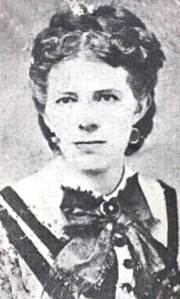
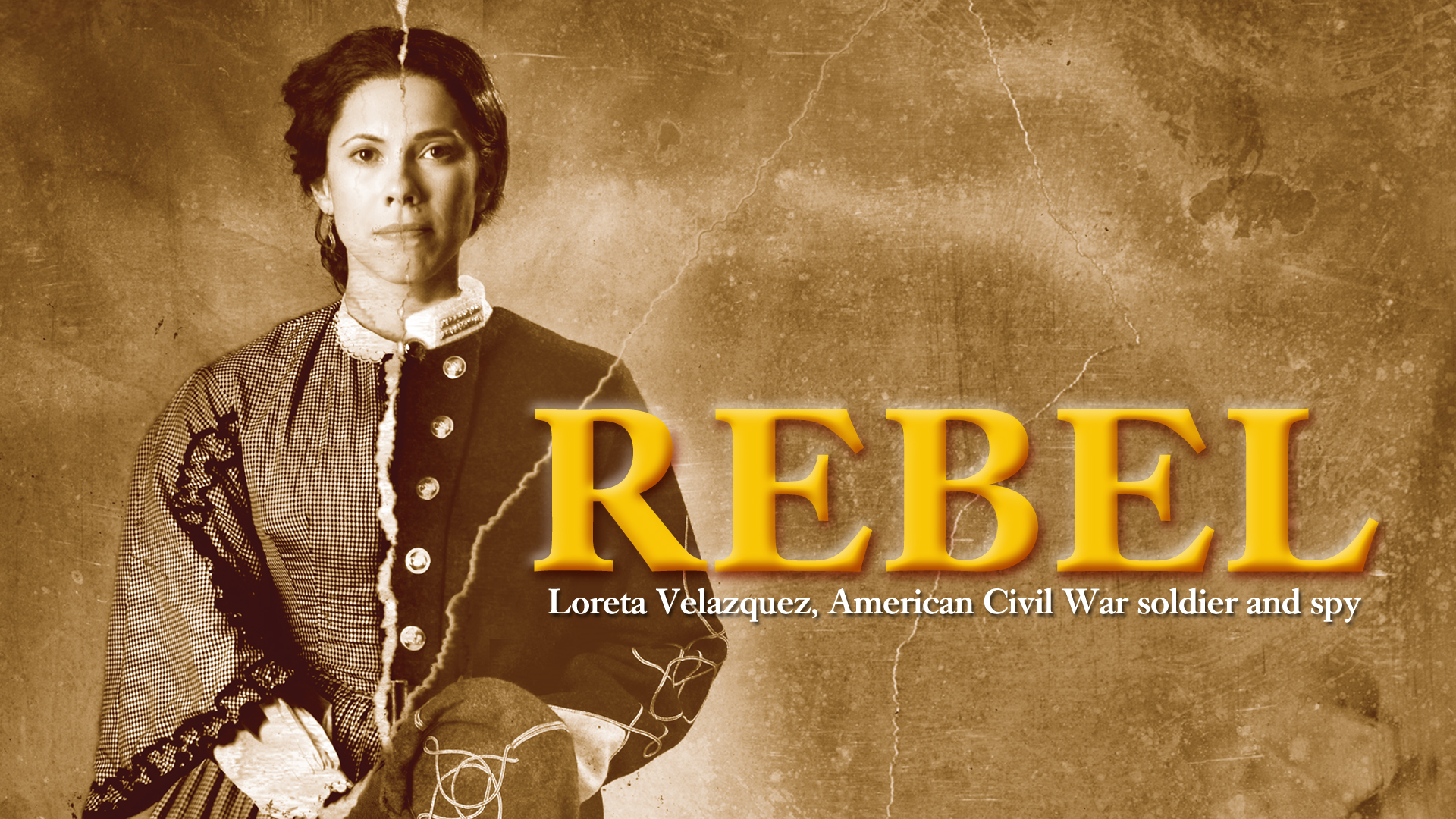
Loreta Velazquez: The Civil War spy emerges from history’s shadows

lv

For my readers in San Antonio — if you’re as fascinated with Loreta Velazquez as I am, this presentation and discussion of her life on Thursday at UTSA should be a treasure trove of information.

I’ve included a PDF with more information:
Maria Agui Carter Flyer

Kate Stone’s Civil War: Our only hope for peace

Stone learns the Hampton Roads Conference has accomplished nothing, which means the stakes for victory are higher than ever.

KS15

From 2012 to 2015, Stillness of Heart will share interesting excerpts from the extraordinary diary of Kate Stone, who chronicled her Louisiana family’s turbulent experiences throughout the Civil War era.

Learn more about Stone’s amazing life in 1861, 1862, 1863, 1864, 1865 and beyond. Click on each year to read more about her experiences. You can read the entire journal online here.

(Photo edited by Bob Rowen)

Stone learns the Hampton Roads Conference has accomplished nothing, which means the stakes for victory are higher than ever.

Feb. 21, 1865

Tyler, Texas

Another rainy day. But Mamma is at home all right, and we are very glad to have her. Ben Clarkson came in Saturday on his way to see his people on his first furlough. He has been away two years and a half. He is a handsome fellow and scarcely looks older than when he left. How delighted his father will be to see him. He has only a twenty-day furlough, and it has taken him that long to get here. He will stay at home a month and rejoin his company at Tupelo, Miss. How vividly his presence recalls my two brothers. Had they lived, they might now be making us happy with their glad presence.

Sunday we all attended the Baptist church which was crowded to overflowing. We occupied a seat with some soldiers and their rations and came away with a goodly portion of the week’s rations whitening our skirts. Dr. Weir asked to walk home with us. I told him we came in the carriage when he innocently inquired had I not rather walk. Decidedly, I had not. Spent this afternoon playing chess with him. I beat him so easily now there is no fun playing with him. …

We hear the Peace Commission returned without effecting anything. Our only hope for peace this year now lies in emancipation or intervention.

Kate Stone’s Civil War: Our soldiers were powerless

Foreign recognition, a cease-fire, slave emancipation: Stone captures the desperate rumors in the air as the Confederacy falls to its knees.

KS10

From 2012 to 2015, Stillness of Heart will share interesting excerpts from the extraordinary diary of Kate Stone, who chronicled her Louisiana family’s turbulent experiences throughout the Civil War era.

Learn more about Stone’s amazing life in 1861, 1862, 1863, 1864, 1865 and beyond. Click on each year to read more about her experiences. You can read the entire journal online here.

(Photo edited by Bob Rowen)

Foreign recognition, a cease-fire, slave emancipation: Stone captures the desperate rumors in the air as the Confederacy falls to its knees.

Feb. 1, 1865

Tyler, Texas

An occasional letter from Jimmy. He had just returned from our old home near the river. How strange it seems for the boys to be going home and wandering at will over the whole country, not a Yankee to be seen. The army worms were our best allies. They made the enemy abandon the country when our soldiers were powerless to drive them off. There are rumors of an armistice, recognition by the powers, and emancipation of the slaves.

Raining today. Could not start Jimmy’s boy back. Jimmy must think Henry is never coming. Have nearly finished Jimmy Carson’s gloves. His hands are none of the smallest and knitting the gloves has been a task.

Have been reading the life of Stonewall Jackson. He was worthy to be idolized by all classes as he is. Have just finished The Hour and the Man by Miss Martineau, purporting to be a historical novel with Toussaint L’Overture, the leader of the insurrection in San Domingo, as the hero. He is represented as superhumanly good and great beyond all heroes of ancient or modern times. He and Napoleon were contemporaries and comparisons are constantly drawn between them, all in favor of this darkie saint. Napoleon is completely overshadowed by Toussaint. It is a disgusting book. The Negroes are all represented as angelic beings, pure and good, while the whites are the fiends who entered in and took possession of their Eden, Haiti.

Anna Meagher returned recently and sent for me to come and see her. She saw Jimmy several times. He is quite well. Her only news was about the Terrapin Neck cutoff which, if true, will place all our plantations above possible overflow. The Yankees are all gone and some of the old planters still at home. Jimmy sent by Anna the box of papers left concealed and all are in good order. We have written him to bring out the silver if possible. It is buried there. The old Negroes are still on the place, and Uncle Hoccles and Aunt Liza want to come out to Texas. Mrs. Newman was about to give a Yankee party. Both girls are at home and reported engaged to Yankee officers. One cannot believe that news. Nous verrons. We hear that Annie Newman is a beauty and a belle. Surely the age of miracles has not passed.

The pouring rains continue, and the house leaks dreadfully. We rather wade than walk.

Recommended reading / viewing / listening

This week: CSS H.L. Hunley emerges / Writing: A job or a calling? / Solving a math mystery / Gaza children with PTSD / What caused her cancer?

KS33

This week: CSS H.L. Hunley emerges / Writing: A job or a calling? / Solving a math mystery / Gaza children with PTSD / What caused her cancer?

Most of these great items come from my social media networks. Follow me on Twitter, Tumblr, LinkedIn, MySpace, and Facebook for more fascinating videos, photos, articles, essays, and criticism.

1. After 150 years, Confederate submarine’s hull again revealed
By Bruce Smith | Associated Press | Jan. 30
“What [scientists] find may finally solve the mystery of why the hand-cranked submarine sank during the Civil War.”

2. Facebook needs a ‘Sympathy’ button
By Amy-Mae Elliott | Mashable | Jan. 25
” It can mean a feeling of pity or sorrow for someone else’s misfortune, and also an understanding between people — a common feeling.”

3. Is Being a Writer a Job or a Calling?
By Benjamin Moser and Dana Stevens | Bookends :: Sunday Book Review | Jan. 27
Moser: “Even the best writing won’t have the immediate, measurable impact of a doctor’s work, or a plumber’s.”
Stevens: “Of course a writer is going to lean toward saying writing is a calling — that’s our job.”

4. The Pursuit of Beauty
By Alec Wilkinson | The New Yorker | Feb. 2
“Yitang Zhang solves a pure-math mystery.”

5. Hundreds of thousands of children shell-shocked after the war in Gaza
By Robert Tait | The Telegraph | Jan. 29
“Children who saw their siblings or parents killed, often gruesomely, have been left stricken, and around 35 per cent to 40 per cent of Gaza’s million children are suffering from shell-shock according to Hasan Zeyada, a psychologist with the Gaza Community Mental Health Programme.”

6. What Caused My Cancer?
By Shana Bernstein | Pacific Standard | Jan. 29
“Was it bad genes? Bad luck? Or was it the toxins I eat, drink, breathe, and touch on a regular basis because the United States has a policy of putting the burden of proof for product safety on the consumer?”

7. The Fire of 1910 — Why It Still Matters
By Timothy Egan | Inside American Experience | Jan. 29
“Never in recorded United States history has there been anything to match the fire of 1910. For its size, its ferocity, its impact, nothing comes close.”

8. 50 years after funeral, Churchill towers over UK politicians
By Jill Lawless | Associated Press | Jan. 30
“Modern politicians know better than to invite comparisons to the larger-than-life Churchill — a noted ‘bon vivant’ … who kept 10 Downing St. stocked with Pol Roger Champagne.”

9. Seven questions every editor should ask the writer
By Roy Peter Clark | Poynter | Jan. 30
“After asking these questions to hundreds of writers, I have confidence that the answers provided by the writer can guide a coaching editor on how best to help the writer over time.”

10. For Incarcerated Japanese-Americans, Baseball Was ‘Wearing the American Flag’
By Michael Beschloss | HistorySource :: The New York Times | June 2014
“By 1943, when some of those in the relocation camps were allowed to volunteer for war service, some of the ballplayers joined the Army’s almost all-Japanese-American 442nd Regimental Combat Team, which suffered grievous casualties in Europe and came to be called the most decorated military unit in American history.”

Kate Stone’s Civil War: Kindly bestow them

Stone begins the new year with a diary entry — one of her longest — filled with details, cautious hope, and determination to hold out for ultimate Confederate victory.

KS9

From 2012 to 2015, Stillness of Heart will share interesting excerpts from the extraordinary diary of Kate Stone, who chronicled her Louisiana family’s turbulent experiences throughout the Civil War era.

Learn more about Stone’s amazing life in 1861, 1862, 1863, 1864, 1865 and beyond. Click on each year to read more about her experiences. You can read the entire journal online here.

(Photo edited by Bob Rowen)

Stone begins the new year with a diary entry — one of her longest — filled with details, cautious hope, and determination to hold out for ultimate Confederate victory.

Jan. 29, 1865

Tyler, Texas

Uncle Johnny and Kate have just gone to their room after a lengthy discussion of the comparative merits of modern poets and novelists. Johnny has kissed me goodnight, Sister is wandering in dreamland, I am alone with a cheerful fire and a wakeful spirit, and so I may as well resume my neglected diary.

Mamma, with Sarah as her maid, started on Wednesday for the prairie to be absent two weeks, and I am left to administer affairs during her absence. The office of housekeeper is not entirely a sinecure now that there are so many to be provided for our family, Uncle John’s, and Mr. Gary’s. We tease Mamma and Mrs. Savage by telling them they are keeping boarding houses, a fact they indignantly deny. But it looks that way to an outsider. We hoped to get Mr. Smith’s house and live to ourselves, but he now declines to rent. But for the hall, we are as much crowded here as at the Ranch, which we had to give up to the owner as he wished to move back. This is a pretty-looking place if the house was painted but new and unfinished, a large yard with the native trees left. Mr. and Mrs. Gary, from whom Mamma rented it, are quite nice people. They have one little girl and they give very little trouble. We rarely see them except at meals, which is a relief, for we did so dread her living in our room. Even Kate leaves us to ourselves sometimes, and so we find it much easier to live together. Though both Uncle Johnny and Kate utterly ignore Johnny’s existence, it is wonderful that they will behave so.

Jimmy and Joe Carson have rejoined their command. It is Jimmy’s first trial as a soldier. I am trying to finish a pair of the prettiest riding gloves to send him by Jimmy Stone’s boy, who will get off Wednesday. I am sending Jimmy Stone a famous pair. Dr. Weir would feel himself awfully slighted and retire in disgust could he peep behind the scenes and see what becomes of the precious gauntlets he forced on my acceptance. He flattered himself I would knit a pair of gloves to them and kindly bestow them on him. But oh no, they go with the best I can make to Jimmy. I have knitted so many gloves, and Mamma knits socks in all her spare time. I wish I had kept account of the numbers of pairs. We froth up old black or blue silk, mix it with wool, and have it spun into a pretty silky thread that makes nice-looking gloves or stockings. …

So slowly news comes in that we have heard nothing since Sherman’s occupation of Savannah more than a month ago and Gen. Hood‘s retreat across the Tennessee River. … Hood is relieved from command and Gen. Johnston reinstated, a rumor that gives general satisfaction. The very air is rife with rumors but nothing reliable. The favorite is that the Confederacy will certainly be recognized by all foreign powers immediately after the fourth of March, and we may look for a speedy peace with much more to the same. But we have been exalted and depressed by these rumors too often to let them weigh with us now. Another topic of general interest is the subject of gradual emancipation said to be under discussion in the lower house [of the Confederate Congress]. …

Thinking As Leverage

Developing deep and critical thinking.

Behind The Wall

Tabletop Games

Rebecca Aguilar

#CallingAllJournalists Initiative | Reporter | Media Watchdog | Mentor | Latinas in Journalism

Anna Fonte's Paper Planes

Words, images & collages tossed from a window.

Postcards from Barton Springs

Gayle Brennan Spencer - sending random thoughts to and from South Austin

The Flask Half Full

Irreverent travelogues, good drinks, and the cultural stories they tell.

Government Book Talk

Talking about some of the best publications from the Federal Government, past and present.

Cadillac Society

Cadillac News, Forums, Rumors, Reviews

Ob360media

Real News That Matters

Mealtime Joy

bringing joy to family meals

Øl, Mad og Folk

Bloggen Øl, Mad og Folk

a joyous kitchen

fun, delicious food for everyone

A Perfect Feast

Modern Comfort Food

donnablackwrites

Art is a gift we give ourselves

Fridgelore

low waste living drawn from food lore through the ages

BeckiesKitchen.com

MUSINGS : CRITICISM : HISTORY : NEWS