Stone finally embraces in writing her Tyler, Texas, community as she and her mother help residents raise money for home Confederate veterans.
From 2012 to 2015, Stillness of Heart will share interesting excerpts from the extraordinary diary of Kate Stone, who chronicled her Louisiana family’s turbulent experiences throughout the Civil War era.
Learn more about Stone’s amazing life in 1861, 1862, 1863, 1864, 1865 and beyond. Click on each year to read more about her experiences. You can read the entire journal online here.
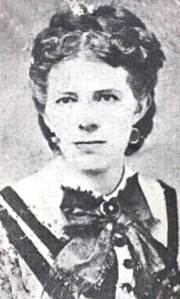
(Photo edited by Bob Rowen)
Stone finally embraces in writing her Tyler, Texas, community as she and her mother help residents raise money for home Confederate veterans.
It is astonishing, given her vivid condescension to and disdain for Texans recorded in past entries, to see Stone not just befriend Tyler residents but to also dismiss any potential disparagement from her fellow Louisiana refugees.
Note her new friendship with Mollie E. Moore, who will eventually become a celebrated poet and successful writer.
March 3, 1865
Tyler, Texas
Our interest for the last ten days has centered on the all-engrossing theme of tableaux. All the society young folks of the town with Mamma as head and front of the affair are busy getting up an entertainment, tableaux, music, and charades, to raise money for establishing a soldiers’ home. The natives, very unexpectedly, asked us to take part; and as Mamma knows more of such things than all the rest of them put together, she soon found herself sole manager of the affair and I am her [deputy]. I have taken no part but they kindly allow me to attend all rehearsals, and I have had a gay time but for being bored to extremity by Dr. Weir, whom I nearly hate.
We have become acquainted with all the creme de la creme of the city, and from one to a dozen are always dropping in to discuss something or ask Mamma’s advice. I know most of the love affairs of Tyler now. I hope Janie Roberts and Lt. Alexander will make a match. They are very much in love with each other and it would be quite suitable. The young people have rehearsed here several times when it was too bad to go to the church. …
Anna Meagher was asked to play at the entertainment but some feeling of pique prevented her, and they all speak most contemptuously of the whole affair. But we are glad the ice is at last broken, and we are friends with the people of the town. It is far more agreeable, and there are many nice people when one finds them out. Mollie E. Moore, a poetess, is a charming girl and we are becoming quite friends. They live near. The other refugees can laugh at us if they like, but we are having the most enjoyable life. …
A complete change of pace and mood from the big balladry of the A-side Actions Speak Louder Than Words, this is a louche, gospel-inflected quasi-blues, occasionally chaotically disorganised and occasionally near-devotional in its direct intensity.
It’s a much better record than the A-side, something which becomes obvious right off the bat. The band are up for it, despite a few lapses (including the bass player dropping right out of time very noticeably at the end, a flub which may have been enough to spike this as a potential A-side), opening the record identically to the Supremes’ Never Again before heading off in a whole different direction.
The backing singers are in full flow too, alternately gospel and blues, reminiscent of the best work of the choir who’d earlier…
Thank you for making 2014 the best year ever. Read the year-end WordPress graphical roundup.
Thank you so much for making 2014 Stillness of Heart‘s best year ever.
Here’s an excerpt:
The concert hall at the Sydney Opera House holds 2,700 people. This blog was viewed about 12,000 times in 2014. If it were a concert at Sydney Opera House, it would take about 4 sold-out performances for that many people to see it.
“The haughty sadness of grandeur beamed out of her intent fixed hazel eye, & though so young, I always felt as if I dared not have spoken to her for my life, how lovely were the lines of her small & rosy mouth, but how very proud her white brow, spacious & wreathed with ringlets, & her neck, which, though so slender, had the superb curve of a queen’s about the snowy throat.”
On Jan. 21, 2011, the Morgan Library & Museum in New York City opened a fascinating exhibit, “The Diary: Three Centuries of Private Lives.” Introducing the exhibit were these thoughts:
“For centuries, people have turned to private journals to document their days, sort out creative problems, help them through crises, comfort them in solitude or pain, or preserve their stories for the future. As more and more diarists turn away from the traditional notebook and seek a broader audience through web journals, blogs, and social media, this exhibition explores how and why we document our everyday lives. With over seventy items on view, the exhibition raises questions about this pervasive practice: what is a diary? Must it be a private document? Who is the audience for the unfolding stories of our lives — ourselves alone, our families, or a wider group?”
Timeless questions … certainly legitimate ones for 21st century bloggers and tweeters. The exhibit, which unfortunately I wasn’t able to visit before its conclusion on May 21, featured work from the brightest stars of the literary galaxy. As quoted in the introductory essay, Henry David Thoreau aspired for his diary “to meet the facts of life — the vital facts — face to face.” Nathaniel Hawthorne and his wife co-authored their diary to celebrate their new married life together. “I do verily believe there is no sunshine in this world, except what beams from my wife’s eyes,” he wrote. “I feel new as the earth which is just born again,” his wife later wrote in response.
St. Augustine and Anais Nin … Walter Scott and Tennessee Williams … William S. Burroughs and Charlotte Brontë … A prisoner from World War II and a police rescue worker from the 2001 World Trade Center attack — the range of work and creativity and purpose is just as astounding as the authors and the beautiful words this exhibit so elegantly celebrated.
The exhibit lives on online. In addition to the introductory essay, the website offers images of diary pages, diary excerpts, and essays on the authors.
Also included are audio readings of selected diaries by actors Paul Hecht and Barbara Feldon. Reading the diaries is, for me, a joy, but hearing them read to me is a special — and often quite romantic — experience.
This special series begins with Charlotte Brontë: “The haughty sadness of grandeur beamed out of her intent fixed hazel eye, & though so young, I always felt as if I dared not have spoken to her for my life, how lovely were the lines of her small & rosy mouth, but how very proud her white brow, spacious & wreathed with ringlets, & her neck, which, though so slender, had the superb curve of a queen’s about the snowy throat.”
I’m fighting off a cold. I haven’t been sick in more than year. I spent today pushing myself (and only occasionally succeeding) to compose a literature review so I’m not looking at an unfinished thesis in early November and wondering how I wasted six months.
I’ve dutifully taken medicine and had lots of juice and warm pho (noodle soup with chunks of eye round steak and brisket, lemon chunks, cilantro, basil leaves, and bean sprouts).
I’ve also enjoyed some oldies to keep me awake, just slightly dancing with my shoulders so no one notices. This music video has always been one of my favorites. I love how he drops in Tupac so perfectly.
Back to work.
A copyright issue required the creator of the video below to mute the sound. Fortunately, the remix survives here.
*****
I’m occasionally sharing some thoughts on a few videos that make me smile, make me think, or preferably do both. Read more from this special series here.
The WordPress.com stats prepared a 2013 annual report for Stillness of Heart.
The WordPress.com stats prepared a 2013 annual report for Stillness of Heart.
Here’s an excerpt:
The concert hall at the Sydney Opera House holds 2,700 people. This blog was viewed about 11,000 times in 2013. If it were a concert at Sydney Opera House, it would take about 4 sold-out performances for that many people to see it.
In one of her longest and most beautiful passages, a heartbroken Kate Stone mourned the loss of yet another beloved brother.
From 2012 to 2015, Stillness of Heart will share interesting excerpts from the extraordinary diary of Kate Stone, who chronicled her Louisiana family’s turbulent experiences throughout the Civil War era.
Learn more about Stone’s amazing life in 1861, 1862, 1863, 1864, 1865 and beyond. Click on each year to read more about her experiences. You can read the entire journal online here.
(Photo edited by Bob Rowen)
Stone recalled with heartbreaking beauty the loss of yet another beloved brother.
Note how Bonham stressed Coleman’s dignity and comfort throughout his physical deterioration, his medical care, and his serene death and moonlit funeral. Her letter turned his decline into a graceful ceremonial journey from life to death. Bonham tried to reassure Coleman’s mother that all Christian values were fulfilled (the Bible under the pillow, the constant prayers read, his hopes for divine forgiveness). It promised that Coleman’s masculinity was preserved right to the end (adoring women always nearby to care for him and kiss him, his brave endurance of terrible pain, his resolve bringing grown men to tears). It illustrated his final moments as unforgettable and fitting for a Southern gentleman (no undignified or embarrassing “contortion,” the retention of “his senses,” his grim but religiously devoted bearing).
Dec. 10, 1863
Again we are called on to mourn one of our dearest and best. Brother Coley has crossed the Dark Valley, free from all pain and trouble. He lies at rest and we are desolate indeed. We had heard only the week before that he was well on October 10, when the letter came telling of his death at Clinton, Miss., on September 22. I can do no better than copy Mrs. Bonham’s letter to Mamma, telling how nobly and fearlessly a Christian soldier can die.
Clinton, Miss.
Sept. 25, 1863
My dear Friend:
It is with feelings of deep and heartfelt sorrow that I resume my pen to give you the particulars of the death of your noble son Coleman Stone. He breathed his last at a quarter before ten Tuesday morning, Sept. 22nd. I wrote you a week before his death giving you full particulars up to that time. Then fever set in which with his previous bad health and reduced state and wound combined soon brought him down. The injury, as I stated in my letter, was very serious from the first and never healed as it would have done on a strong, healthy person. Ten days or more before his death I had him moved from the hospital to an office in the yard next me so I could give him constant care. Mrs. Moore was on the other side so some female was with him all the time. I never saw so great a favorite. Everybody in town was interested in him. Someone was constantly calling to see if they could be of service. As for me, I loved him as a son and grieved for him as one. He was one of the most patient beings under suffering I ever saw.
I watched him three weeks and four days. Most of the time he was suffering the most excruciating pain, but he bore it with the most remarkable firmness, and to you, his mother, I bear the comforting assurance that he died a Christian. The first Sabbath after he came to the hospital I went in the evening to see him, fearing he would be lonely, and found him reading his Testament. I sat down by him and read aloud for some time. He kept his Bible lying always under his pillow. I used often to take my work and sit by him, and we had many conversations about you, his brothers, and sisters, and his last wish was that he could see you all once more, calling you all by name.
Two days before his death he told me he wished the doctor to tell him his exact condition. He was perfectly calm and composed. The doctor told him there was no chance of his recovery, and said to him, “Coley, you are a sensible thinking boy and must know the necessity of preparation for another world.” He replied that he did and asked me to send for a minister to converse and pray with him. I at once sent for Mr. Tom Markham, formerly of Vicksburg, who happened to be in this vicinity, and around the couch of that dying soldier boy I passed through some of the most impressive scenes of my life.
At sunrise on Tuesday morning, we all knelt around his bed and heard one of the most feeling and beautiful prayers I ever listened to. When I rose and stood by him my hand on his head, he looked in my face and said, “Mrs. Bonham, I don’t think I have ever been a very wicked boy, but since I have been in the army I have been striving to be a Christian, and I believe God has heard my prayers and has answered them. I believe He has forgiven my many sins, pardoned me, and will take me to my home in Heaven. Write to my dear Mother and tell her what I have said to you. I have longed, oh, so much, to see her and my Brothers and Sisters once more, but as I cannot on this earth I trust they will meet me in Heaven.”
He was perfectly calm and had his senses up to five minutes before his death. There was no struggle, no contortion. I stood on one side of him, Mrs. Moore on the other, Dr. Hunt, Mr. Markham, and several others around. I stooped and with sobs and tears pressed a kiss on his brow. He looked in my eyes and said audibly so that all could hear, “For my Mother.” Again I kissed him, and he said, “For my Sisters.” All were in tears.
The strong, stout man who waited on him turned to the window sobbing aloud. Of that good man, that kindhearted friend, I must speak. Mr. Galloway was sent at Coley’s request to wait on him. He watched by him day and night with the faithfulness and affection of a brother and the tenderness of a woman. He was never for a moment cross or impatient and always ready to gratify Coley’s slightest wish, and he grieved for him as for a brother. I shall always love the man for his devotion to Coley, who, on his death bed, told me he wanted Mr. Galloway to have his horse and other effects. He said his horse belonged to his brother, and Mr. Galloway would give it up if it was ever called for. He also has his pistol. …
I have his Testament and a few books. My Belle never let a morning pass without taking him a bouquet of flowers, which he always enjoyed.
Joe Carson came in the morning of his death. He grieved sorely to think he must give up forever his dearest friend. It made my heart ache to see his sorrow. … We dressed Coley in a nice suit of clothes furnished by a young friend of his, Tom Moore. When Coley was first brought in, Tom said to his mother, “Do all you can for Coley Stone as he is my best friend.” Everything of the best kind was prepared for his burial. I wish it was in my power to describe the funeral, but my pen is inadequate. It took place just after night. The moon was full and shone most beautifully. The burial service by Mr. Markham was long and most appropriate. Nearly all of his company were present and a large number of ladies. A stranger would have thought from the feeling shown that we were each seeing a loved brother or son to his last resting place. All were in tears. That burial was one we will all remember. You have my deepest sympathy in this, your great sorrow.
How many sad hearts and broken households has this terrible war caused.
Most sincerely your friend,
Mary T. Bonham
My heart bleeds for Mamma. Sorrow after sorrow rolls over her, almost more than she can bear, but she is a most brave woman and will not sink beneath the burden.
The moonlight falls clear and cold on the graves of three of those who made the mirth and happiness of our home only two short summers ago, three of the glad young voices are hushed, three of the bright young heads lie low. Now what remains of the high hopes, the stirring plans, and the great ambitions that burned in the hearts and filled the brain of these gallant boys — only a handful of dust. All have fallen in the dew and flower of their youth. Ashburn was the first to sink to his dreamless sleep. For two long years the grass has been springing fresh and green over his grave at Brokenburn. He died Nov. 12, 1861, aged eighteen years and three months. Brother Walter was the next to obey the dread summons. He crossed the black waters of the River of Death Feb. 15, 1863, aged eighteen years and two months, and now in the autumn of the same year Brother Coley has passed from Time to Eternity, his short life numbering twenty years and six months.
What charms can peace have for us when it does come bereft of our nearest and dearest?
We can never return to the bright and happy home of three years ago. These three graves darken the threshold.
Mamma was in Shreveport when we received the letter and did not get home for several days. She had heard all were well and came home cheerful and happy to be greeted by such news. It was an awful shock to her.
Brother Coley had such a brave and dauntless spirit in that frail, sensitive body, a love for all that was pure and noble, and a scathing contempt for all that was low and mean. Joe Carson has just left after a short furlough home, and from him we learned all that we can know of Brother Coley. He had not grown to strong manhood, as we fondly imagined, but was still a beardless boy, tall and slender, the same fragile form and unbending energy and spirit that we knew at home. He had been offered a position as 2nd lieutenant in Bragg’s army through Uncle Bo’s influence. He had accepted it and expected to join his new company in a few days, when he received the injury that caused his death.
He was out scouting near Clinton with several others when something scared his horse, a powerful black of Dr. Buckner’s. Brother Coley was sitting sideways on the horse, his leg thrown over the pommel. They had stopped to rest when the horse reared and Brother Coley’s spur caught in the bit as he threw his leg over, and the horse fell backward crushing Brother Coley’s shoulder and arm against a root — a most painful injury. He was a splendid rider, and to meet death that way. He had been in many skirmishes and engagements but never was wounded. In the desperate charge that the 28th Mississippi, made in the Franklin, Tenn., battle, he had his cartridge box shot off and fell from his horse but was unhurt. Once acting as regimental orderly he rode through a fire of shot and shell that none of the couriers would brave to carry orders to his squadron.
Brother Walter was only once under fire but acted with such coolness and courage that he was highly complimented by his officers. A small party were sleeping at a picket post on the bank of a little stream when they were surprised by the enemy, who opened artillery fire across the creek. The men rushed for their horses and galloped off, but Brother Walter after mounting rode to the banks of the stream and fired several shots at the gunners, saying afterwards, “Boys, I was just obliged to take a few shots at them.”
Well may we be proud of our brave boys, and we can never be grateful enough to the kind friends at Clinton who nursed Brother Coley so tenderly.
Stone’s new year of happiness ended abruptly, and as Union troops closed in on Brokenburn, her diary fell silent. She did not write again until March 1863.
From 2012 to 2015, Stillness of Heart will share interesting excerpts from the extraordinary diary of Kate Stone, who chronicled her Louisiana family’s turbulent experiences throughout the Civil War era.
Learn more about Stone’s amazing life in 1861, 1862, 1863, 1864, 1865 and beyond. Click on each year to read more about her experiences. You can read the entire journal online here.
(Photo edited by Bob Rowen)
Stone’s new year of happiness — her brother home to recover from minor wounds, a stream of good news from the battlefields — ended abruptly, and as Union troops closed in on Brokenburn, her diary fell silent.
She did not write again until March 1863.
Jan. 1, 1863
My dear Brother came home this morning and in perfect health. How overjoyed we are to have him with us, but oh the disappointment that he is still only a captain. It seems he and the other gentlemen mentioned at the same time were recommended by the officers of their regiment for the field offices and a petition sent up for their promotion, but by the rules of war promotion could not go that way. The senior officers must go up first, and so Tom Manlove is lieutenant colonel and the senior captain, major. Tom Manlove headed a petition signed by all the officers of the regiment asking that My Brother be made colonel, but My Brother would not let it be sent up. I am awfully sorry. I fear now he will never be promoted. He has no ambition and a low opinion of his capabilities. It is foolish for me to feel so bad about it when I should be perfectly happy that he has escaped the myriad dangers and is with us again. He was mentioned for gallant conduct in Gen. Featherston’s report of the battles before Richmond. He was highly complimented on the field of battle at Sharpsburg by Gen. D. H. Hill and again in his official report.
Dear fellow, if anybody deserves promotion he does. He may get the colonelcy of his old batallion, now the 48th Miss. Regt. He was slightly wounded in the foot at the Battle of Fredericksburg, and that is why he was allowed to come home. He is looking well and cheerful. A piece of shell made a slight scar on his face but his whiskers conceal it. To me his coming was no surprise. I have been looking for him for two months, but the others were not so confident. He came by way of Mrs. Amis, and she sent him on by horseback.
Uncle Bo, he reports, is in the finest health and spirits, and our other soldiers are still at Grenada and well.
He brings encouraging news of successes. We have repulsed the enemy twice between the Yazoo and Vicksburg. Gen. Van Dorn has retaken Holly Springs and is threatening Memphis. Our victory at Fredericksburg was complete but barren of result, only it has depressed and surprised the North. Altogether we are getting the better of our foes.
Most of the family are troubled with inflamed eyes and mine are paining me so, from long writing I suppose. This has truly been a Happy New Year to us all, white and black.
Jan. 22
Sunday. After three weeks of silence let me think of what has happened. The Yankees, after an absence of more than a week employed in taking Arkansas Post, have returned in large force, have invested Vicksburg, and are cutting another ditch across the point above DeSoto, or it may be deepening the first ditch. My Brother, Mr. Hardison, Dr. Waddell, and several other Louisiana gentlemen were in Vicksburg when the boats came in sight, and they had great trouble regaining their horses, just missing several encounters with scouting bands.
My Brother started off this morning with the best and strongest of the Negroes to look for a place west of the Ouachita. Only the old and sickly with the house servants are left here. He is sure we will all be forced to leave this place as the enemy intend going into camp at the Bend, and in the event of their defeat at Vicksburg which is certain, will lay this whole country waste, sending out bands of Negroes and soldiers to burn and destroy. My Brother thinks we had better leave at once, and we will commence packing tomorrow. The Negroes did so hate to go and so do we.
We have retaken Galveston under Gen. Magruder, and the Alabama and Florida are spreading death and destruction on the seas. We have fought another … battle at Murfreesboro, and the enemy have evacuated Island No. 10. Three days fighting at Vicksburg, and the enemy badly whipped.
Heard from the boys by Joe’s servant, who is home on a visit. All well. Their regiment is now under Van Dorn.
Jan. 26
Preparing to run from the Yankees, I commit my book to the bottom of a packing box with only a slight chance of seeing it again.
It’s been my best year ever. Thank you all for your interest.
WordPress.com prepared a 2012 annual report for Stillness of Heart.
Here’s an excerpt:
600 people reached the top of Mt. Everest in 2012. This blog got about 7,900 views in 2012. If every person who reached the top of Mt. Everest viewed this blog, it would have taken 13 years to get that many views.




 A complete change of pace and mood from the big balladry of the A-side








 Stillness of Heart
You must be logged in to post a comment.