“Morning-after” pill / Clinton’s 2016 challenges / Shakespeare the businessman / King of nerds may reign again / Friday blues
Most of these great items come from my Twitter feed or Facebook news feed. Follow me on Twitter, Tumblr, and Facebook for more fascinating videos, articles, essays and criticism.
1.Judge strikes restrictions on ‘morning-after’ pill By Jessica Dye | Reuters | April 5
“A federal judge on Friday ordered the U.S. Food and Drug Administration to make ‘morning-after’ emergency contraception pills available without a prescription to all girls of reproductive age, while blasting top Obama administration officials for interfering with the process.”
2.Hillary Clinton Would Not ‘Clear the Field’ for 2016 By Tod Lindberg | The New Republic | April 5
“When Colin Powell stepped down as secretary of state, he had a 77 percent job approval rating. But by 2005, Powell was yesterday’s man, content to amble downhill from the peak of his career. Clinton isn’t at all about nostalgia and gratitude; her best years may lie ahead of her.”
3.British class system alive and growing, survey finds Reuters | April 3
“British people can now aspire to and despise four new levels of social classes, according to a new survey conducted by researchers in partnership with public broadcaster the BBC.”
6.Hobbit ring that may have inspired Tolkien put on show By Maev Kennedy | The Guardian | April 1
“Lord of the Rings author was researching the story of the curse of a Roman ring for two years before starting Bilbo Baggins tale”
7.Three days that saved the world financial system By Neil Irwin | The Washington Post | March 29
“How the world’s top central bankers hopscotched across Europe, wining and dining, to save the global economy.”
8.Study shows Shakespeare as ruthless businessman By Jill Lawless | Associated Press | March 31
“Researchers from Aberystwyth University in Wales argue that we can’t fully understand Shakespeare unless we study his often-overlooked business savvy.”
9.Secret Service Prostitution Scandal: One Year Later By Shane Harris | Washingtonian | March 25
“That wild night in Cartagena rocked the elite secret service and embarrassed the White House. Was it a one-time incident or part of a pattern of agents behaving badly?”
10.The Cash-Strapped King of the Nerds Plots a Comeback By Hal Espen and Borys Kit | The Hollywood Reporter | March 28
“[Harry Knowles, the] founder of the once-renegade movie site [Ain’t It Cool], who earned the admiration of Peter Jackson and Steve Jobs, is struggling for money and relevance in the wild media landscape he helped to create.”
******************
TUNES
Tonight I’m spending some time with the blues, specifically with the Texas Blues Café. Check out the line-up and then listen here.
1. Electrofied — Bad Case Of The Blues 2. Dr. John — Cold Shot 3. Robert Earl Kean — Throwin’ Rocks 4. Will Tang — Love Bites 5. Nasty Ned and the Famous Chili Dogs — Out On The Town 6. Matt Schofield — Siftin’ Thru the Ashes 7. Andrew Strong — To Many Cooks 8. The Vaughan Brothers — Good Texan 9. Lady Antebellum — Love Don’t Live Here Anymore 10. John Campbell — Epiphony 11. Bonnie Raitt — Pride And Joy 12. Micheal Burks — Fire And Water 13. Three-legged Fox — Soul Thief 14. Paul Thorn — Long Way From Tupelo *Instrumental out by Nick Moss & The Flip Tops — The Rump Bump
Perhaps Stone, fighting what she saw as her part of the war, decided that she would never surrender her ground to the dark, silent, sinister enemy. But it took another enemy, one she’d feared longer than any Yankee, to change her mind.
From 2012 to 2015, Stillness of Heart will share interesting excerpts from the extraordinary diary of Kate Stone, who chronicled her Louisiana family’s turbulent experiences throughout the Civil War era.
Learn more about Stone’s amazing life in 1861, 1862, 1863, 1864, 1865 and beyond. Click on each year to read more about her experiences. You can read the entire journal online here.
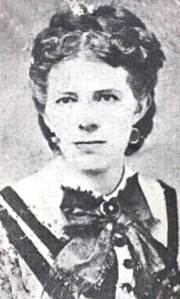
(Photo edited by Bob Rowen)
On March 2, Kate Stone opened her journal and wrote in it for the first time since late January. She was disoriented. She didn’t know exactly what day of the week it was. She guessed it was Saturday. When Federal troops flooded the neighborhood in late January, Stone’s mother prepared to evacuate the family. But she changed her mind when she learned the roads west were already impossibly clogged with frightened refugees. When Stone learned they were not leaving Brokenburn after all, she was secretly relieved.
Whatever misery she endured, whatever property she lost, whatever horrors she witnessed, Stone seemed determined to stand her ground. Perhaps Brokenburn was her own line in the sand. Perhaps she had already seen too many retreats, too many defeats, too many surrenders. Perhaps Stone, fighting what she saw as her part of the war, decided that she would never surrender her ground to the dark, silent, sinister enemy. But it took another enemy, one she’d feared longer than any Yankee, to change her mind.
March 2
Saturday [Monday] I think. We have not had an almanac for more than a year, and so I can only guess at the time until someone better posted comes along. The Yankees have not visited us yet, and so after more than a month’s concealment I take my book out to write again.
The soldiers have been all around us but not on the place. At first we were frightened, expecting them all the time and preparing to start for the hills beyond the Macon, the Mecca for most of the refugeeing planters. Mamma had all the carpets taken up and the valuable clothes and everything but the furniture sent away or ready to send when My Brother came back from Delhi, where he left the Negroes until they could be shipped on the train. Such a crowd was there [that] it will be several days before they can get off.
He gave such a disheartening account of the roads — they are impassable for anything but a six-mule team — that he and Mamma concluded it was impossible to move at this time, and we would await further developments here. Mamma has had the house put in order, and we are again comfortable. I am so glad for I dreaded going into the back country, where we would never see or hear anything among total strangers, and to leave our pleasant home most probably to be destroyed by the Yankees, and we may be able to protect it if we are here.
Brother has been gone for more than a month. He has taken the Negro men to the salt works away beyond Monroe and put them to work. Jimmy returned from there two weeks ago, and Mamma sent out the overseer, Mr. Ellsworth. We have been looking for My Brother for ten days.
Mamma thought of sending Jimmy back to Virginia with My Brother to go to school at Lexington, but now that the conscription is being so rigidly enforced she thinks both Mr. Storey and Mr. Ellison may both be enrolled. She will have no one but Jimmy to depend on, and so she will keep him at home. I am begging her to send Johnny. One of the worst features of the war is that it deprives all the boys of an education. …
Jane, Aunt Laura’s cook, and Aunt Lucy had a terrible row Tuesday night. Jane cut a great gash in Lucy’s face with a blow from a chair and hurt her severely. Mamma had Jane called up to interview her on the subject, and she came with a big carving knife in her hand and fire in her eyes. She scared me. She is nearly six feet tall and powerful in proportion, as black as night and with a fearful temper. … Aunt Laura had a long, lingering illness lasting several months, and she always thought Jane kept her poisoned. Jane showed a very surly, aggressive temper while Mamma was talking to her, and so Mamma did not say much. Jane went to her room and that night took her two children, a girl and a boy about half-grown, and in company with one of Mr. Hardison’s men started for the camp at DeSoto. I think we are all glad she has gone. We felt her a constant menace. She must have had a bad trip. They were out in that blinding rain Wednesday and Wednesday night with only two blankets as protection and not much to eat. Mr. Graves saw them yesterday sitting on the levee at Mr. Utz’s in company with fifty others, waiting to be ferried across at the break there in a dugout. All the Negroes are running away now, and there are numbers of them. They have to stop at the break and wait to be ferried over by an old Negro in a dugout, and so there are crowds waiting all the time. Col. Graves went down there yesterday to try to reclaim three of his who had escaped. Three had just been drowned, trying to get over, and he thought from the description they were his.
Poor creatures, I am sorry for them. How horrible it all is. We had a scene of terror the night Jane left: The quarreling and screaming, the blood streaming down Lucy’s face, Jane’s fiery looks and speeches, Johnny and Uncle Bob’s pursuit of her as she rushed away, the discovery that the children were gone, and then just as we had all quieted down, the cry of fire. The loom room had caught from some hot ashes, but we at once thought Jane was wreaking vengeance on us all by trying to burn us out. We would not have been surprised to have her slip up and stick any of us in the back. Johnny was our only protector as Jimmy was away. I went around bravely in appearance with a five-shooter in my hand. Found out afterwards it was only dangerous to look at as it was not loaded.
Mamma spoke of sending next day for Jane, but Aunt Laura implored her not to. She was only too thankful to get rid of her. She had been a terror to her for years. I think everybody on the place was thankful to get rid of her. The Negroes dreaded her as much as the white folks. They thought her a hoodoo woman.
The place looks deserted now with its empty cabins and neglected fields, and the scene is the same wherever we go. … It has been a month of warm weather and constant rain and the roads are impassable. We have not been out of the house for three weeks. Already the fruit trees are a faint green and the grass is springing in the yard. Spring is early this year. Over the woods in front of the house hangs a faint green mist with the red of the maples shining through, and this morning Sister brought in a bunch of pale wild violets, sweet as a promise that winter is gone. The hardy garden violets and the quaint little heartsease have been perfuming the winter wind for weeks, and the garden is gay with jonquils and narcissus.
March 3
Last night it was reported that the Yankees were at Dr. Devine’s, and we looked for them here today. My Brother and Mr. Hardison, who is conscript agent, went out early this morning to stay in the woods until nightfall, as they do not want to be captured and ornament a Yankee prison. …
Johnny who has been out scouting reports the Yankees at Rescue, the adjoining place, yesterday hunting horses and Negroes, and today they are scattered all through the lower neighborhood on the same quest. This band is said to be Kansas Jayhawkers, the very offscourings of the Northern Army. They say they will take by force all Negroes, whether they wish to go or not. A great number of Negroes have gone to the Yankees from this section. Mr. Watson and his father-in-law, Mr. Scott … got up one morning and found every Negro gone, about seventy-five, only three little girls left. The ladies actually had to get up and get breakfast. They said it was funny to see their first attempt at milking. Mr. Matt Johnson has lost every Negro off one place and a number from the other places. Keene Richards has lost 160 from Transylvania and fifty of them are reported dead. The Negroes at work on the canal have what they call black measles, and it is very fatal to them.
March 4
When we heard from Brother Coley and Dr. Buckner nearly a month ago — they had furloughs and had reached Vicksburg on their way home when they heard that Gen. Van Dorn was to make a great cavalry raid into Kentucky. They at once turned back and rejoined their commands. Brother Coley wrote that he could not possibly miss such a chance for a good fight. Well, they could not come here with the slightest safety, now that there are wandering parties of soldiers all through the swamp. The Yankees are very daring, swimming the bayous, plunging through the mud of the unbroken swamp, often only two or three of them together. One company of good men could put a stop to all of this, but all our men are across the Macon with no desire to come this way. We hear they are panic-stricken at the name of a Yankee and run the other way. It is well that the honor of Louisiana does not depend on the troops on this side of the river.
We get no Southern papers but occasionally a Northern paper from the people who are still on the river. They are all said to have taken the oath and to have letters of protection from the general commanding. Dr. Taylor, Mr. Harris, Mr. Rucker, and Mrs. Nutt are some of the suspected parties. Gen. Grant is said to have been very rude to Mrs. Nutt when she applied for protection. What else could she have expected from a Yankee general? There are some troops still at Lake Providence. We cannot hear whether they are still working on their grand canal or not. We suppose they will harass this section until the river falls and they again attack Vicksburg.
March 5
Mr. Valentine came over last evening in very low spirits indeed. He says his Negroes will not even pretend to work and are very impudent, and he thinks they will all go off in a body the next time the Yankees come on his place. He brought the welcome news of the departure of that body of Jayhawkers that was on Mrs. Evans’ place. They have completely ruined Mr. Catlin’s, Mrs. Evans’, and Mrs. Stevens’ places, taking all the Negroes and all kinds of stock. The Negro women marched off in their mistresses’ dresses.
Jimmy has been for some time with the Negroes at the salt works. We are in a helpless situation, three ladies and two little girls and not a white man or even a gun on the place, not even a boy until Johnny gets back. And the scouts may take him. We can find rest only in the thought that we are in God’s hands.
March 8
There are only twenty Negroes left on Mrs. Tibbetts’ five places, and Dr. Tibbetts has only one left, a superannuated woman helpless to do anything. The ladies are cooking, washing, etc., while Hiram Tibbetts is wood chopper.
The Yankees have five thousand Negroes camped at Lake Providence, all they have taken from the places up the river. They had an army of 30,000 men camped there, but they find the canal through to the Macon not feasible. They have moved up to Ashton to try a new canal there, if they can close the break at that point.
March 9
Aunt Lucy’s little girl Linda died this morning from the effect of the measles. It is the first child she ever lost and she is much distressed. Little Dora is also very ill from the same cause. …
We have heard a good many guns today and a boat whistle at Omega. Must be landing troops there. There must be a large force at the Bend now, as they have been moving men up for some days. Young’s Point and DeSoto are said to be under water, and they are forced to leave. Mr. Joe Noland’s is to be headquarters we hear. We hear that Mr. Hans Harris is having trouble with the Yankees, notwithstanding his protection papers, and that it is not necessary to take the oath to be protected, and so I retract what I said about the traitors on the river. Am glad it was false except Dr. Taylor of Willow Bayou. We truly believe him to be false to the South. His wife has gone North with her children. She is from there and must have contaminated her husband. Mr. Montague’s last two sons, in company with two friends, have gone over to the Yankees. Now Mr. Montague has all five of his sons in the North. It is strange that he could raise five sons in the South to love the North better than their own native land. Let us hope he is satisfied with them, as no one else is. All have a hearty contempt for them. What a disgrace to belong to that family.
The fruit trees are in full bloom now and our young orchard makes quite a show. … Quite a variety of vegetables are up and growing nicely.
Stone began October 1862 with seething bitterness.
From 2012 to 2015, Stillness of Heart will share interesting excerpts from the extraordinary diary of Kate Stone, who chronicled her Louisiana family’s turbulent experiences throughout the Civil War era.
Learn more about Stone’s amazing life in 1861, 1862, 1863, 1864, 1865 and beyond. Click on each year to read more about her experiences. You can read the entire journal online here.
(Photo edited by Bob Rowen)
Stone began October 1862 with seething bitterness. Lee’s invasion of Maryland failed to rouse Southern sentiment, and his fruitless face-off with Federal forces under George McClellan produced one of the bloodiest days in U.S. history. It also inspired President Abraham Lincoln to issue his preliminary Emancipation Proclamation (Lincoln had been advised to unveil it only after a Union victory, though Antietam was closer to a horrific non-defeat).
The demands of a wartime economy quickly stripped the rudimentary Southern economic infrastructure of textiles, and Stone’s journal reflected her growing concerns over the lack of proper clothes, though her concerns should be kept in perspective. She was part of the South’s upper class and probably more sensitive to the lack of luxurious items than regular farmers or Southern citydwellers, particularly when she found herself having to sew fundamental garments for herself and her family, as opposed to casually knitting a fanciful scarf or plaiting a hat for a handsome beau. Nevertheless, her fretting and complaining offers an interesting and at least well-written perspective on the fundamental social and economic changes felt on the Southern home front. The intensity of those changes would quickly intensify in the coming months.
Oct. 1, 1862
The most important fact is Lincoln’s proclamation freeing all slaves held by rebel masters after January 1. I wonder what will be the result of this diabolical move. Surely not as bad for us as they intend it to be. I think there is little chance of a happy hereafter for President Lincoln. A thousand years of repentance would be but brief time to wipe out his sins against the South. How can he ever sleep with the shades of the thousands he has consigned to a bloody death darkening his soul?
Oct. 2
We see … that Lt. Floyd was killed at Sharpsburg. My Brother, I know, is sorry. I saw him last spring in Vicksburg. My good wishes for his safe return were fruitless. He was desperately wounded in the battles before Richmond, but recovered only in time to march to meet his death in Maryland. In Kentucky some hearts are aching for him. He was a frank, pleasant comrade and friend.
There is great disappointment over Maryland. It was thought there would be a great uprising of the people as soon as the Stars and Bars should wave across the Potomac, but nothing of the kind. There has been but little enthusiasm and few recruits. Well, let the Old Bay State go, if her people had rather be slaves in the Union than masters in the Confederacy. They must abide by their choice.
The gunboats are expected down now any day to renew the attack on Vicksburg, but if we get Cincinnati and Louisville as we are threatening to do now, the gunboats will be needed in other waters. …
Oct. 3
My fingers have been busy with unaccustomed work today, the work of olden times, learning to weave. Mamma is having a loom made to weave cloth for the Negroes, and Jimmy and I are to make the “harness.” Mr. Curry came over early this morning on purpose to teach us. He said he knew I could soon learn it. To keep my reputation for aptness, I commenced work at once under his tutelage, and as it takes two to work it Jimmy learned also. Now we progress swimmingly, though it will take several days to finish it. It is like going back to the days of the Revolution to see the planters all setting up their looms and the ladies discussing the making of homespun dresses, the best dyes, and “cuts” of thread, though yet awhile I think a homespun dress would be more difficult to get than a silk. …
We expect to suffer for clothes this winter. … Unless we capture some Northern city well stocked, there will soon be no dry goods in the Confederacy. The ladies are raising a cry for calicoes and silks that echoes from the Potomac to the Gulf. …
Oct. 6
We were out to see Mrs. Carson and Mrs. Savage. They are expecting the Yankees all the time. Mrs. Carson feels that they are being imposed on by soldiers and travelers. She says they are nearly eaten out of house and home, and she gave us her bill of fare. It certainly is a great falling off from the past abundance. There are always five or six soldiers there. She still has flour for lightbread, but it is saved for the sick soldiers. They are exceedingly kind and helpful to all wearing the uniform.
Mrs. Carson is going into raptures over Col. Pargoud. He has large plantations near Monroe, is young and splendid looking, was educated in France, has elegant manners, and is a Colonel in full cavalry uniform, the finest to be had ivory stirrups, silver trappings, and superb horses. What more could one have? May it be given to me to meet this paragon before some other girl snatches him up. Capt. Harper’s company is in his regiment.
We saw the paper of the fourth. It advocates raising the Black Flag in retaliation for Lincoln’s emancipation proclamation. Such a war is too horrible to think of.
Oct. 10
A letter from Uncle Bo dated a month back just as his division was crossing into Maryland. He writes jubilantly, so glad to be advancing into the enemy’s country. The letter is filled with praise of My Brother. … How dreadfully disappointed the army and officials are that Maryland did not rally to their support when once they were on her soil.
Now after all those bloody battles with no good result to follow, our whole army has recrossed the Potomac. Our defeat at Corinth is rumored. We are anxious for full particulars. Reinforcements from Vicksburg have been sent on. …
Oct. 24
Mamma and I went down to Vicksburg ten days ago with Brother Walter to see him that far on his way to the war. We hoped also to see Brother Coley, having heard his regiment had been ordered to Vicksburg, but we were disappointed. The regiment marched through the county to Panola County. We do not know their destination. …
Mrs. Amis’ place is the frontier now, with no one between her and DeSoto. The entire country from Omega to Vicksburg is deserted and many of the back places also. There is a constant stream of men passing, and Mrs. Amis is dreadfully worried by men begging to stay all night and for meals. It is a charming place to visit. Annie has changed less in growing up than any girl I ever saw. She is the same girl she was ten years ago, only grown up and not the least affected, and as a child she was a bundle of it. She was at school in Philadelphia for several years and last in New Orleans for a few months. She plays beautifully on the piano, with such ease I can listen by the hour. She plays on the harp, speaks French well, knows some Latin and Spanish, and is fond of reading, though there was little reading she would allow either of us while together. And they have a good library which was very tempting. She is a pronounced blonde. We were both glad to be together again as we were when little children, after our long separation at different schools.
Oct. 29
Saturday was a day of general upheaval having the carpets put down and general renovating. A cold raw day. When in the height of the discomfort, Mrs. Payne, Julia, and Miss Carrie Lowry were announced. … Carrie is a very talkative, nice girl with only one good feature in her face, splendid grey eyes. She escapes being ugly. She has pretty teeth and glossy black hair but a most unbecoming mouth and nose. Am sure we would like her much on closer acquaintance. She is a most industrious, capable girl.
Jimmy went to Mississippi today to get leather to make shoes for the Negroes. Should he fail to get it, the Negroes will certainly suffer in the cold. Mamma has discharged Mr. McRae, and a Mr. Blakely is overseeing. Mr. McRae proved to be utterly destitute of principle. The Negroes are busy housing the potatoes and goober peas [peanuts] and priming the sugar cane. We shall have some cane should My Brother come now. …
News of major combat in Virginia between Robert E. Lee and George B. McClellan elated Stone.
From 2012 to 2015, Stillness of Heart will share interesting excerpts from the extraordinary diary of Kate Stone, who chronicled her Louisiana family’s turbulent experiences throughout the Civil War era.
Learn more about Stone’s amazing life in 1861, 1862, 1863, 1864, 1865 and beyond. Click on each year to read more about her experiences. You can read the entire journal online here.
(Photo edited by Bob Rowen)
News of major combat in Virginia between Robert E. Lee and George B. McClellan elated Stone. But she was tormented when for weeks she waited for any confirmation that her brother and uncle had survived the brutal fighting.
July 5, 1862
Another Fourth of July has gone by without any festivities, not even a dinner for the Negroes, but they have holiday. The Yankees told Mr. McRae, while they were holding him prisoner, that they would celebrate the day by a furious attack on Vicksburg. But we have heard few guns since the third. That day we heard them very distinctly, almost a continuous roar. It was said both mortar fleets were firing on Vicksburg. We have not heard the result.
The Yankees are gathering the Negroes on the river as fast as possible. They have taken all the men able to work from Lake Providence to Pecan Grove and from Omega to Baton Rouge. They are hourly expected at Pecan Grove. Robert is with us to be out of the way when they do come. He is nearly well. The Negroes are eager to go, leaving wife and children and all for freedom promised them, but we hear they are being worked to death on the canal with no shelter at night and not much to eat.
There has been no attempt at resistance. Some of the plantations have been deserted by the owners, some of them burned by the Yankee bands, and some of them not molested. It depends on the temper of the officer in charge. If he feels malicious, he burns the premises. If a good-natured enemy, he takes what he wants and leaves the buildings standing. Most of them are malicious. Mamma will have the Negro men taken to the back country tomorrow, if she can get them to go. Generally when told to run away from the soldiers, they go right to them, and I cannot say I blame them. …
The trading boats are coming down the river again with groceries at ridiculously low prices, but of course no patriot could think of buying from them. Mamma was able to sell her surplus corn, and that helped her on wonderfully. She had such quantities of it. And we certainly will have eatables this year, judging from the looks of the great fields of corn, peas, and potatoes. Not much cotton planted. Mamma so longed for ice while she was ill, but it was impossible to get it, while those wretches on the gunboats could even have ice cream if they wished it. …
We hear rumors of a great battle in Virginia and the utter discomfiture of McClellan with Gen. Lee attacking him in front and Stonewall Jackson with 2,800 men in the rear. That was a “stone wall” McClellan found hard to climb. My Brother and Uncle Bo must both have been in the fight, but we have had no news from them for such a long time. It is heart-sickening.
July 6
Johnny and Mr. Hardison, just from the Bend, say the victory over McClellan is assured. We attacked and after a three-day fight utterly routed them, capturing most of the force. It is such good news that we can hardly believe it is true.
We are so anxious about My Brother. Any disaster … would nearly kill Mamma in her weakened state. She loves him more than anything on earth, and he is to me the dearest person in the world, next to Mamma. Uncle Bo must have been in the battle, and we cannot hear how he has fared. Suspense is hard to bear. …
July 7
Sister and I went this morning to Judge Byrnes’ below the Bend to see Julia. Heard many rumors but nothing reliable and much about the Negroes and the Yankees. Saw several gunboats go by. The two-story house is just at the river, and they have an excellent view both up and down the river. By the way, it is named River View. As we passed Omega, a gunboat had landed and a number of soldiers in the hateful blue uniform with shining guns and bristling bayonets were lounging on the levee. We did not stop to look at them but drove by as rapidly as Webster could make the mules go. …
They say we are to have two Texas regiments over to protect us tomorrow. We certainly hope so, for we seem to be given up to the evil one now. The suspense about our loved ones is hard to bear, but then not so bad as the certainty of evil would be.
July 15
Continuous and heavy cannonading all day in the direction of Vicksburg ceased soon after dark.
We have the finest melons and in this excessively hot weather they are a luxury. Lou Whitmore brought down for me a beautiful guitar, given her by her father. She does not play and insists on my keeping it, but neither do I. She is the most generous girl. She wants to give away everything, even her clothes, and when do we know we are going to get any more?
Brother Walter and Jimmy have been riding for several days helping to raise partisan bands for home protection. …
July 21
Oh, this long, cruel suspense. No news yet. Surely, if they were both alive, they would have communicated with us by this time. Every day adds to my conviction that My Brother is desperately hurt. I cannot think of him as dead. We see in one of the last papers that his brigade suffered terribly nearly all of the field officers disabled, and My Brother’s colonel, John G. Taylor, whom he loved so much, among the killed. We are relieved about Uncle Bo. His regiment did not suffer greatly. We have seen the list of killed and wounded, and his name is not there. We are thankful for his escape. But my heart leaps to my lips and I turn sick with apprehension whenever I hear a quick step, see a stranger approaching, or note a grave look on the face of any of the boys coming in from a ride. And I must conceal it all for Mamma’s sake. She has been very ill since my last writing but is better tonight. We have been sitting up with her for two nights. She is in the east room, and I am occupying hers for the time. We did not let her see the report of My Brother’s brigade. If there is trouble, she can bear it better when she regains her strength. She noticed the torn place in the newspaper, and I had to tell a story to account for it. I pray the Recording Angel may mercifully blot it out.
Brother Coley’s company is now at Skipwith’s Landing with one other company to support a battery planted there. Wish the authorities would send them to this side of the river.
The man has just returned from Dr. Carson’s with a wagonload of fruit. Everybody in the house is asleep, but, oh, as it is, I shall eat some of those lovely blue figs shining up through the leaves covering the basket. How the boys would enjoy them if I would wake them up, but morning is a better time for them to devour them.
July 24
Good news! Good news! We thank God who has preserved our loved ones unhurt through the fire of battle after battle. The news came today in a letter from Mrs. Narcisse Johnson at Lake Washington to Mamma telling her that Brother Coley had passed there on his way to camp at Greenville [Miss.]. He asked her to write to Mamma and to say that he had heard of My Brother since the battles and he escaped unhurt. Truly God has been merciful to us all. It was kind of Mrs. Johnson to write. We know her very slightly.
Mamma had grown so anxious that Brother Walter started to Vicksburg at daybreak this morning to get news. He will go all the way in a canoe, paddling himself. Truly navigation on the Mississippi is returning to the customs of the aborigines. Mamma is still in bed and improves very slowly. …
A partisan band camped at the schoolhouse last evening and Lou and Sister, returning from Mrs. Curry’s, saw them. They said they would be back this evening. Johnny and I walked out to see, but ne’er a soldier was in sight, only several Negroes returning from their Yankee pleasure trip, weary and footsore and eager to get home. Numbers of them pass here going home, bending their necks to the yoke again, preferring the old allegiance to the new. But numbers are still running to the gunboats. I would not be surprised to hear that all of ours have left in a body any day. …
The consequences of LiLo / Celebrating Richard Ben Cramer / Lima’s ugly side / Unborn babies can learn language / Public sees harm from U.S. politics
Most of these great items come from my Twitter feed or Facebook news feed. Follow me on Twitter and on Facebook for more fascinating videos, articles, essays and criticism.
1.Here Is What Happens When You Cast Lindsay Lohan in Your Movie By Stephen Rodrick | The New York Times Magazine | Jan. 10
“[Director Paul] Schrader thinks she’s perfect for the role. Not everyone agrees. Schrader wrote ‘Raging Bull’ and ‘Taxi Driver’ and has directed 17 films. Still, some fear Lohan will end him.”
2.Hagel pick: Final snub of George W. Bush By Alexandra Burns | Politico | Jan. 9
“[T]he most vehement objections have come from the conservative, interventionist foreign policy community — the so-called neoconservatives who created the ideological architecture for the wars Bush launched in Afghanistan and Iraq.”
3.What do think of Richard Ben Cramer now? By Tom Junod | Esquire | Jan. 8
“Richard Ben Cramer is the only one I still read for that holy, misguided, and somewhat dangerous purpose — the only one whose blood I still welcome for the purposes of transfusion. The others carry the risk of infection, which is to say the risk of mannerism.”
4.Hiding From People-Search Sites By J.D. Biersdorfer | Gadgetwise :: The New York Times | Aug. 29
“I recently found my name, address and other personal information listed on this Web site called Spokeo.com. How do they get this information and can I delete it?”
6.From the Slums of Lima to the Peaks of the Andes By Alastair Bland | Off the Road :: Smithsonian | Jan. 7
“That there could be anything in the world but dust, rubble, traffic, burning trash heaps, mangy dogs and slums seemed impossible as we rolled northward through Lima.”
7.Babies Seem to Pick Up Language in Utero By Nicholas Bakalar | Well :: The New York Times | Jan. 7
“A baby develops the ability to hear by about 30 weeks’ gestation, so he can make out his mother’s voice for the last two months of pregnancy.”
9.Most in U.S. Say Politics in Washington Cause Serious Harm By Frank Newport | Gallup | Jan. 7
“More than three-quarters of Americans (77%) say the way politics works in Washington these days is causing serious harm to the United States, providing still another indicator of the low esteem in which Americans hold their elected officials. …”
10.Creative Aging: The Emergence of Artistic Talents By Richard Senelick | The Atlantic | Jan. 4
“Depending which part of the brain is affected, different skills will be preserved or impaired in various types of cognitive decline and dementia. This gradual reformation is what may allow the emergence of new artistic abilities.”
*****************
TUNES
Tonight I’m spending some time with the blues, specifically with the Texas Blues Café. Check out the line-up and then listen here.
1. J.J. Grey & Mofro — Country Ghetto 2. Dr. Wu — I Don’t Need No Woman Like You 3. Delta Moon — Ghost In My Guitar 4. ZZ Top — Nasty Dogs And Funky Kings 5. Stoney Curtis Band — That’s Right 6. Kelleys Lot — Drive 7. The Fabulous Thunderbirds — Stand Back 8. Jeff Powers & Dead Guys Blues Band — Bad Luck Boogie 9. Ian Moore — Pay No Mind 10. Ray Wylie Hubbard — Down Home Country Blues 11. The Stone Coyotes — Trouble Down In Texas 12. Lost Immigrants — Dixie Queen 13. Band Of Heathens — Hallelujah
It’s been a year since her beloved brother and uncle left for the front, and her sadness casts a shadow over Brokenburn’s springtime blooms.
From 2012 to 2015, Stillness of Heart will share interesting excerpts from the extraordinary diary of Kate Stone, who chronicled her Louisiana family’s turbulent experiences throughout the Civil War era.
Learn more about Stone’s amazing life in 1861, 1862, 1863, 1864, 1865 and beyond. Click on each year to read more about her experiences. You can read the entire journal online here.
(Photo edited by Bob Rowen)
Stone mourns the loss of a dear friend to marriage, “Beast” Butler’s proclamations from conquered New Orleans outrage her, the weakened levee nearby worries her, and a bear frightens and exhilarates everyone. It’s been a year since her beloved brother and uncle left for the front, and her sadness casts a shadow over Brokenburn’s springtime blooms.
May 23
Have heard of my darling Katie’s marriage. Who would have thought after our long close intimacy that I would hear of her wedding only by accident. I know she has written me everything but no letters come now. So have passed our dreams of sisterhood. I hope, oh how I hope, she has been able to forget the old love and is content with the new. May my dear girl be happy. God bless her and hers. I shall miss her out of my life, my dearest girl friend. How it will affect My Brother I can hardly say, but I have thought of late he had given up his love dream and was willing to take the dismissal he forced upon her. …
The gunboats have been at Vicksburg for a week and have secured their answer to the demand to surrender some days ago, but there has been no bombardment. What we heard was the artillery men trying their guns.
In the Whig is Butler’s last infamous proclamation. It seems that the openly expressed scorn and hatred of the New Orleans women for Butler’s vandal hordes has so exasperated him that he issues this proclamation: That henceforth if any female by word, look, or gesture, shall insult any of his soldiers, the soldier shall have perfect liberty to do with her as he pleases. Could any order be more infamous? It is but carrying out the battle cry ‘Bounty and Beauty’ with which they started for New Orleans. May he not long pollute the soil of Louisiana.
The levee is still very insecure with the river rising and the rains bad on it. Many plantation hands are at work on it all the time, and the owners [are] watching it anxiously. We are almost overflowed from rain water as the ditches had to be stopped to keep out backwater. …
May 25
Everything shines out bright and fair in the spring sunshine after the gloom of the last few days. The flowers wave and glisten most invitingly across the grass beyond the shadows of the great oaks, but it is too wet to venture over Nature’s carpeting of soft, green grass. This evening we may plan what we please. The levees having stood so far we think will stand faithfully to the end. They have certainly been found faithful among few. …
May 26
Old Mr. Valentine is very despondent, foretelling the most abject poverty and starvation for the whole country. He came over to try and induce Mamma to have all the cotton plowed up in order to plant corn and to beg her not to let Brother Walter go to Vicksburg. … He has made himself very unpopular by his bitter opposition to the cotton burning and by not allowing his son to join the army. There is no doubt he should go at once. Some actually think Mr. Valentine is in favor of our enemies and advocate hanging him by mob law. A most unjust report and utterly without foundation. I suppose his being of Northern birth increases the prejudice. …
In the afternoon there was a cry raised that there was a bear in the cane. The boys with their dogs and guns turned out in force, assisted by Mr. McRae, Ben Clarkson, as did all the Negroes who could get mules, while the others armed themselves with axes and sticks and cautiously approached the outskirts. The excitement ran high and we at the house had full benefit as it was in the canebrake just back of the yard. We could hear the barking of the dogs, the reports of the guns, and the cries and shouts of the whole party. It was very exhilirating. They returned in the highest state of excitement but without the bear. They went out next morning but with no better success. …
May 28
Yesterday evening and far into the night we heard the roar of cannonading more distinct and rapid than ever heard before. It must be at Vicksburg. Today all is quiet. One understands after hearing the long rolling booms how deafening it must be on a battlefield. …
The river is falling all the way down.nd we are saved from overflow this year.
Papers and letters this evening, a month old.
May 30
We have a paper of the twenty-seventh. It brings the good news of a battle or surprise by Stonewall Jackson at Winchester and Front Royal and the capture of all the stores at the former place and many prisoners. All the news is rather encouraging. We are holding our own at Fort Pillow. At Corinth the enemy are reported in retreat to their gunboats which, now that the Tennessee River is falling, they are compelled to get out at once. All is well in Virginia. And nearer home at Vicksburg there is nothing to discourage us. The slight shelling did no harm, and the soldiers are full of hope and anxious for the Yankees to land to give them the “worst beating they ever had in their lives. …”
My Brother and Uncle Bo have been gone just a year and what a year of changes. Nature smiles as bright and fair now as under the May sun of a year ago, but where are all “the loved ones who filled our home with glee?” Four of the dear familiar faces are absent. One sleeps the sleep that knows no waking. For him we have no more fear or trouble, for we know he has passed from Death into Life that. … But oh, the weary days of waiting and watching for the other three.
Jimmy brought us two recent letters from My Brother. He encloses some violets gathered from the old trenches around Yorktown, dug there by Washington’s army. His tent stands just where Cornwallis gave up his sword. What supreme satisfaction if McClellan could be induced to do the same thing at the same place. They say history repeats itself. My Brother takes a most elderly brother tone regarding Tom Manlove’s love affairs. Four months ago Tom was desperate about Miss Eva, and now Miss Flora reigns sole empress of his heart for the next month. But My Brother need not be critical, as he is not so constant himself. He so regrets leaving Uncle Bo. They are now in different commands. He is anxious to get his clothes and speaks confidently of coming home. …
It’s been my best year ever. Thank you all for your interest.
WordPress.com prepared a 2012 annual report for Stillness of Heart.
Here’s an excerpt:
600 people reached the top of Mt. Everest in 2012. This blog got about 7,900 views in 2012. If every person who reached the top of Mt. Everest viewed this blog, it would have taken 13 years to get that many views.
Containing Iran / Romney administration’s first 100 days / Why Clinton’s speeches sparkle / The moment a tank shell strikes
Most of these great items come from my Twitter feed or Facebook news feed. Follow me on Twitter and on Facebook for more fascinating videos, articles, essays and criticism.
1.Afghans use culture guides to cut ‘insider’ attacks By Amie Ferris-Rolman | Reuters | Sept. 6
“Afghan Defense Ministry officials, trying to stop the alarming increase in ‘insider’ attacks, have given their troops tips on foreign culture, telling them not to be offended by a hearty pat on the back or an American soldier asking after your wife’s health.”
2.Five countries the U.S. is screwing over By Alex Keane | Salon | Sept. 7
“From the drug war to the war on terror, the United States is wreaking havoc around the globe”
5.100 Days Need To Know :: PBS | Sept. 7
“Need to Know spoke with three experts on what the first 100 days of a Romney administration or an Obama second term might look like.”
6.The Proper Way To Share Your Junk By J.R. Reed | Sex and the Single Dad :: The Good Men Project | Sept. 7
“As technology advances so does our ability to move the proverbial line further and further away. The unsolicited penis picture crosses that line but fear not because I have some tips to keep you classy-ish with your photography.”
7.Rives: Reinventing the encyclopedia game TED | April 2012
“Rives takes us on a charming tour through random (and less random) bits of human knowledge: from Chimborazo, the farthest point from the center of the Earth, to Ham the Astrochimp, the first chimpanzee in outer space.”
9.Is Philosophy Literature? By Jim Holt | The Stone :: The New York Times | June 30
“Is philosophy literature? Do people read philosophy for pleasure? Of course it is, and of course they do.”
Olympics beefcake / Gore Vidal’s career as a dramatist, plus a reading list / Detroit, the dumping ground / Human sculpture found in Turkey /
Most of these great items come from my Twitter feed or Facebook news feed. Follow me on Twitter and on Facebook for more fascinating videos, articles, essays, and criticism.
1.The Olympics or Soft Porn? Female, Gay Fans Gawking at Male Athletes By Tricia Romano | The Daily Beast | Aug. 3
“From Ryan Lochte to Tom Daley, the Web is awash with lascivious pictures of the men of the London Games. Did ‘Magic Mike’ set the stage for the worldwide gawkfest?”
3.Ben-Gore By F.X. Feeney | Los Angeles Review of Books | Aug. 1
“There is an almost violent difference in scale and power between the novels that preceded [Vidal’s] career as a dramatist and those which come after.”
4.Washington’s War on Leaks, Explained By Cora Currier | ProPublica | Aug. 2
“Leaks, of course, are nothing new in Washington, but now the Senate has jumped into the fray, with a new proposal to tighten control over the flow of information between intelligence agencies and the press.”
5.Gore Vidal’s reading list for America By Michael Winship | Salon | Aug. 2
“The author’s recommendations were as brilliant and eccentric as he was”
7.Jonathan Harris: the Web’s secret stories TED | July 2007
“With deep compassion for the human condition, his projects troll the Internet to find out what we’re all feeling and looking for.”
8.Archeologists Unearth Extraordinary Human Sculpture in Turkey Science Daily | July 30
“A beautiful and colossal human sculpture is one of the latest cultural treasures unearthed by an international team at the Tayinat Archaeological Project (TAP) excavation site in southeastern Turkey.”
9.Fighting for Nightfall By Will Hickox | Disunion :: The New York Times | June 27
“Rather than securing the rest they badly needed, the exhausted soldiers of Col. Elisha G. Marshall’s 13th New York Infantry began building breastworks.”
10.Civil Rights Era Almost Split CBS News Operation By Walter Cronkite | NPR | May 2005
“Walter Cronkite recalls CBS-TV coverage of civil rights in the 1950s, and how it threatened to divide the news department from network management.”
******************
Tonight I’m spending some time with the blues, specifically with the wonderful Texas Blues Café. Check out the line-up and then listen here.
1. The Kilborn Alley Blues Band — Watch It 2. Blackfoot — Sunshine Again 3. Susan Tedeschi — There’s A Break In The Road 4. Wiser Time — Devided 5. Curtis Salgado — Wiggle Outa This 6. Elvin Bishop — Midnight Hour Blues 7. Storyville — Fairplay 8. Chris Rea — Houston Angel 9. George Thorogood — I Drink Alone 10. Travis Tritt — The Storm 11. Flophouse — Everything Is Cool 12. The Stoney Curtis Band — Hard Livin’
As the winter of 1862 turned Brokenburn into a snowy, muddy landscape, Stone sensed the war was growing ever closer as the joys and comforts she had always enjoyed were slipping away.
From 2012 to 2015, Stillness of Heart will share interesting excerpts from the extraordinary diary of Kate Stone, the daughter of Louisiana cotton plantation owners who chronicled her turbulent life throughout the Civil War era.
Learn more about Stone’s amazing life in 1861, 1862, 1863, 1864, 1865 and beyond. Click on each year to read more about her experiences. You can read the entire journal online here.
(Photo edited by Bob Rowen)
Stone was in marginal command of Brokenburn as her mother and brothers attended to business in and around Vicksburg. As the winter of 1862 turned Brokenburn into a snowy, muddy landscape, she dutifully recorded the comings and goings of family friends, neighborhood gossip, and her brothers’ dreaded school lessons.
By the end of January, however, slaves and animals belonging to Ashburn, her late brother, were distributed to other owners, bringing Stone a degree of “distress,” and the demands and tragedies of a still far-off war were again felt in Louisiana. Stone sensed the war was growing ever closer as the joys and comforts she had always enjoyed were slipping away.
Jan. 16:
Real winter weather at last with sleet and snow whitening the ground a real winter landscape. We made some ice cream last night, ate it this morning, and pronounced it splendid. Today they are killing the last of the hogs, and all of the house servants with a contingent from the quarters are making lard, sausage, souse, etc., etc. ..
Jan. 17:
The snow is melting and running off the house in a continual rain and underfoot is too slushy for anything. It is too cold and wet for Sister to go to school, but the boys went and came in this evening covered with mud but in high good humor. Each one has an essay to write, their first attempt, and it seems to hang over them as a regular kill-joy. Brother Coley is studying at home for several hours a day. I have been sewing and reading “The Pilgrims of the Rhine,” a perfect prose poem. …
Jan. 20:
Sunday, though it was cloudy, windy, and so muddy, all of us went to church, leaving only Brother Walter at home. Mr. Holbury gave us an excellent sermon. We saw nearly everyone we know in that section and also met the new Presbyterian minister, Mr. McNeely, and Anna’s bright, particular star, Dr. Meagher from Franklin Parish. It looks like there might be serious intentions in that quarter, for Mrs. Savage permits no flirting on her premises and is a famous matchmaker. The Doctor is quite nice looking. …
Dr. Lily left last week, I suppose for the army, and did not come out to say farewell. And such a friend as he claimed to be to the Brokenburn household! I was sorry he left in a bad humor with us.
Mr. and Mrs. Goodrich were at church, his first attendance for years. The death of their little girl Sarah not long since was a dreadful blow to them. She was a bright, attractive child about thirteen who died of diphtheria. They have one little boy.
Jan. 22:
Gen. [Leonidas] Polk has called on the planters from Memphis to the lower part of Carroll Parish for hands to complete the fortifications at Fort Pillow, forty miles above Memphis. A great many Negroes have been sent from Arkansas, Tennessee, and North Mississippi, and now it comes Louisiana’s time to shoulder her part of the common burden. A man was here today with Gen. Polk’s appeal. He had been riding constantly since Monday from one plantation to another, and nearly everyone had promised to send some half of their force of men, some more, some less. As they get off tomorrow evening, Brother Coley had to go down to see Mamma about it.
Took a cozy dinner all to myself shut up in Mamma’s room, which I am occupying while she is away and which Frank keeps at summer heat. I find the piano a great resource as I am recalling some of my music. … We miss Mamma dreadfully.
The boys start to school immediately after breakfast and get home just at sunset, and directly after supper they commence on next day’s lessons. Brother Walter has just worried through his first essay. It is short and of course must be filled with mistakes, but he will not let us look at it. It is the first step that costs. Hereafter, hope he will not find it such a job. The other two boys are hammering away at their speeches. Sister has not attained to the dignity of either writing or speaking yet awhile.
Jan. 24:
Mamma and Other Pa (Stone’s maternal grandfather) got home late Thursday evening. We were not looking for them and no supper had been kept hot, as it was some time before then that hot supper was served. Other Pa only came on business and went back to Vicksburg carrying with him Ashburn’s Negroes, who are to be divided out among the heirs. Separating the old family Negroes who have lived and worked together for so many years is a great grief to them and a distress to us. I wish Mamma had been able to buy them all in and keep them here.
Stone reported the final distribution of her late brother’s slaves and animals on Jan. 30:
From Ashburn’s estate Mamma drew two Negroes, Mathilda and Abe. Patsy and John went to Cousins Jenny and Titia. They all came up on the boat this afternoon. Mat with Festus, the horse, goes to Uncle Johnny, Hill to Uncle Bo, Peggy and Jane to Aunt Laura, and Sydney and her two youngest children to Aunt Sarah. It is hard for Sydney and her older children to be separated. We are so sorry but cannot help it. Jan. 27:
We went to hear Mr. McNeely preach Sunday rather dry and humdrum. Dr. Carson took him all around the country to introduce him to his new field of work. Quite pleasant socially, and could not be called ceremonious.
But I forget. I must give the real neighborhood news. Rose and Dr. Lily are to be married very soon — my pet prejudice, Rose Norris and the “Tiger Lily.” She will be Mrs. “Rose Lily.” She slipped quietly off with Mrs. Savage to New Orleans and is selecting her trousseau. … I never would have picked Rose Norris out of all the world to spend my life with. For that matter, neither would I have selected Dr. Lily for that post. But oh! how tastes differ. I cannot believe he is in love with her. It has been too recently that he was criticizing her severely her looks, her walk, her manner. If it proves a happy marriage, I shall be surprised. She is quite young, about seventeen I think. …
Jan. 30:
A late mail this evening. A letter from My Brother complains that it is dreadfully dull. They are just wearing the time away winterbound in their tents. The papers confirm our defeat at Fishing Creek and the death of Gen. Zollicoffer. Two lamentable events. Mr. McNeely knew Gen. Zollicoffer intimately and grieves for his death. He admired him greatly and considers his death a great loss to the Southern Cause.
The whole Northern Army is now on the move preparing to attack us at all points. We expect to hear of great battles within the next few days. God grant us victory in our just war. The manner in which the North is moving her forces, now that she thinks us surrounded and can give us the annihilating blow, reminds me of a party of hunters crouched around the covert of the deer, and when the lines are drawn and there is no escape, they close in and kill. …
It looks like we may have difficulty in getting summer clothes. The merchants are selling only for cash and that cash is hard to get, unless we can do as they seem to be doing in the towns make it. Judging from the looks of the paper money and the many signatures on odd-looking paper and pasteboard, one would be convinced that many people are making their own money. We have spent less this year than ever before. Have bought only absolute necessaries — no frills and fur belows for us. Affairs are too grave to think of dress.










 Stillness of Heart
You must be logged in to post a comment.