Recommended reading / viewing / listening

Healthy eating myths … Poison and Jane Austen … NASA’s Dawn spacecraft … Clinton’s new advisers … Pearl Harbor myths

Most of these great items come from my Twitter feed or Facebook news feed. Follow me on Twitter and on Facebook for more fascinating videos, articles, essays and criticism. Read past recommendations from this series here.

1. Five myths about Pearl Harbor
By Craig Shirley | Five Myths :: The Washington Post | Dec. 2
“President Franklin D. Roosevelt called Dec. 7, 1941, ‘a date which will live in infamy.’ And that day, when the Japanese launched a surprise attack on the U.S. naval base at Pearl Harbor, has lived in infamy for 70 years. Yet even as the memory of the attack has lasted, so have the misperceptions surrounding it.”

2. Pearl Harbor survivors share stories of attack
By Audrey McAvoy | Associated Press | Dec. 5
“The College of the Ozarks program aims to preserve the stories of veterans – something that’s becoming increasingly urgent for Pearl Harbor survivors as the youngest are in their late 80s.”

3. Smallest habitable world around sun-like star found
By Melissae Fellet | New Scientist | Dec. 5
“The new planet was found with the KeplerMovie Camera telescope, which searches for signs that a star’s light has dimmed because a planet has passed between it and the telescope — an event called a transit.”

4. Who will be whispering in Hillary Clinton’s ear now?
By Howard LaFranchi | Christian Science Monitor | Dec. 6
“Secretary Hillary Clinton, eager for the State Department to have its own advisory panel of big thinkers, is convening the new, 25-member Foreign Affairs Policy Board this month.”

5. NASA: Massive Asteroid Vesta ‘Unlike Any Other’
By Alicia Chang | Associated Press | Dec. 5
“Since slipping into orbit around Vesta in July, NASA’s Dawn spacecraft has beamed back stunning images of the second largest object residing in the asteroid belt.”

6. Q&A: Lending Out an Electronic Book
By J.D. Biersdorfer | Gadgetwise :: The New York Times | Aug. 10
“Q: Can you lend a Kindle e-book out to someone who doesn’t have a Kindle e-reader?”

7. Michele Bachmann Loves Vaccines After All
By Benjy Sarlin | Talking Points Memo | Dec. 7
“Michele Bachman, who was condemned as an anti-vaccination conspiracy theorist after suggesting that Gardasil causes ‘mental retardation,’ said Wednesday that she was in fact a big supporter of vaccines. Not only that, she thinks there are too many regulations on them.”

8. Was Jane Austen Poisoned by Arsenic? Science May Soon Find Out
By Ferris Jabr | Scientific American | Dec. 5
“Modern techniques could reveal whether the celebrated English novelist’s surviving hair contains unusually high levels of arsenic”

9. Five myths about healthy eating
By Katherine Mangu-Ward | Five Myths :: The Washington Post | Oct. 14
Myth 1: “People in poor neighborhoods lack access to fresh fruits and vegetables.”

10. Civil War women: Elizabeth Townsend Meagher
Civil War Women blog | Sept. 19
“Elizabeth Meagher was 36 years of age when she arrived on the Montana frontier. She had married the brilliant, but unpredictable, Irish exile in New York and often served as his secretary and nurse. She first arrived at Fort Benton June 5, 1866, aboard the sternwheeler Ontario in the company of her husband who had gone downriver from Benton to meet her.”

Recommended reading / viewing / listening

Postal cuts … Huge black holes … The classic Marine Corps … Dems and religious voters … Secrets of Roman buildings.

Most of these great items come from my Twitter feed or Facebook news feed. Follow me on Twitter and on Facebook for more fascinating videos, articles, essays and criticism. Read past recommendations from this series here.

1. Web an increasing tool to link campaigns, voters
By Beth Fouhy | Associated Press | Dec. 3
“Online advertising, once used primarily as a way to reach young and heavily wired consumers, has emerged as an essential communications tool in the 2012 presidential contest.”

2. Postal cuts to slow delivery of first-class mail
By Hope Yen | Associated Press | Dec. 4
“The changes … could slow everything from check payments to Netflix’s DVDs-by-mail, add costs to mail-order prescription drugs, and threaten the existence of newspapers and time-sensitive magazines delivered by postal carrier to far-flung suburban and rural communities.”

3. Study: Lawn care industry large source of income for Latinos
By Renee Saldana | NewsTaco | Dec. 5
“The authors do point out that the percentage of Latino-owned landscaping and lawn care industry is double the national average. …”

4. Literature of moment not a signal of decline
By T.R. Fehrenbach | San Antonio Express-News | Dec. 5
“From ‘Iliad’ to today’s vampires, they brighten our lives.”

5. Scientists find monster black holes, biggest yet
By Marcia Dunn | Associated Press | Dec. 5
“A team led by astronomers at the University of California, Berkeley, discovered the two gigantic black holes in clusters of elliptical galaxies more than 300 million light years away. That’s relatively close on the galactic scale.”

6. Q&A: Radio Over Wi-Fi Airwaves
By J.D. Biersdorfer | Gadgetwise :: The New York Times | June 28
“Q: I want a small device that will allow me to listen to the BBC Radio 4’s live stream. … I could use my laptop but then I’d have to keep plugging and unplugging it into the peripherals. … Is there another way?”

7. Postwar Marines: smaller, less focused on land war
By Robert Burns | Associated Press | Dec. 4
“This moment of change happens to coincide with a reorienting of American security priorities to the Asia-Pacific region, where China has been building military muscle during a decade of U.S. preoccupation in the greater Middle East. That suits the Marines, who see the Pacific as a home away from home.”

8. Democrats see opening among religious voters in 2012 election
By Josh Lederman | The Hill | Dec. 4
“Democrats are setting out to court faith-based voters by connecting their policies on economic issues to the values of equality, tolerance and humanitarianism.”

9. The Secrets of Ancient Rome’s Buildings
By Erin Wayman | Smithsonian | Nov. 16
“What is it about Roman concrete that keeps the Pantheon and the Colosseum still standing?”

10. The fresh ideas that can help save our world
By Yvonne Roberts | The Guardian | Dec. 3
“Climate change, ageing, joblessness, a healthcare crisis: tomorrow is a tangle of problems. The solution may lie not in politics, but in a ‘social innovation’ movement that is generating groundbreaking ideas”

Nixon lurking in the shadows

Some people fear death. Others fear failure. My fear is not as dire as those two, but it’s related to both.

Richard Nixon was in my dream last night. The post-presidency Nixon. The bitter, self-pitying, damned Nixon, coiled in the shadows of La Casa Pacifica in San Clemente, dark eyes glaring at the world as it spun on without him. In my dream, I was informed that he had selected me to help him with a new book on foreign policy, his biggest work yet, looking a century ahead, in which he would make 20 predictions of what awaited the United States in terms of economics, foreign policy, war, health and technology.

He also quietly admitted to me that he was going to run for president again, “to save America from itself.” Evidently, my dream was set at some point before his death in April 1994 and in a nation governed by a constitution without the Twenty-Second Amendment. I told him that my political and social beliefs mostly leaned toward the Democrats. “That’s fine, fine,” he said. “All the better.” He gruffly insisted that he wanted to be challenged at every point. “That’s the best kind of White House chief of staff,” he growled with a smile. “Gonna need a bastard like that.” At that point, thankfully, I woke up.

Throughout much of my life, Nixon has fascinated me. Nixon the scarred politician. Nixon the global strategist. Nixon the cold-blooded survivor. Nixon the abused vice president. Nixon the elder statesman. Nixon the social reject. I was born during the last months of the Nixon presidency. My mother recalled cradling her new wrinkly, sleepy baby as she watched the Watergate investigations burn down the Nixon presidency. She thinks that’s why I love political history and political scandal so much.

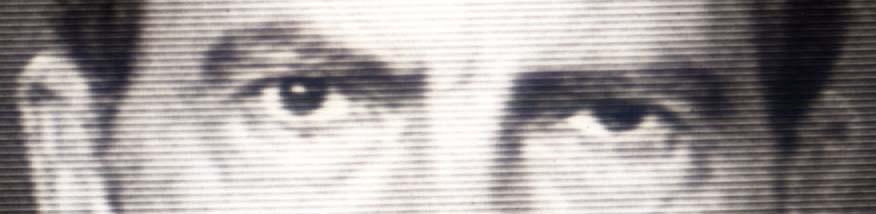
My bookshelves are filled with books on Nixon. On my office wall I’ve hung framed historic newspapers, including the Friday, Aug. 9, 1974, edition of the New York Times, blaring the fully capitalized words, “Nixon Resigns.” Nixon’s angry, bleary eyes are like scarred volcanic coals staring at me from the yellowed newsprint, as if they’re demanding something from me, something unspoken and unknowable. In Nixon’s case, I think it’s better that it remains unspoken and unknowable.

In recent weeks, Nixon has been on my mind more than usual. Nixon-related news seemed to be everywhere.

Writer Ann Beattie recently wrote an op-ed in the New York Times about her new book on Pat Nixon, which was later reviewed in the Book Review.

The New York Times recently ran a fascinating story on the release of the transcript of Nixon’s combative and acidly sarcastic grand jury testimony to Watergate prosecutors. The story contained a great quote from historian Stanley Kutler: “If you know the voice of Richard Nixon, it’s a virtuoso performance, from the awkward attempts at humor to the moments of self-pity.”

Timothy Naftali, the historian and Nixon Library director, recently announced that he was leaving the presidential center. Two weeks later, the library unveiled audio recordings of Nixon recalling his bizarre meeting with anti-war protestors at the Lincoln Memorial.

Journalist Tom Wicker, who wrote a beautiful essay about Nixon for the Character Above All series, died several days ago. China recently agreed to stage — on its own terms — the play “Top Secret: The Battle for the Pentagon Papers,” an exploration of the clash between government power and a free press.

And, finally, the website for the PBS series “American Experience” recently redesigned the page devoted to its powerful presidential documentaries, including a brilliant, bitter one devoted to Nixon.

That 20-year-old PBS documentary, which is sorely in need of an update, ended its introductory segment with a quote that has stayed with me since I first saw it 15 years ago. It was from then-Attorney General Eliot Richardson, who said: “It struck me from time to time that Nixon, as a character, would have been so easy to fix, in the sense of removing these rather petty flaws. And yet, I think it’s also true that if you did this, you would probably have removed that very inner core of insecurity that led to his drive. A secure Nixon, almost surely, in my view, would never have been President of the United States at all.”

For years, as I systematically built a life as an editor, writer and historian, Richardson’s grim observation of Nixon somehow intensified the raging fires fueling my own ambitions. It also challenged me as a presidential historian to understand the intricate mechanisms of a genuinely great and terrible president, along with the diplomatic triumphs and political wastelands he left in his wake.

When I considered Richardson’s observation from the perspective of a novelist, his characterization of Nixon stood as a supreme example of how to design and engineer complex, unforgettable, and tragically-doomed characters for my own fictional illustrations of an equally doomed America. With Nixon in mind, I assembled various aspects of brilliant and frightened men and women, each character crippled by contradictions and insecurities, their virtuous ambitions eventually mutating into bitterness and anger, like the coils of an anaconda strangling their moral centers. Each character is stunning in their own unique way, each one an absolute genius at one thing, magnificently talented, each one contributing to the greater story and the greater society. Some are geniuses yet they don’t know it. Some realize their talents all too late as they look back at a wasted existence, lost love and betrayed principles. For others, their genius is too heavy a burden, or too sharp of a weapon, and they use it to destroy the lives all around them. They are the perfect liars, manipulators, and killers, naturally evil or self-centered people whose true darkness is fully appreciated only when they are thrust into terrible tragedies or failures. A few of my characters — too few — are lucky. They are discovered and guided by the right mentors, and they live rich lives of fulfillment and success, not entirely sure why so many others lead aimless lives destitute of happiness and self-worth.

Lurking not too far behind my musings on Nixon as a president and as a man are my own fears and uncertainties. Some people fear death. Others fear failure. My fear is not as dire as those two, but it’s related to both. I’m haunted every moment of every day by a fear of mediocrity. To me, death is fine as long as I’ve accomplished something notable, as long as I’m celebrated after I’m gone, as long as I’m remembered and appreciated and emulated. Failure is fine as long as I have faith that there are substantive triumphs to eclipse them. I don’t need my face carved onto a mountain or an aircraft carrier named after me, of course. It’s not about ego. Perhaps it’s more about how much I’ve demanded of myself and about how I’ve met those demands, regardless of how ridiculously unrealistic they may have been.

Isn’t this everyone’s personal struggle? Wasn’t it Nixon’s struggle? Shouldn’t I be comforted by the sense that I’m intelligent and perceptive enough to perceive how inconsequential I still am? Shouldn’t that give me some kind of hope, some kind of fresh drive to push harder, write better, think deeper and dream bigger?

Do I have “rather petty flaws” that are driving me to some kind of Pyrrhic doom? Will my hard work in academics and writing build a body of work that I can look back upon with pride? Or am I simply a serene, comfortable, middle class, 21st century American, slowly and sensibly living out his days, not overly flawed and not admirably ambitious, doomed to accomplish nothing? Am I just someone cruising along the suburbs of American existence, blind to the opportunities all around him, a serene man adrift, watched over by his “patron saint,” a forgettable face lost in a forgettable life?

I can’t believe that. I’m a good man who will someday be a great man. That’s all there is to it. This life will improve every life it touches, and it will leave behind a better world. Those are the ambitions I’m achieving and will continue to achieve. That is the greatness I will be remembered for. Hardly mediocre. Hardly petty.

I’ll mention that to Nixon the next time he offers me a job.

Recommended reading / viewing / listening

Today’s intellectuals … Herman Cain fallout … Hating while bored … The new YouTube … Latin America’s new alliance.

Most of these great items come from my Twitter feed or Facebook news feed. Follow me on Twitter and on Facebook for more fascinating videos, articles, essays and criticism. Read past recommendations from this series here.

1. The Literary Cubs
By Alex Williams | The New York Times | Nov. 30
“Fueled by B.Y.O.B. bourbon, impressive degrees and the angst that comes with being young and unmoored, members spend their hours filling the air with talk of Edmund Wilson and poststructuralism.”

2. Grudge Lust
By Elizabeth Greenwood | The New Inquiry | Nov. 23
“Sometimes, especially in arduous and boring times, like a long flight or a dull class, I will pick someone out of a crowd to be my nemesis. My nemeses need not have harmed me, per se, but she or he will be selected for some ghastly, unforgivable trait.”

3. 10 political lessons from Herman Cain’s campaign
Naked Politics :: The Miami Herald | Dec. 3
“Herman Cain’s campaign is gone, but the political takeaways live on”

4. YouTube Gets Its Biggest Makeover Ever, Becomes More Google-Like
By Chris Taylor | Mashable Tech | Dec. 1
“So what’s the change all about? One word: channels. The world’s most popular online video service now sees itself as a descendent of cable TV, with millions of channels rather than hundreds — and it’s doing its darndest to encourage you to use it that way.”

5. Dear Important Novelists: Be Less Like Moses and More Like Howard Cosell
By Dwight Garner | The New York Times Magazine | Sept. 16
“It’s worth suggesting, though, that something more meaningful may be going on here; these long spans between books may indicate a desalinating tidal change in the place novelists occupy in our culture.”

6. Herman Cain Exits
By Amy Davidson | Close Read :: The New Yorker | Dec. 3
“Really, we promise — we’ll manage. Cain suspending his campaign means that we will no longer have to suspend our disbelief about the seriousness of his candidacy, or about what’s become of our political culture.”

7. Understanding the Battle Over Texas Redistricting
By Justin Dehn and Thanh Tan | The Texas Tribune | Dec. 2
“Months after the Legislature established its maps, it’s still not clear who Texans will be voting for in next year’s congressional and state House and Senate races. The Trib’s Thanh Tan and Ross Ramsey explain why.”

8. How Herman Cain benefits from dropping out: Money and political power
By Brad Knickerbocker | The Christian Science Monitor | Dec. 3
“Herman Cain may no longer be a presidential candidate, but he doesn’t need to sulk. His promise to endorse one of the other candidates means political power, and his books and other endeavors will bring him more money.”

9. Chavez lauds new Latin American alliance
Al Jazeera | Dec. 3
“Venezuelan president, battling cancer, appears energetic at founding of 33-member bloc meant to counter United States.”

10. Susan Wallace
Civil War Women Blog | Nov. 28
“Susan Arnold Elston Wallace was an American author and poet and wife of Civil War soldier and author Lew Wallace.”

**************

TUNES

My soundtrack for today included:
1. OH SWEET NUTHIN’ The Velvet Underground
2. THE TRUTH Handsome Boy Modeling School
3. I’LL TAKE YOU THERE The Staple Singers
4. WAY DOWN IN THE HOLE Domaje
5. WHIPPING POST The Allman Brothers Band
6. THIS NIGHT Black Lab
7. GROUNDS FOR DIVORCE Elbow
8. I’LL FLY AWAY Alison Krauss & Gillian Welch
9. ME AND JULIO DOWN BY THE SCHOOLYARD Paul Simon
10. ELECTRIC CITY Black Eyed Peas

Recommended reading / viewing / listening

Saying sorry … Condi’s regret … Hawthorne’s inspiring words … Latino birth rate drop … A sexy inventor.

Most of these great items come from my Twitter feed or Facebook news feed. Follow me on Twitter and on Facebook for more fascinating videos, articles, essays and criticism. Read past recommendations from this series here.

1. Why Some People Say ‘Sorry’ Before Others
By Lauren F. Friedman | Scientific American | Nov. 28
“Certain character traits influence people’s willingness to apologize”

2. Rice regrets N.Y.C. vacation in wake of Katrina
Politico Live :: Politico | Nov. 27
“Reflecting on the Bush administration’s response to Hurricane Katrina in 2005, former Secretary of State Condoleezza Rice says that as the administration’s highest-ranking African-American at that time, she regretted being on vacation in New York during the storm crisis.”

3. An implausible candidate’s implausible story
By Helen O’Neill | Associated Press | Nov. 26
“He’s a mathematician, a minister, a former radio talk show host and pizza magnate. But most of all, Herman Cain is a salesman. And how he sells.”

4. Waiting to die: Cervical cancer in America
By Amanda Robb | Al Jazeera | Nov. 22
“Geography largely determines whether US women will suffer from cervical cancer — and whether they will die from it.”

5. Hawthorne Feels Your Pain: Understanding Economic Crisis Through American Literature
By Daniel Honan | BigThink | Nov. 29
“According to Lisa New, professor of English at Harvard University, Americans ought to download Nathaniel Hawthorne’s The House of Seven Gables to their smartphones. Indeed, classic American literature abounds with examples of how Americans have responded to economic upheavals.”

6. Newt Gingrich, Crackpot Historian
By Tim Murphy | Mother Jones | Nov. 29
“The GOP presidential candidate has a new piece of historical fiction out. Emphasis on fiction.”

7. Latino birth rate drops during recession
By Sara Ines Calderon | NewsTaco | Nov. 29
“Since 2007, the number of Latino babies born in the U.S. has dropped by 11% — or below 1 million in 2010.”

8. Hedy Lamarr: World’s Sexiest Inventor
Life | Nov. 29
“Fascinated by science and eager to find a way to help the Allies during World War II, Lamarr came up with a way to make radio signals jump between frequencies, and thus prevent the signals from becoming jammed.”

9. Visualizing the World’s Food Consumption
Food Service Warehouse | Nov. 29
Guess which country consumed most of the world’s calories.

10. The Sex Addiction Epidemic
By Chris Lee | The Daily Beast | Nov. 25
“It wrecks marriages, destroys careers, and saps self-worth. Yet Americans are being diagnosed as sex addicts in record numbers. Inside an epidemic.”

Recommended reading / viewing / listening

Santa Anna’s papers … Wandering females … Defending soldiers at home … Suicides in literature … Mine tragedy’s open wounds.

Most of these great items come from my Twitter feed or Facebook news feed. Follow me on Twitter and on Facebook for more fascinating videos, articles, essays and criticism. Read past recommendations from this series here.

1. Santa Anna papers sell for $183,500
By Scott Huddleston | San Antonio Express-News | Nov. 19
“Santa Anna’s field commands were among the artifacts in a weeklong, online auction”

2. Saif al-Islam goes from fugitive to facing the Libyan people
By Peter Beaumont | The Guardian | Nov. 19
“Wherever Muammar Gaddafi’s son stands trial, he will be defending not just himself but his whole family”

3. BMW’s electric vision of the future
CNN Money | Nov. 10
“The German automaker unveils its i-Series proyotypes featuring ‘premium’ cars for the electric market.”

4. Our Male Ancestors Stayed Close to Home, While Females Wandered About
By Marlene Cimons | LiveScience | Nov. 18
“It turns out that the males of two bipedal hominid species that roamed the South African savannah more than a million years ago were the stay-at-home types, compared to the wandering females, who went off on their own, leaving the men behind.”

5. What the 99 percent can give American soldiers
By Alexandra Grey | Salon.com | Nov. 18
“I’m proud to put my life on the line to defend your freedoms. Please don’t take them for granted”

6. Natalie Wood detectives face conflicting accounts
By Anthony McCartney | Associated Press | Nov. 19
“Two sheriff’s detectives are now diving into the mysterious events on the yacht Splendour, although whether they reach any different conclusions than their predecessors remains to be seen.”

7. Year later, New Zealand mine still holds 29 bodies
By Nick Perry | Associated Press | Nov. 19
“Some families say they are unable to finish grieving because the men’s bodies have not been recovered from the Pike River mine near Greymouth, and they are frustrated that more has not been done to try to reach them.”

8. Thus With a Kiss: 10 Spectacular Suicides in Literature
By Emily Temple | Flavorwire | Aug. 14
“For us, of all deaths in literature, suicides are often the most affecting, whether there is precise internal monologue or abject mystery surrounding the character’s intentions.”

9. The 31-Year-Old Meeting the Parents of Her Insecure Boyfriend
Daily Intel :: New York Magazine | May 16
“Once a week, Daily Intel takes a peek behind doors left slightly ajar. This week, the 31-Year-Old Meeting the Parents of Her Insecure Boyfriend: Female, administrative assistant, midtown, 31, “straight with bisexual tendencies,” in a relationship.”

10. Assassination of Trujillo
Witness :: BBC News | May 30
“It is 50 years since the assassination of Rafael Trujillo – Dominican Republic dictator.”

********************

TUNES

My soundtrack for today included:
1. BRING IT ON HOME TO ME Sam Cooke
2. I’D RATHER GO BLIND Etta James
3. CONGRATULATIONS HONEY Baby Washington & The Plants
4. FA-FA-FA-FA-FA Otis Redding
5. CORINNA Taj Mahal
6. EVIL GAL BLUES Dinah Washington
7. VIETNAM BLUES Cassandra Wilson
8. THAT’S HOW STRONG MY LOVE IS Otis Redding
9. AIN’T NO SUNSHINE Bill Withers
10. LEAVING TRUNK Taj Mahal

‘Arch of rosy clouds’

Part 10 of this special series focuses on John Ruskin, an English writer, academic and critic who, like so many others presented in the Morgan Library exhibit, turned to a diary to assuage the pain of depression and anxiety.

This special Stillness of Heart series explores the Morgan Library & Museum’s fascinating exhibit, “The Diary: Three Centuries of Private Lives.”

Part 10 focuses on John Ruskin, an English writer, academic, and critic who, like so many others presented in the Morgan Library exhibit, turned to a diary to assuage the pain of depression and anxiety. Ruskin, however, went a step further and used his diary as a primary resource in the study and analysis of his own disorder. As the introductory essay points out, Ruskin “was determined to study his own patterns and learn enough about himself to remain sane. … He re-read his earlier entries, searching for signs leading up to his breakdown, underlining key words and phrases, compiling an index of his experience, and putting down on paper all he could remember of his psychotic visions.”

“No getting things done in this house. Lost all yesterday calling on Marshalls in morning. Fine afternoon, throwing down stones in the wood with Diddie and Maggie. Exquisitest purple I ever saw on hills, in afternoon, and arch of rosy clouds all over old man [a nearby mountain] and opalescent green-blue and rose over blue Helvellyn, divine, but my evening spoiled by finding the poor chaffinch’s nest in ruins, and nestlings dying. A hawk, I fancy, pouncing on the mother;– not able to return for the brood. “

Examine images of his diary and listen to the museum’s audio guide here.

Entries in this series:
Part 1: Introduction to the exhibit and Charlotte Brontë
Part 2: Frances Eliza Grenfell
Part 3: Sophia and Nathaniel Hawthorne
Part 4: Paul Horgan
Part 5: John Newton
Part 6: Mary Ann and Septimus Palairet
Part 7: Walter Scott
Part 8: Bartholomew Sharpe
Part 9: Tennessee Williams
Part 10: John Ruskin

Relaxing

Stillness of Heart is taking some time off to fully enjoy the last few weeks of summer.

Stillness of Heart is taking some time off to fully enjoy the last few weeks of summer.

Stay in touch. You can follow me on Twitter or Facebook.

See you in the fall.

Recommended reading / viewing / listening

China’s navy … Women in Mexico’s drug war … Young Americans no dreamers … Brazil’s girl power … Studying the storm surge.

Most of these great items come from my Twitter feed or Facebook news feed. Follow me on Twitter and on Facebook for more fascinating videos, articles, essays and criticism.

1. Mexico’s Drug War, Feminized
By Damien Cave | The New York Times | Aug. 13
“The number of women incarcerated for federal crimes has grown by 400 percent since 2007, pushing the total female prison population past 10,000.”

2. Troubled Waters: Why China’s Navy Makes Asia Nervous
By Austin Ramzy | Time | Aug. 10
“China’s armed forces are modernizing — military spending has grown by an annual average of 15% since 2000 — and after a decade-long charm offensive in East and Southeast Asia, Beijing has begun taking a more aggressive stand on territorial disputes.”

3. New hurricane scale puts more focus on storm surge
By Mary Wozniak | The (Fort Myers, Fla.) News-Press | Aug. 14
“A newly patented hurricane scale better predicts the potential destruction from both wind and storm surge, but the National Hurricane Center won’t say whether it will be endorsed or used.”

4. Bachmann and Perry — a beautiful 2012 rivalry
By John Whitesides | Reuters | Aug. 14
“It was Michele Bachmann’s big moment in the political spotlight and Rick Perry stomped all over it.”

5. Generation Vexed: Young Americans rein in their dreams
By Tiffany Hsu and Shan Li | The Los Angeles Times | Aug. 14
“Amid so much economic uncertainty, many are rethinking career plans, putting off marriage and avoiding the stock market like the plague.”

6. Brazil’s Girl Power
By Cynthia Gorney | National Geographic | September 2011
“How a mix of female empowerment and steamy soap operas helped bring down Brazil’s fertility rate and stoke its vibrant economy.”

7. The Hope That Flows From History
By Christina D. Romer | The New York Times | Aug. 13
“Adding to the despair is the oft-repeated notion that it took World War II to end the economic nightmare of the ’30s: If a global war was needed to return the economy to full employment then, what is going to save us today? Look more closely at history and you’ll see that the truth is much more complicated — and less gloomy.”

8. The Female Eunuch, 40 years on
By Rachel Cusk | The Guardian | Nov. 20, 2010
“Funny, angry, clever and hopeful – The Female Eunuch set out to transform women’s lives. Does Germaine Greer’s seminal tract still speak to feminists?”

9. The Single Guy Getting Over His On-Again, Off-Again Girlfriend
Daily Intel :: New York Magazine | May 23
“Once a week, Daily Intel takes a peek behind doors left slightly ajar. This week, the Single Guy Getting Over His On-Again, Off-Again Girlfriend: Male, high school teacher, 39, Astoria, straight, single.”

10. Italian internees
Witness :: BBC News | June 10
“When Italy joined World War II in June 1940, British-Italian men were rounded up and interned.”

TUNES

Tonight I’m spending some time with the blues, specifically with the Texas Blues Café. Check out the line-up and then listen here.

1. Mike Zito — 39 Days
2. Chris Rea — Lone Star Boogie
3. The Terry Quiett Band — Long Saturday Night
4. Lady Antebellum — Lookin’ for a Good Time
5. The Insomniacs — Angry Surfer
6. Anna Popovic — Get Back Home to You
7. Stevie Ray Vaughan — The Sky is Crying
8. Douglas Acres — Grand Theft Mojo
9. Tommy Crain & The Cross Town All Stars — For the Music
10. Grace Potter & The Nocturnals — Some Kind of Ride
11. Los Lonely Boys — Texican Style
12. Beau Hall — Hell & Ecstasy
13. Preacher Stone — Mother To Bed

‘A child of love’

Part 9 of this special series focuses on Tennessee Williams, the famed playwright, who embraced his diary as shelter from the depressive snowstorms that ravaged his life

This special Stillness of Heart series explores the Morgan Library & Museum’s fascinating exhibit, “The Diary: Three Centuries of Private Lives.”

Part 9 focuses on Tennessee Williams, the famed playwright, who embraced his diary as shelter from the depressive snowstorms that ravaged his life. Success, drugs, sensual companionship, even public accolades like a Pulitzer Prize (for “Cat on a Hot Tin Roof”) all failed to calm his suffocating anxiety, loneliness, and despair.

“A child of love — dined on the terrace with the cathedral spires lit up and a mass choir singing Catalonian folks songs on the Square below. Then love — came twice, both ways, and divinely responsive as if a benign Providence, or shall we be frank and say God, had suddenly taken cognizance and pity of my long misery this summer and given me this night as a token of forgiveness.”

Examine images of his amazing diary and listen to the museum’s audio guide here.

Entries in this series:
Part 1: Introduction to the exhibit and Charlotte Brontë
Part 2: Frances Eliza Grenfell
Part 3: Sophia and Nathaniel Hawthorne
Part 4: Paul Horgan
Part 5: John Newton
Part 6: Mary Ann and Septimus Palairet
Part 7: Walter Scott
Part 8: Bartholomew Sharpe
Part 9: Tennessee Williams
Part 10: John Ruskin

Rebecca Aguilar

#CallingAllJournalists Initiative | Reporter | Media Watchdog | Mentor | Latinas in Journalism

Anna Fonte's Paper Planes

Words, images & collages tossed from a window.

Postcards from Barton Springs

Gayle Brennan Spencer - sending random thoughts to and from South Austin

The Flask Half Full

Irreverent travelogues, good drinks, and the cultural stories they tell.

Government Book Talk

Talking about some of the best publications from the Federal Government, past and present.

Cadillac Society

Cadillac News, Forums, Rumors, Reviews

Ob360media

Real News That Matters

Mealtime Joy

bringing joy to family meals

Øl, Mad og Folk

Bloggen Øl, Mad og Folk

a joyous kitchen

fun, delicious food for everyone

A Perfect Feast

Modern Comfort Food

donnablackwrites

Art is a gift we give ourselves

Fridgelore

low waste living drawn from food lore through the ages

BeckiesKitchen.com

MUSINGS : CRITICISM : HISTORY : NEWS

North River Notes

Observations on the Hudson River as it passes through New York City. The section of the Hudson which passes through New York is historically known as the North River, called this by the Dutch to distinguish it from the Delaware River, which they knew as the South River. This stretch of the Hudson is still often referred to as the North River by local mariners today. All photos copyright Daniel Katzive unless otherwise attributed. For more frequent updates, please follow northriverblog on Facebook or Instagram.

Flavorite

Where your favorite flavors come together