As she faced a long, hard year ahead, on Jan. 8, 1862, Stone made a fresh promise to herself as an individual and as a citizen of the Confederacy.
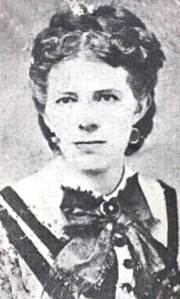
From 2012 to 2015, Stillness of Heart will share interesting excerpts from the extraordinary diary of Kate Stone, the daughter of Louisiana cotton plantation owners who chronicled her turbulent life throughout the Civil War era.
Learn more about Stone’s amazing life in 1861, 1862, 1863, 1864, 1865 and beyond. Click on each year to read more about her experiences. You can read the entire journal online here.
(Photo edited by Bob Rowen)
As she faced a long, hard year ahead, on Jan. 8, 1862, Stone made a fresh promise to herself as an individual and as a citizen of the Confederacy.
Jan. 8:
This is my twenty-first birthday, and I think this will be my motto for the year so uncertain are all our surroundings: “Live for today. Tomorrow’s night, tomorrow’s cares shall bring to light.” May I always be able to put my trust in God as I can tonight, satisfied that He will order our future as is best.
This has been a year of changes, of stirring and eventful life, the shortest ever in our calendar. God has been with our Nation during this year of trouble. He has given us wise rulers, brave and successful generals, valiant and patriotic men, and a united people, self-sacrificing and with their trust in God. …
Stone’s first entry for 1862 was a somber one. The shadow of her brother’s death darkened the holiday cheer.
From 2012 to 2015, Stillness of Heart will share interesting excerpts from the extraordinary diary of Kate Stone, the daughter of Louisiana cotton plantation owners who chronicled her turbulent life throughout the Civil War era.
Learn more about Stone’s amazing life in 1861, 1862, 1863, 1864, 1865 and beyond. Click on each year to read more about her experiences. You can read the entire journal online here.
(Photo edited by Bob Rowen)
Stone’s first entry for 1862 was a somber one. The shadow of her brother’s death darkened the holiday cheer.
Jan. 6:
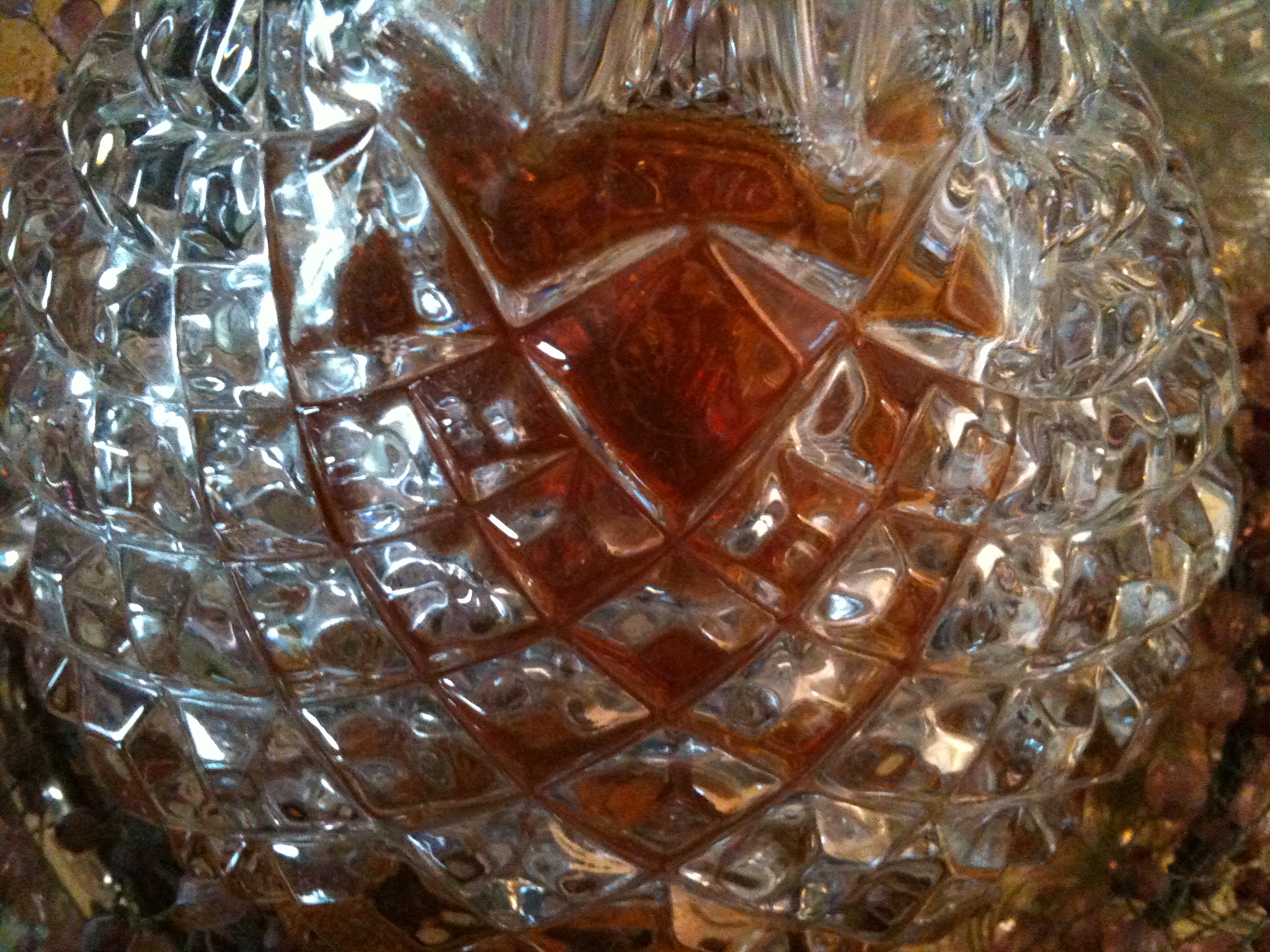
Christmas passed very quietly with us. Greetings on all sides but no gifts and not many good things prepared beforehand. Had the customary eggnog before breakfast, but not a prize nog. It was made of borrowed whiskey with a strong flavor of turpentine. A lovely day, so warm that we sat on the gallery until bedtime.
Julia Reed came on the twenty-seventh and stayed until today. This is the first Christmas in our recollection that was not a time of fun and feasting. We missed Ashburn’s kiss and blithesome presence.
Mamma invited the two Mr. Valentines, father and son, to dinner, thinking it would be pleasant for Other Pa (Stone’s maternal grandfather) to meet the older man, and rather to our surprise they came and stayed until sundown. We never heard of Mr. Valentine, Sr., paying a social visit before. He is odd, just as we fancied he would be, but an excellent talker. He and his son are strikingly alike in looks, manners, and turn of mind, though they generally take opposite sides on every proposition. Mark, Jr., says they are forced to do so to have something to talk about the long winter evenings.
Mark, Jr., acquainted us with his fixed determination to pay us a New Year’s call. So Julia and I hurried back from our ride that misty, misty morning and looked for him all day. In the afternoon we begged Mamma to let us pay our expected visit to Mrs. Savage, but she would not allow it. So he ruined our plans for all day. It will be long before we let an engagement with him keep us in again.
The morning after Christmas Mamma gave all the house servants holiday … and they all went down to the quarters. She hired some of the field women, who were busy in the backyard drying out lard, making up sausages, cleaning feet and so on. …
As the war’s first Christmas approached, life went on at Brokenburn. Soft winter rain drenched the neighborhood. A strange relative got married. Sickness claimed yet another acquaintance. It’s a fascinating record of a quiet home front. Quiet for the moment.
From 2012 to 2015, Stillness of Heart will share interesting excerpts from the extraordinary diary of Kate Stone, the daughter of Louisiana cotton plantation owners who chronicled her turbulent life throughout the Civil War era.
Learn more about Stone’s amazing life in 1861, 1862, 1863, 1864, 1865 and beyond. Click on each year to read more about her experiences. You can read the entire journal online here.
(Photo edited by Bob Rowen)
As the war’s first Christmas approached, life went on at Brokenburn. Soft winter rain drenched the neighborhood. A strange relative got married. Sickness claimed yet another acquaintance. It’s a fascinating record of a quiet home front. Quiet for the moment.
Dec. 22:
I have been sleeping with Mamma and so I have not written for some time, as night is my time for scribbling.
Aunt Laura left us ten days ago after a two-week stay, and she seemed to enjoy so much being with us all, especially Mamma. Her visit was a pleasure to us. …
After two weeks of the lovliest warm spring weather with skies as blue and bright as bend over Italian plains, we wake to hear a soft, warm rain pattering down, and so no church for us today. And none of us went last Sunday. Sunday spent at home is a long, weary day. …
The greatest news of all Uncle Johnny is married. On the seventeenth of this month he gave his heart and hand to Miss Kate Boone, a girl from Charleston, S.C., who has been visiting her brother at Pine Bluff, Ark., for some months. She is quite a young girl, not more than seventeen, while Uncle Johnny is thirty-five. We wish them every happiness, and I wish he would bring her down to see us. I only hope he will not try to educate her according to his theories but will let her go on as Nature and her own antecedents and education would have her. But for years he has had the idea of marrying a very young girl and molding and educating her according to his pet theories. My mind misgives me that such is still his plan.
Other Pa (Stone’s maternal grandfather) left the day after the wedding, which was very quiet. He is not pleased with the marriage, though he does not say much against it. Uncle John is editing a paper in Pine Bluff. He is a most impracticable man with so many theories, and he has made ducks and drakes of all the money inherited from Other Ma (Stone’s maternal grandmother) and every other cent he could get. We hope marriage will be his salvation, an anchor to keep him from drifting with every tide, or feeling, or impulse. Johnny says he shall call his new Aunt “Aunt Boone.” He likes it better than “Kate.” I have pre-emption title on that name. …
Mrs. Virginia Cavalier, the oldest sister of the Morris girls, died a week ago of swamp fever. She was a widow with two young children and a very attractive woman. Her brother-in-law, Mr. Joe Cavalier, has been addressing her for the last year, so report says.
She never thought she was attractive. She never thought she’d be loved. But on one rainy day, a conversation with her mother changed everything.
From 2012 to 2015, Stillness of Heart will share interesting excerpts from the extraordinary diary of Kate Stone, the daughter of Louisiana cotton plantation owners who chronicled her turbulent life throughout the Civil War era.
Learn more about Stone’s amazing life in 1861, 1862, 1863, 1864, 1865 and beyond. Click on each year to read more about her experiences. You can read the entire journal online here.
(Photo edited by Bob Rowen)
July 1861 at Brokenburn began amidst sickness, and Stone was restless. She had always known she was smart, witty, well-read, and insightful. Like many people today, she never believed she was attractive, and that insecurity was a black cloud that darkened every aspect of her emotional life. But on one rainy day, a conversation with her mother inspired her to completely reshape her self-image.
July 1
Mamma is sick again today from the medicine. I hope she will be relieved by tomorrow. It upsets everything for her to be sick. I cannot settle to any work or even read with any comprehension. … A wet disagreeable day, Mamma sleeping through most of it, but she waked up this evening and was telling me tales of my babyhood and early childhood.
It seems My Brother and I were quite noted little people in our circle of acquaintances. At eighteen months I learned my letters with My Brother, who was fifteen months older, and by the time I was two and a half could read very well. I knew “Mother Goose” by heart, could repeat pages of poetry and a number of little tales, and chatter of any and everything by the hour.
And yet I was a good little child and the delight of my Father, who thought me a wonderful little creature and would never let me be crossed. I was his only daughter for so long. I remember his pleasure when Sister was born after six sons had been ushered into the world. …
I do not remember the time when I could not read. My first recollection of books was trying to teach my little Aunt Serena, three years the older, her letters, sitting side by side on the steps. How strange it seemed to me that she could not read. I thought everybody read as everybody talked naturally.
Mamma’s talk was a great surprise to me as I had always thought I was the ugly duckling of the whole family. … I had always, since I could think, had the idea that my Father and all the family petted and encouraged me because they thought me so ugly and were sorry all the time that I was suffering from this idea, for it has been the shadow on my life. I was my Father’s favorite; he thought me perfect. I had the admiration of the rest of the family for what they were pleased to think my quick, bright mind.
The knowledge of this will, I think, change my life from this night. Finding that I have been much beloved all my life, I will try to put away the morbid thoughts that have so often harassed me the fear that, being ugly and unattractive, no one could ever really care for me, and that I was doomed to a life of loneliness and despair. Mamma by one long, sweet talk … exorcised this gloomy spirit; from this time forth I will try to make the best of the girl that Father loved so.
Mamma says I was the quaintest-looking little figure when three years old, being small with long yellow hair plaited down my back my Father would never allow it to be touched with the scissors. I had a short, stumpy, little body and the very tiniest feet and hands, like bird claws, so small and thin, and a grave dignified manner. But I was an incessant chatterbox with the funniest lisp when perched in a high chair in the chimney corner reciting poetry and telling tales to amuse the laughing grown folks.
The lisp I have kept to this day, try as I will to get rid of it. But not another feature is like the Kate of today. I am tall, not quite five feet six, and thin, have an irregular face, a quantity of brown hair, a shy, quiet manner, and talk but little.
What an egotistical page, but it has made me happy. No more morose dreamings, but a new outlook on life.
As the month closed, Stone’s natural defiance blossomed, she complained about the slaves, and a comet appeared in the sky.
From 2012 to 2015, Stillness of Heart will share interesting excerpts from the extraordinary diary of Kate Stone, the daughter of Louisiana cotton plantation owners who chronicled her turbulent life throughout the Civil War era.
Learn more about Stone’s amazing life in 1861, 1862, 1863, 1864, 1865 and beyond. Click on each year to read more about her experiences. You can read the entire journal online here.
(Photo edited by Bob Rowen)
On June 18, 1861, tragic news darkened the pages of Stone’s diary:
Aunt Laura is ill. She has just lost a young baby and I know is much distressed and disappointed. She is so devoted to her only child, Beverly, the loveliest little girl I ever saw. Dr. Buckner thinks her perfect and really I believe she is, bodily, mentally, and physically.
The little baby, we hear, was horribly deformed. God in mercy took it, but Aunt Laura knows nothing of its misfortune.
June 19 saw an interesting incident:
Great excitement! About nine in the evening we were sitting on the front gallery and a runaway Negro passed just in front of the house. The boys rushed out after him, but he soon distanced them, and I was glad he escaped. I hate to think how he will be punished, perhaps whipped unmercifully.
The runaways are numerous and bold. We live on a mine that the Negroes are suspected of an intention to spring on the fourth of next month. The information may be true or false, but they are being well watched in every section where there are any suspects. Our faith is with God.
Stone expressed anxiety for the fate of the “runaway Negro” should he be captured. Was it private sympathy for someone hunted by a slaveholding machinery whose brutality she knew all too well? She encapsulated the family’s general paranoia as they wondered about their own fate. How did that uncertainty mutate Southern perspectives on American society, their sense of how the future of their nation should unfold, and their interpretation of God’s plan for their society? Was it easier to simply focus on how many berries they picked for supper that afternoon, whose baby was lost, or who was joining them for dinner that night?
As the month closed, Stone’s natural defiance blossomed, she complained about the slaves, and a comet appeared in the sky:
A beautiful sunshiny day. Just enough rain has fallen to perfect the corn and help the cotton. Surely this year we have had “the early and the latter rains” and the promise of abundant crops. The North cannot starve us, try as they may, and God will aid us in our righteous cause. …
The house servants have been giving a lot of trouble lately — lazy and disobedient. Will have to send one or two to the field and replace them from the quarters if they do not settle down. I suppose the excitement in the air has infected them. The field hands go on without trouble. …
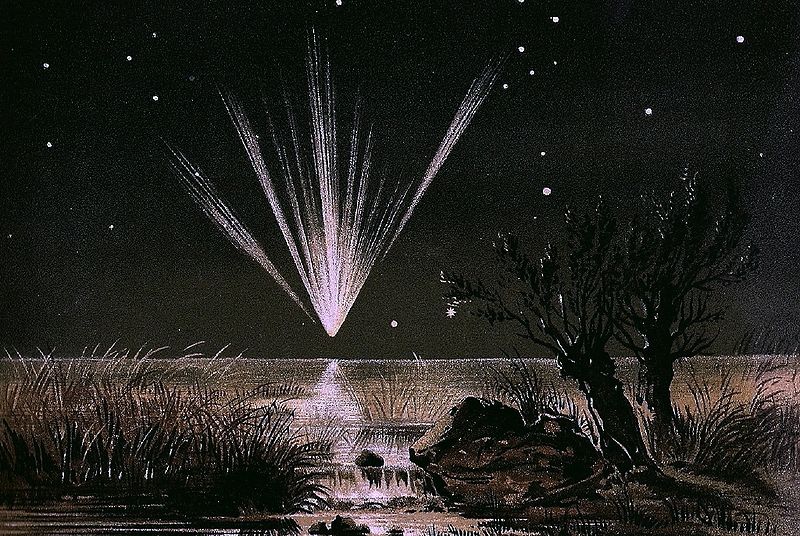
There is a comet visible tonight. We were surprised to see it, as we did not know it was expected. Have seen nothing of it in the papers. It is not very bright but has the appearance of a large star, Venus at her brightest, with a long train of light seen dimly as through a mist. Jimmy first discovered it. Two splendid meteors fell just above it, and the boys said it was a big star chased by little ones trying to regain its orbit.
Texas influence / Children of depressed parents / Illustrating gay rights / New Lincoln find / Women and ‘Alien’
Most of these great items come from my Twitter feed or Facebook news feed. Follow me on Twitter and on Facebook for more fascinating videos, articles, essays and criticism.
1.Gail Collins: Texas runs America By Kyrie O’Connor | Salon | June 9
“In a Salon interview, the New York Times writer who made Mitt’s dog famous takes dead aim at the Lone Star State”
2.Should Depressed People Avoid Having Children? By Maia Szalavitz | Healthland :: Time | June 5
“Do people with depression or other psychological problems have any moral obligation to forgo bearing children in order to avoid passing on their ‘bad’ genes?”
3.Gay rights in the US, state by state The Guardian | May 8
“Gay rights laws in America have evolved to allow — but in some cases ban — rights for gay, lesbian and transgender people on a range of issues, including marriage, hospital visitation, adoption, housing, employment and school bullying.”
4.‘O Doctor, do what you can,’ Lincoln’s wife pleaded, says new find By Richard Simon | The Chicago Tribune | June 5
“The 21-page handwritten copy of [Charles A.]Leale’s report was discovered about two weeks ago by researcher Helena Iles Papaioannou while she was poring through records at the National Archives in Washington.”
5.Woman: The Other Alien in ‘Alien’ By Tom Shone | Slate | June 6
“Why are academics so obsessed with Ridley Scott’s movie and its sequels? Plus: An ‘Alien’ bibliography.”
6.‘Mad Men’s’ Jared Harris on Lane’s Shocking [SPOILER ALERT] By Gwynne Watkins | The Stream :: GQ | June 4
“Lane Pryce was a tragic character from the beginning, a bumbling sadsack of an Englishman who desperately craved the respect he had never received from his employers, his father, his wife, or his coworkers.”
7.Team of Mascots By Todd S. Purdum | Vanity Fair | July 2012
“Four years ago, Barack Obama said he wanted a Lincoln-esque “team of rivals” in his Cabinet. Thanks to his own temperament, the modern White House, and the 24-hour news cycle, what the president has created is something that doesn’t look Lincoln-esque at all.”
8.Obama’s friend in Turkey By David Ignatius | The Washington Post | June 7
“Turkey’s ascendancy in the region may seem obvious now, but it was less so in 2009, when Obama began working to build a special relationship.”
9.10 Reasons Why Cormac McCarthy Is A Badass By David McMillan | Thought Catalog | June 5
“McCarthy is a poetic storyteller whose challenging novels explore themes of violence, good and evil, and human survival.”
Kate Stone tries to relax as spring blossoms all around her, but war clouds building in the East darken everything.
From 2012 to 2015, Stillness of Heart will share interesting excerpts from the extraordinary diary of Kate Stone. The daughter of Louisiana cotton plantation owners chronicled her turbulent life throughout the Civil War era.
(Photo edited by Bob Rowen)
June began bright and warm. On June 5, 1861, Kate Stone wrote:
A lovely June day, and Mr. and Mrs. Curry with the three youngest children spent the day, their first visit in months. Annie, the baby, is a nice enough little tot, but what a time her mother has over her, washing, dressing, undressing, and fussing over her most of the day. One would never think it was about the eleventh child. I wonder if she worked so over all the others and why she has a nurse.
Late in the afternoon I went with Brother Coley and Ashburn to the blackberry patch, a glorious ride, a fresh breeze, splendid horse, and a sweeping pace, and the two frolicsome boys.
Mamma said the day had tired her out, but the berries refreshed her mind by supper and the merry chatter of the boys. After supper Mr. McRae, the overseer, came up for a long consultation with her. One by one the boys dropped off to bed, and when at last Mr. McRae took himself off and Mr. Newton, Mamma, and I had a most pleasant, non-sensical talking bee, while enjoying the nicest little meringues and custards.
I lost my comb riding. It just suited my heavy hair, and combs are combs these days. So Jimmy, the dear obliging fellow, has promised to go early in the morning and look for it. …
Stone tried to focus on the mundane details of life: sickness, her French lessons, visiting neighbors, and church services, but the war clouds building in the East could not be ignored.
On June 10, she vented her frustration with her life’s leisurely pace, far from the front lines.
When quietly our days are passing, when the whole planet is in such a state of feverish excitement and everywhere there is the stir and mob of angry life. Oh! to see and be in it all. I hate weary days of inaction. Yet what can women do but wait and suffer?
A week later, on June 17, Stone shared a sense of her intellectual curiosity as she explored the experiences of foreign-born visitors, She often yearned for different opinions and perspectives. But she was always sure when someone was wrong.
I had a long talk with Mr. Hornwasher on the subject of war and the battles he has been in. Both he and Mr. Kaiser are Hungarian refugees, political exiles. Mr. Hornwasher is a Count [or] something in his own land. He is now a teacher of music and languages, and his great friend, Mr. Kaiser, is tutor at Mrs. Savage’s. They are highly educated and refined men and are entertaining talkers, notwithstanding their odd pronunciation.
Robert had fever and Mrs. Savage was so unwell that both had to lie down. Dinner passed off most pleasantly, at least to me. I sat between Mr. Kaiser and Mr. Newton and they made themselves very entertaining. Mr. Valentine and Anna sat together and hardly spoke to each other a dozen times. They never hit it off somehow. I must not let them sit next to each other again.
War was the principal topic. Both Mr. Hornwasher and Mr. Kaiser speak of enlisting. I should think that they had had enough of war in their own country. Mr. Valentine treats the whole subject of the war in his usual sarcastic, cynical manner. To him, the whole affair is a grand humbug, the enthusiasm and patriotism of the South something to be mocked and sneered at. He cannot appreciate the earnestness and grandness of this great national upheaval, the throes of a Nation’s birth. I could shake him. …
Learn more about Stone’s amazing life in 1861, 1862, 1863, 1864, 1865 and beyond. Click on each year to read more about her experiences.
Stay-at-home moms / Invisible octopuses / The rare transit of Venus / The damage from Texas textbooks / Departures of Kristen Wiig and Peggy Olson
Most of these great items come from my Twitter feed or Facebook news feed. Follow me on Twitter and on Facebook for more fascinating videos, articles, essays and criticism.
1.How Texas Inflicts Bad Textbooks on Us By Gail Collins | The New York Review of Books | June 2012
“Ever since the 1960s, the selection of schoolbooks in Texas has been a target for the religious right, which worried that schoolchildren were being indoctrinated in godless secularism, and political conservatives who felt that their kids were being given way too much propaganda about the positive aspects of the federal government.”
3.How Octopuses Make Themselves Invisible By Katherine Harmon | Octopus Chronicles :: Scientific American | June 1
“Do they survey the whole area in their proximity and incorporate the general hues and patterns into their skin display, or do they pick out just a few nearby landmarks for a more precise match?”
4.Tuesday is last chance to see transit of Venus By Elizabeth Weise | USA Today | May 31
“It happens only four times every 243 years. If you want to see the famed transit of Venus, next Tuesday is your last chance this century.”
5.A Study in Farewells: Kristen Wiig and Peggy Olson By Sasha Weiss | Culture Desk :: The New Yorker | June 1
“What a relief — and what a brilliant coincidence — that the gods of TV charted a course this week from Peggy’s quiet triumph to Wiig’s loud one, and one we can all share in.”
6.Christina Hendricks on Joan’s Epic Moral Moment By Gwynne Watkins | The Stream :: GQ | May 30
“The emotionally wrenching episode was the best so far this season, and a tour de force for actress Christina Hendricks (whose hourglass beauty gets more press than her considerable acting chops).”
7.Issues for His Prose Style By Andrew O’Hagan | London Review of Books | June 2012
“[Ernest Hemingway] never takes nouns for granted. He invests his whole personality in them, because nouns are the part of speech where a person gets to show off.”
9.Are literary classics obsolete? By Laura Miller | Salon | May 30
“A new study says today’s writers are influenced by authors of the present, not the past”
10.The ‘Muslim Schindler’ By Mehdi Hasan | The New Statesman | May 23
“A lawyer by training, he used his negotiating skills to try to persuade the Nazis’ experts on racial purity that the 150 or so Iranian Jews living in the city in 1940 were assimilated to non-Jewish — and ‘Aryan’ — Persians through history, culture and intermarriage.”
The ‘napalm girl’ photo / Exercise and get smarter / A looming galactic collision / Texas traffic / Living to 100
Most of these great items come from my Twitter feed or Facebook news feed. Follow me on Twitter and on Facebook for more fascinating videos, articles, essays and criticism.
1.Cheever’s Art of the Devastating Phrase By Brad Leithauser | Page-Turner :: The New Yorker | May 31
“The more you read Cheever, the more you feel his best work is often less about plot than about language — about poetry in the broadest sense.”
2.AP ‘napalm girl’ photo from Vietnam War turns 40 By Margie Mason | Associated Press | May 31
“‘I really wanted to escape from that little girl,’ says Kim Phuc, now 49. ‘But it seems to me that the picture didn’t let me go.’ ”
3.Exercise Makes You Smarter, Thanks To A Common Gene The Huffington Post | May 31
“It turns out that exercise does a lot more than get the blood pumping: in about 60 percent of the population, it may be responsible for the expression of a gene that floods your cells with … a protein that is thought to help with mental acuity, learning and memory.”
4.Mexico’s Drug Corruption Arrests: Why Soldiers Make Bad Narco Agents By Tim Padgett | Global Spin :: Time | May 31
“While putting soldiers on the streets might have provided some short-term relief, the fact remains that in the long run soldiers make lousy anti-drug agents … and the longer they’re kept in that role, the more problems you’re going to have.”
5.NASA Predicts Our Galaxy Will Collide With Another In 4 Billion Years By Carl Franzen | Talking Points Memo | May 31
“Andromeda, which is located 2.5 million light-years away, is moving rapidly towards the Milky Way at a rate of 250,000 milers-per-hour, a clip that will only increase as the galaxies approach.”
6.Are you feeling sleepy? Here’s why … By William Leith | The Daily Telegraph | May 31
“The pace of modern life forces us to ignore one of the most powerful parts of our brain — the body clock. But at what cost?”
7.Yes, Texas Traffic Really is That Bad By Jason Cohen | Texas Monthly | May 31
“INRIX, which released its numbers last week, also found that Austin was the eighth most congested city in America.”
8.Is the vice presidency worth having? By Chris Cillizza | The Fix :: The Washington Post | May 31
“[Here] are our most up-to-date rankings of the vice presidential field … . This month we decided to cut to the chase and give a single line about the good and the bad of each potential pick.”
10.The 1 Percent’s Problem By Joseph E. Stiglitz | Vanity Fair | May 31
“Why won’t America’s 1 percent — such as the six Walmart heirs, whose wealth equals that of the entire bottom 30 percent — be a bit more … selfish? As the widening financial divide cripples the U.S. economy, even those at the top will pay a steep price.”
******************
TUNES
Tonight I’m spending some time with the blues, specifically with the Texas Blues Café. Check out the line-up and then listen here.
1. Blake Havard — Love 2. Mark Guitar Miller — Tired 3. Rob Mcmahan — Trouble 4. Summer and the Sinners — Breakin’ Up 5. Kid Rock — Country Boy Can Survive 6. The Midnight Flyers — Down Low 7. Tommy Z — Can’t Hide My Feelings 8. Los Lonely Boys — Man to Beat 9. Bleu Edmondson — Dallas 10. Dana Fuchs — Lonely for a Life Time 11. Chris Aaron Band — Grain Of Salt 12. Voodoo Blu — Blues is my Business
Films on the environment / The perfect paper clip / Summer books for politicos / The Lucretius effect / The end of men?
Most of these great items come from my Twitter feed or Facebook news feed. Follow me on Twitter and on Facebook for more fascinating videos, articles, essays and criticism.
1.The Environment video collection PBS :: American Experience | May 2012
“Ever wonder what would happen if Antarctica’s ice melted? Or whether you live near a nuclear power plant? Or what kind of rare and intriguing indigenous animals live on Cuba’s undeveloped islands? Find the best green indie films, and learn more about what you can do to help the Earth.”
2.The Perfection of the Paper Clip By Sara Goldsmith | Slate | May 22
“It was invented in 1899. It hasn’t been improved upon since.”
3.A better border is possible By Katie Ryder | Salon | May 26
“A more enlightened boundary could make us richer, save lives and even help rescue the Rust Belt.”
4.Summer 2012 Reading List By Gwen Ifill | Washington Week | May 26
“Looking for some good summer reading? Check out the books Gwen and the Washington Week panelists recommend for the beach, the car, the plane or the pool. From fiction to politics, history to biography, there is something for everybody. The smartest reporters in Washington, D.C. bring you their suggestions for the summer’s best reads.”
5.‘The Swerve’: When an Ancient Text Reaches Out and Touches Us By Jeffrey Brown | PBS NewsHour | May 25
“In his new book, ‘The Swerve: How the World Became Modern,’ author Stephen Greenblatt unearths the tale of a book collector whose discovery of poet Lucretius’ ‘On the Nature of Things’ helped change the direction of human thought.”
7.The Demise of Guys By Philip G. Zimbardo and Nikita Duncan | Hero :: Psychology Today | May 23
“In record numbers, guys are flaming out academically, wiping out socially with girls, and failing sexually with women.”
9.Feeding a hungry world — or meddling with laws of nature? By Michael McCarthy | The Independent | May 25
“As scientists at Rothamsted’s GM trials plead with activists not to sabotage their work, Michael McCarthy visits the battle field”
10.Making iTunes Ignore the Gap By J.D. Biersdorfer | Gadgetwise :: The New York Times | May 21
“I enjoy listening to opera on my iPhone, but the Music app treats the parts of an opera recording as if they were ‘songs.’ Because of this, there is always a gap between the tracks of an opera CD. Is there a way to defeat this feature so that an entire act of an opera is played back seamlessly?”










 Stillness of Heart
You must be logged in to post a comment.