Party like it’s 1861

We’re little more than a week away from the 150th anniversary of the Confederate attack on Fort Sumter, a Federal military installation in Charleston Harbor, where, our history books tell us, the American Civil War officially began.
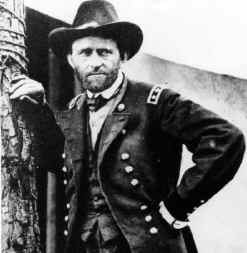
Grant

Until now, legions of commemorative tweets, blogs, multimedia and special anthologies have been busy celebrating and studying the fascinating events of 1859, 1860 and early 1861, which saw brutal fighting in Kansas, John Brown’s doomed raid at Harper’s Ferry, Va., the 1860 presidential victory of Republican Abraham Lincoln, the stunning first and second waves of Southern secession, the inauguration of Jefferson Davis and the birth of the Confederacy. I’ve studied the Civil War era for 20 years, and the public’s recently re-energized enthusiasm for — and for some rediscovery of — the era has made me very happy. It’s been just so damn fun.
 
Disunion, the excellent blog from the New York Times, has used diary entries, photos and other primary sources — coupled with mostly very good historical articles — to examine day by day the thinking of intellectuals, journalists, politicians, men and women alike, watching alongside them as the world they knew slowly crumbles all around them. The short essays, soldier profiles and stories in the 21st century capture with heartbreaking beauty what must have been an excruciating 19th century sense of hopelessness and terror, excitement and determination, dreams of a better world or grim resolve to preserve what had existed for generations.

The Associated Press has pulled together a package of multimedia, interactives, historical coverage and contemporary analysis of the events and the era. Much if not all of it should be available on their special Facebook page. Keep an eye on my Civil War Facebook group for interesting links to articles, essays and interactives. Crossroads and Bull Runnings are two great blogs by Civil War historians that never fail to enlighten me. In March, Kent State University Press unveiled the new editorial staff for the journal Civil War History, and University of North Carolina Press premiered The Journal of the Civil War Era. The latter is edited by William Blair, who just recently was editor of the former. I’ll be a faithful and passionate reader of both journals and note on this blog anything particularly interesting from their pages.

Forget the History Channel when it comes to Civil War documentaries. Full disclosure: The only thing I’m stupidly snobbish about is historical documentaries. Tip: If what you’re watching has commercial breaks, it’s not a real documentary. PBS is still the gold standard when it comes to intelligent exploration and analysis of the Civil War era, and they jumped into commemoration party with a rebroadcast of “The Civil War,” the factually flawed but otherwise gorgeous Ken Burns miniseries. But don’t stop there. Over the past decade, “American Experience” has produced a treasure chest of excellent pieces on the aforementioned psychotic John Brown, Abraham and Mary Lincoln, Lincoln’s murder and its aftermath, the poet Walt Whitman, on U.S. Grant and Robert E. Lee, on the industrial economy over which they fought, and on the endlessly fascinating and horrific Reconstruction era.
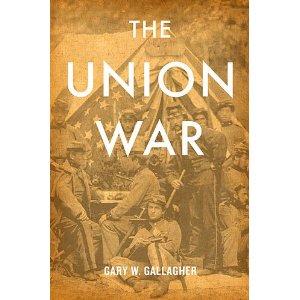
But for some the real fun begins on April 12 at 4:30 a.m., the moment the rebel guns opened fire on Fort Sumter and the Federal troops inside. Fresh studies of the 1861 battles are sure to follow, along with examinations of the early Civil War careers of Grant, Lee, George McClellan, William T. Sherman, Thomas “Stonewall” Jackson, Braxton Bragg, George H. Thomas and others destined for star performances on the bloody stage. Finally, watch for some new book criticism from me as long-ago pre-ordered Civil War books are finally delivered, including Gary W. Gallagher’s “The Union War.”

Save me a seat and a cigar. I’ll definitely be at this party.

Floods, doctorates, surrenders and Kanye

Some items that caught my eye …

NEWS

Pakistan Warns of More Floods in `Heart-Wrenching’ Disaster: Bloomberg reports, “Pakistan warned (Monday) of a new flood wave making its way south along the Indus River and more heavy monsoon rains, threatening to add to the 20 million people who have lost homes, farms and livelihoods. The forecast for further inundations in Sindh province came after United Nations Secretary-General Ban Ki-moon said the devastation was the worst he had ever seen and promised more emergency funding for relief operations. The UN said on Aug. 13 it had received only 20 percent of the $460 million it needs to provide aid to the homeless and hungry.”

Millions of Pakistan children at risk of flood diseases: The BBC reports, “Up to 3.5 million children are at high risk from deadly water-borne diseases in Pakistan following the country’s floods, a UN spokesman has said.” The BBC also offers a piece on the science behind the flooding.

POLITICS

Gates to leave in 2011: Foreign Policy’s Cable blog links to an interview with Defense Secretary Robert Gates, who said “he plans to leave office some time in 2011, once President Obama’s Afghanistan’s strategy review is completed.” Links to the interview and to a fascinating piece speculating on who may succeed him are included.

Obama’s Youthful Voters More Likely to Skip Midterms: In the New York Times, Megan Thee-Brenan recently wrote,”Will all of those young, enthusiastic Obama voters turn out in 2010? If history is any guide, probably not. Older voters are historically more likely to cast ballots in midterm elections than are voters under the age of 30. And this year, they are already more enthusiastic than younger voters about the coming campaign.”

The First Wave of Weary Aides Heads for the Exits: Also in the Times, the White House Memo column noted somberly that “(e)ven in calmer times, the White House is a pressure cooker that can quickly burn out the most idealistic aides, but it may be even more so in an administration that inherited an economic collapse and two wars — and then decided to overhaul the nation’s health care system for good measure. Add to that the nonstop, partisan intensity of the e-mail-Internet-cable era, and it takes a toll.”

Every morning, there’s always at least one story that pisses me off: From Salon.com’s War Room blog: “Florida Republican: Put immigrants in ‘camps’ ”

ENTERTAINMENT

#kanyenewyorkertweets: Thanks to my friend Sara Ines Calderon for turning me on to this jewel. Looks like Kanye loves it. Sign up here.

LITERATURE

Recently read Library of America’s Stories of the Week: Edgar Allen Poe’s “Hop-Frog” and “On Some Mental Effects of the Earthquake” by William James.

HISTORY

Historians rethink key Soviet role in Japan defeat: The AP’s Slobodan Lekic writes, “(S)ome historians have argued that the Soviet (attack on Japanese forces in northeast Asia) served as effectively as … the A-bombs in ending the war. Now a new history … seeks to reinforce that view, arguing that fear of Soviet invasion persuaded the Japanese to opt for surrender to the Americans, who they believed would treat them more generously than the Soviets.”

AND FINALLY …

What Exactly Is a Doctorate? From Gizmodo: “Ever wondered what getting a doctorate really means? Matt Might, professor of Computer Science at the University of Utah, explains it perfectly in this graphic presentation that starts with a simple circle.” Brilliantly done.

looking back on those looking ahead

Every day I savor wave after wave of email newsletters from all points on the political spectrum. Recently, I found a fascinating collection of pieces from the National Review. The conservative magazine republished four articles that originally appeared in the Dec. 17, 1963, edition, the first since the assassination of President Kennedy on Nov. 22. Their critical tone was expected but nevertheless, as I said, fascinating.

R.I.P: “The editors of National Review judged John Fitzgerald Kennedy to be a consummate technician of mass politics. His programs and policies — often chosen, by the evidence, in opportunistic furtherance of technical manipulations — we judged to be, for the most part, dangerous to the nation’s well-being and security, and to the survival of our perilously threatened Western civilization. Neither his death nor the fearful manner of it provides any reason to change these judgments.”

Which Way with LBJ? “If he can keep business happy, and deal with Khrushchev without kowtowing to him, the theme of ‘peace and prosperity’ could provide a stronger platform for him than it would have made for a Kennedy who had had three years’ headstart on him in making enemies.”

Foreign Policy of the Kennedy Administration: “From the point of view of its American proponents, the Yalta strategy looks both realistic and attractive, since they see it as the road to agreement between the two decisive world powers. From the point of view of the Kremlin it also looks both realistic and attractive: they see it as the best method for burying us.”

And Still … Goldwater Can Win: “One would think that after the brutal assassination of President Kennedy, responsible men would have recoiled in horror from capitalizing upon it for ideological ends. Yet, hardly had John F. Kennedy been officially pronounced dead than the Liberal Establishment broke forth in a nationwide television and radio orgy of lynch incitement against the American Right.”

preparing for ‘Mad Men’: history, design, protection

As the fourth season of “Mad Men” rages forward, I’ll mine the Web for interesting tidbits that will enrich the experience for all of us, and I’ll post what I find before the weekends. You’ll be properly marinated in time for the Sunday premieres of new episodes.

As happens with every new season, we take a moment to orient ourselves on the timeline of American history. New York Magazine made it a little easier with this look back at the real history that unfolded between the third and fourth seasons: “What Happened During Mad Men’s Year Off?” The New York Times recently assembled a magnificent interactive timeline of the history dominating the series, which can be savored here.

One thing we do know that continued during the show’s year off was Draper’s slick though not-always successful pursuit of women. New York Magazine created a slideshow exploring a question not even Draper can answer: “What Is Don Draper’s Type? A Guide to His Many Women.”

And what do those many women find so appealing about Draper? Natasha Vargas-Cooper, the editor of the blog Mad Men Unbuttoned: A romp through 1960s America and author of its book version, recently explored the answers in a piece in the Daily Beast. “Whether it’s ancient biology or socialized norms,” she concludes, “there is a protection that Don offers that we women want.”

The key woman in Draper’s life, arguably, is Betty, who has left him with hopes for a better life with Henry Francis. But do we know what her fate will be, regardless of how she may try to defy it? Open Letters Monthly offered Laura Tanenbaum’s grim review of the cultural and historical tides that have and will affect Betty’s evolution as a character. “It seems unlikely her life with Henry will bring her much in the way of feeling, phantom or otherwise,” Tanenbaum warns us. “As the series moves into its post-JFK assassination high-sixties moment, we don’t know where it’s taking us, but we’re fairly certain it will be leaving Betty behind.”

The aesthetic sense of the 1960s “Mad Men” examines through its historical prism is explored in “Designing ‘Mad Men,’ “ a short piece by Martin Filler in the New York Review of Books blog. Miller commends Matthew Weiner for “performing one of the most instructive—not to say diverting and entertaining—sleights of hand in the modern theater of memory.”

Many more links can be found at the wonderful Basket of Kisses blog.

(Photo from the ‘Mad Men’ soundtrack album)

great games, old letters and tragic legacies

Some items that caught my eye:

WAR

The end of (military) history? In Salon.com, Andrew J. Bacevich asserts that “the West no longer looks … triumphant. … (E)vents during the first decade of the present century have delivered history to another endpoint of sorts. Although Western liberalism may retain considerable appeal, the Western way of war has run its course.” (Photo from PopularPics.com)

The Great (Double) Game: In the New York Times, Tom Friedman says, “China supports Pakistan, seeks out mining contracts in Afghanistan and lets America make Afghanistan safe for Chinese companies, all while smiling at the bloody nose America is getting in Kabul because anything that ties down the U.S. military makes China’s military happy. America, meanwhile, sends its soldiers to fight in Afghanistan at the same time that it rejects an energy policy that would begin to reduce our oil consumption, which indirectly helps to fund the very Taliban schools and warriors our soldiers are fighting against. So why put up with all this duplicity? Is President Obama just foolish?”

Obama’s Legacy: Afghanistan: And on the New York Review of Books blog, Garry Wills reveals details of a dinner he and other historians had with President Obama, where they urged the president to give up on hopes for victory in the Afghan war. A subsequently despondent Wills writes that the “President might have been saved from the folly that will be his lasting legacy. But now we are ten years into a war that could drag on for another ten, and could catch in its trammels the next president, the way Vietnam tied up president after president.”

HISTORY

What was for FDR’s eyes only is now for yours: A little late, but here’s an interesting story from the Washington Post on “a newly acquired trove of 5,000 pages of Roosevelt documents that the National Archives said … should be a feast for historians of the president who led the nation through the Depression and most of World War II.” Included are letters from Lucy Mercer Rutherfurd, FDR’s lover.

Rebecca Aguilar

#CallingAllJournalists Initiative | Reporter | Media Watchdog | Mentor | Latinas in Journalism

Anna Fonte's Paper Planes

Words, images & collages tossed from a window.

Postcards from Barton Springs

Gayle Brennan Spencer - sending random thoughts to and from South Austin

The Flask Half Full

Irreverent travelogues, good drinks, and the cultural stories they tell.

Government Book Talk

Talking about some of the best publications from the Federal Government, past and present.

Cadillac Society

Cadillac News, Forums, Rumors, Reviews

Ob360media

Real News That Matters

Mealtime Joy

bringing joy to family meals

Øl, Mad og Folk

Bloggen Øl, Mad og Folk

a joyous kitchen

fun, delicious food for everyone

A Perfect Feast

Modern Comfort Food

donnablackwrites

Art is a gift we give ourselves

Fridgelore

low waste living drawn from food lore through the ages

BeckiesKitchen.com

MUSINGS : CRITICISM : HISTORY : NEWS

North River Notes

Observations on the Hudson River as it passes through New York City. The section of the Hudson which passes through New York is historically known as the North River, called this by the Dutch to distinguish it from the Delaware River, which they knew as the South River. This stretch of the Hudson is still often referred to as the North River by local mariners today. All photos copyright Daniel Katzive unless otherwise attributed. For more frequent updates, please follow northriverblog on Facebook or Instagram.

Flavorite

Where your favorite flavors come together