Recommended reading / viewing / listening

This week: The French Revolution and the Terror / Cuba after Castro / The older genius / A new planet’s secrets / How Cheney remade the world

IMG_2238

This week: The French Revolution and the Terror / Cuba after Castro / The older genius / A new planet’s secrets / How Cheney remade the world

Most of these great items come from my social media networks. Follow me on Twitter, Tumblr, LinkedIn, MySpace, and Facebook for more fascinating videos, photos, articles, essays, and criticism.

1. The French Revolution’s reign of terror
By Melvyn Bragg | In Our Time :: BBC Radio 4 | May 2005
“How did the French Revolution descend into such extremes of violence? Who or what drove The Terror? And was it really an aberration of the revolutionary cause or the moment when it truly expressed itself?”

2. Why should female characters have to ‘behave’?
By Barbara Ellen | SheSaid :: The Guardian | March 27
“Did people demand that Travis Bickle shut up and get back in his cab in ‘Taxi Driver’? Did anyone tell Jack Nicholson that Jack Torrance made all men look bad in ‘The Shining’?”

3. The Dangers of a Cuban Collapse
By Daniel Serwer | Politico Magazine | March 26
“It could happen sooner than we think. Is Obama ready?”

4. Late Bloomers
By Malcolm Gladwell | The New Yorker | 2008
“Why do we equate genius with precocity?”

5. Mammy Revealed, and Not Just Her Red Petticoat
By Julie Bosman | The New York Times | March 26
“‘Gone With the Wind’ Prequel Coming in October”

6. Dwarf planet discovery hints at a hidden Super Earth in solar system
By Ian Sample | The Guardian | March 26
“Though exciting in its own right, the discovery raises a more tantalising prospect for many astronomers: that a ‘Super Earth’ up to 10 times the mass of our planet orbits the sun at such a great distance that it has never been seen.”

7. He Remade Our World
By Mark Danner | The New York Review of Books | April 3
“Cheney believed in a ‘unitary executive,’ believed quite literally that ‘the executive Power shall be vested in a President of the United States of America.’ ”

8. Could a tsunami such as the one that affected the Indian Ocean [in 2004] happen in the United States?
Can It Happen Here? :: U.S. Geological Survey | 2014
“We outline the sources of data that can help answer the question, and then indicate when and how large tsunamis have been for specific regions of the U.S.”

9. Unraveling the mystery of Vivian Maier, one of America’s great street photographers
By Kristin Hohenadel | The Eye :: Slate | March 24
“Maier was intensely private, socially awkward, estranged from family, a loner; even those who shared the same roof with her seemed merely to observe the eccentric woman who insisted on locking her bedroom door and fiercely guarding her boxes of worldly possessions, without ever knowing exactly who she was.”

10. Ankara: ‘Israel to compensate Turkey’ over flotilla raid
Al-Arabiya | March 25
“The May 2010 Israeli assault on the Turkish ship the Mavi Marmara while it was in international waters on its way to Gaza triggered a severe diplomatic crisis between the two countries.”

******************

TUNES

Tonight I’m spending some time with the blues, specifically with the Texas Blues Café. Check out the line-up and then listen here.

1. Band Of Heathens — Jenny Was A Keeper
2. Dr.Wu — Nothing Like Texas
3. The Arc Angles — Good Time
4. Albert Collins — Iceman
5. Rory Gallagher — Loanshark Blues
6. Red Hot Blues Sisters — Ocean Beach
7. The Fabulous Thunderbirds — Got To Get Out
8. Mick Hayes Band — Maria
9. Robin Trower — 21st Century Blues
10. Cross Canadian Ragweed — Boys From Oklahoma
11. Jimmy Thackery — Empty Arms Motel
12. The Blue Dogs — Make My Way
13. Devon Allman — Midnight Rider

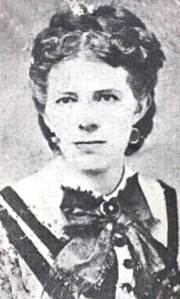
Kate Stone’s Civil War: The petted darling

Stone endures some new Arkansas friends as she chokes back tears over the loss of one from Louisiana.

KS54

From 2012 to 2015, Stillness of Heart will share interesting excerpts from the extraordinary diary of Kate Stone, who chronicled her Louisiana family’s turbulent experiences throughout the Civil War era.

Learn more about Stone’s amazing life in 1861, 1862, 1863, 1864, 1865 and beyond. Click on each year to read more about her experiences. You can read the entire journal online here.

(Photo edited by Bob Rowen)

Stone endures some new Arkansas friends as she chokes back tears over the loss of one from Louisiana.

March 20, 1864

Tyler, Texas

I spent last week in the country, just the wildest most remote section of civilization, with the Goddards, who were complete strangers until then. They are from Arkansas and were recommended to us by Julia some time ago.

We had seen some nice-looking strangers at church in the morning. In the afternoon in the midst of our animated chat with Capts. Smithy and Empy, callers came. The young ladies were announced and introduced themselves. They were so cordial and said they had come the twenty miles to meet us and to carry me home with them and were so insistent that I could hardly refuse, particularly as Mamma urged me to go. So I accompanied them next morning just twenty miles from anywhere.

Mr. Goddard has a hat factory established there, and we spent the time as pleasantly as one could in a rough new house perched on a white sandbank in the midst of a limitless pine forest with rather silent strangers. No amusements except riding horseback on rough horses over roads of deep white sand studded with stumps. Only the necessaries, none of the luxuries of life. On the seventh day I was only too glad to come home, though I had to do what none of us had ever done before — drive home in a buggy driven by an old, old Negro man. Mr. Goddard had promised to bring me home at any time. He would not hear of Mamma’s sending for me, and so I was helpless to get away. I shall not forgive any of them for sending me back in that style, and I never want to see any of them again. I was scared all day long, coming so slowly through those lonely woods, few houses on the way. The old driver was as respectful as possible, but the idea of the trip was perfectly repugnant. Mamma did not like it one bit more than I.

Mamma returned Saturday. She succeeded in her mission and My Brother will be transferred to this department if he can get across the river, but that is very doubtful. …

Mamma heard that Kate Nailor is dead, leaving a little child. My darling girl, I can never love any other friend as I have loved her. She was all that was good and pure and most beautiful, and hers was a happy, lovely life but for My Brother whose hand alone had given her myrrh to drink. She was the petted darling of her entire household never refused any wish that could be gratified.

Kate Stone’s Civil War: The mournful whistle

Some domestic drama disturbs the March boredom at the Stone home when an old family friend decides to move.

KS53

From 2012 to 2015, Stillness of Heart will share interesting excerpts from the extraordinary diary of Kate Stone, who chronicled her Louisiana family’s turbulent experiences throughout the Civil War era.

Learn more about Stone’s amazing life in 1861, 1862, 1863, 1864, 1865 and beyond. Click on each year to read more about her experiences. You can read the entire journal online here.

(Photo edited by Bob Rowen)

Some domestic drama disturbs the March boredom at the Stone home when an old family friend decides to move.

March 8, 1864

Tyler, Texas

I am quite alone tonight, not even a book for company. Mamma is in Shreveport trying to get a transfer for My Brother. The boys are in their room studying, and Sister, after suffering agony for the last twenty-four hours, has at last fallen asleep. The Negroes have left the yard. Even the dogs have forgotten to bark and are dozing on the gallery. The only sounds to break the stillness are the constant chirps of the crickets, the croaking of the rain crows heard afar off, and the mournful whistle of some Texas night-bird borne up from the thickety banks of the little stream … at the foot of the hill.

The wild March wind has subsided to a gentle zephyr, rustling the dry leaves still clinging to the stunted oaks till now when the new shoots are budding out to push them off.

But to descend to dry facts. Our greatest event has been the breaking up of the pleasant household of the last four months. We were all getting on quite pleasantly and all seemed satisfied and happier than ever before in Texas. None of us thought of change, when suddenly one frosty morning came the announcement from Mrs. Carson that she knew of a house to be rented and she would move to it. She thought the households would be better apart. Of course there was nothing to be said, and Mamma at once assented, only offering to take the other house and let Mrs. Carson remain here. But she preferred the new domicile, and so, presto-change, before we hardly realized it they were packed up and away a mile across the hill.

There had not been the shadow of disagreement, and we thought Mrs. Carson perfectly satisfied. We never have known why she left in such a hurry. All the children but Jimmy Stone were disgusted at the change. They were so enjoying themselves together. Mrs. Carson has kept most closely at home rarely calling on either Mamma or Mrs. Savage and she will seldom allow the boys or Katie to come. Such a change from her former habit of going out once or twice every day and doing nothing but talk between times. It seems very odd. She says she is entirely taken up with her housekeeping and sewing, two things she was never known to do in the past. … I think Mamma is rather relieved. Mrs. Carson often bored Mamma by insisting on talking to her hours at the time. I could not have stood it as Mamma did.

We have refugee visitors but the natives … still hold aloof. Capt. King with his dark, sleepy eyes and grand air is a frequent visitor. … The other afternoon we were enjoying our ease, Mamma lolling back in one chair, her feet on another, Sister romping over the bed, and I reclining on several pillows, when we heard a knock at the door. Thinking it one of the servants, we called out, ” Come in.” Who should stalk in with his most dignified air, flashing in crimson and gold, but Capt. King, calling to say good-bye, having been ordered off.

Fortunately for us, he is too near-sighted to notice much, and so the disorder of the room escaped him. …

Podcast recommendations

A close friend recently asked to me to recommend some interesting podcasts. For regular readers of this blog, nothing on this list will surprise you.

IMG_2893

A close friend recently asked to me to recommend some interesting podcasts. Here is my list. It’s not comprehensive, and the categories are quite general. For regular readers of this blog, nothing on this list will surprise you.

Thankfully, most podcasts cover several subjects, and so they’re hard to classify as one thing. Generally, I like news programs, lectures to intelligent crowds (but not recorded classroom lectures), or one-on-one conversations. I mostly avoid call-in shows — I like to keep the public out of the equation whenever possible — but I make exceptions for exceptional programs.

As of Friday, Feb. 7, 2014, the iTunes library tells me I have 2,311 podcast episodes. It calculates that it will take me 66 days, nine hours, 23 minutes, and 46 seconds to listen to all of them.

NEWS
DocArchive — BBC World Service
Global News — BBC World Service
Newshour — BBC World Service
Best of Today — BBC Radio 4
Podcast of Week — CSPAN
New Yorker: Out Loud — The New Yorker
New Yorker: Comment — The New Yorker
Story of the Day — NPR
World Story of the Day — NPR
Hourly News Summary (central to my hourly existence in this life) — NPR
The World — PRI
The Takeaway — PRI and WNYC
TribCast — The Texas Tribune
Washington Week — PBS
PBS News Hour — PBS

NEWS :: DOCUMENTARIES
Documentary of the Week — BBC Radio 4
Outlook — BBC World Service
American RadioWorks — American Public Media
Longform Podcast
ProPublica Podcasts
DecodeDC
Radio 3 Essay — BBC Radio 3
The National Press Club podcast
Weekends on All Things Considered — NPR

NEWS :: FOREIGN AFFAIRS
The Economist podcast
Inside CFR Events — Council on Foreign Relations
Brookings Event podcast — The Brookings Institute
Prime Minister’s Questions — The Guardian
The Stream — Al Jazeera English
Worldview — WBEZ

NEWS :: SCIENCE / TECHNOLOGY
Marketplace Tech Report — American Public Media
New Tech City — WNYC
Quirks and Quarks — CBC
Science Weekly — The Guardian
Stardate podcasts — McDonald Observatory
Science Times — The New York Times
Environment podcast — NPR
Nature podcast — Nature

FILM / TV
Front Row Daily — BBC Radio 4
The Treatment with Elvis Mitchell — KCRW
Kevin Pollack’s Chat Show
The Q&A with Jeff Goldsmith — CBC

MUSIC
Legacy Podcasts: Rock — Legacy Recordings
Legacy Podcasts: Sarah McLachlan — Legacy Recordings
Other Directions — Steven Lee Moya
Soundcheck — WYNC
The Blues File — WXPN
Classical Performance — WGBH
25 Years of Chill Out Music — Roebeck
50 Great Voices — NPR
From the Top — NPR
Jazz Profiles — NPR
Chillsky
Properly Chilled
Escuela de Rumberos Salsa podcast

BOOKS
Book Review Podcast — The New York Times
Q and A — CSPAN
After Words — CSPAN
The Guardian Books Podcast
Writers and Company — CBC
Bookworm — KCRW
The New York Review of Books podcast
Between the Lines — WABE
Unfictional — KCRW
New Yorker: Fiction — The New Yorker
Selected Shorts — PRI
World Book Club — BBC World Service

GENERAL ARTS / LIFE
The Brian Lehrer Show — WNYC
The Leonard Lopate Show — WNYC
TED Talks — TED
The Best of YouTube
Arts and Ideas — BBC Radio 4
Radio Open Source with Christopher Lydon podcasts
Here’s the Thing with Alec Baldwin — WNYC
The Current — CBC Radio
Ideas — CBC Radio
The Forum — KQED
Fresh Air (as long as Terry Gross isn’t on) — NPR
RadioWest — PRI
Studio 360 — PRI and WYNC
To the Best of Our Knowledge — PRI
WGBH Forum
Radio Times — WHYY

HISTORY
Conversations with History — UC Berkeley
Free Library podcast — Free Library of Philadelphia
American History TV — CSPAN
Great Lives — BBC Radio 4
15 Minute History — University of Texas at Austin
BackStory — University of Virginia
The History of Byzantium — Robin Pierson
Walter Cronkite’s History Lessons — NPR
History: Days of Infamy, Daily Life
The Journal of American History Podcast
Lectures in History — CSPAN
Lincoln and the Civil War
Witness — BBC World Service
Los Angeles Public Library Podcast
Miller Center Forums — The University of Virginia Miller Center
New Books in History
Pritzker Military Library Podcasts
Virginia Historical Society Podcasts
We the People Stories — National Constitution Center

The Battle for Boricua

Is Puerto Rico the battleground for America’s intellectual future?
A review by Fernando Ortiz Jr.

IMG_0237

Is Puerto Rico the battleground for America’s intellectual future?
A review by Fernando Ortiz Jr.

******

Discussed in this essay:

Laura Briggs. Reproducing Empire: Race, Empire, and U.S. Imperialism in Puerto Rico. Berkeley: University of California Press, 2002. Pp. 304. $29.95.

I.

Puerto Rico was one of the prizes the U.S. won in its 1898 victory over the Spanish Empire. The U.S. made Puerto Ricans citizens in 1917 and granted the territory an upgrade to commonwealth status in 1952. Debate has raged ever since over how, when, or if Puerto Rico should attempt to move in a new political direction, and over how it should cope with the degree of control the U.S. still wields over its economic and political systems. Like a moon trapped in planetary orbit, bathed only in the solar light reflected from that planet’s surface, struggles for self-definition and conflicting political visions dominate the island’s history.1

Laura Briggs extravagantly explores key components of Puerto Rico’s lurching political evolution in Reproducing Empire, a 2002 book based on her 1998 doctoral thesis composed at Brown University. Her book, standing tall among the work uniting colonial control and gender roles, illustrates Anglo American rulers at first disgusted with Puerto Rico, viewing the island territory as a cesspool of tropical subhumans blinded by rampant sexual desires and staggered by venereal disease, overpopulation endangering their natural and imported resources, and desperate, whether they knew it or not, for American guidance.

Puerto Rico’s social and economic problems were both caused and worsened, Briggs argues, by colonizing Americans who only saw themselves as solutions to those problems. She creatively examines the grinding conflict between the colonizer and the colonized through the prism of Puerto Rican sexuality, particularly the symbolically sexual body of the working-class Puerto Rican woman, whose propensity for sexual “deviancy” was blamed for spreading disease, for having too many children, and for essentially standing in the way of Puerto Rico’s proper Americanization. The fights waged over her sexual body became, Briggs argues, fights over Puerto Rican identity, political autonomy, ethnic equality, forced modernization, and Puerto Rican resistance. The Puerto Rican woman was the greatest battlefield in the titanic struggle over the island, which Briggs calls “the most important place in the world,” where she believes today’s essential debates over globalization issues are rooted in U.S. colonial attitudes.2

Americans saw prostitutes swarming over the men training to fight in World War I, posing their own venereal threat not just to the men but also to the women and children on the mainland, who would eventually be infected by the hapless victims of female Puerto Rican sexuality. U.S. incarceration policies on prostitution, Briggs argues, were one more supplement to colonial control and one more way Americans saw Puerto Ricans as foreigners, as people of lesser value to be kept apart from Americans, and as primitives who needed benevolent guidance. Puerto Rican women were either threats or weaklings needing protection. Islanders protested these prostitution policies, and Briggs sees in the rhetoric islander resistance not simply to the policies but also to the overall colonial project and later over their muddled citizenship.3

Americans saw overpopulation as also caused by these naturally promiscuous and illiterate women, prone to disease, doomed to poverty, and overly attached to the ideal of large hungry families. So, Briggs explains, American scientists developed new sterilization and birth control methods – diaphragms, contraceptive foams and jellies, and eventually the pill – and tested their effectiveness on Puerto Rican women, turning the island into “a social science laboratory.”4

II.

Throughout the Cold War, Briggs argues that Puerto Rico became a “political showcase,” advertising to Latin American nations vulnerable to Soviet seduction the beauty of a society that could result from an alliance (re: economic and military control) with the U.S. Puerto Rico was subjected to development projects — population control, industrialization, export control — again serving as a laboratory where models were analyzed before being sold to Third World nations.5

But the islanders had direct effects on the mainland too. Most importantly, Americans saw a huge post-World War II movement of Puerto Ricans into mainland cities, particularly into New York. The arrival of so many people in only a few decades permanently changed the racial and ethnic makeup of countless neighborhoods, sparked ethnic and political tensions, and re-engineered political activism. New arguments and alliances were born as these citizens struggled to live alongside Americans who saw them as anything but citizens and anything but white.

Overall, despite its strengths and creativity — particularly her intriguing view that the tentacles of colonization in Puerto Rico were only shorter and younger versions of the long American tentacles of globalization now strangling the globe — Briggs could have used a better editor to tighten a muddled narrative that often seems off balance and that could have been much shorter. Briggs often repeats the same points again and again, as if chapters were written months apart and she had to remind herself of the main thesis the latest chapter was supposed to be supporting. Also, the narrative needed more biographical sketches to bring alive the issues of sexuality, gender, and colonial victimization. Her ideas would have been so much more effective if the consequences of colonial decisions were shown in the wreckage of Puerto Rican lives, identities, and outlooks. Briggs bases her arguments on an impressive mountain of essays, books, and governmental studies. She complements a generally solid book with thirty-one pages of entertaining and informative notes and a 23-page bibliography.

One of the book’s best moments comes at the end, when Briggs argues that Puerto Rico illustrates “the explicit disalignment of the components of a nation.” The multidimensional identity of the Puerto Rican man and woman, Briggs seems to say, transcends maps, definitions of nationality, and concepts of national and international place. Imagine a map of the world laid out on a picnic table next to neatly typed definitions of every aspect of foreign affairs, U.S. government, and Latino identity. And then imagine the aurora borealis glowing in the night sky above. Puerto Rico, Briggs essentially argues, is the aurora. The rest of the world is the boring, ordered, defined arrangement on the table far below that celestial beauty.

Alternatively, the unique people of Puerto Ricans must find a unique solution to their unique “ethno-nation” quandary, effectively placing them on the cutting edge in terms of designing effective political entities for the twenty-first century. In that sense, at least, Briggs is absolutely right: Puerto Rico truly is the most important place in the world.6


1. Juan Gonzalez, Harvest of Empire: A History of Latinos in America (New York: Penguin, 2000), 62-63. The Jones-Shafroth Act of 1917 granted citizenship to all Puerto Ricans and established a three-branch government system. An online image of the bill is accessible here: http://tinyurl.com/93rbfx4. A PDF of the commonwealth constitution is accessible here: http://tinyurl.com/yjvo25z.
2. Laura Briggs, Reproducing Empire: Race, Empire, and U.S. Imperialism in Puerto Rico (Berkeley: University of California Press, 2002), 194.
3. Briggs, 17.
4. Briggs, 9.
5. Briggs, 2.
6. Briggs, 195-196.

Obamacare Removes Barriers For Women, Latino Entrepreneurs

Kate Stone’s Civil War: A noted flirt

Stone distracts herself from the new year’s cold beginning with some wry observations of an attractive young woman who, she fears, will break many hearts.

KS50

From 2012 to 2015, Stillness of Heart will share interesting excerpts from the extraordinary diary of Kate Stone, who chronicled her Louisiana family’s turbulent experiences throughout the Civil War era.

Learn more about Stone’s amazing life in 1861, 1862, 1863, 1864, 1865 and beyond. Click on each year to read more about her experiences. You can read the entire journal online here.

(Photo edited by Bob Rowen)

Stone distracts herself from the new year’s cold beginning with some wry observations of an attractive young woman who, she fears, will break many hearts.

Jan. 4, 1864

Tyler, Texas

We were glad to see the Old Year go. It had been a year of trial to us, and we rejoiced when we caught the last glimpse of the sail bearing him on to the dim Ocean of Eternity. The New Year came wailing in, borne on the wings of a freezing norther. God grant it may bring peace to our war-worn land and those we love home again.

Mrs. Savage and her cortege, with Dr. Meagher in the train, arrived Tuesday and are busy settling in their new quarters. The little girls have been staying in here with us until today. We found five in the room with insufficient bedclothes rather too much for comfort in this freezing weather. I very foolishly allowed myself to be persuaded to spend the first night out in camp with them, and I have not recovered from it yet. I feel like blushing every time I think of it as we all practically slept together with only a curtain separating the tent into two rooms and the mattresses touching each other. I never felt so out of place.

Anna is the same as ever, but Emily Norris has outgrown the name of little girl. She has developed very rapidly and promises to be a noted flirt. She already has her “trot lines” out for all these boys. Think Jimmy Stone and Eddie will fall easy victims, but I doubt her ability to land such shy, wild specimens as Johnny and Jimmy Carson.

We are so glad to have Johnny and Jimmy start to school today. It worried us all the time seeing Jimmy losing his last year at home learning nothing. We did not mind so much about Johnny’s idleness. He is well advanced and the brightest child I ever saw. He takes the lead. Jimmy Carson and Eddie will follow him anywhere and applaud all he says or does.

Jimmy Carson has been away for a week on business connected with Anderson’s killing that Negro, a dreadful affair, and Mrs. Carson has fretted over his absence as she alone can fret. It is a terrible spell of weather to be traveling. The snow is several inches deep and frozen hard with the keenest wind howling around the house.

Capt. King, the exquisite, has paid us several visits and beaten me a game of chess by my connivance. He came by to tell us good-bye Tuesday on his way to Shreveport and Camden. Sent letters by him and one of introduction to Julia and Carrie Lowry.

1864: Day to Day

Exiled in Texas, Kate Stone refused to dwell on death. ‘People do not mourn their dead as they used to,’ she wrote. ‘Everyone seems to live only in the present — just from day to day — otherwise I fancy many would go crazy.’

This is Part 4 of a five-part essay series on Kate Stone and her Civil War which was modified from a paper I presented at the New York Military Affairs Symposium in October 2011.

Learn more about Stone’s amazing life in 1861, 1862, 1863, 1865 and beyond. Click on each year to read more about her experiences.

As the war ground on into 1864, the men and women around Stone made the most of their lives of exile in East Texas. Dances were held. Men and women married. new boys studied for classes.

In Tyler, Texas, Stone cleaned the house, played chess, and read. The wall Stone built in her mind to hold back the crush of mounting tragedies in the Eastern Theater became a permanent fixture. Not even the drama of death breached the barrier anymore.

(Photo edited by Bob Rowen)

“People do not mourn their dead as they used to,” she wrote. “Everyone seems to live only in the present — just from day to day — otherwise I fancy many would go crazy.”

In 1864, Confederate victories brightened the situation in the Trans-Mississippi Theater. In the spring of 1864, Federal forces under Maj. Gen. Nathaniel Banks began the Red River Campaign, in which Federal forces from Vicksburg, New Orleans and Arkansas were supposed to meet near Shreveport, seize Louisiana once and for all, amputate Texas from the Confederacy, and then abort any nascent relationship between the Confederacy and the French-controlled Mexican government.

But the plan failed to consider Confederate audacity. In early April 1864, Maj. Gen. Taylor beat back the Federal invasion at the Battles of Mansfield and Pleasant Hill.

Stone practically leapt for joy in her journal. “It is our first great success on this side of the river. … We will never laugh at our soldiers on this side of the Mississippi again. …”

The Confederate conscription act lowered the age range for enlistment to seventeen, and in August, Kate Stone lost a third brother to the Confederate Army. James Stone joined a unit named Harrison’s Brigade at Monroe, La.

She and her mother accompanied him to Louisiana, and Federal raids through the area frightened her, especially when conducted by black soldiers.

“The Paternal Government at Washington,” she wrote, “has done all in its power to incite a general insurrection throughout the South, in the hopes of thus getting rid of the women and children in one grand holocaust. We would be practically helpless should the Negroes rise, since there are so few men left at home.”

******

Works cited or consulted for this essay series:
Faust, Drew Gilpin. Mothers of Invention: Women of the Slaveholding South in the American Civil War. Chapel Hill: North Carolina UP, 1996. Print.
. Southern Stories: Slaveholders in Peace and War. Columbia, Mo.: University of Missouri, 1992. Print.
Foote, Shelby. The Civil War: A Narrative. New York: Vintage, 1986. Print.
Johnson, Ludwell H. Red River Campaign: Politics and Cotton in the Civil War. Baltimore: Johns Hopkins, 1958. Print.
Kronk, Gary W. “C/1861 J1 (Great Comet of 1861).” Cometography.com. n.d. Web. 11 Sept. 2011.
Long, E.B. and Barbara Long. The Civil War: Day by Day. Garden City, N.Y.: Doubleday, 1971. Print.
McPherson, James M., ed. The Atlas of the Civil War. New York: Macmillan, 1994. Print.
. Battle Cry of Freedom. New York: Oxford UP. 1988. Print.
Parrish, T. Michael. Richard Taylor: Soldier Prince of Dixie. Chapel Hill: North Carolina UP. 1992. Print.
Stone, Kate. Brokenburn: The Journal of Kate Stone, 1861-1868. Ed. John Q. Anderson. Baton Rouge: Louisiana UP. 1995. Print.
Sullivan, Walter. The War the Women Lived: Female Voices from the Confederate South. Nashville: J.S. Sanders & Company. 1995. Print.
Wilson, Edmund. Patriotic Gore: Studies in the Literature of the American Civil War. New York: W.W. Norton, 1962. Print.
Wooster, Ralph A. Civil War Texas. Texas State Historical Association. 199. Print.

Happy New Year

May 2014 be one of the best years of our lives.

Happy New Year, my old and new friends. I wish you all well. May 2014 be one of the best years of our lives.

Write me and tell me more about yourselves.

2013 in review

The WordPress.com stats prepared a 2013 annual report for Stillness of Heart.

The WordPress.com stats prepared a 2013 annual report for Stillness of Heart.

Here’s an excerpt:

The concert hall at the Sydney Opera House holds 2,700 people. This blog was viewed about 11,000 times in 2013. If it were a concert at Sydney Opera House, it would take about 4 sold-out performances for that many people to see it.

Click here to see the complete report.

Behind The Wall

Tabletop Games

Rebecca Aguilar

#CallingAllJournalists Initiative | Reporter | Media Watchdog | Mentor | Latinas in Journalism

Anna Fonte's Paper Planes

Words, images & collages tossed from a window.

Postcards from Barton Springs

Gayle Brennan Spencer - sending random thoughts to and from South Austin

The Flask Half Full

Irreverent travelogues, good drinks, and the cultural stories they tell.

Government Book Talk

Talking about some of the best publications from the Federal Government, past and present.

Cadillac Society

Cadillac News, Forums, Rumors, Reviews

Ob360media

Real News That Matters

Mealtime Joy

bringing joy to family meals

Øl, Mad og Folk

Bloggen Øl, Mad og Folk

a joyous kitchen

fun, delicious food for everyone

A Perfect Feast

Modern Comfort Food

donnablackwrites

Art is a gift we give ourselves

Fridgelore

low waste living drawn from food lore through the ages

BeckiesKitchen.com

MUSINGS : CRITICISM : HISTORY : NEWS

North River Notes

Observations on the Hudson River as it passes through New York City. The section of the Hudson which passes through New York is historically known as the North River, called this by the Dutch to distinguish it from the Delaware River, which they knew as the South River. This stretch of the Hudson is still often referred to as the North River by local mariners today. All photos copyright Daniel Katzive unless otherwise attributed. For more frequent updates, please follow northriverblog on Facebook or Instagram.