After two weeks, Stone decided that Texas was home only to deadly snakes, fleas “by the millions,” ignorant children, and ugly women.
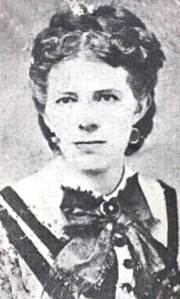
From 2012 to 2015, Stillness of Heart will share interesting excerpts from the extraordinary diary of Kate Stone, who chronicled her Louisiana family’s turbulent experiences throughout the Civil War era.
Learn more about Stone’s amazing life in 1861, 1862, 1863, 1864, 1865 and beyond. Click on each year to read more about her experiences. You can read the entire journal online here.
(Photo edited by Bob Rowen)
Kate Stone despised her new wartime home. After two weeks, she decided that Texas was home only to deadly snakes, fleas “by the millions,” ignorant children, and ugly women. “There must be something in the air of Texas,” she wrote, “fatal to beauty.”
July 7, 1863
Lamar County, Texas
While camping out we were generally too tired at our noonday rest to do anything but throw ourselves down on the cushions and sleep until dinner. And at night when we stopped, I had only spirit to lean lazily back in one of our two rocking chairs and watch Annie get supper or to look up at the stars and think of all the dear friends that the waves of Fate are sweeping farther and farther away from us every day. I had such a longing for home and the dear life of the past that my very soul would grow sick. I know Mamma felt it far more than I did, but she would not complain.
I will copy a letter I wrote to Anna Dobbs which tells all there is to tell of our late journeyings:
“Here we are safely hidden in a dark corner of the far off County of Lamar after a tiresome, monotonous trip of little less than three weeks, and I am already as disgusted as I expected to be.
“This part of the land abounds in white-headed children and buttermilk, my two pet aversions. It is a place where the people are just learning that there is a war going on, where Union feeling is rife, and where the principal amusement of loyal citizens is hanging suspected Jayhawkers. Hoops are just coming in with full fashion. This is indeed the place where hoops ‘most do flourish and abide. Have not seen a hoopless lady since entering the state. Shoes are considered rather luxuries than necessaries and are carefully kept for state occasions. … One tin pan or a frying pan answers every purpose. Wash tubs seem obsolete and not to be bought at any price.
“The only way of killing time and one never feels more like killing him than on this desolate wind-swept prairie is to attend some of the protracted meetings that are being carried on all around us. And oh, the swarms of ugly, rough people, different only in degrees of ugliness. There must be something in the air of Texas fatal to beauty. We have not seen a good-looking or educated person since we entered the state. We are in the dark corner. We could not stand it here for a permanent stay, but Mamma has only stopped here for a breathing spell and to see how the Negroes are getting on. She will start out soon in search of a home until the war is over.
“We camped out except when it rained, which it did most of the last week, thereby ruining most of the clothes we had so laboriously amassed after fleeing from the Yankees. We would be so tired by night we welcomed the rudest shelter. The longer we traveled the more wearisome it grew, and I never turned over at night without expecting to feel the sting of a tarantula or centipede. But we really saw very few and reached here without an accident. I wrote to Sarah Wadley never to come to Texas for pleasure, but if forced to come to cover herself with a thin coat of tar to protect herself from the myriads of insects along the road. And here, we have settled at their headquarters ticks, redbugs, fleas by the millions, and snakes gliding through the grass by hundreds. But we rarely hear of anyone being snake-bitten. Game, deer and turkeys are abundant about here but not eatable on account of the insects tormenting them until they are too tough to eat. …
“We are staying right out on the bare prairie in a rough two-room shanty with the overseer and his family. With only the bare necessaries of life, we think it will be at least two months before we can make any change, and so we must needs make the best of it.”
At last, the Stones moved for Texas. Along the way, Kate Stone enjoyed wild fruits, natural beauty, and the occasional generosity of strangers.
From 2012 to 2015, Stillness of Heart will share interesting excerpts from the extraordinary diary of Kate Stone, who chronicled her Louisiana family’s turbulent experiences throughout the Civil War era.
Learn more about Stone’s amazing life in 1861, 1862, 1863, 1864, 1865 and beyond. Click on each year to read more about her experiences. You can read the entire journal online here.
(Photo edited by Bob Rowen)
At last, the Stones moved for Texas. Along the way, Kate Stone enjoyed wild fruits, natural beauty, and the occasional generosity of strangers.
June 15, 1863
Near Monroe, La.
Visiting and visitors, blackberry parties, and long walks over the hills have occupied the time since Wednesday. Julia Barr and I took tea with Mrs. Dortch and were agreeably entertained. We have been since to see Mrs. Waddell, who is a charming pretty lady.
Mamma and Johnny are busy making arrangements for us to get off. Will start on Wednesday. All busy this afternoon making a tent of some carpeting, the only thing to be bought in Monroe and it was $4 a yard. From Jimmy’s letter, received today from Titus [Texas], think we will be on the road two weeks. He does not write encouragingly. The country is not more abundant than this, and Billy, another Negro man, is almost dead. But Mamma hopes to find it better than Jimmy paints it.
Our delightful sojourn at this place is nearly over, and it will be many a weary day before we are so comfortable again. They are the very kindest people we ever met, and Mr. Wadley, who returned a few days ago, is just as generous and kind as all the others. To crown all her good deeds Mrs. Wadley this morning refused to take a cent for our board all these seven weeks. Mamma insisted on it, but both Mr. and Mrs. Wadley declared they could not think of such a thing, saying Mamma would need every cent she had before she got settled again. Our own relations could not have been kinder, and we were total strangers to them when they took us in out of the goodness of their hearts. May God reward them, we never can.
Tomorrow is our last day here and we will go around and say good-bye to the neighbors. This lovely family and Julia Barr I shall be sorry to leave.
June 19
Between Monroe and Minden, La.
Half past twelve this sultry June 19 we are sitting under the shade of a spreading oak about halfway between Monroe and Minden eating rosy June apples. …
We are on the road for Texas at last, and I imagine no party of emigrants ever started with sadder hearts or less pleasure in anticipation. If we had gone on at once when coming to Monroe, we would have liked the idea, but we stayed just long enough at Mrs. Wadley’s to spoil us for a trip like this. We find it very lonely, only we four and the servants. If we could have joined another party, it would be so much more enjoyable. … A passing soldier tells us that a Federal force is advancing on Monroe. … We all left home without a tear, the dread of staying there was so great, but we and all the family were in tears when we told them good-bye at Mrs. Wadley’s. Shall we ever meet such kind friends again?
The first long hill halted us. We tried for an hour to get the mules on the wagon to pull up it, but they would not or could not. Mamma had part of the baggage unloaded and sent back to the Wadley’s, and at last we got underway. It was such a dark, rainy afternoon that we thought we would not commence camping that evening but would stay at some house on the road. So we went ahead of the wagon, and before sunset commenced enquiring for lodging. At house after house, dark and uninviting with a host of little towheads and a forelorn-looking woman, generally spinning, amid the barking of a pack of dogs, would come the response, “Naw, we don’t take in travelers,” in a tone of contempt, as though the very name of traveler was a disgrace. We kept this up, the poor tired mules dragging on from place to place, until 10 o’clock at night. Being refused at the last house, Mamma declared we could go no farther. … But [of] three swampers staying there … one of them heard our distressed voices, came to our relief, and induced the owner to allow us to stay. We were glad enough of the shelter, for that was about all it was. Chunks of fat meat and cold, white-looking cornbread with very good water were all the refreshments. This night’s experience satisfied us, and we have determined to camp out for the rest of the way.
The next day we went on as far as Mrs. Bedford’s, about twenty-five miles from Monroe. They gave us a nice dinner, and we had a pleasant little stay there. We went on in the afternoon with a supply of pretty June apples from their orchard, camped out that night for the first time, and found it far better than asking for shelter and getting nothing, nothing but snubs and coarse fare at exorbitant prices. It looked like it would rain every minute. It seemed nothing new to be lying out under the shadow of a tree with the stars looking dimly down through the branches, with the lightning flashing in the North, the sultry night breeze swaying the wildwoods grass in my face, and a nondescript bug attempting to creep into my ear. We have read so many stories of camping it seems like an old song. Shall we have any of the startling adventures that travelers usually have to relate?
June 22
Near Bellevue, La.
We are resting for dinner in a thicket of blackjack and towering pines after a wearisome ride over the worst roads. Now we find we branched off in the wrong direction and are only four miles farther on our way than when we left camp this morning.
We passed through Minden — such a pretty little town with the deepest white sand in the streets, about the size of Monroe. I wish we could have located there. It looked very inviting, but we must go on where [our] Negroes are. We camped near a nice-looking house, and the people were kind in sending us out milk and butter, the first time we have been able to get anything of the kind. We also bought some chickens, a relief after a steady diet of ham and bacon. We get a lot of fruit, apples, plums, and huckleberries, the large low-bush variety — also, the blackberries are ripening. We stop several times a day or whenever we see a tempting thicket and enjoy the fruit. We so often have to wait for the wagon. We need never hurry. No flour yet, but we hear it is plentiful farther on. Some tea bought in Monroe is evidently made of blackberry leaves. Dampened and untwisted they are identical, absolutely without flavor.
Stone and her family and neighbors felt virtually powerless as Union raiding parties scoured the countryside and slaves quietly slipped away
From 2012 to 2015, Stillness of Heart will share interesting excerpts from the extraordinary diary of Kate Stone, who chronicled her Louisiana family’s turbulent experiences throughout the Civil War era.
Learn more about Stone’s amazing life in 1861, 1862, 1863, 1864, 1865 and beyond. Click on each year to read more about her experiences. You can read the entire journal online here.
(Photo edited by Bob Rowen)
Stone offers a vivid account of how the presence of Union forces nearby disrupted daily life, frightened Southern civilians, and inspired the slave population. Sometimes the slaves guided Federal soldiers back to their plantations.
No one seemed sure what would happen to Vicksburg. Nevertheless, attack or no attack, civilians like Stone and her family and neighbors felt virtually powerless as Union raiding parties scoured the countryside and slaves quietly slipped away to find freedom among Northern troops. As family acquaintances applied to the Union authorities for letters of protection, which supposedly protected them from raiders, Stone seemed proud her mother remained among the defiant holdouts not yet “forced to ask a favor of a Yankee.”
Note how Stone’s family found palatable substitutes for coffee.
March 11
When My Brother was at home, he heard a few days before he left that the Yankees had discovered quite a lot of cotton bales hidden by the planters on a ridge in the swamp near Mr. Valentine’s and of course were coming at once to get it. Cotton is so valuable now. So he rode over that dark night all alone with a pocketful of matches, and after fumbling around through the swamp for some time found it. With a good deal of trouble, he set it afire, staying by it until daybreak when he left for fear some of the Negroes would see him and tell the Yankees, who would come and burn us out. He did see two or three Negroes looking at him as he galloped through Mr. Valentine’s place. That morning a long train of wagons came pulling through the mud. All the Yankee teamsters were delighted at the idea of getting Midi a pile of cotton hidden by the Rebs, when, lo and behold, there was nothing but a burning, smouldering pile. The lovely cotton was all gone. We hear they were furious and threatened to burn every house within five miles and hang the men who did it. But they did not know the men, and by the time suspicion pointed at My Brother he was off and away. The affair has blown over, but it made us tremble in our shoes for several days for fear they would come and burn us out.
March 12
So many are getting letters of protection from the general at the Bend. We cannot hear his name. Aunt Laura, formerly so bitter against the Yankees, is now urging Mamma to go in to Omega and get letters protecting us.
The enemy have now been three months before Vicksburg doing nothing against the city, but scourging this part of the country. The opinion now is that they will not attack the place at all. The deserters say the soldiers will not fight at Vicksburg. They say that the place is impregnable, that they will not fight to meet certain defeat, and that there is great dissatisfaction both among the officers and men. They will not pay off the men for fear they will desert. For a time there were frequent desertions. I must think there will be an attempt to storm the city. I cannot think they will make all this preparation and gather this great army without at last making an attempt to capture it.
When the fortifications were commenced, no one dreamed that Vicksburg would hold out this long. If the Yankees had come right on after the fall of New Orleans, Vicksburg would have fallen with hardly a struggle. It was strange that they did not push on at once. Now it seems almost a second Gibraltar.
We hear that Gen. [Braxton] Bragg has resigned on account of the dissatisfaction of most of his officers with his retreat from Murfreesboro. Gen. Joseph Johnston is now in command. It seems a pity for an old soldier like Bragg to have no force under him.
March 15
For the last two days we have been in a quiver of anxiety looking for the Yankees every minute, sitting on the front gallery with our eyes strained in the direction they will come, going to bed late and getting up early so they will not find us asleep. Today as it is raining, they are apt to remain in camp, and so we have a little relief. Friday they were at Mr. Graves’, Mr. McPherson’s, and Mr. Hardison’s. Mr. Graves has a protection letter, and we did not hear how they fared. At Mr. McPherson’s they took two horses and all the chickens, eggs, and butter in sight. They ordered dinner cooked and sat in the dining room and ate it. Only two men came to Mr. Hardison’s, but they were ruffians, tough and impudent. They searched through everything for money or jewelry I suppose but found none and went off cursing and threatening another visit. Sister and I happened to go up on a little call soon after the men left and found everybody as mad as could be and feeling so helpless. Caroline, her favorite servant, and one of the Negro men went off the night before.
Yesterday afternoon Mr. Valentine was here, and we were all conversing quietly enough when the frantic barking of the dogs called us to the front gallery just in time to see a party of Yankees and three Negroes passing on the gin ridge. They turned and took a deliberate survey of the place and then went on. They were loaded with chickens, eggs, and such plunder and were guided by one of Mr. Valentine’s Negroes, who had run off some time ago, and had two more to carry the stuff they had stolen.
So far our Negroes 16 have shown no disposition to leave but may at any minute. They were hidden out for a day or so, but of course that could not be kept up with a Yankee camp as near as Winn Forest. The fields as far as we can see are sheets of green and gold, the weeds are growing unchecked and the yellow-top makes a brave show. …
March 17
Gen. Bragg is said to be in command at Vicksburg. His fame must now fall or stand with the city. Lincoln, it is reported, has been appointed a kind of military dictator with unlimited command of men and money. The Conscript Act has been passed and will be strictly enforced. That, with the abolishment of all state lines (if that be true), must make the war unpopular with the masses of the people. But the acts of Congress show that the rulers, at least, are not tired of the strife, and peace, blessed peace, seems farther off than ever. …
The plums and sassafras are in full bloom and the whole yard is fragrant. We all drank sassafras tea for awhile but soon got tired of it, pretty and pink as it is. Okra coffee is now the favorite drink. Mamma had several bushels of the seed saved. After experimenting with parched potatoes, parched pindars, burned meal, roasted acorns, all our coffee drinkers decided on okra seed as the best substitute. We have grown quite expert making shoes for ourselves. We cut up an old pair of gaiters and slippers for a pattern. We make the uppers of broadcloth, velvet, or any strong black goods we can get, and the shoemaker for the Negroes puts on the soles. They are not to say elegant looking but we are delighted to be able to make them, and they are far better than bare feet.
March 20
We have wakened three mornings to the booming of cannon and have gone to sleep to the same music, but we have not heard what they are doing. Sometimes we hear the beating of drums, supposedly at Omega. We are too near “the pomp and circumstance of glorious war” to find it pleasant. No Yankees in this section since Saturday. Perhaps the troops have been concentrated at Vicksburg. The Yankees who passed through the place discussed stopping to raid the house, but the captain with them said, as there were only ladies and children here, they would let us alone. We did not know a Yankee could have so much chivalry. Hope it will develop in the other raiding bands.
The two Mrs. Richardsons and Mrs. Spain went out to camp to get letters of protection. The general gave a letter to Mrs. Spain, as she was a widow, but refused letters to the others unless their husbands or brothers would come out and take the oath. Mr. A. Richardson started the next day to swear allegiance but was dissuaded by a friend. Miss W. Richardson went to the boat with her mother and came back boasting that she had caught a Yankee beau. Imagine any girl falling so low. No other girl in the country would acknowledge having even a Yankee acquaintance. Mrs. Graves’ papers did not prove a perfect safeguard as a squad took all their good horses.
Mamma, Mr. Hardison, Mr. Valentine, and Mr. Jeffries seem to be the only people left in the country who have not applied for protection. We hope we shall never be so pressed as to be forced to ask a favor of a Yankee.
Perhaps Stone, fighting what she saw as her part of the war, decided that she would never surrender her ground to the dark, silent, sinister enemy. But it took another enemy, one she’d feared longer than any Yankee, to change her mind.
From 2012 to 2015, Stillness of Heart will share interesting excerpts from the extraordinary diary of Kate Stone, who chronicled her Louisiana family’s turbulent experiences throughout the Civil War era.
Learn more about Stone’s amazing life in 1861, 1862, 1863, 1864, 1865 and beyond. Click on each year to read more about her experiences. You can read the entire journal online here.
(Photo edited by Bob Rowen)
On March 2, Kate Stone opened her journal and wrote in it for the first time since late January. She was disoriented. She didn’t know exactly what day of the week it was. She guessed it was Saturday. When Federal troops flooded the neighborhood in late January, Stone’s mother prepared to evacuate the family. But she changed her mind when she learned the roads west were already impossibly clogged with frightened refugees. When Stone learned they were not leaving Brokenburn after all, she was secretly relieved.
Whatever misery she endured, whatever property she lost, whatever horrors she witnessed, Stone seemed determined to stand her ground. Perhaps Brokenburn was her own line in the sand. Perhaps she had already seen too many retreats, too many defeats, too many surrenders. Perhaps Stone, fighting what she saw as her part of the war, decided that she would never surrender her ground to the dark, silent, sinister enemy. But it took another enemy, one she’d feared longer than any Yankee, to change her mind.
March 2
Saturday [Monday] I think. We have not had an almanac for more than a year, and so I can only guess at the time until someone better posted comes along. The Yankees have not visited us yet, and so after more than a month’s concealment I take my book out to write again.
The soldiers have been all around us but not on the place. At first we were frightened, expecting them all the time and preparing to start for the hills beyond the Macon, the Mecca for most of the refugeeing planters. Mamma had all the carpets taken up and the valuable clothes and everything but the furniture sent away or ready to send when My Brother came back from Delhi, where he left the Negroes until they could be shipped on the train. Such a crowd was there [that] it will be several days before they can get off.
He gave such a disheartening account of the roads — they are impassable for anything but a six-mule team — that he and Mamma concluded it was impossible to move at this time, and we would await further developments here. Mamma has had the house put in order, and we are again comfortable. I am so glad for I dreaded going into the back country, where we would never see or hear anything among total strangers, and to leave our pleasant home most probably to be destroyed by the Yankees, and we may be able to protect it if we are here.
Brother has been gone for more than a month. He has taken the Negro men to the salt works away beyond Monroe and put them to work. Jimmy returned from there two weeks ago, and Mamma sent out the overseer, Mr. Ellsworth. We have been looking for My Brother for ten days.
Mamma thought of sending Jimmy back to Virginia with My Brother to go to school at Lexington, but now that the conscription is being so rigidly enforced she thinks both Mr. Storey and Mr. Ellison may both be enrolled. She will have no one but Jimmy to depend on, and so she will keep him at home. I am begging her to send Johnny. One of the worst features of the war is that it deprives all the boys of an education. …
Jane, Aunt Laura’s cook, and Aunt Lucy had a terrible row Tuesday night. Jane cut a great gash in Lucy’s face with a blow from a chair and hurt her severely. Mamma had Jane called up to interview her on the subject, and she came with a big carving knife in her hand and fire in her eyes. She scared me. She is nearly six feet tall and powerful in proportion, as black as night and with a fearful temper. … Aunt Laura had a long, lingering illness lasting several months, and she always thought Jane kept her poisoned. Jane showed a very surly, aggressive temper while Mamma was talking to her, and so Mamma did not say much. Jane went to her room and that night took her two children, a girl and a boy about half-grown, and in company with one of Mr. Hardison’s men started for the camp at DeSoto. I think we are all glad she has gone. We felt her a constant menace. She must have had a bad trip. They were out in that blinding rain Wednesday and Wednesday night with only two blankets as protection and not much to eat. Mr. Graves saw them yesterday sitting on the levee at Mr. Utz’s in company with fifty others, waiting to be ferried across at the break there in a dugout. All the Negroes are running away now, and there are numbers of them. They have to stop at the break and wait to be ferried over by an old Negro in a dugout, and so there are crowds waiting all the time. Col. Graves went down there yesterday to try to reclaim three of his who had escaped. Three had just been drowned, trying to get over, and he thought from the description they were his.
Poor creatures, I am sorry for them. How horrible it all is. We had a scene of terror the night Jane left: The quarreling and screaming, the blood streaming down Lucy’s face, Jane’s fiery looks and speeches, Johnny and Uncle Bob’s pursuit of her as she rushed away, the discovery that the children were gone, and then just as we had all quieted down, the cry of fire. The loom room had caught from some hot ashes, but we at once thought Jane was wreaking vengeance on us all by trying to burn us out. We would not have been surprised to have her slip up and stick any of us in the back. Johnny was our only protector as Jimmy was away. I went around bravely in appearance with a five-shooter in my hand. Found out afterwards it was only dangerous to look at as it was not loaded.
Mamma spoke of sending next day for Jane, but Aunt Laura implored her not to. She was only too thankful to get rid of her. She had been a terror to her for years. I think everybody on the place was thankful to get rid of her. The Negroes dreaded her as much as the white folks. They thought her a hoodoo woman.
The place looks deserted now with its empty cabins and neglected fields, and the scene is the same wherever we go. … It has been a month of warm weather and constant rain and the roads are impassable. We have not been out of the house for three weeks. Already the fruit trees are a faint green and the grass is springing in the yard. Spring is early this year. Over the woods in front of the house hangs a faint green mist with the red of the maples shining through, and this morning Sister brought in a bunch of pale wild violets, sweet as a promise that winter is gone. The hardy garden violets and the quaint little heartsease have been perfuming the winter wind for weeks, and the garden is gay with jonquils and narcissus.
March 3
Last night it was reported that the Yankees were at Dr. Devine’s, and we looked for them here today. My Brother and Mr. Hardison, who is conscript agent, went out early this morning to stay in the woods until nightfall, as they do not want to be captured and ornament a Yankee prison. …
Johnny who has been out scouting reports the Yankees at Rescue, the adjoining place, yesterday hunting horses and Negroes, and today they are scattered all through the lower neighborhood on the same quest. This band is said to be Kansas Jayhawkers, the very offscourings of the Northern Army. They say they will take by force all Negroes, whether they wish to go or not. A great number of Negroes have gone to the Yankees from this section. Mr. Watson and his father-in-law, Mr. Scott … got up one morning and found every Negro gone, about seventy-five, only three little girls left. The ladies actually had to get up and get breakfast. They said it was funny to see their first attempt at milking. Mr. Matt Johnson has lost every Negro off one place and a number from the other places. Keene Richards has lost 160 from Transylvania and fifty of them are reported dead. The Negroes at work on the canal have what they call black measles, and it is very fatal to them.
March 4
When we heard from Brother Coley and Dr. Buckner nearly a month ago — they had furloughs and had reached Vicksburg on their way home when they heard that Gen. Van Dorn was to make a great cavalry raid into Kentucky. They at once turned back and rejoined their commands. Brother Coley wrote that he could not possibly miss such a chance for a good fight. Well, they could not come here with the slightest safety, now that there are wandering parties of soldiers all through the swamp. The Yankees are very daring, swimming the bayous, plunging through the mud of the unbroken swamp, often only two or three of them together. One company of good men could put a stop to all of this, but all our men are across the Macon with no desire to come this way. We hear they are panic-stricken at the name of a Yankee and run the other way. It is well that the honor of Louisiana does not depend on the troops on this side of the river.
We get no Southern papers but occasionally a Northern paper from the people who are still on the river. They are all said to have taken the oath and to have letters of protection from the general commanding. Dr. Taylor, Mr. Harris, Mr. Rucker, and Mrs. Nutt are some of the suspected parties. Gen. Grant is said to have been very rude to Mrs. Nutt when she applied for protection. What else could she have expected from a Yankee general? There are some troops still at Lake Providence. We cannot hear whether they are still working on their grand canal or not. We suppose they will harass this section until the river falls and they again attack Vicksburg.
March 5
Mr. Valentine came over last evening in very low spirits indeed. He says his Negroes will not even pretend to work and are very impudent, and he thinks they will all go off in a body the next time the Yankees come on his place. He brought the welcome news of the departure of that body of Jayhawkers that was on Mrs. Evans’ place. They have completely ruined Mr. Catlin’s, Mrs. Evans’, and Mrs. Stevens’ places, taking all the Negroes and all kinds of stock. The Negro women marched off in their mistresses’ dresses.
Jimmy has been for some time with the Negroes at the salt works. We are in a helpless situation, three ladies and two little girls and not a white man or even a gun on the place, not even a boy until Johnny gets back. And the scouts may take him. We can find rest only in the thought that we are in God’s hands.
March 8
There are only twenty Negroes left on Mrs. Tibbetts’ five places, and Dr. Tibbetts has only one left, a superannuated woman helpless to do anything. The ladies are cooking, washing, etc., while Hiram Tibbetts is wood chopper.
The Yankees have five thousand Negroes camped at Lake Providence, all they have taken from the places up the river. They had an army of 30,000 men camped there, but they find the canal through to the Macon not feasible. They have moved up to Ashton to try a new canal there, if they can close the break at that point.
March 9
Aunt Lucy’s little girl Linda died this morning from the effect of the measles. It is the first child she ever lost and she is much distressed. Little Dora is also very ill from the same cause. …
We have heard a good many guns today and a boat whistle at Omega. Must be landing troops there. There must be a large force at the Bend now, as they have been moving men up for some days. Young’s Point and DeSoto are said to be under water, and they are forced to leave. Mr. Joe Noland’s is to be headquarters we hear. We hear that Mr. Hans Harris is having trouble with the Yankees, notwithstanding his protection papers, and that it is not necessary to take the oath to be protected, and so I retract what I said about the traitors on the river. Am glad it was false except Dr. Taylor of Willow Bayou. We truly believe him to be false to the South. His wife has gone North with her children. She is from there and must have contaminated her husband. Mr. Montague’s last two sons, in company with two friends, have gone over to the Yankees. Now Mr. Montague has all five of his sons in the North. It is strange that he could raise five sons in the South to love the North better than their own native land. Let us hope he is satisfied with them, as no one else is. All have a hearty contempt for them. What a disgrace to belong to that family.
The fruit trees are in full bloom now and our young orchard makes quite a show. … Quite a variety of vegetables are up and growing nicely.
Stone’s 1862 ended amid cannon fire, her brother Johnny taken prisoner, and some terrible news that turned out to be not so terrible.
From 2012 to 2015, Stillness of Heart will share interesting excerpts from the extraordinary diary of Kate Stone, who chronicled her Louisiana family’s turbulent experiences throughout the Civil War era.
Learn more about Stone’s amazing life in 1861, 1862, 1863, 1864, 1865 and beyond. Click on each year to read more about her experiences. You can read the entire journal online here.
(Photo edited by Bob Rowen)
Stone offered throughout December 1862 a fascinating, detailed account of indoor life at Brokenburn, filled with sewing assignments, wedding preparations, boring visitors, and concern for the men at the front. Note her frustration over the loss of contact with her now-married friend, also named Kate. Some sentiments are timeless.
Stone’s 1862 ended amid cannon fire, her brother Johnny taken prisoner, and some terrible news that turned out to be not so terrible.
Dec. 3
Have been busy for two days writing letters and notes. A letter of six pages to Uncle Bo giving general home news. … One to Mrs. Johnstone reproaching her for not letting Cousin Jenny send me one of her dresses to make into an over-shirt for Mr. Valentine. Also, notes and letters to the four quarters of the globe. All are to be sent by Jessy, who runs the blockade to Vicksburg tomorrow to get the new carriage springs and a $40 gallon of brandy, an awful price, but Jimmy must have it. He is improving slowly, slowly. He is not yet able to sit up and sleeps no better. He has not slept now for forty-eight hours and is very restless. …
Cousin Jenny gets married tomorrow in the church at Canton to a Dr. Saunders of that place. She wrote to Aunt Laura saying she wished to be married at her home, but when the letter came Aunt Laura had broken up housekeeping and was here with us. A day or two after the letter, Cousin Jenny and Mrs. Johnstone came driving up in Capt. Johnstone’s ambulance. It was when Jimmy was at his worst, and they only stayed all night. Mamma begged Cousin Jenny to come here to be married, and Aunt Laura wished her to do it. But she decided to stay in Canton. She wanted me to be bridesmaid, but under the circumstances it was impossible. I could not leave Jimmy, and there are too many Yankees between here and Canton to make it safe to leave home.
Neither her father nor sister will be present. They are both away. It is decidedly Cousin Jenny’s own wedding. She has selected her trousseau and made all arrangements for herself. It seems strange in her since she has always been of such a timid, yielding nature. We have all taken up a prejudice against Dr. Saunders and think she is doing a bad thing for herself. Our judgment, made without seeing the man, is based on his weak, sentimental-looking picture and the lackadaisical letter he wrote Aunt Laura asking her consent to the marriage. Poor dear girl. May she be happier than we all think she will be.
Mr. Valentine was over a few days ago. We are friends again, and I have knitted gloves for him and am embroidering a tobacco bag at Mamma’s earnest solicitation. He does not chew or smoke, and so he can only use it as a trophy. He aroused Mamma’s sympathy by complaining of the way the girls have all treated him. They have not given him a thing. He begged me so hard to make something for him that I relented and am now on a high hunt for something suitable to make a fancy over-shirt. Cousin Jenny promised me a dress, but Mrs. Johnstone so represented to her that Mr. Valentine was very wealthy and could get what he needed that Cousin Jenny kept the dress. And I have not a thing that will do.
We have cut up every silk and wool thing we have for the different boys. I wrote a note of reproach to Mrs. Johnstone and begged her to [sacrifice] one of her dresses for a poor shirtless Confederate. She promises to do the best she can and give me the first dress she wears out. That will not be until the end of the war. No one’s dresses are ever considered worn out these days as long as they can hold together. …
Dec. 12
Tuesday Sister and I went to Mrs. Hardison’s to see Julia and Carrie Lowry. They were hard at work on soldier’s clothes. They have twenty-four jackets to make, a trying job. I came home feeling ashamed of myself for having done so little and begged Mamma to send to the camp for some of the clothes to make. Mamma refused, saying that we have enough to do already, and really we have. Sister has been sick for several days with severe sore throat, and Jimmy improves hardly at all. He is still in bed and tonight has fever.
We thought maybe Mrs. Curry would do some sewing for the soldiers, and so I went over to see her. Lou and Mary would each undertake a suit and Miss Jefferies, who was there, would also make one, and we thought the Miss Richardsons maybe would do some sewing. I came back well pleased and sent Webster to camp for seven suits. He soon came back with only two suits and a jacket. All the other sewing had been given out so that was a job well off hand.
Mamma and I are busy making my grey silk. Mamma bought it in Vicksburg the last time she was down, and it cost a pretty penny.
Mamma has turned off Mr. Blakely. He would not do at all, and she has engaged a Mr. Ellison who comes tomorrow. Hope he will prove a good overseer. One is hard to get. Mamma has rented a place on Joe’s Bayou above overflow from a Mr. Storey. Can send the Negroes there if the Yankees come again. …
Dec. 16
No news from My Brother for weeks. Do not know his address even. Uncle Bo is still at Fredericksburg and the boys at Grenada [Miss.], and are well. We get neither papers nor letters these days. Not a word from Kate Nailor since her marriage months ago. Why does marrying change one so? Why is it impossible to care for your friends if you have a new husband or wife? I should not think one lone man could take the place of all the loved ones of a lifetime. But I suppose a man’s the reason. …
Dec. 29
Well, the most exciting Christmas of our lives has come and gone, and the excitement still continues as the bombardment on the river is incessant. This evening for several hours it seemed to be heavy guns at Omega.
Two days before Christmas we all rode over to the camp, Johnny and I on horseback and the others in the carriage, to see Capt. Benton’s artillery drill. Capt. Harper and Mr. Valentine came to talk to us and to say, as orders were very strict, they would be unable to leave camp Christmas Day but would like to come to see us Christmas Eve. Of course, we would be glad to have them, and after a pleasant little chat with the soldiers gathered around gazing at us we started home. Johnny and I gathered a lot of mistletoe and crimson casino berries, and we decorated the parlor and hall prettily next day, getting through just as Mary Gustine drove up.
We sent some clothes out to camp and decided to write Capt. Harper to bring any of his friends. Soon after dark he, Capt. Martin from Monroe, Capt. Benton, Lt. Nolley, and Lt. Valentine came in. We gave them a first-class eggnog and intended giving them another after supper, but they went out and before we knew it took some of the brandy straight. Since brandy is $60 a gallon and far from plentiful, we would not let them have any more in eggnog or anything else. They had had plenty. We had a fine supper and all enjoyed the evening.
Next morning, Christine, Mary, and I were amusing ourselves at the piano when old Mr. Valentine came in and after some delay gave us to understand it was My Brother who was killed at Fredericksburg and not another Lt. Stone as we thought. Mamma was at once in despair and gave way to the wildest grief. We sent a messenger at once for Mr. Valentine’s paper, another to the nearest telegraph office, and Johnny got ready at once and started for Vicksburg to get full particulars. Mamma could not listen to reason. She was sure he was dead, and she was heartbroken. As soon as possible the man came with the paper, and reading it over we saw at once Mr. Valentine was mistaken. It was not our boy who had fallen but someone else’s darling with a similar name. The relief was very great but the mischief was done. Our Christmas was ruined, and Johnny was on his way to Vicksburg. Mr. Valentine was very contrite and so sorry for his great mistake.
We did not know until three days later that Johnny had been taken and was a prisoner on the gunboats. Mr. Valentine brought us the news of the arrival of a large Yankee fleet at Omega and the landing of the men. When the officers reached camp Christmas night, the enemy were landing in large force. They at once went on picket duty and the next morning were ordered to break camp and fall back on Tensas or to Delhi. We have heard nothing of them since. A force of 5,000 Yankees marched to Delhi or Dallas, burned some government stores and the bridges, tore up the railroad track, and upon returning embarked for Vicksburg. We expected the Yankees on the place for three days, and the overseer carried most of the Negroes back to the Joe’s Bayou place. But as they did not come, the Negroes were brought back in a pouring rain disgusted with their Christmas outing.
The houses were burned on Buckhorn, except the dwelling. All the mules and horses they could find were taken and some Negroes, and they made prisoners of all the men, the private citizens that came in their way. But they did better than on their previous raids as they did not pillage the houses.
They made a prisoner of Johnny as he was crossing the bridge at Sirs. Scott’s and kept him on the gunboat three days. They questioned Johnny, trying to find out what he knew of the troops, guns, government stores, etc., in the country, but he refused to tell them anything. Then the officers tried to frighten him. Col. Wright took him off privately and told him the men were anxious to hang him. If he would tell Col. Wright all he knew about the soldiers, he would be saved from the fury of the soldiers. Col. Wright said that they had hanged men at several points coming down the river for not talking, but as Johnny was a boy he wanted to save him. His threats had no effect on Johnny. He said that he knew the Colonel was telling a story and that they were not going to hang him.
He became quite a favorite with the soldiers. They called him Bub and amused themselves arguing with him. Some of them encouraged him with “That’s right, Bub. Stand up for your principles.” How much more of a man he proved himself than Duncan Gustine, nearly grown, who was frightened into piloting them through the country, and everybody has been abusing him for cowardice ever since. The Yankees released the prisoners taken after two or three days.
I am so afraid they will get my horse Wonka. I wish we had sent him to the Bayou. Webster has him in charge, hidden in the canebrake. Mary and Ella Gustine have gone home, and I am used up with sore throat and inflamed eyes.
Naked-image scanners out / Eva Longoria: Political leader / Nixon’s Checkers speech / The perfect vagina / Famous presidential words
Most of these great items come from my Twitter feed or Facebook news feed. Follow me on Twitter and on Facebook for more fascinating videos, articles, essays and criticism.
1.Naked-Image Scanners to Be Removed From U.S. Airports By Jeff Plungis | Bloomberg | Jan. 18
“The U.S. Transportation Security Administration will remove airport body scanners that privacy advocates likened to strip searches after OSI Systems Inc. (OSIS) couldn’t write software to make passenger images less revealing.”
2.How Coffee Drank Soda’s Milkshake By Derek Thompson | The Atlantic | Jan. 18
“Soda is in a free fall, with domestic revenue down 40%. Coffee culture is ascendant, up 50% in ten years.”
3.Eva Longoria’s Next Role: Hispanic Activist in Washington By Monica Langley | The Wall Street Journal | Jan. 18
“She helped urge Mr. Obama to make a key change in immigration policy last year, and she is teaming with business to explore investments in housing and retail developments in Hispanic communities.”
4.The secret story of Richard Nixon’s first scandal By Jeffrey Frank | Salon | Jan. 19
“Long before Watergate, a secret fund almost ended his career — instead, the Checkers speech taught him everything.”
5.Just Say No To ‘Barbie’ Vagina By Ami Angelowicz | The Frisky | Jan. 18
“[T]he myth of the ‘perfect vagina’ continues to thrive.”
6.Asking Siri — the Right Way By J.D. Biersdorfer | Gadgetwise :: The New York Times | September 2012
“I just upgraded to iOS 6 on my iPad and am trying to get used to using the Siri assistant. Is there a correct way to ask for stuff?”
7.In four short years, how the world changed By Marc Fisher | Post Politics :: The Washington Post | Jan. 14
“Whatever mandate they’ve been elected to fulfill, whatever sense of control they felt on that first January morning when the crowd’s hopes carried them down Pennsylvania Avenue, quickly runs up against a cold fact: The world stops for no president.”
8.A New GOP Begins, and Ends, With Immigration Reform By Nate Cohn | The New Republic | Jan. 16
“Opposition to immigration reform has hurt Republicans among Latino voters, and although a 180-degree switch on the issue might not yield immediate gains among Hispanics, it’s an essential starting point.”
9.Meet the World’s Laziest Valentine’s Day Gift By Kat Stoeffel | The Cut :: New York Magazine | Jan. 16
“E-card purveyor Datevitation wrote … to alert us to their love coupon books, which can be customized to include 20 of some 200 date options. …”
Stone offers a fascinating portrait of how war changed even the smallest elements of daily life.
From 2012 to 2015, Stillness of Heart will share interesting excerpts from the extraordinary diary of Kate Stone, who chronicled her Louisiana family’s turbulent experiences throughout the Civil War era.
Learn more about Stone’s amazing life in 1861, 1862, 1863, 1864, 1865 and beyond. Click on each year to read more about her experiences. You can read the entire journal online here.
(Photo edited by Bob Rowen)
Stone offers a fascinating portrait of how war changed even the smallest elements of daily life.
May 22
All yesterday and today we have heard cannonading at Vicksburg, sometimes so faint that it is more a vibration than a noise and again quite a loud, clear report. Oh, if we could only know just what is going on there. But it may be days before we get any authentic accounts. We do not know the importance of holding Vicksburg. We know nothing of the plans. Some say the resistance there is only a feint to give Beauregard more time at Corinth, Miss., but we hope it is a desperate attempt to hold the city against all odds. We are sick of hearing of these prudent, cautious retreats without firing a gun. Our only hope is in desperate fighting. We are so outnumbered. We think Dr. Buckner’s company is in Vicksburg, but being cavalry they may not be engaged.
Evening. Brother Walter rode out on the dangerous levee and he thinks it will hold. Heard that the attack on Vicksburg will be made this evening at 3 o’clock, the enemy landing at Warrenton and coming in the rear of the city. Brother Walter is almost wild to take part in the battle there. He has been in tears about it for the last week. … He says he must and will be in that fight, but we are not very anxious about him. We are sure all skiffs leaving Pecan Grove will have gotten away long before he reaches there, as it was two when he left. Mamma gave him some money but he took no clothes. He will be compelled to return soon. But Mamma feels that before many days she will be called on to give up this her third son to fight for his country. …
All the boats stopped running three weeks ago on the fall of New Orleans and we have not had a mail since. There is no communication with anywhere except by skiff as the levees are broken between here and Vicksburg.
All the boys are out on the river, and we expect them to bring Anna Dobbs back with them to stay a few days. It seems odd to be expecting company and no flour or any “boughten” delicacy to regale them on, but we have been on a strict “war footing” for some time cornbread and home-raised meal, milk and butter, tea once a day, and coffee never. A year ago we would have considered it impossible to get on for a day without the things that we have been doing without for months. Fortunately we have sugar and molasses, and after all it is not such hard living. Common cornbread admits of many variations in the hands of a good cook eggbread (we have lots of eggs), muffins, cakes, and so on. Fat meat will be unmitigated fat meat, but one need not eat it. And there are chickens, occasional partridges, and other birds, and often venison, vegetables of all kinds minus potatoes; and last but not least, knowing there is no help for it makes one content. …
Clothes have become a secondary consideration. Fashion is an obsolete word and just to be decently clad is all we expect. The change in dress, habits, and customs is nowhere more striking than in the towns. A year ago a gentleman never thought of carrying a bundle, even a small one, through the streets. Broadcloth was de rigueur. Ceremony and fashion ruled in the land. Presto-change. Now the highest in rank may be seen doing any kind of work that their hands find to do. The men have become “hewers of wood and drawers of water” and pack bundles of all sorts and sizes. It may be a pile of blankets, a stack of buckets, or a dozen bundles. One gentleman I saw walking down the street in Jackson, and a splendid-looking fellow he was, had a piece of fish in one hand, a cavalry saddle on his back, bridle, blankets, newspapers, and a small parcel in the other hand; and over his shoulder swung an immense pair of cavalry boots. And nobody thought he looked odd. Their willingness to fetch and carry is only limited by their strength. All the soldiers one sees when traveling are loaded down with canteen, knapsack, haversack, and blankets.
Broadcloth is worn only by the drones and fireside braves. Dyed linsey is now the fashionable material for coats and pants. Vests are done away with, colored flannel, merino, or silk overshirts taking the place. A gentleman thinks nothing of calling on half a dozen young ladies dressed in home-dyed Negro cloth and blue checked shirt. If there is a button or stripe to show that he is one of his country’s defenders, he is sure of warmest welcome. Another stops to talk to a bevy of ladies. He is laden down with a package of socks and tin plates that he is carrying out to camp, and he shifts the bundles from side to side as he grows interested and his arms get tired. In proportion as we have been a race of haughty, indolent, and waited-on people, so now are we ready to do away with all forms and work and wait on ourselves.
The Southerners are a noble race, let them be reviled as they may, and I thank God that He has given my birthplace in this fair land among these gallant people and in a time when I can show my devotion to my Country.
It’s been my best year ever. Thank you all for your interest.
WordPress.com prepared a 2012 annual report for Stillness of Heart.
Here’s an excerpt:
600 people reached the top of Mt. Everest in 2012. This blog got about 7,900 views in 2012. If every person who reached the top of Mt. Everest viewed this blog, it would have taken 13 years to get that many views.
Being alone / Planning for post-Assad Syria / NASA preps for Mars landing / Larry David and Jerry Seinfeld get coffee / RFK’s secret archive
Most of these great items come from my Twitter feed or Facebook news feed. Follow me on Twitter and on Facebook for more fascinating videos, articles, essays and criticism.
1.How to be alone By Tracy Clark-Flory | Salon | Aug. 4
“We all have to learn to be by ourselves, whether it’s after a breakup, a move or a divorce — but how, exactly?”
2.State Department and Pentagon Plan for Post-Assad Syria By Steven Lee Myers and Thom Shanker | The New York Times | Aug. 4
“Mindful of American mistakes following the invasion of Iraq in 2003, both agencies have created a number of cells to draft plans for what many officials expect to be a chaotic, violent aftermath that could spread instability over Syria’s borders …”
3.Ruins a memento of Iraqi Christians’ glorious past By Kay Johnson | Associated Press | Aug. 5
“[R]uins have emerged from the sand over the past five years with the expansion of the airport serving the city of Najaf, and have excited scholars who think this may be Hira, a legendary Arab Christian center.”
4.NASA braces for ‘7 minutes of terror’ Mars plunge By Alicia Chang | Associated Press | Aug. 5
“The Curiosity rover was poised to hit the top of the Martian atmosphere at 13,000 mph. If all goes according to script, it will be slowly lowered by cables inside a massive crater in the final few seconds.”
6.He May Be Leader of Peru, but to Outspoken Kin, He’s Just a Disappointment By William Neuman | The New York Times | Aug. 4
“The president’s brother Ulises, the oldest of the seven Humala children, compared the family’s wranglings — ‘Humala vs. Humala’ is a headline that needs no translation here — to the escapades in ‘Dallas.’ ”
7.Theo Jansen creates new creatures TED | September 2007
“Artist Theo Jansen demonstrates the amazingly lifelike kinetic sculptures he builds from plastic tubes and lemonade bottles.”
8.Kennedys keep vise-grip on RFK papers By Bryan Bender | The Boston Globe | Aug. 5
“Scholars and government officials believe the 62 boxes of files covering Kennedy’s three years as attorney general during his brother’s administration could provide insights into critical Cold War decisions on issues ranging from the Cuban missile crisis to Vietnam.”
9.Left for Dead in Virginia By Ronald S. Coddington | Disunion :: The New York Times | June 28
“George T. Perkins and his Union comrades breathed a collective sigh of relief on the afternoon of June 27, 1862.”
10.Mississippi 1964: Civil Rights and Unrest By Walter Cronkite | NPR | June 2005
“Walter Cronkite recalls the story of the slaying of three civil rights workers in 1964. Cronkite saw the drama unfold amid two struggles: one for civil rights and another against the Vietnam War.”
Video of asteroid near miss / Peruvian food around the world / Death in a Facebook status / Cronkite remembers the Battle of the Bulge
Most of these great items come from my Twitter feed or Facebook news feed. Follow me on Twitter and on Facebook for more fascinating videos, articles, essays and criticism.
1.Near-Earth Asteroid Fly-By Captured by Observatory Space.com | July 2012
“Asteroid 2002 AM31 flew by Earth on July 22nd. The Slooh Space Camera in the Canary Islands observatory was on hand to capture the space rock zoom by. It was about 3.2 million miles away on its closest approach.”
3.Facebook, in Life and Death By Rubina Madan Fillon | The Juggle :: The Wall Street Journal | July 25
“I’ve grown accustomed to finding out about friends’ milestones on Facebook: graduations, engagements, weddings, new jobs and children. But hearing about death that way — I’m not sure I’ll ever get used to that.”
4.Gang Violence Smoulders On Hot Chicago Streets By Scott Simon | Weekend Edition Saturday | July 28
“When the sun goes down behind the glimmering lakeshore skyline, blocks on the South and West Side of the city can ring with shots and sirens.”
6.Texting: Grammar suffering as a result, finds a new study By Alexander Besant | GlobalPost | July 28
“Researchers from Penn State have found that teenagers who use text messages to communicate tend to have worse grammar skills than those who don’t.”
7.J.J. Abrams’ mystery box TED | January 2008
“J.J. Abrams traces his love for the unseen mystery … back to its magical beginnings.”
8.Fancy that: the golden age of the sexy geeky leading male By Zoe Williams | The Guardian | July 27
“The home-grown actors making it big in Hollywood these days aren’t chiselled or buff, but funny, nerdy and strangely attractive”
9.Runaway Masters By Daniel W. Crofts | Disunion :: The New York Times | June 22
“All hope vanished that the war might end soon, or that the old Union might somehow be restored intact.”
10.The Battle of the Bulge Remembered By Walter Cronkite | NPR | December 2004
“Cronkite reflects on what remains the largest pitched battle in the history of American arms.”
















 Stillness of Heart
You must be logged in to post a comment.