As a Texas summer storm approaches, Stone angrily vows that the Confederacy will never surrender to the Union forces that shattered her family.
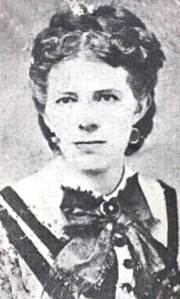
From 2012 to 2015, Stillness of Heart will share interesting excerpts from the extraordinary diary of Kate Stone, who chronicled her Louisiana family’s turbulent experiences throughout the Civil War era.
Learn more about Stone’s amazing life in 1861, 1862, 1863, 1864, 1865 and beyond. Click on each year to read more about her experiences. You can read the entire journal online here.
(Photo edited by Bob Rowen)
As a Texas summer storm approaches, Stone angrily vows that the Confederacy will never surrender to the Union forces that shattered her family.
Aug. 10, 1863
Lamar County, Texas
Nearly the close of summer and we are still in our first Texas retreat. We have dubbed it “Elysian Fields.” Mr. Smith has been away nearly a week looking for another location. No matter where we may go, we are almost sure to meet some of our old friends or acquaintances, for everybody about Monroe is moving out this way, we hear, scattering over Texas. How good the sight of a familiar face will be. I would feel like kissing nearly anybody I had ever seen before. …
Our list of victories last month were all a mistake. Gen. Lee has recrossed into Virginia, and our march into Pennsylvania seems to have been barren of results. We do not hold nor have we destroyed a single Northern city, as we so much hoped. A dark hour for the Confederacy. The loss of Vicksburg has stunned the whole country. It is a grievous blow, and there is great discouragement at least on this side of the Mississippi River. But the reaction will come. The people will rally to strike a more deadly blow, to fight till the last armed foe expires, to conquer or die.
Mamma, Sister, and Johnny are just in from their round of investigation. Instead of renting Mrs. White’s house they rented a book. The house was already taken, but she had quite a library of books that she would hire out for fifty cents a week. She would not think of lending them. The book Mamma brought was a most worthless thing, but the engravings in it are fine. Mrs. White is an educated woman, lives in a nice house, and is well to do, but a regular skinflint. She is living from day to day on the verge of the grave, suffering from some incurable complaint, and is still very eager to make money, extorting the last cent. She has one of our women hired to wait on her. She is a Yankee. That explains all. …
We look out tonight on a windy, stormy sky. Dark clouds go scudding by, and the wind whistles through our frail tenement. The boards have shrunken until daylight shines through. Lightning flashes continuously, thunder is rolling overhead, and the whole prairie is ablaze with the fireflies, weaving in and out like fairy shuttles.
One minor but interesting element of Stone’s diary is how long it took for her to learn of developments on the battlefield.
From 2012 to 2015, Stillness of Heart will share interesting excerpts from the extraordinary diary of Kate Stone, who chronicled her Louisiana family’s turbulent experiences throughout the Civil War era.
Learn more about Stone’s amazing life in 1861, 1862, 1863, 1864, 1865 and beyond. Click on each year to read more about her experiences. You can read the entire journal online here.
(Photo edited by Bob Rowen)
One minor but interesting element of Stone’s diary is how long it took for her to learn of developments on the battlefield. As her old world crumbled, as she was cut off from traditional letters and newspapers, and as she moved farther and farther away from Brokenburn, it took longer for her to learn about rumors of defeats and victories and even longer to gain accurate information about such events.
For example, the Battle of Gettysburg ended on July 3, 1863, and Vicksburg surrendered to Grant’s siege on July 4. Note what Stone says of Lee in Pennsylvania and of Vicksburg’s defenders, almost two weeks after both Confederate defeats.
July 16, 1863
Lamar County, Texas
The atmosphere has been most peculiar for several days. The air is cool and damp. The earth, the air, the sky — all are a dull dead grey. The sun seems to emit neither heat nor light, gleaming with a dim red glare like a blood-red moon. We thought at first it was one phase of the Texas climate, but the natives are as much puzzled by it as the strangers in the land. Some think it portentous, a sign of great victories or defeats. Others think it the smoke from burning grain in Mississippi. No one really knows anything about it.
We hear that we have won a glorious victory back of Vicksburg, repulsing one wing of Grant’s army and opening communication with Vicksburg and replenishing her supplies. Also we hear of surprising the enemy in south Louisiana and capturing many men and stores. We also hear that Gen. Lee’s army is laying waste [to] Pennsylvania. If only the Pennsylvanians may feel some of the horrors of war and know the bitterness of defeat. We live in hopes that our day of triumph may come but we fear not in the near future. …
Texas seems a hard land for women and children. They fly around and work like troopers while the men loll on the galleries and seemingly have nothing to do. Mamma cannot start on her search for a new home for a week yet, and it is disagreeable living here … their ways are not our ways.
As we sat on the gallery tonight, gazing across the darkening prairie into the gleaming west, the very air was brilliant with fireflies. The fancy came that they were the eyes of the departed Indians, come to look again on their old hunting grounds, flashing through the night, looking with scowling, revengeful faces on the changes wrought by their old enemies, the palefaces. I fancy I can see the ghostly shapes one minute taking the form of an Indian brave with bended bow and flying arrow, the next fading into thin air leaving only the fiery eyes. …
Stone hated and pitied the people of Texas. She gagged at the sight of unshaven men sitting at her dinner table. The seeming normality of violence horrified her. But the natural beauty of Texas gradually entranced her.
From 2012 to 2015, Stillness of Heart will share interesting excerpts from the extraordinary diary of Kate Stone, who chronicled her Louisiana family’s turbulent experiences throughout the Civil War era.
Learn more about Stone’s amazing life in 1861, 1862, 1863, 1864, 1865 and beyond. Click on each year to read more about her experiences. You can read the entire journal online here.
(Photo edited by Bob Rowen)
Stone hated and pitied the people of Texas. Barefooted women, evidently ignorant of the latest Southern fashions, still wore outdated “hoops.” The roads all the looked the same. She gagged at the sight of unshaven men sitting at her dinner table. She lost her appetite when she witnessed dusty slaves washing dishes “in the duck pond” before dinner. The Texas heat was punishing. The seeming normality of violence horrified her.
But the natural beauty of Texas gradually entranced her.
July 12, 1863
Lamar County, Texas
We made our first visit in Texas yesterday. We went to a protracted meeting being carried on nine miles from here at an old schoolhouse called — it must be in mockery — “Paradise.” After the meeting we went by invitation to spend the evening and night with some real nice people, settlers from Virginia, the McGleasons. They are a pleasant family and exceedingly hospitable. We came back this morning after a ride of nearly eighteen miles, having missed our road three times. The prairie roads are so much alike it is impossible for strangers to distinguish the right from the wrong.
The congregation was much more presentable than the Gray Rock crowd. We saw several nice-looking families, but all were in the fashions of three years ago. If they would only leave off their tremendous hoops, but hoops seem in the very zenith of their popularity. Mamma and I were the only women folks without the awkward, ungraceful cages. No doubt the people thought us hopelessly out of date. We have not worn them for a long time. Nothing looks funnier than a woman walking around with an immense hoop barefooted.
Mamma and I went several days ago to Tarrant in Hopkins County. The road ran part of the way over a lovely rolling prairie, dotted with clumps of trees and covered with the brilliant, yellow coreopsis in full bloom and gemmed with countless little mounds of bright green, like emeralds set in gold. Tarrant is the hottest looking, new little town right out in the prairie not a tree.
We tried to eat dinner at the roughest house and with the dirtiest people we have met yet. The table was set on a low, sunny gallery and half a dozen dirty, unshaven men took their seats in their shirt sleeves at the dirtiest tablecloth and coarsest ware. We saw the Negro girl wash the dishes at the duck pond right out in the yard. That was too much for me, but Mamma and Mr. Smith managed to swallow down something. …
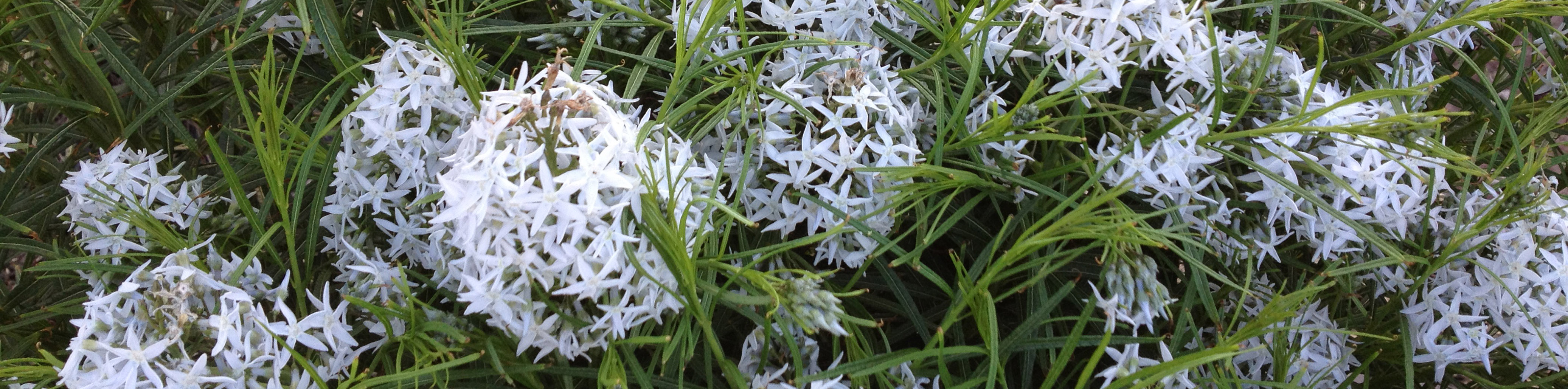
The prairie we are living on is called a thicket prairie. There are clumps of dwarf dogwood, spice trees, and plums, tangled together with wild grape and other vines and alive with snakes. The plums are just in season, a sour, red variety just like the swamp wild plums, and are nice for jelly. The prairie is a mass of flowers, one variety covering it at a time. Before you realize it, that color has faded away and another has taken its place, and this succession of flowers and colors goes on until frost comes and spreads a brown sheet over all. There are many familiar garden flowers: blue salvia, coreopsis, verbenas, larkspur, standing cypress, and now as far as the eye can reach the prairie is a mass of waving purple plumes, “French pinks,” the natives call them. …
We hear no news now but accounts of murders done and suffered by the natives. Nothing seems more common or less condemned than assassination. There have been four or five men shot or hanged within a few miles of us within a week. No one that we have seen seems surprised or shocked, but take it as a matter of course that an obnoxious person should be put to death by some offended neighbor. A few evenings ago a captain in the army had just reached home on a furlough three hours before when he was shot at through his window. He was killed and his wife dangerously wounded. The authorities are trying to find the men who did it. It is supposed to be one of his company who had vowed vengeance against him. The other miscreants go unwhipped of justice.
After two weeks, Stone decided that Texas was home only to deadly snakes, fleas “by the millions,” ignorant children, and ugly women.
From 2012 to 2015, Stillness of Heart will share interesting excerpts from the extraordinary diary of Kate Stone, who chronicled her Louisiana family’s turbulent experiences throughout the Civil War era.
Learn more about Stone’s amazing life in 1861, 1862, 1863, 1864, 1865 and beyond. Click on each year to read more about her experiences. You can read the entire journal online here.
(Photo edited by Bob Rowen)
Kate Stone despised her new wartime home. After two weeks, she decided that Texas was home only to deadly snakes, fleas “by the millions,” ignorant children, and ugly women. “There must be something in the air of Texas,” she wrote, “fatal to beauty.”
July 7, 1863
Lamar County, Texas
While camping out we were generally too tired at our noonday rest to do anything but throw ourselves down on the cushions and sleep until dinner. And at night when we stopped, I had only spirit to lean lazily back in one of our two rocking chairs and watch Annie get supper or to look up at the stars and think of all the dear friends that the waves of Fate are sweeping farther and farther away from us every day. I had such a longing for home and the dear life of the past that my very soul would grow sick. I know Mamma felt it far more than I did, but she would not complain.
I will copy a letter I wrote to Anna Dobbs which tells all there is to tell of our late journeyings:
“Here we are safely hidden in a dark corner of the far off County of Lamar after a tiresome, monotonous trip of little less than three weeks, and I am already as disgusted as I expected to be.
“This part of the land abounds in white-headed children and buttermilk, my two pet aversions. It is a place where the people are just learning that there is a war going on, where Union feeling is rife, and where the principal amusement of loyal citizens is hanging suspected Jayhawkers. Hoops are just coming in with full fashion. This is indeed the place where hoops ‘most do flourish and abide. Have not seen a hoopless lady since entering the state. Shoes are considered rather luxuries than necessaries and are carefully kept for state occasions. … One tin pan or a frying pan answers every purpose. Wash tubs seem obsolete and not to be bought at any price.
“The only way of killing time and one never feels more like killing him than on this desolate wind-swept prairie is to attend some of the protracted meetings that are being carried on all around us. And oh, the swarms of ugly, rough people, different only in degrees of ugliness. There must be something in the air of Texas fatal to beauty. We have not seen a good-looking or educated person since we entered the state. We are in the dark corner. We could not stand it here for a permanent stay, but Mamma has only stopped here for a breathing spell and to see how the Negroes are getting on. She will start out soon in search of a home until the war is over.
“We camped out except when it rained, which it did most of the last week, thereby ruining most of the clothes we had so laboriously amassed after fleeing from the Yankees. We would be so tired by night we welcomed the rudest shelter. The longer we traveled the more wearisome it grew, and I never turned over at night without expecting to feel the sting of a tarantula or centipede. But we really saw very few and reached here without an accident. I wrote to Sarah Wadley never to come to Texas for pleasure, but if forced to come to cover herself with a thin coat of tar to protect herself from the myriads of insects along the road. And here, we have settled at their headquarters ticks, redbugs, fleas by the millions, and snakes gliding through the grass by hundreds. But we rarely hear of anyone being snake-bitten. Game, deer and turkeys are abundant about here but not eatable on account of the insects tormenting them until they are too tough to eat. …
“We are staying right out on the bare prairie in a rough two-room shanty with the overseer and his family. With only the bare necessaries of life, we think it will be at least two months before we can make any change, and so we must needs make the best of it.”
At last, the Stones moved for Texas. Along the way, Kate Stone enjoyed wild fruits, natural beauty, and the occasional generosity of strangers.
From 2012 to 2015, Stillness of Heart will share interesting excerpts from the extraordinary diary of Kate Stone, who chronicled her Louisiana family’s turbulent experiences throughout the Civil War era.
Learn more about Stone’s amazing life in 1861, 1862, 1863, 1864, 1865 and beyond. Click on each year to read more about her experiences. You can read the entire journal online here.
(Photo edited by Bob Rowen)
At last, the Stones moved for Texas. Along the way, Kate Stone enjoyed wild fruits, natural beauty, and the occasional generosity of strangers.
June 15, 1863
Near Monroe, La.
Visiting and visitors, blackberry parties, and long walks over the hills have occupied the time since Wednesday. Julia Barr and I took tea with Mrs. Dortch and were agreeably entertained. We have been since to see Mrs. Waddell, who is a charming pretty lady.
Mamma and Johnny are busy making arrangements for us to get off. Will start on Wednesday. All busy this afternoon making a tent of some carpeting, the only thing to be bought in Monroe and it was $4 a yard. From Jimmy’s letter, received today from Titus [Texas], think we will be on the road two weeks. He does not write encouragingly. The country is not more abundant than this, and Billy, another Negro man, is almost dead. But Mamma hopes to find it better than Jimmy paints it.
Our delightful sojourn at this place is nearly over, and it will be many a weary day before we are so comfortable again. They are the very kindest people we ever met, and Mr. Wadley, who returned a few days ago, is just as generous and kind as all the others. To crown all her good deeds Mrs. Wadley this morning refused to take a cent for our board all these seven weeks. Mamma insisted on it, but both Mr. and Mrs. Wadley declared they could not think of such a thing, saying Mamma would need every cent she had before she got settled again. Our own relations could not have been kinder, and we were total strangers to them when they took us in out of the goodness of their hearts. May God reward them, we never can.
Tomorrow is our last day here and we will go around and say good-bye to the neighbors. This lovely family and Julia Barr I shall be sorry to leave.
June 19
Between Monroe and Minden, La.
Half past twelve this sultry June 19 we are sitting under the shade of a spreading oak about halfway between Monroe and Minden eating rosy June apples. …
We are on the road for Texas at last, and I imagine no party of emigrants ever started with sadder hearts or less pleasure in anticipation. If we had gone on at once when coming to Monroe, we would have liked the idea, but we stayed just long enough at Mrs. Wadley’s to spoil us for a trip like this. We find it very lonely, only we four and the servants. If we could have joined another party, it would be so much more enjoyable. … A passing soldier tells us that a Federal force is advancing on Monroe. … We all left home without a tear, the dread of staying there was so great, but we and all the family were in tears when we told them good-bye at Mrs. Wadley’s. Shall we ever meet such kind friends again?
The first long hill halted us. We tried for an hour to get the mules on the wagon to pull up it, but they would not or could not. Mamma had part of the baggage unloaded and sent back to the Wadley’s, and at last we got underway. It was such a dark, rainy afternoon that we thought we would not commence camping that evening but would stay at some house on the road. So we went ahead of the wagon, and before sunset commenced enquiring for lodging. At house after house, dark and uninviting with a host of little towheads and a forelorn-looking woman, generally spinning, amid the barking of a pack of dogs, would come the response, “Naw, we don’t take in travelers,” in a tone of contempt, as though the very name of traveler was a disgrace. We kept this up, the poor tired mules dragging on from place to place, until 10 o’clock at night. Being refused at the last house, Mamma declared we could go no farther. … But [of] three swampers staying there … one of them heard our distressed voices, came to our relief, and induced the owner to allow us to stay. We were glad enough of the shelter, for that was about all it was. Chunks of fat meat and cold, white-looking cornbread with very good water were all the refreshments. This night’s experience satisfied us, and we have determined to camp out for the rest of the way.
The next day we went on as far as Mrs. Bedford’s, about twenty-five miles from Monroe. They gave us a nice dinner, and we had a pleasant little stay there. We went on in the afternoon with a supply of pretty June apples from their orchard, camped out that night for the first time, and found it far better than asking for shelter and getting nothing, nothing but snubs and coarse fare at exorbitant prices. It looked like it would rain every minute. It seemed nothing new to be lying out under the shadow of a tree with the stars looking dimly down through the branches, with the lightning flashing in the North, the sultry night breeze swaying the wildwoods grass in my face, and a nondescript bug attempting to creep into my ear. We have read so many stories of camping it seems like an old song. Shall we have any of the startling adventures that travelers usually have to relate?
June 22
Near Bellevue, La.
We are resting for dinner in a thicket of blackjack and towering pines after a wearisome ride over the worst roads. Now we find we branched off in the wrong direction and are only four miles farther on our way than when we left camp this morning.
We passed through Minden — such a pretty little town with the deepest white sand in the streets, about the size of Monroe. I wish we could have located there. It looked very inviting, but we must go on where [our] Negroes are. We camped near a nice-looking house, and the people were kind in sending us out milk and butter, the first time we have been able to get anything of the kind. We also bought some chickens, a relief after a steady diet of ham and bacon. We get a lot of fruit, apples, plums, and huckleberries, the large low-bush variety — also, the blackberries are ripening. We stop several times a day or whenever we see a tempting thicket and enjoy the fruit. We so often have to wait for the wagon. We need never hurry. No flour yet, but we hear it is plentiful farther on. Some tea bought in Monroe is evidently made of blackberry leaves. Dampened and untwisted they are identical, absolutely without flavor.
U.S. Grant’s stranglehold on Vicksburg overshadows Stone’s hopes for victory.
From 2012 to 2015, Stillness of Heart will share interesting excerpts from the extraordinary diary of Kate Stone, who chronicled her Louisiana family’s turbulent experiences throughout the Civil War era.
Learn more about Stone’s amazing life in 1861, 1862, 1863, 1864, 1865 and beyond. Click on each year to read more about her experiences. You can read the entire journal online here.
(Photo edited by Bob Rowen)
U.S. Grant’s stranglehold on Vicksburg overshadows Stone’s hopes for victory.
June 3, 1863
Near Monroe, La.
Lt. Valentine is back from his Northern prison and brings us blessed news of My Brother’s safety. He was wounded in the left arm above the elbow in the Battle at Chancellorsville but by this time has rejoined his regiment. … He could not tell us much that was interesting about the North. They were kept too close to see or hear anything. He represents prison life as most monotonous and wearisome, but they were not ill-treated.
He says My Brother is having a nice time in Richmond and regrets the hole in his coat more than the hole in his arm. The last Nature will heal, the first will take money. Lt. Valentine joined his regiment, which was under marching orders at once, and they are now somewhere in the swamp. We are massing quite a force there under Gen. Taylor. May we strike a telling blow.
The news from Vicksburg is very contradictory, but there seems to be constant fighting going on. We were repulsed in every engagement until the troops fell back behind our entrenchment, since then we have driven back every assault with heavy losses on their side. They have made desperate charges on the batteries only to fall back with great slaughter. Numbers of Negroes, placed by their friends in the forefront of the battles, have been slain. Poor things, I am sorry for them. Gen. Grant has surrounded Vicksburg with an immense army. The struggle has commenced, but the great battle is still to be fought. Our friends around Vicksburg must have lost everything before this.
June 5
Aunt Laura and Mrs. Young have had the long-expected falling out, and Aunt Laura has gone to board about three miles from here. We think that in a short time the fate of Vicksburg will be decided, and she will know whether to go on to Vicksburg or to Texas with us. Mamma is also waiting in the hope that our troops will drive the Yankees from the swamp and we can go back home until fall or at least get what is left of the furniture. …
I am trying to braid a pretty braid of rye straw, as I can get no palmetto here, and I have promised Lt. Valentine a hat. Plaited one for Johnny in less than a day. It is rough and ugly, but he likes it. It is so light. Hatmaking is as much the rage here now as it was last summer in the swamp. …
We had a charming ride the other evening. Went out huckleberrying but not a berry did we see. The ride part of the way was over high hills shaded by towering longleaf pines and carpeted with tall woods grass and wild flowers, and sloping in green waves from the hills lay deep ferny hollows. …
June 10
We have bidden Aunt Laura and Beverly a long adieu I fear. They started yesterday for Mississippi to join Dr. Buckner, if possible. They go to Harrisonburg on a boat and then through the country to the river, if possible. They are under the care of Mr. John Curry, and it is doubtful whether they can get on. But Aunt Laura, or rather Mamma, thought it better for her to attempt it than to go to Texas. Aunt Laura wished to go on with us, but Mamma feared she could not stand the hardships of the long trip camping out and the rough life with little hope of seeing or hearing from Dr. Buckner until the war is over. We hated so to see her go. We shall miss them for a long time. We went in to Monroe and saw them off. Sent numbers of letters by them.
The news of today is that our men were repulsed at Milliken’s Bend and are falling back to Delhi. A very different account from the first. It is hard to believe that Southern soldiers and Texans at that have been whipped by a mongrel crew of white and black Yankees. There must be some mistake. …
All of us were busy from 5 o’clock until dusk making mattresses for the wounded soldiers expected at Monroe from the fight at Milliken’s Bend. It is said the Negro regiments fought there like mad demons, but we cannot believe that. We know from long experience they are cowards. …
Aunt Laura spent Sunday with us, our last day together. She went off in fear and trembling but is determined to get through if possible. She is such a sensitive, nervous woman that it will be a great ordeal for her, but it could not be helped.
Julia Barr and I are quite friends. I like Miss Sarah very much, but she is so absorbed with Mrs. Morancy that we see little of her. We are staying so long I fear Mrs. Wadley will get tired of us, and so we are all reconciled to making an early start to Texas.
The value of apostrophes / Obama and Nixon / Cicada secrets / Boston Marathon bombing PTSD / A long-lost WWII Marine’s diary
Most of these great items come from my Twitter or Facebook feeds. Follow me on Twitter, Tumblr, LinkedIn, and Facebook for more fascinating videos, photos, articles, essays, and criticism.
1.WW2 Marine’s diary: A brief look at a brief life By Janet McConnaughey | Associated Press | May 27
“Before Cpl. Thomas ‘Cotton’ Jones was killed by a Japanese sniper in the Central Pacific in 1944, he wrote what he called his ‘last life request’ to anyone who might find his diary: Please give it to Laura Mae Davis, the girl he loved. Davis did get to read the diary — but not until nearly 70 years later. …”
2.How Timbuktu’s manuscripts were saved from jihadists By Sudarsan Raghavan | The Washington Post | May 26
“The scholarly documents depicted Islam as a historically moderate and intellectual religion and were considered cultural treasures by Western institutions — reasons enough for the ultraconservative jihadists to destroy them.”
6.Obama’s speechwriter: from intern to top wordsmith By Darlene Superville | Associated Press | May 25
“Current and former White House colleagues, all Obama campaign veterans, praise [Cody] Keenan’s writing skills and work ethic and what they describe as his sense of fairness, modesty and willingness to help.”
7.The Man Who Knew Too Much By Marie Brenner | Vanity Fair | May 1996
“Angrily, painfully, Jeffrey Wigand emerged from the sealed world of Big Tobacco to confront the nation’s third-largest cigarette company, Brown & Williamson. Hailed as a hero by anti-smoking forces and vilified by the tobacco industry, Wigand is at the center of an epic multibillion-dollar struggle that reaches from Capitol Hill to the hallowed journalistic halls of CBS’s 60 Minutes.”
8.The secrets of cicada survival By John Matson | Salon | May 24
“A new brood is set to emerge this summer for the first time in 17 years. What’s taken them so long?”
9.Why Obama Is Not Nixon By Elizabeth Drew | NYR Blog :: The New York Review of Books | May 18
“Compared to Watergate, on the basis of everything we know about what are the current ‘scandals’ amount to a piffle. Watergate was a Constitutional crisis.”
It’s been a year since her beloved brother and uncle left for the front, and her sadness casts a shadow over Brokenburn’s springtime blooms.
From 2012 to 2015, Stillness of Heart will share interesting excerpts from the extraordinary diary of Kate Stone, who chronicled her Louisiana family’s turbulent experiences throughout the Civil War era.
Learn more about Stone’s amazing life in 1861, 1862, 1863, 1864, 1865 and beyond. Click on each year to read more about her experiences. You can read the entire journal online here.
(Photo edited by Bob Rowen)
Stone mourns the loss of a dear friend to marriage, “Beast” Butler’s proclamations from conquered New Orleans outrage her, the weakened levee nearby worries her, and a bear frightens and exhilarates everyone. It’s been a year since her beloved brother and uncle left for the front, and her sadness casts a shadow over Brokenburn’s springtime blooms.
May 23
Have heard of my darling Katie’s marriage. Who would have thought after our long close intimacy that I would hear of her wedding only by accident. I know she has written me everything but no letters come now. So have passed our dreams of sisterhood. I hope, oh how I hope, she has been able to forget the old love and is content with the new. May my dear girl be happy. God bless her and hers. I shall miss her out of my life, my dearest girl friend. How it will affect My Brother I can hardly say, but I have thought of late he had given up his love dream and was willing to take the dismissal he forced upon her. …
The gunboats have been at Vicksburg for a week and have secured their answer to the demand to surrender some days ago, but there has been no bombardment. What we heard was the artillery men trying their guns.
In the Whig is Butler’s last infamous proclamation. It seems that the openly expressed scorn and hatred of the New Orleans women for Butler’s vandal hordes has so exasperated him that he issues this proclamation: That henceforth if any female by word, look, or gesture, shall insult any of his soldiers, the soldier shall have perfect liberty to do with her as he pleases. Could any order be more infamous? It is but carrying out the battle cry ‘Bounty and Beauty’ with which they started for New Orleans. May he not long pollute the soil of Louisiana.
The levee is still very insecure with the river rising and the rains bad on it. Many plantation hands are at work on it all the time, and the owners [are] watching it anxiously. We are almost overflowed from rain water as the ditches had to be stopped to keep out backwater. …
May 25
Everything shines out bright and fair in the spring sunshine after the gloom of the last few days. The flowers wave and glisten most invitingly across the grass beyond the shadows of the great oaks, but it is too wet to venture over Nature’s carpeting of soft, green grass. This evening we may plan what we please. The levees having stood so far we think will stand faithfully to the end. They have certainly been found faithful among few. …
May 26
Old Mr. Valentine is very despondent, foretelling the most abject poverty and starvation for the whole country. He came over to try and induce Mamma to have all the cotton plowed up in order to plant corn and to beg her not to let Brother Walter go to Vicksburg. … He has made himself very unpopular by his bitter opposition to the cotton burning and by not allowing his son to join the army. There is no doubt he should go at once. Some actually think Mr. Valentine is in favor of our enemies and advocate hanging him by mob law. A most unjust report and utterly without foundation. I suppose his being of Northern birth increases the prejudice. …
In the afternoon there was a cry raised that there was a bear in the cane. The boys with their dogs and guns turned out in force, assisted by Mr. McRae, Ben Clarkson, as did all the Negroes who could get mules, while the others armed themselves with axes and sticks and cautiously approached the outskirts. The excitement ran high and we at the house had full benefit as it was in the canebrake just back of the yard. We could hear the barking of the dogs, the reports of the guns, and the cries and shouts of the whole party. It was very exhilirating. They returned in the highest state of excitement but without the bear. They went out next morning but with no better success. …
May 28
Yesterday evening and far into the night we heard the roar of cannonading more distinct and rapid than ever heard before. It must be at Vicksburg. Today all is quiet. One understands after hearing the long rolling booms how deafening it must be on a battlefield. …
The river is falling all the way down.nd we are saved from overflow this year.
Papers and letters this evening, a month old.
May 30
We have a paper of the twenty-seventh. It brings the good news of a battle or surprise by Stonewall Jackson at Winchester and Front Royal and the capture of all the stores at the former place and many prisoners. All the news is rather encouraging. We are holding our own at Fort Pillow. At Corinth the enemy are reported in retreat to their gunboats which, now that the Tennessee River is falling, they are compelled to get out at once. All is well in Virginia. And nearer home at Vicksburg there is nothing to discourage us. The slight shelling did no harm, and the soldiers are full of hope and anxious for the Yankees to land to give them the “worst beating they ever had in their lives. …”
My Brother and Uncle Bo have been gone just a year and what a year of changes. Nature smiles as bright and fair now as under the May sun of a year ago, but where are all “the loved ones who filled our home with glee?” Four of the dear familiar faces are absent. One sleeps the sleep that knows no waking. For him we have no more fear or trouble, for we know he has passed from Death into Life that. … But oh, the weary days of waiting and watching for the other three.
Jimmy brought us two recent letters from My Brother. He encloses some violets gathered from the old trenches around Yorktown, dug there by Washington’s army. His tent stands just where Cornwallis gave up his sword. What supreme satisfaction if McClellan could be induced to do the same thing at the same place. They say history repeats itself. My Brother takes a most elderly brother tone regarding Tom Manlove’s love affairs. Four months ago Tom was desperate about Miss Eva, and now Miss Flora reigns sole empress of his heart for the next month. But My Brother need not be critical, as he is not so constant himself. He so regrets leaving Uncle Bo. They are now in different commands. He is anxious to get his clothes and speaks confidently of coming home. …
Hauling a rock into orbit / A comatose Senate / Fiction to understand Iraq War / Navy SEALS fighting Jabba the Hutt / John Kerry and Cuba
Most of these great items come from my Twitter feed or Facebook news feed. Follow me on Twitter and on Facebook for more fascinating videos, articles, essays and criticism.
1.Senatus Decadens By George Packer | The Daily Comment :: The New Yorker | Jan. 4
“The Senate is in a prolonged, self-induced coma. It does not produce creative legislation. It does not inspire important debate. It is not responsive to key national problems. Its pretense of institutional dignity is so battered that junior senators openly mock it.”
3.Be Cautious With Free Software By J.D. Biersdorfer | Gadgetwise :: The New York Times | August 2012
“Is it safe to install freeware and shareware on my computer?”
4.Can Kerry make friends with Cuba? By Nick Miroff | GlobalPost :: Salon | Jan. 2
“While the ex-senator’s been a harsh critic of U.S. policy toward Havana, he’ll have a hard time changing anything”
5.Louis C. K.’s Symphony Of Comedy By Chris Duffy | WBUR | Jan. 3
“In a field notorious for compromise, where comedians routinely change personas and water down material to get sitcom deals, C.K. has managed to maintain his voice.”
6.High schooler suspended for poem on understanding Adam Lanza By Natasha Lennard | Salon | Jan. 2
“A 17-year-old high school student in San Francisco has been suspended indefinitely after she wrote a poem in her personal notebook which included the lines, ‘I understand the killings in Connecticut; I understand why he pulled the trigger.’ ”
7.Good and Bad, the Little Things Add Up in Fitness By Gretchen Reynolds | Well :: The New York Times | Jan. 2
“I was delighted to report … that the ‘sweet sport’ for health benefits seems to come from jogging or moderately working out for only a brief period a few times a week.”
8.How Real Navy SEALs Would Handle Famous Movie Missions By Shane Snow | Underwire :: Wired | December 2012
“[W]e asked 17-year SEAL veteran Don Mann … how the SEALs would handle a few epic missions of our own devising. And by ‘our,’ we mean Hollywood’s.”
9.Dissatisfaction City By Jesse Elias Spafford | The New Inquiry | Jan. 2
“The Las Vegas casino is a machine for social control that works not through repression, but disinhibition”
10.NASA mulls plan to drag asteroid into moon’s orbit By Jeff Hecht | New Scientist | Jan. 2
“The mission would cost about $2.6 billion — slightly more than NASA’s Curiosity Mars rover — and could be completed by the 2020s.”
It’s been my best year ever. Thank you all for your interest.
WordPress.com prepared a 2012 annual report for Stillness of Heart.
Here’s an excerpt:
600 people reached the top of Mt. Everest in 2012. This blog got about 7,900 views in 2012. If every person who reached the top of Mt. Everest viewed this blog, it would have taken 13 years to get that many views.







 Stillness of Heart
You must be logged in to post a comment.