Muster, the excellent blog for the Journal of the Civil War Era, recently interviewed the historical adviser to the new Civil War drama Mercy Street
Muster, the excellent blog for the Journal of the Civil War Era, recently interviewed Dr. Jane E. Schultz, professor of English at Indiana University-Purdue University Indianapolis and historical adviser to Mercy Street, the PBS drama about women in Civil War hospitals. She perceptively argues that the series “is trying to show the depths of human turbulence that lay beneath the surface of military etiquette.”
Read the entire interview here. It offers intellectual depth and understanding to the process of shaping the drama’s narrative, location, characters, and era.
This week: Bill Cosby / A historic mammoth / ISIS: The Magazine / Benefits of red wine / Cartels and Mexican politics
This week: Bill Cosby / A historic mammoth / ISIS: The Magazine / Benefits of red wine / Cartels and Mexican politics
Most of these great items come from my social media networks. Follow me on Twitter, Tumblr, LinkedIn, MySpace, and Facebook for more fascinating videos, photos, articles, essays, and criticism.
1.Bill Cosby and His Enablers By Ta-Nehisi Coates | The Atlantic | Jan. 12
“Even victims of discrimination can look away from — and thereby enable — other forms of violence.”
2.Gingerly, Donald Trump Tries Out Some Campaign Conventions By Maggie Haberman and Patrick Healy | The New York Times | Jan. 15
“The risk for Mr. Trump is that too much baby-kissing, people-pleasing, Mr. Nice Guy politicking will come across as inauthentic to voters who like that he is, in their view, a tough-talking realist about perceived threats from Muslims, illegal immigrants, and budget-busting Democratic and Republican leaders in Washington.”
3.FDR’s Nate Silver By David Greenberg | Politico Magazine | Jan. 16
“How a self-taught data whiz from Michigan became the first person ever to poll for an American president — and turned into a national sensation.”
4.A Mysterious Mammoth Carcass Could Change Human History By Maddie Stone | Gizmodo | Jan. 14
“Its discovery … might push back the timeline for when humans entered the northernmost reaches of the world — including the first entries into North America.”
5.Why Cartels Are Killing Mexico’s Mayors By Ioan Grillo | Sunday Review :: The New York Times | Jan. 15
“These new cartels continue to traffic drugs. … But they have also used their armies of assassins to move into new endeavors: rackets, extortion, oil theft, even wildcat iron mining. And they are now muscling in on one of Mexico’s most lucrative businesses of all: local politics.”
7.Why the United States can’t make a magazine like ISIS By William McCants and Clint Watts | Brookings and The Daily Beast | Jan. 13
“Can you name a single U.S. government publication or online platform devoted to the anti-ISIS fight that is as informative or as widely-read as Dabiq? … We couldn’t come up with one either.”
9.Health Benefits of Red Wine vs. Grape Juice By Karen Weintraub | Ask Well :: The New York Times | Jan. 8
“We keep hearing about the benefits of drinking red wine. Why not grape juice instead? It has the same benefits, plus no alcohol.”
10.Why Ike Wouldn’t Celebrate the D-Day Anniversary By Michael Beschloss | HistorySource :: The New York Times | May 2014
“Thus Ike spent the D-Day anniversary of Sunday, June 6, 1954, out of sight, with his family at Camp David.”
Incredible Texas women worked tirelessly in the 1960s and 1970s to make our state a better, more equitable place. We want to celebrate these women, and their unique experiences as political and community activists, as told through their work with La Raza Unida.
It was important that they share their stories in their own words; we eventually hope to include the transcripts in a book. We aim to gain a new understanding of Texas history through the lens of some of its most stellar daughters, who found their way into activism vis-à-vis La Raza Unida.
We hope you enjoy their stories and learn from them — and please share with your friends and family.
Laura Varela is a filmmaker based in San Antonio, you can contact her here.
Andrew Gonzales is a filmmaker based in Austin, you can contact him here.
As you plan your reading for 2016, consider these eight recently published or forthcoming titles. Watch for more recommendations and book reviews in the coming weeks.
ANTIQUITY
Mary Beard, classicist and author of the blog A Don’s Life, offers SPQR: A History of Ancient Rome (Liveright, 608 pp., $35), a perceptive tour of the birth of Rome, the political entity, from the shadows of obscurity and its circuitous evolution into the Roman Republic. Step by step, she interrogates the traditional academic assumptions of its leaders, origin myths, and governing structures and analyzes them, often through the prisms of recent archaeological and historical discoveries, and presents a fresh and comprehensive history of Rome before its imperial era.
Richard Alston’s Rome’s Revolution: Death of the Republic and Birth of the Empire (Oxford University Press, 408 pp., $29.95) examines the chaotic and blood-soaked transition of the Roman Republic to Roman Empire. Another civil war erupted in 44 BC following the senatorial assassination of Julius Caesar, and in the end three men were left standing — Octavian, Mark Antony, and Lepidus. They agreed to share power and administer separate parts of the Roman world. Octavian governed Rome and the west. Antony took the eastern territories (basing himself in Alexandria, where he met Cleopatra), and Lepidus took the rest of Africa west of Egypt. Ultimately, however, Roman rule could not be shared, and Octavian eventually eliminated his partners, terminated the 500-year-old republic, and assumed supreme power as emperor of a new Roman Empire. Alston’s story effortlessly swings back and forth between experiences of Romans on the street and Romans in the halls (and bedrooms) of power as they all experienced, whether they realized it or not, one of the most significant political revolutions in human history.
CIVIL WAR
Simon Cameron, Abraham Lincoln’s first secretary of war, is remembered for little more than his departure under the shadow of corruption, incompetence, or intransigence. Paul Kahan’s Amiable Scoundrel: Simon Cameron, Lincoln’s Scandalous Secretary of War (University of Nebraska Press, 408 pp. $36.95) confronts the fog of historical negativity swirling around Cameron and argues that not only was Cameron a product of his time, his time was partly a product of him. Before joining Lincoln’s Cabinet — an intelligent political move on Lincoln’s part — Cameron was a political powerhouse in Pennsylvania, chairman of the Senate Foreign Relations Committee, present at the birth of the Republican Party, a key voice in formulating Northern military strategy, and an early supporter for inclusion of black Americans in the ranks of the Union forces. He witnessed, was a part of, or a target of the most important political and military debates before and during the early months of the Civil War. Kahan’s portrait of Cameron and his times reminds us to not overlook Cameron’s crucial influence and historical importance and to remember the larger political forces Lincoln needed to succeed.
As powerful men influenced historical events, even more powerful women influenced the men. Candice Shy Hooper focuses on four of these women in Lincoln’s Generals’ Wives: Four Women Who Influenced the Civil War — for Better and for Worse (Kent State University Press, 440 pp., $39.95). Jessie Fremont (wife of John C. Fremont), Nelly McClellan (wife of George B. McClellan), Ellen Sherman (wife of William T. Sherman), and Julia Grant (wife of Ulysses S. Grant) watched their husbands rise up the ranks of Union command, worried for their safety as they fought the biggest and bloodiest battles in the history of the Western Hemisphere, traveled around the war-torn country, and offered their opinions and guidance as politics and war coalesced into the same battlefield over supreme power. Hooper deftly (and amusingly) explores how the wives’ personalities and outlooks resembled those of their spouses. They viewed Lincoln either with contempt or respect. They encouraged their husbands to either undermine or support him, ultimately intensifying either their husbands’ intransigence, and thereby dooming them to removal from command, or challenging them to do better, thereby securing their husbands’ places in the pantheon of U.S. military history.
Kelly D. Mezurek’s For Their Own Cause: The 27th United States Colored Troops (Kent State University Press, 344 pp., $37.95) promises to go beyond the traditional unit history to illustrate why black Americans volunteered to fight in the Union Army, how they endured racism and unfair treatment and assignments, and what they expected from the democratic republic they had bled for and died to save. The free Ohio men that comprised the 27th USCT fought in North Carolina and Virginia, serving from April 1864 to September 1865, months after the Confederacy collapsed. They returned to Ohio determined to build better and stronger communities for their children, linked to the promises of the the Thirteenth, Fourteenth and Fifteenth Amendments. Their story further brightens the scholarly illumination of black veterans’ excruciating struggle to secure equal rights for all Americans and ultimately realize the promise of American democracy.
Richard M. Reid’s African Canadians in Union Blue: Volunteering for the Cause in the Civil War (Kent State University Press, 308 pp., $28.95) offers an exciting and fresh perspective on black Union soldiers who joined their American counterparts in the fight for freedom in North America. The transnational perspective sparks new considerations of the nature of black Northern societies that stretched far beyond international borders and cultures. It also contributes to the larger conversation about why men and women fought on either side in the Civil War. Reid’s Canadian soldiers join the array of other foreign soldiers — including Latinos from Mexico, Cuba, and the Caribbean — who fought their own larger world war for freedom and democracy.
WORLD WAR II
The process of intellectual preparation for the wars of the future is a complicated landscape for any historian to analyze and illustrate. But John M. Lillard’s Playing War: Wargaming and U.S. Navy Preparations for World War II (University of Nebraska Press, 224 pp., $39.95) offers the ideal vantage point for both scholars, students, and enthusiasts of military history. While other studies might underestimate the Naval War College’s interwar contribution to the U.S. Navy’s eventual strategies and tactics, Lillard argues that the College’s multi-level war games, experiments with new technologies, and perceptive simulations of the future wars all lay at the heart of U.S. victory in 1945.
SPACE
Astronauts inspire us like none others. Their scientific, technological, and intellectual achievements are unrivaled, their bravery in the face of certain death is unforgettable, and their patriotism is unassailable. They are the first to admit that what they achieved was the result of their participation in efforts that involved thousands of men and women around the world. They are also the first to remind their admirers that not everyone survived the journeys into history. Colin Burgess, Kate Doolan and Bert Vis collected the stories of sixteen Americans and Russians who died during their nations’ efforts to reach the moon in a new edition of Fallen Astronauts: Heroes Who Died Reaching for the Moon (University of Nebraska Press, 448 pp., $36.95). Some died in training accidents, others on the launch pad, and one died in an automobile accident. Fallen Astronauts promises to deepen the reverence for those who lost their lives, for those who dared to move forward, and for those who made it to the summit, never forgetting those they lost. Heroism transcended nationality, ideology, or culture.
‘The Force Awakens’ (of course) / A highway marriage proposal / ‘Thriller’ makes history / Confessions of a cartel killer / Trump’s unpleasant talents
This week: ‘The Force Awakens’ (of course) / A highway marriage proposal / ‘Thriller’ makes history / Confessions of a cartel killer / Trump’s unpleasant talents
Most of these great items come from my social media networks. Follow me on Twitter, Tumblr, LinkedIn, MySpace, and Facebook for more fascinating videos, photos, articles, essays, and criticism.
1.Trump, Master of the Seven Deadly Sins By Michael D’Antonio | Politico Magazine | Dec. 16
“How the GOP leader has succeeded for 40 years by bringing out the worst in people.”
3.A Houston Marriage Proposal Stops Traffic By Katie Rogers | The New York Times | Dec. 16
“Drivers did not give them more than a few seconds to celebrate. As the ecstatic couple hugged, the blare of car horns could be heard as people in trucks and S.U.V.s began to drive around the couple and their entourage, who were also recording.”
4.Alter Your Reading… Alternate History Picks Sure to Make You Wonder By Billy Gschlecht | Bibliofile :: New York Public Library | Nov. 5
“Alternate history is an interesting and imaginative look at what might have been, sometimes for the better or worse, but certainly always different.”
5.Michael Jackson’s ‘Thriller’ sets new sales record By Anthony McCartney | Associated Press | Dec. 16
“The album has sold 30 million copies in the United States, making Jackson the first artist to attain 30-time multiplatinum status …”
7.30 lives extinguished, but no regrets: A killer’s story By E. Eduardo Castillo | Associated Press | Dec. 15
“This is a story from the other side, the tale of a man who kidnaps, tortures and kills for a drug cartel. His story is the mirror image of those recounted by survivors and victims’ families, and seems to confirm their worst fears: Many, if not most, of the disappeared likely are never coming home.”
8.‘Star Wars: The Force Awakens’: The fanboy dissection of a film that restores faith By Michael Cavna and David Betancourt | Comic Riffs :: The Washington Post | Dec. 16
“With John Williams’s soaring score still ringing in our ears, and the uplift of this soon-to-be globally embraced film still dizzying our senses, here is Comic Riffs’ fanboy dissection of the Star Wars franchise reawakened …”
9.Revisiting ‘Star Wars’ Before ‘The Force Awakens’ Here & Now :: NPR | Dec. 14
“That was back in the day when the first Apple II computers went on sale and Space Mountain was opening at Disneyland.”
10.When T.R. Saw Lincoln By Michael Beschloss | HistorySource :: The New York Times | May 2014
“For Theodore Roosevelt’s family, Lincoln’s cortege was no abstract public ceremony. “
Read Kate Stone’s amazing stories as she defiantly faces Union soldiers, escapes across a Louisiana swamp, falls in love with Texas, and watches the Civil War rip her country and her family apart.
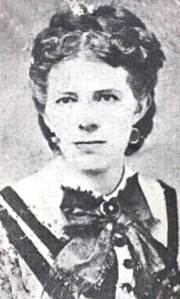
From May 2012 to November 2015, a special series from Stillness of Heart shared excerpts from the extraordinary diary of Kate Stone, who chronicled her Louisiana family’s turbulent experiences throughout the Civil War era.
She defiantly faced Union soldiers, escaped across a Louisiana swamp, fell in love with Texas, and watched the Civil War rip her country and her family apart.
The entire series of excerpts is collected here.
Learn more about Stone’s amazing life in 1861, 1862, 1863, 1864, 1865 and beyond. Click on each year to read more about her experiences. You can read the entire journal online here.
Stone’s last three entries in her diary are from September 1867 and 1868. They form a somber epilogue to her chaotic journey. They capture a bitter reflection of a shattered Southern slaveholding society, adrift, confused, and afraid of a world in which they no longer rule.
From 2012 to 2015, Stillness of Heart will share interesting excerpts from the extraordinary diary of Kate Stone, who chronicled her Louisiana family’s turbulent experiences throughout the Civil War era.
Learn more about Stone’s amazing life in 1861, 1862, 1863, 1864, 1865 and beyond. Click on each year to read more about her experiences. You can read the entire journal online here.
(Photo edited by Bob Rowen)
Stone’s last three entries in her diary are from September 1867 and 1868. They form a somber epilogue to her chaotic Civil War journey. They capture a bitter reflection of a shattered Southern slaveholding society, adrift, confused, and afraid of a world in which they no longer rule.
A long silence and a year of hard endeavor to raise a crop, reconstruct the place with the problem of hired labor, high water, and cotton worms. Mamma had little trouble in getting advances in New Orleans to plant. Cotton is so high that merchants are anxious to advance to put in a crop, and there is much Northern capital seeking investment in that field. … The Negroes demanded high wages, from $20 to $25 for men, in addition to the old rations of sugar, rice, tobacco, molasses, and sometimes hams. Many of the old hands left, and My Brother went to New Orleans and brought back a number of ex-Negro soldiers, who strutted around in their uniforms and were hard to control. I was deadly afraid of them.
During the spring while Mamma and I were in New Orleans (Mamma on business and she took me for my pleasure), and Uncle Bo and My Brother and Jimmy were away for a few hours, Johnny had a fight with a young Negro in the field, shot and came near killing him, and was mobbed in return. Johnny would have been killed but for the stand one of the Negroes made for him and Uncle Bo’s opportune arrival just as the Negroes brought him to the house a howling, cursing mob with the women shrieking, “Kill him!” and all brandishing pistols and guns. It came near breaking up the planting, and it is a pity it did not as it turned out. Johnny had to be sent away. He was at school near Clinton [Miss.] and the Negroes quieted down and after some weeks the wounded boy recovered, greatly to Johnny’s relief. He never speaks now of killing people as he formerly had a habit of doing. He came home when school closed and there was no further trouble.
Then the water came up and we were nearly overflowed. The cotton planted was very late, and when it was looking as luxuriant and promising as possible and we saw ease of mind before us, the worms came. In a few days the fields were blackened like fire had swept over them. We made about twenty bales and spent $25,000 doing it. What most distresses me is that none of that money went for our personal comfort. All of it went to the Negroes. Mamma would buy only bare necessaries for the table and plainest clothes for the family. Not a luxury, no furniture, carpets, or anything. We are worse off for those things than even in Texas and such a sum spent! But Mamma said it was not honest to spend the money on anything but making the crop. All in this section have suffered in the same way, and for awhile they seemed stunned by their misfortunes. But now the reaction has come, and all are taking what pleasure offers.
Old neighbors and new ones have come in and all seemed to be anxious to be together and talk over their trials and tribulations. There has been much visiting and various picnics and fish frys. I would not go at first. I felt like I did not want to see anybody or ever dance again. I felt fully forty years old, but Mamma made me go after a good cry. Once there, I was compelled to exert myself, and soon I was enjoying it all. The burden of some of the years slipped from my shoulders, and I was young again. It was pleasant to talk nonsense, to be flattered though one knew it was flattery, and to be complimented and fussed over. So since then, Mamma, the boys, and all of us have been going to everything and have found even poverty in company more bearable than when suffered alone. …
September 1868
Rose Hill
In January My Brother rented this place knowing that Brokenburn would be again overflowed, and we moved out the latter part of the month. My Brother lost money again last year planting, and this year he determined to farm, planting a little of everything.
Johnny and Jimmy are both at home, and having nothing to do pulled off their coats and rolled up their sleeves and went to work to raise a crop of corn and potatoes for themselves. They have succeeded well as they will clear several hundred dollars.
We all regret so much Jimmy’s refusal to go buck to the hospital. … We fear he is throwing away the best chance of his life. The boys are so hot and tired when they come in from the fields. …
Sept. 28, 1868
Rose Hill
Mother has been in Vicksburg for a month on a visit to Aunt Sarah. It is her first outing for eighteen months. We hope it will benefit her — her health has been bad for more than a year. She is seldom out of bed more than a week at a time. It took great persuasion and the pointed urging of the whole family to induce her to go on this visit that Aunt Sarah has been begging her to take for months.
Jimmy is now on the wharf boat, Johnny at Omega, and Sister, My Brother, and I have it all our own way with but little to do. My Brother is making an excellent crop and is much more cheerful. …
How we wish Sister could be sent off to school for two years, but it has been impossible. No money. … Let us hope that now the current will change and success will be our portion, as the outlook is brighter than for three years.
This is a pleasant neighborhood … and everybody has been kind and polite about calling and coming in at all times. [The other day we] had another of those inevitable dances that have been given so often this summer. Mary and Katie Byrnes, Louise Meagher, and the other girls never seem to tire of them, but they wear me out — such a sameness. I doubt not that I am getting too old for such gaieties. The men and boys about here are so silly and boyish in conversation. …
It has been an enjoyable life since we came here in January. It is a pleasant enough cottage house, after we got it thoroughly cleaned. There is a lovely little flower yard and a splendid orchard, and the kindest and most sociable neighbors with various little entertainments and dances. …We have new books and papers ad libitum, a luxury we missed for years.
My Brother has just sent Mamma money to buy our winter clothes, and Sister and I are jubilant at the prospect of new dresses and bonnets. We have lived on very little of late years, little bought that was not absolutely necessary. They have dressed me better than any of the others. I have not wanted for anything indispensable for a young lady, but the only money I have spent really as I wished was five dollars of the ten Uncle Bob gave me when Mamma and I went to New Orleans three winters ago. …
What splendid fellows my brothers are. They are all so good to us and such handsome boys. Sister looks almost the same, scarcely older than three years ago. We hope she can go to school this fall and make her debut next fall. If not, I shall beg Mamma to put long dresses … on her and bring her out this winter. She has a gay cheerful nature, and I hope will have a happy girlhood.
Mamma’s bright hopeful spirit never change. She is us always the ruling power with us all, the center and light of our home. How much she will have to tell us on her return, and maybe Aunt Sarah will come with her.
Well, this is the last page of the book that has gone with me through all our journeying. Looking back to the beginning so many years ago, I realize what an unthankful, wicked girl I was not to be supremely happy. With youth, health, and everything surrounding me for comfort and happiness. with unmistakable blessings, I was yet an unsatisfied, discontented girl. It has taken trouble to teach me my faults, and how earnestly I try now to enjoy instead of repine, to be thankful instead of fault-finding. I will try always to see the silver lining to the cloud. All my life I have been surrounded with love and care, far more than I deserved, and I will try in the future to be more worthy of the blessings that brighten my pathway.
So this is the end — shall I ever care to write again?
Stone’s last entry of 1865 is filled with sadness and gives hints of what a grim future holds. But amid those dark hints, a small flame of romance stirs.
From 2012 to 2015, Stillness of Heart will share interesting excerpts from the extraordinary diary of Kate Stone, who chronicled her Louisiana family’s turbulent experiences throughout the Civil War era.
Learn more about Stone’s amazing life in 1861, 1862, 1863, 1864, 1865 and beyond. Click on each year to read more about her experiences. You can read the entire journal online here.
(Photo edited by Bob Rowen)
Stone’s last entry of 1865 is filled with sadness and gives hints of what a grim future holds. But amid those dark hints, a small flame of romance stirs.
Nov. 17, 1865
Brokenburn
My Brother amd Jimmy are off hunting, fishing, and spying on the land. Little Sister is absorbed in papers a month old, and I, having made my afternoon toilet — a habit of old that I may as well forget now that evening visiting is a thing of the past — have literally nothing to do and nothing to read except Shakespeare, and one cannot read him all the time. We certainly conned that book in Texas and on our various carriage trips. Mamma and Johnny should nearly know it by heart. There is no resort but scribbling. How many idle hours this book has filled.
Uncle Bob is the best old darkie. He has done the best he could to care for things and is as humble and respectful as ever. Every now and then he brings up presents of candy, raisins, and nuts. Aunt Laura’s silver service was buried in the yard, and Uncle Bob in walking one day stepped into a hole. He investigated and found the barrel head had decayed and sunken in. He did not say anything as the Yankees were on the place at the time. He quickly covered it up and that night slipped out and took it to his house, carefully hiding it, but it became noised about among the Negroes and a few spoons were stolen. I suppose his wife, Mary Ann, told as she is the real typical free darkie. The next day he packed the silver all up and took it down to Mrs. Graves to keep. He said he could no longer care for it, and now we have it all. He is the only Negro we know that would not at once on finding it have given or sold it to the darkies. He wants to rent some of the land and plant for himself next year. Mamma will let him have the land rent free. He sold his last cotton for $1 a pound. I wish we had a thousand bales.
Mamma should be back today. I wonder what she will bring us. We bought our first piece of Yankee finery in Shreveport, a broad black belt with an immense buckle for me.
In camping out this trip, we had every appliance for camping, and people who like camping would have found it pleasant. …
Shreveport seemed nearly as busy a place as New Orleans in the old times. … From there to Judge N. Richardson’s, the prettiest place on Bayou DeSaird. How more than comfortably they live in that stately comfortable home with the beautiful yard with its trees and shrubbery, splendid orchard, and well-worked garden, and with all the old servants and the most lavish table. … Lt., or Mr. Holmes now, came out twice to see us while we were there. He is looking handsome and was beautifully dressed. But alas, he has been spending a wild summer and fall, and though he assured me marrying would reform him, I believe not, A dreadful risk for any woman. I fear there is little hope for him. Ho expects to go to Maryland soon on a visit to his mother. That may save him. …
Stone finally achieves her dream of returning to Brokenburn. But what she tries to reclaim no longer exists. War remade her into a woman who can no longer exist in a plantation world.
From 2012 to 2015, Stillness of Heart will share interesting excerpts from the extraordinary diary of Kate Stone, who chronicled her Louisiana family’s turbulent experiences throughout the Civil War era.
Learn more about Stone’s amazing life in 1861, 1862, 1863, 1864, 1865 and beyond. Click on each year to read more about her experiences. You can read the entire journal online here.
(Photo edited by Bob Rowen)
Stone finally achieves her dream of returning to Brokenburn. But what she tries to reclaim no longer exists. War remade her into a woman who can no longer exist in a plantation world.
Nov. 16, 1865
Brokenburn
At home again but so many, many changes in two years. It does not seem the same place. The bare echoing rooms, the neglect and defacement of all — though the place is in better repair than most and the stately oaks and the green grass make it look pleasant and cheerful, though gardens, orchards, and fences are mostly swept away. But if the loved ones who passed through its doors could be with us again, we might be happy yet. But never, never, never more echoes back to our hearts like a funeral knell at every thought of the happy past. We must bear our losses as best we can. Nothing is left but to endure. …
Mamma and Johnny went yesterday to Vicksburg. Mamma hopes to make arrangements for planting next year and will buy indispensable housekeeping articles and replenish our wardrobes, now sadly in need, if she can get the money.
We have by dint of much scrubbing and little furniture made the east room habitable. Mamma, Sister, and I occupy that. So vividly it brings back the memory of dear Aunt Laura and little Beverly that I start at the slightest noise and almost fancy I can see them. Jimmy joined us at Shreveport and brought the intelligence of little Elise’s death, poor, frail little flower. No one could look at her tiny white face and fancy her long for the world. She was a dear good baby.
How still and lifeless everything seems. How I fear that the life at Tyler has spoiled us for plantation life. Everything seems sadly out of time. But no thoughts like these. We must be brave, and to give way to the “blues” now is cowardly. … We think we shall be able to pick up enough of our furniture scattered through the country to make two or three rooms habitable and that must suffice us until better. …


![IMG_2392[1]](https://stillnessofheart.com/wp-content/uploads/2016/01/img_23921.jpg?w=840)














 Stillness of Heart
You must be logged in to post a comment.