Kate Stone’s Civil War: The greatest villian

Nothing disgusted Kate Stone more than her family’s slaves taking control of Brokenburn, the family plantation.

KS15

From 2012 to 2015, Stillness of Heart will share interesting excerpts from the extraordinary diary of Kate Stone, who chronicled her Louisiana family’s turbulent experiences throughout the Civil War era.

Learn more about Stone’s amazing life in 1861, 1862, 1863, 1864, 1865 and beyond. Click on each year to read more about her experiences. You can read the entire journal online here.
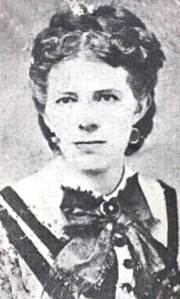
(Photo edited by Bob Rowen)

By late April 1863, Kate Stone, still too weary to explain how or why her family evacuated their Louisiana plantation, grappled with the harsh realities of her new existence. She marveled at fellow Southern refugees’ desperate attempts to retain their small comforts of life in the midst of war. She viewed slaves — freed, armed, and empowered — as a far greater threat than the Union troops that swarmed over the flooded region. Nothing disgusted her more than her family’s slaves taking control of Brokenburn, the family plantation.

April 21

Near Monroe, La.

We have reached this place of refuge three weeks after deserting our home. We have come by short but not easy stages. Wednesday we left Dr. Carson’s Anchorage place at sunrise, going in skiffs to Mr. Templeton’s only a few miles and hoping to catch Mr. Gaddis’ boat. The boat had gone on, and Mr. and Mrs. Templeton begged us to stay with them until Friday, when the boat would make another trip. We were only too glad to do so. There was absolutely nothing else we could do. The whole country is a sheet of water from the levees being down in every direction. There is not a skiff to be borrowed or bought at any price.

The whole family, consisting of Col. and Mrs. Templeton and their two half-grown daughters, Mary and Emma, were as kind as possible to us. They did all they could to help us on. We were sorry to tell the Carsons good-bye. They were so kind, but we hope to meet them very soon. Col. Templeton’s is a pleasant home. It is a long, low house with a large yard, shaded with forest trees, cool, green and homelike. It is comfortable within but with no pretensions. They set an excellent table and have a well-filled larder. Most pleasant of all to storm-tossed wanderers was a warm welcome. The only thing I did not like: My bedfellow was a “Yankee school marm.” She professed to be a true Southerner in feeling, but when she knelt to pray I could not help speculating whether her petitions were for our success or the success of our enemies.

Emma Templeton is a little beauty, a dimpled blonde. Mary is a tall, pale, dark-eyed girl. Both of them are idolized by their parents. Mr. Hornwasher is their music and drawing teacher. He did not join the army. He had enough of war in his own country, no doubt.

Friday we came down to Delhi in an immense dugout, a trip of six hours. All seven of us — Mamma, Aunt Laura, Sister, Beverly, I, and the two boys — with an assorted cargo of corn, bacon, hams, Negroes, their baggage, dogs and cats, two or three men, and our scant baggage. It was a dreadful trip. We were very crowded, the hot sun beaming on us as we were creeping down the bayou, hungry and tired. There was a very strong reflection from the water, and one of our poor Negroes was sick, groaning most of the way, and could not be made comfortable. We were glad enough to get out at the railroad bridge and walk the mile to reach Delhi.

The scene there beggars description: such crowds of Negroes of all ages and sizes, wagons, mules, horses, dogs, baggage, and furniture of every description, very little of it packed. It was just thrown in promiscuous heaps, pianos, tables, chairs, rosewood sofas, wardrobes, parlor sets, with pots, kettles, stoves, beds and bedding, bowls and pitchers, and everything of the kind just thrown pell-mell here and there, with soldiers, drunk and sober, combing over it all, shouting and laughing. While thronging everywhere were refugees — men, women, and children, everybody and everything — trying to get on the cars, all fleeing from the Yankees or worse still, the Negroes.

All have lost heavily, some with princely estates and hundreds of Negroes, escaping with ten or twenty of their hands and only the clothes they have on. Others brought out clothes and household effects but no Negroes, and still others sacrificed everything to run their Negroes to a place of safety.

Everybody was animated and excited. All had their own tales to tell of the Yankee insolence and oppression and their hairbreadth escapes. All were eager to tell their own stories of hardship and contrivance, and everybody sympathized with everybody else. All were willing to lend a helping hand and to give advice to anybody on any subject. Nearly everybody took his trials cheerfully, making a joke of them, and nearly all are bound for Texas. Nobody “crying over spilled milk.” Not a tear all day, though one knows there were heavy hearts bravely borne.

We got off from Delhi about sunset and reached Monroe after twelve. Nearly all remained on the cars until daylight … it was impossible to get accommodations in town. It was amusing to watch the people wake up in the morning, wash their faces, smooth at their hair, and go to eating breakfast — leisurely and with as much sangfroid as though in their breakfast rooms at home. Everyone traveling on the cars now carries his own provisions, as you can get nothing if you do not, and no room if you get off. …

We drove through Monroe, which seems to be a beautiful little town, but I was suffering with fever too much to like anything. The road up the Ouachita was lovely. It is a clear bright stream with forest-shaded banks. The hard dry road was appreciated after the mud and water of the last months. The profusion of catalpa trees, all in full bloom, lining the streets of Monroe was indescribably fair in the early morning light. The deep green leaves seemed heaped with pyramids of snow. …

We crossed the river at Trenton on a flat and came out two miles in the hills to this place, Mr. Deane’s, but we hope to be here only a few days. The woods around here are beautiful with quantities of wild flowers and fruits. I have been sick in bed until today.

Yesterday Mamma and Jimmy went back to Delhi to get a party of soldiers to go back home with Jimmy and bring out the Negroes left there. All our and Aunt Laura’s house servants, the most valuable we own, were left. … We hear that the Negroes are still on the place, but the furniture and all movables have been carried out to camp by the Yankees. The Negroes quarreled over the division of our clothes. … Webster, our most trusted servant, claims the plantation as his own and is renowned as the greatest villain in the country. If we succeed in getting the Negroes we may say farewell to the buildings as no doubt they will be burned, but that may happen at any time.

Kate Stone’s Civil War: A horrid flight

Kate Stone and her family are afraid and adrift, now Confederate refugees from Northern soldiers tightening their grip on Vicksburg. But there is hope for safety … in Texas.

KS14

From 2012 to 2015, Stillness of Heart will share interesting excerpts from the extraordinary diary of Kate Stone, who chronicled her Louisiana family’s turbulent experiences throughout the Civil War era.

Learn more about Stone’s amazing life in 1861, 1862, 1863, 1864, 1865 and beyond. Click on each year to read more about her experiences. You can read the entire journal online here.

(Photo edited by Bob Rowen)

Something has happened. Stone refers to a “horrid flight from home” but the memory is still too raw for her to discuss. All she can admit to is shame and shock over where her family has found themselves: afraid, adrift, refugees in their own country, and reliant on the kindness of friends and strangers for clothing, shelter, and food.

Note Stone’s mention of “skiffs.” The region’s levees were breached or damaged, and floodwaters were everywhere.

April 15, 1863

Anchorage, La.

Tomorrow at daybreak we leave here on our way to Monroe [La.]. This has been but a resting place on our journey to the unknown. At Mr. Templeton’s on Bayou Macon, we will take a flat for Delhi where we will take the cars for Monroe. We hope to reach there sometime during the night. Jimmy has secured two rooms for us at a Mr. Deane’s in the hills four miles from Monroe, across the Ouachita. These are Mamma’s plans if she can carry them through, but everything is uncertain from the getting of the flat to the rent of the rooms. No plans are fixed in these troublesome times. “First come, first served” is the motto. Engagements stand for nothing.

But we must certainly leave here, as we have trespassed on these kind friends for two weeks. Now, they are preparing to move on themselves, and we would surely be in the way. They have been exceedingly kind. No relatives could have been kinder, and Dr. Carson even wants to send us down to Delhi in one of his skiffs, a trip of two days. He is in all the hurry and bustle of moving not only his own family but several hundred Negroes, his own and those belonging to the large Bailey estate, for which he is executor. The more I see of Dr. Carson the more I am impressed with the beauty and nobility of his character. He has a tremendous undertaking before him, so many women and children to be moved and sheltered, and he feels deeply the responsibility.

Mamma will not take advantage of his kindness about the skiff. We will get down the Macon from Col. Templeton’s someway. Mrs. Carson has given Sister a complete suit of Katie’s clothes, as Sister, in our escape from home, got off with only the clothes she had on. She and Katie are the same size, and the clothes fit nicely. She has also given me a pair of nice gaiters such as it would be impossible to buy in the Confederacy. As I have only a pair of old half-worn shoes and can get no more, they are most acceptable. Mamma will get mourning for Sister in Monroe, if possible. We feel that black should be our only wear.

Mrs. Carson and the children will follow us to Monroe in a few days, and we have all planned to go out to Texas together, camping out. “Times change and men change with them” — trite but true. A year ago would we have thought of receiving, or of a friend offering, clothes as a present? Now we are as pleased to receive a half-worn garment from a friend as the veriest beggar that goes from door to door. How else shall we cover our nakedness? We have lost all and as yet can buy nothing. A year ago would we have thought of going even to the house of a friend to spend some time without an invitation? And tomorrow we are all going seven of us with bag and baggage (very little of that, though) to stay an indefinite time with a lady we have seen only once, and without any invitation, trusting only that, as she is a lady, she will be kind to us in our distress. We are going to Col. Templeton’s to wait there until we can get transportation down the Macon. …

Before leaving here, we wrote to our two boys and Uncle Bo. My heart was too full for a careless letter. I could only think of Brother Walter. But we know how anxious they are about us all, and writing is all we can do for them. So we wrote as cheerfully as we could. We would not add to their hardships. Brother Coley wrote that they were doing as hard service as was possible for men. And my heart aches for the delicate young fellow, trying his strength to the utmost. He seems almost as far from us as Brother Walter, and I have almost as little hope of seeing him again. Not a word from My Brother since he left.

I have had no heart to write of our horrid flight from home but will someday when anchored somewhere.

Recommended reading / viewing / listening

The value of apostrophes / Obama and Nixon / Cicada secrets / Boston Marathon bombing PTSD / A long-lost WWII Marine’s diary

IMG_2085

Most of these great items come from my Twitter or Facebook feeds. Follow me on Twitter, Tumblr, LinkedIn, and Facebook for more fascinating videos, photos, articles, essays, and criticism.

1. WW2 Marine’s diary: A brief look at a brief life
By Janet McConnaughey | Associated Press | May 27
“Before Cpl. Thomas ‘Cotton’ Jones was killed by a Japanese sniper in the Central Pacific in 1944, he wrote what he called his ‘last life request’ to anyone who might find his diary: Please give it to Laura Mae Davis, the girl he loved. Davis did get to read the diary — but not until nearly 70 years later. …”

2. How Timbuktu’s manuscripts were saved from jihadists
By Sudarsan Raghavan | The Washington Post | May 26
“The scholarly documents depicted Islam as a historically moderate and intellectual religion and were considered cultural treasures by Western institutions — reasons enough for the ultraconservative jihadists to destroy them.”

3. Why Efforts to Bring Extinct Species Back from the Dead Miss the Point
Scientific American | May 27
“A project to revive long-gone species is a sideshow to the real extinction crisis”

4. There Are Plenty of Reasons Why Parents May Read More With Their Daughters
By Nanette Fondas | The Atlantic | May 21
“Understanding a new study that finds girls get more reading time with their parents than boys.”

5. As Boston recovers from Marathon attack, emotional trauma may be just setting in
By Marissa Miley | GlobalPost | May 24
“PTSD and related stress disorders can take weeks or months to develop — and local organizations are prepared to help.”

6. Obama’s speechwriter: from intern to top wordsmith
By Darlene Superville | Associated Press | May 25
“Current and former White House colleagues, all Obama campaign veterans, praise [Cody] Keenan’s writing skills and work ethic and what they describe as his sense of fairness, modesty and willingness to help.”

7. The Man Who Knew Too Much
By Marie Brenner | Vanity Fair | May 1996
“Angrily, painfully, Jeffrey Wigand emerged from the sealed world of Big Tobacco to confront the nation’s third-largest cigarette company, Brown & Williamson. Hailed as a hero by anti-smoking forces and vilified by the tobacco industry, Wigand is at the center of an epic multibillion-dollar struggle that reaches from Capitol Hill to the hallowed journalistic halls of CBS’s 60 Minutes.”

8. The secrets of cicada survival
By John Matson | Salon | May 24
“A new brood is set to emerge this summer for the first time in 17 years. What’s taken them so long?”

9. Why Obama Is Not Nixon
By Elizabeth Drew | NYR Blog :: The New York Review of Books | May 18
“Compared to Watergate, on the basis of everything we know about what are the current ‘scandals’ amount to a piffle. Watergate was a Constitutional crisis.”

10. Are Apostrophes Necessary?
By Matthew J.X. Malady | Slate | May 23
“Not really, no.”

Kate Stone’s Civil War: Tears on my cheek

The dark veil of sadness silenced Stone’s diary for more than two weeks. On April 10, 1863, she regained the strength to record what happened.

KS13

From 2012 to 2015, Stillness of Heart will share interesting excerpts from the extraordinary diary of Kate Stone, who chronicled her Louisiana family’s turbulent experiences throughout the Civil War era.

Learn more about Stone’s amazing life in 1861, 1862, 1863, 1864, 1865 and beyond. Click on each year to read more about her experiences. You can read the entire journal online here.

(Photo edited by Bob Rowen)

The dark veil of sadness silenced Stone’s diary for more than two weeks. On April 10, 1863, she regained the strength to record what happened.

April 10

Anchorage, La.

Brother Walter died Feb. 15, 1863, at Cotton Gin, Miss. Again has God smitten us, and this last trouble is almost more than we can bear. I can hardly believe that our bright, merry little Brother Walter has been dead for seven weeks. And we cannot realize that he is gone forevermore. Even peace will not restore him to us all. It is hard, hard that he should have to go, so full of life and happiness and with such promise of a noble manhood. We were always so proud of our six stalwart boys, and again one is snatched away and we cannot think of them without tears. …

For seven long weeks my dear little brother has been sleeping in his lonely grave, far from all who loved him, and we knew it not until a few days ago.

Even as I write, I feel his tears on my cheek and see him as I saw him last when I bade him good-bye in Vicksburg, reining his horse on the summit of the hill and turning with flushed cheeks and tearful eyes to wave me a last farewell. And by the side of this picture is another that has haunted me ever since reading that fatal letter: I see him lying cold and still, dressed in black, in his plain black coffin. His slender hands are worn and brown with the toil of the last four months and are crossed on his quiet breast. His handsome clear-cut features are glaring cold and white, and the white lids are drawn down over the splendid grey eyes, so easy to fill with tears or brighten with laughter. The smile we knew so well is resting on his lips. Happy boy, free from the toil and turmoil of life, safe in the morning of life in a glorious immortality.

It breaks our hearts to think of him sick and dying among strangers, a Negro’s face the only familiar one near him. I can hear him asking so eagerly, “Has Brother Coley come?” They say he longed so to see him, and he had been dead two weeks before Brother Coley knew it.

All we know of his death is from a letter of Brother Coley’s written on the sixteenth of March, the day Van Dorn’s cavalry left Arkalona for the raid into Tennessee. Brother Walter had fever but he rode all day. The next morning he still suffered with fever, and he and two other soldiers of his company were left at the house of Mrs. Owens near Cotton Gin, a little town in north Mississippi. Pompey, Joe Carson’s boy, was left to wait on him. The next morning the other two soldiers were well enough to follow on, and they carried a note from Mrs. Owens telling Brother Coley that his brother was very sick and that he had better return. He did not get the note for two weeks.

Brother Walter had developed a severe case of pneumonia, and on the fifth evening, Feb. 15 at 3 o’clock, he passed away with no friend but Pompey near him. It wrings my heart to think of him suffering and alone. I hope he did not realize that Death was so near and all he loved so far away. Poor little fellow, he was not used to strangers. He has been surrounded by loved and familiar faces all his short life. He was eighteen in December and died in February. He was but a boy and could not stand the hardships of a soldier’s life. Four months of it killed him.

We have no likeness of him. He has left only a memory and a name.

Recommended reading / viewing / listening

Alec Baldwin’s new NBC show? / The Met gets a $1 billion gift / The quirks of the DSM 5 / Remembering Thatcher and Firestone / Renaissance art reborn

IMG_2073

Most of these great items come from my Twitter feed or Facebook news feed. Follow me on Twitter, Tumblr, and Facebook for more fascinating videos, articles, essays and criticism.

1. Alec Baldwin Said to Be in Talks to Join NBC’s Late-Night Lineup
By Bill Carter | Media Decoder :: The New York Times | April 9
“The most likely landing place for a show hosted by Mr. Baldwin would be in the latest of NBC’s entries, the show now called ‘Last Call.’ That half-hour interview program currently stars Carson Daly.”

2. The D.S.M and the Nature of Disease
By Gary Greenberg | Elements :: The New Yorker | April 9
“[T]here is little reason to think that a new D.S.M. will increase the prevalence of mental-disorder diagnoses, and less to think that we will ever really know how many people are sick.”

3. The Man Who Pierced the Sky
By William Langewiesche | Vanity Fair | May 2013
“When Felix Baumgartner set out to make a living by stunt jumping … the young Austrian had no idea where it would take him: to a pressurized capsule nearly 24 miles above New Mexico, last October 14, preparing to free-fall farther than any man in history, and at supersonic speed.”

4. The 21 Books from the 21st Century Every Man Should Read
GQ | April 8
“These are GQ‘s hands-down, most emphatically favorite works of fiction from the new millennium, plus all the books from the past thirteen years the authors want you to read”

5. The lady who changed the world
The Economist | April 8
“The essence of Thatcherism was to oppose the status quo and bet on freedom. … She thought nations could become great only if individuals were set free. Her struggles had a theme: the right of individuals to run their own lives, as free as possible from the micromanagement of the state.”

6. Beautiful Renaissance Paintings, All Done Up Real Handsome-Like as Photographs
By Rebecca J. Rosen | The Atlantic | April 4
“A project co-opts classic Italian art to challenge Europe’s xenophobia.”

7. Death of a Revolutionary
By Susan Faludi | The New Yorker | April 15
“When Shulamith Firestone’s body was found late last August … she had been dead for some days. … Such a solitary demise would have been unimaginable to anyone who knew Firestone in the late nineteen-sixties, when she was at the epicenter of the radical-feminist movement …”

8. Prize-Writing
By Amanda Foreman | The New York Times Book Review | April 5
“Literary prizes have become so numerous and pervasive that just like the invention of the computer, it makes you wonder how writers ever survived without them.”

9. The Invincible Mrs. Thatcher
By Charles Moore | Vanity Fair | December 2011
“Twenty years after Thatcher’s retirement, her biographer Charles Moore re-assesses the most powerful British prime minister since Churchill, one who forged a legacy that will long survive her.”

10. Cubism, Which Changed Art, Now Changes the Met
By Carol Vogel | The New York Times | April 9
“In one of the most significant gifts in the history of the Metropolitan Museum of Art, the philanthropist and cosmetics tycoon Leonard A. Lauder has promised the institution his collection of 78 Cubist paintings, drawings and sculptures.”

Kate Stone’s Civil War: The pistol pointed at my head

Relatives and friends dead. Home defense forces utterly impotent. Union soldiers taking what they wanted whenever they wanted it. Union gunboats defiling the Mississippi River. Slaves more a threat than ever before. Her mother came to a single solution.

KS12

From 2012 to 2015, Stillness of Heart will share interesting excerpts from the extraordinary diary of Kate Stone, who chronicled her Louisiana family’s turbulent experiences throughout the Civil War era.

Learn more about Stone’s amazing life in 1861, 1862, 1863, 1864, 1865 and beyond. Click on each year to read more about her experiences. You can read the entire journal online here.

(Photo edited by Bob Rowen)

“The life we are leading now,” Stone wrote dejectedly, “is a miserable, frightened one, living in constant dread of great danger, not knowing what form it may take, and utterly helpless to protect ourselves. …”

Stone’s mother agreed completely. Her cotton crop was destroyed. Damaged levees flooded the region. Life’s daily necessities were impossibly overpriced. New Orleans was gone, and Vicksburg would not hold out forever. Relatives and friends dead. Home defense forces utterly impotent. Union soldiers taking what they wanted whenever they wanted it. Union gunboats defiling the Mississippi River. Slaves more a threat than ever before. Her mother came to a single solution.

At long last, she decided, it was time to lead her family west.

But one more tragedy awaited them, one that would silence Stone’s diary for more than two weeks.

March 22

We have had an exciting time since the last date. Two Yankees came out Friday guided by John Graves and carried off my horse Wonka in spite of all we could do.

Wonka was racing around the yard, glad to be at liberty after being tied out so long, when two most villainous-looking Yankees rode up to the gallery where we three ladies and the two children were standing. They had pistols in their hands and proposed a “swap” but we all refused of course and begged them not to take the horse. Mamma even offered to pay the price for him, but the greatest villain of the two refused bluntly and worked himself into a towering rage while the other, the smooth villain, galloped off to catch the horse. I called to one of the Negroes to open the gate, thinking it would give Wonka a chance to escape, but as they seemed afraid I ran to do it myself. When the wretch called to me impudently to stop, I did not notice him but threw the gate open. He then dashed up with the pistol pointed at my head … and demanded in the most insolent tone how I dared to open a gate when he ordered it shut. I looked at him and ran on to open the other gate. Just then Mamma called to me that they had caught the horse, and as I turned to go in the house the man cursed and said, “I had just as soon kill you as a grasshopper.” I was not frightened but I was furiously angry and would have been glad to have seen him lying dead. And I never saw Mamma so angry. Aunt Laura took it more calmly, and the little girls were frightened. Johnny was sick with fever. In five minutes the man had changed saddles and was riding my prancing, beautiful pet gaily off, leaving in his place a pack of animated bones, covered with sorrel skin. …

I cried the rest of the day and half of the night. We had had the horse tied out in the cane for days, and not ten minutes before the men came, Webster brought him up and said that he would die if he was kept tied up where the mosquitoes could get to him any longer. So I told Webster to turn him in the yard and went out to see, and I never saw him look finer. At that moment the Negroes called from the kitchen that the Yankees were coming, and in a minute they were dashing up to the gallery and in ten minutes more were racing away on my horse.

I think I will never see lilac blooms again without recalling this sad incident. We had all just come in from the garden and had great sprays of the purple flowers in our hands and stuck in the children’s hats, and when the Yankees rode away and the excitement subsided we were still holding the tossing, fragrant plumes. …

The Negroes all behaved very well while the men were here. Most of them hid, and the others did not show the slightest disposition to go with them, though the Yankees asked them to go. They made William help catch the horse by cursing and holding a pistol to his head, and then invited him to go along with them to camp. He refused most positively, and they rode off without doing any further damage. These two returned by way of Mrs. Hardison’s, stopping to have a long talk with her Negroes, and took one of her mules, crossing just below the house. The effect of their talk with Mr. Hardison’s Negroes came out today when six of the men with their children and clothes walked off in broad daylight after a terrible row, using the most abusive language to Mrs. Hardison. Mr. Hardison expected to get home today and move them all to Monroe, but he has waited too long. The other Negroes declare they are free and will leave as soon as they get ready. Mrs. Hardison sent for Johnny and Mr. McPherson early this morning. Johnny went at once but they could do nothing. None of them have even a gun. A Negro has stolen Mr. Hardison’s. But guns are of no use to people in our dilemma. To use one would only be to invite complete destruction from the soldiers.

The river is rising rapidly, and the levee at Lake Providence has been cut. It looks like we are going to be overflowed, a misfortune that we will welcome if it drives the Yankees away. No effort is made to hold the levees; in fact, they spoke of cutting the one at Pecan Grove before the Yankees came up, and it is a pity they did not. A few feet more of water would be a protection as the Yankees would not be able to come out in boats.

This country is in a deplorable state. The outrages of the Yankees and Negroes are enough to frighten one to death. The sword of Damocles in a hundred forms is suspended over us, and there is no escape. The water hems us in. The Negroes on Mrs. Stevens’, Mr. Conley’s, Mr. Catlin’s, and Mr. Evans’ places ran off to camp and returned with squads of soldiers and wagons and moved off every portable thing furniture, provisions, etc., etc. A great many of the Negroes camped at Lake Providence have been armed by the officers, and they are a dreadful menace to the few remaining citizens. The country seems possessed by demons, black and white.

March 24

Storms and rain for two days. There has been almost constant rain since Christmas. The oldest inhabitants say they never saw such persistent rains. It might be the rainy season of the tropics. Some think the cannonading at Vicksburg brings on the rains. It is seldom we hear the cannon that it is not succeeded by showers or a downpour, and often it is difficult to distinguish between the burst of thunder and the roar of the guns.

The firing has been kept up, now fast then slow, for several days until today there is quiet. The sound comes over the water with such distinctness as to rattle the windows, and when the river is low we scarcely hear the guns.

Johnny brought us news Sunday (Sunday does not seem like Sunday nowadays. It’s always the time of the greatest excitement). He said that Mrs. Graves was going Monday to see the Yankee general and would try to get my horse returned. That we know is a hopeless job, but we wrote asking her to report the behavior of the two men, giving the names they gave us and telling of their frequent raids out this way. Mrs. Hardison also wrote asking her to represent to the commanding general that there are only women and children in these homes, and, if he will allow marauding parties to continue to harass us, at least to send an officer in charge. Mrs. Graves says that the pickets are very strict now and that it is hard to get through the lines. The Graves have lost twenty of their Negroes. The letters of protection do them no good. Mrs. Hardison’s servants have behaved worse than anyone’s. They have done everything but strike her and have used very abusive language. The leader is a boy or man, Charles, who ran to the Yankees among the first and soon returned to stay at home. He said he had enough of Yankees.

The life we are leading now is a miserable, frightened one, living in constant dread of great danger, not knowing what form it may take, and utterly helpless to protect ourselves. It is a painful present and a dark future with the wearing anxiety and suspense about our loved ones. We long for news from the outside world, and yet we shudder to think what evil tidings it may bring us. Could we hear that all our soldiers are well, the troubles here at home would seem but light ones.

We beguile the time sewing and reading well-thumbed books, starting at every sound, and in the evening play backgammon or chess. Aunt Laura has just learned backgammon and enjoys playing a game. Little Sister has third-day chills and looks thin and pale. It seems impossible to break them without quinine, and we can get none. Johnny is at last almost well. Beverly’s hair has been cut short and she looks like a pretty little boy and is delighted with her appearance.

So my and My Brother’s old friend, Joe Wicks, is dead. And he died, as a Southern boy should, leading his men in action. He was adjutant of a Tennessee regiment and was killed in a skirmish near Oxford months ago. What a host of pleasant memories his name awakens of the happy Clinton days when I was a little girl of twelve off at school for the first time, with My Brother as protector and comforter, and Joe my first little lover. What a gay, guileless time we all had together, boarding there with his sister, Mrs. Rhodes. …

Kate Stone’s Civil War: It made us tremble

Stone and her family and neighbors felt virtually powerless as Union raiding parties scoured the countryside and slaves quietly slipped away

KS11

From 2012 to 2015, Stillness of Heart will share interesting excerpts from the extraordinary diary of Kate Stone, who chronicled her Louisiana family’s turbulent experiences throughout the Civil War era.

Learn more about Stone’s amazing life in 1861, 1862, 1863, 1864, 1865 and beyond. Click on each year to read more about her experiences. You can read the entire journal online here.

(Photo edited by Bob Rowen)

Stone offers a vivid account of how the presence of Union forces nearby disrupted daily life, frightened Southern civilians, and inspired the slave population. Sometimes the slaves guided Federal soldiers back to their plantations.

No one seemed sure what would happen to Vicksburg. Nevertheless, attack or no attack, civilians like Stone and her family and neighbors felt virtually powerless as Union raiding parties scoured the countryside and slaves quietly slipped away to find freedom among Northern troops. As family acquaintances applied to the Union authorities for letters of protection, which supposedly protected them from raiders, Stone seemed proud her mother remained among the defiant holdouts not yet “forced to ask a favor of a Yankee.”

Note how Stone’s family found palatable substitutes for coffee.

March 11

When My Brother was at home, he heard a few days before he left that the Yankees had discovered quite a lot of cotton bales hidden by the planters on a ridge in the swamp near Mr. Valentine’s and of course were coming at once to get it. Cotton is so valuable now. So he rode over that dark night all alone with a pocketful of matches, and after fumbling around through the swamp for some time found it. With a good deal of trouble, he set it afire, staying by it until daybreak when he left for fear some of the Negroes would see him and tell the Yankees, who would come and burn us out. He did see two or three Negroes looking at him as he galloped through Mr. Valentine’s place. That morning a long train of wagons came pulling through the mud. All the Yankee teamsters were delighted at the idea of getting Midi a pile of cotton hidden by the Rebs, when, lo and behold, there was nothing but a burning, smouldering pile. The lovely cotton was all gone. We hear they were furious and threatened to burn every house within five miles and hang the men who did it. But they did not know the men, and by the time suspicion pointed at My Brother he was off and away. The affair has blown over, but it made us tremble in our shoes for several days for fear they would come and burn us out.

March 12

So many are getting letters of protection from the general at the Bend. We cannot hear his name. Aunt Laura, formerly so bitter against the Yankees, is now urging Mamma to go in to Omega and get letters protecting us.

The enemy have now been three months before Vicksburg doing nothing against the city, but scourging this part of the country. The opinion now is that they will not attack the place at all. The deserters say the soldiers will not fight at Vicksburg. They say that the place is impregnable, that they will not fight to meet certain defeat, and that there is great dissatisfaction both among the officers and men. They will not pay off the men for fear they will desert. For a time there were frequent desertions. I must think there will be an attempt to storm the city. I cannot think they will make all this preparation and gather this great army without at last making an attempt to capture it.

When the fortifications were commenced, no one dreamed that Vicksburg would hold out this long. If the Yankees had come right on after the fall of New Orleans, Vicksburg would have fallen with hardly a struggle. It was strange that they did not push on at once. Now it seems almost a second Gibraltar.

We hear that Gen. [Braxton] Bragg has resigned on account of the dissatisfaction of most of his officers with his retreat from Murfreesboro. Gen. Joseph Johnston is now in command. It seems a pity for an old soldier like Bragg to have no force under him.

March 15

For the last two days we have been in a quiver of anxiety looking for the Yankees every minute, sitting on the front gallery with our eyes strained in the direction they will come, going to bed late and getting up early so they will not find us asleep. Today as it is raining, they are apt to remain in camp, and so we have a little relief. Friday they were at Mr. Graves’, Mr. McPherson’s, and Mr. Hardison’s. Mr. Graves has a protection letter, and we did not hear how they fared. At Mr. McPherson’s they took two horses and all the chickens, eggs, and butter in sight. They ordered dinner cooked and sat in the dining room and ate it. Only two men came to Mr. Hardison’s, but they were ruffians, tough and impudent. They searched through everything for money or jewelry I suppose but found none and went off cursing and threatening another visit. Sister and I happened to go up on a little call soon after the men left and found everybody as mad as could be and feeling so helpless. Caroline, her favorite servant, and one of the Negro men went off the night before.

Yesterday afternoon Mr. Valentine was here, and we were all conversing quietly enough when the frantic barking of the dogs called us to the front gallery just in time to see a party of Yankees and three Negroes passing on the gin ridge. They turned and took a deliberate survey of the place and then went on. They were loaded with chickens, eggs, and such plunder and were guided by one of Mr. Valentine’s Negroes, who had run off some time ago, and had two more to carry the stuff they had stolen.

So far our Negroes 16 have shown no disposition to leave but may at any minute. They were hidden out for a day or so, but of course that could not be kept up with a Yankee camp as near as Winn Forest. The fields as far as we can see are sheets of green and gold, the weeds are growing unchecked and the yellow-top makes a brave show. …

March 17

Gen. Bragg is said to be in command at Vicksburg. His fame must now fall or stand with the city. Lincoln, it is reported, has been appointed a kind of military dictator with unlimited command of men and money. The Conscript Act has been passed and will be strictly enforced. That, with the abolishment of all state lines (if that be true), must make the war unpopular with the masses of the people. But the acts of Congress show that the rulers, at least, are not tired of the strife, and peace, blessed peace, seems farther off than ever. …

The plums and sassafras are in full bloom and the whole yard is fragrant. We all drank sassafras tea for awhile but soon got tired of it, pretty and pink as it is. Okra coffee is now the favorite drink. Mamma had several bushels of the seed saved. After experimenting with parched potatoes, parched pindars, burned meal, roasted acorns, all our coffee drinkers decided on okra seed as the best substitute. We have grown quite expert making shoes for ourselves. We cut up an old pair of gaiters and slippers for a pattern. We make the uppers of broadcloth, velvet, or any strong black goods we can get, and the shoemaker for the Negroes puts on the soles. They are not to say elegant looking but we are delighted to be able to make them, and they are far better than bare feet.

March 20

We have wakened three mornings to the booming of cannon and have gone to sleep to the same music, but we have not heard what they are doing. Sometimes we hear the beating of drums, supposedly at Omega. We are too near “the pomp and circumstance of glorious war” to find it pleasant. No Yankees in this section since Saturday. Perhaps the troops have been concentrated at Vicksburg. The Yankees who passed through the place discussed stopping to raid the house, but the captain with them said, as there were only ladies and children here, they would let us alone. We did not know a Yankee could have so much chivalry. Hope it will develop in the other raiding bands.

The two Mrs. Richardsons and Mrs. Spain went out to camp to get letters of protection. The general gave a letter to Mrs. Spain, as she was a widow, but refused letters to the others unless their husbands or brothers would come out and take the oath. Mr. A. Richardson started the next day to swear allegiance but was dissuaded by a friend. Miss W. Richardson went to the boat with her mother and came back boasting that she had caught a Yankee beau. Imagine any girl falling so low. No other girl in the country would acknowledge having even a Yankee acquaintance. Mrs. Graves’ papers did not prove a perfect safeguard as a squad took all their good horses.

Mamma, Mr. Hardison, Mr. Valentine, and Mr. Jeffries seem to be the only people left in the country who have not applied for protection. We hope we shall never be so pressed as to be forced to ask a favor of a Yankee.

Kate Stone’s Civil War: Hoodoo woman

Perhaps Stone, fighting what she saw as her part of the war, decided that she would never surrender her ground to the dark, silent, sinister enemy. But it took another enemy, one she’d feared longer than any Yankee, to change her mind.

KS10

From 2012 to 2015, Stillness of Heart will share interesting excerpts from the extraordinary diary of Kate Stone, who chronicled her Louisiana family’s turbulent experiences throughout the Civil War era.

Learn more about Stone’s amazing life in 1861, 1862, 1863, 1864, 1865 and beyond. Click on each year to read more about her experiences. You can read the entire journal online here.

(Photo edited by Bob Rowen)

On March 2, Kate Stone opened her journal and wrote in it for the first time since late January. She was disoriented. She didn’t know exactly what day of the week it was. She guessed it was Saturday. When Federal troops flooded the neighborhood in late January, Stone’s mother prepared to evacuate the family. But she changed her mind when she learned the roads west were already impossibly clogged with frightened refugees. When Stone learned they were not leaving Brokenburn after all, she was secretly relieved.

Whatever misery she endured, whatever property she lost, whatever horrors she witnessed, Stone seemed determined to stand her ground. Perhaps Brokenburn was her own line in the sand. Perhaps she had already seen too many retreats, too many defeats, too many surrenders. Perhaps Stone, fighting what she saw as her part of the war, decided that she would never surrender her ground to the dark, silent, sinister enemy. But it took another enemy, one she’d feared longer than any Yankee, to change her mind.

March 2

Saturday [Monday] I think. We have not had an almanac for more than a year, and so I can only guess at the time until someone better posted comes along. The Yankees have not visited us yet, and so after more than a month’s concealment I take my book out to write again.

The soldiers have been all around us but not on the place. At first we were frightened, expecting them all the time and preparing to start for the hills beyond the Macon, the Mecca for most of the refugeeing planters. Mamma had all the carpets taken up and the valuable clothes and everything but the furniture sent away or ready to send when My Brother came back from Delhi, where he left the Negroes until they could be shipped on the train. Such a crowd was there [that] it will be several days before they can get off.

He gave such a disheartening account of the roads — they are impassable for anything but a six-mule team — that he and Mamma concluded it was impossible to move at this time, and we would await further developments here. Mamma has had the house put in order, and we are again comfortable. I am so glad for I dreaded going into the back country, where we would never see or hear anything among total strangers, and to leave our pleasant home most probably to be destroyed by the Yankees, and we may be able to protect it if we are here.

Brother has been gone for more than a month. He has taken the Negro men to the salt works away beyond Monroe and put them to work. Jimmy returned from there two weeks ago, and Mamma sent out the overseer, Mr. Ellsworth. We have been looking for My Brother for ten days.

Mamma thought of sending Jimmy back to Virginia with My Brother to go to school at Lexington, but now that the conscription is being so rigidly enforced she thinks both Mr. Storey and Mr. Ellison may both be enrolled. She will have no one but Jimmy to depend on, and so she will keep him at home. I am begging her to send Johnny. One of the worst features of the war is that it deprives all the boys of an education. …

Jane, Aunt Laura’s cook, and Aunt Lucy had a terrible row Tuesday night. Jane cut a great gash in Lucy’s face with a blow from a chair and hurt her severely. Mamma had Jane called up to interview her on the subject, and she came with a big carving knife in her hand and fire in her eyes. She scared me. She is nearly six feet tall and powerful in proportion, as black as night and with a fearful temper. … Aunt Laura had a long, lingering illness lasting several months, and she always thought Jane kept her poisoned. Jane showed a very surly, aggressive temper while Mamma was talking to her, and so Mamma did not say much. Jane went to her room and that night took her two children, a girl and a boy about half-grown, and in company with one of Mr. Hardison’s men started for the camp at DeSoto. I think we are all glad she has gone. We felt her a constant menace. She must have had a bad trip. They were out in that blinding rain Wednesday and Wednesday night with only two blankets as protection and not much to eat. Mr. Graves saw them yesterday sitting on the levee at Mr. Utz’s in company with fifty others, waiting to be ferried across at the break there in a dugout. All the Negroes are running away now, and there are numbers of them. They have to stop at the break and wait to be ferried over by an old Negro in a dugout, and so there are crowds waiting all the time. Col. Graves went down there yesterday to try to reclaim three of his who had escaped. Three had just been drowned, trying to get over, and he thought from the description they were his.

Poor creatures, I am sorry for them. How horrible it all is. We had a scene of terror the night Jane left: The quarreling and screaming, the blood streaming down Lucy’s face, Jane’s fiery looks and speeches, Johnny and Uncle Bob’s pursuit of her as she rushed away, the discovery that the children were gone, and then just as we had all quieted down, the cry of fire. The loom room had caught from some hot ashes, but we at once thought Jane was wreaking vengeance on us all by trying to burn us out. We would not have been surprised to have her slip up and stick any of us in the back. Johnny was our only protector as Jimmy was away. I went around bravely in appearance with a five-shooter in my hand. Found out afterwards it was only dangerous to look at as it was not loaded.

Mamma spoke of sending next day for Jane, but Aunt Laura implored her not to. She was only too thankful to get rid of her. She had been a terror to her for years. I think everybody on the place was thankful to get rid of her. The Negroes dreaded her as much as the white folks. They thought her a hoodoo woman.

The place looks deserted now with its empty cabins and neglected fields, and the scene is the same wherever we go. … It has been a month of warm weather and constant rain and the roads are impassable. We have not been out of the house for three weeks. Already the fruit trees are a faint green and the grass is springing in the yard. Spring is early this year. Over the woods in front of the house hangs a faint green mist with the red of the maples shining through, and this morning Sister brought in a bunch of pale wild violets, sweet as a promise that winter is gone. The hardy garden violets and the quaint little heartsease have been perfuming the winter wind for weeks, and the garden is gay with jonquils and narcissus.

March 3

Last night it was reported that the Yankees were at Dr. Devine’s, and we looked for them here today. My Brother and Mr. Hardison, who is conscript agent, went out early this morning to stay in the woods until nightfall, as they do not want to be captured and ornament a Yankee prison. …

Johnny who has been out scouting reports the Yankees at Rescue, the adjoining place, yesterday hunting horses and Negroes, and today they are scattered all through the lower neighborhood on the same quest. This band is said to be Kansas Jayhawkers, the very offscourings of the Northern Army. They say they will take by force all Negroes, whether they wish to go or not. A great number of Negroes have gone to the Yankees from this section. Mr. Watson and his father-in-law, Mr. Scott … got up one morning and found every Negro gone, about seventy-five, only three little girls left. The ladies actually had to get up and get breakfast. They said it was funny to see their first attempt at milking. Mr. Matt Johnson has lost every Negro off one place and a number from the other places. Keene Richards has lost 160 from Transylvania and fifty of them are reported dead. The Negroes at work on the canal have what they call black measles, and it is very fatal to them.

March 4

When we heard from Brother Coley and Dr. Buckner nearly a month ago — they had furloughs and had reached Vicksburg on their way home when they heard that Gen. Van Dorn was to make a great cavalry raid into Kentucky. They at once turned back and rejoined their commands. Brother Coley wrote that he could not possibly miss such a chance for a good fight. Well, they could not come here with the slightest safety, now that there are wandering parties of soldiers all through the swamp. The Yankees are very daring, swimming the bayous, plunging through the mud of the unbroken swamp, often only two or three of them together. One company of good men could put a stop to all of this, but all our men are across the Macon with no desire to come this way. We hear they are panic-stricken at the name of a Yankee and run the other way. It is well that the honor of Louisiana does not depend on the troops on this side of the river.

We get no Southern papers but occasionally a Northern paper from the people who are still on the river. They are all said to have taken the oath and to have letters of protection from the general commanding. Dr. Taylor, Mr. Harris, Mr. Rucker, and Mrs. Nutt are some of the suspected parties. Gen. Grant is said to have been very rude to Mrs. Nutt when she applied for protection. What else could she have expected from a Yankee general? There are some troops still at Lake Providence. We cannot hear whether they are still working on their grand canal or not. We suppose they will harass this section until the river falls and they again attack Vicksburg.

March 5

Mr. Valentine came over last evening in very low spirits indeed. He says his Negroes will not even pretend to work and are very impudent, and he thinks they will all go off in a body the next time the Yankees come on his place. He brought the welcome news of the departure of that body of Jayhawkers that was on Mrs. Evans’ place. They have completely ruined Mr. Catlin’s, Mrs. Evans’, and Mrs. Stevens’ places, taking all the Negroes and all kinds of stock. The Negro women marched off in their mistresses’ dresses.

Jimmy has been for some time with the Negroes at the salt works. We are in a helpless situation, three ladies and two little girls and not a white man or even a gun on the place, not even a boy until Johnny gets back. And the scouts may take him. We can find rest only in the thought that we are in God’s hands.

March 8

There are only twenty Negroes left on Mrs. Tibbetts’ five places, and Dr. Tibbetts has only one left, a superannuated woman helpless to do anything. The ladies are cooking, washing, etc., while Hiram Tibbetts is wood chopper.

The Yankees have five thousand Negroes camped at Lake Providence, all they have taken from the places up the river. They had an army of 30,000 men camped there, but they find the canal through to the Macon not feasible. They have moved up to Ashton to try a new canal there, if they can close the break at that point.

March 9

Aunt Lucy’s little girl Linda died this morning from the effect of the measles. It is the first child she ever lost and she is much distressed. Little Dora is also very ill from the same cause. …

We have heard a good many guns today and a boat whistle at Omega. Must be landing troops there. There must be a large force at the Bend now, as they have been moving men up for some days. Young’s Point and DeSoto are said to be under water, and they are forced to leave. Mr. Joe Noland’s is to be headquarters we hear. We hear that Mr. Hans Harris is having trouble with the Yankees, notwithstanding his protection papers, and that it is not necessary to take the oath to be protected, and so I retract what I said about the traitors on the river. Am glad it was false except Dr. Taylor of Willow Bayou. We truly believe him to be false to the South. His wife has gone North with her children. She is from there and must have contaminated her husband. Mr. Montague’s last two sons, in company with two friends, have gone over to the Yankees. Now Mr. Montague has all five of his sons in the North. It is strange that he could raise five sons in the South to love the North better than their own native land. Let us hope he is satisfied with them, as no one else is. All have a hearty contempt for them. What a disgrace to belong to that family.

The fruit trees are in full bloom now and our young orchard makes quite a show. … Quite a variety of vegetables are up and growing nicely.

Kate Stone’s Civil War: Preparing to run

Stone’s new year of happiness ended abruptly, and as Union troops closed in on Brokenburn, her diary fell silent. She did not write again until March 1863.

KS9

From 2012 to 2015, Stillness of Heart will share interesting excerpts from the extraordinary diary of Kate Stone, who chronicled her Louisiana family’s turbulent experiences throughout the Civil War era.

Learn more about Stone’s amazing life in 1861, 1862, 1863, 1864, 1865 and beyond. Click on each year to read more about her experiences. You can read the entire journal online here.

(Photo edited by Bob Rowen)

Stone’s new year of happiness — her brother home to recover from minor wounds, a stream of good news from the battlefields — ended abruptly, and as Union troops closed in on Brokenburn, her diary fell silent.

She did not write again until March 1863.

Jan. 1, 1863

My dear Brother came home this morning and in perfect health. How overjoyed we are to have him with us, but oh the disappointment that he is still only a captain. It seems he and the other gentlemen mentioned at the same time were recommended by the officers of their regiment for the field offices and a petition sent up for their promotion, but by the rules of war promotion could not go that way. The senior officers must go up first, and so Tom Manlove is lieutenant colonel and the senior captain, major. Tom Manlove headed a petition signed by all the officers of the regiment asking that My Brother be made colonel, but My Brother would not let it be sent up. I am awfully sorry. I fear now he will never be promoted. He has no ambition and a low opinion of his capabilities. It is foolish for me to feel so bad about it when I should be perfectly happy that he has escaped the myriad dangers and is with us again. He was mentioned for gallant conduct in Gen. Featherston’s report of the battles before Richmond. He was highly complimented on the field of battle at Sharpsburg by Gen. D. H. Hill and again in his official report.

Dear fellow, if anybody deserves promotion he does. He may get the colonelcy of his old batallion, now the 48th Miss. Regt. He was slightly wounded in the foot at the Battle of Fredericksburg, and that is why he was allowed to come home. He is looking well and cheerful. A piece of shell made a slight scar on his face but his whiskers conceal it. To me his coming was no surprise. I have been looking for him for two months, but the others were not so confident. He came by way of Mrs. Amis, and she sent him on by horseback.

Uncle Bo, he reports, is in the finest health and spirits, and our other soldiers are still at Grenada and well.

He brings encouraging news of successes. We have repulsed the enemy twice between the Yazoo and Vicksburg. Gen. Van Dorn has retaken Holly Springs and is threatening Memphis. Our victory at Fredericksburg was complete but barren of result, only it has depressed and surprised the North. Altogether we are getting the better of our foes.

Most of the family are troubled with inflamed eyes and mine are paining me so, from long writing I suppose. This has truly been a Happy New Year to us all, white and black.

Jan. 22

Sunday. After three weeks of silence let me think of what has happened. The Yankees, after an absence of more than a week employed in taking Arkansas Post, have returned in large force, have invested Vicksburg, and are cutting another ditch across the point above DeSoto, or it may be deepening the first ditch. My Brother, Mr. Hardison, Dr. Waddell, and several other Louisiana gentlemen were in Vicksburg when the boats came in sight, and they had great trouble regaining their horses, just missing several encounters with scouting bands.

My Brother started off this morning with the best and strongest of the Negroes to look for a place west of the Ouachita. Only the old and sickly with the house servants are left here. He is sure we will all be forced to leave this place as the enemy intend going into camp at the Bend, and in the event of their defeat at Vicksburg which is certain, will lay this whole country waste, sending out bands of Negroes and soldiers to burn and destroy. My Brother thinks we had better leave at once, and we will commence packing tomorrow. The Negroes did so hate to go and so do we.

We have retaken Galveston under Gen. Magruder, and the Alabama and Florida are spreading death and destruction on the seas. We have fought another … battle at Murfreesboro, and the enemy have evacuated Island No. 10. Three days fighting at Vicksburg, and the enemy badly whipped.

Heard from the boys by Joe’s servant, who is home on a visit. All well. Their regiment is now under Van Dorn.

Jan. 26

Preparing to run from the Yankees, I commit my book to the bottom of a packing box with only a slight chance of seeing it again.

Kate Stone’s Civil War: She was heartbroken

Stone’s 1862 ended amid cannon fire, her brother Johnny taken prisoner, and some terrible news that turned out to be not so terrible.

KS8

From 2012 to 2015, Stillness of Heart will share interesting excerpts from the extraordinary diary of Kate Stone, who chronicled her Louisiana family’s turbulent experiences throughout the Civil War era.

Learn more about Stone’s amazing life in 1861, 1862, 1863, 1864, 1865 and beyond. Click on each year to read more about her experiences. You can read the entire journal online here.

(Photo edited by Bob Rowen)

Stone offered throughout December 1862 a fascinating, detailed account of indoor life at Brokenburn, filled with sewing assignments, wedding preparations, boring visitors, and concern for the men at the front. Note her frustration over the loss of contact with her now-married friend, also named Kate. Some sentiments are timeless.

Stone’s 1862 ended amid cannon fire, her brother Johnny taken prisoner, and some terrible news that turned out to be not so terrible.

Dec. 3

Have been busy for two days writing letters and notes. A letter of six pages to Uncle Bo giving general home news. … One to Mrs. Johnstone reproaching her for not letting Cousin Jenny send me one of her dresses to make into an over-shirt for Mr. Valentine. Also, notes and letters to the four quarters of the globe. All are to be sent by Jessy, who runs the blockade to Vicksburg tomorrow to get the new carriage springs and a $40 gallon of brandy, an awful price, but Jimmy must have it. He is improving slowly, slowly. He is not yet able to sit up and sleeps no better. He has not slept now for forty-eight hours and is very restless. …

Cousin Jenny gets married tomorrow in the church at Canton to a Dr. Saunders of that place. She wrote to Aunt Laura saying she wished to be married at her home, but when the letter came Aunt Laura had broken up housekeeping and was here with us. A day or two after the letter, Cousin Jenny and Mrs. Johnstone came driving up in Capt. Johnstone’s ambulance. It was when Jimmy was at his worst, and they only stayed all night. Mamma begged Cousin Jenny to come here to be married, and Aunt Laura wished her to do it. But she decided to stay in Canton. She wanted me to be bridesmaid, but under the circumstances it was impossible. I could not leave Jimmy, and there are too many Yankees between here and Canton to make it safe to leave home.

Neither her father nor sister will be present. They are both away. It is decidedly Cousin Jenny’s own wedding. She has selected her trousseau and made all arrangements for herself. It seems strange in her since she has always been of such a timid, yielding nature. We have all taken up a prejudice against Dr. Saunders and think she is doing a bad thing for herself. Our judgment, made without seeing the man, is based on his weak, sentimental-looking picture and the lackadaisical letter he wrote Aunt Laura asking her consent to the marriage. Poor dear girl. May she be happier than we all think she will be.

Mr. Valentine was over a few days ago. We are friends again, and I have knitted gloves for him and am embroidering a tobacco bag at Mamma’s earnest solicitation. He does not chew or smoke, and so he can only use it as a trophy. He aroused Mamma’s sympathy by complaining of the way the girls have all treated him. They have not given him a thing. He begged me so hard to make something for him that I relented and am now on a high hunt for something suitable to make a fancy over-shirt. Cousin Jenny promised me a dress, but Mrs. Johnstone so represented to her that Mr. Valentine was very wealthy and could get what he needed that Cousin Jenny kept the dress. And I have not a thing that will do.

We have cut up every silk and wool thing we have for the different boys. I wrote a note of reproach to Mrs. Johnstone and begged her to [sacrifice] one of her dresses for a poor shirtless Confederate. She promises to do the best she can and give me the first dress she wears out. That will not be until the end of the war. No one’s dresses are ever considered worn out these days as long as they can hold together. …

Dec. 12

Tuesday Sister and I went to Mrs. Hardison’s to see Julia and Carrie Lowry. They were hard at work on soldier’s clothes. They have twenty-four jackets to make, a trying job. I came home feeling ashamed of myself for having done so little and begged Mamma to send to the camp for some of the clothes to make. Mamma refused, saying that we have enough to do already, and really we have. Sister has been sick for several days with severe sore throat, and Jimmy improves hardly at all. He is still in bed and tonight has fever.

We thought maybe Mrs. Curry would do some sewing for the soldiers, and so I went over to see her. Lou and Mary would each undertake a suit and Miss Jefferies, who was there, would also make one, and we thought the Miss Richardsons maybe would do some sewing. I came back well pleased and sent Webster to camp for seven suits. He soon came back with only two suits and a jacket. All the other sewing had been given out so that was a job well off hand.

Mamma and I are busy making my grey silk. Mamma bought it in Vicksburg the last time she was down, and it cost a pretty penny.

Mamma has turned off Mr. Blakely. He would not do at all, and she has engaged a Mr. Ellison who comes tomorrow. Hope he will prove a good overseer. One is hard to get. Mamma has rented a place on Joe’s Bayou above overflow from a Mr. Storey. Can send the Negroes there if the Yankees come again. …

Dec. 16

No news from My Brother for weeks. Do not know his address even. Uncle Bo is still at Fredericksburg and the boys at Grenada [Miss.], and are well. We get neither papers nor letters these days. Not a word from Kate Nailor since her marriage months ago. Why does marrying change one so? Why is it impossible to care for your friends if you have a new husband or wife? I should not think one lone man could take the place of all the loved ones of a lifetime. But I suppose a man’s the reason. …

Dec. 29

Well, the most exciting Christmas of our lives has come and gone, and the excitement still continues as the bombardment on the river is incessant. This evening for several hours it seemed to be heavy guns at Omega.

Two days before Christmas we all rode over to the camp, Johnny and I on horseback and the others in the carriage, to see Capt. Benton’s artillery drill. Capt. Harper and Mr. Valentine came to talk to us and to say, as orders were very strict, they would be unable to leave camp Christmas Day but would like to come to see us Christmas Eve. Of course, we would be glad to have them, and after a pleasant little chat with the soldiers gathered around gazing at us we started home. Johnny and I gathered a lot of mistletoe and crimson casino berries, and we decorated the parlor and hall prettily next day, getting through just as Mary Gustine drove up.

We sent some clothes out to camp and decided to write Capt. Harper to bring any of his friends. Soon after dark he, Capt. Martin from Monroe, Capt. Benton, Lt. Nolley, and Lt. Valentine came in. We gave them a first-class eggnog and intended giving them another after supper, but they went out and before we knew it took some of the brandy straight. Since brandy is $60 a gallon and far from plentiful, we would not let them have any more in eggnog or anything else. They had had plenty. We had a fine supper and all enjoyed the evening.

Next morning, Christine, Mary, and I were amusing ourselves at the piano when old Mr. Valentine came in and after some delay gave us to understand it was My Brother who was killed at Fredericksburg and not another Lt. Stone as we thought. Mamma was at once in despair and gave way to the wildest grief. We sent a messenger at once for Mr. Valentine’s paper, another to the nearest telegraph office, and Johnny got ready at once and started for Vicksburg to get full particulars. Mamma could not listen to reason. She was sure he was dead, and she was heartbroken. As soon as possible the man came with the paper, and reading it over we saw at once Mr. Valentine was mistaken. It was not our boy who had fallen but someone else’s darling with a similar name. The relief was very great but the mischief was done. Our Christmas was ruined, and Johnny was on his way to Vicksburg. Mr. Valentine was very contrite and so sorry for his great mistake.

We did not know until three days later that Johnny had been taken and was a prisoner on the gunboats. Mr. Valentine brought us the news of the arrival of a large Yankee fleet at Omega and the landing of the men. When the officers reached camp Christmas night, the enemy were landing in large force. They at once went on picket duty and the next morning were ordered to break camp and fall back on Tensas or to Delhi. We have heard nothing of them since. A force of 5,000 Yankees marched to Delhi or Dallas, burned some government stores and the bridges, tore up the railroad track, and upon returning embarked for Vicksburg. We expected the Yankees on the place for three days, and the overseer carried most of the Negroes back to the Joe’s Bayou place. But as they did not come, the Negroes were brought back in a pouring rain disgusted with their Christmas outing.

The houses were burned on Buckhorn, except the dwelling. All the mules and horses they could find were taken and some Negroes, and they made prisoners of all the men, the private citizens that came in their way. But they did better than on their previous raids as they did not pillage the houses.

They made a prisoner of Johnny as he was crossing the bridge at Sirs. Scott’s and kept him on the gunboat three days. They questioned Johnny, trying to find out what he knew of the troops, guns, government stores, etc., in the country, but he refused to tell them anything. Then the officers tried to frighten him. Col. Wright took him off privately and told him the men were anxious to hang him. If he would tell Col. Wright all he knew about the soldiers, he would be saved from the fury of the soldiers. Col. Wright said that they had hanged men at several points coming down the river for not talking, but as Johnny was a boy he wanted to save him. His threats had no effect on Johnny. He said that he knew the Colonel was telling a story and that they were not going to hang him.

He became quite a favorite with the soldiers. They called him Bub and amused themselves arguing with him. Some of them encouraged him with “That’s right, Bub. Stand up for your principles.” How much more of a man he proved himself than Duncan Gustine, nearly grown, who was frightened into piloting them through the country, and everybody has been abusing him for cowardice ever since. The Yankees released the prisoners taken after two or three days.

I am so afraid they will get my horse Wonka. I wish we had sent him to the Bayou. Webster has him in charge, hidden in the canebrake. Mary and Ella Gustine have gone home, and I am used up with sore throat and inflamed eyes.

Thinking As Leverage

Developing deep and critical thinking.

Behind The Wall

Tabletop Games

Rebecca Aguilar

#CallingAllJournalists Initiative | Reporter | Media Watchdog | Mentor | Latinas in Journalism

Anna Fonte's Paper Planes

Words, images & collages tossed from a window.

Postcards from Barton Springs

Gayle Brennan Spencer - sending random thoughts to and from South Austin

The Flask Half Full

Travel stories and culture, with a twist.

Government Book Talk

Talking about some of the best publications from the Federal Government, past and present.

Cadillac Society

Cadillac News, Forums, Rumors, Reviews

Ob360media

Real News That Matters

Mealtime Joy

bringing joy to family meals

Øl, Mad og Folk

Bloggen Øl, Mad og Folk

a joyous kitchen

fun, delicious food for everyone

A Perfect Feast

Modern Comfort Food

donnablackwrites

Art is a gift we give ourselves

Fridgelore

low waste living drawn from food lore through the ages

BeckiesKitchen.com

MUSINGS : CRITICISM : HISTORY : NEWS