Recommended reading / viewing / listening

This week: CSS H.L. Hunley emerges / Writing: A job or a calling? / Solving a math mystery / Gaza children with PTSD / What caused her cancer?

KS33

This week: CSS H.L. Hunley emerges / Writing: A job or a calling? / Solving a math mystery / Gaza children with PTSD / What caused her cancer?

Most of these great items come from my social media networks. Follow me on Twitter, Tumblr, LinkedIn, MySpace, and Facebook for more fascinating videos, photos, articles, essays, and criticism.

1. After 150 years, Confederate submarine’s hull again revealed
By Bruce Smith | Associated Press | Jan. 30
“What [scientists] find may finally solve the mystery of why the hand-cranked submarine sank during the Civil War.”

2. Facebook needs a ‘Sympathy’ button
By Amy-Mae Elliott | Mashable | Jan. 25
” It can mean a feeling of pity or sorrow for someone else’s misfortune, and also an understanding between people — a common feeling.”

3. Is Being a Writer a Job or a Calling?
By Benjamin Moser and Dana Stevens | Bookends :: Sunday Book Review | Jan. 27
Moser: “Even the best writing won’t have the immediate, measurable impact of a doctor’s work, or a plumber’s.”
Stevens: “Of course a writer is going to lean toward saying writing is a calling — that’s our job.”

4. The Pursuit of Beauty
By Alec Wilkinson | The New Yorker | Feb. 2
“Yitang Zhang solves a pure-math mystery.”

5. Hundreds of thousands of children shell-shocked after the war in Gaza
By Robert Tait | The Telegraph | Jan. 29
“Children who saw their siblings or parents killed, often gruesomely, have been left stricken, and around 35 per cent to 40 per cent of Gaza’s million children are suffering from shell-shock according to Hasan Zeyada, a psychologist with the Gaza Community Mental Health Programme.”

6. What Caused My Cancer?
By Shana Bernstein | Pacific Standard | Jan. 29
“Was it bad genes? Bad luck? Or was it the toxins I eat, drink, breathe, and touch on a regular basis because the United States has a policy of putting the burden of proof for product safety on the consumer?”

7. The Fire of 1910 — Why It Still Matters
By Timothy Egan | Inside American Experience | Jan. 29
“Never in recorded United States history has there been anything to match the fire of 1910. For its size, its ferocity, its impact, nothing comes close.”

8. 50 years after funeral, Churchill towers over UK politicians
By Jill Lawless | Associated Press | Jan. 30
“Modern politicians know better than to invite comparisons to the larger-than-life Churchill — a noted ‘bon vivant’ … who kept 10 Downing St. stocked with Pol Roger Champagne.”

9. Seven questions every editor should ask the writer
By Roy Peter Clark | Poynter | Jan. 30
“After asking these questions to hundreds of writers, I have confidence that the answers provided by the writer can guide a coaching editor on how best to help the writer over time.”

10. For Incarcerated Japanese-Americans, Baseball Was ‘Wearing the American Flag’
By Michael Beschloss | HistorySource :: The New York Times | June 2014
“By 1943, when some of those in the relocation camps were allowed to volunteer for war service, some of the ballplayers joined the Army’s almost all-Japanese-American 442nd Regimental Combat Team, which suffered grievous casualties in Europe and came to be called the most decorated military unit in American history.”

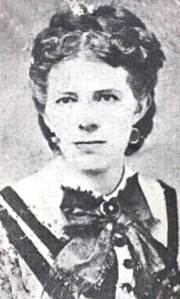
Kate Stone’s Civil War: Kindly bestow them

Stone begins the new year with a diary entry — one of her longest — filled with details, cautious hope, and determination to hold out for ultimate Confederate victory.

KS9

From 2012 to 2015, Stillness of Heart will share interesting excerpts from the extraordinary diary of Kate Stone, who chronicled her Louisiana family’s turbulent experiences throughout the Civil War era.

Learn more about Stone’s amazing life in 1861, 1862, 1863, 1864, 1865 and beyond. Click on each year to read more about her experiences. You can read the entire journal online here.

(Photo edited by Bob Rowen)

Stone begins the new year with a diary entry — one of her longest — filled with details, cautious hope, and determination to hold out for ultimate Confederate victory.

Jan. 29, 1865

Tyler, Texas

Uncle Johnny and Kate have just gone to their room after a lengthy discussion of the comparative merits of modern poets and novelists. Johnny has kissed me goodnight, Sister is wandering in dreamland, I am alone with a cheerful fire and a wakeful spirit, and so I may as well resume my neglected diary.

Mamma, with Sarah as her maid, started on Wednesday for the prairie to be absent two weeks, and I am left to administer affairs during her absence. The office of housekeeper is not entirely a sinecure now that there are so many to be provided for our family, Uncle John’s, and Mr. Gary’s. We tease Mamma and Mrs. Savage by telling them they are keeping boarding houses, a fact they indignantly deny. But it looks that way to an outsider. We hoped to get Mr. Smith’s house and live to ourselves, but he now declines to rent. But for the hall, we are as much crowded here as at the Ranch, which we had to give up to the owner as he wished to move back. This is a pretty-looking place if the house was painted but new and unfinished, a large yard with the native trees left. Mr. and Mrs. Gary, from whom Mamma rented it, are quite nice people. They have one little girl and they give very little trouble. We rarely see them except at meals, which is a relief, for we did so dread her living in our room. Even Kate leaves us to ourselves sometimes, and so we find it much easier to live together. Though both Uncle Johnny and Kate utterly ignore Johnny’s existence, it is wonderful that they will behave so.

Jimmy and Joe Carson have rejoined their command. It is Jimmy’s first trial as a soldier. I am trying to finish a pair of the prettiest riding gloves to send him by Jimmy Stone’s boy, who will get off Wednesday. I am sending Jimmy Stone a famous pair. Dr. Weir would feel himself awfully slighted and retire in disgust could he peep behind the scenes and see what becomes of the precious gauntlets he forced on my acceptance. He flattered himself I would knit a pair of gloves to them and kindly bestow them on him. But oh no, they go with the best I can make to Jimmy. I have knitted so many gloves, and Mamma knits socks in all her spare time. I wish I had kept account of the numbers of pairs. We froth up old black or blue silk, mix it with wool, and have it spun into a pretty silky thread that makes nice-looking gloves or stockings. …

So slowly news comes in that we have heard nothing since Sherman’s occupation of Savannah more than a month ago and Gen. Hood‘s retreat across the Tennessee River. … Hood is relieved from command and Gen. Johnston reinstated, a rumor that gives general satisfaction. The very air is rife with rumors but nothing reliable. The favorite is that the Confederacy will certainly be recognized by all foreign powers immediately after the fourth of March, and we may look for a speedy peace with much more to the same. But we have been exalted and depressed by these rumors too often to let them weigh with us now. Another topic of general interest is the subject of gradual emancipation said to be under discussion in the lower house [of the Confederate Congress]. …

5 (more) facts about orgasm

2014 in review

Thank you for making 2014 the best year ever. Read the year-end WordPress graphical roundup.

Thank you so much for making 2014 Stillness of Heart‘s best year ever.

Here’s an excerpt:

The concert hall at the Sydney Opera House holds 2,700 people. This blog was viewed about 12,000 times in 2014. If it were a concert at Sydney Opera House, it would take about 4 sold-out performances for that many people to see it.

Click here to see the complete report.

Step by step

One step at a time. That’s all I have to believe in.

KS59

Slowly but surely, I’m building a full and rich life.

I have to believe that. Maybe happiness comes later.

Kate Stone’s Civil War: Season of general disaster

Sudden deaths shock Stone and break her heart. All optimism of the past year is shattered.

KS8

From 2012 to 2015, Stillness of Heart will share interesting excerpts from the extraordinary diary of Kate Stone, who chronicled her Louisiana family’s turbulent experiences throughout the Civil War era.

Learn more about Stone’s amazing life in 1861, 1862, 1863, 1864, 1865 and beyond. Click on each year to read more about her experiences. You can read the entire journal online here.

(Photo edited by Bob Rowen)

Sudden deaths shock Stone and break her heart. All optimism of the past year is shattered.

Dec. 10, 1864

Tyler, Texas

Dear little Beverly, that angel upon earth, has left us. The pure spirit has winged its way to its Heavenly home. Darling little Beverly. What a sad despairing letter her father wrote bearing the bitter news of her death. They are utterly heartbroken. She was the one great treasure of their lives. The pure little spirit is freed now, but all the sunshine of life to them lies buried in that tiny grave. She died October 2 of sore throat at Selma, Ala. She was the one perfect being I have ever known in face, in figure, in mind, in heart not one improvement could be suggested. We have several times heard people who were not related to her say, after playing with her, “That child will not live to grow up; she is too perfect.” That seemed to be the general feeling of all their friends in Vicksburg who had known her always. She was too fair and frail a flower to blossom in this time of death and destruction. … There was never a sweeter, lovelier little creature than our “Swamp Lily,” as she loved us to call her. May Our Father comfort and strengthen her poor mother, for her life is bound up in the child’s.

We were shocked and distressed to hear of Mary Gustine’s death. We were there on one Thursday and she died on Sunday. Her mother seemed a little anxious, but no one else thought her much ill. A noble, generous, and beautiful woman, she was one of our most valued friends. This is the first break in the circle of happy girls who erstwhile met at Brokenburn. Her mother, who is in wretched health, will continue to live with Capt. Buckner, and she and Ella will take charge of the baby. That family is utterly broken up — one brother in prison and another desperately wounded — and not a month ago they were congratulating themselves on how wonderfully they had escaped all sorrow in this season of general disaster and despair.

Truly, “We know not what a day may bring forth.”

Kate Stone’s Civil War: I suffered intensely

As Stone works her way back to Texas, a toothache adds to her discomfort and fear throughout a journey through wild and war-torn swampland.

KS2

From 2012 to 2015, Stillness of Heart will share interesting excerpts from the extraordinary diary of Kate Stone, who chronicled her Louisiana family’s turbulent experiences throughout the Civil War era.

Learn more about Stone’s amazing life in 1861, 1862, 1863, 1864, 1865 and beyond. Click on each year to read more about her experiences. You can read the entire journal online here.

(Photo edited by Bob Rowen)

As Stone works her way back to Texas, a toothache adds to her discomfort and fear throughout a journey through wild and war-torn swampland.

November 1864

On the road to Texas

We got off from Col. Templeton’s Monday morning, all sorry to part after a delightful summer and fall with not a disagreeable incident to mar our intercourse. They have been the soul of kindness to me, one and all. The direct road through the swamp is impassable, and so Capt. Wylie piloted us a new route. Capt. Wylie, Johnny, and I were on horseback, and about 2 o’clock we reached the hill road without getting bogged down as Johnny had in coming through the old road. We dismounted, entered the carriage, and bade Capt. Wylie a warm farewell, thanking him for his many courtesies. …

It was a rainy day and we did not reach Monroe until about sunset. Capt. Brigham met us, and we waved him adieu as we crossed the Ouachita on a flat. We passed the night at Mrs. Scale’s at Trenton, much to Johnny’s disgust as he does not like them. Some gentlemen called, and we had cards. After they left, Lucy and I tried our fortunes in divers ways as it was “All Hallow’e’en.” We tried all magic arts and had a merry frolic, but no future lord and master came to turn our wet garments hanging before the fire. There were no ghostly footprints in the meal sprinkled behind the door. No bearded face looked over our shoulders as we ate the apples before the glass. No knightly forms of soldiers brave disturbed our dreams after eating the white of an egg half-filled with salt. …

The third morning we left in a cold drizzling rain with a splendid lunch and a jar of pickles, and with kisses and good wishes of the family. I had a raging toothache, because of sitting all day in wet shoes after passing the swamp. Capt. Wylie’s solicitude on the subject of my thin, wet shoes was not uncalled for at last.

Our trip to Vienna was disagreeable. We stopped at twelve, built a fire, enjoyed our dinner, and then smoked leaf cigarettes. They relieved my tooth for a time, but the pain returned. For several days I suffered intensely, nearly ruining all my teeth I fear by using creosote, caustic, and any strong thing people recommended. Our supper at the hotel at Vienna consisted of cold stewed pumpkins, cold greens, and cold white cornbread. Nothing else but cold well water. The breakfast was nearly as unpalatable, but it was warm. We had nothing to eat all day except the pickles, which Johnny first ate and then drank the vinegar. …

Recommended reading / viewing / listening

This week: Enduring sexism / LBJ and the Secret Service / Exercise and depression / The Roman Empire / The political Eva Longoria

IMG_1475

This week: Enduring sexism / LBJ and the Secret Service / Exercise and depression / The Roman Empire / The political Eva Longoria

Most of these great items come from my social media networks. Follow me on Twitter, Tumblr, LinkedIn, MySpace, and Facebook for more fascinating videos, photos, articles, essays, and criticism.

1. Jessica’s Feminized Atmosphere
By Jessica Williams | The Daily Show | Oct. 2
“Also, that’s redundant.”

2. L.B.J.’s Bravado and a Secret Service Under Scrutiny
By Michael Beschloss | The Upshot :: The New York Times | Oct. 2
“Not long after President Kennedy’s assassination, President Johnson chafed under his Secret Service protection.”

3. What made Japan’s deadly volcanic eruption so unpredictable?
By Judy Woodruff and Miles O’Brien | PBS NewsHour | Sept. 30
“More than 250 people were out hiking and enjoying a nice fall day, when a surprise eruption littered the mountain with falling boulders, thick smoke and piles of ash. At least 36 people were killed.”

4. This Is How Eva Longoria Is Trying to Win the Midterms
By Asawin Suebsaeng | The Daily Beast | Oct. 1
“From working behind the scenes in the midterms to making a new farm labor documentary, the former Desperate Housewife has emerged as a force to be reckoned with in liberal politics.”

5. How Exercise May Protect Against Depression
By Gretchen Reynolds | Well :: The New York Times | Oct. 1
“Exercise may help to safeguard the mind against depression through previously unknown effects on working muscles.”

6. The Elements of Style
By Sasha Weiss | The Sunday Book Review :: The New York Times | Oct. 3
“Watching other women, seeing how they’re dressed and how they pull it off, is the way most of us learn to become ourselves.”

7. Former Haiti president Duvalier dies
By Mike Wooldridge | BBC News | Oct. 4
“Duvalier was just 19 when in 1971 he inherited the title of “president-for-life” from his father, the notorious Francois ‘Papa Doc’ Duvalier. He was accused of corruption, human rights abuses and repression in his rule, which ended in a 1986 uprising.”

8. Catastrophic Coltrane
By Geoff Dyer | NYR Gallery :: New York Review of Books | Oct. 4
“The interest of recordings from this final phase — in which Coltrane’s playing became increasingly frenzied and the accompaniment more abstracted — lies partly in what they preserve and partly in any hints they contain as to where Trane might have headed next.”

9. The Aral Sea’s Disappearing Act
By Anna Nemtsova | The Daily Beast | Oct. 4
“Satellite photos show how the depredations of dictators have turned the world’s fourth largest inland sea into a poisonous desert.”

10. 40 maps that explain the Roman Empire
By Timothy B. Lee | Vox | Aug. 19
“Two thousand years ago, on August 19, 14 AD, Caesar Augustus died. … Under Augustus and his successors, the empire experienced 200 years of relative peace and prosperity. Here are 40 maps that explain the Roman Empire — its rise and fall, its culture and economy, and how it laid the foundations of the modern world.”

Kate Stone’s Civil War: Too disgraceful if true

An operation to capture a Union gunboat turns into a Confederate disaster.

KS63

From 2012 to 2015, Stillness of Heart will share interesting excerpts from the extraordinary diary of Kate Stone, who chronicled her Louisiana family’s turbulent experiences throughout the Civil War era.

Learn more about Stone’s amazing life in 1861, 1862, 1863, 1864, 1865 and beyond. Click on each year to read more about her experiences. You can read the entire journal online here.

(Photo edited by Bob Rowen)

An operation to capture a Union gunboat turns into a Confederate disaster.

Sept. 10, 1864

Near Oak Ridge, La.

The famed Brigade is back again after its hurried trip to Tensas, during which it managed to capture sixteen Yankees, kill three, and kill five of its own men by a badly placed ambuscade. The object of the march was to take possession of a gunboat that was to be given up by treachery, but it proved a fiasco.

Our opinion is that the officers all got on a grand spree and so failed at the critical time. Too disgraceful if true. Jimmy and Joe were two who volunteered to board the boat when volunteers were called for. I think there were eighty in all, but it proved they were not to board the gunboat but to form an ambuscade.

How near death they were when they stood firing within fifteen paces of each other. It makes one shudder to think of it. What unnecessary risk and such culpable ignorance in the man who placed the ambuscade.

Kate Stone’s Civil War: One grand holocaust

A furious Stone employs amazing language to accuse the Federal government of using former slaves to wipe Southern civilization off the face of the earth.

KS62

From 2012 to 2015, Stillness of Heart will share interesting excerpts from the extraordinary diary of Kate Stone, who chronicled her Louisiana family’s turbulent experiences throughout the Civil War era.

Learn more about Stone’s amazing life in 1861, 1862, 1863, 1864, 1865 and beyond. Click on each year to read more about her experiences. You can read the entire journal online here.

(Photo edited by Bob Rowen)

After false rumors of a Union raid, a furious Stone employs amazing language to accuse the Federal government of using former slaves to wipe Southern civilization off the face of the earth.

Sept. 5, 1864

Near Oak Ridge, La.

Intense excitement in the neighborhood. Yankees reported advancing in large force destroying, burning, and murdering as they come!! Capt. Lea with his small band of guerrillas contesting every mile of the way but being steadily forced back by superior numbers! Praying Col. Parsons, who has the only troops near, for reinforcements, but who refuses to send them as he is under stringent orders and making forced marches! Blank consternation among the citizens who hear that the Federals have vowed vengeance against this section on account of Capt. Lea and his guerrillas. Everyone is preparing to flee the wrath to come.

Such were the startling reports brought to Col. Templeton by terrified Mr. Philips this morning, frightening us nearly to death, for great is our horror of the vandal hordes since their ruthless destruction of Floyd and Pin Hook and their outrageous conduct at those doomed places. Mrs. Templeton soon had everything arranged for our rapid flight through the swamp across the Ouachita to the safe haven of Col. Wadley’s home, should the reports prove true, leaving Mrs. Templeton and Mrs. Savage here to brave the storm, Col. Templeton going with us. We were on the qui vive all day looking for a mounted messenger galloping up through the wooded lawn shouting, “Flee, Flee.” But about sunset the tension relaxed. We heard that the Yankees came out only as far as Floyd on a reconnaissance and are retiring to the river, and so we breathe freely once more.

The Yankee raids are no joke, though we laugh at each other for being frightened. Last week 200 of the Corps D’Afrique, officered by six big white men (wretches they are), came out and laid the two little villages of Floyd and Pin Hook in ashes, not allowing the people to remove any of their possessions from their houses and thus leaving them utterly destitute. They were very rough and insulting in their language to the ladies, tore the pockets from their dresses and the rings from their fingers, cursing and swearing, and frightening the helpless folks nearly into fits.

This was done in revenge for a guerrilla raid a few days before, in which a good many government stores were destroyed and eighty or ninety Negroes brought out. The Yankees know they make it ten times worse for us by sending Negroes to commit these atrocities. The Paternal Government at Washington has done all in its power to incite a general insurrection throughout the South, in the hopes of thus getting rid of the women and children in one grand holocaust. We would be practically helpless should the Negroes rise, since there are so few men left at home. It is only because the Negroes do not want to kill us that we are still alive. The Negroes have behaved well, far better than anyone anticipated. They have not shown themselves revengeful, have been most biddable, and in many cases have been the only mainstay of their owners.

Five or six citizens, unarmed, were murdered by the Yankees in that Floyd raid. How thankful I am we left home when we did. To lose everything is bad, but constant terror and insult are worse.

The guerrillas report that the cotton crop on the river is a complete failure, entirely eaten up by the worms. The fields are swept of every vestige of green and there is hardly a matured boll to a stalk. This news rejoices our very hearts. Those are true “Confederate worms,” working for the good of the Cause. …

Rebecca Aguilar

#CallingAllJournalists Initiative | Reporter | Media Watchdog | Mentor | Latinas in Journalism

Anna Fonte's Paper Planes

Words, images & collages tossed from a window.

Postcards from Barton Springs

Gayle Brennan Spencer - sending random thoughts to and from South Austin

The Flask Half Full

Irreverent travelogues, good drinks, and the cultural stories they tell.

Government Book Talk

Talking about some of the best publications from the Federal Government, past and present.

Cadillac Society

Cadillac News, Forums, Rumors, Reviews

Ob360media

Real News That Matters

Mealtime Joy

bringing joy to family meals

Øl, Mad og Folk

Bloggen Øl, Mad og Folk

a joyous kitchen

fun, delicious food for everyone

A Perfect Feast

Modern Comfort Food

donnablackwrites

Art is a gift we give ourselves

Fridgelore

low waste living drawn from food lore through the ages

BeckiesKitchen.com

MUSINGS : CRITICISM : HISTORY : NEWS

North River Notes

Observations on the Hudson River as it passes through New York City. The section of the Hudson which passes through New York is historically known as the North River, called this by the Dutch to distinguish it from the Delaware River, which they knew as the South River. This stretch of the Hudson is still often referred to as the North River by local mariners today. All photos copyright Daniel Katzive unless otherwise attributed. For more frequent updates, please follow northriverblog on Facebook or Instagram.

Flavorite

Where your favorite flavors come together