Death, Yankee prisoners, pride grounded into nothing … Stone stared into a quiet Texas night with fear and sadness.
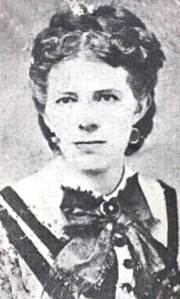
From 2012 to 2015, Stillness of Heart will share interesting excerpts from the extraordinary diary of Kate Stone, who chronicled her Louisiana family’s turbulent experiences throughout the Civil War era.
Learn more about Stone’s amazing life in 1861, 1862, 1863, 1864, 1865 and beyond. Click on each year to read more about her experiences. You can read the entire journal online here.
(Photo edited by Bob Rowen)
Death, Yankee prisoners, pride grounded into nothing … Stone stared into a quiet Texas night with fear and sadness.
Nov. 13, 1863
Tyler, Texas
This week Mrs. Carson, the little girls, and I are alone. Mamma has gone to Shreveport, taking Eddie Carson with her. Mr. Smith is again taken into the militia, thanks to Maj. Little’s dislike of refugees, and Mamma has gone to the headquarters of Gen. Kirby Smith to try to get a permanent discharge for Mr. Smith.
The turnout for the trip was essentially Texas: the high Jersey with white body and black curtains and two shaggy mules with shuck collars. It was anything but stylish. They say pride must have a fall, and ours has had many a tumble since we left home. How I hope Mamma will be able to buy a carriage this trip.
Jimmy has gone to the prairie to stay during Mr. Smith’s absence. He started off with a dreadful toothache, on a rough little mule. Hope he will return free of toothache and on a horse. We rode with him as far as the Yankee camp. Mamma had some business with the commanding officer, and we went out with her. A number of the prisoners escaped the other day, and the townspeople are very apprehensive of their burning the town. They put out guards every night, and they take turns in guarding the prisoners. One of the prisoners was shot yesterday for disobedience of orders. He died in a few hours. …
Death does not seem half so terrible as it did long ago. We have grown used to it. Never a letter but brings news of the death of someone we knew. Another girlhood friend off the list, but none do I regret like Kate Nailor, the first and best. …
Alone as we are tonight, I feel a little afraid of the escaped Yankees. So I will put out the light, pull the cover over my head, and go to sleep.
Stone’s first standard for even considering spending a significant number of days anywhere in Texas was its number of Louisiana war refugees living nearby. Tyler, Texas, suited her just fine.
From 2012 to 2015, Stillness of Heart will share interesting excerpts from the extraordinary diary of Kate Stone, who chronicled her Louisiana family’s turbulent experiences throughout the Civil War era.
Learn more about Stone’s amazing life in 1861, 1862, 1863, 1864, 1865 and beyond. Click on each year to read more about her experiences. You can read the entire journal online here.
(Photo edited by Bob Rowen)
Stone’s first standard for even considering spending a significant number of days anywhere in Texas was its number of Louisiana war refugees living nearby. Tyler, Texas, suited her just fine.
Note her anxiety over simply the possibility of receiving any news from the outside world. It made her “sick with apprehension.”
Nov. 7, 1863
There are some changes in our household. Mr. Kaiser has left us after his school left him. He has gone seven miles in the country to open another school. May it prove more successful than this attempt. We have forgiven him for his desertion of Jimmy. He cannot help being a coward. He remarked pathetically to Mrs. Carson, speaking of the big boys of the school, that he felt he was on the mouth of a volcano. We have no teacher and no prospect of one.
Mamma is speaking seriously of going on to live in Gilmore to put Jimmy in school, but I hope she will not. There are so many refugees here that we may like Tyler after a while, and the next school the boys may be able to attend. …
Several letters this week. One from Uncle Johnny at Austin. He secured his situation but says everything is very high, wood $40 a cord. A letter from Sarah Wadley just as they were leaving for Georgia. Hope they succeeded in running the blockade and crossing the river in safety.
I do not wish for letters. Have such a fear of bad news. The sight of a letter turns me sick with apprehension.
Stone and her brother still endured the hatred of Texas boys. She also despaired over the lack of news that reliably reported any Confederate victory.
From 2012 to 2015, Stillness of Heart will share interesting excerpts from the extraordinary diary of Kate Stone, who chronicled her Louisiana family’s turbulent experiences throughout the Civil War era.
Learn more about Stone’s amazing life in 1861, 1862, 1863, 1864, 1865 and beyond. Click on each year to read more about her experiences. You can read the entire journal online here.
(Photo edited by Bob Rowen)
Stone and her brother still endured the hatred of Texas boys. She also despaired over the lack of news that reliably reported any Confederate victory.
Nov. 1, 1863
Tyler, Texas
We are just from church. Jimmy, Johnny, and I did not go con amore. There are more pleasant things than toiling a mile through heavy sand, up hill and down dale too dark to see the road beneath you or the sky above, sitting for an hour listening to an indifferent sermon, and being gazed at by a battery of hostile eyes. Jimmy was determined to go, and I would go too, though he did not want me. Last night he and Johnny went alone, and during the services someone cut his bridle all to pieces and stole his martingale and blanket. A crowd of boys followed them after church, talking at them all the time. They know now the boys are armed and so did not attack them. The rowdies followed us tonight, and I saw them for the first time. They are real nice-looking lads. What a pity they are not gentlemen. Jimmy Carson is deeply mortified that he is compelled to desert a friend in need.
Miss Sally Grissman called to see us a short time ago. She is quite pretty, a Creole, piquante and petite. They are from Assumption Parish and have been here nearly a year. Mrs. Prentice from Joe’s Bayou and Mrs. Hull from St. Louis called yesterday. Mrs. Hull is a delightful little lady with the prettiest face and sweetest manner. Her husband is a colonel. He has just returned from Missouri. He went in to raise a regiment, of course in disguise, and brought out four hundred men, a most dangerous undertaking since it meant the death of a spy if he had been captured. Mr. and Mrs. Prentice have a house near town and Mrs. Hull boards with them. Mrs. Prentice begged me to come and stay some with her. Perhaps I shall.
Spent a day with Mrs. Levy lately. She is from New Orleans and has a large family of little children. Her husband and oldest son are in the Virginia Army. She is a good talker, a woman of the world, and a Jewess, but I think does not practice her religion. She was a Miss Moise from Charleston. …
The exhilarating news of the capture of [Union Maj. Gen. William] Rosecrans and his army proves to have been a canard. He has been heavily reinforced and is again in the field. What credulous mortals we be, believing all the good reports and distrusting all the bad until the truth is forced upon us. …
Stone’s brothers began a new school in Tyler, Texas, but bullies tormented them, and they nearly came to blows. Students brought guns to school to deal with these Louisiana refugees.
From 2012 to 2015, Stillness of Heart will share interesting excerpts from the extraordinary diary of Kate Stone, who chronicled her Louisiana family’s turbulent experiences throughout the Civil War era.
Learn more about Stone’s amazing life in 1861, 1862, 1863, 1864, 1865 and beyond. Click on each year to read more about her experiences. You can read the entire journal online here.
(Photo edited by Bob Rowen)
Stone’s brothers began a new school in Tyler, Texas, but bullies tormented them, and they nearly came to blows. Students brought guns to school to deal with these Louisiana refugees.
As Kate fretted, she and her mother sewed winter clothes and celebrated the construction of impressive new bonnets.
Oct. 29, 1863
“Refugee Ranch,” Tyler, Texas
We have been at Tyler scarcely long enough to feel settled, and the first thing is a grand disturbance that threatens all our plans.
It seems there is a great prejudice existing here against the unfortunate refugees, a feeling strong in Mr. Kaiser’s school that made Jimmy and Eddie Carson very unpopular. There was no open outbreak, however, until Jimmy and Johnny were entered as pupils. For several days the disaffected could find no open cause of offense, and our boys, perfectly unsuspecting, rode, walked, hunted, and marched together perfectly happy to renew their old friendships and not dreaming they were making enemies. But all this was the head and front of their offending. When they added to this “wearing gold watch chains and black broadcloth” a slender little strand of gold and a secondhand suit of clothes the Tyler boys could stand no more, and they rose in their wrath to put down those “refugee upstarts” most unaffected little fellows.
They opened hostilities by sticking pins in Jimmy and Johnny at church during the prayer. … Johnny was so enraged that he challenged the boy to come out of the church at once and fight, but the boy excused himself as he had a lady with him. They made an appointment to meet the next day and have a regular fisticuffs. The boy failed to keep the promise, and Jimmy denounced the act at school as ungentlemanly. The fuss blew over without coming to blows, the boys agreeing not to speak to each other, and they thought everything was settled. But the father of the boy came to school very angry and told Mr. Kaiser that unless Jimmy Stone was dismissed from school all the other boys would be taken away. Several boys wore pistols to school today, and they had formed a plan to mob Jimmy last night, but as I was with him they put it off.
We knew nothing of all this until Mr. Kaiser came over this evening to advise Mamma and Mrs. Carson to keep the boys inside the yard and to make Jimmy Carson take off the chain and put on rough clothes. Mr. Kaiser has acted a very cowardly part. The boys have been taken from school, and Mamma and Mrs. Carson are trying to get a private tutor for them. Jimmy Stone was studying hard since he knows his school days are short. …
Oct. 30
The Tyler boys are trying to force Jimmy Carson into a fight. Half a dozen of them are going armed for him, and we are very anxious. Mamma and Mrs. Carson have made our boys promise they will not be first to start a row. They restrain themselves but they are boiling with rage. Mamma will not let Jimmy go to church as she hears the Tyler boys intend mobbing him, and Jimmy is in a dreadful state of mind. He says they will all call him a coward. We do not care what these rowdy roughs call our boys, just so they do not all get into a free fight with pistols. If it was only fisticuff, we would let them fight it out. Mrs. Carson went to see Mr. Williams, the father of the ring-leader, and we hope her pacific representations to him will calm the excitement.
Jimmy Stone has behaved as well as a boy could, with firmness but moderation. I do not think he has even been angry until tonight, when Mamma forbid his going to church unless she or I went with him. And he has not put on a pistol until this morning, though he has known for several days that half a dozen boys are wearing pistols to “do him up,” as they say. The entire household is wrought up, and Jimmy is furious. He says he intends to shoot down the first boy tomorrow who says a harsh word to him.
Mrs. Carson is a strong member of the peace party and has forbidden either of her boys to go to Tyler on any pretext whatever. This restraint chafes the boys extremely but is a most necessary one, excited and angry as all the boys are. Johnny and Eddie had been wearing pistols days before we knew there was any trouble. How little we can know what is in the heart of a boy. Here we were, so pleased with their innocent sports, thinking them absorbed in their marbles and horses and marching around, when every boy was expecting a deadly encounter and burning with hatred for his enemies. We were praising Johnny for his devotion to study when lie insisted on going to school one day when Mamma thought him too unwell. We found out afterwards they were expecting a battle royal that day, and Johnny had an appointment to fight. I hope Mr. Kaiser, for his cowardly truckling in dismissing Jimmy without cause, will lose his school.
I am glad it is a general refugee quarrel instead of being confined to Jimmy. Edward Levy and George Grissman, refugee boys, have both had to leave school.
Mamma has been busy remodeling and making bonnets. She has excellent ideas on the subject, and we tell her a first-class milliner was spoiled when she turned to other pursuits. Her bonnet is quite a triumph, a regular “skyscraper” of straw and silk. She finished mine today, a pretty mixture of black velvet and cherry. It is the same I sported at Monroe in uniform with Julia Barr and Shirley Crith, but it is much improved by the addition of the bright color. I have been forced to take off black. None to be bought.
I am still on the weary treadmill of work, work, work that commenced at Monroe. Our sewing seems endless. We have been hard at it for nearly six months and the end is not yet. Mamma bought two calicoes for me, one at $55 and the other $66. One is made and I am sewing on the last one. We still have two drill dresses to make over. Jimmy is without winter underclothes, and we cannot buy a piece of woolen. We fear in such thin clothes he will take pneumonia again.
Kate Stone’s brother returned with news of a beloved Louisiana crawling with Federal troops and Unionists. Stone was enraged, disgusted, and insulted.
From 2012 to 2015, Stillness of Heart will share interesting excerpts from the extraordinary diary of Kate Stone, who chronicled her Louisiana family’s turbulent experiences throughout the Civil War era.
Learn more about Stone’s amazing life in 1861, 1862, 1863, 1864, 1865 and beyond. Click on each year to read more about her experiences. You can read the entire journal online here.
(Photo edited by Bob Rowen)
Kate Stone’s brother returned with news of a beloved Louisiana crawling with Federal troops and Unionists. Stone was enraged, disgusted, and insulted.
Oct. 8, 1863
“Elysian Fields,” Lamar County, Texas
The last few days have been full of interest. First, Johnny returned only last night, and this opens the gates of release from this region of sin and woe. We think we can get off on Monday. Uncle Johnny has been awaiting only Johnny’s return to move on, and they will start on their long journey on Saturday over 300 miles. Thus Johnny’s arrival has been the signal trumpet calling us all to horse and away.
A letter from Julia in which she says My Brother was twice severely wounded in his right arm in the battle of Gettysburg. He has recovered and is with his command but has lost the use of his right hand. We are truly thankful it is no worse. If we could only hear all that has happened to him since seeing him last, but we know so little. Poor fellow, this is his fifth wound and the most severe of all. We so hope he can get a furlough this fall. It worries me to hear of Tom Manlove’s frolicking about, getting married and enjoying himself in every way, getting all the honor, while My Brother, who is worth ten of him, gets only the hard work of the camp and the wounds. … I can write and think myself into a fever about My Brother.
Julia is still at Camden. All wagons have been impressed to remove government stores, and so they cannot get away. She heard through Robert Norris, who wrote asking news of his aunt, that Uncle Bo is well and is now a 1st lieutenant. We are so glad of his promotion. Not a word of Brother Coley, and we are very anxious about him. Joe Carson is regimental colorbearer, a dangerous post. …
Johnny gives a dreadful account of affairs in and around Delhi and Monroe. Most of the citizens remaining boast of being Unionists and carry on a most profitable trade with Vicksburg. The Yankee cavalry came out to Monroe by invitation, and a number of citizens signed a petition asking them to come out and drive away our soldiers still there. This is too disgraceful to be true. Then, a great number of Louisianians have deserted. My cheek crimsons as I write this of our own beloved state, but I cannot believe that she has brought her name to be a disgrace and reproach to her loyal children. …
Stone at last received news of the rest of her family and was left despondent. War scattered her relatives, destroyed their communities, and turned them into disgraced refugees.
From 2012 to 2015, Stillness of Heart will share interesting excerpts from the extraordinary diary of Kate Stone, who chronicled her Louisiana family’s turbulent experiences throughout the Civil War era.
Learn more about Stone’s amazing life in 1861, 1862, 1863, 1864, 1865 and beyond. Click on each year to read more about her experiences. You can read the entire journal online here.
(Photo edited by Bob Rowen)
Stone at last received news of the rest of her family and was left despondent. War scattered her relatives, destroyed their communities, and turned them into disgraced refugees.
Note how Stone almost admired how she managed to get on with her life with “almost nothing but servants, and yet we are comfortable.”
Sept. 20, 1863
“Elysian Fields,” Lamar County, Texas
Uncle Johnny was at Richmond, Va., a month ago and heard from nearly every member of the family. How thankful we are to know that they are all alive, though perhaps in distress. My Brother was neither killed nor hurt in the Pennsylvania campaign. Uncle Bo is as usual in fine health and spirits and is under [Confederate commander Braxton] Bragg. Dr. Buckner and Brother Coley are also with Gen. Bragg, and Aunt Laura is at Chattanooga within reach of Dr. Buckner. How glad we are that she is comfortably settled and not suffering all the discomforts of life in Texas. …
Aunt Sarah is at Bladen Springs, Ala. Poor little Horace is dead, a most bitter blow to his mother. He was her favorite. She was keeping house at Cooper’s Well when the Yankees marched on Jackson. She just escaped on the last train with only their wearing clothes. Everything else was destroyed by the Yankees, house and furniture burned, piano hacked to pieces, and the portraits torn to shreds. … It looks like the whole family is to be ruined, root and branch. Every member of it is broken up and all the women and children fleeing from the Yankees, while all the men and half-grown boys are in the army.
We are thankful Mamma has saved most of Uncle Bo’s Negroes, and if we can keep what we have now we can help the others. But I have a strong presentment that we shall yet lose all that we have and be compelled to labor with our hands for our daily bread.
Mrs. Smith had moved up to Mr. Vaughn’s just in time to give room for Uncle Johnny. How glad we are to have a house to ourselves once more. Mrs. Smith was very kind in leaving everything we needed for housekeeping. It is surprising how little one can get on with. We seem to have almost nothing but servants, and yet we are comfortable, comparatively so.
I have finished knitting those tiresome gloves and can read with a clear conscience. Fingered and gauntlet gloves are a trouble to knit.
Sept. 22
The news today is discouraging. Charleston [S.C.] has fallen, Louisiana and Arkansas are to be entirely deserted by our troops, and all the available forces of the Trans-Mississippi Department are to be concentrated at Tyler, Texas. If Charleston has fallen, it is because it was not in the power of man to hold it. Everything possible had been done, and it had made a most gallant defense. No disgrace can sully the name of its Gen. Beauregard, as the name of Lovell and Pemberton have been darkened. …
How I long for a glimpse at Brokenburn these pleasant autumn days radiant in flowers and crowned with fruit, the grassy yard and tall oaks, the clump of sassafras changing now to bright crimson, and the fragrant sweet gum showering down its leaves of gold, the flower garden sparkling across the grass, its many kinds of fall flowers gay in the mellow September sun, and the wide fields stretching away, white with cotton and vocal with the songs of the busy pickers. Shall we ever see it so again?
Part 10 of this special series focuses on John Ruskin, an English writer, academic and critic who, like so many others presented in the Morgan Library exhibit, turned to a diary to assuage the pain of depression and anxiety.
This special Stillness of Heart series explores the Morgan Library & Museum’s fascinating exhibit, “The Diary: Three Centuries of Private Lives.”
Part 10 focuses on John Ruskin, an English writer, academic, and critic who, like so many others presented in the Morgan Library exhibit, turned to a diary to assuage the pain of depression and anxiety. Ruskin, however, went a step further and used his diary as a primary resource in the study and analysis of his own disorder. As the introductory essay points out, Ruskin “was determined to study his own patterns and learn enough about himself to remain sane. … He re-read his earlier entries, searching for signs leading up to his breakdown, underlining key words and phrases, compiling an index of his experience, and putting down on paper all he could remember of his psychotic visions.”
“No getting things done in this house. Lost all yesterday calling on Marshalls in morning. Fine afternoon, throwing down stones in the wood with Diddie and Maggie. Exquisitest purple I ever saw on hills, in afternoon, and arch of rosy clouds all over old man [a nearby mountain] and opalescent green-blue and rose over blue Helvellyn, divine, but my evening spoiled by finding the poor chaffinch’s nest in ruins, and nestlings dying. A hawk, I fancy, pouncing on the mother;– not able to return for the brood. “
Examine images of his diary and listen to the museum’s audio guide here.
Part 9 of this special series focuses on Tennessee Williams, the famed playwright, who embraced his diary as shelter from the depressive snowstorms that ravaged his life
This special Stillness of Heart series explores the Morgan Library & Museum’s fascinating exhibit, “The Diary: Three Centuries of Private Lives.”
Part 9 focuses on Tennessee Williams, the famed playwright, who embraced his diary as shelter from the depressive snowstorms that ravaged his life. Success, drugs, sensual companionship, even public accolades like a Pulitzer Prize (for “Cat on a Hot Tin Roof”) all failed to calm his suffocating anxiety, loneliness, and despair.
“A child of love — dined on the terrace with the cathedral spires lit up and a mass choir singing Catalonian folks songs on the Square below. Then love — came twice, both ways, and divinely responsive as if a benign Providence, or shall we be frank and say God, had suddenly taken cognizance and pity of my long misery this summer and given me this night as a token of forgiveness.”
Examine images of his amazing diary and listen to the museum’s audio guide here.
Part 5 of this series focuses on John Newton, a British slave trafficker and later a minister who wrote ‘Amazing Grace.’
This special Stillness of Heart series explores the Morgan Library & Museum’s fascinating exhibit, “The Diary: Three Centuries of Private Lives.”
Part 5 focuses on John Newton, a British slave trafficker and later a minister who wrote “Amazing Grace.” Throughout his adult life, he struggled with his religious faith and with his views on slavery, and the diary captured in daily detail the long, tumultuous spiritual journey he made. In the end, as the exhibit essay explains, Newton simply hoped that someday he “would serve as inspiration to others.”
“I have been reading what I have recorded of my experience in the last year – a strange vanity. I find myself condemn’d in every page[.] But the Lord is good, O how gracious! How wonderfully has he born with my repeated backslidings! And yet the thought but faintly affects. What I can I will – Lord I am not able to praise thee, accept the desire, which I trust is thine own gift – deliver me from that pride, impurity & self seeking, which so fatally interrupt my progress.”
Examine images of the extraordinary diary and listen to the museum’s audio guide here.
One of my guiding principles is that we’re all capable of self-improvement at any age, particularly intellectual self-improvement. Sometimes that faith is the only thing that enables me to sleep through the night and get out of bed in the morning.
That’s Latin for “universal man” or “man of the world,” if Wikipedia can be relied on for a proper translation.
I glide through a small, comfortable life — trying not to bother anyone, trying to be pleasant and polite, non-judgmental and sympathetic, charming and humble, trying to be intellectually honest and self-aware of my limits and flaws, every day edging closer to fulfilling all my ambitions.
One of my guiding principles is that we’re all capable of self-improvement at any age, particularly intellectual self-improvement. Sometimes that faith is the only thing that enables me to sleep through the night and get out of bed in the morning. I’ve always been blessed with a hunger for knowledge, a curiosity that often flares into full-blown passion for new arenas of experience, a curiosity perhaps sparked by a bittersweet frustration that I don’t know as much about literature, science, mathematics, history and culture as I think I should.
Perhaps that’s why I’ve always embraced wholeheartedly people like Theodore Roosevelt and Michelangelo, those who lived their lives desperately hungry for more of the world to absorb into their hearts and minds, constantly reaching out to make more of it their own.
A friend once called me a polymath. Other friends have called me a Renaissance man. I politely laughed off both compliments. I’m certainly no genius. I’d hardly consider myself intelligent, compared to the accomplishments and capabilities of the other men and women in my life.
As I understand it, polymaths and Renaissance men and women possess an immensity of talent to complement that fiery passion to achieve great things in multiple fields, professions, etc. As my quiet life sadly illustrates — in which I’ve been not much more than a minor writer, historian, editor, painter and arts critic — I have very much of the latter and very little of the former.
Perhaps later life will prove otherwise, as I’m slowly exploring how to become a proper pianist, an amateur boxer, an effective apiarist and gardener, an expert numismatist and philatelist, a stellar professor of American Civil War and Roman and Spanish imperial history, a sympathetic and effective psychologist, an historical novelist, a decent speaker, writer and translator of Spanish and Latin, and a less-than-atrocious golfer, photographer, and salsa dancer. My mandate is to be more than a simple-minded, well-meaning hobbyist.
But if none of that works out, perhaps this particular man of the world will be content being someone who’s fun to spend time with, whose passion for history is inspiring, whose writing makes the heart soar, who’s always interesting, always relaxing, always enriching. Always happy.
I’d settle for that last one, above and beyond all the rest.









 Stillness of Heart
You must be logged in to post a comment.