Happy Birthday to me, sort of

There’s still so much left to do, so much still to explore. Thanks for joining the party. I’m just getting warmed up.

“I resisted creating a personal, standalone blog like this for a long time.”

That’s how I began this blog, one year ago today. I’m so happy the resistance crumbled, the hesitation eased, and the words flowed.

I’ve used dozens of posts to write about the Civil War and mojitos, Yuri Gagarin and Eva Longoria, Michelangelo and Theodore Roosevelt.

I’ve written about Thomas Jefferson’s ice cream. “Mad Men” and earthquakes. Papa Hemingway and Papa Ortiz. Writing and writers. I’ve recommended great reads and remembered great places.

There’s still so much left to do, so much still to explore.

Thanks for joining the party. I’m just getting warmed up.

F.

TUNES

My soundtrack for today included:
1. MISS YOU The Rolling Stones
2. COLOMBIA Jan Hammer
3. CRY Godley & Creme
4. TONIGHT, TONIGHT, TONIGHT Genesis
5. RICO’S BLUES Jan Hammer
6. CARRY ME Chris DeBurgh
7. FEELS LIKE THE FIRST TIME Foreigner
8. CROCKETT’S THEME Jan Hammer
9. NOTORIOUS Duran Duran
10. ALL SHE WANTS TO DO IS DANCE Don Henley

‘He was nearly pulled apart’

Part 6 of this series focuses on Mary Ann and Septimus Palairet, a British couple who honeymooned in the United States and Canada in the 1840s.

This special Stillness of Heart series explores the Morgan Library & Museum’s fascinating exhibit, “The Diary: Three Centuries of Private Lives.”

Part 6 focuses on Mary Ann and Septimus Palairet, a British couple who honeymooned in the United States and Canada in the 1840s. They wrote and illustrated a travel diary, recording — and often haughtily (and hilariously) criticizing — daily life in American society.

“On the boat’s arrival at her destination, the passengers were assailed by a mob of cabmen, porters &c who though not allowed to come on board the steamer quarreled about their passengers, and if any one ventured ashore and presumed to scorn their offer he was nearly pulled to pieces for his temerity.”

Examine images of their wonderful diary and listen to the museum’s audio guide here.

Entries in this series:
Part 1: Introduction to the exhibit and Charlotte Brontë
Part 2: Frances Eliza Grenfell
Part 3: Sophia and Nathaniel Hawthorne
Part 4: Paul Horgan
Part 5: John Newton
Part 6: Mary Ann and Septimus Palairet
Part 7: Walter Scott
Part 8: Bartholomew Sharpe
Part 9: Tennessee Williams
Part 10: John Ruskin

‘A strange vanity’

Part 5 of this series focuses on John Newton, a British slave trafficker and later a minister who wrote ‘Amazing Grace.’

This special Stillness of Heart series explores the Morgan Library & Museum’s fascinating exhibit, “The Diary: Three Centuries of Private Lives.”

Part 5 focuses on John Newton, a British slave trafficker and later a minister who wrote “Amazing Grace.” Throughout his adult life, he struggled with his religious faith and with his views on slavery, and the diary captured in daily detail the long, tumultuous spiritual journey he made. In the end, as the exhibit essay explains, Newton simply hoped that someday he “would serve as inspiration to others.”

“I have been reading what I have recorded of my experience in the last year – a strange vanity. I find myself condemn’d in every page[.] But the Lord is good, O how gracious! How wonderfully has he born with my repeated backslidings! And yet the thought but faintly affects. What I can I will – Lord I am not able to praise thee, accept the desire, which I trust is thine own gift – deliver me from that pride, impurity & self seeking, which so fatally interrupt my progress.”

Examine images of the extraordinary diary and listen to the museum’s audio guide here.

Entries in this series:
Part 1: Introduction to the exhibit and Charlotte Brontë
Part 2: Frances Eliza Grenfell
Part 3: Sophia and Nathaniel Hawthorne
Part 4: Paul Horgan
Part 5: John Newton
Part 6: Mary Ann and Septimus Palairet
Part 7: Walter Scott
Part 8: Bartholomew Sharpe
Part 9: Tennessee Williams
Part 10: John Ruskin

Homo universalis

One of my guiding principles is that we’re all capable of self-improvement at any age, particularly intellectual self-improvement. Sometimes that faith is the only thing that enables me to sleep through the night and get out of bed in the morning.

KS16

That’s Latin for “universal man” or “man of the world,” if Wikipedia can be relied on for a proper translation.

I glide through a small, comfortable life — trying not to bother anyone, trying to be pleasant and polite, non-judgmental and sympathetic, charming and humble, trying to be intellectually honest and self-aware of my limits and flaws, every day edging closer to fulfilling all my ambitions.

One of my guiding principles is that we’re all capable of self-improvement at any age, particularly intellectual self-improvement. Sometimes that faith is the only thing that enables me to sleep through the night and get out of bed in the morning. I’ve always been blessed with a hunger for knowledge, a curiosity that often flares into full-blown passion for new arenas of experience, a curiosity perhaps sparked by a bittersweet frustration that I don’t know as much about literature, science, mathematics, history and culture as I think I should.

Perhaps that’s why I’ve always embraced wholeheartedly people like Theodore Roosevelt and Michelangelo, those who lived their lives desperately hungry for more of the world to absorb into their hearts and minds, constantly reaching out to make more of it their own.

A friend once called me a polymath. Other friends have called me a Renaissance man. I politely laughed off both compliments. I’m certainly no genius. I’d hardly consider myself intelligent, compared to the accomplishments and capabilities of the other men and women in my life.

As I understand it, polymaths and Renaissance men and women possess an immensity of talent to complement that fiery passion to achieve great things in multiple fields, professions, etc. As my quiet life sadly illustrates — in which I’ve been not much more than a minor writer, historian, editor, painter and arts critic — I have very much of the latter and very little of the former.

Perhaps later life will prove otherwise, as I’m slowly exploring how to become a proper pianist, an amateur boxer, an effective apiarist and gardener, an expert numismatist and philatelist, a stellar professor of American Civil War and Roman and Spanish imperial history, a sympathetic and effective psychologist, an historical novelist, a decent speaker, writer and translator of Spanish and Latin, and a less-than-atrocious golfer, photographer, and salsa dancer. My mandate is to be more than a simple-minded, well-meaning hobbyist.

But if none of that works out, perhaps this particular man of the world will be content being someone who’s fun to spend time with, whose passion for history is inspiring, whose writing makes the heart soar, who’s always interesting, always relaxing, always enriching. Always happy.

I’d settle for that last one, above and beyond all the rest.

‘To be ready to die’

Part 4 of this series focuses on Paul Horgan, a middle-aged novelist who in the summer of 1968 shared Aspen, Colo., with hippies, rich tourists, and others from whom he felt wearily disconnected.

This special Stillness of Heart series explores the Morgan Library & Museum’s fascinating exhibit, “The Diary: Three Centuries of Private Lives.”

Part 4 focuses on Paul Horgan, a middle-aged novelist who in the summer of 1968 shared Aspen, Colo., with hippies, rich tourists, and others from whom he felt wearily disconnected. Nevertheless, he took comfort and inspiration from his perch as a keen observer of the details that define and enrich daily life.

“I remember once being sent to bed physically ill because I could not be a part of the off-hand dinner conversation of a couple — young, beautiful, articulate — at the next table, in a hotel restaurant in Corpus Christi, Texas. To be ready to die because a beautiful young man and a beautiful girl were not known to me, or did not want me with them!”

Examine images of Horgan’s fascinating diary and learn more about him here.

Entries in this series:
Part 1: Introduction to the exhibit and Charlotte Brontë
Part 2: Frances Eliza Grenfell
Part 3: Sophia and Nathaniel Hawthorne
Part 4: Paul Horgan
Part 5: John Newton
Part 6: Mary Ann and Septimus Palairet
Part 7: Walter Scott
Part 8: Bartholomew Sharpe
Part 9: Tennessee Williams
Part 10: John Ruskin

‘Happiness has no succession of events’

Part 3 in this series focuses on Sophia and Nathaniel Hawthorne, newlyweds who co-authored a diary celebrating their new lives together.

This special Stillness of Heart series explores the Morgan Library & Museum’s fascinating exhibit, “The Diary: Three Centuries of Private Lives.”

Part 3 focuses on Sophia and Nathaniel Hawthorne, newlyweds who co-authored a diary celebrating their new lives together.

“Happiness has no succession of events; because it is a part of eternity, and we have been living in eternity, ever since we came to this old Manse. Like Enoch, we seem to have been translated to the other state of being, without having passed through death.”

Examine images of their heart-swelling diary and listen to the museum’s audio guide here.

Entries in this series:
Part 1: Introduction to the exhibit and Charlotte Brontë
Part 2: Frances Eliza Grenfell
Part 3: Sophia and Nathaniel Hawthorne
Part 4: Paul Horgan
Part 5: John Newton
Part 6: Mary Ann and Septimus Palairet
Part 7: Walter Scott
Part 8: Bartholomew Sharpe
Part 9: Tennessee Williams
Part 10: John Ruskin

‘I woke with a feeling of agony’

This special series explores the Morgan Library & Museum’s fascinating exhibit, “The Diary: Three Centuries of Private Lives.” Part 2 focuses on Frances Eliza Grenfell, whose parents forbid her to spend her life with the man she loved. So she secretly wrote him letters, spilling her broken heart and feverish longings, page after page after page.

This special Stillness of Heart series explores the Morgan Library & Museum’s fascinating exhibit, “The Diary: Three Centuries of Private Lives.”

Part 2 focuses on Frances Eliza Grenfell, whose parents forbid her to spend her life with the man she loved. So she secretly wrote him letters, spilling her broken heart and feverish longings, page after page after page.

“I dreamt a long letter came from you, & I opened it, Oh! how well I can see it now, & as I was eagerly beginning the first page, I woke with a feeling of agony, for to have read it in a dream w[oul]d have been a blessing. I slept again; & again a long long letter was brought to me in your hand – I opened it, I found it was my own writing inside – the Journal I had kept for you.”

Examine images of her beautiful diary and listen to the museum’s audio guide here.

Entries in this series:
Part 1: Introduction to the exhibit and Charlotte Brontë
Part 2: Frances Eliza Grenfell
Part 3: Sophia and Nathaniel Hawthorne
Part 4: Paul Horgan
Part 5: John Newton
Part 6: Mary Ann and Septimus Palairet
Part 7: Walter Scott
Part 8: Bartholomew Sharpe
Part 9: Tennessee Williams
Part 10: John Ruskin

Total immersion

One of the several excellent books I read on my recent tour of Turkey was Orhan Pamuk’s memoir “Istanbul.” It’s a wonderful exploration of the sad, crumbling remnant of a city in which his childhood and early adulthood was rooted, and the novelist and Nobel laureate remains both enamored with and haunted by its grim and powerful dominance over his life.

One of the several excellent books I read on my recent tour of Turkey was Orhan Pamuk’s memoir “Istanbul.” It’s a wonderful exploration of the sad, crumbling remnant of a city in which his childhood and early adulthood was rooted, and the novelist and Nobel laureate remains both enamored with and haunted by its grim and powerful dominance over his life.

One of my favorite passages is a moment of black humor from Chapter 22, titled “On the Ships That Passed Through the Bosphorus, Famous Fires, Moving House, and Other Disasters,” where he recalls, during research for this book, reading old newspaper articles about people killing themselves by jumping into or otherwise ending up in the Bosphorus.

“However many cars that have flown into the Bosphorus over the years, the story is always the same: It’s passengers are dispatched to the watery depths, from where there is no return. …

“I should remind readers that, once cars start sinking, it’s impossible to open their doors because the pressure of the water against them is too great. At a time when an unusual number of cars were flying into the Bosphorus, one refined and thoughtful journalist, wishing to remind readers of this fact, did something rather clever: He published a survival guide, complete with beautifully drawn illustrations:

” ‘HOW TO ESCAPE FROM A CAR THAT’S FALLEN INTO THE BOSPHORUS
” ‘1. Don’t panic. Close your window and wait for your car to fill with water. Make sure the doors are unlocked. Also ensure that all passengers stay very still.
” ‘2. If the car continues to sink into the depths of the Bosphorus, pull up your hand brake.
” ‘3. Just as your car has almost filled with water, take one final breath of the last layer of air between the water and the car roof, slowly open the doors, and, without panicking, get out of the car.’ “

Pamuk concludes wryly, “I’m tempted to add a fourth pointer: With God’s help, your raincoat won’t get caught on the hand brake.”

“Istanbul” is a beautiful book. I’d also recommend Pamuk’s short stories, some published in the New Yorker, and his Nobel Prize acceptance speech, “My Father’s Suitcase,” also reprinted in the magazine.

What has happened to the short story?

Sometimes the best part of returning home is the huge, rich pile of mail, articles, newsletters, books, journals, newspapers, magazines and packages that await me. I dive in like a little kid jumping into a pile of fall leaves.

I’ve returned from vacation in southern Turkey, Istanbul and New York City. Now I really need some time to rest.

Sometimes the best part of returning home is the huge, rich pile of mail, articles, newsletters, books, journals, newspapers, magazines and packages that await me. I dive in like a little kid jumping into a pile of fall leaves.

One of the most interesting pieces in that pile was an article recently posted on The Millions website.

Paul Vidich explored why it seems the number of people reading short stories has dropped. The reasons have nothing to do with an overall diminished quality of short stories. Far from it. “The answer,” he writes, “is related to how readers are given the opportunity to read — distribution, in commercial terms.” The decline of mass market magazine readership has dragged down short story readership right along with it.

But technology, he says, offers a great opportunity. “Technology gave rise to the flowering of the short story, contributed to its decline, and technology will, in my opinion, again solve the problem of connecting readers and stories. Like the song, the short story is perfectly suited for mobile consumption.”

Interesting article. Check it out.

‘Youth is the weapon’

The cost of youthful idealism, the history of Iraq, some useful writing tips, notable books and journals I’ve recently received, and the soundtrack for a Beautiful Blues Friday.

Deadly idealism

The New York Times recently reminded me of an aspect of story of African and Middle Eastern uprising I hadn’t thought about before: how this revolutionary and reformatory fervor must appear to Iraqi youth politically suffocated by the limping government.

Supplementing their article, the At War news blog offered quotes from Iraqis collected during the reporting, “a sampling of their comments on three topics vital to the country’s future: democracy, faith and the future of the young generation.” Sherzad Omar Rafeq, a Kirkuk attorney: “The youth is the weapon of the next change in Iraq, and especially in the Kurdistan region, through demonstrations and sit-ins that are forcing change and overthrowing corrupted people.”

Youthful idealism has always frightened me, if only because history has showed me so many dreams of change end up in the gutters of geo-political reality, especially after U.S. force is utilized to take down those “corrupted people.” I used to condemn my own cynicism. I don’t anymore. I just remind myself to check particular numbers on a particular list to see the price of idealism. I don’t want to ever see any more lists like that one, especially if they’re the consequence of anyone’s youthful idealism, conceived on the streets of Baghdad or behind the desk in the Oval Office.

Speaking of Iraq, take a moment to listen to PRI’s stunning three-part series on the history of Iraq, the torturous British legacy and its bloody history with the United States.

Beautiful Blue Friday

My soundtrack for today included:
1. WHEN LOVE COMES TO TOWN U2 and B.B. King
2. BLOOD AND SNOW The Melissa Ludwig Band
3. TAKE ME Mable John
4. HOOCHIE COOCHIE MAN Muddy Waters
5. LAST NIGHT Little Walter
6. THE THRILL IS GONE B.B. King
7. I’M A MAN Bo Diddley
8. THAT’S ALL RIGHT Mighty Joe Young
9. MY LOVE WILL NEVER DIE Otis Rush
10. DEATH LETTER Cassandra Wilson

Writing tips

Over at the Guardian’s Punctuated Equilibrium blog, Henry Gee contributed his 10 tips for good writing. I feel better, knowing I already follow “the first six.” Check it out here.

Journals and books recently received

1. “The Berlin-Baghdad Express: The Ottoman Empire and Germany’s Bid for World Power” by Sean McMeekin. Belknap Harvard. $29.95
2. The Journal of Military History. April 2011, Vol. 75, No. 2
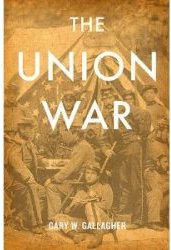
3. “The Union War” by Gary W. Gallagher. Harvard.
4. The Journal of the Civil War Era. March 2011. Vol. 1, No. 1
5. Civil War History. March 2011. Vol. 57. No. 1

Rebecca Aguilar

#CallingAllJournalists Initiative | Reporter | Media Watchdog | Mentor | Latinas in Journalism

Anna Fonte's Paper Planes

Words, images & collages tossed from a window.

Postcards from Barton Springs

Gayle Brennan Spencer - sending random thoughts to and from South Austin

The Flask Half Full

Irreverent travelogues, good drinks, and the cultural stories they tell.

Government Book Talk

Talking about some of the best publications from the Federal Government, past and present.

Cadillac Society

Cadillac News, Forums, Rumors, Reviews

Ob360media

Real News That Matters

Mealtime Joy

bringing joy to family meals

Øl, Mad og Folk

Bloggen Øl, Mad og Folk

a joyous kitchen

fun, delicious food for everyone

A Perfect Feast

Modern Comfort Food

donnablackwrites

Art is a gift we give ourselves

Fridgelore

low waste living drawn from food lore through the ages

BeckiesKitchen.com

MUSINGS : CRITICISM : HISTORY : NEWS

North River Notes

Observations on the Hudson River as it passes through New York City. The section of the Hudson which passes through New York is historically known as the North River, called this by the Dutch to distinguish it from the Delaware River, which they knew as the South River. This stretch of the Hudson is still often referred to as the North River by local mariners today. All photos copyright Daniel Katzive unless otherwise attributed. For more frequent updates, please follow northriverblog on Facebook or Instagram.

Flavorite

Where your favorite flavors come together