Recommended reading / viewing / listening

Ten facts about Jon Huntsman … Hadrian’s villa was more than a villa … Reeling in a 260-pound Mekong giant catfish … A lost Amazon civilization … Sexy corruption in China.

Most of these great items come from my Twitter feed or Facebook news feed. Follow me on Twitter and on Facebook for more fascinating videos, articles, essays and criticism.

1. Our Lefty Military
By Nicholas D. Kristof | The New York Times | June 15
“The United States armed forces knit together whites, blacks, Asians and Hispanics from diverse backgrounds, invests in their education and training, provides them with excellent health care and child care. And it does all this with minimal income gap …”

2. Fulfilling My Dream of Becoming a Diplomat
By Shamim Kazemi | DipNote | June 16
“It allowed me, in my own way, to give back to the country that offered asylum and a new, safe home to my family. It also fulfilled the desire to serve a common humanity that my upbringing had afforded me to appreciate.”

3. Solomon P. Ortiz congressional papers provide trail through 30 years of South Texas history
By Rick Spruill | Corpus Christi Caller-Times | June 16
“The photographs, congressional correspondence, research papers, meeting minutes and other governmental documents span Ortiz’s congressional career, said Thomas Kreneck, the associate director for Special Collections & Archives at Texas A&M University-Corpus Christi.”

4. Art of lost Amazon culture a surprise
Archaeology News Network | June 2011
“It is one of the most enticing archaeological mysteries of the Americas — a long-overlooked ancient culture that existed for 900 years on an island at the mouth of Amazon River and then disappeared.”

5. Giant catfish caught in Thailand sets new record
By Emily Sohn | Discovery News | June 16
Welshman David Kent caught “a 260-pound Mekong giant catfish … in Thailand. The angler had baited his hook with a mere piece of sweet corn. It took him just under an hour to reel it in.”

6. A Wider View of Authorship: Eroticizing the Past
By Kenny McPhee | The Bombshell :: Bookslut | June 2011
“Early in Eavan Boland’s dazzling new book, ‘A Journey with Two Maps: Becoming a Woman Poet,’ she tells a story: when she was a young poet and mother living in the suburbs of Dublin, she went into the city one day and happened to walk by an art gallery where she spied in the window a painting she immediately recognized as her mother’s work — her green vase, her beloved lily-of-the-valley, her pair of gloves.”

7. Election 101: Ten facts about Jon Huntsman and his presidential campaign
By Husna Haq | The Christian Science Monitor | June 21
“Dubbed ‘the Republican Democrats fear most,’ the tall, handsome, cerebral former governor of Utah often draws comparisons to Mr. Obama, the very man he’s struggling to distance himself from. Will that, and his centrist views and Mormon faith, keep him on the margins of the Republican field?”

8. True Stories: They Had Sex So I Didn’t Have To
By Molly Jong-Fast | Nerve | June 14
“A writer comes to terms with the sexual adventures of her parents.”

9. Sex, Buddhism and ballroom dancing: WikiLeaks reveals Beijing underbelly
By Michael Sheridan | The Australian | June 20
“US diplomats used to collect racy gossip linking Chinese leaders with mistresses and corruption, according to leaked cables reporting their conversations with political insiders and journalists.”

10. Hadrian’s buildings catch the Sun
By Eric Hand | NatureNews | June 16
“Hadrian’s villa 30 kilometres east of Rome was a place where the Roman Emperor could relax in marble baths and forget about the burdens of power. But he could never completely lose track of time, says Marina De Franceschini, an Italian archaeologist who believes that some of the villa’s buildings are aligned so as to produce sunlight effects for the seasons.”

Recommended reading / viewing / listening

Lessons from a Turkish grandmother … the Churchill we thought we knew … the release of all Pentagon Papers … Anna Nicole Smith and her doomed life … what not to say to the editor that fired you …

Most of these great items come from my Twitter feed or Facebook news feed. Follow me on Twitter and on Facebook for more fascinating videos, articles, essays and criticism.

1. My ‘Confession’
By Fang Lizhi | The New York Review of Books | June 2011
“From reading Henry Kissinger’s new book On China,1 I have learned that Mr. Kissinger met with Deng Xiaoping at least eleven times—more than with any other Chinese leader—and that the topic of one of their chats was whether Fang Lizhi would confess and repent.”

2. Jessi Arrington: Wearing nothing new
By Jessi Arrington | TED Talks | June 2011
“Designer Jessi Arrington packed nothing for TED but 7 pairs of undies, buying the rest of her clothes in thrift stores around LA. It’s a meditation on conscious consumption — wrapped in a rainbow of color and creativity.”

3. Chile’s Puyehue Volcano: A slideshow
Time | June 6
“After laying dormant for nearly half a century, the Puyehue volcano in southern Chile erupted on Saturday, shooting a column of ash and gas six miles into the sky and prompting the evacuation of more than 3,500 residents. … Here’s some of the best images photographers captured in the past 24 hours.”

4. “I Would Have Loved To Piss on Your Shoes”
By Jack Shafer | Slate | June 6
“In honor of every journalist who flipped the boss off on the way out the door, I’ve collected a few of their best kiss-off notes and gestures from the recent past. If, after reading, you don’t turn in your badge and burn every bridge and causeway behind you and fill with sewage every tunnel and viaduct that connects you to your former place of employment, I’ve failed in my mission.”

5. After 40 Years, the Complete Pentagon Papers
By Michael Cooper and Sam Roberts | The New York Times | June 7
“It may be a first in the annals of government secrecy: Declassifying documents to mark the anniversary of their leak to the press. But that is what will happen Monday, when the federal government plans to finally release the secret government study of the Vietnam War known as the Pentagon Papers 40 years after it was first published by The New York Times.”

6. Paw Paw & Lady Love
By Dan. P. Lee | New York Magazine | June 5
“Has the Supreme Court ever heard such a peculiarly American story as that of Anna Nicole Smith? And they didn’t know the half of it.”

7. Film directors are embracing TV
By Nicole Sperling and Melissa Maerz | Los Angeles Times | June 5
“Let the major movie studios have their superheroes and pirates. Cable TV has become more innovative, and top moviemakers such as Martin Scorsese, Michael Mann and Gus Van Sant are taking advantage.”

8. The Forgotten Churchill
By George Watson | The American Scholar | June 6
“The man who stared down Hitler also helped create the modern welfare state.”

9. Marriage Lessons from My Turkish Grandmother
By Sevil Delin | Granta | June 7
“The stories my grandmother, my anneanne, told me when I was a child are anything but children’s stories. They are folktales that have a common theme – the triumph of wily wives over evil husbands (jealous, repressive skinflints) through crafty subterfuge.”

10. Clever Girl
By Tessa Hadley | The New Yorker: Fiction | June 6
“My stepfather wasn’t a big man, not much taller than my mother. He was lithe and light on his feet, handsome, with velvety dark brows, a sensual mouth, and jet-black hair in a crewcut as thick and soft as the pelt of an animal (not that I ever touched it, though sometimes, out of curiosity, I wanted to).”

TUNES

My soundtrack for today included:
1. MANDINGA (Live) Buena Vista Social Club
2. A LA LOMA DE BELEN El Gran Combo de Puerto Rico
3. LA NOCHE DE LA IGUANA Lucrecia
4. DOS GARDENIAS Ibrahim Ferrer
5. PATRIA QUERIDA Los Guaracheros De Oriente
6. SON FO Africando All Stars
7. LA LIBELULA Mariana Montalvo
8. GUAJIRA LINDA Celina Gonzalez
9. BOOM BOOM BOOM The Iguanas
10. LA ULTIMA COPA Felipe Rodriguez

Passion for the pages

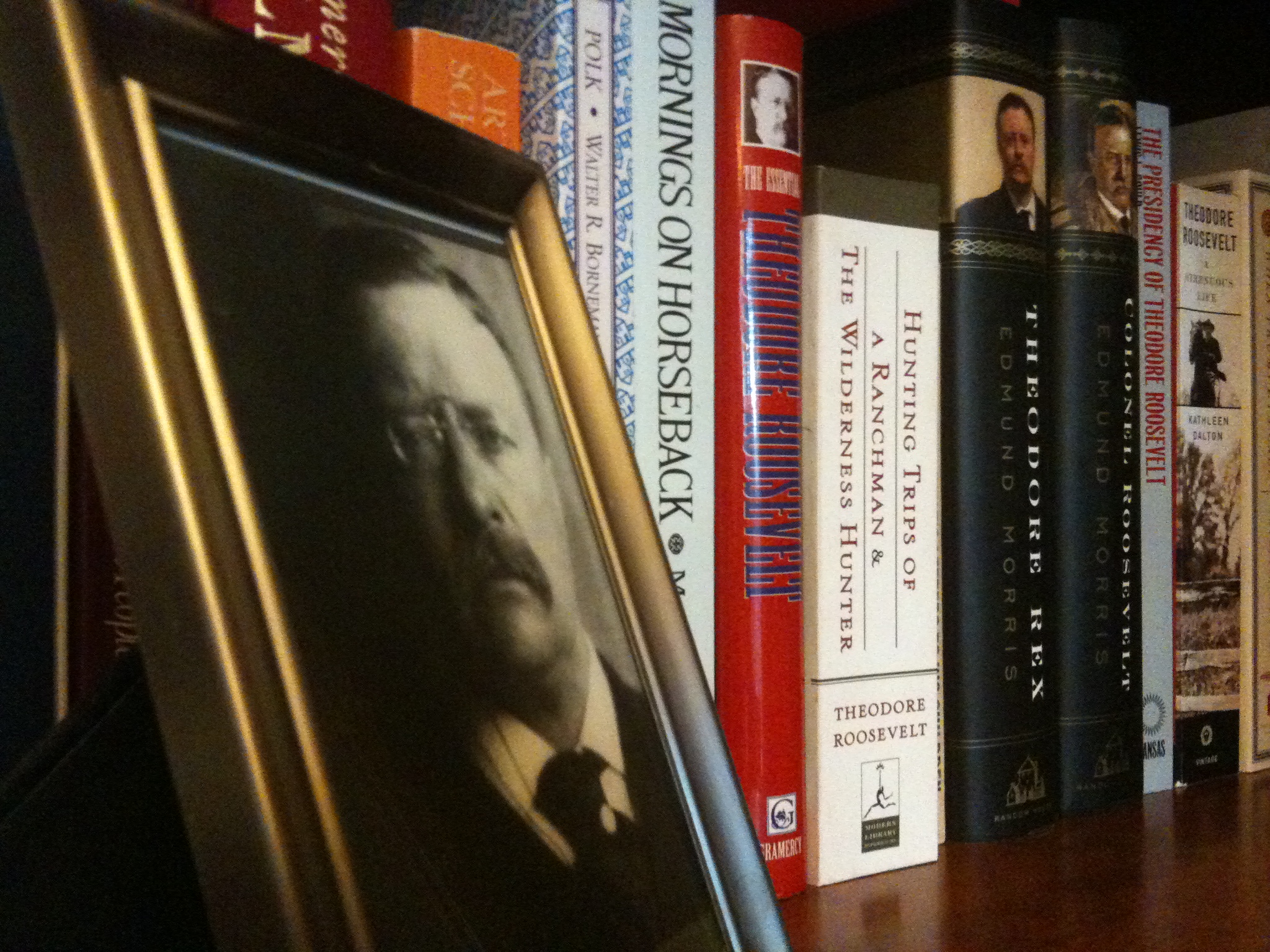
In early April, the Theodore Roosevelt Association posted a note on its Facebook page, asking “Ever Wonder What Roosevelt Liked to Read?” “Oh, yes,” I replied aloud. “I’m always interested.”

In early April, the Theodore Roosevelt Association posted a note on its Facebook page, asking “Ever Wonder What Roosevelt Liked to Read?”

“Oh, yes,” I replied aloud. “I’m always interested.”

The note began, “In 1905, a contributor to The Century Magazine (1881-1930), reported a two-year ‘pretty full, but far from complete’ list of what the president had read (or reread), ‘purely for enjoyment’. The list did not include all the books, magazines and papers the president had to read in the daily course of the nation’s business. The list included 83 different authors and approximately a couple hundred volumes, estimating TR devoured 35,000 pages a year or about 100 pages a day. …”

In the book “When Trumpets Call,” Patricia O’Toole explored Roosevelt’s life after his presidency, beginning with his March 1909 African safari. The account includes one of the more famous examples of Roosevelt’s love for books: the so-called Pigskin Library. It was, she wrote, a collection of about 50 volumes “to be taken apart, trimmed at the margins, and bound anew in pigskin, the material he thought most likely to withstand the beating of a year on safari.” Roosevelt stored the books in an alumnium container, and the whole collection weighed less than 60 pounds.

During the expedition “TR read with the intensity he gave to everything else,” O’Toole wrote, “his wattage focused on the book. He read before going to sleep at night, on rainy afternoons, aboard trains and ships, and whenever he needed a few minutes’ escape. The Pigskin Library was stocked with reading matter that took time to ingest,” including Homer, Dante, novels by Walter Scott, poetry from Keats and Browning, the works of Shakespeare and Mark Twain and Dickens, and works in their original French, German or Italian — languages in which he was fairly fluent. “He always carried a book into the field, reading under a tree during the noonday halt or next to a fresh kill as he waited” for the team that skinned his safari trophies.

The library would grow as the intense weeks and months in Africa passed, absorbing works from Montaigne, Cervantes and Charles Darwin, among many others. In “Colonel Roosevelt,” Edmund Morris wrote that by mid-August, the “intense physicality of Africa so stimulates (Roosevelt) intellectually that he has already read most of his Pigskin Library — some covers stained with blood, oil, ashes and sweat till they look like saddle leather.”

Volume 14 of the Memorial Edition of “The Works of Theodore Roosevelt” collected his literary essays, including one on the Pigskin Library (page 463). “[The books] were for use,” Roosevelt wrote, “not ornament. I almost always had some volume with me, either in my saddle-pocket or in the cartridge-bag which one of my gun-bearers carried to hold odds and ends. Often my reading would be done while resting under a tree at noon, perhaps beside the carcass of a beast I had killed, or else while waiting for camp to be pitched …”

Like the many books he took on other long trips, there were no complex reasons for selecting the books he took to Africa. “The choice,” he recalled in the essay, “would largely depend upon what I had just been reading.” Collections of German poetry would inspire Roosevelt to take more German poetry. Essays on Greek history would inspire him to take works by Polybius, the Greek historian. Reading Melville’s “Typee” would inspire him to read “Moby Dick” once again.

Having offered a casual list of his favorite books, Roosevelt’s essay segued into comments on Harvard President Charles Eliot’s then-recently published 50-volume Harvard Classics. “Let me repeat,” he said near the end of his observations, “that Mr. Eliot’s list is a good list, and that my protest is merely against the belief that it is possible to make any list of the kind which shall be more than a list as good as many scores or many hundreds of others.” Eliot’s list seemed too stuffy and too bland for Roosevelt, who loved funny novels as much as dense classical texts. “There are many thousands of good books” Roosevelt concluded, “and any list of such books should simply be accepted as meeting a given individual’s needs under given conditions of time and surroundings.”

I think Roosevelt sometimes saw himself as the perfect intellectual and moral example for his countrymen to follow on their march into the new century. Throughout his strenuous life, Roosevelt felt starved not only for the culture, literature, landscape and character of his own nation and society but for the world’s as well. If Americans were to emerge as the new leaders of the international community, they had to push themselves farther and expand their intellects beyond borders, oceans and languages, just like he had done. An expansive and ravenous intellect was, for Roosevelt, the foundation for a fully formed citizen of the world — certainly far too big to be limited to petty and proper Harvard book lists. Like him, that citizen was always reaching out for more, desperate to taste new writers, new opinions, and new challenges to preconceived notions. Life was too short — and too much fun — for anything less.

Total immersion

One of the several excellent books I read on my recent tour of Turkey was Orhan Pamuk’s memoir “Istanbul.” It’s a wonderful exploration of the sad, crumbling remnant of a city in which his childhood and early adulthood was rooted, and the novelist and Nobel laureate remains both enamored with and haunted by its grim and powerful dominance over his life.

One of the several excellent books I read on my recent tour of Turkey was Orhan Pamuk’s memoir “Istanbul.” It’s a wonderful exploration of the sad, crumbling remnant of a city in which his childhood and early adulthood was rooted, and the novelist and Nobel laureate remains both enamored with and haunted by its grim and powerful dominance over his life.

One of my favorite passages is a moment of black humor from Chapter 22, titled “On the Ships That Passed Through the Bosphorus, Famous Fires, Moving House, and Other Disasters,” where he recalls, during research for this book, reading old newspaper articles about people killing themselves by jumping into or otherwise ending up in the Bosphorus.

“However many cars that have flown into the Bosphorus over the years, the story is always the same: It’s passengers are dispatched to the watery depths, from where there is no return. …

“I should remind readers that, once cars start sinking, it’s impossible to open their doors because the pressure of the water against them is too great. At a time when an unusual number of cars were flying into the Bosphorus, one refined and thoughtful journalist, wishing to remind readers of this fact, did something rather clever: He published a survival guide, complete with beautifully drawn illustrations:

” ‘HOW TO ESCAPE FROM A CAR THAT’S FALLEN INTO THE BOSPHORUS
” ‘1. Don’t panic. Close your window and wait for your car to fill with water. Make sure the doors are unlocked. Also ensure that all passengers stay very still.
” ‘2. If the car continues to sink into the depths of the Bosphorus, pull up your hand brake.
” ‘3. Just as your car has almost filled with water, take one final breath of the last layer of air between the water and the car roof, slowly open the doors, and, without panicking, get out of the car.’ “

Pamuk concludes wryly, “I’m tempted to add a fourth pointer: With God’s help, your raincoat won’t get caught on the hand brake.”

“Istanbul” is a beautiful book. I’d also recommend Pamuk’s short stories, some published in the New Yorker, and his Nobel Prize acceptance speech, “My Father’s Suitcase,” also reprinted in the magazine.

What has happened to the short story?

Sometimes the best part of returning home is the huge, rich pile of mail, articles, newsletters, books, journals, newspapers, magazines and packages that await me. I dive in like a little kid jumping into a pile of fall leaves.

I’ve returned from vacation in southern Turkey, Istanbul and New York City. Now I really need some time to rest.

Sometimes the best part of returning home is the huge, rich pile of mail, articles, newsletters, books, journals, newspapers, magazines and packages that await me. I dive in like a little kid jumping into a pile of fall leaves.

One of the most interesting pieces in that pile was an article recently posted on The Millions website.

Paul Vidich explored why it seems the number of people reading short stories has dropped. The reasons have nothing to do with an overall diminished quality of short stories. Far from it. “The answer,” he writes, “is related to how readers are given the opportunity to read — distribution, in commercial terms.” The decline of mass market magazine readership has dragged down short story readership right along with it.

But technology, he says, offers a great opportunity. “Technology gave rise to the flowering of the short story, contributed to its decline, and technology will, in my opinion, again solve the problem of connecting readers and stories. Like the song, the short story is perfectly suited for mobile consumption.”

Interesting article. Check it out.

Stowe’s Civil War

I had some writer’s block the other night, and, as always, I turned to narrative historian David McCullough for some inspiration. One book in particular always re-energizes my creative energy, “Brave Companions: Portraits in History.”

I had some writer’s block the other night, and, as always, I turned to narrative historian David McCullough for some inspiration. One book in particular always re-energizes my creative energy, “Brave Companions: Portraits in History.” His incredibly diverse collection of historical essays and articles is probably one of my all-time favorite books. Among the best are illustrations of Alexander von Humboldt, Louis Agassiz, Frederic Remington, and the U.S. Congress, along with a brilliant tour guide for Washington D.C. and a musing on a special clock that tracks more than just the time.

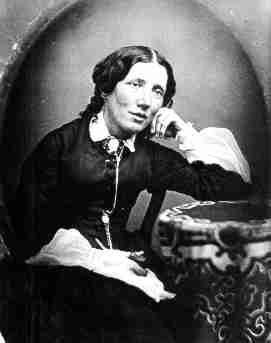
One of the pieces is about Harriet Beecher Stowe, author of “Uncle Tom’s Cabin,” the 1852 novel that made her an international celebrity overnight. As I bask in the resurgence of public interest in the Civil War, I’ll share with you what McCullough writes about Stowe during the war:

“When war came, everyone told her it was her war, and she thought so too. In South Carolina, as the war commenced, the wife of a plantation owner wrote in her diary that naturally slavery had to go, but added, ‘Yes, how I envy those saintly Yankee women, in their clean cool New England homes, writing to make their fortunes and to shame us.’

“Harriet Stowe never saw the Civil War as anything but a war to end slavery, and all her old Beecher pacifist principles went right out the window. ‘Better, a thousand times better, open, manly, energetic war, than cowardly and treacherous peace,’ she proclaimed. Her oldest son, Frederick, put on a uniform and went off to fight. Impatient with Lincoln for not announcing emancipation right away, she went down to Washington when he finally proclaimed that the slaves would be free, and was received privately in the White House. The scene is part of our folklore. ‘So this is the little woman who made this big war,’ Lincoln is supposed to have said as he shook her hand.

“She was sitting in the gallery at the Boston Music Hall, attending a concert, on January 1, 1863, the day the Emancipation Proclamation became effective. When an announcement of the historic event was made from the stage, someboday called out that she was in the gallery. In an instant the audience was on its feet cheering while she stood and bowed, her bonnet awry.”

TUNES

My poolside soundtrack for today included:
1. IN THE CLUB 50 Cent
2. MADE YOU LOOK Nas
3. HELLO N.W.A.
4. CALIFORNIA LOVE 2Pac
5. LET IT RIDE Dr. Dre
6. GIN & JUICE Snoop Dogg
7. BREAK U OFF Kool Keith
8. YOU CAN DO IT Ice Cube
9. NUTHIN’ BUT A G-THANG Snoop Dogg & Dr. Dre
10. LOSE CONTROL (Stonebridge mix) Missy Elliott, Ciara & Fatman Scoop

‘Youth is the weapon’

The cost of youthful idealism, the history of Iraq, some useful writing tips, notable books and journals I’ve recently received, and the soundtrack for a Beautiful Blues Friday.

Deadly idealism

The New York Times recently reminded me of an aspect of story of African and Middle Eastern uprising I hadn’t thought about before: how this revolutionary and reformatory fervor must appear to Iraqi youth politically suffocated by the limping government.

Supplementing their article, the At War news blog offered quotes from Iraqis collected during the reporting, “a sampling of their comments on three topics vital to the country’s future: democracy, faith and the future of the young generation.” Sherzad Omar Rafeq, a Kirkuk attorney: “The youth is the weapon of the next change in Iraq, and especially in the Kurdistan region, through demonstrations and sit-ins that are forcing change and overthrowing corrupted people.”

Youthful idealism has always frightened me, if only because history has showed me so many dreams of change end up in the gutters of geo-political reality, especially after U.S. force is utilized to take down those “corrupted people.” I used to condemn my own cynicism. I don’t anymore. I just remind myself to check particular numbers on a particular list to see the price of idealism. I don’t want to ever see any more lists like that one, especially if they’re the consequence of anyone’s youthful idealism, conceived on the streets of Baghdad or behind the desk in the Oval Office.

Speaking of Iraq, take a moment to listen to PRI’s stunning three-part series on the history of Iraq, the torturous British legacy and its bloody history with the United States.

Beautiful Blue Friday

My soundtrack for today included:
1. WHEN LOVE COMES TO TOWN U2 and B.B. King
2. BLOOD AND SNOW The Melissa Ludwig Band
3. TAKE ME Mable John
4. HOOCHIE COOCHIE MAN Muddy Waters
5. LAST NIGHT Little Walter
6. THE THRILL IS GONE B.B. King
7. I’M A MAN Bo Diddley
8. THAT’S ALL RIGHT Mighty Joe Young
9. MY LOVE WILL NEVER DIE Otis Rush
10. DEATH LETTER Cassandra Wilson

Writing tips

Over at the Guardian’s Punctuated Equilibrium blog, Henry Gee contributed his 10 tips for good writing. I feel better, knowing I already follow “the first six.” Check it out here.

Journals and books recently received

1. “The Berlin-Baghdad Express: The Ottoman Empire and Germany’s Bid for World Power” by Sean McMeekin. Belknap Harvard. $29.95
2. The Journal of Military History. April 2011, Vol. 75, No. 2
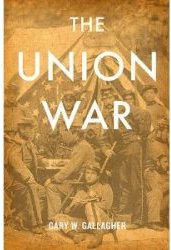
3. “The Union War” by Gary W. Gallagher. Harvard.
4. The Journal of the Civil War Era. March 2011. Vol. 1, No. 1
5. Civil War History. March 2011. Vol. 57. No. 1

Behind The Wall

Tabletop Games

Rebecca Aguilar

#CallingAllJournalists Initiative | Reporter | Media Watchdog | Mentor | Latinas in Journalism

Anna Fonte's Paper Planes

Words, images & collages tossed from a window.

Postcards from Barton Springs

Gayle Brennan Spencer - sending random thoughts to and from South Austin

The Flask Half Full

Irreverent travelogues, good drinks, and the cultural stories they tell.

Government Book Talk

Talking about some of the best publications from the Federal Government, past and present.

Cadillac Society

Cadillac News, Forums, Rumors, Reviews

Ob360media

Real News That Matters

Mealtime Joy

bringing joy to family meals

Øl, Mad og Folk

Bloggen Øl, Mad og Folk

a joyous kitchen

fun, delicious food for everyone

A Perfect Feast

Modern Comfort Food

donnablackwrites

Art is a gift we give ourselves

Fridgelore

low waste living drawn from food lore through the ages

BeckiesKitchen.com

MUSINGS : CRITICISM : HISTORY : NEWS

North River Notes

Observations on the Hudson River as it passes through New York City. The section of the Hudson which passes through New York is historically known as the North River, called this by the Dutch to distinguish it from the Delaware River, which they knew as the South River. This stretch of the Hudson is still often referred to as the North River by local mariners today. All photos copyright Daniel Katzive unless otherwise attributed. For more frequent updates, please follow northriverblog on Facebook or Instagram.