Recommended reading / viewing / listening

Cold War myths / Classics’ future / Talking to yourself / Boozy writing / Gossipy grandma

Most of these great items come from my Twitter feed or Facebook news feed. Follow me on Twitter and on Facebook for more fascinating videos, articles, essays and criticism. Read past recommendations from this series here.

1. In 2012 race, both sides seek middle-class voters
By Erica Werner | Associated Press | Dec. 24
“Fighting to win over unhappy American voters, President Barack Obama and his Republican challengers are seizing on one of the most potent issues this election season: the struggling middle class and the widening gap between rich and poor.”

2. The Forgotten Cold War: 20 Years Later, Myths About U.S. Victory Persist
By Leslie H. Gelb | The Daily Beast | Dec. 23
“This month is the 20th anniversary of its end, but few remember how it dominated our lives. What does stick in people’s heads, writes Leslie H. Gelb, is wrong — that Reagan won the war with big military spending and toughness.”

3. Do the Classics Have a Future?
By Mary Beard | The New York Review of Books | January 2012
“[H]ow do we make the ancient world make sense to us? How do we translate it?”

4. For Joplin, a Love Letter in Ruins
By A.G. Sulzberger | The New York Times | Dec. 25
“The reason this house has so far survived the wrecking ball can be found scribbled on its walls, on its floorboards, in its closets and along virtually every other remaining surface. They are personal messages, thousands of them, handwritten by the volunteers who flooded the community to help sift through and cart out the debris.”

5. Thinking Out Loud
By C. Claiborne Ray | Q&A :: The New York Times | September 2009
“Why do ‘normal’ people talk to themselves?”

6. Barcode Scanning Apps
By J.D. Biersdorfer | Gadgetwise :: The New York Times | Nov. 16
“Once scanned, most apps present a list of places and prices the scanned item can be found, which makes comparison-shopping even easier on the go.”

7. The Dreamers
By Amie Williams | Activate :: Al Jazeera | September 2011
“Roughly two million young people in the US are unaware that they are classified as illegal immigrants.”

8. Does Alcohol Improve Your Writing?
By Brian Palmer | Explainer :: Slate | Dec. 16
“Putting Hitch’s theory to the test.”

9. I can’t get along with my grandma, who loves to gossip, criticize
Troubleshooter :: The Yomiuri Shimbun | Dec. 16
“When we all sit down for dinner, she loves to gossip and speak ill of people, talking about how much money they have or their level of education.”

10. Isherwood in Berlin
Witness :: BBC News | March 18
“The English author Christopher Isherwood lived in Berlin throughout the 1930s. His vision of the city has been linked with the German capital ever since.”

Recommended reading / viewing / listening

Great iPhone apps / Smarties’ gadgets / Bachelor pad essentials / Writers’ libraries / Octopus intellect

Most of these great items come from my Twitter feed or Facebook news feed. Follow me on Twitter and on Facebook for more fascinating videos, articles, essays and criticism. Read past recommendations from this series here.

1. Some New Little Treasures for the iPhone
By Bob Tedeschi | The New York Times | Dec. 21
“If you really want to turbocharge your device, combine these with last year’s picks. … Like last year’s list, this one includes many free picks.”

2. The Indispensable Gadgets of the World’s Smartest People
By Larry Greenemeier | Scientific American | Dec. 21
“We ask our board of advisers to choose the technologies that they could not live without.”

3. Nine Essentials for the Perfect Bachelor Pad
By Michael Carl | Carl’s Crush :: Vanity Fair | Dec. 21
“So here are the nine things you need to create the perfect apartment for ‘company’ (I’m trying to avoid saying ‘getting laid,’ O.K.?).”

4. Writers and Their Books: Inside Famous Authors’ Personal Libraries
By Maria Popova | The Atlantic | Dec. 21
“As a hopeless bibliophile, an obsessive lover of bookcases, and a chronic pursuer of voyeuristic peeks inside the minds of creators, I’m utterly spellbound by Unpacking My Library: Writers and Their Books — a vicarious journey into the personal libraries of thirteen favorite authors. …”

5. Trial of the Will
Vanity Fair | January 2012
“Reviewing familiar principles and maxims in the face of mortal illness, Christopher Hitchens has found one of them increasingly ridiculous: ‘Whatever doesn’t kill me makes me stronger.’ Oh, really?”

6. The Gulf War
By Raffi Khatchadourian | The New Yorker | March 14
“Were there any heroes in the BP oil disaster”

7. Deep Intellect
By Sy Montgomery | Orion Magazine | Nov./Dec. 2011
“Inside the mind of an octopus”

8. India, China Show Military Grit
By Nitin Gokhale | The Diplomat | Dec. 22
“The latest defense dialogue between the Chinese and Indian militaries had some constructive ideas for improving military ties. Can they follow through?”

9. Analysis: Republicans risk backlash in 2012
By Tim Reid | Reuters | Dec. 21
“This week’s tense standoff over how to extend payroll tax cuts for 160 million Americans offered an unflattering look at how conservative House Republicans occasionally have overreached in avoiding compromise, lawmakers, strategists and analysts say.”

10. Reagan assassination attempt
Witness :: BBC News | March 30
“On 30 March 1981, there was an attempt to assassinate the US President.”

Recommended reading / viewing / listening

Twain’s lost love / No more experts / Stalled computer / Cheney myth / Bombing of Guernica

Most of these great items come from my Twitter feed or Facebook news feed. Follow me on Twitter and on Facebook for more fascinating videos, articles, essays and criticism. Read past recommendations from this series here.

1. Iraq: What Remains
Christopher de Bellaigue | NYR Blog :: The New York Review of Books | Dec. 21
“[M]any Americans continue to see in Iraq a reflection of their own country’s ideals and contradictions. They will remember Iraq as an American trauma. But it was, above all, an Iraqi trauma.”

2. Mark Twain in Love
By Ron Powers | Smithsonian | May 2010
“A chance encounter on a New Orleans dock in 1858 haunted the writer for the rest of his life ”

3. The Information
By Adam Gopnik | The New Yorker | Feb. 14
“How the Internet gets inside us”

4. Wikipedia and the Death of the Expert
By Maria Bustillos | The Awl | May 17
“If learners are indeed doers and not recipients, from whom are they learning? From one another, it appears; same as it ever was.”

5. My daughter longs to meet real dad despite his snubs
Troubleshooter :: The Yomiuri Shimbun | Dec. 16
“I’m a woman in my 40s who got divorced when my daughter was 5 years old. I remarried a foreigner and we are currently living overseas. My daughter is now in high school and she misses her biological father.”

6. Q&A: Getting a Response From Stalled Software
By J.D. Biersdorfer | Gadgetwise :: The New York Times | Oct. 13
“Q: What causes a long pause with “Not Responding” indicated at the top of a program’s window?”

7. Drunks on a Plane: The Top 10 Hottest Messes at 35,000FT
The Flying Pinto | November 2011
“In honor of holiday travel: a look at the airline industry’s most infamous inebriates.”

8. Five myths about Dick Cheney
By Stephen F. Hayes | Five Myths :: The Washington Post | Sept. 9
“He’s been called Darth Vader, feared or derided as a trigger-happy, torture-loving puppet master who called the shots over the eight years of the George W. Bush White House. … But what about the former vice president is real, exaggerated, or outright myth?”

9. Civil War women: Fanny Kemble
Civil War Women Blog | Aug. 27
“Fanny Kemble was a famous British actress prior to her marriage to slaveholder Pierce Mease Butler, grandson of Founding Father Pierce Butler. Fanny was an independent and highly intelligent woman who had no idea how much her life would be affected by the institution of slavery in America.”

10. The bombing of Guernica
Witness :: BBC News | April 26
“It was one of the worst atrocities of the Spanish Civil War. German bombers, backing Franco’s fascist forces, virtually destroyed the Basque town.”

Recommended reading / viewing / listening

A president’s generals / Massacre’s secrets uncovered / Newton goes digital / GOP’s southern battles / Biden eyes 2016

Most of these great items come from my Twitter feed or Facebook news feed. Follow me on Twitter and on Facebook for more fascinating videos, articles, essays and criticism. Read past recommendations from this series here.

1. Sir Isaac Newton’s Papers & Annotated Principia Go Digital
OpenCulture | Dec. 13
“The initial archive features 4,000 pages of scanned materials (roughly 20% of the complete Newton archive), and eventually Cambridge will add material from Charles Darwin, another famous alum, and other scientific figures.”

2. MIT researchers unravel the physics of how cats drink
By Carolyn Y. Johnson | The Green Blog :: The Boston Globe | Nov. 11
“Dogs take a straightforward approach, using their tongues as ladles to literally scoop water into their mouths. Cats, on the other hand, solve a delicate physics, fluid mechanics, and engineering problem with every gulp.”

3. The South is up for grabs
By Alexander Burns and Jonathan Martin | Politico | Dec. 12
“Republican presidential nominations have traditionally been forged here — in South Carolina, especially — and any successful challenger to Mitt Romney would most likely have to dominate among heavily conservative, evangelical Southern voters.”

4. The President and the Generals
By Richard A. Clarke | The New York Times | Dec. 12
“History provides ample evidence of bad judgment on the part of American military commanders, and some of our best presidents have had the courage to overrule them.”

5. Biden 2016?
By Byron Tau | Politco 44 :: Politico | Dec. 14
“Vice President Biden — who ran for president in 1988 and 2008 — refused to rule out a run when asked, telling NBC’s ‘Today’ show recently that ‘I’m never ready to close the door on anything.’ ”

6. Q&A: Defending Your PC Online
By J.D. Biersdorfer | Gadgetwise :: The New York Times | Sept. 26
“Q: Does antivirus software protect my PC from hackers?”

7. Talking to Parents About Fat Babies
By Anahad O’Connor | Well :: The New York Times | Dec. 12
“Obesity in teenagers and adolescents is a major concern for pediatricians. But the discussion gets tricky when it turns to a weight crisis in infants.”

8. Junkyard Gives Up Secret Accounts of Massacre in Iraq
By Michael S. Schmidt | The New York Times | Dec. 14
“The 400 pages of interrogations, once closely guarded as secrets of war, were supposed to have been destroyed as the last American troops prepare to leave Iraq.”

9. Amy Purdy: Living beyond limits
TED Talks | May 2011
“When she was 19, Amy Purdy lost both her legs below the knee. And now … she’s a pro snowboarder.”

10. Yuri Gagarin
Witness :: BBC News | April 12
“The young cosmonaut became a hero around the world and a poster boy for Soviet technological achievement.”

Recommended reading / viewing / listening

Healthy eating myths … Poison and Jane Austen … NASA’s Dawn spacecraft … Clinton’s new advisers … Pearl Harbor myths

Most of these great items come from my Twitter feed or Facebook news feed. Follow me on Twitter and on Facebook for more fascinating videos, articles, essays and criticism. Read past recommendations from this series here.

1. Five myths about Pearl Harbor
By Craig Shirley | Five Myths :: The Washington Post | Dec. 2
“President Franklin D. Roosevelt called Dec. 7, 1941, ‘a date which will live in infamy.’ And that day, when the Japanese launched a surprise attack on the U.S. naval base at Pearl Harbor, has lived in infamy for 70 years. Yet even as the memory of the attack has lasted, so have the misperceptions surrounding it.”

2. Pearl Harbor survivors share stories of attack
By Audrey McAvoy | Associated Press | Dec. 5
“The College of the Ozarks program aims to preserve the stories of veterans – something that’s becoming increasingly urgent for Pearl Harbor survivors as the youngest are in their late 80s.”

3. Smallest habitable world around sun-like star found
By Melissae Fellet | New Scientist | Dec. 5
“The new planet was found with the KeplerMovie Camera telescope, which searches for signs that a star’s light has dimmed because a planet has passed between it and the telescope — an event called a transit.”

4. Who will be whispering in Hillary Clinton’s ear now?
By Howard LaFranchi | Christian Science Monitor | Dec. 6
“Secretary Hillary Clinton, eager for the State Department to have its own advisory panel of big thinkers, is convening the new, 25-member Foreign Affairs Policy Board this month.”

5. NASA: Massive Asteroid Vesta ‘Unlike Any Other’
By Alicia Chang | Associated Press | Dec. 5
“Since slipping into orbit around Vesta in July, NASA’s Dawn spacecraft has beamed back stunning images of the second largest object residing in the asteroid belt.”

6. Q&A: Lending Out an Electronic Book
By J.D. Biersdorfer | Gadgetwise :: The New York Times | Aug. 10
“Q: Can you lend a Kindle e-book out to someone who doesn’t have a Kindle e-reader?”

7. Michele Bachmann Loves Vaccines After All
By Benjy Sarlin | Talking Points Memo | Dec. 7
“Michele Bachman, who was condemned as an anti-vaccination conspiracy theorist after suggesting that Gardasil causes ‘mental retardation,’ said Wednesday that she was in fact a big supporter of vaccines. Not only that, she thinks there are too many regulations on them.”

8. Was Jane Austen Poisoned by Arsenic? Science May Soon Find Out
By Ferris Jabr | Scientific American | Dec. 5
“Modern techniques could reveal whether the celebrated English novelist’s surviving hair contains unusually high levels of arsenic”

9. Five myths about healthy eating
By Katherine Mangu-Ward | Five Myths :: The Washington Post | Oct. 14
Myth 1: “People in poor neighborhoods lack access to fresh fruits and vegetables.”

10. Civil War women: Elizabeth Townsend Meagher
Civil War Women blog | Sept. 19
“Elizabeth Meagher was 36 years of age when she arrived on the Montana frontier. She had married the brilliant, but unpredictable, Irish exile in New York and often served as his secretary and nurse. She first arrived at Fort Benton June 5, 1866, aboard the sternwheeler Ontario in the company of her husband who had gone downriver from Benton to meet her.”

Nixon lurking in the shadows

Some people fear death. Others fear failure. My fear is not as dire as those two, but it’s related to both.

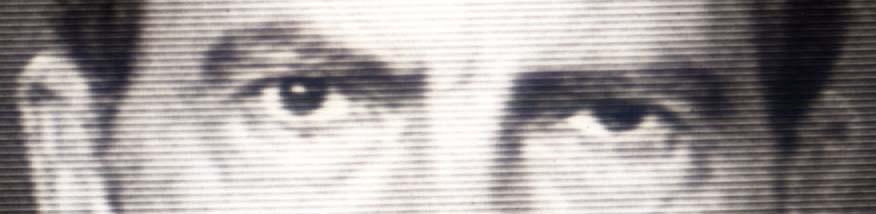
Richard Nixon was in my dream last night. The post-presidency Nixon. The bitter, self-pitying, damned Nixon, coiled in the shadows of La Casa Pacifica in San Clemente, dark eyes glaring at the world as it spun on without him. In my dream, I was informed that he had selected me to help him with a new book on foreign policy, his biggest work yet, looking a century ahead, in which he would make 20 predictions of what awaited the United States in terms of economics, foreign policy, war, health and technology.

He also quietly admitted to me that he was going to run for president again, “to save America from itself.” Evidently, my dream was set at some point before his death in April 1994 and in a nation governed by a constitution without the Twenty-Second Amendment. I told him that my political and social beliefs mostly leaned toward the Democrats. “That’s fine, fine,” he said. “All the better.” He gruffly insisted that he wanted to be challenged at every point. “That’s the best kind of White House chief of staff,” he growled with a smile. “Gonna need a bastard like that.” At that point, thankfully, I woke up.

Throughout much of my life, Nixon has fascinated me. Nixon the scarred politician. Nixon the global strategist. Nixon the cold-blooded survivor. Nixon the abused vice president. Nixon the elder statesman. Nixon the social reject. I was born during the last months of the Nixon presidency. My mother recalled cradling her new wrinkly, sleepy baby as she watched the Watergate investigations burn down the Nixon presidency. She thinks that’s why I love political history and political scandal so much.

My bookshelves are filled with books on Nixon. On my office wall I’ve hung framed historic newspapers, including the Friday, Aug. 9, 1974, edition of the New York Times, blaring the fully capitalized words, “Nixon Resigns.” Nixon’s angry, bleary eyes are like scarred volcanic coals staring at me from the yellowed newsprint, as if they’re demanding something from me, something unspoken and unknowable. In Nixon’s case, I think it’s better that it remains unspoken and unknowable.

In recent weeks, Nixon has been on my mind more than usual. Nixon-related news seemed to be everywhere.

Writer Ann Beattie recently wrote an op-ed in the New York Times about her new book on Pat Nixon, which was later reviewed in the Book Review.

The New York Times recently ran a fascinating story on the release of the transcript of Nixon’s combative and acidly sarcastic grand jury testimony to Watergate prosecutors. The story contained a great quote from historian Stanley Kutler: “If you know the voice of Richard Nixon, it’s a virtuoso performance, from the awkward attempts at humor to the moments of self-pity.”

Timothy Naftali, the historian and Nixon Library director, recently announced that he was leaving the presidential center. Two weeks later, the library unveiled audio recordings of Nixon recalling his bizarre meeting with anti-war protestors at the Lincoln Memorial.

Journalist Tom Wicker, who wrote a beautiful essay about Nixon for the Character Above All series, died several days ago. China recently agreed to stage — on its own terms — the play “Top Secret: The Battle for the Pentagon Papers,” an exploration of the clash between government power and a free press.

And, finally, the website for the PBS series “American Experience” recently redesigned the page devoted to its powerful presidential documentaries, including a brilliant, bitter one devoted to Nixon.

That 20-year-old PBS documentary, which is sorely in need of an update, ended its introductory segment with a quote that has stayed with me since I first saw it 15 years ago. It was from then-Attorney General Eliot Richardson, who said: “It struck me from time to time that Nixon, as a character, would have been so easy to fix, in the sense of removing these rather petty flaws. And yet, I think it’s also true that if you did this, you would probably have removed that very inner core of insecurity that led to his drive. A secure Nixon, almost surely, in my view, would never have been President of the United States at all.”

For years, as I systematically built a life as an editor, writer and historian, Richardson’s grim observation of Nixon somehow intensified the raging fires fueling my own ambitions. It also challenged me as a presidential historian to understand the intricate mechanisms of a genuinely great and terrible president, along with the diplomatic triumphs and political wastelands he left in his wake.

When I considered Richardson’s observation from the perspective of a novelist, his characterization of Nixon stood as a supreme example of how to design and engineer complex, unforgettable, and tragically-doomed characters for my own fictional illustrations of an equally doomed America. With Nixon in mind, I assembled various aspects of brilliant and frightened men and women, each character crippled by contradictions and insecurities, their virtuous ambitions eventually mutating into bitterness and anger, like the coils of an anaconda strangling their moral centers. Each character is stunning in their own unique way, each one an absolute genius at one thing, magnificently talented, each one contributing to the greater story and the greater society. Some are geniuses yet they don’t know it. Some realize their talents all too late as they look back at a wasted existence, lost love and betrayed principles. For others, their genius is too heavy a burden, or too sharp of a weapon, and they use it to destroy the lives all around them. They are the perfect liars, manipulators, and killers, naturally evil or self-centered people whose true darkness is fully appreciated only when they are thrust into terrible tragedies or failures. A few of my characters — too few — are lucky. They are discovered and guided by the right mentors, and they live rich lives of fulfillment and success, not entirely sure why so many others lead aimless lives destitute of happiness and self-worth.

Lurking not too far behind my musings on Nixon as a president and as a man are my own fears and uncertainties. Some people fear death. Others fear failure. My fear is not as dire as those two, but it’s related to both. I’m haunted every moment of every day by a fear of mediocrity. To me, death is fine as long as I’ve accomplished something notable, as long as I’m celebrated after I’m gone, as long as I’m remembered and appreciated and emulated. Failure is fine as long as I have faith that there are substantive triumphs to eclipse them. I don’t need my face carved onto a mountain or an aircraft carrier named after me, of course. It’s not about ego. Perhaps it’s more about how much I’ve demanded of myself and about how I’ve met those demands, regardless of how ridiculously unrealistic they may have been.

Isn’t this everyone’s personal struggle? Wasn’t it Nixon’s struggle? Shouldn’t I be comforted by the sense that I’m intelligent and perceptive enough to perceive how inconsequential I still am? Shouldn’t that give me some kind of hope, some kind of fresh drive to push harder, write better, think deeper and dream bigger?

Do I have “rather petty flaws” that are driving me to some kind of Pyrrhic doom? Will my hard work in academics and writing build a body of work that I can look back upon with pride? Or am I simply a serene, comfortable, middle class, 21st century American, slowly and sensibly living out his days, not overly flawed and not admirably ambitious, doomed to accomplish nothing? Am I just someone cruising along the suburbs of American existence, blind to the opportunities all around him, a serene man adrift, watched over by his “patron saint,” a forgettable face lost in a forgettable life?

I can’t believe that. I’m a good man who will someday be a great man. That’s all there is to it. This life will improve every life it touches, and it will leave behind a better world. Those are the ambitions I’m achieving and will continue to achieve. That is the greatness I will be remembered for. Hardly mediocre. Hardly petty.

I’ll mention that to Nixon the next time he offers me a job.

Recommended reading / viewing / listening

A new Canary island … Scorsese’s best … al-Qaida in Africa … Bachmann’s journey … Girl gangs

Most of these great items come from my Twitter feed or Facebook news feed. Follow me on Twitter and on Facebook for more fascinating videos, articles, essays and criticism. Read past recommendations from this series here.

1. Canary Island volcano: A new island in the making?
By Rob Hugh-Jones | The World and BBC News | Dec. 3
“An undersea volcano erupting just south of Spain’s Canary Islands may be the beginnings of a new island, or an extension to an existing one. For some, it’s a colourful spectacle — for others a major blow to their livelihood.”

2. Martin Scorsese’s greatest movies
By Matt Zoller Seitz | Salon | Dec. 3
“‘Raging Bull’s’ a contender, and ‘Taxi Driver.’ Which other films round out the iconic director’s best?”

3. Dreaming May Help Relieve a Bad Day
My HealthNewsDaily | Nov. 23
“The results show that during nighttime dreaming, also known as REM sleep, the brain processes emotional experiences in a ‘safe’ environment, or one in which stress chemicals are low. This processing may take the emotional edge off of difficult memories, the researchers said.”

4. Candy, cash — al-Qaida implants itself in Africa
By Rukmini Callimachi and Martin Vogl | Associated Press | Dec. 4
“The terrorist group has create a refuge in this remote land through a strategy of winning hearts and minds, described in rare detail by seven locals in regular contact with the cell.”

5. Bachmann, from Waterloo to White House contender
By Adam Geller | Associated Press | Dec. 3
“The choreographed repetition of modern presidential campaigns can turn the most personable candidate into an endless loop of talking points. But any close observer of Bachmann’s political career would be hard-pressed to dismiss her as two-dimensional.”

6. Plastic Bag Bans Spreading Across The United States
By Jordan Howard | The Huffington Post | Dec. 1
“Four cities in Oregon — Eugene, Corvallis, Newport and Ashland — are considering banning plastic bags at retail stores. The towns would join at least 10 other U.S. cities and counties that have prohibited plastic bags since 2008.”

7. Interesting readers, as well as writers
By Sarah Sweeney | Harvard Gazette | Dec. 1
“Book focuses on leading authors and the books they love”

8. Chelsea Clinton, Living Up to the Family Name
By Amy Chozick | The New York Times | Dec. 3
“Her move to television was a career shift she initiated, having her close advisers arrange interviews with top network executives and at one point working with the powerful Creative Artists Agency.”

9. Which Faulkner Novels Should HBO Adapt?
By David Haglund | Browbeat :: Slate | Dec. 2
“Clearly this is a question for true Faulkner aficionados, so I posed it to a handful of writers who know his work intimately—starting with a novelist who’s no slouch himself when it comes to literary adaptations.”

10. Rise of the girl gangs
By Brad Hamilton | The New York Post | Dec. 3
“As ‘crews’ proliferate in New York’s housing projects, officials worry about the increasing brutality of all-female wolfpacks”

**************

TUNES

My soundtrack for today included:
1. LOVE TO LOVE YOU BABY Donna Summer
2. POSSESSION Sarah McLachlan
3. ELSEWHERE (The Freedom Sessions) Sarah McLachlan
4. EROTICA Madonna
5. I WANT TO KNOW WHAT LOVE IS Foreigner
6. WAIT (The Whisper Song) Ying Yang Twins
7. KILOMETER Sebastien Tellier
8. THE ORBITING SUNS Jens Gad
9. PUNCH DRUNK Sade
10. LINGER The Cranberries

Recommended reading / viewing / listening

Today’s intellectuals … Herman Cain fallout … Hating while bored … The new YouTube … Latin America’s new alliance.

Most of these great items come from my Twitter feed or Facebook news feed. Follow me on Twitter and on Facebook for more fascinating videos, articles, essays and criticism. Read past recommendations from this series here.

1. The Literary Cubs
By Alex Williams | The New York Times | Nov. 30
“Fueled by B.Y.O.B. bourbon, impressive degrees and the angst that comes with being young and unmoored, members spend their hours filling the air with talk of Edmund Wilson and poststructuralism.”

2. Grudge Lust
By Elizabeth Greenwood | The New Inquiry | Nov. 23
“Sometimes, especially in arduous and boring times, like a long flight or a dull class, I will pick someone out of a crowd to be my nemesis. My nemeses need not have harmed me, per se, but she or he will be selected for some ghastly, unforgivable trait.”

3. 10 political lessons from Herman Cain’s campaign
Naked Politics :: The Miami Herald | Dec. 3
“Herman Cain’s campaign is gone, but the political takeaways live on”

4. YouTube Gets Its Biggest Makeover Ever, Becomes More Google-Like
By Chris Taylor | Mashable Tech | Dec. 1
“So what’s the change all about? One word: channels. The world’s most popular online video service now sees itself as a descendent of cable TV, with millions of channels rather than hundreds — and it’s doing its darndest to encourage you to use it that way.”

5. Dear Important Novelists: Be Less Like Moses and More Like Howard Cosell
By Dwight Garner | The New York Times Magazine | Sept. 16
“It’s worth suggesting, though, that something more meaningful may be going on here; these long spans between books may indicate a desalinating tidal change in the place novelists occupy in our culture.”

6. Herman Cain Exits
By Amy Davidson | Close Read :: The New Yorker | Dec. 3
“Really, we promise — we’ll manage. Cain suspending his campaign means that we will no longer have to suspend our disbelief about the seriousness of his candidacy, or about what’s become of our political culture.”

7. Understanding the Battle Over Texas Redistricting
By Justin Dehn and Thanh Tan | The Texas Tribune | Dec. 2
“Months after the Legislature established its maps, it’s still not clear who Texans will be voting for in next year’s congressional and state House and Senate races. The Trib’s Thanh Tan and Ross Ramsey explain why.”

8. How Herman Cain benefits from dropping out: Money and political power
By Brad Knickerbocker | The Christian Science Monitor | Dec. 3
“Herman Cain may no longer be a presidential candidate, but he doesn’t need to sulk. His promise to endorse one of the other candidates means political power, and his books and other endeavors will bring him more money.”

9. Chavez lauds new Latin American alliance
Al Jazeera | Dec. 3
“Venezuelan president, battling cancer, appears energetic at founding of 33-member bloc meant to counter United States.”

10. Susan Wallace
Civil War Women Blog | Nov. 28
“Susan Arnold Elston Wallace was an American author and poet and wife of Civil War soldier and author Lew Wallace.”

**************

TUNES

My soundtrack for today included:
1. OH SWEET NUTHIN’ The Velvet Underground
2. THE TRUTH Handsome Boy Modeling School
3. I’LL TAKE YOU THERE The Staple Singers
4. WAY DOWN IN THE HOLE Domaje
5. WHIPPING POST The Allman Brothers Band
6. THIS NIGHT Black Lab
7. GROUNDS FOR DIVORCE Elbow
8. I’LL FLY AWAY Alison Krauss & Gillian Welch
9. ME AND JULIO DOWN BY THE SCHOOLYARD Paul Simon
10. ELECTRIC CITY Black Eyed Peas

‘Arch of rosy clouds’

Part 10 of this special series focuses on John Ruskin, an English writer, academic and critic who, like so many others presented in the Morgan Library exhibit, turned to a diary to assuage the pain of depression and anxiety.

This special Stillness of Heart series explores the Morgan Library & Museum’s fascinating exhibit, “The Diary: Three Centuries of Private Lives.”

Part 10 focuses on John Ruskin, an English writer, academic, and critic who, like so many others presented in the Morgan Library exhibit, turned to a diary to assuage the pain of depression and anxiety. Ruskin, however, went a step further and used his diary as a primary resource in the study and analysis of his own disorder. As the introductory essay points out, Ruskin “was determined to study his own patterns and learn enough about himself to remain sane. … He re-read his earlier entries, searching for signs leading up to his breakdown, underlining key words and phrases, compiling an index of his experience, and putting down on paper all he could remember of his psychotic visions.”

“No getting things done in this house. Lost all yesterday calling on Marshalls in morning. Fine afternoon, throwing down stones in the wood with Diddie and Maggie. Exquisitest purple I ever saw on hills, in afternoon, and arch of rosy clouds all over old man [a nearby mountain] and opalescent green-blue and rose over blue Helvellyn, divine, but my evening spoiled by finding the poor chaffinch’s nest in ruins, and nestlings dying. A hawk, I fancy, pouncing on the mother;– not able to return for the brood. “

Examine images of his diary and listen to the museum’s audio guide here.

Entries in this series:
Part 1: Introduction to the exhibit and Charlotte Brontë
Part 2: Frances Eliza Grenfell
Part 3: Sophia and Nathaniel Hawthorne
Part 4: Paul Horgan
Part 5: John Newton
Part 6: Mary Ann and Septimus Palairet
Part 7: Walter Scott
Part 8: Bartholomew Sharpe
Part 9: Tennessee Williams
Part 10: John Ruskin

Relaxing

Stillness of Heart is taking some time off to fully enjoy the last few weeks of summer.

Stillness of Heart is taking some time off to fully enjoy the last few weeks of summer.

Stay in touch. You can follow me on Twitter or Facebook.

See you in the fall.

Behind The Wall

Tabletop Games

Rebecca Aguilar

#CallingAllJournalists Initiative | Reporter | Media Watchdog | Mentor | Latinas in Journalism

Anna Fonte's Paper Planes

Words, images & collages tossed from a window.

Postcards from Barton Springs

Gayle Brennan Spencer - sending random thoughts to and from South Austin

The Flask Half Full

Irreverent travelogues, good drinks, and the cultural stories they tell.

Government Book Talk

Talking about some of the best publications from the Federal Government, past and present.

Cadillac Society

Cadillac News, Forums, Rumors, Reviews

Ob360media

Real News That Matters

Mealtime Joy

bringing joy to family meals

Øl, Mad og Folk

Bloggen Øl, Mad og Folk

a joyous kitchen

fun, delicious food for everyone

A Perfect Feast

Modern Comfort Food

donnablackwrites

Art is a gift we give ourselves

Fridgelore

low waste living drawn from food lore through the ages

BeckiesKitchen.com

MUSINGS : CRITICISM : HISTORY : NEWS

North River Notes

Observations on the Hudson River as it passes through New York City. The section of the Hudson which passes through New York is historically known as the North River, called this by the Dutch to distinguish it from the Delaware River, which they knew as the South River. This stretch of the Hudson is still often referred to as the North River by local mariners today. All photos copyright Daniel Katzive unless otherwise attributed. For more frequent updates, please follow northriverblog on Facebook or Instagram.