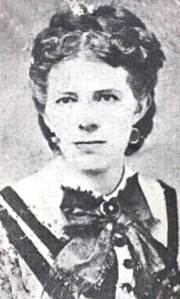
Kate Stone’s Civil War: A charming little woman

Stone’s visitors brought her gloomy confirmation that the Northern states hardly felt the effects of a war that brought so much devastation and deprivation to her once-luxurious life.

KS46

From 2012 to 2015, Stillness of Heart will share interesting excerpts from the extraordinary diary of Kate Stone, who chronicled her Louisiana family’s turbulent experiences throughout the Civil War era.

Learn more about Stone’s amazing life in 1861, 1862, 1863, 1864, 1865 and beyond. Click on each year to read more about her experiences. You can read the entire journal online here.

(Photo edited by Bob Rowen)

Stone’s visitors brought her gloomy confirmation that the Northern states hardly felt the effects of a war that brought so much devastation and deprivation to her once-luxurious life.


Dec. 19, 1863

Tyler, Texas

Mamma, Mrs. Carson, and the little girls are off looking for a house to rent for Mrs. Savage. They are now on their way to Tyler and wish to have a house rented by their arrival. They expect to reach here by Christmas, and we will all be overjoyed to have them again as neighbors. We have not seen them for just a year. If Julia could come too, we would be pleased. She keeps us in kind remembrance. She has just sent me “the Rebel headress” and some visiting cards. Texas will not seem so desolate with old friends around us.

It has been intensely cold for some days, but the norther has at last blown itself away. We went out this morning to see Mrs. Prentice, fearing she has been lonely. We found Mrs. Hull and Mrs. Clark with her. Mrs. Hull is just back from Shreveport, going there to meet some St. Louis friends lately banished from the state. They say there is no prospect of peace. The North is more prosperous than ever before. Traveling through the states, one would hardly know there was a war going on. How different from our own suffering country. Mrs. Hull is a charming little woman. I would like to know her well. Mrs. Levy and Mrs. Wells beg us to come out and stay some with them, but we have not the heart to visit now, only to see some refugee in trouble. Refugees must be good to each other. …

We are sewing and reading some dull, dry books. Mamma spent nearly a thousand dollars while in Shreveport buying clothes, five or six dresses. Everything is so enormously high … a velvet mantle or poplin dress cannot be bought for less than $1,500. She did not indulge in one of those.

Torn in the USA

Life, liberty, and the doomed pursuit of happiness. A review essay by Fernando Ortiz Jr.

IMG_1470

Life, liberty, and the doomed pursuit of happiness.
A review essay by Fernando Ortiz Jr.

******

Discussed in this essay:

Make Love, Not War: The Sexual Revolution: An Unfettered History. By David Allyn. (New York: Routledge, 2001. 400 pp. $26.96).

Making a New Deal: Industrial Workers in Chicago, 1919-1939. 2nd ed. By Lizabeth Cohen. (Cambridge, MA: Cambridge University Press, 2008. 568 pp. $25.99).

Stayin’ Alive: The 1970s and the Last Days of the Working Class. By Jefferson Cowie. (New York: The New Press, 2010. 488 pp. $15.98).

“Resistance in the Urban North: Trumbull Park, Chicago, 1953-1966.” By Arnold R. Hirsch. The Journal of American History. (82, no. 2 [September, 1995]: 522-550. JSTOR [accessed Feb. 1, 2013] ).

In Search of the Black Panther Party: New Perspectives on a Revolutionary Movement. Edited by Jama Lazerow and Yohuru Williams. (Durham, N.C.: Duke University Press, 2006. 408 pp. $24.01).

Quixote’s Soldiers: A Local History of the Chicano Movement, 1966-1981. By David Montejano. (Austin, TX: University of Texas Press, 2010. 360 pp. $23.70).

Polio: An American Story. By David M. Oshinsky. (New York: Oxford University Press, 2005. 368 pp. $16.95).

“Crabgrass-Roots Politics: Race, Rights, and the Reaction against Liberalism in the Urban North, 1940-1964.” By Thomas J. Sugrue. The Journal of American History. 82, no. 2 [September, 1995]: 551-578. JSTOR [accessed Feb. 1, 2013] ).

I.

The New Deal caressed with warm rays of hope the hearts and minds of millions of Americans grappling with the Great Depression. Shimmering ideals carved into the pillars of 1930s bureaucratic power re-invented the relationship between government and the people it represented. The New Deal also served for subsequent generations as a gateway opening onto a glowing era without racism, illness, or injustice. Citizens only needed to step towards the entrance to realize the core tenets – and challenges — of their American democracy: life, liberty, and the pursuit of happiness. Select academic and popular works from the past two decades beautifully illustrate how Americans dared to aspire for better lives, to reach out for democracy’s sweetest fruits, and to confront adversaries unwilling to share the treasures of freedom.

The aspiration for a better life often began with fair employment. Lizabeth Cohen’s Making a New Deal and Jefferson Cowie’s Stayin’ Alive both focus on the journey the working-class endured throughout six decades of economic turbulence and doomed political alliances. Cohen sets the stage by exploring Chicago’s ethnic working-class communities from about 1920 to 1940. Before the Great Depression, companies corralled their workers into paternalistic corporate societies. Workers enjoyed picnics, medical care, education, and other key aspects of a full life, yet all existed in the company’s shadow, without leverage to demand higher wages or a significant voice to improve worker conditions. Corporate authority framed workers’ identities. Cohen’s tapestry of Chicago communities gradually changed their understanding of who they were – from automatons governed by heartless corporate machinery to autonomous citizens who could no longer look to their employers for economic protection. Just as they changed their outlook, the liberal Democratic Roosevelt administration grew in political power and effectiveness. They reached out for each other. Energized unions offered workers a new avenue towards their goals of economic security, social legitimacy, and a viable political voice. The Democratic Party valued union support, listened to workers’ needs, and institutionalized the view that government could protect workers from corporate manipulation and financial unrest.

But the freedom from corporate autocracy, Cohen explains, added to workers’ lives a new vulnerability to “new tyrannies.” Chicago workers, along with workers throughout the U.S., became so closely bound to Democratic policy that when the Roosevelt administration, faced with entry into World War II, moved closer to companies needed to make war materiel, workers had no choice but to endure the consequences of corporate-friendly agreements. Alliances with political groups, Cohen also points out, meant workers swam in deeper political waters, filled with large allies but even larger enemies. Workers savored their new political value, but their leaders also did whatever was necessary to hold on to that influence on parties, administrations, and elections. Political enemies like Richard Nixon targeted that desire and the frustration workers felt over advantages the civil rights movements afforded to minorities.

Cowie’s Stayin’ Alive examines labor after the New Deal’s light faded beyond history’s horizons. He focuses on the years between 1968 and 1982. The working-class identity in the midst of that postwar political dusk was still proud and hopeful, hand-in-hand with liberal determination to transform the working-class into a new segment of the middle class. Three decades later, the working-class identity was a mutilated and incinerated political corpse quietly spat upon and dumped into Ronald Reagan’s ashbin of history.

The 1968 presidential election opened amid the cacophony of riots over the Vietnam War and years of unrest over the Great Society’s promised solutions to workplace, school, and social inequalities. Vice President Hubert Humphrey emerged from Democrats’ circular firefight as the presidential nominee, with only the labor machinery at his side, Cowie writes, making labor the “big boss in the Democratic Party.” Richard Nixon, leading a united Republican Party, raced into the gaps in the Democratic ranks, slicing off white working-class workers with manufactured sympathy over their growing hostility to effete Northern “elitists,” the anti-war movement, women who refused to recognize traditional patriarchal authority, and empowered minorities disrupting workplaces and intensifying corporate hostility to labor’s aspirations for better wages and improved worker rights. Workers in 1968 and 1972 slipped into a warm electoral spa with Nixon, a python sympathetically caressing their dreams as his coils squeezed them to death. Nixon, Cowie deftly points out, was the last president to view the working class in the context of their New Deal legacy of political empowerment. He invented a new chess board on which workers were neutralized as electoral threats and absorbed into the net Nixon cast over the landscape of American voters. He lured them into his New Majority by targeting the cultural-vs.-material dichotomy in the workers’ outlook, appealing to their sentimental ideal of New Deal America and blurring the financial danger his party posed to workers’ dreams for better lives.

The danger Nixon directly posed to labor’s aspirations ended with his 1974 resignation. But Ronald Reagan’s 1980 victory – secured in part with his own Nixonian seduction of working-class patriotic sentiments — worsened what Nixon began. His election followed four years of Democrat Jimmy Carter, who was never a stalwart labor ally and was hardly the mortar needed to rebuild the old alliances the civil rights and antiwar movements fractured. Economic problems sparked in the late 1960s intensified in the 1970s. Industries moved to regions that fought union organization and offered corporate-friendly employment laws. By 1980, Cowie wrote, “a unionized manufacturing job” was a precious drink of water for workers crawling across a blasted economic wasteland. The dire predicament worsened when the Reagan administration shattered the Professional Air Traffic Controllers (PATCO) strike in 1981, legitimating conservative disregard for labor as a viable element of the political calculus and exposing workers, stripped of government allies, to corporate manipulation. Cohen’s workers embarked on a journey to build new and better lives. Cowie’s workers continued the journey but failed to overcome the obstacles that moved into their path. The menagerie of groups gathered under the New Deal canopy may have simulated solidarity but they also stimulated real (if not lasting) determination among labor, even if bitter divisions negated their triumphs.

II.

One of the New Deal’s sparks ignited the civil rights movement in the 1960s and 1970s. As the working class pursued better economic lives, blacks and Latinos throughout the United States pursued liberty. David Montejano’s Quixote’s Soldiers and Jama Lazerow’s and Yohuru Williams’ In Search of the Black Panther Party both portray inspired individuals striving for the dignity of equal treatment, but the authors also refuse to portray equally inspirational coalitions that overcame every level of institutional opposition. Internal divisions, as Cohen and Cowie illustrate with their labor histories, threatened the civil rights movements at every turn.

Montejano’s three-part local history explores the multifaceted Chicano civil rights fight in San Antonio from 1966 to 1981. Chicanos targeted the “gringo supremacy” that governed the city and region. They saw Anglos dominating the social scenes and annual Fiesta events. They blamed Anglos for limiting Latino economic mobility and quality of education. The Latino movement descended from World War II and Korean War Latino veterans who returned home with legitimate expectations, particularly “first-class citizenship,” from the society they fought to defend. Social activists tried to ease the ravaging effects of gang violence and drug use on youth culture by encouraging Chicanismo or “carnalismo” — a sense of Chicano brotherhood that appreciated Latino history and aimed to improve a Latino identity unfairly associated with poverty, ignorance, and violence. Latinos demanded better schools and textbooks, and they conducted school walkouts to drive home their displeasure. They marched in the streets to protest police brutality and housing discrimination. They formed organizations like the Mexican American Youth Organization to coordinate messages, register voters, and gather participants.

Montejano considers much of San Antonio’s Chicano movement a success. But with progress came resistance. Montejano points to U.S. Rep. Henry B. Gonzalez, who saw the new fiery Chicano voices as a threat to his institutionalized power base. Like patriarchal labor leaders willing to deal with any political power that preserved their status, Gonzalez perceived Chicano protestors’ “aggressive nationalism” as disruptive to fragile local understandings and arrangements with the “gringo supremacy” and to his own ambitions. Chicanas demanded equality from the paternalistic community that expected them to remain subordinate to Chicano goals, tactics, and directions, and resistance to their demands also caused internal rifts. Women, Montejano writes, challenged male activists to extend the equality principle to their own households and “machismo” attitudes that oppressed Chicana expression and progress. The struggle echoes Cohen, who wrote that female members of the Congress of Industrial Organizations were not allowed in positions of union leadership because “the male breadwinner would represent the family’s interests in policy making.”

Lazerow and Williams take a dispersed approach to the Black Panther Party’s accomplishments and contributions. In Search of the Black Panther Party uses fourteen essays to connect their battles to a wide array of revolutionary movements within and beyond U.S. borders. Contributor Jeffrey Ogbar’s piece on Black Panther connections to Latino nationalists best illustrates their struggle in a larger racial context. The Black Panthers inspired the Chicano Brown Berets and the Puerto Rican Young Lords and Latin Kings. The aggressively vocal “black demand for equality,” embodied by Malcolm X and Stokely Carmichael, also energized Latino youths who realized their demands could be heard by institutions that could address them. Black nationalist themes of “multinational alliances and cooperation” resonated with Chicanos who saw paralyzing U.S. colonialism in Central America and with Puerto Ricans in the U.S. who saw pervasive Caribbean poverty. The Black Panthers also played a uniting factor among strivers for liberty. In 1970, Ogbar explains, the Party “became the first major black organization to align itself with a women’s liberation movement,” which was seen as an Anglo cause. They later embraced the gay rights movement. The Panthers linked Latinas to bolder visions of social equality their patriarchal Chicano partners could not stomach, and they injected Black Power’s pride and dignity into the Latino movements, enriching the struggles as well as the rewards.

Social divisions often crippled the civil rights struggles. Arnold R. Hirsch’s study of white resistance to community change in Chicago from 1953 to 1966 and Thomas J. Sugrue’s study of similar disdain in Detroit from 1940 to 1964 both brutally underline the tragic consequences of unresolved racial differences among the New Deal’s descendants. Hirsch’s microstudy of a plan to move black families into Chicago’s Trumbull Park Homes and Sugrue’s local history of Detroit’s white working class illustrate how some Americans reached their economic goals and left other similar groups behind. In Chicago, whites refused to live with blacks in the same neighborhood. In Detroit, whites worried that rights for minorities threatened their workplaces, wages, schools, and communities. Social, personal, and material concerns, Hirsch and Sugrue demonstrate, mattered more than the moral struggle for equality and justice.

Americans pursued better lives and secure liberties. They also pursued happiness – fuller lives, longer lives, and healthier lives. The New Deal’s defeat of poverty and the World War II defeat of fascism primed Americans for victory in an old war at home: the fight for freedom from disease and, decades later, the fight for freedom from sexual oppression.

III.

David Oshinsky’s Polio: An American Story explores the national endeavor to eradicate the polio virus with a safe vaccine. Millions of dollars were raised. Franklin Delano Roosevelt, also a polio victim, encouraged the multi-city celebration of his birthday to raise funds for the National Foundation for Infantile Paralysis. He inspired women canvassing their communities for donations. Citizens and politicians worked together for the common good. A vaccine would help young and poor, of any race or religion, and prove the benefits of a democratic society free to fulfill its potential. It also showcased U.S. scientific abilities as the postwar era darkened into the Cold War era. Experts like Jonas Salk became the public face of American ingenuity. The 1954 vaccination trials offered tangible hope and a sense of progress towards an ultimate cure.

The polio story touches on race, ethnicity, and class. Before the vaccine’s development, Americans blamed immigrants for bringing disease and viewed lower-class slums as cesspools of infection. But rich and poor were struck equally. Scientists thought black Americans were less susceptible to polio, so they received less attention during outbreaks. By the mid-1950s, polio ravaged the lower classes who could not afford the three-shot-plus-booster combination.

Freedom from oppression is just as important as freedom from disease. David Allyn’s Make Love, Not War tenderly explores a sexual renaissance that ebbed and flowed from the 1960s to the 1980s, opening new social spaces for expressions of gay sexuality, experiments with group sex, sophisticated sexual education, the birth control pill, and an open sexual life.

Allyn argues that the sexual revolution changed the most important element of any sex life: the mind. Every phase of the revolution, from acceptance of sexual literature at bookstores to a woman deciding to have an abortion or control her fertility, prepared for the ground for more changes in Americans’ outlook on their times. Swinger parties were incorporated into normal suburban lives. Couples consulted illustrated sex manuals to improve their nocturnal time together. Gay Americans celebrated their desires in clubs that were no longer hidden away in shameful corners of the urban landscape. The revolution introduced to Americans a new freedom from fear, and that freedom still flourishes — and must still be defended — today.

The pursuits of life, liberty, and happiness eventually end for some as others begin the journey anew. Superior forces obstructed the revolutions’ progress. Tragic internal weaknesses, inherent or introduced at a later point, ripped apart movements’ ideological cohesion and lasting power. These works offer larger lessons and warnings to future revolutionaries and idealists: know where you want to arrive before beginning the journey, and bind yourselves tightly to your most unlikely of allies. These works silently demand perseverance, patience, and belief that the American Dream belongs to everyone. One must only fight for it, even if it means fighting other marginalized Americans. There may never be enough of the Dream for everyone.


Kate Stone’s Civil War: It makes us shiver

In the absence of hard facts or updated news from the battlefields, rumors of all kinds were rampant.

KS34

From 2012 to 2015, Stillness of Heart will share interesting excerpts from the extraordinary diary of Kate Stone, who chronicled her Louisiana family’s turbulent experiences throughout the Civil War era.

Learn more about Stone’s amazing life in 1861, 1862, 1863, 1864, 1865 and beyond. Click on each year to read more about her experiences. You can read the entire journal online here.

(Photo edited by Bob Rowen)

In the absence of hard facts or updated news from the battlefields, rumors of all kinds were rampant.

Sept. 1, 1863

“Elysian Fields,” Lamar County, Texas

A letter from Jimmy at Jefferson [Texas] on the thirty-first of July, just as he was leaving for Navasota. It is almost time for his return, and Mamma is anxious for him to get back. She wants the wagons to move the Negroes before they hear that the Yankees are coming in from the North, as it is rumored, and before they have a chance to make a break for the Federal lines again.

There are quite a number of Yankee prisoners at Tyler, captured while in command of black troops. It does seem like they ought to be hanged, and they are so impudent too. The detestable creatures!

There is a rumor that Louisiana, Missouri, Mississippi, and Tennessee have applied for admission into the Union again. Of course, we know it is a base fabrication, but many of the natives believe it firmly. They will believe anything against Louisiana. They seem to hate that state, and we would not give one Louisiana parish for half of Texas.

Our pet rumor is again in the air that France, Spain, and England have recognized the Confederacy. Oh, that it were true. …

We hear that Mrs. White, from whom we rented books and also bought one or two, has leprosy. It makes us shiver to think of it, and our handling her things and Patsy nursing her. We can only hope it is another big story, as it is too late to take precautions.

Sept. 11

Jimmy is back after an absence of seven weeks, and now as soon as we can collect up our scattered goods and chattels we will be off to fresh fields and pastures new. …

The Federals made only a short stay at Monroe, but were busy at the work of destruction. Would like to know how our friends have fared.

Our high hopes of recognition by the European powers are again dashed to the ground. If they just would not start such rumors, raising expectations only to be disappointed.

We paid a three-day visit to Mrs. Slaughter up in the famous Union neighborhood, Honey Grove, where they say there is only one Confederate family. There, everyone you talk to says of course we will be conquered. In Louisiana one rarely heard such an idea expressed.

We attended a large Baptist meeting in the vicinity several times. The interest and excitement were intense. There were often fifty mourners crowded around the altar and the church crowded to suffocation. Never saw so many men in church before, and we have not seen so many men at one time since the war commenced, unless they were soldiers in uniform. The scene at night was most striking: the anxious, excited faces, crowding and surging around the altar; the exalted, earnest mien of the minister; the groans and shrieks and wild prayers of the mourners, mingling with the shouts and hallelujahs of the newly professed; while high over all rises the thunder of a triumphant hymn, borne on many voices. In the background gleam the eager, curious faces of the lookers-on, row on row.

A scene to thrill and interest anyone, but I must take my religion more quietly. It was a country-looking congregation with a sprinkling of nice people. Short dresses, large hoops, and top-knotted sun-bonnets, the style.

Kate Stone’s Civil War: Conquer or die

As a Texas summer storm approaches, Stone angrily vows that the Confederacy will never surrender to the Union forces that shattered her family.

OLYMPUS DIGITAL CAMERA

From 2012 to 2015, Stillness of Heart will share interesting excerpts from the extraordinary diary of Kate Stone, who chronicled her Louisiana family’s turbulent experiences throughout the Civil War era.

Learn more about Stone’s amazing life in 1861, 1862, 1863, 1864, 1865 and beyond. Click on each year to read more about her experiences. You can read the entire journal online here.

(Photo edited by Bob Rowen)

As a Texas summer storm approaches, Stone angrily vows that the Confederacy will never surrender to the Union forces that shattered her family.

Aug. 10, 1863

Lamar County, Texas

Nearly the close of summer and we are still in our first Texas retreat. We have dubbed it “Elysian Fields.” Mr. Smith has been away nearly a week looking for another location. No matter where we may go, we are almost sure to meet some of our old friends or acquaintances, for everybody about Monroe is moving out this way, we hear, scattering over Texas. How good the sight of a familiar face will be. I would feel like kissing nearly anybody I had ever seen before. …

Our list of victories last month were all a mistake. Gen. Lee has recrossed into Virginia, and our march into Pennsylvania seems to have been barren of results. We do not hold nor have we destroyed a single Northern city, as we so much hoped. A dark hour for the Confederacy. The loss of Vicksburg has stunned the whole country. It is a grievous blow, and there is great discouragement at least on this side of the Mississippi River. But the reaction will come. The people will rally to strike a more deadly blow, to fight till the last armed foe expires, to conquer or die.

Mamma, Sister, and Johnny are just in from their round of investigation. Instead of renting Mrs. White’s house they rented a book. The house was already taken, but she had quite a library of books that she would hire out for fifty cents a week. She would not think of lending them. The book Mamma brought was a most worthless thing, but the engravings in it are fine. Mrs. White is an educated woman, lives in a nice house, and is well to do, but a regular skinflint. She is living from day to day on the verge of the grave, suffering from some incurable complaint, and is still very eager to make money, extorting the last cent. She has one of our women hired to wait on her. She is a Yankee. That explains all. …

We look out tonight on a windy, stormy sky. Dark clouds go scudding by, and the wind whistles through our frail tenement. The boards have shrunken until daylight shines through. Lightning flashes continuously, thunder is rolling overhead, and the whole prairie is ablaze with the fireflies, weaving in and out like fairy shuttles.

Kate Stone’s Civil War: The glory of the family

Stone mourns what has been lost as she finishes her tale of escape. “So passes the glory of the family.”

KS17

From 2012 to 2015, Stillness of Heart will share interesting excerpts from the extraordinary diary of Kate Stone, who chronicled her Louisiana family’s turbulent experiences throughout the Civil War era.

Learn more about Stone’s amazing life in 1861, 1862, 1863, 1864, 1865 and beyond. Click on each year to read more about her experiences. You can read the entire journal online here.

(Photo edited by Bob Rowen)

Stone mourns what has been lost as she finishes her tale of escape. “So passes the glory of the family.”

April 27

Near Trenton, La.

Mamma and Johnny are out hunting up bed clothes and anything else buyable since we need everything, and Sister and I are left to ourselves this rainy day. So I may as well finish the recital of our woes.

We left our clothes in care of Uncle Bob who has been as faithful as any white man could be. He is Mamma’s driver on the plantation. And we piled ourselves and our scanty luggage into two rocking, leaky dugouts and pushed off, Jimmy paddling one and Coffee, one of Dr. Carson’s hands, the other. The sight of a body of horsemen in the distance coming our way lent strength to their arms, and as fast as they could ply the paddles we glided through the water. The men came on down the road, and we saw they were Yankee soldiers. But the water was so deep that they could not ride fast and we kept ahead. At last after nearly a mile of this race, the boats shot out into deep water, and we were safe from pursuit. Then what a shout rang out for Jeff Davis and the Confederacy. The men could see and hear us distinctly, and we half expected a volley to come whizzing over the waters. But the boys would not be restrained, and their “Farewell to the Feds!” “Hurrah for Jeff Davis!” and “Ho for Texas!” floated over the waters ’til we were out of sight. The Yankees followed us until their horses were nearly swimming.

After rowing a few miles, we joined Mr. Hardison and his family at the Jones place in the middle of Tensas swamp. They were in a skiff and had been waiting for us for some time. All his family and all his worldly possessions were in that skiff and it was not loaded, so quickly had he been reduced from affluence to poverty. We went on in company and were in the boats for seven hours in the beating rain and the sickening sun, sitting with our feet in the water. Not an inch of land was to be seen during the journey through the dense swamp and over the swift curling currents. The water was sometimes twenty feet deep, rushing and gurgling around the logs and trees. We all stood it very well except Aunt Laura. She was terrified nearly to death and was alternately laughing and crying. She insisted on giving the rower directions and, as he was a slow African, confused him so that he forgot how to pull and ran us into brush piles innumerable. At last he said, “Now, Mistress, you just tell me how to pull and I’ll do it.” So Aunt Laura and Mamma steered the boat viva voce, and he did the hard pulling. I thought they surely would make him turn us over, since a dugout goes over with such ease. At last we came to a clearing, and the boats had to be pulled over the land. We walked a path lined with brambles, and our dresses were nearly torn off. Johnny suffered with fever nearly all day.

As we were passing Mr. Anderson’s, heavy clouds rolled up, and it looked like a coming storm. Aunt Laura and Mrs. Hardison declared they would not go on but would stop right there, and so our boats were headed for the gallery.

They were all under water since it was a little bit of a house, but we carried it by storm without a remonstrance from the owners, who were as kind as could be. Mamma and I were wet nearly to our waists, and the floor looked like it had been scoured when we passed over it. But the dear little lady did not seem to mind it a bit. I had a great bag of Aunt Laura’s gold around my waist. It was very heavy, and just as I stepped on the gallery the belt gave way and it came down with a crash. A foot nearer and it would have fallen in the water, and I suppose we never would have found it. That evening Dr. Carson came to take us to his house but Aunt Laura felt too worn out to go. Mamma stayed with her, and Sister, the boys, and I went on with Dr. Carson. The next day the others joined us there. The whole family received us most kindly, and oh what a relief it was to get to a place of rest and to feel safe once more.

That night there was a most terrific storm which did not even waken me. I slept like the dead. I was completely exhausted by fatigue, excitement, and loss of sleep. … Aunt Laura and Mamma said they were worse frightened by the storm than they had been by anything else. They had not had a brutal Negro man standing on their dress and fingering a pistol a few inches from their heads. I can stand anything but Negro and Yankee raiders. They terrify me out of my wits. …

We spent nearly three weeks at Dr. Carson’s most delightfully. Books, music, rest, and pleasant company charmed the hours away until came news of our great bereavement.

The Negroes at Dr. Carson’s were almost as much demoralized as those on the river. The night after we reached there, a skiff load attempted to escape but were followed and captured after being fired on several times by Jimmy. Fortunately he did not hit any of them.

Now for a list of our losses. All the clothes left in the cart were taken by Mr. Catlin’s Negroes, Uncle Bob being unable to protect them. They comprised most of our underclothes and dresses, all my fine and pretty things, laces, etc., except one silk dress, all our likenesses, and all the little family treasures that we valued greatly. Little Sister did not get off with a change. Mrs. Carson kindly had a suit made for her. Mamma and I have barely a change and the boys have only what they have on. They lost theirs after getting them out here.

Aunt Laura has lost everything except barely enough to do with for a time. Beverly’s things were mostly saved. Aunt Laura’s trunk, packed with a quantity of beautiful clothes, laces, silks, velvets, and so on, was sent to Mr. Anthony’s in the vain hope that it would be safe. We hear, however, that the Yankees, informed by Webster, went there, demanded Mrs. Buckner’s trunk, took it to Grant’s headquarters, and that is the last of it. Some say they just broke it open and divided up the spoils. Both Mamma and Aunt Laura have lost all their bedding, table linen, etc. Our house is stripped of furniture, carpets, books, piano, and everything else, the carriage, buggy, harness, and everything of that kind. Also they have thirty Negroes still on the place we shall probably never see again.

Mamma regrets coming away as she did, but what else could she do? We could not stand more than anyone else, and nearly everyone left before we did. Our mistake was in not moving everything in the fall. Charles and Annie were the only two Negroes who would come with us, and they are only half-grown. So passes the glory of the family.

Kate Stone’s Civil War: Flaming cheeks and flashing eyes

Kate Stone at last recounts why she and her family fled from Brokenburn.

KS16

From 2012 to 2015, Stillness of Heart will share interesting excerpts from the extraordinary diary of Kate Stone, who chronicled her Louisiana family’s turbulent experiences throughout the Civil War era.

Learn more about Stone’s amazing life in 1861, 1862, 1863, 1864, 1865 and beyond. Click on each year to read more about her experiences. You can read the entire journal online here.

(Photo edited by Bob Rowen)

Kate Stone at last recounts why she and her family fled from Brokenburn.

April 25

Near Trenton, La.

Affairs look dark for our Confederacy just now. … This country is filled with refugees. Nearly all our friends are back here or on their way to Texas, where we hope to be before long.

Out here the prices asked for everything are enormous. The people of Monroe seem determined to fleece the refugees. It cost us $3,000 to get a four-horse hack to bring us from Monroe here four miles.

Having no other way of amusing myself, I may as well write the account of our flight from home [Brokenburn] and our subsequent adventures.

On Thursday, March 26, hearing that Mr. Hardison had returned from Monroe, Sister and I walked up in the afternoon to hear what news he had brought. As we approached the house, it struck me that something was wrong. As we were going through the garden George Richards came out and told us a party of Yankees and armed Negroes had just left, carrying with them every Negro on the place, most of Mrs. Hardison’s and the children’s clothes, and all the provisions they could manage. They were led by Charles, Mr. Hardison’s most trusted servant, and they were all vowing vengeance against Mr. Hardison. They said they would shoot him on sight for moving two of his Negroes a few days before. Mr. Hardison had fortunately seen them coming and, knowing he would be arrested or perhaps killed as a conscript officer, had escaped to the woods.

We walked in and found Mrs. Hardison and the children all much excited and very angry, with flaming cheeks and flashing eyes. The Negroes had been very impertinent. The first armed Negroes they had ever seen. Just as we were seated someone called out the Yankees were coming again. It was too late to run. All we could do was to shut ourselves up together in one room, hoping they would not come in. George Richards was on the gallery. In a minute we heard the gate open and shut, rough hoarse voices, a volley of oaths, and then a cry, “Shoot him, curse him! Shoot him! Get out of the way so I can get him.” Looking out of the window, we saw three fiendish-looking, black Negroes standing around George Richards, two with their guns leveled and almost touching his breast. He was deathly pale but did not move. We thought he would be killed instantly, and I shut my eyes that I might not see it. But after a few words from George, which we could not hear, and another volley of curses, they lowered their guns and rushed into the house “to look for guns” they said, but only to rob and terrorize us. The Negroes were completely armed and there was no white man with them. We heard them ranging all through the house, cursing and laughing, and breaking things open.

Directly one came bursting into our room, a big black wretch, with the most insolent swagger, talking all the time in a most insulting manner. He went through all the drawers and wardrobe taking anything he fancied, all the time with a cocked pistol in his hand. Cursing and making the most awful threats against Mr. Hardison if they ever caught him, he [walked] up to the bed where the baby was sleeping. Raiding the bar, he started to take the child, saying as he waved the pistol, “I ought to kill him. He may grow up to be a [guerrilla]. Kill him.” Mrs. Hardison sprang to his side, snatched the baby up, and shrieked, “Don’t kill my baby. Don’t kill him.”

The Negro turned away with a laugh and came over where I was sitting with Little Sister crouched close to me holding my hand. He came right up to us, standing on the hem of my dress while he looked me slowly over, gesticulating and snapping his pistol. He stood there about a minute, I suppose. It seemed to me an age. I felt like I would die should he touch me. I did not look up or move, and Little Sister was as still as if petrified. In an instant more he turned away with a most diabolical laugh, gathered up his plunder, and went out. I was never so frightened in my life. Mrs. Hardison said we were both as white as marble, and she was sure I would faint. What a wave of thankfulness swept over us when he went out and slammed the door. In the meanwhile, the other Negroes were rummaging the house, ransacking it from top to bottom, destroying all the provisions they could not carry away, and sprinkling a white powder into the cisterns and over everything they left. We never knew whether it was poison or not.

The Negroes called and stormed and cursed through the house, calling each other “Captain” and “Lieutenant” until it nearly froze the blood in our veins, and every minute we expected them to break into our room again. I was completely unnerved. I did not think I could feel so frightened. …

After carrying on this way about two hours they lit matches, stuck them about the hall, and then leisurely took themselves off, loaded down with booty. We rushed around, put out all the matches, gathered up the few little articles left, and started at once for home. Since the Negroes declared as they moved off that they were coming back in a little while and burn every house on the place, I took the baby and Mrs. Hardison, Mrs. Alexander, and the children with George and Mr. McPherson gathered up everything of any value left, and we hurried home, reaching there spent with excitement. Mrs. Hardison was almost crazy. …

We made preparations that night to move at daybreak, but something deterred us. Mamma thought she would go out and get letters of protection but later abandoned the idea. It was then too late for us to get off, and we spent a night and day of terror. The next evening the Negroes from all the inhabited places around commenced flocking to Mr. Hardison’s, and they completely sacked the place in broad daylight, passing our gate loaded down with plunder until twelve at night. That more than anything else frightened Mamma and determined her to leave, though at the sacrifice of everything we owned.

We made arrangements to get Dr. Carson’s skiffs and sent Webster around collecting saddles and bridles. On account of the water we could go only on horseback to take the skiffs.

With much difficulty we got everything ready for the start at midnight. Aunt Laura was the only one who did not want to go. She begged Mamma to let her and Beverly stay, saying that she would get old Mr. Valentine to stay with her, but of course Mamma could not allow that. The boys brought in everything we had buried out, except Aunt Laura’s silver. That had to be left packed in a barrel and buried in the yard. The boys had done it one very dark night, when they hoped all the Negroes were in their cabins as it was raining. All the servants behaved well enough except Webster, but you could see it was only because they knew we would soon be gone. We were only on sufferance.

Two days longer and we think they would all have gone to the Yankees, most probably robbing and insulting us before they left. About eleven of the boys went off with their guns to have the horses saddled and brought up. After a good deal of trouble, they came. The boys carried their guns all the time. Without them I think we would never have gotten off. Webster tried every artifice to get hold of one of them, but the boys never relaxed their watch. The night was cloudy and dark with occasional claps of thunder, but we had to go then or never. We knew the news would be carried to camp, and the Yankees had forbidden citizens to leave their places. …

It was too dark to see the road but Johnny led off, and each one followed the shadow in front. … As we opened gates and rode through place after place in perfect silence, not a light was visible anywhere. After passing Out Post, the road was so bad and it was so dark that we were forced to wait for daylight. We dismounted in the middle of the road, and to Aunt Laura’s surprise and amazement Mamma lay her head down in Johnny’s lap and went sound asleep. Riding in the dark made her sick, and she was worn out with excitement and loss of sleep. …

When we reached within a mile of our place of debarkation, the road became impassable, and we struck off into the woods. The cart had to be left there and the baggage carried on by mules. After much trouble, getting lost and riding through water up to our saddle skirts I actually swam a bayou with Beverly in my arms we succeeded in getting all of our party and a little of our baggage to the landing place below Mrs. Stevens’. We sent Webster back to the cart for the baggage, and no sooner was he out of sight than he mounted a horse and set off for home. … Thus by his treachery we lost almost everything we brought away with us, for when we heard it, it was already too late to send back for the things. …

Finish this another day.

Kate Stone’s Civil War: The greatest villian

Nothing disgusted Kate Stone more than her family’s slaves taking control of Brokenburn, the family plantation.

KS15

From 2012 to 2015, Stillness of Heart will share interesting excerpts from the extraordinary diary of Kate Stone, who chronicled her Louisiana family’s turbulent experiences throughout the Civil War era.

Learn more about Stone’s amazing life in 1861, 1862, 1863, 1864, 1865 and beyond. Click on each year to read more about her experiences. You can read the entire journal online here.

(Photo edited by Bob Rowen)

By late April 1863, Kate Stone, still too weary to explain how or why her family evacuated their Louisiana plantation, grappled with the harsh realities of her new existence. She marveled at fellow Southern refugees’ desperate attempts to retain their small comforts of life in the midst of war. She viewed slaves — freed, armed, and empowered — as a far greater threat than the Union troops that swarmed over the flooded region. Nothing disgusted her more than her family’s slaves taking control of Brokenburn, the family plantation.

April 21

Near Monroe, La.

We have reached this place of refuge three weeks after deserting our home. We have come by short but not easy stages. Wednesday we left Dr. Carson’s Anchorage place at sunrise, going in skiffs to Mr. Templeton’s only a few miles and hoping to catch Mr. Gaddis’ boat. The boat had gone on, and Mr. and Mrs. Templeton begged us to stay with them until Friday, when the boat would make another trip. We were only too glad to do so. There was absolutely nothing else we could do. The whole country is a sheet of water from the levees being down in every direction. There is not a skiff to be borrowed or bought at any price.

The whole family, consisting of Col. and Mrs. Templeton and their two half-grown daughters, Mary and Emma, were as kind as possible to us. They did all they could to help us on. We were sorry to tell the Carsons good-bye. They were so kind, but we hope to meet them very soon. Col. Templeton’s is a pleasant home. It is a long, low house with a large yard, shaded with forest trees, cool, green and homelike. It is comfortable within but with no pretensions. They set an excellent table and have a well-filled larder. Most pleasant of all to storm-tossed wanderers was a warm welcome. The only thing I did not like: My bedfellow was a “Yankee school marm.” She professed to be a true Southerner in feeling, but when she knelt to pray I could not help speculating whether her petitions were for our success or the success of our enemies.

Emma Templeton is a little beauty, a dimpled blonde. Mary is a tall, pale, dark-eyed girl. Both of them are idolized by their parents. Mr. Hornwasher is their music and drawing teacher. He did not join the army. He had enough of war in his own country, no doubt.

Friday we came down to Delhi in an immense dugout, a trip of six hours. All seven of us — Mamma, Aunt Laura, Sister, Beverly, I, and the two boys — with an assorted cargo of corn, bacon, hams, Negroes, their baggage, dogs and cats, two or three men, and our scant baggage. It was a dreadful trip. We were very crowded, the hot sun beaming on us as we were creeping down the bayou, hungry and tired. There was a very strong reflection from the water, and one of our poor Negroes was sick, groaning most of the way, and could not be made comfortable. We were glad enough to get out at the railroad bridge and walk the mile to reach Delhi.

The scene there beggars description: such crowds of Negroes of all ages and sizes, wagons, mules, horses, dogs, baggage, and furniture of every description, very little of it packed. It was just thrown in promiscuous heaps, pianos, tables, chairs, rosewood sofas, wardrobes, parlor sets, with pots, kettles, stoves, beds and bedding, bowls and pitchers, and everything of the kind just thrown pell-mell here and there, with soldiers, drunk and sober, combing over it all, shouting and laughing. While thronging everywhere were refugees — men, women, and children, everybody and everything — trying to get on the cars, all fleeing from the Yankees or worse still, the Negroes.

All have lost heavily, some with princely estates and hundreds of Negroes, escaping with ten or twenty of their hands and only the clothes they have on. Others brought out clothes and household effects but no Negroes, and still others sacrificed everything to run their Negroes to a place of safety.

Everybody was animated and excited. All had their own tales to tell of the Yankee insolence and oppression and their hairbreadth escapes. All were eager to tell their own stories of hardship and contrivance, and everybody sympathized with everybody else. All were willing to lend a helping hand and to give advice to anybody on any subject. Nearly everybody took his trials cheerfully, making a joke of them, and nearly all are bound for Texas. Nobody “crying over spilled milk.” Not a tear all day, though one knows there were heavy hearts bravely borne.

We got off from Delhi about sunset and reached Monroe after twelve. Nearly all remained on the cars until daylight … it was impossible to get accommodations in town. It was amusing to watch the people wake up in the morning, wash their faces, smooth at their hair, and go to eating breakfast — leisurely and with as much sangfroid as though in their breakfast rooms at home. Everyone traveling on the cars now carries his own provisions, as you can get nothing if you do not, and no room if you get off. …

We drove through Monroe, which seems to be a beautiful little town, but I was suffering with fever too much to like anything. The road up the Ouachita was lovely. It is a clear bright stream with forest-shaded banks. The hard dry road was appreciated after the mud and water of the last months. The profusion of catalpa trees, all in full bloom, lining the streets of Monroe was indescribably fair in the early morning light. The deep green leaves seemed heaped with pyramids of snow. …

We crossed the river at Trenton on a flat and came out two miles in the hills to this place, Mr. Deane’s, but we hope to be here only a few days. The woods around here are beautiful with quantities of wild flowers and fruits. I have been sick in bed until today.

Yesterday Mamma and Jimmy went back to Delhi to get a party of soldiers to go back home with Jimmy and bring out the Negroes left there. All our and Aunt Laura’s house servants, the most valuable we own, were left. … We hear that the Negroes are still on the place, but the furniture and all movables have been carried out to camp by the Yankees. The Negroes quarreled over the division of our clothes. … Webster, our most trusted servant, claims the plantation as his own and is renowned as the greatest villain in the country. If we succeed in getting the Negroes we may say farewell to the buildings as no doubt they will be burned, but that may happen at any time.

Kate Stone’s Civil War: A horrid flight

Kate Stone and her family are afraid and adrift, now Confederate refugees from Northern soldiers tightening their grip on Vicksburg. But there is hope for safety … in Texas.

KS14

From 2012 to 2015, Stillness of Heart will share interesting excerpts from the extraordinary diary of Kate Stone, who chronicled her Louisiana family’s turbulent experiences throughout the Civil War era.

Learn more about Stone’s amazing life in 1861, 1862, 1863, 1864, 1865 and beyond. Click on each year to read more about her experiences. You can read the entire journal online here.

(Photo edited by Bob Rowen)

Something has happened. Stone refers to a “horrid flight from home” but the memory is still too raw for her to discuss. All she can admit to is shame and shock over where her family has found themselves: afraid, adrift, refugees in their own country, and reliant on the kindness of friends and strangers for clothing, shelter, and food.

Note Stone’s mention of “skiffs.” The region’s levees were breached or damaged, and floodwaters were everywhere.

April 15, 1863

Anchorage, La.

Tomorrow at daybreak we leave here on our way to Monroe [La.]. This has been but a resting place on our journey to the unknown. At Mr. Templeton’s on Bayou Macon, we will take a flat for Delhi where we will take the cars for Monroe. We hope to reach there sometime during the night. Jimmy has secured two rooms for us at a Mr. Deane’s in the hills four miles from Monroe, across the Ouachita. These are Mamma’s plans if she can carry them through, but everything is uncertain from the getting of the flat to the rent of the rooms. No plans are fixed in these troublesome times. “First come, first served” is the motto. Engagements stand for nothing.

But we must certainly leave here, as we have trespassed on these kind friends for two weeks. Now, they are preparing to move on themselves, and we would surely be in the way. They have been exceedingly kind. No relatives could have been kinder, and Dr. Carson even wants to send us down to Delhi in one of his skiffs, a trip of two days. He is in all the hurry and bustle of moving not only his own family but several hundred Negroes, his own and those belonging to the large Bailey estate, for which he is executor. The more I see of Dr. Carson the more I am impressed with the beauty and nobility of his character. He has a tremendous undertaking before him, so many women and children to be moved and sheltered, and he feels deeply the responsibility.

Mamma will not take advantage of his kindness about the skiff. We will get down the Macon from Col. Templeton’s someway. Mrs. Carson has given Sister a complete suit of Katie’s clothes, as Sister, in our escape from home, got off with only the clothes she had on. She and Katie are the same size, and the clothes fit nicely. She has also given me a pair of nice gaiters such as it would be impossible to buy in the Confederacy. As I have only a pair of old half-worn shoes and can get no more, they are most acceptable. Mamma will get mourning for Sister in Monroe, if possible. We feel that black should be our only wear.

Mrs. Carson and the children will follow us to Monroe in a few days, and we have all planned to go out to Texas together, camping out. “Times change and men change with them” — trite but true. A year ago would we have thought of receiving, or of a friend offering, clothes as a present? Now we are as pleased to receive a half-worn garment from a friend as the veriest beggar that goes from door to door. How else shall we cover our nakedness? We have lost all and as yet can buy nothing. A year ago would we have thought of going even to the house of a friend to spend some time without an invitation? And tomorrow we are all going seven of us with bag and baggage (very little of that, though) to stay an indefinite time with a lady we have seen only once, and without any invitation, trusting only that, as she is a lady, she will be kind to us in our distress. We are going to Col. Templeton’s to wait there until we can get transportation down the Macon. …

Before leaving here, we wrote to our two boys and Uncle Bo. My heart was too full for a careless letter. I could only think of Brother Walter. But we know how anxious they are about us all, and writing is all we can do for them. So we wrote as cheerfully as we could. We would not add to their hardships. Brother Coley wrote that they were doing as hard service as was possible for men. And my heart aches for the delicate young fellow, trying his strength to the utmost. He seems almost as far from us as Brother Walter, and I have almost as little hope of seeing him again. Not a word from My Brother since he left.

I have had no heart to write of our horrid flight from home but will someday when anchored somewhere.

Recommended reading / viewing / listening

The value of apostrophes / Obama and Nixon / Cicada secrets / Boston Marathon bombing PTSD / A long-lost WWII Marine’s diary

IMG_2085

Most of these great items come from my Twitter or Facebook feeds. Follow me on Twitter, Tumblr, LinkedIn, and Facebook for more fascinating videos, photos, articles, essays, and criticism.

1. WW2 Marine’s diary: A brief look at a brief life
By Janet McConnaughey | Associated Press | May 27
“Before Cpl. Thomas ‘Cotton’ Jones was killed by a Japanese sniper in the Central Pacific in 1944, he wrote what he called his ‘last life request’ to anyone who might find his diary: Please give it to Laura Mae Davis, the girl he loved. Davis did get to read the diary — but not until nearly 70 years later. …”

2. How Timbuktu’s manuscripts were saved from jihadists
By Sudarsan Raghavan | The Washington Post | May 26
“The scholarly documents depicted Islam as a historically moderate and intellectual religion and were considered cultural treasures by Western institutions — reasons enough for the ultraconservative jihadists to destroy them.”

3. Why Efforts to Bring Extinct Species Back from the Dead Miss the Point
Scientific American | May 27
“A project to revive long-gone species is a sideshow to the real extinction crisis”

4. There Are Plenty of Reasons Why Parents May Read More With Their Daughters
By Nanette Fondas | The Atlantic | May 21
“Understanding a new study that finds girls get more reading time with their parents than boys.”

5. As Boston recovers from Marathon attack, emotional trauma may be just setting in
By Marissa Miley | GlobalPost | May 24
“PTSD and related stress disorders can take weeks or months to develop — and local organizations are prepared to help.”

6. Obama’s speechwriter: from intern to top wordsmith
By Darlene Superville | Associated Press | May 25
“Current and former White House colleagues, all Obama campaign veterans, praise [Cody] Keenan’s writing skills and work ethic and what they describe as his sense of fairness, modesty and willingness to help.”

7. The Man Who Knew Too Much
By Marie Brenner | Vanity Fair | May 1996
“Angrily, painfully, Jeffrey Wigand emerged from the sealed world of Big Tobacco to confront the nation’s third-largest cigarette company, Brown & Williamson. Hailed as a hero by anti-smoking forces and vilified by the tobacco industry, Wigand is at the center of an epic multibillion-dollar struggle that reaches from Capitol Hill to the hallowed journalistic halls of CBS’s 60 Minutes.”

8. The secrets of cicada survival
By John Matson | Salon | May 24
“A new brood is set to emerge this summer for the first time in 17 years. What’s taken them so long?”

9. Why Obama Is Not Nixon
By Elizabeth Drew | NYR Blog :: The New York Review of Books | May 18
“Compared to Watergate, on the basis of everything we know about what are the current ‘scandals’ amount to a piffle. Watergate was a Constitutional crisis.”

10. Are Apostrophes Necessary?
By Matthew J.X. Malady | Slate | May 23
“Not really, no.”

Recommended reading / viewing / listening

The return of ‘Arrested Development’ / The drone wars / Revitalizing sexual desire / A writer’s dreams / Don’t bring the baby to the bar

IMG_2084

Most of these great items come from my Twitter or Facebook feeds. Follow me on Twitter, Tumblr, LinkedIn, and Facebook for more fascinating videos, photos, articles, essays, and criticism.

1. Medea Benjamin, the Woman Who Heckled Obama, Is Not Sorry
By Caroline Linton | The Daily Beast | May 24
“Medea Benjamin has spent a lifetime confronting powerful people, so she was a bit baffled when Obama called her a ‘young lady.’ ”

2. ‘Arrested Development’ returns
Arts Beat :: The New York Times | May 2013
The cast discusses the show’s fourth season.
Jason Bateman | Jeffrey Tambor | Jessica Walter
Will Arnett | Portia de Rossi | David Cross | Michael Cera

3. ‘Arrested Development,’ Season 4
By David Haglund and Emma Roller | Slate | May 24
“Panic attack! What if the new episodes aren’t very good?”

4. Jon Huntsman’s Real Challenge
By Scott Conroy | Real Clear Politics | May 24
“To hear Jon Huntsman tell it, his hopes of succeeding in a potential second presidential bid depend largely on one thing: whether enough voters come around to his views on the major issues of the day.”

5. Unexcited? There May Be a Pill for That
By Daniel Bergner | The New York Times Magazine | May 22
“The promise of Lybrido and of a similar medication called Lybridos … is that it will be possible to take a next step, to give women the power to switch on lust, to free desire from the obstacles that get in its way.”

6. China Has Drones. Now What?
By Andrew Erickson and Austin Strange | Foreign Affairs | May 23
“When Beijing will — and won’t — use its UAVs”

7. The Shadow War Behind Syria’s Rebellion
By Rania Abouzeid | Time | May 24
“Qatar and Saudi Arabia each favor different rebel factions.”

8. My Psychic Garburator
By Margaret Atwood | NYR Blog :: The New York Review of Books | May 6
“Should you, as a fiction writer, permit your characters to have dreams?”

9. How Do I Tell a Friend to Stop Bringing Her Cockblocking Baby to Bars?
By Sara Benincasa | Jezebel | May 24
“Our lives and friendships change as we get older, and it’s unfair and also creepy to expect your gaggle of single girlfriends to accommodate your kid at a boozy pre-fuckfest.”

10. Remote Control
By Steve Coll | The New Yorker | May 6
“Our drone delusion”

******************

TUNES

Tonight I’m spending some time with the blues, specifically with the Texas Blues Café. Check out the line-up and then listen here.

1. Bob Segar — Come to Papa
2. Rick Fowler — Walk Softly
3. Mike Zito — Natural Born Lover
4. Larry Tillery Band — Natches River
5. Micheal K’s Rumble Pack — Another Kind of Love
6. Pat Green — Let Me
7. Paul Thorn — Crutches
8. Paul Thorn — Will the Circle Be Unbroken
9. Z-Tribe — Since the Blues Began
10. Tony Caggiano — Trouble
11. Zed Head — Till I Lost You
12. Wiser Time — Had Enough
13. The Fabulous Thunderbirds — Wrap It Up

Behind The Wall

Tabletop Games

Rebecca Aguilar

#CallingAllJournalists Initiative | Reporter | Media Watchdog | Mentor | Latinas in Journalism

Anna Fonte's Paper Planes

Words, images & collages tossed from a window.

Postcards from Barton Springs

Gayle Brennan Spencer - sending random thoughts to and from South Austin

The Flask Half Full

Irreverent travelogues, good drinks, and the cultural stories they tell.

Government Book Talk

Talking about some of the best publications from the Federal Government, past and present.

Cadillac Society

Cadillac News, Forums, Rumors, Reviews

Ob360media

Real News That Matters

Mealtime Joy

bringing joy to family meals

Øl, Mad og Folk

Bloggen Øl, Mad og Folk

a joyous kitchen

fun, delicious food for everyone

A Perfect Feast

Modern Comfort Food

donnablackwrites

Art is a gift we give ourselves

Fridgelore

low waste living drawn from food lore through the ages

BeckiesKitchen.com

MUSINGS : CRITICISM : HISTORY : NEWS

North River Notes

Observations on the Hudson River as it passes through New York City. The section of the Hudson which passes through New York is historically known as the North River, called this by the Dutch to distinguish it from the Delaware River, which they knew as the South River. This stretch of the Hudson is still often referred to as the North River by local mariners today. All photos copyright Daniel Katzive unless otherwise attributed. For more frequent updates, please follow northriverblog on Facebook or Instagram.