Recommended reading / viewing / listening

This week: Rumsfeld’s no McNamara / Search for the black box / Second novels / American dynasties / No more Turkish miracle

IMG_0611

This week: Rumsfeld’s no McNamara / The race to find the black box / Second novels / American dynasties / No more Turkish miracle

Most of these great items come from my social media networks. Follow me on Twitter, Tumblr, LinkedIn, MySpace, and Facebook for more fascinating videos, photos, articles, essays, and criticism.

1. Donald Rumsfeld Hasn’t Learned a Damn Thing
By James G. Blight and Janet M. Lang | Politico Magazine | April 4
“Bush’s unrepentant defense secretary and the dark art of B.S.”

2. Clock ticking on search to find Malaysia Airlines Flight MH370’s black box
By Swati Pandey | Thomseon Reuters | April 4
“On Monday, it will be 30 days since the jetliner lost communications and disappeared from civilian radar.”

3. Letterman Wasn’t That Funny, Which Is Exactly Why He Matters
By Isaac Chotiner | The New Republic | April 4
“I can’t think of a mass cultural figure of such large importance who was so committed to his own idea of artistic integrity.”

4. Are We Entering a Golden Age of the Second Novel?
By Bill Morris | The Millions | April 4
“Writers get only one shot at becoming The Next Big Thing, which, to too many publishers, is The Only Thing. Failure to do so can carry a wicked and long-lasting sting.”

5. The Work Hitler Despised and the One from Above His Fireplace
By R.C. Baker | The Village Voice | April 2
“The art of hate.”

6. Allegheny Arsenal Explosion
By Maggie MacLean | Civil War Women | April 3
“On September 17, 1862, seventy-eight girls and young women were killed in an explosion at the Allegheny Arsenal in the Lawrenceville section of Pittsburgh, Pennsylvania — the worst civilian disaster of the Civil War.”

7. Bush 41 Reunion Looks to Burnish His Legacy
By Peter Baker | The New York Times | April 3
“This seems to be a season for presidential rehabilitation, if not for the incumbent then for his predecessors.”

8. Karzai Is Trying to Keep His Sway After Term Ends
By Matthew Rosenberg | The New York Times | April 3
“American officials have ignored him, and Afghanistan’s presidential contenders have tried to persuade voters that they will be different from him. But those hoping to see President Hamid Karzai slip into a quiet retirement may be disappointed in the months to come.”

9. Dynasty Isn’t Just for Monarchies Anymore
By Larry J. Sabato | Politico Magazine | March 31
“A Bush-Clinton matchup in 2016 would hardly be unusual. American politics is more of a family affair than you think.”

10. Turkey Goes Out of Control
By Christopher de Bellaigue | The New York Review of Books | April 3
“Large parts of the civil service have been eviscerated, much of the media has been reduced to unthinking carriers of politically motivated revelation and innuendo, and the economy has slowed down after a decade of strong growth. The Turkish miracle is over.”

******************

TUNES

Tonight I’m spending some time with the blues, specifically with the Texas Blues Café. Check out the line-up and then listen here.

1. ZZ Top — Whats Up With That
2. Eddie Turner — I’m A Man
3. Carolyn Wonderland — Ain’t Nobody’s Business
4. Guitar Shorty — A Little Less Conversation
5. Jimi Hendrix — Electric Church Red House
6. Paul Rodgers — Walk In My Shadow
7. North Mississippi Allstars — Shake (Yo Mama)
8. Too Slim And The Taildraggers — Mexico
9. Walter Trout — May Be A Fool
10. The Black Keys — Hurt Like Mine
11. R.L Burnside — Goin Down South
12. Janiva Magness — Slipped,Tripped And Fell
13. Steve Miller — Driven Wheel
14. Bo Cox — Gone

Recommended reading / viewing / listening

This week: The French Revolution and the Terror / Cuba after Castro / The older genius / A new planet’s secrets / How Cheney remade the world

IMG_2238

This week: The French Revolution and the Terror / Cuba after Castro / The older genius / A new planet’s secrets / How Cheney remade the world

Most of these great items come from my social media networks. Follow me on Twitter, Tumblr, LinkedIn, MySpace, and Facebook for more fascinating videos, photos, articles, essays, and criticism.

1. The French Revolution’s reign of terror
By Melvyn Bragg | In Our Time :: BBC Radio 4 | May 2005
“How did the French Revolution descend into such extremes of violence? Who or what drove The Terror? And was it really an aberration of the revolutionary cause or the moment when it truly expressed itself?”

2. Why should female characters have to ‘behave’?
By Barbara Ellen | SheSaid :: The Guardian | March 27
“Did people demand that Travis Bickle shut up and get back in his cab in ‘Taxi Driver’? Did anyone tell Jack Nicholson that Jack Torrance made all men look bad in ‘The Shining’?”

3. The Dangers of a Cuban Collapse
By Daniel Serwer | Politico Magazine | March 26
“It could happen sooner than we think. Is Obama ready?”

4. Late Bloomers
By Malcolm Gladwell | The New Yorker | 2008
“Why do we equate genius with precocity?”

5. Mammy Revealed, and Not Just Her Red Petticoat
By Julie Bosman | The New York Times | March 26
“‘Gone With the Wind’ Prequel Coming in October”

6. Dwarf planet discovery hints at a hidden Super Earth in solar system
By Ian Sample | The Guardian | March 26
“Though exciting in its own right, the discovery raises a more tantalising prospect for many astronomers: that a ‘Super Earth’ up to 10 times the mass of our planet orbits the sun at such a great distance that it has never been seen.”

7. He Remade Our World
By Mark Danner | The New York Review of Books | April 3
“Cheney believed in a ‘unitary executive,’ believed quite literally that ‘the executive Power shall be vested in a President of the United States of America.’ ”

8. Could a tsunami such as the one that affected the Indian Ocean [in 2004] happen in the United States?
Can It Happen Here? :: U.S. Geological Survey | 2014
“We outline the sources of data that can help answer the question, and then indicate when and how large tsunamis have been for specific regions of the U.S.”

9. Unraveling the mystery of Vivian Maier, one of America’s great street photographers
By Kristin Hohenadel | The Eye :: Slate | March 24
“Maier was intensely private, socially awkward, estranged from family, a loner; even those who shared the same roof with her seemed merely to observe the eccentric woman who insisted on locking her bedroom door and fiercely guarding her boxes of worldly possessions, without ever knowing exactly who she was.”

10. Ankara: ‘Israel to compensate Turkey’ over flotilla raid
Al-Arabiya | March 25
“The May 2010 Israeli assault on the Turkish ship the Mavi Marmara while it was in international waters on its way to Gaza triggered a severe diplomatic crisis between the two countries.”

******************

TUNES

Tonight I’m spending some time with the blues, specifically with the Texas Blues Café. Check out the line-up and then listen here.

1. Band Of Heathens — Jenny Was A Keeper
2. Dr.Wu — Nothing Like Texas
3. The Arc Angles — Good Time
4. Albert Collins — Iceman
5. Rory Gallagher — Loanshark Blues
6. Red Hot Blues Sisters — Ocean Beach
7. The Fabulous Thunderbirds — Got To Get Out
8. Mick Hayes Band — Maria
9. Robin Trower — 21st Century Blues
10. Cross Canadian Ragweed — Boys From Oklahoma
11. Jimmy Thackery — Empty Arms Motel
12. The Blue Dogs — Make My Way
13. Devon Allman — Midnight Rider

Podcast recommendations

A close friend recently asked to me to recommend some interesting podcasts. For regular readers of this blog, nothing on this list will surprise you.

IMG_2893

A close friend recently asked to me to recommend some interesting podcasts. Here is my list. It’s not comprehensive, and the categories are quite general. For regular readers of this blog, nothing on this list will surprise you.

Thankfully, most podcasts cover several subjects, and so they’re hard to classify as one thing. Generally, I like news programs, lectures to intelligent crowds (but not recorded classroom lectures), or one-on-one conversations. I mostly avoid call-in shows — I like to keep the public out of the equation whenever possible — but I make exceptions for exceptional programs.

As of Friday, Feb. 7, 2014, the iTunes library tells me I have 2,311 podcast episodes. It calculates that it will take me 66 days, nine hours, 23 minutes, and 46 seconds to listen to all of them.

NEWS
DocArchive — BBC World Service
Global News — BBC World Service
Newshour — BBC World Service
Best of Today — BBC Radio 4
Podcast of Week — CSPAN
New Yorker: Out Loud — The New Yorker
New Yorker: Comment — The New Yorker
Story of the Day — NPR
World Story of the Day — NPR
Hourly News Summary (central to my hourly existence in this life) — NPR
The World — PRI
The Takeaway — PRI and WNYC
TribCast — The Texas Tribune
Washington Week — PBS
PBS News Hour — PBS

NEWS :: DOCUMENTARIES
Documentary of the Week — BBC Radio 4
Outlook — BBC World Service
American RadioWorks — American Public Media
Longform Podcast
ProPublica Podcasts
DecodeDC
Radio 3 Essay — BBC Radio 3
The National Press Club podcast
Weekends on All Things Considered — NPR

NEWS :: FOREIGN AFFAIRS
The Economist podcast
Inside CFR Events — Council on Foreign Relations
Brookings Event podcast — The Brookings Institute
Prime Minister’s Questions — The Guardian
The Stream — Al Jazeera English
Worldview — WBEZ

NEWS :: SCIENCE / TECHNOLOGY
Marketplace Tech Report — American Public Media
New Tech City — WNYC
Quirks and Quarks — CBC
Science Weekly — The Guardian
Stardate podcasts — McDonald Observatory
Science Times — The New York Times
Environment podcast — NPR
Nature podcast — Nature

FILM / TV
Front Row Daily — BBC Radio 4
The Treatment with Elvis Mitchell — KCRW
Kevin Pollack’s Chat Show
The Q&A with Jeff Goldsmith — CBC

MUSIC
Legacy Podcasts: Rock — Legacy Recordings
Legacy Podcasts: Sarah McLachlan — Legacy Recordings
Other Directions — Steven Lee Moya
Soundcheck — WYNC
The Blues File — WXPN
Classical Performance — WGBH
25 Years of Chill Out Music — Roebeck
50 Great Voices — NPR
From the Top — NPR
Jazz Profiles — NPR
Chillsky
Properly Chilled
Escuela de Rumberos Salsa podcast

BOOKS
Book Review Podcast — The New York Times
Q and A — CSPAN
After Words — CSPAN
The Guardian Books Podcast
Writers and Company — CBC
Bookworm — KCRW
The New York Review of Books podcast
Between the Lines — WABE
Unfictional — KCRW
New Yorker: Fiction — The New Yorker
Selected Shorts — PRI
World Book Club — BBC World Service

GENERAL ARTS / LIFE
The Brian Lehrer Show — WNYC
The Leonard Lopate Show — WNYC
TED Talks — TED
The Best of YouTube
Arts and Ideas — BBC Radio 4
Radio Open Source with Christopher Lydon podcasts
Here’s the Thing with Alec Baldwin — WNYC
The Current — CBC Radio
Ideas — CBC Radio
The Forum — KQED
Fresh Air (as long as Terry Gross isn’t on) — NPR
RadioWest — PRI
Studio 360 — PRI and WYNC
To the Best of Our Knowledge — PRI
WGBH Forum
Radio Times — WHYY

HISTORY
Conversations with History — UC Berkeley
Free Library podcast — Free Library of Philadelphia
American History TV — CSPAN
Great Lives — BBC Radio 4
15 Minute History — University of Texas at Austin
BackStory — University of Virginia
The History of Byzantium — Robin Pierson
Walter Cronkite’s History Lessons — NPR
History: Days of Infamy, Daily Life
The Journal of American History Podcast
Lectures in History — CSPAN
Lincoln and the Civil War
Witness — BBC World Service
Los Angeles Public Library Podcast
Miller Center Forums — The University of Virginia Miller Center
New Books in History
Pritzker Military Library Podcasts
Virginia Historical Society Podcasts
We the People Stories — National Constitution Center

The Battle for Boricua

Is Puerto Rico the battleground for America’s intellectual future?
A review by Fernando Ortiz Jr.

IMG_0237

Is Puerto Rico the battleground for America’s intellectual future?
A review by Fernando Ortiz Jr.

******

Discussed in this essay:

Laura Briggs. Reproducing Empire: Race, Empire, and U.S. Imperialism in Puerto Rico. Berkeley: University of California Press, 2002. Pp. 304. $29.95.

I.

Puerto Rico was one of the prizes the U.S. won in its 1898 victory over the Spanish Empire. The U.S. made Puerto Ricans citizens in 1917 and granted the territory an upgrade to commonwealth status in 1952. Debate has raged ever since over how, when, or if Puerto Rico should attempt to move in a new political direction, and over how it should cope with the degree of control the U.S. still wields over its economic and political systems. Like a moon trapped in planetary orbit, bathed only in the solar light reflected from that planet’s surface, struggles for self-definition and conflicting political visions dominate the island’s history.1

Laura Briggs extravagantly explores key components of Puerto Rico’s lurching political evolution in Reproducing Empire, a 2002 book based on her 1998 doctoral thesis composed at Brown University. Her book, standing tall among the work uniting colonial control and gender roles, illustrates Anglo American rulers at first disgusted with Puerto Rico, viewing the island territory as a cesspool of tropical subhumans blinded by rampant sexual desires and staggered by venereal disease, overpopulation endangering their natural and imported resources, and desperate, whether they knew it or not, for American guidance.

Puerto Rico’s social and economic problems were both caused and worsened, Briggs argues, by colonizing Americans who only saw themselves as solutions to those problems. She creatively examines the grinding conflict between the colonizer and the colonized through the prism of Puerto Rican sexuality, particularly the symbolically sexual body of the working-class Puerto Rican woman, whose propensity for sexual “deviancy” was blamed for spreading disease, for having too many children, and for essentially standing in the way of Puerto Rico’s proper Americanization. The fights waged over her sexual body became, Briggs argues, fights over Puerto Rican identity, political autonomy, ethnic equality, forced modernization, and Puerto Rican resistance. The Puerto Rican woman was the greatest battlefield in the titanic struggle over the island, which Briggs calls “the most important place in the world,” where she believes today’s essential debates over globalization issues are rooted in U.S. colonial attitudes.2

Americans saw prostitutes swarming over the men training to fight in World War I, posing their own venereal threat not just to the men but also to the women and children on the mainland, who would eventually be infected by the hapless victims of female Puerto Rican sexuality. U.S. incarceration policies on prostitution, Briggs argues, were one more supplement to colonial control and one more way Americans saw Puerto Ricans as foreigners, as people of lesser value to be kept apart from Americans, and as primitives who needed benevolent guidance. Puerto Rican women were either threats or weaklings needing protection. Islanders protested these prostitution policies, and Briggs sees in the rhetoric islander resistance not simply to the policies but also to the overall colonial project and later over their muddled citizenship.3

Americans saw overpopulation as also caused by these naturally promiscuous and illiterate women, prone to disease, doomed to poverty, and overly attached to the ideal of large hungry families. So, Briggs explains, American scientists developed new sterilization and birth control methods – diaphragms, contraceptive foams and jellies, and eventually the pill – and tested their effectiveness on Puerto Rican women, turning the island into “a social science laboratory.”4

II.

Throughout the Cold War, Briggs argues that Puerto Rico became a “political showcase,” advertising to Latin American nations vulnerable to Soviet seduction the beauty of a society that could result from an alliance (re: economic and military control) with the U.S. Puerto Rico was subjected to development projects — population control, industrialization, export control — again serving as a laboratory where models were analyzed before being sold to Third World nations.5

But the islanders had direct effects on the mainland too. Most importantly, Americans saw a huge post-World War II movement of Puerto Ricans into mainland cities, particularly into New York. The arrival of so many people in only a few decades permanently changed the racial and ethnic makeup of countless neighborhoods, sparked ethnic and political tensions, and re-engineered political activism. New arguments and alliances were born as these citizens struggled to live alongside Americans who saw them as anything but citizens and anything but white.

Overall, despite its strengths and creativity — particularly her intriguing view that the tentacles of colonization in Puerto Rico were only shorter and younger versions of the long American tentacles of globalization now strangling the globe — Briggs could have used a better editor to tighten a muddled narrative that often seems off balance and that could have been much shorter. Briggs often repeats the same points again and again, as if chapters were written months apart and she had to remind herself of the main thesis the latest chapter was supposed to be supporting. Also, the narrative needed more biographical sketches to bring alive the issues of sexuality, gender, and colonial victimization. Her ideas would have been so much more effective if the consequences of colonial decisions were shown in the wreckage of Puerto Rican lives, identities, and outlooks. Briggs bases her arguments on an impressive mountain of essays, books, and governmental studies. She complements a generally solid book with thirty-one pages of entertaining and informative notes and a 23-page bibliography.

One of the book’s best moments comes at the end, when Briggs argues that Puerto Rico illustrates “the explicit disalignment of the components of a nation.” The multidimensional identity of the Puerto Rican man and woman, Briggs seems to say, transcends maps, definitions of nationality, and concepts of national and international place. Imagine a map of the world laid out on a picnic table next to neatly typed definitions of every aspect of foreign affairs, U.S. government, and Latino identity. And then imagine the aurora borealis glowing in the night sky above. Puerto Rico, Briggs essentially argues, is the aurora. The rest of the world is the boring, ordered, defined arrangement on the table far below that celestial beauty.

Alternatively, the unique people of Puerto Ricans must find a unique solution to their unique “ethno-nation” quandary, effectively placing them on the cutting edge in terms of designing effective political entities for the twenty-first century. In that sense, at least, Briggs is absolutely right: Puerto Rico truly is the most important place in the world.6


1. Juan Gonzalez, Harvest of Empire: A History of Latinos in America (New York: Penguin, 2000), 62-63. The Jones-Shafroth Act of 1917 granted citizenship to all Puerto Ricans and established a three-branch government system. An online image of the bill is accessible here: http://tinyurl.com/93rbfx4. A PDF of the commonwealth constitution is accessible here: http://tinyurl.com/yjvo25z.
2. Laura Briggs, Reproducing Empire: Race, Empire, and U.S. Imperialism in Puerto Rico (Berkeley: University of California Press, 2002), 194.
3. Briggs, 17.
4. Briggs, 9.
5. Briggs, 2.
6. Briggs, 195-196.

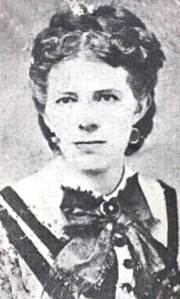
1864: Day to Day

Exiled in Texas, Kate Stone refused to dwell on death. ‘People do not mourn their dead as they used to,’ she wrote. ‘Everyone seems to live only in the present — just from day to day — otherwise I fancy many would go crazy.’

This is Part 4 of a five-part essay series on Kate Stone and her Civil War which was modified from a paper I presented at the New York Military Affairs Symposium in October 2011.

Learn more about Stone’s amazing life in 1861, 1862, 1863, 1865 and beyond. Click on each year to read more about her experiences.

As the war ground on into 1864, the men and women around Stone made the most of their lives of exile in East Texas. Dances were held. Men and women married. new boys studied for classes.

In Tyler, Texas, Stone cleaned the house, played chess, and read. The wall Stone built in her mind to hold back the crush of mounting tragedies in the Eastern Theater became a permanent fixture. Not even the drama of death breached the barrier anymore.

(Photo edited by Bob Rowen)

“People do not mourn their dead as they used to,” she wrote. “Everyone seems to live only in the present — just from day to day — otherwise I fancy many would go crazy.”

In 1864, Confederate victories brightened the situation in the Trans-Mississippi Theater. In the spring of 1864, Federal forces under Maj. Gen. Nathaniel Banks began the Red River Campaign, in which Federal forces from Vicksburg, New Orleans and Arkansas were supposed to meet near Shreveport, seize Louisiana once and for all, amputate Texas from the Confederacy, and then abort any nascent relationship between the Confederacy and the French-controlled Mexican government.

But the plan failed to consider Confederate audacity. In early April 1864, Maj. Gen. Taylor beat back the Federal invasion at the Battles of Mansfield and Pleasant Hill.

Stone practically leapt for joy in her journal. “It is our first great success on this side of the river. … We will never laugh at our soldiers on this side of the Mississippi again. …”

The Confederate conscription act lowered the age range for enlistment to seventeen, and in August, Kate Stone lost a third brother to the Confederate Army. James Stone joined a unit named Harrison’s Brigade at Monroe, La.

She and her mother accompanied him to Louisiana, and Federal raids through the area frightened her, especially when conducted by black soldiers.

“The Paternal Government at Washington,” she wrote, “has done all in its power to incite a general insurrection throughout the South, in the hopes of thus getting rid of the women and children in one grand holocaust. We would be practically helpless should the Negroes rise, since there are so few men left at home.”

******

Works cited or consulted for this essay series:
Faust, Drew Gilpin. Mothers of Invention: Women of the Slaveholding South in the American Civil War. Chapel Hill: North Carolina UP, 1996. Print.
. Southern Stories: Slaveholders in Peace and War. Columbia, Mo.: University of Missouri, 1992. Print.
Foote, Shelby. The Civil War: A Narrative. New York: Vintage, 1986. Print.
Johnson, Ludwell H. Red River Campaign: Politics and Cotton in the Civil War. Baltimore: Johns Hopkins, 1958. Print.
Kronk, Gary W. “C/1861 J1 (Great Comet of 1861).” Cometography.com. n.d. Web. 11 Sept. 2011.
Long, E.B. and Barbara Long. The Civil War: Day by Day. Garden City, N.Y.: Doubleday, 1971. Print.
McPherson, James M., ed. The Atlas of the Civil War. New York: Macmillan, 1994. Print.
. Battle Cry of Freedom. New York: Oxford UP. 1988. Print.
Parrish, T. Michael. Richard Taylor: Soldier Prince of Dixie. Chapel Hill: North Carolina UP. 1992. Print.
Stone, Kate. Brokenburn: The Journal of Kate Stone, 1861-1868. Ed. John Q. Anderson. Baton Rouge: Louisiana UP. 1995. Print.
Sullivan, Walter. The War the Women Lived: Female Voices from the Confederate South. Nashville: J.S. Sanders & Company. 1995. Print.
Wilson, Edmund. Patriotic Gore: Studies in the Literature of the American Civil War. New York: W.W. Norton, 1962. Print.
Wooster, Ralph A. Civil War Texas. Texas State Historical Association. 199. Print.

Happy New Year

May 2014 be one of the best years of our lives.

Happy New Year, my old and new friends. I wish you all well. May 2014 be one of the best years of our lives.

Write me and tell me more about yourselves.

2013 in review

The WordPress.com stats prepared a 2013 annual report for Stillness of Heart.

The WordPress.com stats prepared a 2013 annual report for Stillness of Heart.

Here’s an excerpt:

The concert hall at the Sydney Opera House holds 2,700 people. This blog was viewed about 11,000 times in 2013. If it were a concert at Sydney Opera House, it would take about 4 sold-out performances for that many people to see it.

Click here to see the complete report.

Recommended reading / viewing / listening

Obama’s 2014 / Why grandmothers exist / Atahualpa’s tomb finally found? / The future of news / Widowed without warning

IMG_2126

This week: Obama’s 2014 / Why grandmothers exist / Atahualpa’s tomb finally found? / The future of news / Widowed without warning

Most of these great items come from my social media networks. Follow me on Twitter, Tumblr, LinkedIn, MySpace, and Facebook for more fascinating videos, photos, articles, essays, and criticism.

1. 2013’s biggest media stories (and screw-ups)
By Dylan Byers and Hadas Gold | Politico | Dec. 22
“2013 was indeed exceptional: Edward Snowden released the biggest leak in U.S. history; President Barack Obama lost the goodwill of a press corps that not long ago had been accused of being in his pocket; and America’s most established news organizations came under new leadership, from Jeff Zucker at CNN to Jeff Bezos at The Washington Post, paving the way for a new and uncertain future.”

2. Official business behind him, Obama looks to 2014
By Josh Lederman | Associated Press | Dec. 27
“But as campaigning for House, Senate and governors’ mansions kicks into high gear in 2014, Obama may find his efforts to focus attention on his priorities drowned out by the political posturing that reaches a fever pitch in Washington every other year.”

3. How to Make Your Book a Bestseller
By Mary Kary Zuravleff | The Atlantic | Dec. 27
“An imagined guide to successful self-promotion”

4. Why Do Grandmothers Exist?
By Judith Shulevitz | The New Republic | January 2013
“[T]he grandmother hypothesis has gone from oddball conjecture to one of the dominant theories of why we live so long, breed so fast, and are so smart.”

5. I Find Myself in a Dark Wood
By Joseph Luzzi | Private Lives :: The New York Times | Dec. 18
“I had left the house that morning at 8:30 to teach a class; by noon, I was a father and a widower.”

6. The future of news is anticipation
By Amy Webb | Nieman Journalism Lab | December 2013
“One of the most important trends going into 2014 is the wave of sophisticated algorithms and processes that will forever change how journalism is both created and consumed.”

7. For Candidates, the End of the Year is a Deadline
By Ross Ramsey | The Texas Tribune | Dec. 23
“Political candidates are thinking they have a little over a week of fundraising left before an important deadline: Dec. 31 is the last day of contributions that can be reported on a required Jan. 15 campaign finance report.”

8. A toast to the bad old days
By Todd S. Purdum | Politico | Dec. 23
“If the past few weeks in the capital have shown anything, it is that the time-honored traits and tactics that modern politics loves to demonize in fact still have much to recommend them.”

9. Is this the lost tomb of the last Incan emperor?
The Daily Mail | Dec. 19
“The site, discovered by a multinational team of explorers, could be the tomb of Atahualpa, the last emperor of the Incas, who was executed by the Spanish after their conquest of South America.”

10. Doctor, Teacher, Soldier, Spy
By Melinda Miller and Rachel Smith Purvis | Discunion :: The New York Times | Dec. 18
“[Rufus Gillpatrick’s] curious career and violent death illustrates the porous line between civilian and soldier on the frontier.”

Kate Stone’s Civil War: A sad 1863 ends

As 1863 came to a quiet close, Kate Stone — bathed in early evening firelight and unnerved by the brutal gales of a Texas winter — recorded some final thoughts on her grim situation.

KS49

From 2012 to 2015, Stillness of Heart will share interesting excerpts from the extraordinary diary of Kate Stone, who chronicled her Louisiana family’s turbulent experiences throughout the Civil War era.

Learn more about Stone’s amazing life in 1861, 1862, 1863, 1864, 1865 and beyond. Click on each year to read more about her experiences. You can read the entire journal online here.

(Photo edited by Bob Rowen)

As 1863 came to a quiet close, Kate Stone — bathed in early evening firelight and unnerved by the brutal gales of a Texas winter — recorded some final thoughts on her grim situation, made less uncomfortable by determined effort and endurance. The sense of loss weighed heavier than ever on her heart and mind. She missed her brothers, her friends, and her Brokenburn neighbors. Her community, she mourned, was “scattered to the four winds.”

Christmas Night

Tyler, Texas

The day has passed most quietly, not a cake, not a visitor. We did have an eggnog but only the servants enjoyed it. Made of mean whiskey, it smacked of Texas. We missed our regular Christmas visitor, Mr. Valentine. He has been with us for the last three years. I wonder where he is now. Only one present on the place, a fine turkey from Mrs. Lawrence. Last Christmas morning when dear little Beverly raised up in bed, and looking at her stockings saw only some homemade toys, bedstead and chairs made of white pine by the plantation carpenter, hid her head, sobbing that she “would not have the ugly common things.”

Aunt Laura told her how bad that was and that poor Santa Claus had done his best but he could not get through the Yankee lines. Presently the little, flushed face was raised and an apologetic little voice faltered out, “Table, I begs your pardon. Bedstead, I begs your pardon. I will keep you and play with you. You is nice.” What a dear little heart she is. …

A cold, moonshiny night, a warm room, and Mamma dozing at ease in our only rocking chair before a bright fire. The chair has accompanied us in all our journeyings since leaving Monroe and, though not a thing of beauty, it is a joy forever and seldom without an occupant. Sad to say, it is showing signs of wear, but it has acted the part of comforter in our weary pilgrimage. …

Mrs. Lawrence has been kind about lending us her books, but we have about finished her library. Have read history until I feel as dry as those old times. Have nearly memorized Tennyson and read and reread our favorite plays in Shakespeare. Fortunately he never grows old. We hope Mr. McGee will be able to get “Harper’s” to us. We wrote to him for it. That would keep us stirred up for awhile at least. The literature of the North is to us what the “flesh pots of Egypt” were to the wandering Israelites — we long for it.

Never a letter but brings news of death. Mr. Catlin is gone. And when we saw him last spring, what a picture of vigorous health he was. I wish we could hear from Lt. Valentine. Our old neighborhood is scattered to the four winds.

Recommended reading / viewing / listening

Bush’s storms loom over Obamaland / Heroin labeled ‘Obamacare’ / Life lessons from Pinterest / The Civil War in Florida / A new exomoon

IMG_2101

This week: Bush’s storms loom over Obamaland / Heroin labeled ‘Obamacare’ / Life lessons from Pinterest / The Civil War in Florida / A new exomoon

Most of these great items come from my social media networks. Follow me on Twitter, Tumblr, LinkedIn, MySpace, and Facebook for more fascinating videos, photos, articles, essays, and criticism.

1. Echoes of George W. Bush blues in Barack Obama’s 2nd term
By Alex Isenstadt and Carrie Budoff Brown | Politico | Dec. 19
“They’re two presidents dogged by crises largely of their own making, whose welcome with Americans has worn thin after two marathon elections.”

2. Dick Cheney in Nixonland
By Jon Wiener | The Nation | Dec. 19
“When our most hated vice president visits the library of our most disgraced president, you look forward to a good night.”

3. Found heroin labeled ‘Obamacare’
By Lucy McCalmont | Politico | Dec. 20
“This probably isn’t the Obamacare PR push the White House had in mind.”

4. Important Life Lessons From Pinterest’s Top Pins of 2013
By Erin Gloria Ryan | Jezebel | Dec. 19
Pinterest is to physically impossible crafts, recipes, and photographs for the homebound and quixotic what Cosmo is to physically impossible sex positions for the recently deflowered.”

5. Florida’s Cattle Wars
By Phil Leigh | Disunion :: The New York Times | Dec. 19
“[T]he Confederacy increasingly looked to a seemingly unlikely source, Florida, as a source of beef for its armies.”

6. Our Thirteen Most-Read Blog Posts of 2013
By Nicholas Thompson | The News Desk :: The New Yorker | Dec. 12
“There’s a certain randomness, or at least unpredictability, to Web traffic. You’re never absolutely certain that a blog post will take off until it does.”

7. How Diplomacy Helped Cause an F-18 Crash
By Dan Lamothe | The Complex :: Foreign Policy | Dec. 19
“[A] series of miscommunications and judgment mistakes … ultimately forced the $60 million fighter — call sign ‘Victory 206’ — into the North Arabian Sea.”

8. Astronomers may have found the first-ever exomoon seen by humans
By James Plafke | Geek.com | Dec. 18
“The planet and moon, located 1,800 light years from Earth, are around four times the mass of Jupiter, and half the mass of Earth, respectively.”

9. Auld Lang Syne NYE tradition thanks to cigar firm
The Scotsman | Dec. 19
“Guy Lombardo, a bandleader who was nicknamed America’s Mr New Year’s Eve, was searching for a song to bridge a gap between radio broadcasts.”

10. Afraid to spend money: The psychological trauma of long-term unemployment
By Adriene Hill | Marketplace Your Money | May 2013
“How do you take control of your finances when, after six years of under- and un-employment, you suddenly have a job?”

Behind The Wall

Tabletop Games

Rebecca Aguilar

#CallingAllJournalists Initiative | Reporter | Media Watchdog | Mentor | Latinas in Journalism

Anna Fonte's Paper Planes

Words, images & collages tossed from a window.

Postcards from Barton Springs

Gayle Brennan Spencer - sending random thoughts to and from South Austin

The Flask Half Full

Irreverent travelogues, good drinks, and the cultural stories they tell.

Government Book Talk

Talking about some of the best publications from the Federal Government, past and present.

Cadillac Society

Cadillac News, Forums, Rumors, Reviews

Ob360media

Real News That Matters

Mealtime Joy

bringing joy to family meals

Øl, Mad og Folk

Bloggen Øl, Mad og Folk

a joyous kitchen

fun, delicious food for everyone

A Perfect Feast

Modern Comfort Food

donnablackwrites

Art is a gift we give ourselves

Fridgelore

low waste living drawn from food lore through the ages

BeckiesKitchen.com

MUSINGS : CRITICISM : HISTORY : NEWS

North River Notes

Observations on the Hudson River as it passes through New York City. The section of the Hudson which passes through New York is historically known as the North River, called this by the Dutch to distinguish it from the Delaware River, which they knew as the South River. This stretch of the Hudson is still often referred to as the North River by local mariners today. All photos copyright Daniel Katzive unless otherwise attributed. For more frequent updates, please follow northriverblog on Facebook or Instagram.