Also, check out one of my favorite shows, “Secrets of the Dead,” which took a closer look at what really happened at the Roman city of Herculaneum when Mount Vesuvius exploded, burying it and Pompeii for centuries. Later, the series explored the recent discovery of Roman cargo ships near the beautiful Italian island of Ventotene. Why they were there and why they sank has been a famous mystery, until now.
We’re little more than a week away from the 150th anniversary of the Confederate attack on Fort Sumter, a Federal military installation in Charleston Harbor, where, our history books tell us, the American Civil War officially began.
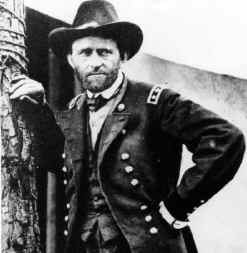
Grant
Until now, legions of commemorative tweets, blogs, multimedia and special anthologies have been busy celebrating and studying the fascinating events of 1859, 1860 and early 1861, which saw brutal fighting in Kansas, John Brown’s doomed raid at Harper’s Ferry, Va., the 1860 presidential victory of Republican Abraham Lincoln, the stunning first and second waves of Southern secession, the inauguration of Jefferson Davis and the birth of the Confederacy. I’ve studied the Civil War era for 20 years, and the public’s recently re-energized enthusiasm for — and for some rediscovery of — the era has made me very happy. It’s been just so damn fun.
Disunion, the excellent blog from the New York Times, has used diary entries, photos and other primary sources — coupled with mostly very good historical articles — to examine day by day the thinking of intellectuals, journalists, politicians, men and women alike, watching alongside them as the world they knew slowly crumbles all around them. The short essays, soldier profiles and stories in the 21st century capture with heartbreaking beauty what must have been an excruciating 19th century sense of hopelessness and terror, excitement and determination, dreams of a better world or grim resolve to preserve what had existed for generations.
The Associated Press has pulled together a package of multimedia, interactives, historical coverage and contemporary analysis of the events and the era. Much if not all of it should be available on their special Facebook page. Keep an eye on my Civil War Facebook group for interesting links to articles, essays and interactives. Crossroads and Bull Runnings are two great blogs by Civil War historians that never fail to enlighten me. In March, Kent State University Press unveiled the new editorial staff for the journal Civil War History, and University of North Carolina Press premiered The Journal of the Civil War Era. The latter is edited by William Blair, who just recently was editor of the former. I’ll be a faithful and passionate reader of both journals and note on this blog anything particularly interesting from their pages.
Forget the History Channel when it comes to Civil War documentaries. Full disclosure: The only thing I’m stupidly snobbish about is historical documentaries. Tip: If what you’re watching has commercial breaks, it’s not a real documentary. PBS is still the gold standard when it comes to intelligent exploration and analysis of the Civil War era, and they jumped into commemoration party with a rebroadcast of “The Civil War,” the factually flawed but otherwise gorgeous Ken Burns miniseries. But don’t stop there. Over the past decade, “American Experience” has produced a treasure chest of excellent pieces on the aforementioned psychotic John Brown, Abraham and Mary Lincoln, Lincoln’s murder and its aftermath, the poet Walt Whitman, on U.S. Grant and Robert E. Lee, on the industrial economy over which they fought, and on the endlessly fascinating and horrific Reconstruction era.
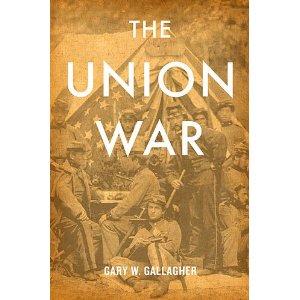
But for some the real fun begins on April 12 at 4:30 a.m., the moment the rebel guns opened fire on Fort Sumter and the Federal troops inside. Fresh studies of the 1861 battles are sure to follow, along with examinations of the early Civil War careers of Grant, Lee, George McClellan, William T. Sherman, Thomas “Stonewall” Jackson, Braxton Bragg, George H. Thomas and others destined for star performances on the bloody stage. Finally, watch for some new book criticism from me as long-ago pre-ordered Civil War books are finally delivered, including Gary W. Gallagher’s “The Union War.”
Save me a seat and a cigar. I’ll definitely be at this party.
My morning began with a flash of alarm when I awoke and found myself hours behind the breaking news of the terrible Japan earthquake. My phone brimmed with automated alerts from the U.S. Geological Survey, the BBC and the Associated Press. My email was packed with news updates. Twitter was aflame with bulletins, tsunami warnings, death toll updates and links to dramatic videos.
After a little breakfast and my usual double barrel of coffee, I moved to my office and settled into the first of a few hours spent comprehending the catastrophe as it affects the entire Pacific Rim, looking for scientific explanations for the quake, refreshing myself on tsunami science and then focusing on the scale of devastation confronting the Japanese people.
Blogs: For the London Review of Books, R.T. Ashcroft writes from Ichikawa City, “It was strangely peaceful outside: people were moving around purposefully but calmly. … Although there is still chaos in other, worse-hit parts of the country, life here seems to have returned to normal surprisingly quickly.” FEMA’s blog offers advice on how to use a cell phone as more than just a phone during a disaster, especially when phone service is interrupted.
Twitter: The hashtags #tsunami and #earthquake follow the crisis moment by moment, with updates from the U.S. State Department, the United Nations, countless news agencies, and from people in Japan, Hawaii and on the West Coast.
Science: The Washington Post’s The Answer Sheet blog pulled together some useful educational links. I especially enjoyed the comparison of destructive effects from one magnitude to another. The BBC prepared a wave map charting the progression of the tsunami across the Pacifc region. This animation from the University of Alaska demonstrates how a tsunami is generated. Learn more about quakes from the experts at the National Earthquake Information Center.
Alerts: : Some of those alerts that awaited me this morning came from the U.S. Geological Survey, which is generally regarded in the U.S. as the leading authority on earthquake magnitude and location. Sign up for their alerts here. Wave alerts come from the Pacific Tsunami Warning Center.
How to help: The Facebook page Global Disaster Relief offers links and email addresses for those trying to find and contact loved ones in Japan.
Some foreign affairs items that recently caught my eye …
Obama’s ill-timed Cuba move: Foreign Policy’s Shadow Government blog asserts that “(n)ot only are any policy changes that could be construed as lessening the isolation of the Castro brothers’ barbaric and unrepentant regime counter-productive at this point, they muddy the real issues at hand.”
The Anarchic Republic of Pakistan: Ahmed Rashid pens a grim review of the political and socioeconomic morass that is today’s Pakistan: “For a country that was founded as a modern democracy for Muslims and non-Muslims alike and claims to be the bastion of moderate Islam, it has the worst discriminatory laws against minorities in the Muslim world and is being ripped apart through sectarian and extremist violence by radical groups who want to establish a new Islamic emirate in South Asia.” It’s all the more poignant and heartbreaking as the flooding situation in Pakistan only worsens every day.
Hair Today, Prime Minister Tomorrow: The Washington Institute for Near East Policy had a odd, darly funny piece from Turkey: “Turkish politics adheres to a simple rule: wives and their moustache-wearing husbands like moustache-wearing men as their leaders. The Turkish prime minister not only looks like a man from the varos, but also walks and talks like one — for instance, cursing on TV whenever he likes.”
Have You Been Caught Masturbating? Do Tell.: The blogosphere is still buzzing about Sally’s self-pleasuring scene, including Jezebel, where Sadie Stein asks her readers for some TMI: “While we’re hoping your stories of being caught in the act don’t rate quite to Draper-level of trauma, we’re guessing there are some classics out there — and we want to hear them. So share your tales of masturbatory angst! Let us heal through group therapy!”
How Joan Holloway Gives Me Confidence: From earlier this summer, The Frisky’s Wendy Atterberry admits that it “wasn’t until … I finally rented the first season of the show that I really understood what a compliment it was to be compared to the incomparable Joan Holloway. She’s a vixen! A sex symbol!”
Were lives really messier in the “Mad Men” era?: On Salon.com, Mary Elizabeth Williams amusingly frets that Americans today “care about the ice caps and our cholesterol levels and attend sexual harassment seminars and recycle now, right? We must be atoning for somebody’s crimes. Wasn’t it easier somehow when we didn’t have to give a crap?”
Why We Need Betty: Linda Stasi, TV critic for the New York Post, wants more Betty Draper in Season 4. As Stasi explains, “(Betty’s) shallow narcissism, it turns out, gave every scene a very scary, very unpredictable aspect. Ms. Jones as Mrs. Draper was a perfectly perfect female specimen who was always just one mussed hair away from becoming a monster.”
As I regularly monitor the Atlantic Ocean, Caribbean Sea and Gulf of Mexico for tropical trouble, thanks to the National Hurricane Center, I came across a few interesting and heartbreaking pieces on Hurricane Katrina and the long shadow it still casts on all of America five years later.
The big what-if: The San Antonio Current republished a New Orleans Gambit interview with Spike Lee about “If God Is Willing And Da Creek Don’t Rise,” his HBO documentary sequel to “When The Levees Broke.” Both multi-part films explore the history of New Orleans and the natural and political devastation its inhabitants endured in the days, months and years after Hurricane Katrina. “If God Is Willing” premiered this week on HBO.
‘We Knew the Story Was Not Done’: Newsweek also interviews Lee about the documentary. At one point, the filmmaker is asked if he thinks New Orleans residents will ever feel comfortable in their city again. Lee responds, “Still today, people are dealing with posttraumatic stress, especially kids, and this was five years ago. First of all, you can never feel 100 percent secure, because New Orleans is under sea level, and it’s in the direct path of storms during hurricane season. So it’s just a risk living there.”
Uneven Katrina recovery efforts often offered the most help to the most affluent: From the Washington Post: “In New Orleans, the massive government effort to repair the damage from Hurricane Katrina is fostering a stark divide as the state governments in Louisiana and Mississippi structured the rebuilding programs in ways that often offered the most help to the most affluent residents. The result, advocates say, has been an uneven recovery, with whites and middle-class people more likely than blacks and low-income people to have rebuilt their lives in the five years since the horrific storm.”
New Orleans’ Lower Ninth: Katrina’s Forgotten Victim? From Time: “Only a fifth of the Lower Ninth’s 20,000 residents have returned to live since 2005, in no small part because of inadequate reconstruction funding compared to aid that homeowners in other New Orleans neighborhoods have received, and because of the slow pace of long-promised infrastructure and other community development projects.”
And finally: Check out “Law and Disorder,” the latest Frontline TV documentary, which was produced in a partnership with ProPublica.org and the Times-Picayune, which each have their own excellent investigation packages devoted to the post-Katrina chaos. And then take a look at “The Storm,” Frontline’s first riveting look at Katrina and New Orleans.
Military Computer Attack Confirmed: The New York Times reports, “A top Pentagon official has confirmed a previously classified incident that he describes as ‘the most significant breach of U.S. military computers ever,’ a 2008 episode in which a foreign intelligence agent used a flash drive to infect computers, including those used by the Central Command in overseeing combat zones in Iraq and Afghanistan.”
Defending a New Domain: In the latest issue of Foreign Affairs, U.S. Deputy Secretary of Defense William J. Lynn III claims that “the Pentagon has built layered and robust defenses around military networks and inaugurated the new U.S. Cyber Command to integrate cyberdefense operations across the military.”
Digital Devices Deprive Brain of Needed Downtime: The New York Times reports, “Even though people feel entertained, even relaxed, when they multitask while exercising, or pass a moment at the bus stop by catching a quick video clip, they might be taxing their brains, scientists say.”
Trapped Chilean miners face long shifts to keep their refuge clear of debris: The Guardian reports Thursday that the “33 miners trapped 700 metres underground in a collapsed mine are expected to work in 12-hour shifts to help dig themselves out because they will be faced with a constant hail of falling rocks that is expected to last for months.”
This rescue operation fascinates me. Here’s a sidebar story about the Chilean government asking NASA for advice on how to keep the men healthy and sane in their confined space. Earlier on Thursday, the Guardian reported that the the miners were told that their rescue could take months.
How the Stimulus Is Changing America: Time’s Michael Grunwald concludes, “Obama has spent most of his first term trying to clean up messes — in the Gulf of Mexico, Iraq and Afghanistan, on Wall Street and Main Street — but the details in the stimulus plan are his real down payment on change. The question is which changes will last.”
Key Karzai Aide in Corruption Inquiry Is Linked to C.I.A.: What?!? I’m am utterly shocked. Dexter Filkins and Mark Mazzetti write, “It is unclear exactly what (Mohammed Zia Salehi, the chief of administration for the National Security Council,) does in exchange for his money, whether providing information to the spy agency, advancing American views inside the presidential palace, or both.” Oh, I’m sure he does a lot more than that.
Pakistan Warns of More Floods in `Heart-Wrenching’ Disaster: Bloomberg reports, “Pakistan warned (Monday) of a new flood wave making its way south along the Indus River and more heavy monsoon rains, threatening to add to the 20 million people who have lost homes, farms and livelihoods. The forecast for further inundations in Sindh province came after United Nations Secretary-General Ban Ki-moon said the devastation was the worst he had ever seen and promised more emergency funding for relief operations. The UN said on Aug. 13 it had received only 20 percent of the $460 million it needs to provide aid to the homeless and hungry.”
Obama’s Youthful Voters More Likely to Skip Midterms: In the New York Times, Megan Thee-Brenan recently wrote,”Will all of those young, enthusiastic Obama voters turn out in 2010? If history is any guide, probably not. Older voters are historically more likely to cast ballots in midterm elections than are voters under the age of 30. And this year, they are already more enthusiastic than younger voters about the coming campaign.”
The First Wave of Weary Aides Heads for the Exits: Also in the Times, the White House Memo column noted somberly that “(e)ven in calmer times, the White House is a pressure cooker that can quickly burn out the most idealistic aides, but it may be even more so in an administration that inherited an economic collapse and two wars — and then decided to overhaul the nation’s health care system for good measure. Add to that the nonstop, partisan intensity of the e-mail-Internet-cable era, and it takes a toll.”
Historians rethink key Soviet role in Japan defeat: The AP’s Slobodan Lekic writes, “(S)ome historians have argued that the Soviet (attack on Japanese forces in northeast Asia) served as effectively as … the A-bombs in ending the war. Now a new history … seeks to reinforce that view, arguing that fear of Soviet invasion persuaded the Japanese to opt for surrender to the Americans, who they believed would treat them more generously than the Soviets.”
AND FINALLY …
What Exactly Is a Doctorate? From Gizmodo: “Ever wondered what getting a doctorate really means? Matt Might, professor of Computer Science at the University of Utah, explains it perfectly in this graphic presentation that starts with a simple circle.” Brilliantly done.
Every day I savor wave after wave of email newsletters from all points on the political spectrum. Recently, I found a fascinating collection of pieces from the National Review. The conservative magazine republished four articles that originally appeared in the Dec. 17, 1963, edition, the first since the assassination of President Kennedy on Nov. 22. Their critical tone was expected but nevertheless, as I said, fascinating.
R.I.P: “The editors of National Review judged John Fitzgerald Kennedy to be a consummate technician of mass politics. His programs and policies — often chosen, by the evidence, in opportunistic furtherance of technical manipulations — we judged to be, for the most part, dangerous to the nation’s well-being and security, and to the survival of our perilously threatened Western civilization. Neither his death nor the fearful manner of it provides any reason to change these judgments.”
Which Way with LBJ? “If he can keep business happy, and deal with Khrushchev without kowtowing to him, the theme of ‘peace and prosperity’ could provide a stronger platform for him than it would have made for a Kennedy who had had three years’ headstart on him in making enemies.”
Foreign Policy of the Kennedy Administration: “From the point of view of its American proponents, the Yalta strategy looks both realistic and attractive, since they see it as the road to agreement between the two decisive world powers. From the point of view of the Kremlin it also looks both realistic and attractive: they see it as the best method for burying us.”
And Still … Goldwater Can Win: “One would think that after the brutal assassination of President Kennedy, responsible men would have recoiled in horror from capitalizing upon it for ideological ends. Yet, hardly had John F. Kennedy been officially pronounced dead than the Liberal Establishment broke forth in a nationwide television and radio orgy of lynch incitement against the American Right.”




 Stillness of Heart
You must be logged in to post a comment.