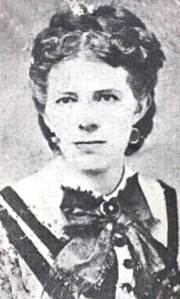
Kate Stone’s Civil War: The heart of a boy

Stone’s brothers began a new school in Tyler, Texas, but bullies tormented them, and they nearly came to blows. Students brought guns to school to deal with these Louisiana refugees.

KS39

From 2012 to 2015, Stillness of Heart will share interesting excerpts from the extraordinary diary of Kate Stone, who chronicled her Louisiana family’s turbulent experiences throughout the Civil War era.

Learn more about Stone’s amazing life in 1861, 1862, 1863, 1864, 1865 and beyond. Click on each year to read more about her experiences. You can read the entire journal online here.

(Photo edited by Bob Rowen)

Stone’s brothers began a new school in Tyler, Texas, but bullies tormented them, and they nearly came to blows. Students brought guns to school to deal with these Louisiana refugees.

As Kate fretted, she and her mother sewed winter clothes and celebrated the construction of impressive new bonnets.

Oct. 29, 1863

“Refugee Ranch,” Tyler, Texas

We have been at Tyler scarcely long enough to feel settled, and the first thing is a grand disturbance that threatens all our plans.

It seems there is a great prejudice existing here against the unfortunate refugees, a feeling strong in Mr. Kaiser’s school that made Jimmy and Eddie Carson very unpopular. There was no open outbreak, however, until Jimmy and Johnny were entered as pupils. For several days the disaffected could find no open cause of offense, and our boys, perfectly unsuspecting, rode, walked, hunted, and marched together perfectly happy to renew their old friendships and not dreaming they were making enemies. But all this was the head and front of their offending. When they added to this “wearing gold watch chains and black broadcloth” a slender little strand of gold and a secondhand suit of clothes the Tyler boys could stand no more, and they rose in their wrath to put down those “refugee upstarts” most unaffected little fellows.

They opened hostilities by sticking pins in Jimmy and Johnny at church during the prayer. … Johnny was so enraged that he challenged the boy to come out of the church at once and fight, but the boy excused himself as he had a lady with him. They made an appointment to meet the next day and have a regular fisticuffs. The boy failed to keep the promise, and Jimmy denounced the act at school as ungentlemanly. The fuss blew over without coming to blows, the boys agreeing not to speak to each other, and they thought everything was settled. But the father of the boy came to school very angry and told Mr. Kaiser that unless Jimmy Stone was dismissed from school all the other boys would be taken away. Several boys wore pistols to school today, and they had formed a plan to mob Jimmy last night, but as I was with him they put it off.

We knew nothing of all this until Mr. Kaiser came over this evening to advise Mamma and Mrs. Carson to keep the boys inside the yard and to make Jimmy Carson take off the chain and put on rough clothes. Mr. Kaiser has acted a very cowardly part. The boys have been taken from school, and Mamma and Mrs. Carson are trying to get a private tutor for them. Jimmy Stone was studying hard since he knows his school days are short. …

Oct. 30

The Tyler boys are trying to force Jimmy Carson into a fight. Half a dozen of them are going armed for him, and we are very anxious. Mamma and Mrs. Carson have made our boys promise they will not be first to start a row. They restrain themselves but they are boiling with rage. Mamma will not let Jimmy go to church as she hears the Tyler boys intend mobbing him, and Jimmy is in a dreadful state of mind. He says they will all call him a coward. We do not care what these rowdy roughs call our boys, just so they do not all get into a free fight with pistols. If it was only fisticuff, we would let them fight it out. Mrs. Carson went to see Mr. Williams, the father of the ring-leader, and we hope her pacific representations to him will calm the excitement.

Jimmy Stone has behaved as well as a boy could, with firmness but moderation. I do not think he has even been angry until tonight, when Mamma forbid his going to church unless she or I went with him. And he has not put on a pistol until this morning, though he has known for several days that half a dozen boys are wearing pistols to “do him up,” as they say. The entire household is wrought up, and Jimmy is furious. He says he intends to shoot down the first boy tomorrow who says a harsh word to him.

Mrs. Carson is a strong member of the peace party and has forbidden either of her boys to go to Tyler on any pretext whatever. This restraint chafes the boys extremely but is a most necessary one, excited and angry as all the boys are. Johnny and Eddie had been wearing pistols days before we knew there was any trouble. How little we can know what is in the heart of a boy. Here we were, so pleased with their innocent sports, thinking them absorbed in their marbles and horses and marching around, when every boy was expecting a deadly encounter and burning with hatred for his enemies. We were praising Johnny for his devotion to study when lie insisted on going to school one day when Mamma thought him too unwell. We found out afterwards they were expecting a battle royal that day, and Johnny had an appointment to fight. I hope Mr. Kaiser, for his cowardly truckling in dismissing Jimmy without cause, will lose his school.

I am glad it is a general refugee quarrel instead of being confined to Jimmy. Edward Levy and George Grissman, refugee boys, have both had to leave school.

Mamma has been busy remodeling and making bonnets. She has excellent ideas on the subject, and we tell her a first-class milliner was spoiled when she turned to other pursuits. Her bonnet is quite a triumph, a regular “skyscraper” of straw and silk. She finished mine today, a pretty mixture of black velvet and cherry. It is the same I sported at Monroe in uniform with Julia Barr and Shirley Crith, but it is much improved by the addition of the bright color. I have been forced to take off black. None to be bought.

I am still on the weary treadmill of work, work, work that commenced at Monroe. Our sewing seems endless. We have been hard at it for nearly six months and the end is not yet. Mamma bought two calicoes for me, one at $55 and the other $66. One is made and I am sewing on the last one. We still have two drill dresses to make over. Jimmy is without winter underclothes, and we cannot buy a piece of woolen. We fear in such thin clothes he will take pneumonia again.

Kate Stone’s Civil War: This is too disgraceful

Kate Stone’s brother returned with news of a beloved Louisiana crawling with Federal troops and Unionists. Stone was enraged, disgusted, and insulted.

KS38

From 2012 to 2015, Stillness of Heart will share interesting excerpts from the extraordinary diary of Kate Stone, who chronicled her Louisiana family’s turbulent experiences throughout the Civil War era.

Learn more about Stone’s amazing life in 1861, 1862, 1863, 1864, 1865 and beyond. Click on each year to read more about her experiences. You can read the entire journal online here.

(Photo edited by Bob Rowen)

Kate Stone’s brother returned with news of a beloved Louisiana crawling with Federal troops and Unionists. Stone was enraged, disgusted, and insulted.

Oct. 8, 1863

“Elysian Fields,” Lamar County, Texas

The last few days have been full of interest. First, Johnny returned only last night, and this opens the gates of release from this region of sin and woe. We think we can get off on Monday. Uncle Johnny has been awaiting only Johnny’s return to move on, and they will start on their long journey on Saturday over 300 miles. Thus Johnny’s arrival has been the signal trumpet calling us all to horse and away.

A letter from Julia in which she says My Brother was twice severely wounded in his right arm in the battle of Gettysburg. He has recovered and is with his command but has lost the use of his right hand. We are truly thankful it is no worse. If we could only hear all that has happened to him since seeing him last, but we know so little. Poor fellow, this is his fifth wound and the most severe of all. We so hope he can get a furlough this fall. It worries me to hear of Tom Manlove’s frolicking about, getting married and enjoying himself in every way, getting all the honor, while My Brother, who is worth ten of him, gets only the hard work of the camp and the wounds. … I can write and think myself into a fever about My Brother.

Julia is still at Camden. All wagons have been impressed to remove government stores, and so they cannot get away. She heard through Robert Norris, who wrote asking news of his aunt, that Uncle Bo is well and is now a 1st lieutenant. We are so glad of his promotion. Not a word of Brother Coley, and we are very anxious about him. Joe Carson is regimental colorbearer, a dangerous post. …

Johnny gives a dreadful account of affairs in and around Delhi and Monroe. Most of the citizens remaining boast of being Unionists and carry on a most profitable trade with Vicksburg. The Yankee cavalry came out to Monroe by invitation, and a number of citizens signed a petition asking them to come out and drive away our soldiers still there. This is too disgraceful to be true. Then, a great number of Louisianians have deserted. My cheek crimsons as I write this of our own beloved state, but I cannot believe that she has brought her name to be a disgrace and reproach to her loyal children. …

Kate Stone’s Civil War: Two distressed damsels

A simple carriage-ride day trip for Kate Stone and her friend Kate turned into a nightmare.

KS37

From 2012 to 2015, Stillness of Heart will share interesting excerpts from the extraordinary diary of Kate Stone, who chronicled her Louisiana family’s turbulent experiences throughout the Civil War era.

Learn more about Stone’s amazing life in 1861, 1862, 1863, 1864, 1865 and beyond. Click on each year to read more about her experiences. You can read the entire journal online here.

(Photo edited by Bob Rowen)

A simple carriage-ride day trip for Kate Stone and her friend Kate turned into a nightmare.

Oct. 2, 1863

“Elysian Fields,” Lamar County, Texas

We got a late start [on our shopping trip] … with a tired horse and in a drizzling rain, and we had not gone two miles before our bad luck caught up with us.

Uncle Johnny took the wrong road, and we soon found it out and urged him to turn around. He avowed his horror of anything like a backward movement and kept on his chosen way, thinking it would lead into the right road. We traveled on for several miles, leaving home farther and farther away, until at last our united persuasions induced him to turn and cut across the country instead of heading straight for Arkansas, as we were doing. After a wearisome ride thorough stubborn thickets and hogwallow prairie, we at last reached the Paris road and went on rejoicing, but our troubles were just beginning.

A slow pattering rain set in and the buckshot prairie soil grew heavy and more heavy, and our gallant grey was visibly tired. We got out of the Jersey in the pouring rain to cross Sulphur Creek, the bridge like most Texas bridges being only a trap for the unwary. With wet heads and muddy feet, we climbed in again, congratulating ourselves that we would soon be at home. Vain hope. Night came on apace, wrapped in her sable mantle and unbrightened by a star, and we were still four miles from our own hearthstone with a horse only able to drag on in a slow walk. Again we took the wrong road and wandered off on what looked in the uncertain light like a boundless prairie with not a house or road in sight. Again as in the morning we begged Uncle Johnny to turn back to the right road, but true to his expressed principles he refused. We journeyed on, leaving the horse to find his way and straining our eyes to discern a light, but the only lights were those shining up through the tangled grass, the countless glowworms with their gleaming crests. At last plodding along in the Egyptian darkness, the horse gave out entirely, and … we were forced to camp out.

We picketed out the poor horse and wrapped ourselves in bolts of calico and woolen, for we had not a wrap of any kind and it had grown very chilly. Crouching in the Jersey, we resigned ourselves to sweet slumber, but nature’s kind restorer, balmy sleep, was safely sheltered in warm homesteads and was not to be coaxed out on the bleak cold prairie. Twisting and turning we wore the hours away until we discovered that the horse was off picket, and such a chase as Uncle Johnny had to catch him, while we had visions of wandering lost on the prairie for days.

As soon as the first tints of day crimsoned the east, Uncle Johnny set off for home to bring relief to two distressed damsels. The horse was too spent to take us all home. How we laughed at the figure Uncle Johnny presented when he started off with a cushion for a saddle. Kate and I at once went to sleep. Jimmy found us cuddled down in the bottom of the Jersey fast asleep when several hours later he came to our relief with a fresh horse. We reached home at last just before dinner, two forlorn-looking wights and very hungry.

Kate Stone’s Civil War: Destroyed by the Yankees

Stone at last received news of the rest of her family and was left despondent. War scattered her relatives, destroyed their communities, and turned them into disgraced refugees.

KS36

From 2012 to 2015, Stillness of Heart will share interesting excerpts from the extraordinary diary of Kate Stone, who chronicled her Louisiana family’s turbulent experiences throughout the Civil War era.

Learn more about Stone’s amazing life in 1861, 1862, 1863, 1864, 1865 and beyond. Click on each year to read more about her experiences. You can read the entire journal online here.

(Photo edited by Bob Rowen)

Stone at last received news of the rest of her family and was left despondent. War scattered her relatives, destroyed their communities, and turned them into disgraced refugees.

Note how Stone almost admired how she managed to get on with her life with “almost nothing but servants, and yet we are comfortable.”

Sept. 20, 1863

“Elysian Fields,” Lamar County, Texas

Uncle Johnny was at Richmond, Va., a month ago and heard from nearly every member of the family. How thankful we are to know that they are all alive, though perhaps in distress. My Brother was neither killed nor hurt in the Pennsylvania campaign. Uncle Bo is as usual in fine health and spirits and is under [Confederate commander Braxton] Bragg. Dr. Buckner and Brother Coley are also with Gen. Bragg, and Aunt Laura is at Chattanooga within reach of Dr. Buckner. How glad we are that she is comfortably settled and not suffering all the discomforts of life in Texas. …

Aunt Sarah is at Bladen Springs, Ala. Poor little Horace is dead, a most bitter blow to his mother. He was her favorite. She was keeping house at Cooper’s Well when the Yankees marched on Jackson. She just escaped on the last train with only their wearing clothes. Everything else was destroyed by the Yankees, house and furniture burned, piano hacked to pieces, and the portraits torn to shreds. … It looks like the whole family is to be ruined, root and branch. Every member of it is broken up and all the women and children fleeing from the Yankees, while all the men and half-grown boys are in the army.

We are thankful Mamma has saved most of Uncle Bo’s Negroes, and if we can keep what we have now we can help the others. But I have a strong presentment that we shall yet lose all that we have and be compelled to labor with our hands for our daily bread.

Mrs. Smith had moved up to Mr. Vaughn’s just in time to give room for Uncle Johnny. How glad we are to have a house to ourselves once more. Mrs. Smith was very kind in leaving everything we needed for housekeeping. It is surprising how little one can get on with. We seem to have almost nothing but servants, and yet we are comfortable, comparatively so.

I have finished knitting those tiresome gloves and can read with a clear conscience. Fingered and gauntlet gloves are a trouble to knit.

Sept. 22

The news today is discouraging. Charleston [S.C.] has fallen, Louisiana and Arkansas are to be entirely deserted by our troops, and all the available forces of the Trans-Mississippi Department are to be concentrated at Tyler, Texas. If Charleston has fallen, it is because it was not in the power of man to hold it. Everything possible had been done, and it had made a most gallant defense. No disgrace can sully the name of its Gen. Beauregard, as the name of Lovell and Pemberton have been darkened. …

How I long for a glimpse at Brokenburn these pleasant autumn days radiant in flowers and crowned with fruit, the grassy yard and tall oaks, the clump of sassafras changing now to bright crimson, and the fragrant sweet gum showering down its leaves of gold, the flower garden sparkling across the grass, its many kinds of fall flowers gay in the mellow September sun, and the wide fields stretching away, white with cotton and vocal with the songs of the busy pickers. Shall we ever see it so again?

Kate Stone’s Civil War: Years of grinding toil

The Stone family’s plans to move to Tyler, Texas, were shattered when their guide was taken away to serve in the militia.

KS35

From 2012 to 2015, Stillness of Heart will share interesting excerpts from the extraordinary diary of Kate Stone, who chronicled her Louisiana family’s turbulent experiences throughout the Civil War era.

Learn more about Stone’s amazing life in 1861, 1862, 1863, 1864, 1865 and beyond. Click on each year to read more about her experiences. You can read the entire journal online here.

(Photo edited by Bob Rowen)

The Stone family’s plans to move to Tyler, Texas, were shattered when their guide was taken away to serve in the militia. Kate Stone’s mother demanded his return.

Sept. 14, 1863

“Elysian Fields,” Lamar County, Texas

Our affairs are in a state of confusion worse confounded. All our plans were nipped in the bud by Mr. Smith’s being taken to camp to serve in the militia in spite of Gen. Smith’s detail. Everything is at a standstill with us. Mrs. Smith insulted the men who came for Mr. Smith, and so they waylaid him and took him off to camp, not allowing him even to come by home and get a change of clothes. Mrs. Smith was deadly angry, and an ironical message from one of Mr. Smith’s captors has made her rabid. Her abuse of everything and everybody in Texas is eloquent. We were to have started to Tyler. Mr. Smith was going to Shreveport on important business for Mamma, Mrs. Smith and Miss Mary were going to live at Mr. Vaughn’s and take charge of his children, but all our plans have come to naught.

I hear the crickets and see the stars so the storm must have passed us by, and we will not sleep under a dripping roof.

Sept. 19

A most pleasant surprise this morning. Uncle Johnny, his wife, and baby arrived at our Retreat. They are fleeing from the Yankees in Arkansas and are on their way to Austin, where Uncle Johnny hopes to edit a newspaper. They came 150 miles out of their route to see us. His wife, Kate, is a sweet, innocent-looking woman. She looks about sixteen, though she is twenty-one. The baby, Sally, is the tiniest mite of a creature. Texas air will have to do much for her before she gets a strong hold on life. We will be here several weeks longer, and this new family will be a great pleasure. We can at least talk to the newcomers, and Mamma and I have about exhausted all our well-worn topics.

Mamma thinks now affairs are entrain to get Mr. Smith again detailed by paying $500 and swearing she is in need of his services. Mamma went Thursday all the way to Charleston, the militia camp, to get Mr. Smith released. She met there her Paris friend, Gen. Smith, who was very polite and who really seemed to wish to do her a kindness. He will do all in his power to get Mr. Smith off. He is the second man we have met in Texas who seemed to have goodwill for refugees and sympathy for their troubles. If the officers had any sense, they could see that Mamma is forced to have someone to manage for her. Mamma and Miss Mary saw a funny set at Charleston.

We have had a succession of callers recently. The unadulterated natives are all eager to hire Negroes. There is a furor for them. All the old ladies in the county are falling sick just to get their “Old Men” to hire a servant. Who can blame them after their years of grinding toil for seeking a little rest?

Torn in the USA

Life, liberty, and the doomed pursuit of happiness. A review essay by Fernando Ortiz Jr.

IMG_1470

Life, liberty, and the doomed pursuit of happiness.
A review essay by Fernando Ortiz Jr.

******

Discussed in this essay:

Make Love, Not War: The Sexual Revolution: An Unfettered History. By David Allyn. (New York: Routledge, 2001. 400 pp. $26.96).

Making a New Deal: Industrial Workers in Chicago, 1919-1939. 2nd ed. By Lizabeth Cohen. (Cambridge, MA: Cambridge University Press, 2008. 568 pp. $25.99).

Stayin’ Alive: The 1970s and the Last Days of the Working Class. By Jefferson Cowie. (New York: The New Press, 2010. 488 pp. $15.98).

“Resistance in the Urban North: Trumbull Park, Chicago, 1953-1966.” By Arnold R. Hirsch. The Journal of American History. (82, no. 2 [September, 1995]: 522-550. JSTOR [accessed Feb. 1, 2013] ).

In Search of the Black Panther Party: New Perspectives on a Revolutionary Movement. Edited by Jama Lazerow and Yohuru Williams. (Durham, N.C.: Duke University Press, 2006. 408 pp. $24.01).

Quixote’s Soldiers: A Local History of the Chicano Movement, 1966-1981. By David Montejano. (Austin, TX: University of Texas Press, 2010. 360 pp. $23.70).

Polio: An American Story. By David M. Oshinsky. (New York: Oxford University Press, 2005. 368 pp. $16.95).

“Crabgrass-Roots Politics: Race, Rights, and the Reaction against Liberalism in the Urban North, 1940-1964.” By Thomas J. Sugrue. The Journal of American History. 82, no. 2 [September, 1995]: 551-578. JSTOR [accessed Feb. 1, 2013] ).

I.

The New Deal caressed with warm rays of hope the hearts and minds of millions of Americans grappling with the Great Depression. Shimmering ideals carved into the pillars of 1930s bureaucratic power re-invented the relationship between government and the people it represented. The New Deal also served for subsequent generations as a gateway opening onto a glowing era without racism, illness, or injustice. Citizens only needed to step towards the entrance to realize the core tenets – and challenges — of their American democracy: life, liberty, and the pursuit of happiness. Select academic and popular works from the past two decades beautifully illustrate how Americans dared to aspire for better lives, to reach out for democracy’s sweetest fruits, and to confront adversaries unwilling to share the treasures of freedom.

The aspiration for a better life often began with fair employment. Lizabeth Cohen’s Making a New Deal and Jefferson Cowie’s Stayin’ Alive both focus on the journey the working-class endured throughout six decades of economic turbulence and doomed political alliances. Cohen sets the stage by exploring Chicago’s ethnic working-class communities from about 1920 to 1940. Before the Great Depression, companies corralled their workers into paternalistic corporate societies. Workers enjoyed picnics, medical care, education, and other key aspects of a full life, yet all existed in the company’s shadow, without leverage to demand higher wages or a significant voice to improve worker conditions. Corporate authority framed workers’ identities. Cohen’s tapestry of Chicago communities gradually changed their understanding of who they were – from automatons governed by heartless corporate machinery to autonomous citizens who could no longer look to their employers for economic protection. Just as they changed their outlook, the liberal Democratic Roosevelt administration grew in political power and effectiveness. They reached out for each other. Energized unions offered workers a new avenue towards their goals of economic security, social legitimacy, and a viable political voice. The Democratic Party valued union support, listened to workers’ needs, and institutionalized the view that government could protect workers from corporate manipulation and financial unrest.

But the freedom from corporate autocracy, Cohen explains, added to workers’ lives a new vulnerability to “new tyrannies.” Chicago workers, along with workers throughout the U.S., became so closely bound to Democratic policy that when the Roosevelt administration, faced with entry into World War II, moved closer to companies needed to make war materiel, workers had no choice but to endure the consequences of corporate-friendly agreements. Alliances with political groups, Cohen also points out, meant workers swam in deeper political waters, filled with large allies but even larger enemies. Workers savored their new political value, but their leaders also did whatever was necessary to hold on to that influence on parties, administrations, and elections. Political enemies like Richard Nixon targeted that desire and the frustration workers felt over advantages the civil rights movements afforded to minorities.

Cowie’s Stayin’ Alive examines labor after the New Deal’s light faded beyond history’s horizons. He focuses on the years between 1968 and 1982. The working-class identity in the midst of that postwar political dusk was still proud and hopeful, hand-in-hand with liberal determination to transform the working-class into a new segment of the middle class. Three decades later, the working-class identity was a mutilated and incinerated political corpse quietly spat upon and dumped into Ronald Reagan’s ashbin of history.

The 1968 presidential election opened amid the cacophony of riots over the Vietnam War and years of unrest over the Great Society’s promised solutions to workplace, school, and social inequalities. Vice President Hubert Humphrey emerged from Democrats’ circular firefight as the presidential nominee, with only the labor machinery at his side, Cowie writes, making labor the “big boss in the Democratic Party.” Richard Nixon, leading a united Republican Party, raced into the gaps in the Democratic ranks, slicing off white working-class workers with manufactured sympathy over their growing hostility to effete Northern “elitists,” the anti-war movement, women who refused to recognize traditional patriarchal authority, and empowered minorities disrupting workplaces and intensifying corporate hostility to labor’s aspirations for better wages and improved worker rights. Workers in 1968 and 1972 slipped into a warm electoral spa with Nixon, a python sympathetically caressing their dreams as his coils squeezed them to death. Nixon, Cowie deftly points out, was the last president to view the working class in the context of their New Deal legacy of political empowerment. He invented a new chess board on which workers were neutralized as electoral threats and absorbed into the net Nixon cast over the landscape of American voters. He lured them into his New Majority by targeting the cultural-vs.-material dichotomy in the workers’ outlook, appealing to their sentimental ideal of New Deal America and blurring the financial danger his party posed to workers’ dreams for better lives.

The danger Nixon directly posed to labor’s aspirations ended with his 1974 resignation. But Ronald Reagan’s 1980 victory – secured in part with his own Nixonian seduction of working-class patriotic sentiments — worsened what Nixon began. His election followed four years of Democrat Jimmy Carter, who was never a stalwart labor ally and was hardly the mortar needed to rebuild the old alliances the civil rights and antiwar movements fractured. Economic problems sparked in the late 1960s intensified in the 1970s. Industries moved to regions that fought union organization and offered corporate-friendly employment laws. By 1980, Cowie wrote, “a unionized manufacturing job” was a precious drink of water for workers crawling across a blasted economic wasteland. The dire predicament worsened when the Reagan administration shattered the Professional Air Traffic Controllers (PATCO) strike in 1981, legitimating conservative disregard for labor as a viable element of the political calculus and exposing workers, stripped of government allies, to corporate manipulation. Cohen’s workers embarked on a journey to build new and better lives. Cowie’s workers continued the journey but failed to overcome the obstacles that moved into their path. The menagerie of groups gathered under the New Deal canopy may have simulated solidarity but they also stimulated real (if not lasting) determination among labor, even if bitter divisions negated their triumphs.

II.

One of the New Deal’s sparks ignited the civil rights movement in the 1960s and 1970s. As the working class pursued better economic lives, blacks and Latinos throughout the United States pursued liberty. David Montejano’s Quixote’s Soldiers and Jama Lazerow’s and Yohuru Williams’ In Search of the Black Panther Party both portray inspired individuals striving for the dignity of equal treatment, but the authors also refuse to portray equally inspirational coalitions that overcame every level of institutional opposition. Internal divisions, as Cohen and Cowie illustrate with their labor histories, threatened the civil rights movements at every turn.

Montejano’s three-part local history explores the multifaceted Chicano civil rights fight in San Antonio from 1966 to 1981. Chicanos targeted the “gringo supremacy” that governed the city and region. They saw Anglos dominating the social scenes and annual Fiesta events. They blamed Anglos for limiting Latino economic mobility and quality of education. The Latino movement descended from World War II and Korean War Latino veterans who returned home with legitimate expectations, particularly “first-class citizenship,” from the society they fought to defend. Social activists tried to ease the ravaging effects of gang violence and drug use on youth culture by encouraging Chicanismo or “carnalismo” — a sense of Chicano brotherhood that appreciated Latino history and aimed to improve a Latino identity unfairly associated with poverty, ignorance, and violence. Latinos demanded better schools and textbooks, and they conducted school walkouts to drive home their displeasure. They marched in the streets to protest police brutality and housing discrimination. They formed organizations like the Mexican American Youth Organization to coordinate messages, register voters, and gather participants.

Montejano considers much of San Antonio’s Chicano movement a success. But with progress came resistance. Montejano points to U.S. Rep. Henry B. Gonzalez, who saw the new fiery Chicano voices as a threat to his institutionalized power base. Like patriarchal labor leaders willing to deal with any political power that preserved their status, Gonzalez perceived Chicano protestors’ “aggressive nationalism” as disruptive to fragile local understandings and arrangements with the “gringo supremacy” and to his own ambitions. Chicanas demanded equality from the paternalistic community that expected them to remain subordinate to Chicano goals, tactics, and directions, and resistance to their demands also caused internal rifts. Women, Montejano writes, challenged male activists to extend the equality principle to their own households and “machismo” attitudes that oppressed Chicana expression and progress. The struggle echoes Cohen, who wrote that female members of the Congress of Industrial Organizations were not allowed in positions of union leadership because “the male breadwinner would represent the family’s interests in policy making.”

Lazerow and Williams take a dispersed approach to the Black Panther Party’s accomplishments and contributions. In Search of the Black Panther Party uses fourteen essays to connect their battles to a wide array of revolutionary movements within and beyond U.S. borders. Contributor Jeffrey Ogbar’s piece on Black Panther connections to Latino nationalists best illustrates their struggle in a larger racial context. The Black Panthers inspired the Chicano Brown Berets and the Puerto Rican Young Lords and Latin Kings. The aggressively vocal “black demand for equality,” embodied by Malcolm X and Stokely Carmichael, also energized Latino youths who realized their demands could be heard by institutions that could address them. Black nationalist themes of “multinational alliances and cooperation” resonated with Chicanos who saw paralyzing U.S. colonialism in Central America and with Puerto Ricans in the U.S. who saw pervasive Caribbean poverty. The Black Panthers also played a uniting factor among strivers for liberty. In 1970, Ogbar explains, the Party “became the first major black organization to align itself with a women’s liberation movement,” which was seen as an Anglo cause. They later embraced the gay rights movement. The Panthers linked Latinas to bolder visions of social equality their patriarchal Chicano partners could not stomach, and they injected Black Power’s pride and dignity into the Latino movements, enriching the struggles as well as the rewards.

Social divisions often crippled the civil rights struggles. Arnold R. Hirsch’s study of white resistance to community change in Chicago from 1953 to 1966 and Thomas J. Sugrue’s study of similar disdain in Detroit from 1940 to 1964 both brutally underline the tragic consequences of unresolved racial differences among the New Deal’s descendants. Hirsch’s microstudy of a plan to move black families into Chicago’s Trumbull Park Homes and Sugrue’s local history of Detroit’s white working class illustrate how some Americans reached their economic goals and left other similar groups behind. In Chicago, whites refused to live with blacks in the same neighborhood. In Detroit, whites worried that rights for minorities threatened their workplaces, wages, schools, and communities. Social, personal, and material concerns, Hirsch and Sugrue demonstrate, mattered more than the moral struggle for equality and justice.

Americans pursued better lives and secure liberties. They also pursued happiness – fuller lives, longer lives, and healthier lives. The New Deal’s defeat of poverty and the World War II defeat of fascism primed Americans for victory in an old war at home: the fight for freedom from disease and, decades later, the fight for freedom from sexual oppression.

III.

David Oshinsky’s Polio: An American Story explores the national endeavor to eradicate the polio virus with a safe vaccine. Millions of dollars were raised. Franklin Delano Roosevelt, also a polio victim, encouraged the multi-city celebration of his birthday to raise funds for the National Foundation for Infantile Paralysis. He inspired women canvassing their communities for donations. Citizens and politicians worked together for the common good. A vaccine would help young and poor, of any race or religion, and prove the benefits of a democratic society free to fulfill its potential. It also showcased U.S. scientific abilities as the postwar era darkened into the Cold War era. Experts like Jonas Salk became the public face of American ingenuity. The 1954 vaccination trials offered tangible hope and a sense of progress towards an ultimate cure.

The polio story touches on race, ethnicity, and class. Before the vaccine’s development, Americans blamed immigrants for bringing disease and viewed lower-class slums as cesspools of infection. But rich and poor were struck equally. Scientists thought black Americans were less susceptible to polio, so they received less attention during outbreaks. By the mid-1950s, polio ravaged the lower classes who could not afford the three-shot-plus-booster combination.

Freedom from oppression is just as important as freedom from disease. David Allyn’s Make Love, Not War tenderly explores a sexual renaissance that ebbed and flowed from the 1960s to the 1980s, opening new social spaces for expressions of gay sexuality, experiments with group sex, sophisticated sexual education, the birth control pill, and an open sexual life.

Allyn argues that the sexual revolution changed the most important element of any sex life: the mind. Every phase of the revolution, from acceptance of sexual literature at bookstores to a woman deciding to have an abortion or control her fertility, prepared for the ground for more changes in Americans’ outlook on their times. Swinger parties were incorporated into normal suburban lives. Couples consulted illustrated sex manuals to improve their nocturnal time together. Gay Americans celebrated their desires in clubs that were no longer hidden away in shameful corners of the urban landscape. The revolution introduced to Americans a new freedom from fear, and that freedom still flourishes — and must still be defended — today.

The pursuits of life, liberty, and happiness eventually end for some as others begin the journey anew. Superior forces obstructed the revolutions’ progress. Tragic internal weaknesses, inherent or introduced at a later point, ripped apart movements’ ideological cohesion and lasting power. These works offer larger lessons and warnings to future revolutionaries and idealists: know where you want to arrive before beginning the journey, and bind yourselves tightly to your most unlikely of allies. These works silently demand perseverance, patience, and belief that the American Dream belongs to everyone. One must only fight for it, even if it means fighting other marginalized Americans. There may never be enough of the Dream for everyone.

Kate Stone’s Civil War: It makes us shiver

In the absence of hard facts or updated news from the battlefields, rumors of all kinds were rampant.

KS34

From 2012 to 2015, Stillness of Heart will share interesting excerpts from the extraordinary diary of Kate Stone, who chronicled her Louisiana family’s turbulent experiences throughout the Civil War era.

Learn more about Stone’s amazing life in 1861, 1862, 1863, 1864, 1865 and beyond. Click on each year to read more about her experiences. You can read the entire journal online here.

(Photo edited by Bob Rowen)

In the absence of hard facts or updated news from the battlefields, rumors of all kinds were rampant.

Sept. 1, 1863

“Elysian Fields,” Lamar County, Texas

A letter from Jimmy at Jefferson [Texas] on the thirty-first of July, just as he was leaving for Navasota. It is almost time for his return, and Mamma is anxious for him to get back. She wants the wagons to move the Negroes before they hear that the Yankees are coming in from the North, as it is rumored, and before they have a chance to make a break for the Federal lines again.

There are quite a number of Yankee prisoners at Tyler, captured while in command of black troops. It does seem like they ought to be hanged, and they are so impudent too. The detestable creatures!

There is a rumor that Louisiana, Missouri, Mississippi, and Tennessee have applied for admission into the Union again. Of course, we know it is a base fabrication, but many of the natives believe it firmly. They will believe anything against Louisiana. They seem to hate that state, and we would not give one Louisiana parish for half of Texas.

Our pet rumor is again in the air that France, Spain, and England have recognized the Confederacy. Oh, that it were true. …

We hear that Mrs. White, from whom we rented books and also bought one or two, has leprosy. It makes us shiver to think of it, and our handling her things and Patsy nursing her. We can only hope it is another big story, as it is too late to take precautions.

Sept. 11

Jimmy is back after an absence of seven weeks, and now as soon as we can collect up our scattered goods and chattels we will be off to fresh fields and pastures new. …

The Federals made only a short stay at Monroe, but were busy at the work of destruction. Would like to know how our friends have fared.

Our high hopes of recognition by the European powers are again dashed to the ground. If they just would not start such rumors, raising expectations only to be disappointed.

We paid a three-day visit to Mrs. Slaughter up in the famous Union neighborhood, Honey Grove, where they say there is only one Confederate family. There, everyone you talk to says of course we will be conquered. In Louisiana one rarely heard such an idea expressed.

We attended a large Baptist meeting in the vicinity several times. The interest and excitement were intense. There were often fifty mourners crowded around the altar and the church crowded to suffocation. Never saw so many men in church before, and we have not seen so many men at one time since the war commenced, unless they were soldiers in uniform. The scene at night was most striking: the anxious, excited faces, crowding and surging around the altar; the exalted, earnest mien of the minister; the groans and shrieks and wild prayers of the mourners, mingling with the shouts and hallelujahs of the newly professed; while high over all rises the thunder of a triumphant hymn, borne on many voices. In the background gleam the eager, curious faces of the lookers-on, row on row.

A scene to thrill and interest anyone, but I must take my religion more quietly. It was a country-looking congregation with a sprinkling of nice people. Short dresses, large hoops, and top-knotted sun-bonnets, the style.

Kate Stone’s Civil War: They call us all renegades

Two carriage accidents, a large rattlesnake, and a dirty house all inspire Stone to call Texas “the dark corner of the Confederacy.”

KS33

From 2012 to 2015, Stillness of Heart will share interesting excerpts from the extraordinary diary of Kate Stone, who chronicled her Louisiana family’s turbulent experiences throughout the Civil War era.

Learn more about Stone’s amazing life in 1861, 1862, 1863, 1864, 1865 and beyond. Click on each year to read more about her experiences. You can read the entire journal online here.

(Photo edited by Bob Rowen)

Two carriage accidents, a large rattlesnake, and a dirty house all inspire Stone to call Texas “the dark corner of the Confederacy.”

Aug. 30, 1863

“Elysian Fields,” Lamar County, Texas

I must record the first instance of liberality that has come under our notice since entering the state. The first night after leaving Tyler we stayed at a Mr. Fowler’s, a very nice place, and they did not charge us a cent. But we were picked up the next night. We lost our way and traveled until 8 o’clock when we asked to stay at a pretty, large, white house, white only on the outside. I despair of giving any idea of the dirt. We tried to eat without seeing or tasting and to sleep without touching the bed. They gave us coffee, a horrid decoction of burnt wheat and milk without sugar, in saucers and water in the halves of broken bottles. The table was set in the dirtiest of kitchens with a dirt floor and half a dozen half-naked little Negroes and numberless cats and dogs scampering through the room and under the table. The rafters were festooned with old hoop skirts and worn-out, rough boots. It surpassed any place we have been in yet. We certainly had found the dark corner of the Confederacy.

We lost our way again one evening and traveled until way in the night, through a wild woods road dotted with stumps. But it was cool and bright moonlight and really more pleasant than a stuffy dirty room, but the mules and Hoccles did not enjoy it.

Our next adventure was not so pleasant. The mules were rushing down a long, rocky, red hill. Hoccles is a wretched driver and lets them do pretty much as they please when crash! over went the Jersey, and we rolled out on the ground, along with a confused medley of baskets, bundles, palmetto, corn, bonnets, and boxes. Fortunately no serious damage was done, and after a few repairs to the Jersey we journeyed on. Hoccles is a right good tinker for wagons.

But our troubles were not yet over. The mules were trotting briskly along through the white sand, Mamma was asleep sitting in the foot of the Jersey, and I was knitting away, when there was a sudden cluck and tearing sound. I looked up to see the whole top of our devoted Jersey folding back like a fan. While Hoccles was nodding in the sultry heat, we had run into a tree and broken the top nearly entirely off. Mamma gave a groan and exclaimed, “Now Hoccles, just run us over a stump and break the wheels and maybe you will be satisfied. You have broken the bottom racing down the hill. But that would not do you. You had to go and break the top. Now run over a rock and break the wheels and you will be fixed!”

I could not help laughing. It was funny in spite of our bad plight, and poor Hoccles looked so humble and apologetic. We thought he would be forced to take the entire top off, but he was equal to the emergency. With hammer, nail, and strings, he patched it up so it lasted until we reached home. But it is a most forlorn, lopsided affair. If we just had our own good carriage, but we hear it is a smallpox ambulance now.

Our last day we just missed driving over the largest rattlesnake, stretched across the road basking in the sun. It was larger than my arm and had twelve rattles. That frightened us most of all. It might have glided into the carriage as we drove over it. …

A long letter from Julia Street was awaiting me. … She says she hates Arkansas and wants to come to Texas. I am sure she will hate this state ten times more. If she is a wise girl, she will stay where she is as long as possible. The more we see of the people, the less we like them, and every refugee we have seen feels the same way. They call us all renegades in Tyler. It is strange the prejudice that exists all through the state against refugees. We think it is envy, just pure envy. The refugees are a nicer and more refined people than most of those they meet, and they see and resent the difference. That is the way we flatter ourselves. …

Recommended reading / viewing / listening

Profiles of first ladies / Childfree and loving it / A boring mission to Mars / A Texas-made space telescope / Nixon’s love for Jews

IMG_2092

This week: Profiles of first ladies / Childfree and loving it / A boring mission to Mars / A Texas-made space telescope / Nixon’s love for Jews

Most of these great items come from my social media networks. Follow me on Twitter, Tumblr, LinkedIn, MySpace, and Facebook for more fascinating videos, photos, articles, essays, and criticism.

1. The First Ladies
C-SPAN | 2013 and 2014
Watch the stunning and fascinating series about the women as intelligent, complex, canny, and noble (if not more so) than the presidents their husbands became.

2. The Choice To Be Childfree
On Point with Tom Ashbrook :: NPR | Aug. 23
“Childless by choice. We look at the trend of couples saying ‘no thanks’ to having kids.”

3. Dating Superman
By Seth Stevenson | Slate | May 2013
“The ultimate superpower would let you find, woo, and mate with the perfect person”

4. Olivia Wilde Takes Center Stage
By Emma Brown | Interview | Aug. 22
Drinking Buddies is Olivia Wilde’s first time carrying a film, but it is certainly not her last. With upcoming roles in everything from Rush to Spike Jonze’s Her and Paul Haggis’ Third Person, Wilde is the girl of the moment.”

5. Danger! This Mission to Mars Could Bore You to Death!
By Maggie Koerth-Baker | The New York Times Magazine | July 2013
“It would be catastrophic if humanity’s greatest voyage were brought low by the mind’s tendency to wander when left to its own devices. ”

6. Some Newly Uncovered Nixon Comments on the Subjects of Jews and Black People
By Elspeth Reeve | Atlantic Wire :: Atlantic Monthly | Aug. 21
“Richard Nixon was like many a Millennial (or middle-aged politician) who’s gotten busted for sending racy emails or sexts — even though he knew everything he was saying would be archived forever, he still said really inappropriate things.”

7. UT, A&M telescope to be 10 times sharper than Hubble
By Robert Stanton | Houston Chronicle | Aug. 21
“This Saturday, the third mirror for the Giant Magellan Telescope (GMT) will be cast inside a rotating furnace lab at the Steward Observatory in Tucson, Ariz. It’s the only facility in the world where mirrors this large are being made.”

8. Turkey’s Women Strike Back
The New York Review of Books | Aug. 19
“Just as some Turks have recognized for the first time that violence against the Kurds in the east is no different than the police violence they are now experiencing in the west, they are also becoming aware that state meddling in women’s lives means meddling in the lives of everyone.”

9. Not-so-empty nests: When adult children live at home
By Adriene Hill | Marketplace Life | May 2013
“There are more than 22 million adult children still living at home with their parents, according to the U.S. Census Bureau.”

10. The End of Second Acts?
By Shadd Maruna and Charles Barber | The Wilson Quarterly | Spring 2013
“The mass warehousing of convicts is a sign of America’s faltering belief in second chances. Considering how individuals atone for their crimes can help us restore rehabilitation as an ideal.”

Recommended reading / viewing / listening

Tracking whale sharks / How Nixon chased women / Dead vice presidents / Man-made eggs, woman-made sperm / Chronicling Syria’s bloodshed / Friday’s blues

IMG_2087

For this week:
Tracking whale sharks / How Nixon chased women / Dead vice presidents / Man-made eggs, woman-made sperm / Chronicling Syria’s bloodshed / Friday’s blues

Most of these great items come from my social media networks. Follow me on Twitter, Tumblr, LinkedIn, MySpace, and Facebook for more fascinating videos, photos, articles, essays, and criticism.

1. Where the Whale Sharks Go
By Christopher Joyce | Morning Edition :: NPR | Aug. 22
“After tagging more than 800 whale sharks over nine years, the team discovered that after feeding, the sharks head off in seemingly random directions. Some travel thousands of miles, and they can dive a mile deep.”

2. How the Nixon Administration Tried to Woo Women
By Emma Green | The Atlantic | Aug. 22
“It turns out that the Republican strategy on women in the 1970s was about as nimble as ‘binders full of women’ ”

3. Have any vice presidents died in office?
By Anthony Bergen | Dead Presidents | August 2013
“Yes, quite a few of our Vice Presidents have died in office, actually — SEVEN out of 47 total, so about 15% of the VPs didn’t survive their term.”

4. Lab-Made Egg and Sperm Precursors Raise Prospect for Infertility Treatment
By David Cyranoski | Nature / Scientific American | Aug. 21
“A technical tour de force, which involved creating primordial germ cells from mouse skin cells, is prompting scientists to consider attempting this experiment with human cells”

5. Syria’s civil war: A chronicle of bloodshed
By Emily Lodish | GlobalPost | Aug. 21
“News of a possible chemical weapons attack in Syria follows a chain of deadly events. Here’s a look at the worst of the worst.”

6. The Latinos turning to Islam
By Katy Watson | Newshour :: BBC World News | August 2013
“With more than 50 million Hispanics living in the US, the Latino community is now the country’s biggest minority. ”

7. Covering Nixon
The New York Review of Books | Aug. 9
“The sheer number, variety, and viciousness of David Levine’s drawings of Nixon provide some sense of his place in The New York Review’s pages during the five and a half years of his presidency.”

8. Bezos, Heraclitus and the Hybrid Future of Journalism
By Arianna Huffington | LinkedIn | Aug. 14
“The future will definitely be a hybrid one, combining the best practices of traditional journalism — fairness, accuracy, storytelling, deep investigations — with the best tools available to the digital world — speed, transparency, and, above all, engagement.”

9. The Man Who Knew Too Much
By Marie Brenner | Vanity Fair | May 1996
“Angrily, painfully, Jeffrey Wigand emerged from the sealed world of Big Tobacco to confront the nation’s third-largest cigarette company, Brown & Williamson. Hailed as a hero by anti-smoking forces and vilified by the tobacco industry, Wigand is at the center of an epic multibillion-dollar struggle that reaches from Capitol Hill to the hallowed journalistic halls of CBS’s 60 Minutes.”

10. Are Apostrophes Necessary?
By Matthew J.X. Malady | Slate | May 2013
“Not really, no.”

******************

TUNES

Tonight I’m spending some time with the blues, specifically with the Texas Blues Café. Check out the line-up and then listen here.

1. Gary Moore — Texas Strut
2. Paul Rodgers & Gary Moore — She Moves Me
3. Dr. Wu — Storm Watch Warning
4. Needtobreathe — Prisoner
5. Rick Huckaby — Can’t Miss Kid
6. The Mark Knoll Band — High Time
7. Preacherstone — Old Fashioned Ass Whoopin’
8. Brian Burns & Ray Wylie Hubbard — Little Angel Comes A-Walkin
9. Cody Gill Band — Crazy
10. Ramblin Dawgs — Worse Without You
11. Pat Green & Cory Morrow — Stuck In The Middle With You
12. Bobby Manriquez — How We Started
13. WSNB — True Love
14. Shane Dwight — Boogie King

Behind The Wall

Tabletop Games

Rebecca Aguilar

#CallingAllJournalists Initiative | Reporter | Media Watchdog | Mentor | Latinas in Journalism

Anna Fonte's Paper Planes

Words, images & collages tossed from a window.

Postcards from Barton Springs

Gayle Brennan Spencer - sending random thoughts to and from South Austin

The Flask Half Full

Irreverent travelogues, good drinks, and the cultural stories they tell.

Government Book Talk

Talking about some of the best publications from the Federal Government, past and present.

Cadillac Society

Cadillac News, Forums, Rumors, Reviews

Ob360media

Real News That Matters

Mealtime Joy

bringing joy to family meals

Øl, Mad og Folk

Bloggen Øl, Mad og Folk

a joyous kitchen

fun, delicious food for everyone

A Perfect Feast

Modern Comfort Food

donnablackwrites

Art is a gift we give ourselves

Fridgelore

low waste living drawn from food lore through the ages

BeckiesKitchen.com

MUSINGS : CRITICISM : HISTORY : NEWS

North River Notes

Observations on the Hudson River as it passes through New York City. The section of the Hudson which passes through New York is historically known as the North River, called this by the Dutch to distinguish it from the Delaware River, which they knew as the South River. This stretch of the Hudson is still often referred to as the North River by local mariners today. All photos copyright Daniel Katzive unless otherwise attributed. For more frequent updates, please follow northriverblog on Facebook or Instagram.