Fascinating interview.
Rouhani: Coming months in Iran will be ‘comparatively better’
Fascinating interview.

Fascinating interview.

The first rays of happiness in 1864 come in the form of a letter from Stone’s brother and the hope for a new carriage.

From 2012 to 2015, Stillness of Heart will share interesting excerpts from the extraordinary diary of Kate Stone, who chronicled her Louisiana family’s turbulent experiences throughout the Civil War era.
Learn more about Stone’s amazing life in 1861, 1862, 1863, 1864, 1865 and beyond. Click on each year to read more about her experiences. You can read the entire journal online here.
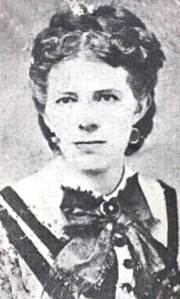
The first rays of happiness in 1864 come in the form of a letter from Stone’s brother and the hope for a new carriage.
Jan. 13, 1864
Tyler, Texas
Good news from My Dearest Brother today. He is almost well and has rejoined his regiment. We heard through a letter from Capt. Manlove December 8. Flora Manlove, Tom’s wife, sent a nice little note to me in the letter. How sweet of her to write. We have only a slight acquaintance, but she knows My Brother well and saw him, quite recently in Virginia. Capt. Manlove is so kind. He writes Mamma by every opportunity.
A letter from My Brother, written in March. Other letters for Mrs. Carson urging her to come North. Different Yankees at Monroe and Vicksburg will send her on, but she will not hear of it. It is a good thing. She is wise enough to see that such schemes for abandoning all that they have are foolish in the extreme.
Dr. Wylie is spending the evening and night. What a sordid soul that man has. Did he ever perform a generous action in his life of forty years? …
Mamma sent a letter to Mr. Smith yesterday, and if he can get what she writes for we shall feel quite independent. The first desideratum is a carriage.

A week of brutal Texas winter weather brings Stone and her family depression, boredom, and frustration as she dreads what the future may hold.

From 2012 to 2015, Stillness of Heart will share interesting excerpts from the extraordinary diary of Kate Stone, who chronicled her Louisiana family’s turbulent experiences throughout the Civil War era.
Learn more about Stone’s amazing life in 1861, 1862, 1863, 1864, 1865 and beyond. Click on each year to read more about her experiences. You can read the entire journal online here.
A week of brutal Texas winter weather brings Stone and her family depression, boredom, and frustration as she dreads what the future may hold.
Jan. 7, 1864
Tyler, Texas
All the unimportant days so far fall on Friday, Christmas, New Year’s, and my twenty-third birthday, the day of ill omen, all on luckless Friday. Let us see what reputation we can give it on the last of the year, when we can scan the record.
In the last twelve months trouble and distress have been our portion. “We have swallowed our tears like water” and have sunk beneath the chastisement of Our Lord. “His hands hath been heavy upon us yet … He hath not utterly forsaken us,” and we can thank Him for many blessings left.
A monotonous week to all closely housed by the extreme cold. Mamma and Mrs. Carson both depressed. Jimmy more than usually solemn. Eddie silent and subdued. The little girls tired of their usual pursuits, even cats and dolls have lost their charm. Even Johnny, the merriest and most mirth-loving of boys, has quieted down and is busy with his books and studies. He misses his great chum, Jimmy Carson, who is still away much to his mother’s annoyance.
No news from My Brother for so many months. When will he come? We are weary watching for the sight of his face and the sound of his voice. Gen. Morgan’s daring escape is one piece of good news.


Today in 1925, Andrew Aguirre was born in Vinton, Texas. The Marine served during World War II and the Korean War, facing challenges he never imagined.

Today in 1925, Andrew Aguirre was born in Vinton, Texas. The Marine served during World War II and the Korean War, facing challenges he never imagined.
*************
The Looking Back series
During my time as a contributing editor to the magnificent Voces Oral History Project at the University of Texas at Austin, I came across some amazing stories. The project, which I celebrated in 2011, collects the stories of Latino veterans and civilians who saw and felt the effects of war, from World War II to Vietnam. This occasional series will highlight a few of these fascinating lives.
Andrew Aguirre, born on Jan. 4, 1925, joined the Marine Corps in 1944, delivered supplies to Marine units on Pacific islands, and helped move out the dead. He joined U.S. forces in China in November 1945, and was discharged in 1946.
Military life, he recalled, gave him a new lease on life and professional ambition.
But by 1950, he was back in uniform, this time in Korea. As he faced down battle-hardened North Korean soldiers, Aguirre had no idea what he was about to experience. Read his dramatic profile here.
Visit the Voces website. Like them on Facebook. Follow them on Twitter.

Stone distracts herself from the new year’s cold beginning with some wry observations of an attractive young woman who, she fears, will break many hearts.

From 2012 to 2015, Stillness of Heart will share interesting excerpts from the extraordinary diary of Kate Stone, who chronicled her Louisiana family’s turbulent experiences throughout the Civil War era.
Learn more about Stone’s amazing life in 1861, 1862, 1863, 1864, 1865 and beyond. Click on each year to read more about her experiences. You can read the entire journal online here.
Stone distracts herself from the new year’s cold beginning with some wry observations of an attractive young woman who, she fears, will break many hearts.
Jan. 4, 1864
Tyler, Texas
We were glad to see the Old Year go. It had been a year of trial to us, and we rejoiced when we caught the last glimpse of the sail bearing him on to the dim Ocean of Eternity. The New Year came wailing in, borne on the wings of a freezing norther. God grant it may bring peace to our war-worn land and those we love home again.
Mrs. Savage and her cortege, with Dr. Meagher in the train, arrived Tuesday and are busy settling in their new quarters. The little girls have been staying in here with us until today. We found five in the room with insufficient bedclothes rather too much for comfort in this freezing weather. I very foolishly allowed myself to be persuaded to spend the first night out in camp with them, and I have not recovered from it yet. I feel like blushing every time I think of it as we all practically slept together with only a curtain separating the tent into two rooms and the mattresses touching each other. I never felt so out of place.
Anna is the same as ever, but Emily Norris has outgrown the name of little girl. She has developed very rapidly and promises to be a noted flirt. She already has her “trot lines” out for all these boys. Think Jimmy Stone and Eddie will fall easy victims, but I doubt her ability to land such shy, wild specimens as Johnny and Jimmy Carson.
We are so glad to have Johnny and Jimmy start to school today. It worried us all the time seeing Jimmy losing his last year at home learning nothing. We did not mind so much about Johnny’s idleness. He is well advanced and the brightest child I ever saw. He takes the lead. Jimmy Carson and Eddie will follow him anywhere and applaud all he says or does.
Jimmy Carson has been away for a week on business connected with Anderson’s killing that Negro, a dreadful affair, and Mrs. Carson has fretted over his absence as she alone can fret. It is a terrible spell of weather to be traveling. The snow is several inches deep and frozen hard with the keenest wind howling around the house.
Capt. King, the exquisite, has paid us several visits and beaten me a game of chess by my connivance. He came by to tell us good-bye Tuesday on his way to Shreveport and Camden. Sent letters by him and one of introduction to Julia and Carrie Lowry.

Exiled in Texas, Kate Stone refused to dwell on death. ‘People do not mourn their dead as they used to,’ she wrote. ‘Everyone seems to live only in the present — just from day to day — otherwise I fancy many would go crazy.’

This is Part 4 of a five-part essay series on Kate Stone and her Civil War which was modified from a paper I presented at the New York Military Affairs Symposium in October 2011.
Learn more about Stone’s amazing life in 1861, 1862, 1863, 1865 and beyond. Click on each year to read more about her experiences.
As the war ground on into 1864, the men and women around Stone made the most of their lives of exile in East Texas. Dances were held. Men and women married. new boys studied for classes.
In Tyler, Texas, Stone cleaned the house, played chess, and read. The wall Stone built in her mind to hold back the crush of mounting tragedies in the Eastern Theater became a permanent fixture. Not even the drama of death breached the barrier anymore.
“People do not mourn their dead as they used to,” she wrote. “Everyone seems to live only in the present — just from day to day — otherwise I fancy many would go crazy.”
In 1864, Confederate victories brightened the situation in the Trans-Mississippi Theater. In the spring of 1864, Federal forces under Maj. Gen. Nathaniel Banks began the Red River Campaign, in which Federal forces from Vicksburg, New Orleans and Arkansas were supposed to meet near Shreveport, seize Louisiana once and for all, amputate Texas from the Confederacy, and then abort any nascent relationship between the Confederacy and the French-controlled Mexican government.
But the plan failed to consider Confederate audacity. In early April 1864, Maj. Gen. Taylor beat back the Federal invasion at the Battles of Mansfield and Pleasant Hill.
Stone practically leapt for joy in her journal. “It is our first great success on this side of the river. … We will never laugh at our soldiers on this side of the Mississippi again. …”
The Confederate conscription act lowered the age range for enlistment to seventeen, and in August, Kate Stone lost a third brother to the Confederate Army. James Stone joined a unit named Harrison’s Brigade at Monroe, La.
She and her mother accompanied him to Louisiana, and Federal raids through the area frightened her, especially when conducted by black soldiers.
“The Paternal Government at Washington,” she wrote, “has done all in its power to incite a general insurrection throughout the South, in the hopes of thus getting rid of the women and children in one grand holocaust. We would be practically helpless should the Negroes rise, since there are so few men left at home.”
******
Works cited or consulted for this essay series:
Faust, Drew Gilpin. Mothers of Invention: Women of the Slaveholding South in the American Civil War. Chapel Hill: North Carolina UP, 1996. Print.
—. Southern Stories: Slaveholders in Peace and War. Columbia, Mo.: University of Missouri, 1992. Print.
Foote, Shelby. The Civil War: A Narrative. New York: Vintage, 1986. Print.
Johnson, Ludwell H. Red River Campaign: Politics and Cotton in the Civil War. Baltimore: Johns Hopkins, 1958. Print.
Kronk, Gary W. “C/1861 J1 (Great Comet of 1861).” Cometography.com. n.d. Web. 11 Sept. 2011.
Long, E.B. and Barbara Long. The Civil War: Day by Day. Garden City, N.Y.: Doubleday, 1971. Print.
McPherson, James M., ed. The Atlas of the Civil War. New York: Macmillan, 1994. Print.
—. Battle Cry of Freedom. New York: Oxford UP. 1988. Print.
Parrish, T. Michael. Richard Taylor: Soldier Prince of Dixie. Chapel Hill: North Carolina UP. 1992. Print.
Stone, Kate. Brokenburn: The Journal of Kate Stone, 1861-1868. Ed. John Q. Anderson. Baton Rouge: Louisiana UP. 1995. Print.
Sullivan, Walter. The War the Women Lived: Female Voices from the Confederate South. Nashville: J.S. Sanders & Company. 1995. Print.
Wilson, Edmund. Patriotic Gore: Studies in the Literature of the American Civil War. New York: W.W. Norton, 1962. Print.
Wooster, Ralph A. Civil War Texas. Texas State Historical Association. 199. Print.

May 2014 be one of the best years of our lives.

Happy New Year, my old and new friends. I wish you all well. May 2014 be one of the best years of our lives.
Write me and tell me more about yourselves.

The WordPress.com stats prepared a 2013 annual report for Stillness of Heart.
The WordPress.com stats prepared a 2013 annual report for Stillness of Heart.

Here’s an excerpt:
The concert hall at the Sydney Opera House holds 2,700 people. This blog was viewed about 11,000 times in 2013. If it were a concert at Sydney Opera House, it would take about 4 sold-out performances for that many people to see it.
Click here to see the complete report.

Obama’s 2014 / Why grandmothers exist / Atahualpa’s tomb finally found? / The future of news / Widowed without warning

This week: Obama’s 2014 / Why grandmothers exist / Atahualpa’s tomb finally found? / The future of news / Widowed without warning
Most of these great items come from my social media networks. Follow me on Twitter, Tumblr, LinkedIn, MySpace, and Facebook for more fascinating videos, photos, articles, essays, and criticism.
1. 2013’s biggest media stories (and screw-ups)
By Dylan Byers and Hadas Gold | Politico | Dec. 22
“2013 was indeed exceptional: Edward Snowden released the biggest leak in U.S. history; President Barack Obama lost the goodwill of a press corps that not long ago had been accused of being in his pocket; and America’s most established news organizations came under new leadership, from Jeff Zucker at CNN to Jeff Bezos at The Washington Post, paving the way for a new and uncertain future.”
2. Official business behind him, Obama looks to 2014
By Josh Lederman | Associated Press | Dec. 27
“But as campaigning for House, Senate and governors’ mansions kicks into high gear in 2014, Obama may find his efforts to focus attention on his priorities drowned out by the political posturing that reaches a fever pitch in Washington every other year.”
3. How to Make Your Book a Bestseller
By Mary Kary Zuravleff | The Atlantic | Dec. 27
“An imagined guide to successful self-promotion”
4. Why Do Grandmothers Exist?
By Judith Shulevitz | The New Republic | January 2013
“[T]he grandmother hypothesis has gone from oddball conjecture to one of the dominant theories of why we live so long, breed so fast, and are so smart.”
5. I Find Myself in a Dark Wood
By Joseph Luzzi | Private Lives :: The New York Times | Dec. 18
“I had left the house that morning at 8:30 to teach a class; by noon, I was a father and a widower.”
6. The future of news is anticipation
By Amy Webb | Nieman Journalism Lab | December 2013
“One of the most important trends going into 2014 is the wave of sophisticated algorithms and processes that will forever change how journalism is both created and consumed.”
7. For Candidates, the End of the Year is a Deadline
By Ross Ramsey | The Texas Tribune | Dec. 23
“Political candidates are thinking they have a little over a week of fundraising left before an important deadline: Dec. 31 is the last day of contributions that can be reported on a required Jan. 15 campaign finance report.”
8. A toast to the bad old days
By Todd S. Purdum | Politico | Dec. 23
“If the past few weeks in the capital have shown anything, it is that the time-honored traits and tactics that modern politics loves to demonize in fact still have much to recommend them.”
9. Is this the lost tomb of the last Incan emperor?
The Daily Mail | Dec. 19
“The site, discovered by a multinational team of explorers, could be the tomb of Atahualpa, the last emperor of the Incas, who was executed by the Spanish after their conquest of South America.”
10. Doctor, Teacher, Soldier, Spy
By Melinda Miller and Rachel Smith Purvis | Discunion :: The New York Times | Dec. 18
“[Rufus Gillpatrick’s] curious career and violent death illustrates the porous line between civilian and soldier on the frontier.”

Art, Design and Resources Blog
Developing deep and critical thinking.
Tabletop Games
#CallingAllJournalists Initiative | Reporter | Media Watchdog | Mentor | Latinas in Journalism
Words, images & collages tossed from a window.
Gayle Brennan Spencer - sending random thoughts to and from South Austin
Travel stories and culture, with a twist.
Talking about some of the best publications from the Federal Government, past and present.
Cadillac News, Forums, Rumors, Reviews
Real News That Matters
bringing joy to family meals
Bloggen Øl, Mad og Folk
fun, delicious food for everyone
Modern Comfort Food
Art is a gift we give ourselves
low waste living drawn from food lore through the ages
 Stillness of Heart
You must be logged in to post a comment.