Loreta’s Civil War: Punctuality is the road to wealth

Velazquez secures the necessary currency printing equipment, and she and her team in the U.S. and England get to work.

Throughout 2016 and 2017, Stillness of Heart shared edited excerpts from the extraordinary memoir of Loreta Janeta Velazquez, who chronicled her adventures throughout the Civil War — either as herself, as a Confederate spy, or in disguise as Confederate Lt. Harry T. Buford. She fought and led men in terrible battles, fell in love, bore and lost children, and traveled throughout the U.S. and Europe, ultimately fulfilling her childhood dream of a rich and adventurous life.

You can read the entire 1876 memoir online here. Learn more about Velazquez (and the incredible documentary film Maria Agui Carter made about her) here.

Read previous chapters of her incredible story here.

Part 49: Velazquez secures the necessary currency printing equipment, and she and her team in the U.S. and England get to work.

******

It so happened, however, that Mr. Chase, of his own motion, called Baker in to assist him in discovering some suspected wrong-doing in the department, and that individual, having then obtained the requisite authority, immediately went to work with even more than his accustomed zeal to find out what was wrong in the printing bureau.

Baker, however, was either somewhat obtuse, or else the person to whom I have alluded as at the head of the ring, and his confederates, were successful in getting him on the wrong track, for the first man he laid his hands on was Dr. Stewart Gwynn. This old gentleman was an eccentric inventor who had a lot of queer, original ideas about proper methods of printing the currency and bonds. Mr. Chase believed that he was a great genius, and it is possible he may have been. I regarded him, however, as a mere catspaw for the others, and have never thought that he was guilty of any intentional wrongdoing.

Dr. Gwynn was arrested by Baker and was lodged for a number of months in the Old Capitol Prison. Nothing criminal, however, was proved against him, although it was shown very conclusively that some of his schemes were not very profitable to the government. Much sympathy was felt for this old man, and I, among others, went to Mr. Chase to beg for his release.

I had quite a long talk with Mr. Chase on this occasion, and he was very emphatic in stating that the method in vogue in the Treasury Department for printing notes and bonds was an effectual check on counterfeiting. I, of course, knew very well what a serious delusion he was laboring under, and it would have given me great pleasure to have undeceived him. …

Having captured Dr. Gwynn, Baker next made an expose of the conduct of the other treasury official whom I have mentioned, and certain female employees of the department, but he did not get at the facts with regard to the bogus plates and other matters of equal importance until a considerable time after. Indeed, I am not sure that it was his investigation that brought the worst practices of the printing bureau to light, but think that someone else had a hand in making that revelation.

It is probable that the manner in which he was treated by those who should have supported him, after proving how the two men mentioned were conducting themselves with the female employees, may have disgusted him with the whole business and discouraged him from prosecuting his investigations any further. The expose with regard to the women created a great excitement when it got into the newspapers but the implicated treasury officials had sufficient influence to brave public opinion and to retain their positions in spite of the clamor for their removal that was raised. Indeed, so great was the prejudice against Col. Baker in certain quarters that, I have no doubt, many very good people actually believed the parties accused by him were innocent and were the victims of a conspiracy.

Besides this, the public attention at that period was tolerably well occupied with war matters, and Baker, having been bluffed off, the scandal was forgotten in a short time. Baker, however, was very sore over the treatment he received from Mr. Chase, Mr. Jordan, Mr. Garfield, and others; and was especially indignant that the rogues who were robbing the people should not only be permitted to go unpunished but should be actually protected in their villainies by their official superiors.

With these matters, however, I had nothing to do, having discontinued my operations in connection with the treasury before Col. Baker commenced to examine into the gross mismanagement of affairs in that important department.

In accordance with my agreement with the printing bureau official, I called at his office at the appointed hour and was referred by him to one of his subordinates. With this man I made an arrangement for a conference under a certain cedar tree in the eastern part of the Smithsonian Institution grounds at nine o’clock in the evening.

This man and his father were printers in the bureau and were confederates in the dishonest practices that were going on, by which the government was defrauded of immense sums and by which immense quantities of bogus notes and bonds were foisted on the public. One of these men had a mistress who was employed to do some work about the printing presses. This woman conveyed the electrotype duplicates of the plates to parties outside and performed other services of a similar character, for which she was paid handsomely.

Some time before the appointed hour I strolled into the grounds of the Smithsonian Institution, and after finding the cedar tree, hid myself in some bushes near by, not being at all certain that some trick would not be played upon me, for it occurred to me that perhaps these people might not fancy my having anything to do with the matters we were negotiating about and would take a notion to have me put out of the way in some manner.

My apprehensions, however, were groundless, for I had approached them in such a manner that they were compelled to trust me, whether they wanted to or not, and their only idea was, with the assistance of myself and associates, to make the grandest haul on the treasury that had ever yet been attempted.

Ere a great while I heard footsteps approaching and presently some one coughed in a significant manner, which I interpreted as a signal for me. I accordingly looked out from my hiding place and saw the man I was expecting. Having assured myself that he was alone, I went up to him, and said, “Good evening.”

“You are her, are you?” said he.

“Yes, I am always punctual on business; punctuality is the road to wealth.”

We then sat down together on the grass to arrange our plans. The scheme I had to propose was quite a modest one, all things taken into consideration. It was, that I, as receiver and bearer for certain other parties, should be given electrotype duplicates of bond and currency plates, such as we had information manufactured by certain parties in the Treasury Department. For them we would either pay so much or would share the profits.

My new acquaintance, however, was in favor of going into business on quite a grand scale. He suggested, in rather indefinite terms, that he had a scheme for bleeding the treasury, which would, if proper management was used, be an even more expeditious and safer method of making money than by issuing bogus paper but he seemed to be a little hesitating about confiding all the details to me.

I therefore said, after we had talked for some time without coming to any conclusion, “Well, sir, what are your plans? I have no notion of rendering myself liable to imprisonment for the plans of another person unless I know all about them and understand exactly what risks I run and what I am likely to gain. If it were not for the sake of a great object I have in view, I would not engage in this business on any terms and would not risk my life and reputation as I am and have been doing.”

“What is your object?”

“That is a personal secret, and it has nothing to do with any one individual.”

“Well,” said he, “this plan of mine is the biggest thing that has ever been tried on yet, and I am certain we can manage it if we only go to work in the right way. I have facilities for carrying on an affair of this kind such as are possessed by no other man in Washington. I know all the men in every department and know exactly who can and who cannot be trusted. I am acquainted with every private entrance to the public buildings in this city and am familiar with a great part of the rascality that is going on every day and every night.”

“If that is so, you certainly have advantages, and if your scheme is a practicable one, I will take it into consideration.”

He then went on to tell me how he proposed using government money and bonds, which were to be taken from the treasury for certain speculative purposes and also for floating bogus bonds, both Federal and Confederate, upon the English market. He was to manage the matter in the Treasury Department, I was to act as go-between, and certain brokers and others in Philadelphia and New York were to attend to the outside business.

When he had fully explained himself, I said, “I am almost afraid to undertake such an enterprise. It will be no small matter to carry on such operations as you propose without detection. Don’t you think you are trying to do too much?”

“I know that we will be operating on a rather large scale, but if we go about the matter in the right way there need be no serious danger. We can begin on a moderate basis and extend our business as we go on, replacing the borrowed money in the treasury as it comes back to us. I and my two friends will be responsible for procuring the capital, if you will consent to be the bearer between here and Philadelphia and New York.”

“Oh, sir, you must not let me be known to any third party in an affair of this kind. If you will deliver to me the money in person, or cause it to be placed where I can get it without danger of being detected, I will undertake the job.”

“Well, that is all right. I will arrange everything for you so that you will be in no danger. I want this to bring in something handsome, for I am anxious to get out of Washington, and so soon as I can make enough money I intend to go South. My feelings have always been with the Southern people, and I consider that they have been the victims of unnumbered outrages.”

“Why, ain’t you afraid to talk in that manner, you a government employee? Don’t you know that I am for the Union?”

“So am I,” said he, “but, for all I can make out, the Union is a great big hobby-horse for speculations, and as other people are making money out of it, I don’t see why I might not.”

I then returned to what had been my chief object in meeting him, by telling him that I wanted one of those electrotype plates. He seemed to be rather disinclined to accommodate me in this matter at first but as I was persistent, he finally consented, and we parted with the understanding that we were not to meet again until I was ready to report the result of our operations and hand him his share of the profits.

The next day a plate was delivered to me at the Kirkwood House, which I immediately put under lock and key in my trunk. Subsequently I received a note informing me that I would find a package under the cedar tree in the Smithsonian grounds, and that I had better go and get it as soon after dark as possible, for fear some of the workmen might pick it up.

The package … was found to contain fifty-five thousand dollars’ worth of government paper. … Securing my booty, I returned to the hotel, rang the bell for my bill, and started for Philadelphia with all possible expedition. The plate which I had in my trunk was for one hundred dollars’ compound interest notes. Not very long after, I and my associates obtained another one for printing fractional currency.

On reaching Philadelphia, I commenced operations immediately in connection with certain brokers and others and bought a large amount of bogus Confederate bonds. Having obtained these, I went to New York, where I took rooms in a private house on Greenwich Street, deeming a hotel rather too conspicuous, and communicating with my associates there, we went to work with energy to turn the money belonging to Uncle Sam in our possession over and over as rapidly as we could, making it pay us a handsome profit at each turn.

Some of this cash was put into the bounty and substitute brokerage business, but a large part of it was invested in bogus Confederate and other securities, which were sold to brokers for the English market. One private banker took sixty-two thousand dollars’ worth, and another twenty-one thousand dollars’ worth, while smaller amounts were scattered about in various directions, we receiving English exchange and gold at market rates, which we turned into greenbacks.

This business finally grew to such an extent that it was found to be convenient to communicate with London direct. Correspondence was therefore established with a banking house on Regent Street, and until the close of the war a lively traffic in real and bogus Federal and Confederate securities was maintained.

After we had been operating six days with the money obtained from the treasury, I telegraphed to my confederate in Washington, stating how much had already been made and asking whether I should keep on. The reply was to give myself plenty of time, and to keep the thing going for ten days longer, and then close out and return to Washington in time for the monthly reports to be made out. At the end of the ten days there was but five thousand dollars’ worth of Confederate bonds remaining on our hands undisposed of.

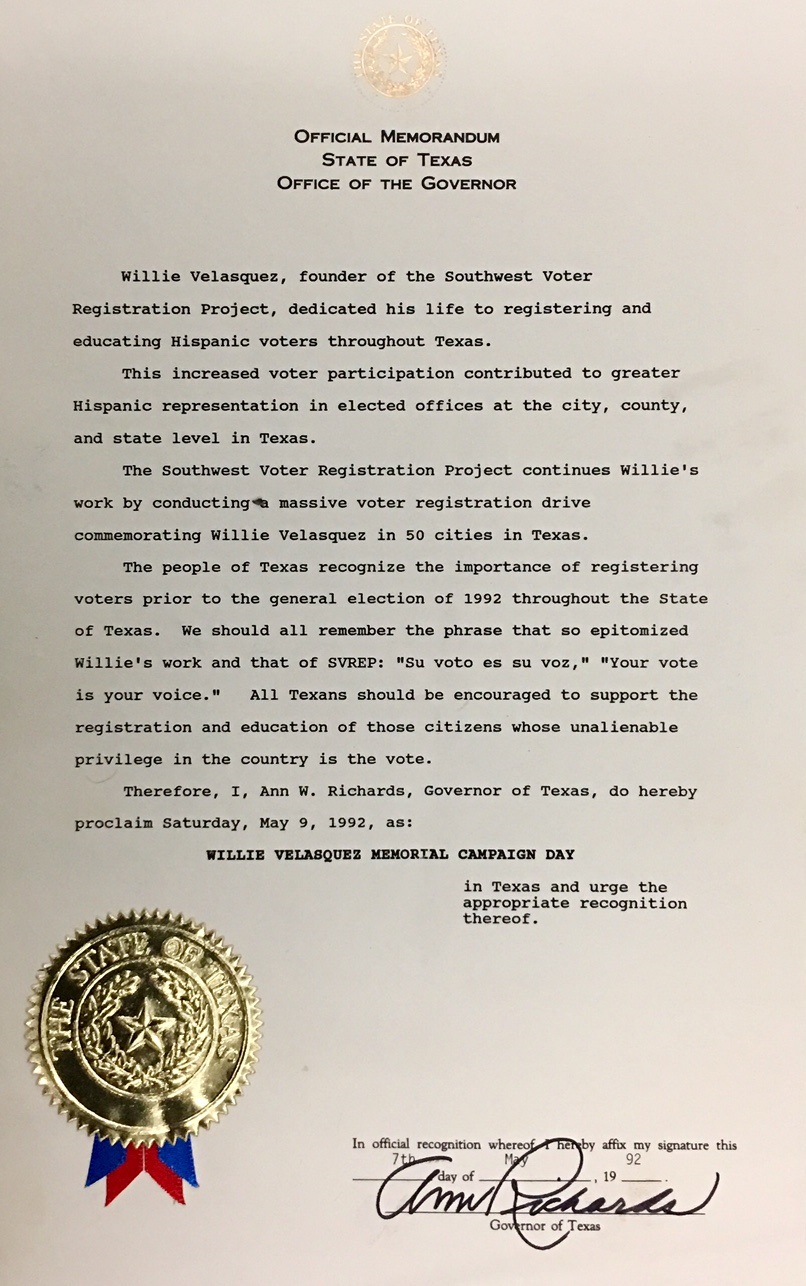
Willie Velásquez Day

Leah Rios's avatarThe Top Shelf

willie day The official memorandum for Willie Velasquez Day from the SVREP Collection

Today we celebrate Willie Velasquez Day here in Texas! May 9th also marks Willie’s birthday where he would have celebrated his 73rd birthday! We encourage everyone to make sure you and your loved ones are registered to vote. More importantly, encourage everyone around you to go out and vote! It is great to take the first step to register but it is VITAL that we allow our voices to be heard in the upcoming election by showing up at the polls. “Su Voto Es Su Voz!” We can celebrate and honor Willie’s history and legacy by continuing to empower Latinos by participating in any way possible in our country’s democratic process.

As the UTSA team continues to work towards completing the SVREP Collection, we hope that not only researchers, but the community as well can use the work completed…

View original post 42 more words

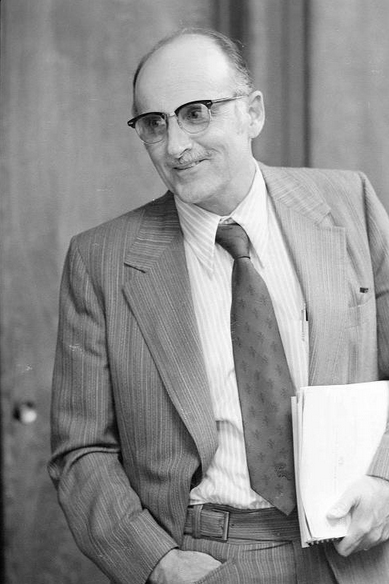
Remembering Peter T. Flawn

Kristin Law's avatarThe Top Shelf

President Peter T. Flawn President Flawn, June 15, 1973. Source: MS 27, Gil Barrera Photographs of the University of Texas at San Antonio.

We were sad to hear that UTSA’s second President, Peter Tyrrell Flawn, passed away Sunday at age 91. Originally from Miami, he served in the Army Air Corps in WWII. He studied at Oberlin College and received his doctorate in geology from Yale University. Dr. Flawn taught geology at UT Austin before joining UTSA in 1973.

His presidency from 1973-1977 was a critical time in UTSA’s history. During his tenure the first classes were held (1973), the first commencement ceremony occurred (1974), Main Campus opened (1975), and the university achieved full accreditation for its graduate programs by the Southern Association of Colleges and Schools.

Flawn later served as UT Austin’s President, from 1979-1985, and again as interim President in 1997-1998. In 2012 the UTSA Science Building was re-named the…

View original post 7 more words

Loreta’s Civil War: Nothing but his fears

Velazquez, both disgusted and cautious, moves forward with an operation within the U.S. Treasury Department.

Throughout 2016 and 2017, Stillness of Heart shared edited excerpts from the extraordinary memoir of Loreta Janeta Velazquez, who chronicled her adventures throughout the Civil War — either as herself, as a Confederate spy, or in disguise as Confederate Lt. Harry T. Buford. She fought and led men in terrible battles, fell in love, bore and lost children, and traveled throughout the U.S. and Europe, ultimately fulfilling her childhood dream of a rich and adventurous life.

You can read the entire 1876 memoir online here. Learn more about Velazquez (and the incredible documentary film Maria Agui Carter made about her) here.

Read previous chapters of her incredible story here.

Part 48: Velazquez, both disgusted and cautious, moves forward with an operation within the U.S. Treasury Department.

******

Having made my arrangements with parties in Philadelphia and New York and having obtained the information necessary for me to make my initial movements, I went to Washington, and, first of all, had a talk with Col. Baker, giving him some information — real or fictitious, as the case may have been — which I thought would amuse him, and assist in convincing him that I was overflowing with zeal for the Federal cause. This interview with Baker was in accordance with a general plan I had laid out, for … I thought it best to call on him and give an account of myself than to have him or his men getting sight of me unexpectedly and perhaps wondering what I was up to.

Baker’s vigilance having thus been disarmed, I went to a clerk in the Treasury Department, and telling him briefly what I wanted … I asked him to assist me in gaining access to the private rooms in the building where none but the officials in charge and the employees immediately under them were ever allowed to go, except by written permits signed by the secretary. These rooms were chiefly those of the printing bureau, where the Federal bonds and currency were manufactured. …

This clerk was a Confederate sympathizer like a number of other Federal employees of various grades, and he carried his sympathies so far as that he was willing and anxious to aid the Confederacy by every means in his power, so long as he could do so with safety to himself. He was not the sort of a man I had much liking for, but in the kind of work I was engaged in prosecuting, it did not do to be too fastidious about the characters of one’s associates. Moreover, he had proved himself … to be a very efficient spy and was constantly in communication with the Confederate agents, giving them information which often was of extreme importance.

It was probably through him that my associates first learned what was going on in the printing bureau, but of this I am not certain. At any rate, they knew that he was the best person to apply to for the sake of getting such an introduction to the private rooms of the Treasury building … as he was thoroughly posted with regard to the villainies that were being practiced there.

In response to my application to this clerk for assistance, he gave me a letter of introduction to a man occupying a very high and very responsible position — so high and so responsible that I was astonished, beyond measure, on being referred to him on such an errand, who, he said, would accomplish for me what I wished. This letter was so worded that the party to whom it was addressed would understand that I wanted to talk with him about matters that it would not do for everybody to be cognizant of, and I was told that I might speak with the most perfect freedom to him with regard to the business I had in hand.

I accordingly went to this official and presented the letter of introduction, wondering not a little what he would say and do when he read it. His conduct satisfied me at once that he was implicated in unlawful schemes and that he was exactly the man for my purposes. When he read the letter he turned as pale as a sheet, and then red, while his hand trembled so much that I was afraid some of the people in the room would notice it.

He read the letter through two or three times before he was able to obtain sufficient composure to trust himself to speak. He finally, however, said a few commonplace things to me, which meant nothing and were intended for the ears of those around us rather than for mine, and then requested me to give him my address.

I did this, and then, in obedience to a hurried gesture, took my departure without attempting to have any further conversation just then, but feeling well assured that I could speedily be afforded ample opportunity for an exchange of views with him.

That evening my new acquaintance called on me at my hotel, and, although we both for a time fought shy of the main subject, I readily perceived from the general tenor of his conversation that he had, since my visit to his office, been making particular inquiries with regard to me. He remarked, among other things, that he had heard Col. Baker mention my name several times and always in highly commendatory terms. This was very satisfactory intelligence, for it convinced me that I really stood well with the secret service chief. …

At length he said he thought he understood my object in making his acquaintance, and, although he was not quite certain what I wanted, he would endeavor to aid me by any means in his power.

I then told him, plump and plain, that I and my associates had full information with regard to what was being done in certain of the Treasury bureaus, and that we had it in our power to set the detectives to work in such a way that all those engaged in swindling the government would be arrested and brought to punishment. Instead of doing anything of this kind, however, we proposed to share the profits of such fraudulent transactions as were going on in the Treasury Department. As the agent and receivers of the others interested, I wanted to get possession of one or more of the electrotype impressions of the bond and note plates, such as were used for fraudulent issues, and I also desired to obtain facilities for visiting the printing bureau … for the sake of conferring with certain parties there. …

My friend saw that I “had him,” to use a slang phrase that is very appropriate in such a connection as this, for it expresses the situation exactly. He hesitated, however, as well he might, before yielding to my request, and after some immaterial talk, which expressed nothing but his fears, he said, “Well, if I oblige you in this, I will place my honor and my reputation in your hands. I have never yet stepped aside from the duties of my office since I have been sworn in, and what assurances have I that you will not betray me?”

I knew exactly how much of this to believe, and so I said to him, “I don’t care, sir, what you may or may not have done before this. I am satisfied, however, that you are the proper person to assist me in the matter under discussion, and if you do you shall have your share of the profits. You can rely upon my secrecy, for I will be implicated as well as yourself; but, independently of that, I think that my character for reliability is sufficiently well known for you to have no hesitation in trusting me.”

“Yes, I know your reputation for skill and secrecy; you seem to have played it finely with Baker. I am glad somebody has managed to get ahead of that fellow, for he has been making himself an infernal nuisance about here.”

This was said with considerable bitterness, and I could not help smiling both at the words and the manner, for there was something absolutely comical in the idea of my friend and those in league with him considering Baker’s negligence a grievance. I, however, said nothing on that point, but merely remarked that Baker appeared to be a tolerably capable officer.

My friend possibly did not care to argue about Baker, for he went on, without noticing the remark, to say that he would have to swear me to secrecy. I laughed at this and ridiculed the idea of my oath being worth any more than my word under the circumstances. He, therefore, abandoned all notion of attempting to bind me, except by the responsibilities I would incur in connection with himself and the others interested, and began to talk business in a straightforward manner. This suited me exactly, and it was not long before we had matters arranged to our mutual satisfaction.

He agreed to furnish any capital that might be needed to commence operations or to do any preliminary bribing that was necessary and was to have a percentage of whatever profits were made. As for getting possession of a fraudulent plate or plates, I would have to talk about that to the people to whom he would introduce me but he did not doubt, if I managed right, I could get all that were necessary for our purposes.

There were other things to be done, however, besides printing bogus notes and bonds, and he thought that a thriving business could be carried on in the genuine articles, which might be abstracted and returned, after being turned over a few times in the market, so as to yield a sufficient profit to pay for the risk and trouble. The bogus bonds, he thought, could be printed in Washington, and seemed rather anxious that they should be but I said that I doubted whether my associates would consent to that — at any rate, I could not undertake to make definite arrangements without consulting them. The idea was to float these bonds, as far as possible, on the European market, and it was thought that it could readily be done, as they could be sold at rates that would defy competition on the part of the government agents who were working with the genuine articles. …

I, of course, made all necessary promises, and he, accordingly, wrote a note, which he signed with a private mark instead of with his name, and told me to call the next day at the Treasury and give it to a certain prominent official connected with the printing bureau. He then took his leave, and I had little or nothing to do with him afterwards, his share of whatever profits was made being paid to him by someone else.

My arrangement with the parties at whose instance I went to Washington on this business was that in event of my being able to make a satisfactory bargain with the officials in the Treasury Department, I was to be the receiver and bearer of whatever they might confide to my care in the way of bonds, notes, bogus plates, and other matters, and was to travel to and fro between Washington, Philadelphia, and New York as a confidential manager, while brokers in the two last-named cities and elsewhere were to do the [financing].

The scheme was an immense one, although it did not reach its full proportions all at once, and it included not only dealing in genuine — borrowed for the purpose from the treasury — and bogus Federal securities, but Confederate bogus bonds also. These bonds were to be, as far as practicable, put upon the English market at the best rates that could be gotten for them, and our — that is, the Confederate — share of the proceeds was to go into a general fund to be used for advancing the interests of the Cause. As for the Britishers, we considered them fair game when selling them either kind of bogus securities, for we regarded their conduct as treacherous to both parties in the great contest and thought that they might as well be made to pay some of the expenses of conducting it.

From first to last the British government had deluded the people of the Confederacy with false hopes of recognition and interference, and, as at the time of which I am writing, it was becoming daily more apparent that it did not propose to interfere unless it could do so without risking anything, the feeling against it — especially among the Confederates at the North and in Canada, who were constantly in correspondence with agents in England and on the continent — was getting to be very bitter.

It was determined, therefore, to go for Johnny Bull’s pocket, and a lively trade in bogus Confederate and Federal securities was started and kept up for a considerable time, which, among other things, involved my making a trip to London. …

The day after receiving the note … I took it to the person in the printer’s bureau, to whom it was addressed. This individual did not appear to be the least surprised to see me, and it was evident that he had been apprised of the fact that I intended to make him a visit and what the visit would be for.

He proceeded to business at once … by requesting me to call the next day at his office, when, he said, the matter would be arranged to my satisfaction. He was not disposed to be talkative about the situation and, as I found out shortly afterwards, certain persons under him in the bureau were the active agents in the swindling transactions that were going on — his plan being to avoid, as far as practicable, any palpable participation in them. … This man, however, was at the head of the ring, and was responsible for all the rascalities that occurred in connection with the important bureau with which he was connected.

The abstraction of currency and bonds for speculative purpose and the permitting electrotypes of the plates used for printing bonds and currency, to be taken and disposed of to outside parties for the purpose of enabling them to print bogus issues, were not his only offenses. He and another official … had several abandoned women employed under them, at large salaries, and with whom they were in the habit of carousing in their offices at midnight. Indeed, so shameless and abandoned were both the men and the women that their doings became a public scandal and did much to bring about an exposure of their official misdeeds.

Before I knew anything of these matters, Col. Baker pointed out these women to me as the pets of these two men and told me about their introducing them into the Treasury building and taking them to the Canterbury saloon in male attire. This was some time before Baker commenced the investigations which created such a sensation by revealing to the public the vice and corruption that ruled in the Treasury Department. Baker then said he was certain that villainies of no ordinary character were going on and that he proposed some day to try and find out what they were.

The fact that Baker had his eye on these officials and others whom I knew were guilty of transactions … induced me to conclude that I had best have nothing to do with them, and, accordingly, I severed my business relations with the printing bureau after giving those interested a hint to beware of the colonel.

This hint was disregarded for the reason that the scamps knew that he could not commence an investigation into the affairs of the Treasury Department without the consent of Secretary Chase, and this consent, for reasons which to them were good and sufficient, they did not believe would ever be given.

Amerikan Rambler: Did 620,000 Men Die in the Civil War?

From Dec. 2011: “For generations, historians have assumed that the Civil War took 620,000 American lives (360,000 Union; 260,000 Confederate).”

Although I never doubted that the Civil War cost this country more than a half-million lives, I have always wondered where the 620,000 figure came from. Casualties are often difficult to pinpoint, especially on the Confederate side, and especially later in the war.

via Did 620,000 Men Die in the Civil War? — Amerikan Rambler: Everybody Has a Story

Loreta’s Civil War: One of the most disgraceful

Velazquez completes her uneventful trip to Havana and returns to Washington, where she begins a new mission in the depths of the Treasury Department.

Throughout 2016 and 2017, Stillness of Heart shared edited excerpts from the extraordinary memoir of Loreta Janeta Velazquez, who chronicled her adventures throughout the Civil War — either as herself, as a Confederate spy, or in disguise as Confederate Lt. Harry T. Buford. She fought and led men in terrible battles, fell in love, bore and lost children, and traveled throughout the U.S. and Europe, ultimately fulfilling her childhood dream of a rich and adventurous life.

You can read the entire 1876 memoir online here. Learn more about Velazquez (and the incredible documentary film Maria Agui Carter made about her) here.

Read previous chapters of her incredible story here.

Part 47: Velazquez completes her uneventful trip to Havana and returns to Washington, where she begins a new mission in the depths of the Treasury Department.

******

It was a troublesome matter getting our cargo together, but finally, after many anxious days and nights, during which we expected every moment to be pounced upon by the Federal authorities, our schooner was loaded with wines, drugs, boots, shoes, buttons, and military goods. I also filled several private orders and … purchased a handsome sword and belt and a fine pair of pistols. These I obtained through a sergeant stationed at Governor’s Island … who proved useful to me afterwards in a variety of transactions. …

Everything being ready, the schooner set sail and succeeded in reaching her port without being overhauled. So, soon as she was off, I prepared to start by the steamer for Havana, having orders for coffee and other supplies to the Confederate agent there. These goods had been shipped from Antwerp and other places in Europe and from New York, and they were to be sent from Nassau to Brownsville, Texas, under consignment to the Confederate quartermaster or agent there, who, if I recollect rightly, was a Capt. Shankey.

This trip to Havana was scarcely as pleasant as the one I had made to that city from New Orleans in the summer of 1862. The Atlantic Ocean I found to be a great deal rougher than the Gulf of Mexico, and, for nearly half the voyage, the weather was very stormy. The result was that I was too sick to have much enjoyment for a couple of days but, having recovered from my attack of mat de mer, I began to enjoy myself and felt benefited by the sea air. I was not sorry, however, when the shores of my beautiful native island began to appear in the distance, and [I] felt much satisfaction when our vessel steamed in under the guns of the Moro Castle and anchored off the city of Havana.

In Havana, I found a number of my old acquaintances of 1862, who were as busily engaged as ever in running the blockade, although the difficulties and dangers of the business gave them much discomfort. The profits of a successful trip, however, were so great that they could afford to brave them and to submit to large losses through the vigilance of the Federal cruisers. In fact, despite the annoyances experienced from the blockaders, who were becoming exceedingly keen in their scent after prizes, blockade-running was yet a very paying business, and the men engaged in it would have been quite willing that the war should have continued indefinitely, so long as their ventures yielded as handsome results as they did.

What gave these people the most uneasiness … was not the stringency of the blockade but a prospect that the war would speedily come to an end. They watched the course of events critically and anxiously but from a very different standpoint from that of myself and my associates, North or South, and I was not a little startled by the evident belief that the collapse of the Confederacy was near at hand. The cold-blooded way in which they considered such a calamity, and the purely pecuniary light in which they regarded it, shocked me and greatly excited my indignation. I could not but acknowledge the force of much of their reasoning, however, although their total indifference to the fate of the Confederacy, except so far as it affected their opportunities for money-making, had the effect of reviving my enthusiasm and of making me more than ever resolved to labor for the success of the cause while a glimmer of hope remained.

Having transacted my business in Havana, I started for Bridgetown, Barbados, to make arrangements there for the shipment of goods. I went from Havana to St. Thomas in the steamer Pelyo and from St. Thomas to Bridgetown in a British steamer. The purser of the last-mentioned vessel was particularly attentive to me — indeed, I had not had so persistent an admirer since the time I was escorted to Memphis by the Federal lieutenant, whose fancy for me I turned to such good purpose in carrying out my plans. The purser gave me his photograph and made me promise to write to him. The photograph I kept and have given it a proper place in my collection of curiosities, but the promise to write I am afraid I broke. I hope the purser, who was a very good follow in his way, did not break his heart in consequence.

At Bridgetown I was received very kindly by the friends of the Confederacy there but was disappointed at finding that Mr. M., the gentleman whom I was to see, was absent. I, however, left my orders with his secretary and started to return to New York by way of St. Thomas.

At St. Thomas I was compelled to wait some days for the steamer, during which time the Confederate cruiser Florida came in under the noses of the Federal fleet, coaled, and put to sea again. One of the Federal men-of-war which was watching her was deluded into giving chase to a mail steamer, and the Florida succeeded in slipping off and getting out of harm’s way before she discovered her mistake — a performance which afforded me exceeding great delight.

While in St. Thomas I succeeded in contracting a loan with Messrs. V & Son, a Belgian firm, on account of the Confederate agents in Canada, and, this being done, I was ready to return to New York by the first steamer.

On my return to New York, circumstances occurred which called my special attention to the operations of the bounty-jumpers and substitute-brokers, and having no other schemes on hand, I was induced to interest myself in the business of reducing the strength of the Federal armies in the field by preventing the reinforcements demanded by the government from reaching the front.

The efficiency of the services rendered the Confederacy by these substitute-brokers and bounty-jumpers cannot be over-estimated. Large armies existed on paper but while the generals in command kept constantly and uninterruptedly calling for more men, they failed to receive them in such numbers as were requisite for keeping their ranks full, and many important movements were rendered ineffectual, and thousands of lives were needlessly sacrificed, simply because the recruiting system adopted by the government was far better calculated for giving abundant employment to rogues of the worst class than it was for keeping the strength of the army up to the proper standard.

The majority of these rogues were Northern men who … did not care the toss of a button which side won, so long as they were able to make money out of the contest. The war, to them, was a grand opportunity for driving all manner of schemes for their individual profit, and the longer it was likely to last, the better they were pleased, giving no thought whatever to the enormous destruction of life and property that was going on, or to the incalculable misery that was caused to thousands of people, all over the land, every day it was waged. …

I doubt whether a good many of the people of the North who supported the Federal government in its efforts to conquer the South, under the belief that their cause was a just one and worth making sacrifices for, had any adequate idea of the rascality, in high quarters and low quarters, that was one of the results of the war. We read about certain scandalous doings in the newspapers but, apart from the fact that many of the worst rascalities of the period never were brought to light, it was impossible for the good, patriotic people who contributed their money and goods, and who prayed, day and night, for the success of the Federal cause, to understand the infamies that were being practiced around them. …

Had these infamies been confined to a comparatively few obscure men in the large cities they would have been bad enough and would have been sufficiently demoralizing in their influences to make it a subject for profound regret that opportunities for their practice should have been afforded.

Bad as they were, however, the substitute-brokers and the bounty-jumpers were not the worst villains of the period. Men high in public station and occupying offices of the greatest responsibility were engaged in robbing the government and in swindling the public to an extent that was absolutely startling to me when I obtained cognizance of their doings, and, for the purpose of carrying out my plans, became an accomplice in some of their transactions.

The Treasury Department itself — where the Federal currency and the interest-bearing bonds, upon which was raised money to carry on the contest, were manufactured — was the headquarters of a gang of thieves and counterfeiters, who carried on their operations for months, within my own knowledge, in a most barefaced manner, and who, when at length detected and brought to bay, were able not only to escape punishment but to retain their positions and to find apologists in their official superiors and in prominent members of Congress.

I really did not know what to make of it when I read the report of the committee of Congress, which not only exonerated certain Treasury officials, whose misdeeds were discovered by Col. Baker, but which actually insinuated that the detective was engaged in a conspiracy against them. I knew only too well how guilty they were, and I knew that Baker had ample evidence against them, although he was not informed of a tithe of the villainies they had committed. That the secretary and the solicitor of the treasury should take sides with them, and that a congressional committee composed of statesmen who claimed to be honest and patriotic, should … sustain them and endeavor to punish Baker for having detected them, are things that I have never yet been able to understand.

That they were protected, and that attempts were made to punish Baker, are, however, facts that cannot be denied, and certainly, of all the disgraceful things which occurred during the war, this was one of the most disgraceful. …

My opinion of Col. Baker’s character or of his qualifications for the position he held as chief of the United States Secret Service Corps is not the most exalted, and I have too vivid a recollection of the fears I felt and of the trouble I had in keeping out of his way at the period to which I am alluding. … I was pleased, for my own sake, but I was astonished beyond measure when I learned that his efforts to break up certain practices in vogue in the Treasury Department resulted as they did. … It was almost incredible that Secretary Chase, Solicitor Jordan, and Mr. Garfield and the other members of the congressional investigating committee should have taken the peculiar stand that they did. …

I had little or nothing to do with the bounty-jumpers until after my return from the West Indies. My relations with the officials of the Treasury Department, however, commenced not a great while after my arrival at the North, and it was mainly my transactions with them that made me so much afraid of being discovered by Col. Baker and so extremely anxious to stand well in his good graces. I am convinced that my intimate relations with Baker, as one of his employees, and the confidence in me which I succeeded in inspiring in his mind alone saved me from detection when he went to work to find out what was worth finding out in the Treasury Department. …

When I first learned of the uses which some of my Confederate friends were making of the facilities of the Federal treasury for obtaining cash, I was rather shocked, and it took some time to convince me that even the license of warfare and the right we had to injure our adversaries in every manner possible made such things permissible. When I found out, however, that not only were counterfeit Confederate bonds and notes freely manufactured at the North, without any interference on the part of the government, but that Federal officials actually made use of this bogus Confederate paper whenever they found it convenient to do so, I had no hesitation in coming to the conclusion that we would be perfectly justifiable in retaliating, and that we had the same right to raid on the Federal treasury and to injure to Federal credit that the Federals had to try and swamp our finances.

It was Col. Baker who decided me to go into this business. That individual always seemed to have a plentiful amount of bogus Confederate bills on hand to be used on occasion. On my Richmond trip, as the reader will recollect, he gave me a considerable sum in this kind of money to assist in paying my expenses, all of which was just so much saved to the Federal government — or, perhaps, to Baker individually — for I was traveling in the capacity of a Federal secret service agent. On numerous similar occasions Baker found it convenient to meet the expenses of his spies within the Confederate lines with promises to pay — supposed to have been issued in Richmond, but in reality manufactured and given to the world in New York and Philadelphia. He seemed to regard it as quite a proper way of fighting the rebels — to put as many counterfeit Confederate notes as possible into circulation — and when I discovered that he was of this way of thinking, I was not long in deciding that we rebels had a right to make the thing even by circulating as many bogus United States notes and bonds as we could. …

TED Ideas: A peek into the brave new world of programmable materials

A flat piece of plastic that can shape itself into a shoe? An orthodontic device that moves into position to straighten teeth? Computational architect Skylar Tibbits is shaking up the material world. Ever tried to assemble an Ikea table? Turning a two-dimensional pile of wood and plastic into a useful 3D object can be a…

via A peek into the brave new world of programmable materials — ideas.ted.com

Behind The Wall

Tabletop Games

Rebecca Aguilar

#CallingAllJournalists Initiative | Reporter | Media Watchdog | Mentor | Latinas in Journalism

Anna Fonte's Paper Planes

Words, images & collages tossed from a window.

Postcards from Barton Springs

Gayle Brennan Spencer - sending random thoughts to and from South Austin

The Flask Half Full

Irreverent travelogues, good drinks, and the cultural stories they tell.

Government Book Talk

Talking about some of the best publications from the Federal Government, past and present.

Cadillac Society

Cadillac News, Forums, Rumors, Reviews

Ob360media

Real News That Matters

Mealtime Joy

bringing joy to family meals

Øl, Mad og Folk

Bloggen Øl, Mad og Folk

a joyous kitchen

fun, delicious food for everyone

A Perfect Feast

Modern Comfort Food

donnablackwrites

Art is a gift we give ourselves

Fridgelore

low waste living drawn from food lore through the ages

BeckiesKitchen.com

MUSINGS : CRITICISM : HISTORY : NEWS

North River Notes

Observations on the Hudson River as it passes through New York City. The section of the Hudson which passes through New York is historically known as the North River, called this by the Dutch to distinguish it from the Delaware River, which they knew as the South River. This stretch of the Hudson is still often referred to as the North River by local mariners today. All photos copyright Daniel Katzive unless otherwise attributed. For more frequent updates, please follow northriverblog on Facebook or Instagram.